Doing It Right Beats Speed · 0:00
In order to know the door business, you've got to know where the door is used. You've got to know how to hang a door. Yesterday I was out on a job teaching three new builders how to properly install the door. I had to slow them down and say it's not about speed, it's about doing it right.
Windows and doors, I've always loved them because they're hard. People find them scary because they're difficult. If you get a window order or a door order wrong, it's expensive. So the stakes are higher, but that also means you can make more margin, and you can help people more on things that are scary for them.
Understand your product and be able to go out to a job site, whether it's a homeowner or a contractor, and share with them what you actually see that's wrong and show them how to fix it. Because then you become valuable to them, and they're gonna buy from you again.
Welcome And Guest Background · 0:46
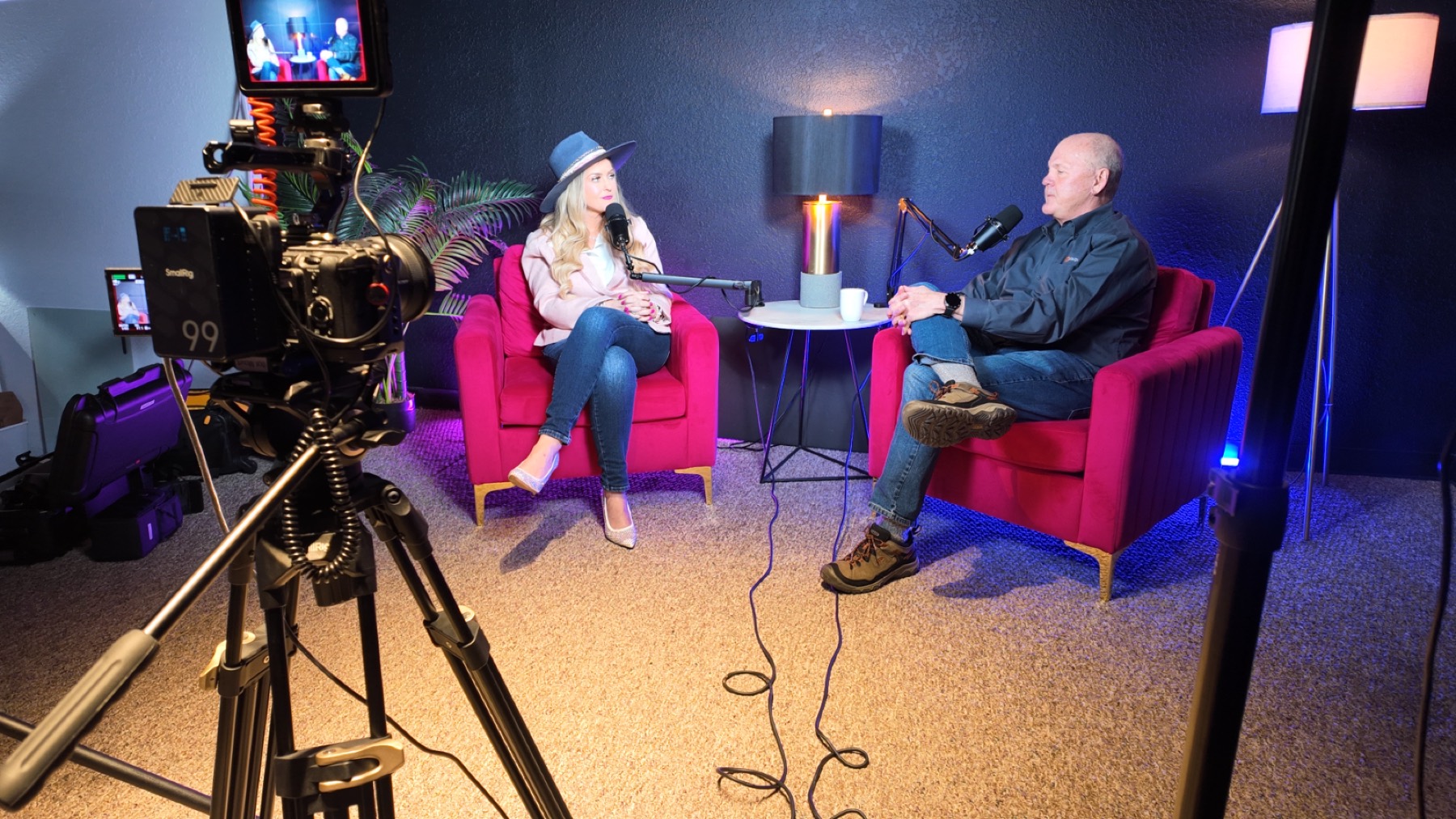
Welcome to the Grit Blueprint Podcast. I'm your host, Stefanie Couch. This is a spot where leaders talk about the stories, strategies, and systems that win in the building industry. We unpack how leaders and brands build their reputations and become unmistakable. Today I'm coming to you live from Grit Studios in Clayton, Georgia, with my friend and colleague Michael Tull from Tull Sales. Welcome to the show.
You're also a neighbor, because you live nearby in the sticks in Northeast Georgia, just like me. Tell me a little bit about where you're from.
I live in Cleveland, Georgia. It's a beautiful small town in White County. I went to college there a long time ago, and I decided I had to move back. I had so many friends all across the whole county, and everywhere I go, I know somebody. The small town atmosphere is just wonderful.
We have a lot in common, but we did not know each other until about a year ago. A lot of friends in common, a lot of loves in common, including the door business. I don't know if I've ever met anyone that loves doors as much as me until I met you. You've been in the door business a long time, we have customers in common, and you live in the place where I grew up. We may be twins. You just need a hat.
I started in the door business when I was 17, and I'm 72 now. It's been the most wonderful business, meeting people like you who have the same passion for doors.
Doors are one thing, but they're on every single house that gets built. Interior and exterior doors, windows on every house. No matter what kind of house you're building, whether it's a hundred thousand dollars or a million dollars, you gotta have a front door.
What A Manufacturer’s Rep Does · 3:02
You are actually a manufacturer's rep. You and your dad had a business. You sell product to two‑step distribution, which is where I used to work, and then you help them go out into the market and sell it to dealers. I've never interviewed a manufacturer's rep on this show before. Tell me about that business.
I represent six different companies. Each one is an independent standalone business, and I try to keep the product lines related to the door business. I sell weather strip, door sweeps, door panels, door hardware, and all of it can go to the same customer base, but it comes from different manufacturers depending on their specialty.
What's the difference between a manufacturer's rep and someone who works for the manufacturer directly? Why do one versus the other?
Let's be real honest. It's about income. A manufacturer's rep is going to be up earlier than a company person and stay later. Because without sales, you don't have any revenue.
Sales solves all sins, and it pays the bills pretty good when you're by yourself like we are, trying to make it happen.
It certainly does. And you learn to depend on your customers. They become your best friends. You share with them everything you're doing with the product line to help them grow their business, because it makes your business grow.
Relationships As A Sales Advantage · 4:50
Everybody says this is a relationship business. No matter what happens with tech or AI, I still believe it's going to be that way. We might do relationships a little differently. You probably text people now, you probably didn't 20 or 30 years ago. But it's still about who you know and how you build those relationships. You are a really great relationship builder. How do you do it? A lot of people struggle with that, especially the next generation.
When I have a new customer, I try to find out what their interest might be. Hunting, fishing, sports, whatever. I might not have the same interest, but I'm still going to share with them. Like I said, I try to turn my customers into my best friends.
What happens when you have someone who is not your best friend as a customer? Where you like them okay, but they're not your buddy?
I have people that work with me. I might turn them over to them.
That's smart. Ben and I have had that happen. There are some customers where we just don't jive, and then they love him. So I say, here you go, hon. This one's perfect for you. There's nothing wrong with that. That's the good thing about having a team.
Absolutely. Some of the people that work with me get along with a customer perfectly where I might have a different opinion.
How Two‑Step Distribution Works · 7:02
Who is the customer base you are selling to, and who is their end user?
With the fiberglass doors I sell, we sell those to two‑step distribution, which means they're gonna buy by the truckload from me. They bring it into their shop and add value. They machine for the lock, prepare for the hinges, put it in a frame, make it into a door unit. That can go two ways. It can go to a dealer who adds more value and sells it to a builder with a window package, or it could go straight to a production builder who buys door units by the truckload, a multifamily type operation.
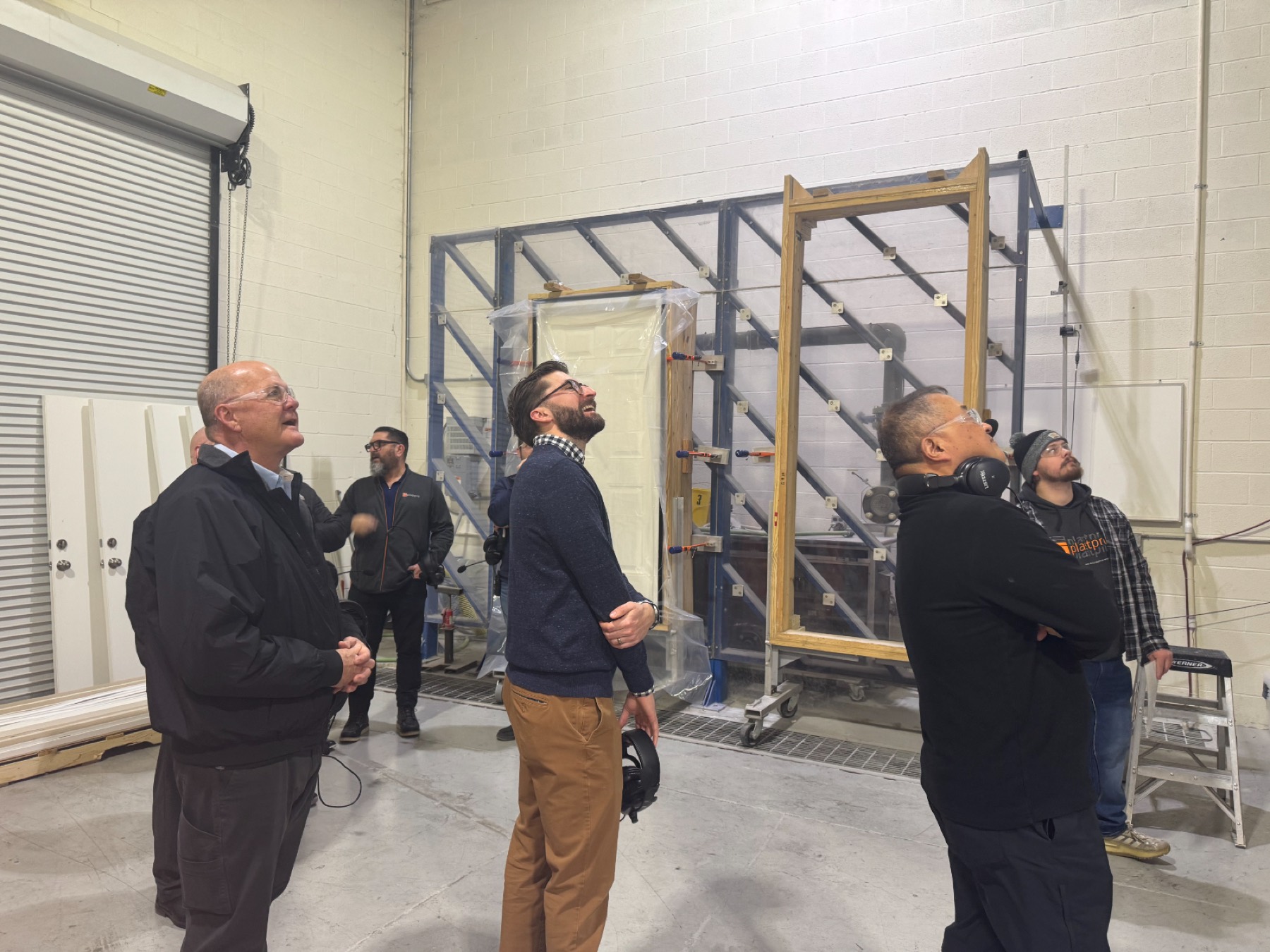
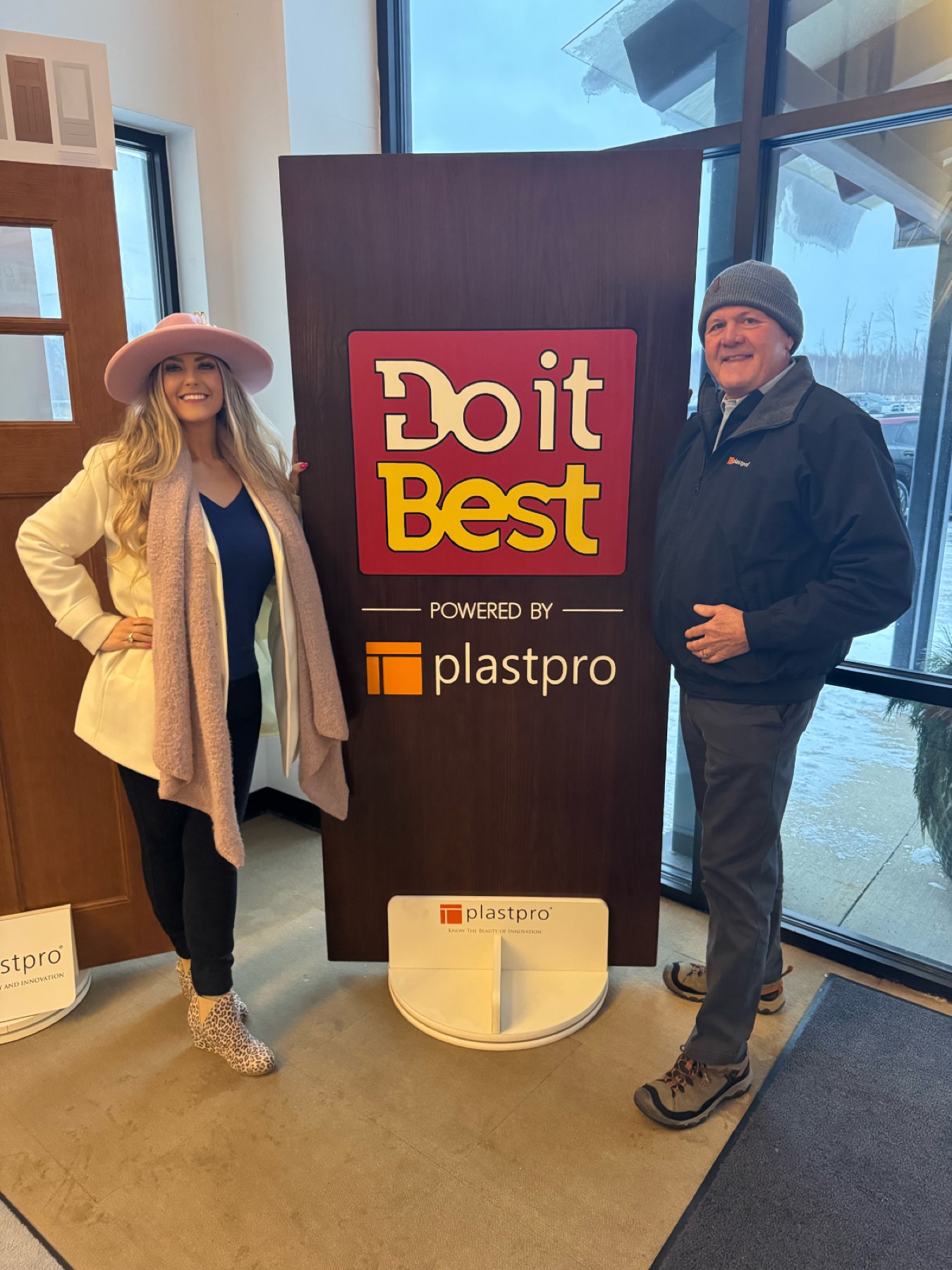
For those that don't know two‑step distribution, that's where I cut my teeth after I left my dad's lumber yard. The Plastpro plant, which I was at last week with you, is such a huge operation. A million square feet of new building, plus 275,000 square feet of older building that's been there a long time, making doors every day in Ohio.
That's correct. We have about 125 employees there, and we can make over a million doors a year, 100,000 doors a month at that plant.
That plant is very automated. I've been through a lot of manufacturing plants. Some are pretty automated with a few people at certain machines. Some have people everywhere. This is probably the most automated door plant I've ever been in. Was that intentional from the get‑go, or did you iterate?
Inside An Automated Door Plant · 8:39
When we first put together the plan to build a plant in America, we located in Ashtabula County, Ohio, because that's one of the hotbeds for fiberglass production. I think it's the number one county in the United States for fiberglass products. We knew we had to make a plant that was automated. Labor has gotten harder and harder to get. So we designed our plant with three different assembly lines. One makes a door about every 20 seconds, a second one makes a door about every 45 seconds to a minute. To do that you've got to have automation, and you want to make the same product over and over so they're all A‑grade and you're not creating waste.
You also have a really nice prefinish line. As labor gets harder to find, the pro contractor is going to have a lot more say over what they do in the field. It's going to be harder to get a painter to come to a house to paint one door. So buying a prefinished door where they install it and it's done, already painted or stained, that's a huge value add for the contractor, and they're still making margin on it. For the homeowner, they get a five‑year warranty. I think that's one of the biggest opportunities in the door market right now, and I don't see a lot of dealers and distributors taking advantage of it.
With the prefinish, I've been fairly successful with it in the Southeast market. Most of it has gone into multifamily.
The Case For Prefinished Doors · 10:16
If you think about it, a door gets hung on the job and it requires a prime coat and two top coats. That's three trips to a job for one door.
We can do all of that in our factory in one pass, and it comes out with a five‑year warranty on a finish that is super tough and is gonna last.
Not to mention, if you're here in Georgia today where it's going to get eight degrees tomorrow, you're not painting a door in eight degrees. It's never going to finish up the right way. And unfortunately a lot of people just don't finish their doors, and then they have warranty issues. If you're watching this and you're not sure: finish all six sides of your door immediately when you get it.
At the end of the day it's a really big opportunity. If you're a dealer or a distributor trying to figure out how to make more margin and sell more high‑end product, prefinish is a great opportunity that adds real value for the homeowner and the contractor. And you can paint any color.
If you want hot pink like my chair, you give me your color, we match it up, give you a sample first, you approve it, and then we paint it that color.
You already know my color is going to be hot pink. I ask every manufacturer I go to, can you do hot pink? Sometimes they say no, and it is very disappointing.
A lot of people in this industry are older and have been in it a long time. Both of us are old timers now. I've been in it over 30 years, selling lumber since I was six.
Training The Next Generation · 12:06
How do you replicate the knowledge that takes three decades of selling doors and windows? How do you pass that to the next generation?
I'm not completely sure, but I try to share my knowledge base with the younger people. I teach them that in order to know the door business, you've got to know where the door is used. You've got to know how to hang a door. You need to teach a builder how to install a door properly. Yesterday I was out on a job teaching three new builders how to properly install the door, and I had to slow them down and say it's not about speed, it's about doing it right.
You said that door was a 12/0 x 8/0, so 12 feet wide by 8 feet tall. That sucker is super heavy, and the doors keep getting bigger. When I was selling doors at my dad's lumber yard it was basically a 3068, or maybe a door with side lights. There was no 12/0 x 8/0 door. They didn't really exist. Now they just keep getting bigger.
When we built our plant in Ohio, the automated line was only for six‑foot‑eight, because that was the majority of the doors. Now probably 50% of all the doors we make in Ohio are eight foot tall. And we have the ability to make a 10‑foot one.
Installing Oversized And Pivot Doors · 13:50
In certain markets like Florida they're all eight-foot doors pretty much. Almost everything you see is 8-0.
They certainly are. And we see the 10‑foot-tall doors come in, and pivot doors, which are wider than three foot.
Those are big. We're both going to IBS in the next month. Pivot doors were huge last year at IBS, and the wide ones: 12 feet, 16 feet, 20 feet wide, 10 and 12 feet tall. How do you teach someone to install a door like that?
I'll use yesterday as an example. There were three men, and they wanted to put the door together and stand it up. I said no, we need to put it together laying down on the floor until we have two of the panels in, because it's going to be too heavy. You've got to keep the door frame square so it's installed in the wall square. And then you've got to have it plumb and level so the door will operate properly.
For non‑door nerds, what does plumb and level mean?
Plumb is straight up and down. Level is like the floor. It's got to be flat. It can't have any humps in it.
What happens if the floor's not level?
You're not gonna close the door.
So that's the first step. You've got to have a level floor. I had a $12 million home where we were doing media work for the customer, and they asked for pictures of a specific door. I said, oh no, that's never good. It turns out the floor was not level when the door was installed. These people provided the door, they didn't install it. They had to go back after the house was fully finished, sheetrock done, people in the house, because it just would not close right. It was binding, and it was a 12/0 x 8/0. They had to take the full door out, sand the concrete down, and reinstall it.
Diagnosing Problems: Install Vs Product · 15:55
When that happens, the first person who takes the blame is the door manufacturer. It's the door. My door won't open, my door won't lock, my door won't close properly, I've got air leaking around my door. Well, that's usually an installation problem.
The door won't close right, it's sagging. A lot of times it's something really simple, like put some two‑and‑a‑half‑inch screws in the top hinge and it'll pull it back up and fix the problem. We've both seen a lot of emails saying this is your door manufacturer being wrong. A lot of times it's not, and it's a simple solution. People like you can train those little tricks.
One of my new best friends is a laser level I bought. When I get out of my car and a contractor sees me walking up to his job, he says, what is that? And I said, it is a laser level.
We're gonna tell if that wall is your worst nightmare, my friend.
We're gonna make sure your wall is plumb. Because if your wall is plumb and my door's hung properly, we're not gonna have a problem.
I went out on a claim one time with one of my outside sales reps. The door was binding, they were saying it was a warped door, and they had installed it with no shims and with 18‑penny finish nails. It is like, guys, come on.
Sales Training On The Jobsite · 17:27
When the rep came out they knew, if they know what they're doing, this is going to be denied. And we showed them how to fix it. One of the things you've told me a lot is that you actually help people fix it. Not that you're doing warranty repairs, but you tell them what the problem is and how to make it better.
I think that's very important. Understand your product and be able to go out to a job site, whether it's a homeowner or a contractor, and share with them what you actually see that's wrong and show them how to fix it. Because then you become valuable to them, and they're gonna buy from you again.
If you have something that's a commodity product, and there are differences between door brands and window brands, but it's an item a lot of people compete on price with, that value is how you keep business for years and years. If you had a new sales rep, if I was riding with you for the first time and knew nothing about sales or doors, what does training me look like?
I've done that several times. I've hired people I knew were going to be good salespeople, but I had to take them to the job site. I literally take them to a house under construction and start talking about everything that has to happen in the construction process, so you understand the window and door openings have to be done correctly. It starts with the rough opening. If you get the rough opening right and then get the door or the window installed right, you're never gonna have a callback. I try to explain to salespeople that you want to become your customer's best friend and be able to talk the language with the contractor. And you should actually be better than the contractor.
Why Exterior Doors Beat Commodity Play · 19:10
The contractor has a lot of responsibilities, from the foundation through to closing the house. He or she might not pay as much attention to the detail as you will, because you are the door expert.
That's the thing about niching down. I love all building products, but windows and doors I've always loved because they're hard. People find them scary because they're difficult. If you get a window or door order wrong, it's expensive. It's not like a bundle of two-by-four studs that get ordered at the wrong length and you resell them the next day. The stakes are higher, but that means you can make more margin and help people more on things that are scary for them. Every single house has to have windows and doors. For people who shy away from it, is exterior doors a good place to start if you want to learn specialty millwork?
Exterior doors are a great place to start versus interior doors. Interior doors are more of a commodity and they're sold on price. Exterior doors today, we have a lot of opaque doors and glass doors, and we cross all the spectrums of quality, from the low end up to the finer homes that are going to have a lot of exterior doors. It's not unusual in a high-end home to see eight or ten exterior doors.
The average when I was selling doors at distribution was about three per home in the U.S. A lot of the houses you are selling have eight to ten doors, and they might be ten to twenty thousand dollars, sometimes more. So the margin is huge on one job.
Building A Business From Scratch · 21:07
We're both entrepreneurs. We both grew up in entrepreneurial houses. What advice would you have for someone like me who is only three years into the business on how to endure? Any lessons you wish you had known?
Like I said early on, you've got to be willing to get up early and stay late. As an entrepreneur, your job is just never done.
Empires are built before dawn is a saying I like to think about. While people are doing whatever they're doing on the weekends or early mornings, if you're out lead generating on LinkedIn or sending emails or catching up, it's going to make you more successful, because you're putting in that extra time. You have to be willing to go way harder than you would if you were collecting a paycheck.
One thing when you are building a business, take the door distribution business as an example. You go in, you make a relationship with your customer, get them comfortable buying your product, you service them really well. I have a saying I have always used: show and tell, watch it sell. If you don’t, it won’t.
Pricing, Value, And Objections · 22:31
So if I leave something in my car and don't take it in on a sales call, that means I'm not gonna push that product.
I'm always conscious about why am I going in to see someone. What am I gonna talk to them about? What is my goal to leave that place with? Is it gonna be an order? I also like the term keeping it sold. The way you keep things sold is you do what you say you're going to do. If your manufacturing company is behind, you call your customer and tell them we're behind. If you've got a week where you can jump ahead, you call them and say I'd encourage you to do this this week, because we have an advantage right now.
That's the communication part, and having hard conversations up front before they call you. It's going to go way worse if you don't bring it up. If the band-aid's going to get ripped off, you might as well rip it off. What do you do when something really goes wrong? During COVID, production times for everyone in the industry were crazy. How do you handle stress like that when things are going wrong but you need to keep it together for your customers and your team?
During COVID is a good example. Our normal lead time was four weeks, then we jumped...
From Wood To Steel To Fiberglass · 24:05
...out to six weeks, eight weeks, ten, twelve, fourteen weeks. When you get out that far, and the competition is as well, you really have to stay close with your customers and encourage them, even when they're discouraged, to go ahead and place the orders to stay ahead and keep from running out of doors. Because we're in the door business. People depend on us for doors.
If I am a young salesperson, how do you handle the objection that your price is too high?
When you're selling, you're selling value. So when someone says your price is too high, against what? I'd like to see what I'm selling against, so I understand: is my price really too high, or am I talking about an apple versus an orange?
Sometimes your price is too high, but a lot of times it's not the exact same thing. Sometimes that matters to people, and sometimes they like oranges and apples just the same, and they'd take an orange if it's cheaper. Maybe they need a steel door versus a fiberglass. I don't know why you'd ever want a steel door, but some people do.
I used to sell steel doors before I sold fiberglass, so I can't talk really bad about them. I started off selling just wood doors. In the 70s, a wood door was the dominant door in the market. Steel doors started coming out at double the price of a wood door. By the middle of the 80s, a steel door became half the price of a wood door. So I pretty much lost a lot of my business.
Smart Blinds And Switchable Glass · 25:41
That's why in the 90s I was looking around for something new to do, and I found the Plastpro fiberglass door was coming to market. They only had plans to make fiberglass doors, no steel or wood. I felt like that was the next generation, and that I'd be able to give customers a better value, because you have a door that's going to last the lifetime of that house versus a wood door that's going to be replaced. A metal door more than likely is going to get dents and dings, and if it's on the coast it's going to rust out.
Very quickly. Sometimes within a year. When you're looking at trends, IBS is coming. Anything exciting that you see in our industry?
You're going to see some new things at the IBS show. Some of the things we are working on have been out in the market for many years, but we're improving them. For example, mini blinds installed between the glass. We now have a third generation that we'll be showing at IBS that uses solar panels to raise and lower the blinds.
It's really cool, I saw it last week. For somebody who doesn't know what we're talking about, you've got this blind inside the glass, which has been out for a long time. In the last few years they've made them so they can be in a flush glazed glass where it's built into the door. And you've got this magnet on the side, and it's kind of annoying. Sometimes it works, sometimes it doesn't. You've got to tilt it a certain way to raise and lower. This new one has a remote control. And it's Alexa smart home.
Wrap-Up And Call To Action · 27:25
Hey Alexa, close my door blinds. Boom, done. I was pretty blown away when I saw it. And you have them in black and white, so if you want a black door with black blinds, you do not have to do a black door with white blinds, which is really cool, because black doors are so popular now.
Another innovation we will be showing at the IBS show is a new glass that switches. Same thing. You can say, Alexa, please close my door, and the glass will change from clear to frosted.
Super cool. If you have an exterior where at night you drive by and can see inside the whole house, you can just switch it.
I'm excited to see all of these new products at IBS. I love walking around because there's so much buzz and energy. There are contractors everywhere, people selling doors, selling windows, selling all the things. It's in Orlando, so hopefully it'll be warmer than it is here today.
We're forecast to have six inches of snow here today.
We better get out of here before we get locked in the studio forever. I'm excited to be your colleague and your friend, and to learn from you, because you're probably one of the wisest people I've ever met business-wise, but also door-wise. It's very rare to have someone I trust from an entrepreneurial standpoint who also knows doors. So thank you for everything you've done for me and taught me, and your lovely wife as well. We both have spouses who work with us and put up with us.
Stefanie, we appreciate everything that you do for our industry as well.
Thank you for joining us on this episode of the Grit Blueprint Podcast. If this episode helped you think differently about how to show up, share it with someone in your building world who needs it. If you're ready to turn visibility into growth, head to gritblueprint.com to learn more and book a call. Until next time, stay unmistakable.