Click any timestamp to jump to that moment in the video.
Welcome And Tree House Reveal
0:01 Chip Wade: One of the first shows I was on was called Design to Sell. And that was three rooms in three days with only $2,000. Which you're like, how is that even possible? I would in one episode rip out like whole kitchens and bathrooms. I don't even know how we did it. It's almost a cheat code of sorts. Start with something you're really excited about, make it quality, and then layer it on. You don't have to make it so incredibly complicated. It almost is just like one step after the other that ends up kind of almost from the outsider's perspective accidentally making total sense.
0:31 Stefanie Couch: I think the value of humans is still gonna be huge. And if you can lean into using it for the crap task that you spend five hours a day on, if we could outsource that to AI, and then I could spend five hours talking to a real human and doing real things that only I can do, that's where the exponential value comes. So I think whoever figures that out first as a company, as a person, as a leader in a company, they're gonna win.
1:00 Stefanie Couch: Welcome to the Grant Blueprint Podcast. I'm your host, Stefanie Couch. This is a spot where leaders talk about the stories, strategies, and systems that win in the building industry. We unpack how leaders and brands build their reputations and become unmistakable. Welcome to the Grit Blueprint Podcast. I'm your host, Stefanie Couch, and I'm excited today to be here in Chatsworth, Georgia, live on scene with Chip Wade. Welcome to the show, Chip.
1:32 Chip Wade: Thanks for having me.
1:33 Stefanie Couch: And we are not only live on scene, but we are live on scene in a pink tree house that you've built.
Chip’s Path From Engineer To TV Host
1:38 Chip Wade: I thought you'd like it.
1:40 Stefanie Couch: I mean, it's perfect. So good luck getting me out of here. I'm probably just gonna move in. I brought my toothbrush.
1:45 Chip Wade: That's good, that's good. Well, we got some extra ones upstairs in case you can do it.
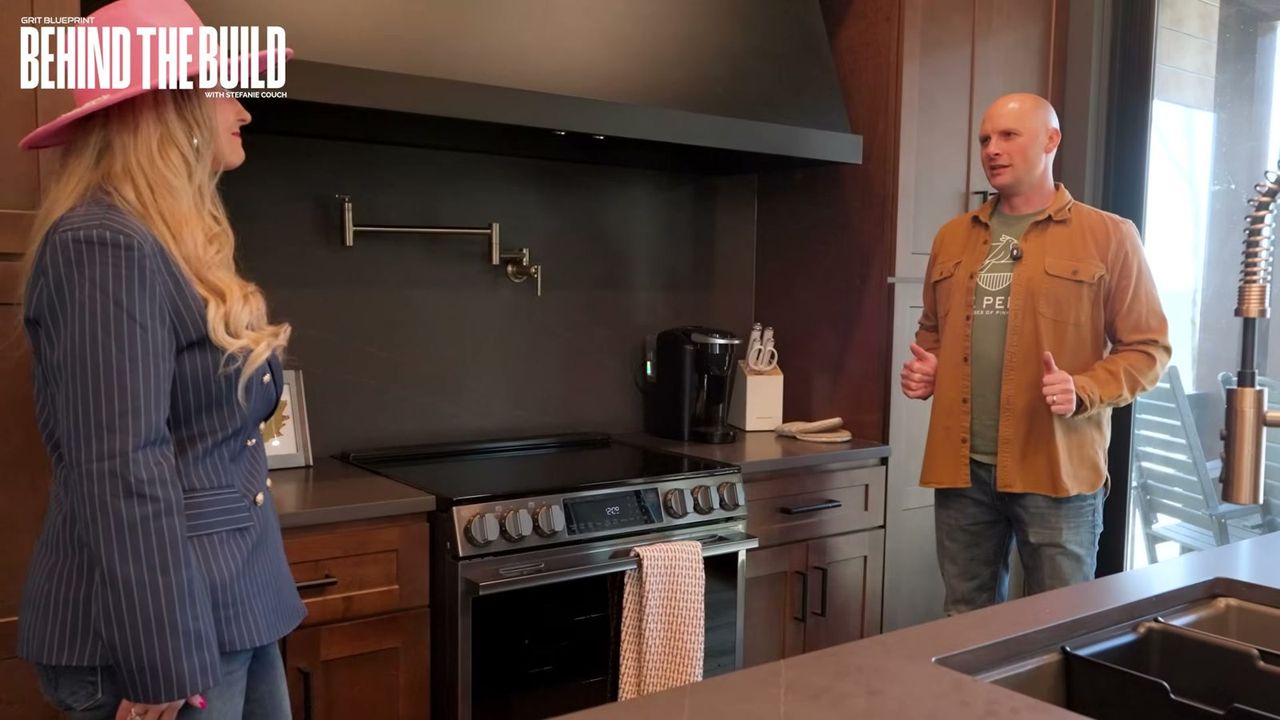
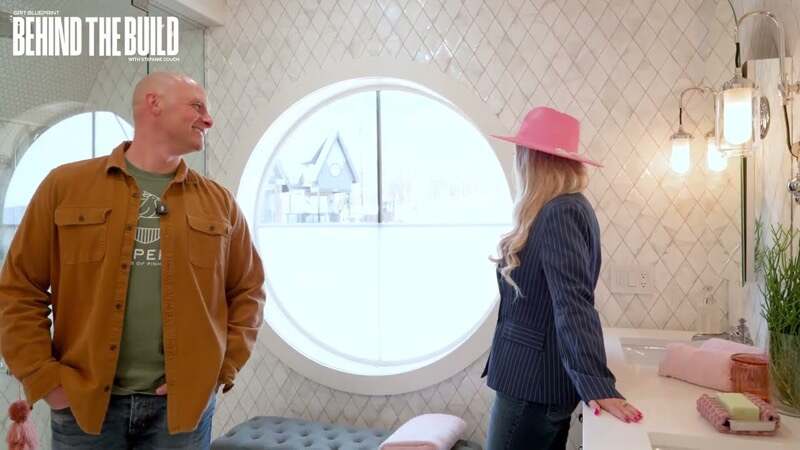
1:48 Stefanie Couch: So we are actually here on site and we're gonna tour three different tree houses that you built in Chatsworth. They're all themed, and we've been working on this for I don't know what you've been working on a year and a half, two years. I've maybe met with you about a year ago, and we did some stuff with doors, which are my favorite love language, and I got to help you design a pink door, which is perfect. So I'm excited to talk. But before we talk about this project, I want to talk a little bit about you and your career.
2:14 Stefanie Couch: So I actually first got introduced to you about two years ago in person, but I used to watch your show on HGTV Elbow Room. Uh it was a show showing small spaces where you had all kind of cool things that you did, and you've really kind of taken that to the next level in these projects because they're pretty small, but you've jammed a lot of cool stuff into them. Tell me a little bit about your career, how you got started. You're a Georgia guy.
2:39 Chip Wade: I am a Georgia guy, born and raised. Uh I uh grew up kind of in like the Northeast kind of corridor, Gwinnett County, if you kind of know where that was. I went to a school card Parkview High School, um, was into sports, um, kind of a typical upbringing, but always was very hands-on. I learned a lot from my dad. Uh, he was an engineer as well. Uh, but we had a home workshop and I loved to build things. And so uh I went to Georgia Tech.
3:02 Chip Wade: I studied mechanical uh engineering, and that was just kind of because I didn't really know what else I wanted to do specifically. And after uh school, I worked uh a couple of different jobs. Uh worked a little bit of stuff with like the military, uh, which was very cool. We've got a lot of really smart, very non-personable engineers, you know, which is kind of the I would say the typical protocol for uh Yeah, you don't strike me as an engineer.
3:26 Stefanie Couch: If I met you, I wouldn't be like, oh, this guy's an engineer.
3:29 Chip Wade: Yeah, it's kind of the the the ulterior personality to what you would typically think. But uh I knew I loved building, uh, so what I ended up doing is I became a structural engineer for a home builder. And that's what I was doing when one day I got cast uh on a show for HGTV that I wasn't really looking for. So I kind of came on as a sidekick character, did shows for five, six years or so, and then the seventh year I actually uh ended up getting offered my own show.
3:52 Chip Wade: So over the course of about 15 years, we've did did hundreds and hundreds, I don't know, over over 500 episodes on HGTV and DIY and others. And um, yeah, and so through the course of that, kind of as you start getting older and a little bit more proficient at what you're doing, I started an architecture firm. We have a uh brokerage uh with real estate, uh, and then I have a production company. So all those are about ultimately what I've kind of grown into is I love helping homeowners make educated home purchasing decisions and building fun, kind of iconic inspirational projects is kind of just one of those little things that scratches that creative itch.
4:24 Chip Wade: Uh and that's where we are here.
4:26 Stefanie Couch: Yeah, it's so much fun stuff in this house, and I can imagine how much fun you had picking it out. You have lots of uh product companies that partnered with you on this, and they got to show off some of their cool stuff, so it's always fun to be able to do something creative because a lot of times home building can be, you know, run of the mill, your normal stuff. We sell a lot of five-panel doors or just something very normal, but that's not what Chip Wade does.
4:52 Stefanie Couch: Chip weight doesn't do normal. Well, I have a question for you based on your TV time. So give me a story or two that would be like something fun or crazy or unbelievable that happened during anything that you could tell me that I that would just be like, wow, oh man, behind the scenes, because we watch it on the post-production side.
5:10 Chip Wade: Sure. Yeah, the TV stuff has also has an arc to it. When I started back, you know, in my early 20s, um, DIY programming was very different than it is now. It really was a little bit of less, it was less about just entertainment. It was what I believe more about like real meat and potatoes, like quality design, quality how-to, which is what I am excited about. I don't really care so much about being super entertaining as wanting to build something that's very compelling and iconic.
Inside HGTV Constraints And Grind
5:34 Stefanie Couch: Absolutely.
5:34 Chip Wade: And so um I'm just so incredibly hands-on that I'm sure I made it harder on myself in every aspect. So um, you know, from the early-on programs, um, one of the first shows I was on was called Design to Sell. And that was three rooms in three days with only $2,000. Which you're like, how is that even possible? But it's like, I think, but the the miraculous part about it is when you put parameters around yourself, it's amazing actually, even what you can do with what seems like virtually nothing.
6:04 Chip Wade: Yeah. And so, I mean, we would, I mean, of course, yes, we got some product trade-outs and things like that. But I mean, I would in one episode rip out like whole kitchens and bathrooms in one episode and do all of that. And and I look back on it, I don't even know how we did it.
6:19 Stefanie Couch: So, did you go to like thrift stores and buy furniture and stuff to use for vanities?
6:24 Chip Wade: We would do anything and everything that we had to, or I would just build it out of yourself. Out of yeah, so that's it. It was crazy though with the times. Like I would work through the night on a regular basis. It was an absolute grind. But those are also some of the best times.
6:39 Stefanie Couch: Yeah.
6:40 Chip Wade: Um, I think that's the biggest differentiator is like when you're watching television, kind of being able to pick and uh kind of have a little bit more of an understanding on who really knows what they're doing and who's kind of just kind of there for the entertainment. Yeah. Which again, we kind of all do it to ourselves though, because you know, TV is produced on what people watch. Sure. And so even social media is kind of all our own faults because we like to watch the you know, the characterization of actual real things.
7:07 Chip Wade: Yeah.
7:08 Stefanie Couch: The fun part or the terrible like oh no part or whatever is what we stop on.
7:13 Chip Wade: But that's where the engineer in me just like, oh, I hate that stuff so bad that like I just want to see something amazing.
7:19 Stefanie Couch: Yeah. Well, now you are working in, like you said, lots of capacities. You actually also work with your wife, and you I work with my husband, so that's a whole dynamic. Not everybody can do it, not everyone can. Um, but you guys have different strengths, I'm sure, and you're working in different parts of the business. And I'm sure she had a lot to do with the finishing touches on some of these.
7:41 Chip Wade: For sure, for sure. She is an invaluable resource. Now, she will be the first one to self-proclaim, like she's not the designer, that's not what her background is in. But again, I mean, she's been doing it with me now for almost 20 years. It's like, no, I mean, you're pretty much there, sweetie. Yeah, she's helping thick. So, I mean, with with all that stuff, but it's also um, I'm a very creative, you know, kind of outbound, cast the net wide, meet everybody, see what there is to see.
8:06 Chip Wade: And then it's about kind of uh, you know, siphoning through to really find what's worth uh including. So for any project like this, one thing I love to do more than anything is the research on it. Uh and the only way to really figure it out is to try it and see if it's any good.
8:20 Stefanie Couch: Yes.
8:20 Chip Wade: Um, that's the only way that I feel confident on speaking matter-of-factly about any product. So some stuff really surprises me in a great way, some stuff unfortunately surprises me in a bad way. More and more it's kind of like approximately where I think it's gonna be. Uh, but occasionally things kind of fall outside of that. But the only way to do that is to do kind of next level push yourself type designs where it's not just standard run-of-the-mill builder-grade stuff, because also nobody cares about seeing that as well.
8:48 Chip Wade: So uh doing that, there's certainly inherent risk involved, and it takes more time and it's much harder and oftentimes more expensive, but it's the only way to get the experience.
8:56 Stefanie Couch: So let's talk a little bit about that because you have a lot of products that you can sift through. Like you said, there's a lot of things on the market. Like, take a window, for example. There's millions of options by the time you go brands, colors, types, sizes, all those things. That's right. So when you're working on these projects and when you're out working with brands, what is that like? Tell me a little bit about your process. Like when you started picking things for these projects, and when you started thinking about design and what you wanted these to look like and feel like, what's your process like?
9:28 Chip Wade: Well, first and foremost, the product has to be quality. You know, whether or not it looks the way that I want it to look right on the website or on the shelf is almost a secondary thing for my what my process is. But when I first started, I was, you know, not quite so open-minded. I was like, okay, I'm looking for a very specific thing. Let me search until I find exactly what I want to find. Now I'm a little bit more open where a lot of folks can do a lot of different things.
9:54 Chip Wade: And so as long as the quality, the craftsmanship, the warranty, and really the relationship with the actual entity themselves is there, I feel like there's a way of getting to the final product. And so, so much more, you know, similar to you know, some of the custom features like the doors or like some of the custom finishes that I'll show you later, um, they may not even exist off the shelf. Yeah. And so that's another real thing that's really fun for me to be able to do with brands is to come up with something, try it, actually go from design all the way to, okay, now I get it in context.
10:31 Chip Wade: And oftentimes that comes uh or turns into a product line, it turns into, or at a minimum, a new product offering for that brand where they might see a market or an elevated you know execution of their own product line that they didn't realize they could do.
10:46 Stefanie Couch: Yeah, I mean like with these doors, you and I were having lunch and we were talking about them, and I think I like took out a notepad or my electronic notepad, and so like what if we did this and you know did a circle window and because it's feminine, so let's make it clean, you know, and then like that's the door, it's here in real life. And uh, you know, we put a Dutch door on the pink one, and it was just fun to draw. I mean, for me as a door nerd and also someone who loves designing things, I think it's really fun to be able to say, hey, like we literally drew that on a napkin.
Partnering With Brands And Prototyping
11:14 Stefanie Couch: I mean, it was a 2025, but it now it's real life, and it's perfect, it's beautiful, and so it's so cool. Um, and the fact that it some of them are just weird shapes, a gothic arch, which will show that's probably my favorite thing.
11:29 Chip Wade: Yep.
11:30 Stefanie Couch: Um, it's the weirdest thing, and you don't see that hardly ever, and it's so beautiful, so I can't wait to show everyone that because it turned out spectacular.
11:38 Chip Wade: Well, one thing that's interesting, whenever like you and I uh were talking about this project, and we got excited about the doors, and you might not think, okay, the doors is like a great place to start, yeah, but it actually helped to inform a lot of other things. I mean, you look at the the archways and the like this is the whole thematic kind of uh language that we use throughout this entire property, or at least this tree house. Uh and similarly with the Jake, with the gothic arches and all that, you know, it really informed that design language all the way through, which it's almost a cheat code of sorts.
12:06 Chip Wade: Start with something you're really excited about, make it quality, and then layer it on. I mean, and that's just something that you kind of learn after doing projects. You don't have to make it so incredibly complicated. It almost is just like one step after the other that just kind of leads into a rolling motion that ends up kind of almost from the outsider's perspective accidentally making total sense.
12:26 Stefanie Couch: Yeah, and I think, you know, I think about personal style, like an outfit or something like that, it's very similar with a house. Everything doesn't have to be a wow moment. Some of them are complimentary items to a wow moment. And so, like you said, these arches and all of that are complementary to the wow moment on the door. And then you've got some hidden features like the Murphy doors we were really excited about. Yep. Um, you have a pink toilet in here.
12:49 Chip Wade: If there was ever a time to use it, this was it.
12:52 Stefanie Couch: I don't I just it's amazing. Who provided that?
12:55 Chip Wade: That was a Kohler toilet.
12:56 Stefanie Couch: Okay, so Kohler toilet. Um, I mean, just really cool. So, you know, Magby, Magby contractor supply did the doors, and um then Murphy Door provided the hidden doors, and both of them are products I just really love, and I was just pumped to be able to get it in here. So I can't wait to show everyone the final finished product. Let's talk about a little bit about the property because not only is the actual house and the area that inside the house amazing, you look out these beautiful doors here, and you see my favorite part of the world, which is the North Georgia Mountains.
13:27 Chip Wade: Unstoppable.
13:28 Stefanie Couch: It is absolutely breathtaking. This morning we're actually here, it's kind of been raining, and there's this mist rising up through the mountains, which is magical. I mean, it feels like a Disney movie, and I may be into Disney Princess. So, like if I break out into song, then I'll then I'll I'll join in.
13:42 Chip Wade: Yeah, I hope. Hopefully in tune.
13:44 Stefanie Couch: But it is really cool. So, how did you pick this? Tell me this story, because there's a really neat story about the name of the mountain. That's right. And then the name of the houses, sort of thing, taking that wow moment and the theme coming from something naturally. Tell me about that.
13:59 Chip Wade: Well, the actual identification of the property, that's probably one of the questions I get asked the most is how did you find this place? Because you're like, does this type of place even exist? Because you don't you look around and you see no other houses, you don't see roads, you don't hear anything. We're surrounded by about 60,000 acres of national forest. Now, I found this property not by looking to do an architectural build project. I found this because I was looking at a place to get off the beaten path to take my kids to ride four-wheelers.
14:22 Chip Wade: And there's an off-road vehicle trail that is actually uh contiguous with this road, actually, and about a quarter mile, it just ends and then just goes for miles and miles through the national forest, which is amazing. So I brought them up here, and in my course up here, I was like, where are we? This is absolutely amazing. My family loved it, and so I actually ended up finding this property, a small parcel, five acres listed on Facebook Marketplace from a holding company out of Alaska. It wasn't even listed on the MLS.
14:49 Chip Wade: Wow. So I don't meant to be. Yeah, I so this is not something I'm like, this is the strategy of how to find it. It was accidental. Um I actually only wanted to buy two acres because mountain property is notoriously difficult, and you don't need a ton, especially when you're surrounded by something like a national forest. So I ended up having to buy the five acres to make the deal work. Um, and I built a project called the Lodge at Pinhodi first. That was the first project.
Doors As Design Language
15:09 Chip Wade: Then I bought another 15 acres as it, you know, just kind of became something I could negotiate with other uh property owners. But then I wanted to do something that was different. Um, this mountain uh uh is actually on a national hiking trail called the Pinhode Trail. Uh so basically Pinhodi is an Indian word meant that means turkey home. Um, and so what's cool about it is this actually ties right into the Appalachian Trail. So it's about 240 miles long. It starts in Alabama, works its way all the way across the North Georgia corridor.
15:39 Chip Wade: But there's hikers, mountain bikers that come through here every single day, which is very, very cool. Uh probably a little bit of a shock to come up on this whole compound, you know, when you're like, hopefully this is uh hostel for me to work.
15:53 Chip Wade: They're looking for a black bear, and then they're like, whoa, wait a second, did we get off the track? But um uh but that's where I wanted to create something that was obviously thematically, you know, there there was a purpose. So our tree houses is really a playoff the turkey theme. Um and so the Jake, the Jinny, and the Tom, they're all kind of names of turkeys of different, you know, uh maturity and uh and gender. So uh really fun. That gave us a great kind of clear theme to do different styles and aesthetics.
16:18 Chip Wade: Uh but yeah, it's not any more magical than that, other than it's just an absolutely beautiful location. Uh and it's meant to take advantage of you know what we didn't create and kind of get the architecture out of the way, but make this as a spot. I kind of wanted this to be a little bit more like an adult Disneyland. And to do that, we had to do a couple of things very, very well, which is take away all of the distractions. Like when you go, I'm not a huge Disney guy, you know, to go, you know, you take everybody takes their kids there when you're little, but you can't mistake the you get a feeling when you're there, which it's there's almost like a perfection to it.
16:53 Chip Wade: You know, almost like a atypical perfection. And it's all about, you know, it smells good, it looks good, there's not distraction, you're getting this kind of feeling of urban, you know, um convenience, but you get all of the benefits of it being pristine. And so that's kind of what I wanted to create here, um, which is that. But I want it to be fun, I wanted it to feel youthful, but more like a Disneyland for adults.
17:16 Stefanie Couch: Yeah, and each house has some fun aspect underneath the tree house. So tell us about what you built and into each one and kind of what the activities are.
17:26 Chip Wade: Sure. Well, here in the Jenny, which is the center, um, all of these houses, I'm calling them tree houses. They're not actual tree houses, they're up on stilts. Sure. I've built a lot of tree houses uh over the past 20 years. The whole way that you see on like shows like Treehouse Masters and all that with the tree hanging brackets and all that. I'm not the biggest fan of those, mainly just because of the longevity, making like a real, long-lasting, high-quality, sustaining structure. It's almost impossible to do that on a living tree.
Finding Pinhoti Peak And Its Story
17:54 Chip Wade: Um so what I wanted to do is to create that elevation, that that weightlessness, uh, create these vistas, and obviously we're on very adverse terrain, 30 plus percent grade. It's hard to build here. And so my initial concept was actually building a pedestal house on a big, like four-foot diameter pole, um, which I still want to do. It was a great idea. Uh, I just ended up diverting a little bit because of site conditions on this one. But basically, we're between 20 and 28 feet up off the ground for the three different structures.
18:24 Chip Wade: Each house has two different structures, one has eight pilings and one has six. Okay. Uh but what that does is it creates this under area that is very unique and interesting. So you get that weightlessness of airiness, so you actually see the woods and the views even under the house, which is awesome. But because of that, because of the site work that was done, it provided opportunities to do outdoor living areas uh with significance from pickleball to putting greens to slides to uh big massive hanging uh you know above-ground stargazing nets.
18:56 Stefanie Couch: Chess forbes that are the size of you know your body.
19:00 Chip Wade: All the fun things that you just look at it and you kind of instinctually just want to be like, I want to go down there. You know, we got waterfalls coming down and all kinds of bridges that you're walking 40 feet off the ground where you're like, oh, that's cool, but you get up there and you're like, whoa, you know, like we're really up here, but we're not swaying in the wind. It's not kind of like a sketchy thing, it's a really solid, well done piece.
19:22 Stefanie Couch: In the fall, I cannot wait to come back and see it with the mountains in full beauty and all the colors. I can't wait.
19:29 Chip Wade: So and you're gonna see bear here every day.
19:31 Stefanie Couch: Um tons of turkey up here. It has to be, right?
19:36 Chip Wade: No deer. Surprising. I've seen a couple of deer, but we're at about 3,000 feet of elevation, and the deer really don't come up, you know, north of about 2,000, except for a couple times a year when they're you know chasing each other. But um, but bear any given day, you know, you'd see a mom and a few cubs and a couple of young males and then a big male all in one day. So you're here staying, and it's like you're in a zoo.
19:58 Stefanie Couch: Yeah.
19:58 Chip Wade: You know, uh, it's which is incredible.
20:00 Stefanie Couch: That's pretty common in these parks where people are like, what a bear! It's like black bear in Georgia. My dad has a pet bear that kind of comes up to their yard and tries to get his bird feeder, they're in a little bit of a war. It's pretty common here, so just make sure if you stay here, you put your trash up at night.
20:14 Chip Wade: The trash is what it's all about. I've gone through uh if you anybody needs any um insight on how to protect trash from bear, I've got a lot of resources because I've done it wrong about 20 times, but I finally got it figured out, I think. They are really good at getting it. Relentless too. Actually, I had a um one of those big job boxes, you know, uh, and up at the up at the lodge, and I had some guests staying there, and they sent me a video, and there's three bear on top of it jumping up and down.
20:41 Chip Wade: They flip the whole entire thing. It takes two full grown men to lift this box empty, uh-huh. And those three young bears know like it was a claw marks dents, and they they and it was cabled to a rock wall, they flip the entire thing over. It is just house trash. It's just house trash.
20:58 Stefanie Couch: Wow.
20:58 Chip Wade: Yeah, they smell they smelled that chicken and they're they are, they're very clever.
21:03 Stefanie Couch: Yeah, absolutely. They're hungry, is what they are.
21:05 Chip Wade: They they they they're not gonna really bother you, but they won they want to eat. So yeah, put your trash away.
21:10 Stefanie Couch: Well, for people that may be thinking about this property, it is actually they are for rent, so you have them individually. But one thing that you were talking to me about that I think would be amazing is you have the lodge, which is a bigger property. What how how many rooms is it?
21:24 Chip Wade: Uh it has five different bedrooms, but it'll sleep, uh it will actually sleep 15, but we market it as sleeping 12. Okay. Um, and then each of the tree houses will sleep four to six. Yeah. So comfortably, uh a lot of people, you know, can you know uh bring a group of thirty.
21:37 Stefanie Couch: Yeah, so you could do like a corporate retreat here. Corporate retreat and family event family event, or you know, if you wanted to bring um church retreat, anything like that. Like it's such a great place. So I hope people I hope so.
21:50 Chip Wade: Yeah, you can find it on PinhodiePeak.com, uh, but it's on Airbnb and VRBO and all.
21:54 Stefanie Couch: It's gonna be packed this fall. I can't wait for you. I've got I need a reserve now.
21:58 Chip Wade: I come on, I'll I'll get you in.
22:00 Stefanie Couch: Okay, I I I feel like I know a guy. Yeah, yeah. Well, let's talk a little bit more about some of the partners that you you know, let's spotlight some of the things you love the most. I would love to talk about just some of the coolest products in here because we're gonna show some of them and I want to be able to show them off. So tell me a little bit about that.
22:16 Chip Wade: Oh my goodness. So total, um, it's a little overwhelming. I think we ended up having about 140 different brands with full, you know, product specification integration. Obviously, I use a lot more than that, but those are ones where I specifically work directly with them, uh, where I hand selected, either helped developed or you know, specified specific products for. So um obviously a lot of the big things, I have a long-standing relationship with brands like Dal Tile that make everything from uh quartz countertops, natural stone countertops, um, uh to all of the tile everywhere.
Building Elevated Structures That Last
22:50 Chip Wade: Um I worked with Kohler, uh, which I also have another long-standing relationship with. They make great stuff. I mean, you like the pink toilets, you like the pink farmstead sink.
22:59 Stefanie Couch: Yeah, so talking about brand, which obviously I love invisibility, Kohler just does such a great job with their marketing and their branding, and they make beautiful things and they show them beautifully.
23:08 Chip Wade: That's right. And they're just the the you can't deny the quality.
23:12 Stefanie Couch: Yeah.
23:13 Chip Wade: You know, I mean, are they expensive? Yes, they are.
23:15 Stefanie Couch: Yeah.
23:16 Chip Wade: Um, but there's a lot of things that are also expensive or almost expensive and still kind of like not really worth it. So I definitely err on um the quality side of things. Um just when you start to build properties and it's people will be touching it and messing with it all. Things will get messed up if they're not made to last a test of time. Um so I don't know, fun things in here that I think might be unorthodox. Uh I worked uh with a company called John Boost.
23:42 Chip Wade: Okay. Um actually the table behind me here, solid butcher block slabs, uh kind of in different scenarios. In the Jake, you'll see I actually have waterfall to edge walnut butcher block slabs that I use there. And for the shells, it all really looks nice to be able to do it. Where are they at?
23:55 Stefanie Couch: If I've never heard that before.
23:57 Chip Wade: Uh John Boost, I I'm an I think they're in Illinois.
24:01 Stefanie Couch: Okay.
24:01 Chip Wade: Um, but a great uh, I mean, super high-end cutting boards is what people know them for. Um we'll we'll see them here at the Builder Show as well. Um but they're a great brand. Um trying to think of things that might be of real interest. I worked with a variety of different lighting brands. This is actually from Calco, um, which is one of those that you would like look at a website lighting on websites is tough.
24:24 Stefanie Couch: Yeah.
24:24 Chip Wade: You know, it's like picking stuff, you're like, man, is that weird? Like, why does everything just look so weird? Like you're gonna be.
24:29 Stefanie Couch: Well, and how's it gonna look when it's off versus on? That's right.
24:32 Chip Wade: You know, because it's like so difficult to understand just by looking at, but this is a great example of one that just totally paid off. Yeah. You know, it's like, where else would I have ever used a light that looked like this? I don't know. But here it is, and I think it's fantastic.
24:43 Stefanie Couch: I like it because the the inside of it's sort of wagon wheel, like a little ode to something older.
24:48 Chip Wade: That's right. But the out of it's very contemporary at the same time. All in kind of a very cottage core environment, which again, but somehow it really goes. Um, a lot of the other lighting is uh from Kitchler that you'll see that you'll probably really like, especially the outdoor lighting.
25:04 Stefanie Couch: Um windows, what where are the windows from?
25:08 Chip Wade: Um well it's now in my windows, uh, but it was New South Windows, is where I got these from. Um, but they're all impact-rated glass.
25:14 Stefanie Couch: Um it is so quiet in here.
25:17 Chip Wade: Yeah, it's pretty good. Yeah, we had to insulate really, really well with these. Uh again, another challenge with this is because they're open underneath. That's another thing that like almost no other residential structure has to deal with. We have super steep roofs, 1612 pitch.
25:30 Stefanie Couch: Um God bless your roofers.
25:32 Chip Wade: Oh my gosh, yeah. So the peaks of these are you know well over 70 foot tall off the ground. So and and you have no level ground around. So just for anybody that understands building, it is a challenge beyond challenges to make that happen. Uh and where we are here in Georgia at this elevation in the winter, the temperatures are significantly, significantly lower. And so the for the entire cold months, the ground just stays in a perpetual state of thaw and w which basically means you're in a mud bog on steep slopes.
26:03 Chip Wade: So needless to say, wind and rain and all that. Everything, everything is um is about nine times as hard. It I honestly felt that way up here. And I've built in a lot of different places. But we're done now, so time will heal.
26:16 Stefanie Couch: Um are they still answering the phone call?
26:18 Chip Wade: Oh my gosh. I actually texted one of my lead framers the other day, just checking on him and his family. Like, are we still friends? Yeah, yeah, yeah, yeah. I guess we're oh my gosh. But that's why you make something iconic, right? Because you've got to get people excited uh and prideful about the work they're doing. Uh, and you do that when you're making cool stuff.
26:36 Stefanie Couch: Um that's one thing I want to ask you about. So you've been in this business a long time, so have I, you know, things are shifting with the next generation coming in and builders are changing and how things are working in the industry are changing. But what excites you most about some of the things that are happening and how do we get other people, because you do a lot of work with younger people trying to get them into the trades. Um is it Skills USA?
Wildlife, Bears, And Guest Realities
26:56 Chip Wade: Uh I'm not directly with Skills USA. Uh we've crossed paths. I'll actually be at a Skills USA here in uh another week or so doing uh um an integration with doing a little builders program where I you know teach some building classes through them. But I as you said I'm very involved in the trades and I'm involved in uh the what's called the Elite Trades Championship series, okay, uh, which is another whole like big national. Like the Olympics kind of trade. Yeah. So we have different ones for like plumbers, electricians, very cool, um, even auto tech, all of these types of things.
27:24 Chip Wade: Um really cool, but it's about elevating the trades. It's a it's a tough bit out there. Um, it's getting harder and harder. Um but these guys and girls are unbelievable. Uh and they're clearly a um very necessary and vital part of making any of this stuff happen. I mean, I learned pretty much everything I know from working side by side with skilled trades. Um, so uh I'm a big advocate for them. Uh and at the same time, you know, technology and skilled trades, you know, this is an interesting kind of junction point where I don't necessarily think it's gonna be an intersection, but it's really more of like a, you know, kind of a tangent battle a little bit where technology is gonna have to accommodate skilled labor, and skilled labor is gonna have to adopt technology in a in a much more meaningful way uh to be efficient, or else everything kind of screeches to a halt from an economic standpoint.
28:18 Stefanie Couch: Yeah, and AI is obviously here coming on strong, and there's some things that historically have been really hard, like takeoffs, that AI can do a really great job of Home Depot just.
28:29 Chip Wade: Nobody's missing that. That's right.
28:31 Stefanie Couch: No one's missing that, but it may make everything easier. And so that is really exciting that maybe you hated that part of the business and now AI can do it. That's right. That is exciting to me because my dad really hated takeoffs in our lumber yard, and I remember hearing him like, oh, like I want to sell this job, but man, I don't want to do this takeoff.
28:48 Chip Wade: That's right.
28:48 Stefanie Couch: And it it's a lot of liability also on people.
28:51 Chip Wade: There's plenty of other things people can do besides takeoffs that that is more enjoyable and you know, an exceedingly value proposition rather than you know making human mistakes on the phone.
29:00 Stefanie Couch: So for those that maybe are trying to decide, like, do I want to go to college more traditional route, or do I want to go into the trades, maybe work for someone, own my own business eventually, whatever that looks like, what would you say to those people?
29:12 Chip Wade: Well try it. There's there's no I'm my son's 17 right now. I have three kids. We're having this exact conversation right now. Um I've even though, you know, it's I you know, I say this a lot, you know, it's um when I'm talking to a you know an older guy or girl that's already made it in their career, they've got millions of dollars, it's easy for them to say, oh yeah, don't worry about it, because they've already made their bag. Yeah. You know, we're still in the hustle, we're doing all this, so I have to also be understanding when I'm talking to my son or when I'm talking to younger kids, being like, oh no, you don't need to do that.
Lodging Capacity And Retreat Ideas
29:43 Chip Wade: You know, like how much is that believable? Yeah. I will say, even though, you know, I went to Georgia Tech, I don't regret it whatsoever. I got a nice degree. Do I attribute that to you know all of my success? No, I mean possibly part of it, but I I I attribute what I did in a college degree as just a showcase of resiliency. You know, I think that there was already a piece of that in there. It was a mechanism for me to kind of suss that out, but it didn't make or break.
30:10 Chip Wade: And I don't think it's gonna make or break other kids as well. Uh I think you're either gonna do it or you're not gonna do it. And that's inherent. I feel like, you know, there's different ways of increasing your network, which really historically, I don't even so much now, but is kind of the been a utility of, you know, kind of graduate, you know, uh college type programs. There's ways to skin the cat. Uh ambition and hard work is gonna get you there.
30:36 Stefanie Couch: Absolutely.
30:37 Chip Wade: Period. So whatever method that takes, whether it's college, whether it's going directly in the trades, you know, some of the most successful people I've ever met had nothing to do with college.
30:46 Stefanie Couch: Yeah.
30:47 Chip Wade: And so, I mean, that's just a testament to where and is college bad? No, but have a purpose for it. Don't just do it because.
30:53 Stefanie Couch: When we lived in Texas, we moved there and uh we lived in a little town called Heath that has a lot of wealth in that area. And we were driving down this road, and I was with someone that I was working with, and he had lived there for a long time, and I said, Well, what in the heck do all these people do? Because it was like a 20,000-foot house, 20,000 square foot house, like giant, giant, giant houses, one after another. He was like, That guy's a roofer, that guy sells porridge, exactly, and that guy does scrap metal.
31:20 Stefanie Couch: And I was like, Okay, well, that's no one there is doing the traditional like college route, but they all had houses that were a lot bigger than the one I was living in.
31:30 Chip Wade: But they all had something in common. That's exactly all busted their tail for years, I'm sure, 20, 30 years. And they were less concerned about the optics of what they were doing than the daggum paycheck. Because yeah.
31:41 Stefanie Couch: The dirty jobs do sell, and they are they're usually the ones that no matter what the economy, if you think about it, no matter what the economy does, a plumber is gonna have work, maybe not as much as when new construction is booming, but he's always gonna get called when the toilet stops up.
Favorite Products And Materials
31:55 Chip Wade: But this is the thing. When you are a type of person where day in and day out you're out there, you are tactile, you're working with your hand, there there is an there is a like a physical IQ to that that is very transferable across so many different things. So, I mean, I kind of liken it to like the engineering route. If you're gonna go to college, that may not be a bad one because that for the same reason it's very um universal in its utility.
32:20 Chip Wade: Yeah, I'm not doing anything, I'm not an engineer now, but it prepared that that mental process did have a level of preparation. Similarly, the hands-on stuff has served me really well. I could go do a number of different things. I could now get into plumbing, I could get into electricians, I could build houses, I can do anything. Uh, and all of those are you know potentially very valuable uh occupations. So whatever whatever you like.
32:45 Stefanie Couch: The core skills transfer, like you said, and I think that is important. And also the communication skills, and you mentioned building a network. I mean, I can't imagine that most of what you've had success in hasn't had something to do with the your ability to meet people and network. Oh, that's right. I mean, you're whole you're amazing at it, and I think that that has to be a huge portion of why you're successful.
33:06 Chip Wade: So one silver lining of getting over 40 is your network starts to mature a little bit, because now all of your your people that you've met have uh put in their due diligence and their time and their uh effort as well. And yeah, I mean that's what that's what you're gonna see. This is why, you know, um always are when you're always working hard. That's why I'm now with a you know, maybe a girl that I met that you know just got out of school 20 years ago, now she's the VP of marketing at some massive brand, and she takes my phone call.
33:36 Stefanie Couch: Yes.
33:37 Chip Wade: And that's what made it all work, even though at the time, like maybe I didn't think she knew anything, right you know, but that's why you're you're you're positive with people, uh, you don't burn bridges ever. Yeah. Uh but yeah, you just stay uh with that integrity and work hard and things will work out eventually.
33:51 Stefanie Couch: So for someone that doesn't know how to build a network, maybe, or that doesn't have natural charisma, what would you tell them as a starting point of like, hey, I really want to connect with more people outside of my company or outside of the circle I'm already in? Where do you start?
34:04 Chip Wade: You know, it you just literally, there is no substitute for face-to-face interactions. This is really still maybe the main reason why I go to trade shows. Um, even though it seems a bit of an arc, like, are these things even going to be around? I don't know. But it's one of still the vestiges that where people show up uh in some fashion and you're able to sit and you're able to have a conversation that's mixed with personal stuff and business stuff. Um I love it. I mean, I now try to make that time more valuable by piling on different levels of things, but it's weird.
34:38 Stefanie Couch: We all do that like that 24 hours, it's like, well, we have 24 hours, we're gonna use every minute of it.
34:43 Chip Wade: That's right. But the main lifeblood is going back and saying hello, even if it's just a high. Right. Uh because when you make a phone call, if if if I call you in 10 years and haven't seen you, talk to you, or whatever, you're gonna be like, What are you still alive? Like, like who are even what are you even doing? But you know, if I even once a year said, Stefanie, hey, it's great to see you. You look great. You know, what are you doing?
35:05 Chip Wade: Got some exciting stuff. Let me send you something, you know, like that. There's just something that just baked into humanity that that is just the way that we feel comfortable. And so I think it's a necessity.
35:15 Stefanie Couch: I heard something the other day that I thought was pretty cool. Um, Ryan Sirhant, who does the real estate stuff and he's got shows and stuff, but they ask him, what do you think is the most important thing to your success? And he said, basically, his ability to follow up with someone until they die. That's exactly how he said it. And I and he said, not necessarily like buy something from me. Just like you just said, connection. It doesn't have to be any end game to it that you know, oh, this is gonna turn into something.
35:43 Chip Wade: Eventually you'll be at the right place at the right time.
35:44 Stefanie Couch: That's right. And they may need you and you may need them, or symbiotically it could work out, but not letting those things go and forgetting, like you said, for 10 years to touch base or to say hi or to send a note, a text, that kind of thing. And I've I've really tried to do that, and I think a lot of people that are good at that do it.
36:01 Chip Wade: I think that this is gonna be one thing that's interesting, and one thing I'm personally trying to figure out is how do I leverage AI in an impactful way that doesn't completely undermine my whole that that whole that dynamic of personal interaction but yet able to do it at scale where it's you're not doing the redundant, dummy work, but it's not a form letter that you're just cascading across everybody. That ultimately is gonna get so diluted because if when everybody does that, it's gonna end up work not working working against you.
Extreme Site Challenges And Craft
36:33 Chip Wade: So I think that that's gonna be we're gonna see some success with brands or individuals that figure out how to do that at scale. Right. Um, that's gonna be interesting, and I'm gonna I want to be a student of that as well because I'm interested in that, but it can also go wrong.
36:49 Stefanie Couch: Well, that's the thing is with AI video, you can already do that where it feels like it's hey chip, this is Stefanie Couch, but really chip is not what I said. I just said hey, and then I I got AI to fill in your name. And people are gonna know that's not you, and they're gonna know it's 500 videos I sent in 13 seconds because I did that.
37:07 Chip Wade: And the thing is, like, will that work this year? Maybe. Maybe. Right. Will it work next year? I don't know.
37:12 Stefanie Couch: Yeah.
37:14 Chip Wade: And or maybe it will. I think that that's still a little bit TBD in the way that consumers absorb more automated content because we just have so much content. I don't know the right answer to this, actually. Even for brands, as it relates to advertising. This is a very interesting turning point. I'm in a lot of TV broadcast. Yeah. You know, the historically that this has been a a little bit of a known entity on how to do it, a proven thing, but now we're just are drinking out of just unending amounts of content.
37:46 Chip Wade: So therefore, making content, making realistic content, making relevant content isn't even a differentiator. So what becomes the differentiator that sticks out. This is where we got we're figuring this out, and brands, especially in the home and lifestyle category, which notoriously are slightly second or third tier in line of aggressiveness when it comes to adopting new strategies, it's gonna it's gonna be interesting, but that's where on the technology side I get really invigorated of playing around in that technology in that next level kind of sphere to see what's actually impactful.
38:23 Chip Wade: Right. Uh, and that is where I've been fairly successful with brands, kind of not on like a broadcast side, but from a you know an actual brand building side on what that looks like. And that the thing about that, it's like technology, it's always changing. It's a great business to be in because you're constantly reinvigorating and reinventing yourself. Um if you're not afraid to do that, then uh it's a wellspring.
38:43 Stefanie Couch: Well, with AI, I mean, every single morning when you wake up, things are happening that are like landmark changes, and every week it's something very big that's happening. So it's not like a hey, this changed one little tiny thing. It's a whole new opportunity every week. So I think most people are having a hard time keeping up with it if they're not spending most of their time doing that. And people like us can kind of experiment for them, try some things, throw some spaghetti at the wall, see what sticks, and then no, it's probably gonna be different.
39:11 Chip Wade: I'm just curious about that. This is just a question that I thought you might have a good answer for as well, with because with what you do, is with the AI integration with things and with all this content that we're absorbing, how much resistance just like, you know, it's not just our grandparents or our parents' generation anymore that are watching some, you know, ridiculous wildlife video that they send you, and you're like, you're like, that's not true.
39:32 Stefanie Couch: That's not real.
39:32 Chip Wade: That's not real. But like, it's getting so good that's like, I'm like, dad gum it. Like, it's not gonna be long, it is not gonna be long before it even the the people that are in tune with this stuff, and it I believe it's really going to affect the trust factor of everything. Yeah. And how does that affect consumer behavior as it relates to brand advertisement? Because that this is me and you are in this space, uh-huh. And I think it's going to define a lot of what we're doing in the next 12 to 24 months.
40:02 Stefanie Couch: I have a pretty contrarian thought on all of it, really. I think that because of AI and because of the ease of making content at scale, right? So people that maybe could make one or two blogs a month can now make 20 blogs in 30 seconds, and they might be horrible, right? But you can put it out into the world, right? And a couple of them might hit. Yeah. Everything on the internet is filling and out in the world is filling the answers that AI is giving people.
Elevating The Trades And Tech
40:28 Stefanie Couch: So if the category of how fast you can create content that's complete crap is easier, so there's gonna be so much more crap out there that's then answering your question. So I think it's gonna do two things. I think it's gonna create great distrust in most people, and I think it's gonna create more trust for live events. I think you're gonna see sort of a Ben and I talk about this a lot, and I think his word is demodernization. So you know how people are going back to sort of like old school, they don't want the wide open house plan anymore, they want the walls again, they want to feel like grandma's house.
41:00 Stefanie Couch: I think that's gonna happen with events, I think it's gonna happen with relationships, and I think it's gonna make it to where people are gonna go back to some old school ways on certain things, and then they're gonna use AI for the stuff that is real easy to do task-driven. But I do believe content is gonna be the realer it looks, the the less produced it is, the more it's really just a storytelling, like person to person where you know it's Chip or you know it's Stefanie.
41:28 Stefanie Couch: I think that is gonna be the most valuable thing. And I I believe truly that that will happen quickly because, like you said, everywhere you look, it's videos that you can't tell. It looks real. It looks like a real person, it looks like whatever. And you can kind of see some little small things, but the better the video gets, you can't, you're not even gonna be able to tell that.
41:47 Chip Wade: That's right. I mean, it's happening in all aspects of life from politics to everything else. We just make these quick judgments off of little snip, little snip, little snip. We craft this narrative and then we make we're gonna get fatigued of that. I'm getting tired of it. I was like, I want to almost just like throw my phone in the garbage, honestly, a little bit.
42:01 Stefanie Couch: It's just like But if you wanted to write something with AI, you know, you could I could literally go in and say, write me a thousand blogs, and it would come out with a thousand thousand blogs in like minutes. Right. Minutes. It's insane, but there's no value there. So, and I'm not saying no, but it's it's replicating. So, what can AI not do? In my opinion, AI cannot tell a story that's not either made up or from another story, it can't create a story, and it can't think the way that humans can to problem solve really organically.
42:36 Stefanie Couch: And what I mean by that is whatever it solves for you, and whatever strategy AI gives you is something from a pattern that's happened before. So if you think about the Wright brothers, they looked up in the sky and saw a bird and said, we can do that. It was never done before. It never could have been done in 99.9% of humans' minds. But because they saw that could happen here, they took that pattern and they made it happen, right? But AI is not gonna do things like that, it's gonna say, This is the pattern, these are the things, and maybe it's gonna solve for stuff, but not like humans do.
43:12 Stefanie Couch: So I think the value of humans is still gonna be huge. And if you can lean into using it for the crap task that you spend five hours a day on, like I spend so much time on email and you know, things like that. Not email personally, like here's our relationship. Just tactical bull crap. If we could outsource that to AI, and then I could spend five hours talking to a real human and doing real things that only I can do, sure, that's where the exponential value comes.
43:42 Stefanie Couch: So I think whoever figures that out first as a company, as a person, as a leader in a company, they're gonna win. And I think there's gonna be an exponential curve that happens for those companies.
43:54 Chip Wade: Yeah, you know, it's it definitely is an interesting time, it's a fast moving time. Uh there's no doubt. I mean I I was telling you I'm gonna do a speaking engagement here shortly, and you know, it's it's it's shocking, you know. You put into you know any different I AI protocols for like idea generation stuff, and you're like, man, this thing will spit out an eloquent, yeah, you know, absolute just bull crap, you know, thing to where it's like the most, you know, cloaked motivational stuff.
44:23 Chip Wade: But you can do it. Right. You can do it. But I was like, what does this not have? Like what is my like, why would somebody care about what I have to say? Yeah. Like I could give you all of these leadership mo jargon and all this stuff. It's like, you know what, okay, maybe am I credentialized to talk about this? Maybe, but you know what I'm great at? I'm just like I'm I'm a doer. You know, I'm a real creative guy that actually like I don't I we need to talk about the stuff that we do.
College Vs Trades And Resilience
44:46 Chip Wade: Because ultimately, AI can design your kitchen and tell you that it looks, and you're like, oh, that's pretty. Yeah. You know, but the difference is like when we walk through this space, this is different because I know how I want to live personally. And if you if human to human, we could relate that way, there's a different language there that ultimately is way more compelling than just the lipstick.
45:08 Stefanie Couch: And and proof always AI doesn't have proof, it has what it makes up based on patterns. But like when you step out and say this is what you do, it's because you literally are sitting in the place that you built with your own hands or with the right.
45:21 Chip Wade: And we can back it up 19 layers deep.
45:23 Stefanie Couch: Exactly.
45:24 Chip Wade: And I think people are getting fatigued, even if somebody gives the right answer, they don't even know where it comes from. We're just listening and re-parroting back, you know, what are the design trends? Okay, or if it's something political or if it's something else. Like none of us really have like the undergirt of the why. Right. And when we do, that's the people that are are getting elevated and listened to once it's three layers deep with this is why I believe this, this is what, this is what it is, and when that becomes believable, that's the biggest differentiate.
45:56 Chip Wade: That's who I think is gonna ultimately rise to the top. You gotta have this.
45:59 Stefanie Couch: You can use your power, your strengths, your abilities, and your experience, and then couple it with the technology and the ability to scale that, and that's great. And so the brands that really are doing well, their products are amazing, their services are amazing, the people are amazing. If they put them in the forefront and then do use AI as an accelerant, it's gonna be amazing.
46:20 Chip Wade: Yeah, there's there's ways to do it, but yeah, just going the easy route of just trying to churn out and keep up with the Joneses.
46:26 Stefanie Couch: Volume is not the game, it's there's so much noise now, you have to be able to segment what is a signal and what is noise.
46:31 Chip Wade: Sure.
46:32 Stefanie Couch: And that's gonna get harder, as like you said, in the next 12 months.
46:34 Chip Wade: But that's what that's I know both you and I are in that. Big time. Um so yeah, it's it'll be exciting to work with different brands that are kind of of the same mindset.
46:43 Stefanie Couch: Yeah, for sure. Well, I'm excited to go tour these houses. Thank you so much for joining me. And you're gonna be at IBS next week, International Builder Show, big week for our industry. Anything super exciting that you I mean, there's so much to see there. Um, I'm I'm obviously very keyed in on like the window indoor products and the lumber and building materials side more than the K Biz side, but where can where can people go to see anything exciting that you've seen? Any products coming up?
47:08 Stefanie Couch: It where what is your topic? You're actually what did you choose to speak on?
47:12 Chip Wade: Um, so I'm actually going to be um talking about momentum in a project and kind of what what that because ultimately I feel like that's what I'm best at, creating excitement, creating momentum, and actual like real change with a project. So kind of my methodology with how I do that is what I'll be talking about. But what I'm really looking for, I'm really thinking that the um, I think that there's a big, this is a bit of an aside, but a big press in the future that's not tiny homes, it's not park models necessarily, but they are going to have some type of there there is a missing piece of modularity, cost effectiveness, and quality at a confined scale that's not 200 square feet, it's not ridiculously small, but there's something that that's really where my interest is is tweaked.
48:03 Chip Wade: Uh and that's really what I'm gonna be looking at at these shows.
48:06 Stefanie Couch: I actually totally agree with you. It's interesting that you say that. One of my architects that we partnered with um and did some stuff for, Lou Oliver, who drew Trilleth uh where the studios are in Atlanta, he did Avalon Mall, he's done a ton of stuff, big stuff, but he has designed a modular collection, the same reason. Because if you think about how hard it is to build things and get the labor, it's not gonna get easier to get. That's right. It's not gonna be cheaper.
Networking That Compounds Over Time
48:28 Stefanie Couch: And if you can build something that's still well built, so similar to the furnishings that we're looking around in here, still beautiful, it's still beautiful, amazing.
48:36 Chip Wade: But it can't be $500,000.
48:38 Stefanie Couch: No, it's gotta be relatively affordable, and it has to be where you can build it very easily and scale.
48:45 Chip Wade: So that's what I'm I think that that there's probably gonna be a piece of that that you're gonna see from me uh in some significant level in the next two years.
48:51 Stefanie Couch: That's amazing.
48:52 Chip Wade: Um but yeah, I'm I'm in my kind of absorption phase of all that. I have big ideas, but obviously it's got to be something that has strong merit uh and a great plan.
49:03 Stefanie Couch: The affordability piece is gonna be tough. That's right. Because even in a small scale, if you did 1,200 to 1,500 square feet or something like that, even 2,000 square feet, it's it's um tough to get it affordable.
49:15 Chip Wade: That's right. That's right. But there's ways to do it, but it's gonna come down to material, it's gonna come down to process. Um, but that's what we're good at. So it's exciting. Yeah, we'll figure that out.
49:23 Stefanie Couch: Pink windows and doors everywhere.
49:24 Chip Wade: Possibly. It'll be an option for sure.
49:27 Stefanie Couch: Upgrade feature.
49:29 Chip Wade: That's right.
49:29 Stefanie Couch: All right. Well, we will see you on the next episode of the Grit Blueprint. Thank you for joining us. Thank you for listening to the Grit Blueprint Podcast. If this episode helped you think a little differently about how to show up, share it with someone in your building world who needs it. If you're ready to turn visibility into growth, then head to gritblueprint.com to learn more and book a call to talk to us about your growth strategy. Until next time, stay unmistakable.