














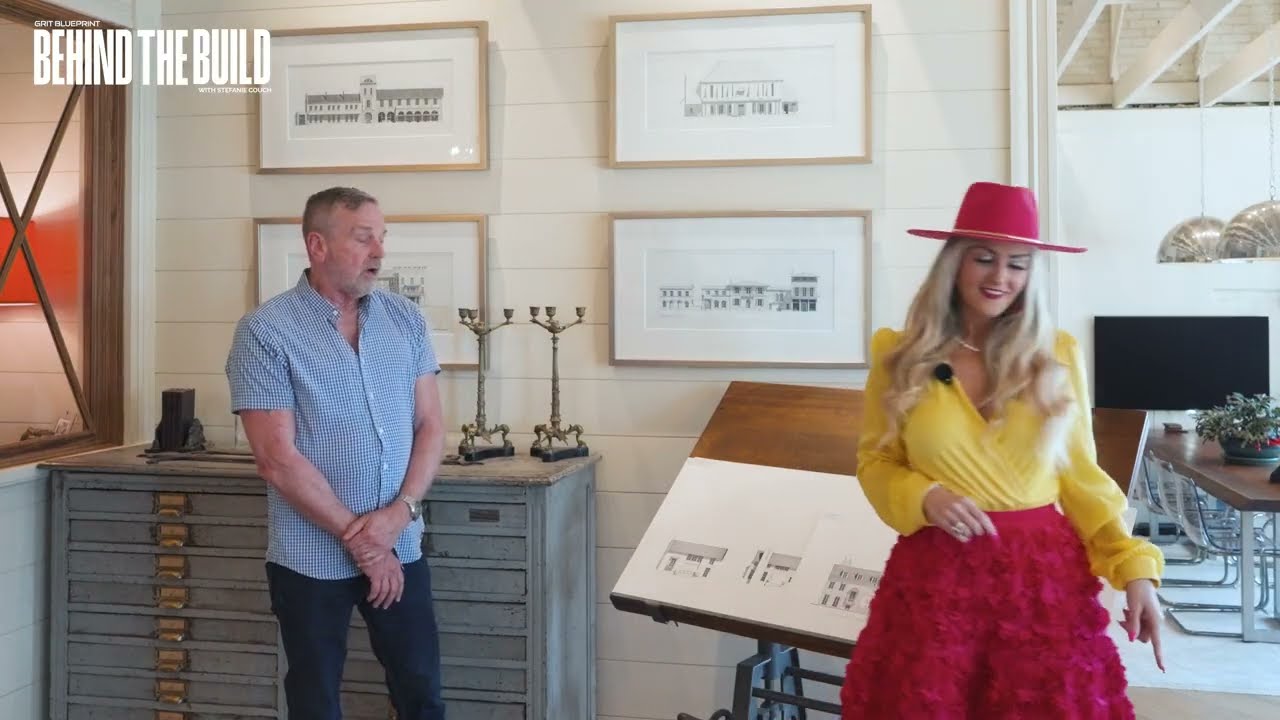
Lew Oliver’s Office Rebuild in Clarkesville, Georgia
Gut it to the slab, then let the building talk.
- Designer Lew Oliver Inc.
- Builder Austin Treadwell
Get useful ideas, expert advice, and stories from across the building industry. Learn something new. Put it to work.
This page shows how a lock fits a door and what each side of the door does. It also shows what goes on the ticket before anyone drills. Pick who you are and this page puts what you need first.
A lock has to fit the holes in the door. The cross bore is the big hole through the face of the door for the lock body. The backset is the distance from the edge of the door to the center of that hole. The door's thickness has to fall in the lock's range too.
Function is what each side of the door does. A passage set only latches, for a hall or a closet. A privacy set locks from inside, for a bedroom or a bath. A keyed lock is best for outside doors, and a deadbolt is a separate bolt worked by a key outside or a thumbturn inside.
Locks come in two main bodies. A bored lock fits round holes in the face and edge of the door. A mortise lock fits a rectangular pocket cut into the edge. One will not drop into a door cut for the other. So the door prep goes on the order with the lock.
Pick who you are. The page puts what you need first and remembers your choice on every product page.
Pick the lock by what each door needs to do, room by room. Then make sure it fits the holes in the door.
A closet or hall door needs only a latch. A bedroom or bath needs a privacy lock. An outside door, or an office that needs more security, gets a keyed lock and often a deadbolt. A matching finish does not mean a matching function.
Bring the box to the counter. The dealer reads the backset, the door thickness range, and the function. Then the brand and model go on the door ticket. That way the shop drills the new door to match.
Home locks are graded for security, durability, and finish. One lock maker explains the scale this way: C is good, B is better, and A is best. Ask for the grade in each category and pick what matters to you.
Get the lock model before the door is drilled. Prep done wrong is expensive to undo.
One lock maker's checklist lists a 2-1/8 inch cross bore and a backset of 2-3/8 or 2-3/4 inches. The edge bore, the hole in the door edge for the latch, is 1 inch. The door should be between 1-3/8 and 1-3/4 inches thick. Mortise, multipoint, and some smart locks need different prep, so use the instructions for the exact lock.
On a prehung door, the shop that builds the unit can do the prep. Whoever does it needs the exact lock, backset, and hinge details on the ticket. A multipoint lock locks at several points with one motion. Order the door prepped for it by the supplier nearly every time.
Fire-rated and required-exit doors have their own hardware rules. Do not change the hardware on a rated door until a code and hardware specialist has reviewed it.
Write the function for every door, by room. Put the prep on the ticket with the lock.
A line that gives only a finish and a number of doors is not an order. Write the function for every door, by room. Check the lever's hand on the lock maker's chart and the door on the door maker's diagram.
A multipoint lock is made into the slab, so the door is machined for that system before it ships. The word multipoint alone is not enough. Name the system on the order.
Have new salespeople gather every detail on a checklist before they quote. Have a second person read any high-stakes order before it is released. Whoever wrote it has looked at it too long to see the miss.
It's actually gonna be touching and closing in multiple points locking, and it's made into the slab.
Dealers and door shops ask about locks in backsets, bores, functions, and hands. They are taught to go to the exact lock's instructions. So your papers are what they need.
Backsets, bore sizes, door thickness ranges, functions, handing, multipoint systems, grades, and finishes belong to each lock maker and model. Dealers are taught to use the instructions for the exact lock.
At Tucker Door & Trim in Monroe, Georgia, one station preps slabs for multipoint locks. That prep has to match the lock system. So the shop needs your system named and your prep details.
Here’s a lot of the preps they do on here for the slabs, which is the multi points.
Short lessons in plain words, each one built from the people who make, sell, and install it.
A lock has to fit the holes in the door, do the right job on each side and match the swing. Ask all three first.
Lesson · 9 min read
What people say at the counter and on the job, in plain words.
Manufacturers in the Grit Guide directory whose own record says they make it. The ones on our shows come first.
Where it goes in a house, with the projects, lessons, and episodes for each room.
24 pieces
29 pieces
Homes where it was part of the story, told by the people who did the work.
Gut it to the slab, then let the building talk.
Questions people ask about this that Grit Guide has not answered yet. They are on our list, with the people who know.
The people, companies and topics that come up most across Grit Guide.
 Expert card Tap to open
Expert card Tap to open
Expert card Tap to open
People and companies mentioned above, each with a page on Grit Guide.