Windows 101: Parts, Types, Sizes and What to Ask
The first lesson on windows: the parts, how each type opens, the three sizes and the questions that turn “I need a window” into a clear order.


The first lesson on windows: the parts, how each type opens, the three sizes and the questions that turn “I need a window” into a clear order.
A window has a frame that is fastened into the wall and stays put, a sash that holds the glass, and the glass itself. A window’s type is named for how it opens, and the six types you will quote most are single-hung, double-hung, casement, awning, slider, and fixed.
Windows scare a lot of new people at a dealer. There are many parts, the words sound alike and a wrong order is hard to fix.
The good news is that the basics can be learned. Marion Pulse got her start in windows at Pella. She says a year spent learning basic words like sash, frame and glazing package, before she went into the field, made the move into sales much easier. This page is that first set of words, so you can understand what a customer is pointing at and ask better questions.
The parts of a window
Every window has the same few groups of parts. Learn the groups first and the names get easier. These are general trade terms. Manufacturers sometimes use their own names, so for ordering a part, the manufacturer’s own diagram is the one that counts.
- Frame: the outer box that is fastened into the wall and stays put. The top is the head, the two sides are the jambs and the bottom is the sill. The sill slopes so water runs off.
- Sash: the framework that holds the glass. On a window that opens, the sash is the part that moves. Its vertical sides are stiles and its horizontal pieces are rails. On a hung window, one with sashes that slide up and down, the two rails that meet in the middle are the meeting rails, also called check rails.
- Glass: the trade word is glazing. It means the glass and also the work of setting it. One pane, or one section of glass you can see, is a lite.
- Grilles (also called grids or muntins): bars that make the glass look divided into smaller panes. They can sit between the panes, attach to the surface or truly divide the glass.
- Hardware: the lock or latch holds the sash closed. The lift or handle is what you grab. The operator is the crank mechanism on a window that swings open. The balance is the hidden mechanism in a hung window that holds the sash where you leave it.
- Air and water parts: weatherstripping is the flexible seal between the sash and the frame. Weep holes are small openings low on the outside of some frames that let water drain out. A nailing fin (also called a flange) is a thin strip around the outside of many new-construction windows, used to fasten the window to the wall.
Word to know
The whole glossary- Jamb
- A vertical side of a window or door frame. People also say “jamb” for the whole frame, so ask which they mean.
The trim words customers mix up
This is where words get crossed most often. These parts are trim around the window. They are not part of the window unit itself.
| Trade name | Where it is | What a customer may call it |
|---|---|---|
| Stool | The flat ledge at the bottom, inside the room | The sill, the ledge, the shelf |
| Apron | The flat trim on the wall under the stool | The trim under the sill |
| Casing | The trim around the sides and top | The frame, the molding |
| Jamb extension | Added material that makes the frame as deep as the wall | The inside of the frame, the return |
General trade terms. Regional and manufacturer names differ.
How windows open
A window’s type is named for how it opens. The type says nothing about energy, strength or weather ratings.
| Type | How it opens | Good to know |
|---|---|---|
| Single-hung | Two sashes, one above the other. Only the bottom sash slides up and down. | Looks like a double-hung when it is closed. |
| Double-hung | Both the top and bottom sashes slide up and down. | On many models both sashes tilt in for cleaning. Confirm for the model. |
| Casement | Hinged on one side. The sash swings out like a door, usually with a crank. | Needs clear space outside. The hinge side goes on the order. |
| Awning | Hinged at the top. The bottom of the sash swings out. | Needs clear space outside. |
| Slider (also called a glider) | One or more sashes slide sideways in a track. | Nothing sticks out, inside or outside. |
| Fixed (also called a picture window) | It does not open. | Light and view, no fresh air. |
General descriptions. Some products open inward or work differently. Check the model.
You will also hear about bay and bow windows (several units joined so they stick out from the wall, a bay at angles and a bow in a gentle curve), garden windows (a small glass box that sticks out, often over a kitchen sink) and tilt-and-turn windows (one sash that can tip in at the top or swing in from the side). A hung window that tilts in for cleaning is not a tilt-and-turn. Each of these has its own ordering details, so go to the manufacturer’s documents.
Questions that narrow the type
- What is right outside? An open casement or awning sticks out. Ask about walkways, decks and plants.
- Who has to reach it, and from where? Over a sink or a counter, ask how they would open it from there.
- How will the outside glass be cleaned? On an upper floor, ask which models let a sash tilt in or come out.
- Do they want to open the top? Of the two hung types, only a double-hung opens at the top.
- What is already in the house? Most owners want new windows to look and work like the others. Look at the screens too.
- Is there a rule about opening size? Some rooms have rules about how large the clear opening must be. That answer comes from the plans, the builder or the local code official, and from the manufacturer’s published opening sizes for the exact unit. Do not judge it from the window’s overall size.
If a customer is torn between two types, do not guess which costs less. Price both in the same product line, with the same size, glass, color and options. Let the quote show the difference.
Frame materials: what the words mean
Material is a separate choice from type. None of these words tells you how a window performs. That comes from the ratings and documents for the exact product.
- Vinyl: rigid PVC plastic formed into hollow frame parts. Also written uPVC.
- Wood: wood frame and sash parts. The outside may be painted wood or covered with another material.
- Clad wood: wood on the inside with a cover of another material, often aluminum, on the outside. “Aluminum-clad” does not mean an all-aluminum window.
- Fiberglass: glass fibers set in resin and formed into frame parts, with a factory coating on top.
- Aluminum: aluminum shapes, usually hollow. Some have a thermal break, a strip of a different material that separates the inside metal from the outside metal.
- Composite: a blend of materials. The word alone tells you little, so ask what is in it.
Glass words in one line each
- Insulating glass unit (IGU): two or more panes sealed together at the edges with a spacer between them. Customers say “double pane” or “triple pane.”
- Low-E coating: a very thin coating on the glass that cuts how much heat passes through while still letting light in. There are many kinds.
- Gas fill: a gas such as argon sealed in the space between the panes in place of air.
- Glazing package: the full glass makeup chosen for a window: how many panes, which coatings, which gas fill and any special glass.
The energy numbers on a window label are ratings for the whole window, not for the glass alone. One of them is U-factor, which measures how well the window keeps heat from escaping. Lower is better. The National Fenestration Rating Council (NFRC) is the nonprofit that certifies those label ratings, and Marion Pulse, who worked there when she recorded in 2024, explains its work in her episode. Which numbers a job needs comes from the plans, the builder or the local code official.
Rough opening vs unit size
Words to know
The whole glossary- Rough opening
- The framed opening in the wall where a window or door will go. Often written RO.
- Unit size
- The outside size of the window itself, measured the way that manufacturer measures it.
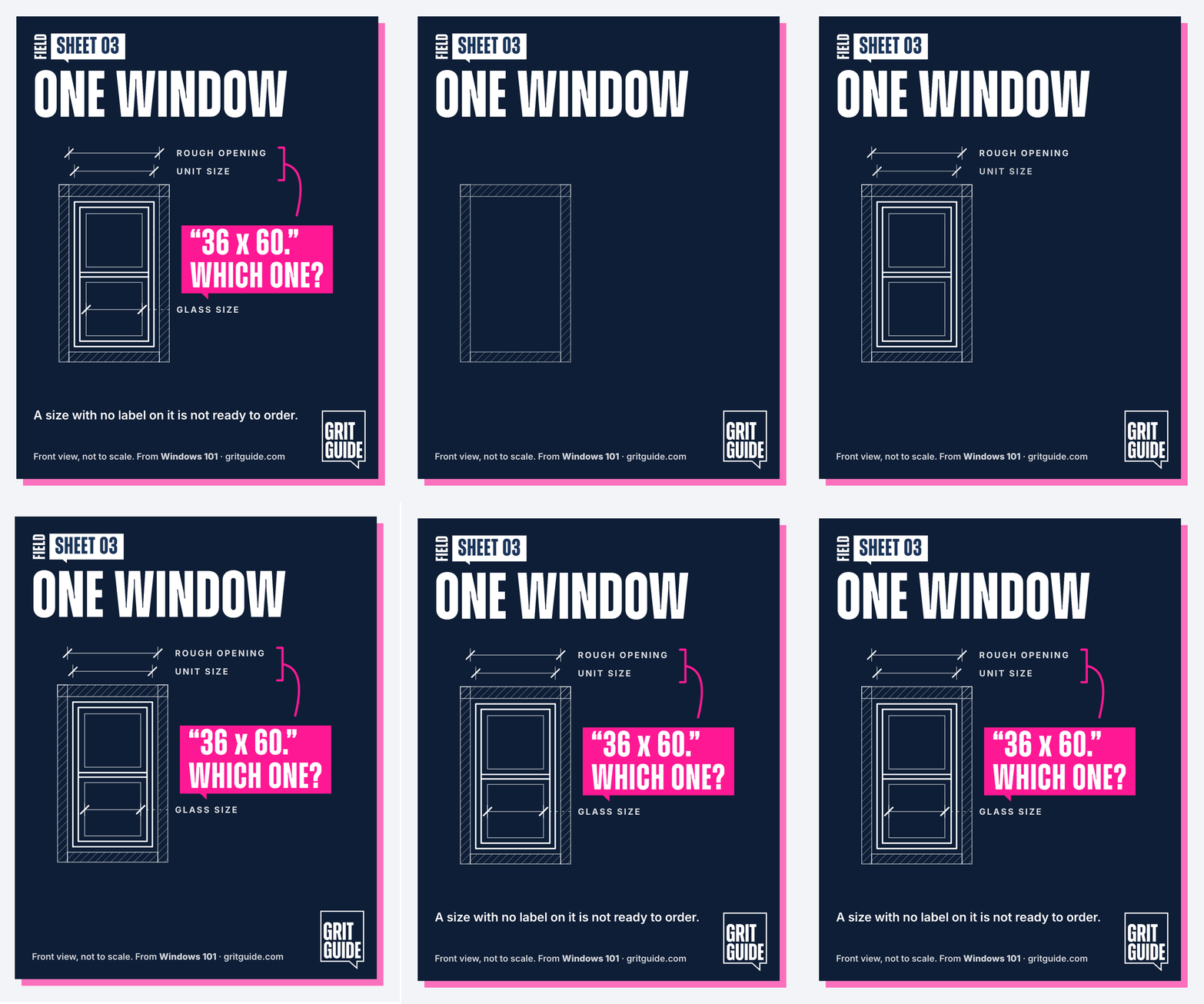
The unit is a little smaller than the rough opening so it can be set and sealed. How much smaller is the manufacturer’s call, and it is printed in their size charts. Never subtract a number from memory. You will also see glass size (the glass you can see) and clear opening (the open space when the window is opened). Those are four different numbers for the same window, so a size with no label on it is not ready to order.
Michael Tull, a manufacturer’s rep, takes every new salesperson to a house under construction first. “It starts with the rough opening,” he says. Learn more from Michael Tull: The Real Reason Customers Buy Again.
New construction vs replacement
The same opening can be handled three ways. Ask which one before you quote.
- New-construction window: goes into an open rough opening, usually on a new house or an addition. Many are fastened through a nailing fin.
- Insert replacement (also called pocket replacement): the old frame stays. The old sashes come out and a new window is set inside the old frame.
- Full-frame replacement: the old frame and sashes all come out, down to the rough opening.
Which one fits depends on the condition of the old frame and the wall around it. That is for the installer to inspect and decide. Your job is to ask what is staying, what is coming out and who measured.
What to ask a customer
Here is a script you can say almost word for word.
“So I can get this right the first time, can I ask a few quick questions? Is this a new opening, or are you replacing a window that is there now? If you are replacing it, is the old frame staying? Who measured, and is that number the rough opening or the window itself? How do you want it to open? What is right outside it? Do you know the brand and line you want, or what is in the rest of the house? When do you need it on site?”
Then say the numbers back with their labels: “So that is a rough opening of 36 wide by 60 tall.”
Checklist: before you quote a window
Go down this list before you quote a window. Any box you can’t tick is the step to go back to.
0 of 10 ticked
For a full form to print and fill in, use the Window and Door Order Checklist.
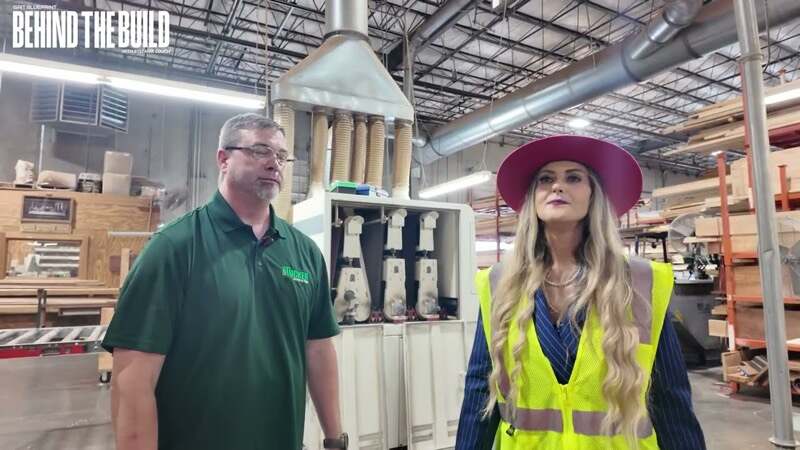
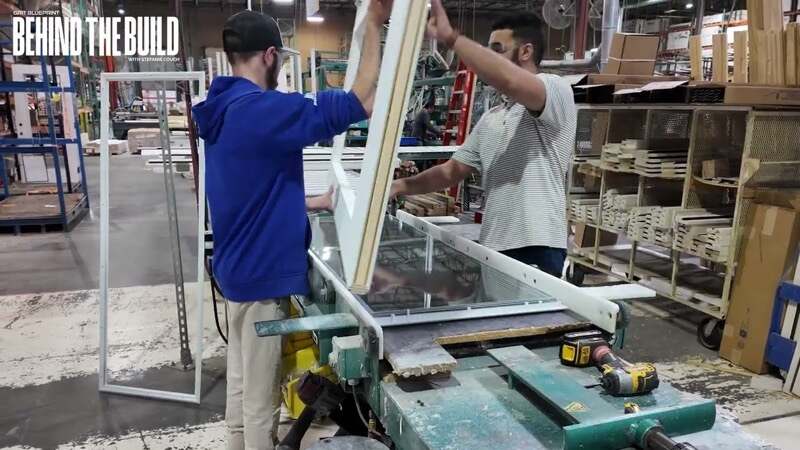
Watch: How Custom Luxury Windows And Doors Are Made: Behind The Build at Panda Windows & Doors in Las Vegas, a Behind The Build episode filmed at a window and door manufacturer.
What stays product-specific
Part names, part numbers, sizes, how far a sash opens, tilt and cleaning features, screens, ratings, lead times and warranty all depend on the manufacturer and the model. This page helps you ask the right question. For the answer, open the manufacturer’s current documents or call your rep.
When you do not know, say so. Marion Pulse’s advice to people starting out: “It’s okay to say, I don’t know, and I’ll find the answer for you.”
What to do next
Walk your showroom or yard and find one of each type in the table above. Open and close each one. Then see if you can point to every part on this list.
Checklist: can you point to each of these?
Answer each one before you move on. Any box you can’t tick is the step to go back to.
0 of 6 ticked
Ready to use it? Compare window types on the Windows page, measure with How to Measure Windows, check common sizes in Standard Window Sizes, sort out a foggy window with Fogged Window: New Glass, a New Sash, or a New Window?, and learn the glass words on the Window and Door Glass page.
Next on the newcomer path: Doors 101. How the Building Industry Works explains who makes, moves and sells these products. Read it if you have not yet.
Disclosure: Marion Pulse is now Client Success Director at Grit Blueprint, which publishes Grit Guide. Her words here come from her 2024 Grit Blueprint Podcast interview, recorded while she was at NFRC.