

How a 70 Year Old Millwork Shop Operates: Behind The Build at Magbee Contractors Supply
With Stewart Brandon and Bob Magbee · Magbee Contractors Supply
Get useful ideas, expert advice, and stories from across the building industry. Learn something new. Put it to work.
The doors, trim, and stair parts that finish a house, and how to order them right. Pick who you are and this page puts what you need first.
Lumber frames the house. Millwork finishes it. At most dealers, millwork means the doors, the mouldings and trim, and the stair parts. It also means anything a shop builds to order. Moulding and molding are the same word. You will see both on price lists.
The easy way to learn trim is by where it goes. Baseboard runs along the bottom of the wall. Casing goes around a door or window. Crown goes where the wall meets the ceiling. Trim is made of solid wood, finger-jointed wood (short pieces glued end to end), MDF (a board made from wood fibers), or PVC (a plastic). Paint or stain, and whether it will get wet, decide which one fits.
Most trim mistakes start with a name. Two pieces with the same nickname can have different curves and thickness. They can also stand off the wall by different amounts. The shape of the cut end is called the profile, and the profile is what you match. Bring a short cut-off piece or a tracing of the end, not a photo.
Pick who you are. The page puts what you need first and remembers your choice on every product page.
Start with how the room should look and whether the trim will be painted or stained. Then let your dealer turn that into a list of pieces.
Stand in a room and look from the floor up. Base shoe is the small strip against the floor. Baseboard runs along the bottom of the wall. Casing frames each door and window. Chair rail runs across the wall partway up. Crown sits where the wall meets the ceiling.
Paint grade trim is made to be painted, so joints in the material get covered. Stain grade trim shows the wood. So the species and the grain have to match the house. Finger-jointed and MDF trim are paint grade. Woodgrain, a trim maker, does not recommend MDF where it can get wet, because it can soak up water and swell.
MDF, Finger-Jointed, Solid Wood or PVC Trim: Where Does Each Fit?
Metrie, a moulding maker, suggests a simple crown of about 3 to 5-3/4 inches for an 8-foot ceiling. For a 9-foot ceiling, it suggests 3 to 7-1/2 inches. Those are one maker's ideas, not rules. A piece of crown looks big at the counter and small up on the ceiling. So ask to see a photo of it in a room.
Picking a base, a casing, and a crown that look right together is design work. Some suppliers now sell collections of doors and mouldings made to match. Magbee Contractors Supply in Winder, Georgia, makes one drawn by designer Lew Oliver.
we're coming up with some collections of doors and moldings that go together. To where you don't have to be an interior designer to figure out what works together.
Order every piece by its profile, its size, and its length. Write the waste allowance on the quote so nobody is guessing.
A good trim line names the profile drawing or number, the width and thickness, the material, primed or raw, and the lengths. Lay a cut-off or a tracing on the supplier's full-size drawing. Nicknames, catalog numbers, and photos change from supplier to supplier and state to state.
A linear foot is one foot of length, no matter how wide the piece is. A 12 by 10 foot room with one 3-foot doorway has 41 linear feet of wall to cover with baseboard. That is not yet the order. Trim comes in set lengths, and every corner needs a cut. So decide where joints fall and how much waste to allow.
PVC trim grows and shrinks with temperature. Versatex, a PVC trim maker, says it moves about 3/16 inch in an 18-foot length. Pull the fastening guide for the line you use.
MDF, Finger-Jointed, Solid Wood or PVC Trim: Where Does Each Fit?
A split column is made in halves and wrapped around a post. Ask the maker or your dealer what a column can hold up.
In this house we're seeing crown molding kind of dialed back a lot in this era, but the crown molding in this house has a little bit different profile and they were able to make that for us.
Find out what the price is for before you type a line. Then quote the whole package with every open item named.
A builder asks you to price 18 interior doors. Ask if it is a budget, a comparison, or an order ready to place. Ask what is picked out and what is still open. Read it back before you build the quote.
How to Sell Millwork: Learn the Job, Then Quote the Whole Package
Leave out anything that misses the budget, the timing, or the job. Tie each choice to what the customer said matters most. If you do not know an answer, find out and say when you will have it.
One room can carry more than the rest of the house. A dining room or a fireplace wall can take crown, panel moulding, or a built-up base. Those pieces earn more for the contractor and for you. Offer them on purpose, one room at a time, with a picture of the finished look.
Have a new person walk one room and name every piece of trim from the floor up. Then have them find the same pieces on the moulding rack by profile number. Name one person as your millwork specialist. Send every hard millwork question to them.
But with that being said, with great fear comes possibility of great margin.
Dealers sell millwork by profile, by the full package, and by the questions that complete an order. They need your drawings, your rules, and tools that do not let a step get missed.
Dealers are taught to match trim on the full-size drawing, not by a nickname or a photo. Woodgrain says it can mould standard profiles and any drawing a customer provides. Make your drawings and profile numbers easy to find.
Where a trim product may be used, how it is fastened, and how much it moves are in the maker's installation guide. One maker's MDF or PVC can have different rules from another's. Dealers are told to pull the guide for the line they sell.
MDF, Finger-Jointed, Solid Wood or PVC Trim: Where Does Each Fit?
Most builders and homeowners are not designers. Lew Oliver drew a set of mouldings that work together. Magbee Contractors Supply makes it in stain grade or paint grade. A collection gives a builder a path to a custom look without starting from scratch.
Terry Bailey of DW Distribution says a distributor can carry the stock so the dealer does not have to. DW also gives its dealers an online door configurator. It walks the user through each choice on a door order.
answering every question along the way, not allowing the user to miss a step
Short lessons in plain words, each one built from the people who make, sell, and install it.
Millwork is the doors, trim and stair parts that finish a house, and here is how to talk about it.
Lesson · 9 min read
The same casing profile can come in four materials. Paint or stain, and where it goes, decide which one.
Lesson · 7 min read
A trim package is every stick of moulding a house needs, matched by drawing and pulled for one job.
Lesson · 8 min read
A stair is a walking part, a structure and a railing system. Learn the names before anyone asks for “stair parts.”
Lesson · 8 min read
Every cabinet and closet panel is a face on a core. The customer picks the face. You need to know the core.
Lesson · 8 min read
Two boards, white or gray, clicked together and screwed to the wall. Here is what goes into a Trusscore room and what to ask before you quote one.
Lesson · 7 min read
Sell more by learning the job. Sell better by making the choices, the scope and the next step clear.
Lesson · 8 min read
Plant tours, interviews, and stories from the people who make and sell it.
What people say at the counter and on the job, in plain words.
Manufacturers in the Grit Guide directory whose own record says they make it. The ones on our shows come first.
 Arauco North America
 Alexandria Moulding
 Woodgrain
 AZEK Exteriors
 Boston Sash & Millwork
 Chadsworth Columns
 Chelsea Building Products
 Fitts Industries
 Fypon
 Garden State Lumber
 House of Fara
 Intex Millwork Solutions
 Ornamental Mouldings
 Parrett Windows & Doors
 Ply Gem
 Stewart Brannen Millworks
 Sun Mountain
Where it goes in a house, with the projects, lessons, and episodes for each room.
29 pieces
Homes where it was part of the story, told by the people who did the work.
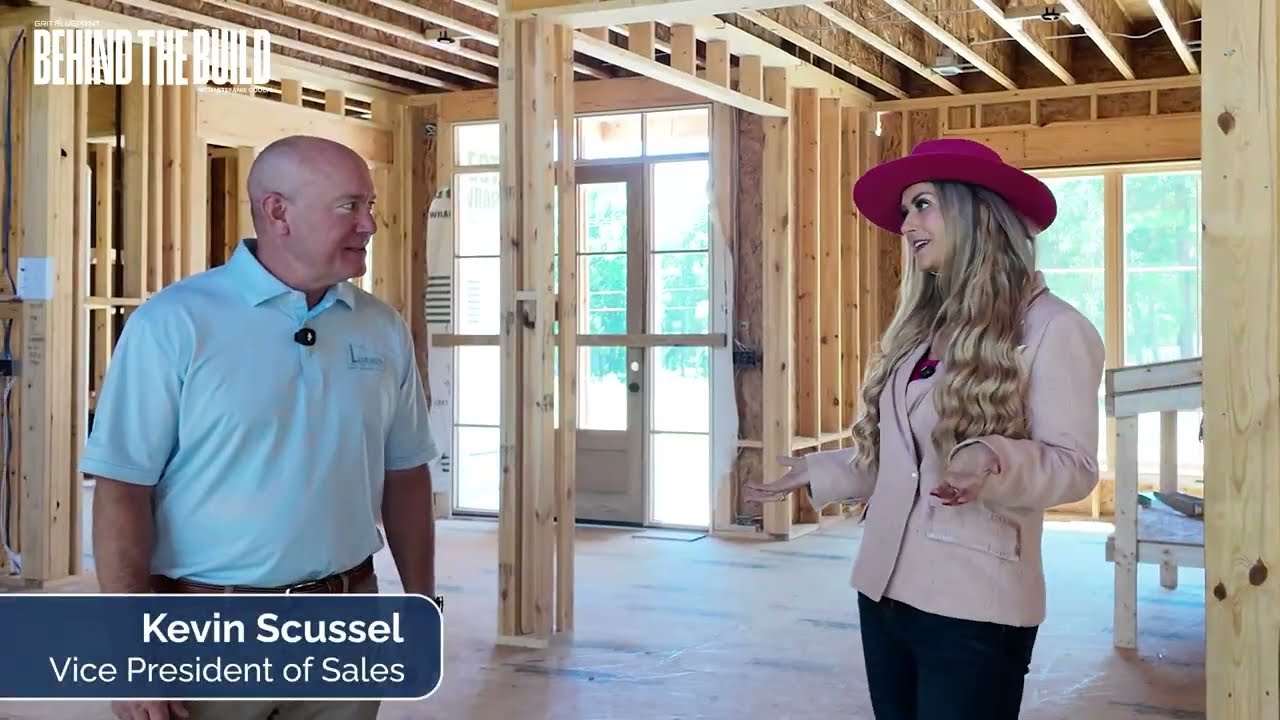
The door and the windows had to line up. Exactly.

The trim on the market was too small, so they drew their own.
Questions people ask about this that Grit Guide has not answered yet. They are on our list, with the people who know.
The people, companies and topics that come up most here on Grit Guide.
 Expert card Tap to open
Expert card Tap to open
Expert card Tap to open
Expert card Tap to open
People and companies mentioned above, each with a page on Grit Guide.