Click any timestamp to jump to that moment in the video.
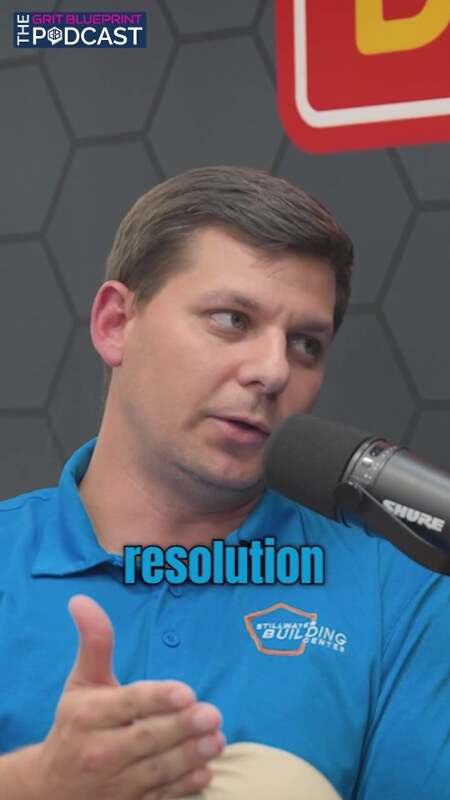
Meet Kale Gaden of Stillwater Building Center
0:00 Kale Gaden: Be comfortable being uncomfortable in every environment you're in and you will excel at whatever you're doing. I'm looking in any part of my life to be a high operating individual. It's just what I want to do.
0:10 Stefanie Couch: That's how I operate. Right. When I met you, I knew that.
0:13 Kale Gaden: You had us doing mock scenarios, which I thought was the most hands-on training that I was able to implement back to my team. I immediately took that from our interactions that we had and the conflict resolution that you developed in those problems. And I immediately took that home, and Hutson and I grew on that. Seven months out, Hutson doesn't come to me with confidence problems at this point. And so it's really awesome to see my guys gain independence from some of these trainings that Do it Best puts together. It's truly applicable to our reality.
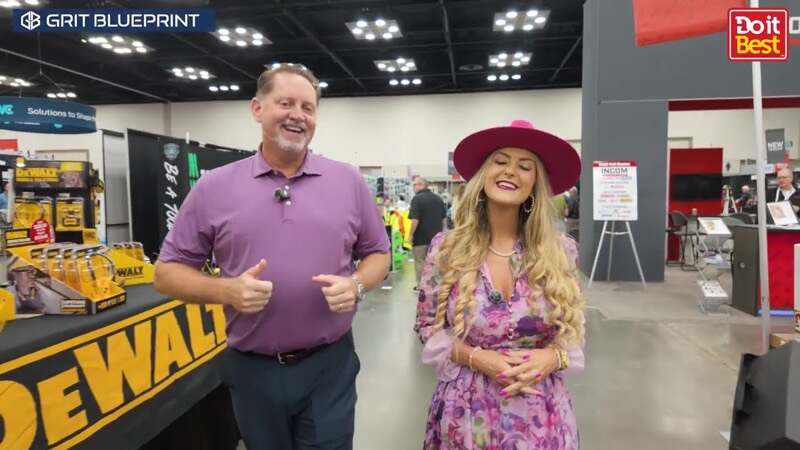
0:48 Stefanie Couch: Welcome to the Grit Blueprint Podcast. I'm your host, Stefanie Couch, and today I'm coming to you live in the action from the Do it Best market floor. And I'm here with my friend Kale. Welcome to the show, Kale.
0:58 Kale Gaden: Thanks, Stefanie. I'm really happy to be here.
1:00 Stefanie Couch: I'm pumped up because you're one of my favorite Do it Best members. We got to meet at the Do it Best millwork training that Grit Blueprint did with Do it Best in the Fort Wayne headquarters. You actually are with Stillwater Building, and I want you to tell me a little about who you are and tell me about the company that you work for.
1:18 Kale Gaden: Absolutely. I appreciate you inviting me on. My name is Kale. I work for Stillwater Building Center, and I'm the inside sales manager for this team. We are a single location outfit that we work really hard and we like to punch up. We are aggressive in this market. We're a team that looks for developing community leadership, building an industry. LBM has been extremely eye-opening for me given my background. I'm sure we can get into that a little bit. My parents were property managers in Stillwater. They had 500 units around campus.
1:57 Stefanie Couch: Wow.
1:57 Kale Gaden: I grew up going and cleaning out the slums and the rentals that all the college students were left over with, so.
2:03 Stefanie Couch: So you know a little bit about hard work, huh?
2:04 Kale Gaden: I've been in the grime. I've been in the stuff before, but I've also been in the home industry since I was a kid, since I was 12, 13 years old. Mom telling Jake and I, my older brother, to go clean that rental so we can get the next person in. I love that type situation. So we've been in this home process for a long time, and it's really awesome that, you know, I went out and did the things that I did with my life, got my degree, went to school, but tailored it all back into a home improvement, a building center type process, a residential construction type process. And it's been incredible so far.
Selling Building Materials in Stillwater, Oklahoma
2:41 Stefanie Couch: Tell me a little bit about what is it like in Stillwater, Oklahoma? I love Oklahoma, actually. I've spent a lot of time in Tulsa, but I know Stillwater because I've watched college softball my whole life. Grew up watching the World Series of college softball. Played softball, loved it. And that's where you guys are. You're right.
3:01 Kale Gaden: It's like the Mecca. We got a couple of, almost like, Hall of Fames. We got the Wrestling Hall of Fame in Stillwater. You know, you've got the softball team, which is doing really well. All sports are really, you know, golf is big in Stillwater. It's a wonderful community. We're in between the two major metros in Oklahoma. So we're an hour 10, hour and 15 from Tulsa and Oklahoma City. So we're located centrally between these two major hubs that are growing rapidly.
3:25 Stefanie Couch: And home of the Oklahoma State Cowboys.
3:28 Kale Gaden: That's right. That's right.
3:30 Stefanie Couch: I mean, you guys wear hats. I like hats. I feel like we're kind of kindred spirits a little bit.
3:34 Kale Gaden: Yep. I wish I would have brought my cowboy hat and my boots, but my boss, Paul, he said, hey, there's going to be a lot of walking, going around at my first market. So he said, wear something comfortable. And I've got my boots. I'll wear them tonight, but we'll do that at another time.
3:47 Stefanie Couch: I love it. Well, maybe if you come in March, we can do cowboys in Orlando.
3:52 Kale Gaden: Okay. Yeah, I'd be down for that.
3:54 Stefanie Couch: I love that.
3:55 Kale Gaden: That'd be fun in the summer.
3:55 Stefanie Couch: Tell me a little bit about the Stillwater Building customer base. Like, what are you guys doing? Who are you selling to? What products do you sell? All those things?
4:03 Kale Gaden: Yep. We're kind of a niche group. We've got kind of an older population in that area. Although we do have our young students. We have about 30 to 35,000 students that come into the campus, you know, every year. So it's very imbalanced. It seems like, you know, that it turns into a ghost town, essentially, when school's out. We lose 30 to 35,000 students and everybody's like, okay, we got three months to reacclimate.
4:32 Stefanie Couch: So May through like September?
4:34 Kale Gaden: Yeah, like May through. Yeah, September. Yep. And we lose a lot of students, and they'll leave, and it kind of pulls our heartstrings a little bit, and then we kind of come back to it. But it's a really, really fun community. We recently had a situation where we had some fires that burned several homes in our community. We lost 175 homes to...
4:58 Stefanie Couch: Wow.
4:58 Kale Gaden: A two-day fire. We have been working extremely hard. Every lumber yard or building center in this local area is looking to try to, you know, rebuild these homes for these communities. It's been kind of odd because of the 175-ish homes that were burned down, we're still only about 55 to 60% rebuilt. And it's been two years. So we've had some clients that have reinvested in the community. We've had some clients that have, you know, taken their check and they decided to make a change. So it's ever changing. You know, we've got a massive data center project that's going on the north side of campus, on the north side of Stillwater, that has really opened up our community's eyes to a corporate structure and how these big companies, you know, can come in here and change a community. Yeah, so it's been very interesting to see that process take place.
5:58 Stefanie Couch: Talk about opinionated things. Data centers, buddy, that's two words that'll get people fired up. It is tough whether you feel one way or the other. You know, I use AI a lot, but I still don't know that I would want a data center in my backyard. So it's kind of a catch-22 a little bit. Even if you believe in the technology, it's tough. There's a lot of things going on with that. So I mean, with your company, what type of clients do you have walking in every day? Who are you serving and what are you selling them?
6:27 Kale Gaden: Yeah, we've got kind of a grouping of all. We have some retail shoppers that come in. They'll buy the, you know, the Do it Best garden center stuff. They will come in and do some seeding and they'll plant some stuff. We've got some landscaping things on the retail side. But a lot of our customers, it's contractors a lot of the time. Our early birds are our contractors. We have retail customers that come in. We have end-use homeowners that come in and are wanting to do remodels. I mean, we have a plethora of it. We've got tract home teams that we operate with in the state of Oklahoma. We've got individual builders that are, you know, just one-offs. We also have some builders that are trying to gain some momentum in our community. And so it's fun. We try to sell them every single thing that we can. We want to get every single product in front of them that we can to make it a comprehensive experience for them in a one-stop situation. Yeah, we don't want them to have to bounce to four different stores to get their insulation and to get their paint and to get their hardware. We've got the lumber, we've got the engineered wood. We stock the I-joists, we stock... I mean, it's really fun diving into all those different areas and being able to come to a comprehensive plan set to take care of a customer.
From Data Center Job to Lumber Yard Estimator
7:51 Stefanie Couch: You just mentioned a lot of product categories, which, you know, I love all of those things and grew up selling them. You grew up in the home property management industry, but you obviously had to learn all those little technical details about those products, which I think is a really hard thing for a lot of people because there's so many things in this industry to learn. How did you learn that? When you started, what was your first job at Stillwater, and how did you learn all those technical details?
8:19 Kale Gaden: Great question, Stefanie. So when I first got my position at Stillwater Building Center, I had come from... So I'd worked at the data center for a little bit in Pryor, Oklahoma, under a mechanical contractor.
8:30 Stefanie Couch: Okay.
8:30 Kale Gaden: COVID hit in 2020. They extended my contract as an essential worker for an additional six months. So I got to work through August of 2021.
8:39 Stefanie Couch: Okay.
8:40 Kale Gaden: That shut down, that Pryor shut down the site. I moved back to Broken Arrow, Tulsa, or Broken Arrow, Oklahoma, and worked as a superintendent for a custom home builder for a year and a half. In the field, I was a superintendent. I did punch lists. I was dealing with contractors in the field. I was making sure my guys were pouring the slab correctly. So I was hands-on with the products then. I didn't know at all what I was looking at. I didn't have any understanding of it.
9:05 Stefanie Couch: Sure.
9:06 Kale Gaden: I saw a piece of wood and I was like, okay, that's a piece of wood. What's that got to do with it? So it was very eye-opening there. I worked there for a little over a year. My wife and I were trying to have children, and we got pregnant in 2021. I'm from Stillwater. I'm a very tight-knit person with that community, and I wanted to raise my children there. So I convinced my wife to move back to Stillwater and raise our family. I love that we did it without me finding a position. I had not solidified a position moving back to Stillwater yet. So it was a little eye-opening for us. We had a little bit of a nest egg working through that.
9:40 Stefanie Couch: What made you feel like you should take... I mean, it was a risk, but not that big of a risk. But it feels like you're a very passionate person. Like, you can meet you and just know that you just knew that was the right thing and you took the chance.
9:53 Kale Gaden: Yeah. It's similar to the statement I made before about my mom. I'm keeping her in the loop on my first market. And she said, "Kale, you're right where you're supposed to be. Okay? Just own that and just be okay with it." And it was really fun getting exposed to this industry in the field. We took that risk and we came home, and my little sister, she was looking on Indeed, and Stillwater Building Center was interviewing for an estimator's position. I said, okay, I've done this in the field. I've seen the products. Maybe I don't know everything about them yet, but how about we give this a shot? I think I could do this. And so I submitted my resume with all the good details on it. The mechanical group that I'd worked for, I was a superintendent for a year and a half for a custom home builder. This aligns, right? And so I go into the interview and I express my life to him and what I had done in my education and growing up. And he said, "Kale, this is something I think we can move on." So he offered me the position that day. I took the position that day. And I started two days after that.
11:02 Stefanie Couch: That's awesome.
11:03 Kale Gaden: I kept that position for three, almost four years. And it was just me. I was the only estimator that we had at the time. So they were hemorrhaging their takeoffs, their salesmen. For whatever reason, they had figured out how to do it themselves, and they were really extending themselves out a little too far.
11:22 Stefanie Couch: Yeah.
11:22 Kale Gaden: They weren't able to service their customers the way they wanted to. And I decided that I wanted to be that stopgap. I wanted to be the one that said, okay, nope, you guys need to do your part, and I'm going to do this for you so you guys can go out and succeed for all of our business. So that was really fun. I was in that position for three years, three and a half years. That's where I learned to understand how the details work and how important the details are in anything we do. So it taught me all the different product categories that I had previously brought up to you. I had to kind of get forged in fire and learn everything about it so that I could provide the best service to my customers, whether it was the retail customer that was coming in, the homeowner that wanted the remodel and the new exterior door and windows, or whether it was the new builder that is trying to break into our market and figure out how we build frame packs. You start realizing that you're kind of connected to everyone.
12:18 Stefanie Couch: Yeah. And you also have that customer you mentioned of the outside salesperson as well. You're serving, you know, your internal customer in that estimating role. So you're trying to make a lot of people happy. A lot of timelines. You mentioned 2021. I can't imagine a harder time to start in this business. So if you can make it then... It was the busiest time ever. Things were shut down. It was a little different in Oklahoma, maybe, than in other places. Y'all are maybe a little bit...
12:44 Kale Gaden: More lenient, isolated market, it seems like. That's what I continue to hear for the last five years I've been with this company. Oklahoma is slightly insulated, it seems like. Yeah. And we're really trying hard to grow that.
12:55 Stefanie Couch: It's really interesting, though, that time. I think you were baptized by the fire a little bit. And I'm sure you're a stronger inside sales manager now. And you're also over procurement as well. Procurement during that time was really tough as well.
13:09 Kale Gaden: Yes.
13:09 Stefanie Couch: It's been a hard few years. So if you can make it now, you can make it anytime.
13:13 Kale Gaden: OSB at $35, $40 a sheet at times.
What College Baseball Taught Him About Leading a Team
13:16 Stefanie Couch: Oh, wow. Your background, you talked about entrepreneurial parents. You also were a competitive athlete, which I think definitely teaches you some things, having to do those types of activities to be able to be a competitive athlete. Tell me a little about what sport did you play? Where did you play? And how did that get you ready or help you become a better leader now in your job as an inside sales manager?
13:39 Kale Gaden: Yeah. Yeah. So when I was a kid, I considered myself an athlete. I loved playing anything that had to do with a baseball or any types of balls. My brother was big into football. He got hurt. My mom kind of redirected me when I was 12 or 13, and we really sunk our teeth into baseball, and we got really competitive in travel ball, did all those different things. It was also another forged in fire type situation because my mother decided, okay, if we're going to do this, we're really going to do it.
14:07 Stefanie Couch: Yeah.
14:07 Kale Gaden: So she pushed and pushed and pushed to put me in the best positions with the best players with the best tryouts to... Okay, can you do this?
14:16 Stefanie Couch: What's your mom's name?
14:17 Kale Gaden: Her name's Tami.
14:17 Stefanie Couch: Tami. Tami raised a good one, but I think I would like Tami. Tami feels like my type of lady.
14:23 Kale Gaden: Tami's awesome. Tami's a good one. She pushed me a long time. Actually, I'll give you a little insight. My parents got divorced when I was five. That was hard. We moved to Stillwater when I was five. My brother was two years older than me, and it was just my mom and Jake and I. Yeah. And so she had to be both. And she was just so strong in her ability and her capabilities. And I learned from those things as rapidly as possible. And I am so happy that my mother was able to instill those things in me because I use it every day today. I mean, just how we had talked earlier. "You're Kale. Stay the course." That's... Oh, my God. That's what gets me. It's just... Wow. That got me a little bit.
15:12 Stefanie Couch: Hey, every time I talk about my parents, I do the same thing.
15:15 Kale Gaden: Oh, man. Yeah. But no, she pushed me to stay uncomfortable. Always be comfortable being uncomfortable in every environment you're in, and you will excel at whatever you're doing. And I think that's how you can kind of see that bit of passion that I have. That's what lights me up. That's what gets me going. That's what keeps my engine running.
15:34 Stefanie Couch: Tell me about baseball. What position did you play?
15:37 Kale Gaden: Yeah, I like to consider myself a utility player.
15:41 Stefanie Couch: Okay.
15:41 Kale Gaden: I want to, first and foremost, tell everyone that I was a hitter. I was a hitter first. I loved hitting. Obviously, defense was important, but I didn't really mind where I played on the field as long as I had a stick in my hand and I got to hit the ball.
15:53 Stefanie Couch: Yeah, me too.
15:54 Kale Gaden: That was the biggest thing for me. I want the contact.
15:56 Stefanie Couch: What's your pitch? What was your, like, pitch that you love?
15:58 Kale Gaden: Low and inside fast.
15:59 Stefanie Couch: I liked a high... I loved it. High and fast.
16:04 Kale Gaden: Well, and so how that correlates for me and why I'm low and in is I threw right-handed, but I hit left-handed. I naturally hit left-handed. So my bottom hand was very strong to get to low pitches. So anybody that tried to come hard in on me? Nope. I'm taking it. I'm taking it. And I mean, I had 35 career home runs in college.
16:26 Stefanie Couch: Wow, that's awesome. And you played for Oklahoma?
16:29 Kale Gaden: Well, not Oklahoma State. I played against a competitor.
16:31 Stefanie Couch: Okay.
16:32 Kale Gaden: So I graduated from Stillwater High School.
16:35 Stefanie Couch: Okay.
16:36 Kale Gaden: I was actually ranked, in 2009, and you can look this up on Perfect Game. You can check me on this. I was the number one position player coming out of Oklahoma in '09.
16:45 Stefanie Couch: That's amazing.
16:47 Kale Gaden: I lived by that. I lived and breathed baseball. Obviously, education was very important, but I told Ben, I'm looking in any part of my life to be a high operating individual. It's just what I want to do.
16:59 Stefanie Couch: That's how I operate. Right. When I met you, I knew that.
17:02 Kale Gaden: And so baseball was a driver for me to make that happen. So I got opportunities to get scholarships. I had dinners with national cross-checkers in my home that were talking about trying to draft me. Didn't end up getting drafted because of my education. My grandfather graduated from OU, and he put education at the forefront. So I decided that I put a number, a price on my education, and that priced me out. So I went to college. Yeah, I started off at University of Missouri in Columbia.
17:35 Stefanie Couch: Okay.
17:35 Kale Gaden: Started with a scholarship there, played there for a year, started 22 games for them. And the coach and I didn't seem to get... We were kind of butting heads a little bit. We had 19 freshmen that came in that year. And I had won the DH and left field position. Even though I told you as a catcher, I could run pretty fast too. So I was like, I told you I was a utility guy. I didn't care where I was on the field. I wanted to hit. And so I had solidified that at Mizzou and played that year. The coach decided to leave, and so I got my waiver to transfer out. Went to Seminole State back in Oklahoma, a big Division 1 juco powerhouse. Played there for a year. Got my associate's degree and decided I wanted to finish out at a private school at Oklahoma City University under Denney Crabaugh and Keith Lytle.
18:25 Stefanie Couch: Awesome.
18:26 Kale Gaden: And they were incredible human beings that helped grow me into the person I am today. They helped mature me into the man I am today. And so I have to shout out to them too. Let's go, OCU Stars.
18:38 Stefanie Couch: Love it. What lesson do you think you use the most from baseball in your day-to-day as a leader at Stillwater Building?
18:45 Kale Gaden: Yeah, I relate that to when I was a catcher. So when I got on the field, I saw every position. I knew where everybody was. I felt as though I was the general and I could operate and move people where I needed them to be while analyzing a hitter sitting right here, saying, okay, what's this guy gonna do right here? Okay, you're shifting, you're moving. I'm putting my guys where they need to be.
19:07 Stefanie Couch: Yeah.
19:08 Kale Gaden: So I've tried to take that, even though as an estimator I wasn't managing anyone. As an estimator, I had my own protocols and my own things and my own schedule to do. Now I have others under me, and I'm kind of rediscovering what I was utilizing as a leader on the field and how to guide my team members to pull the most potential out of themselves. I've learned that I can't do everything. We can't do everything. I have to be able to let something go and let someone grow into that position. So I've really tried to maintain that and show my guys that. Look, the way I'm going to teach you is the way I'm going to teach you. But I'm not saying that's the way you have to do it. You're going to find your way that makes it most effective for you. I just want you to reach your potential. And if that's what we can do and we're going to continue to grow our team, then what else can we ask for at that point?
How His Inside Sales and Millwork Team Is Built
20:06 Stefanie Couch: Tell me a little bit about your team today. How many team members do you have on your team? Who are you leading?
20:11 Kale Gaden: Okay, I've got four team members right now. So I'm the inside sales manager. I've got two full-time estimators that do the LBM side but can also do the millwork side. So they're kind of full-encompassing estimators for me. If a customer walks in and they want an exterior door and two windows, they're going to quote that. If you've got a set of plans that's going to come in, we're going to talk about the questions about your plan set, and we're going to quote that plan set, including the doors and the windows and the paint and the Sheetrock and the trim and the profiles, every single thing to make it an easy, comprehensive customer experience. So I've got those full-time estimators. I've got two millwork specialists that specifically deal with doors and windows, which one of the two came out of your class. And he is excelling so well, Stefanie. He has taken your Grit Blueprint... You know, we haven't delineated it out to anybody, but we use that on a daily basis on how to integrate ourselves with our customers, ask the appropriate questions to provide them the products that they're looking for.
Using BAMFAM and a Question Checklist at the Sales Counter
21:12 Stefanie Couch: What are some of the things you guys are using? I'm just super curious.
21:15 Kale Gaden: Yeah, yeah, we've used your standard table that you've kind of set out, and we kind of funnel through that. We look at it. Yeah, we look at the checklist of questions that you kind of implemented for us, and we look at that almost daily. We make sure to double-check that. Okay, are we turning this stone every direction to make sure that we're providing the best product to that customer in that specific need?
21:41 Stefanie Couch: So what about BAMFAM? You loved BAMFAM when we talked about BAMFAM.
21:45 Kale Gaden: So much fun.
21:47 Stefanie Couch: Book a meeting from a meeting.
21:48 Kale Gaden: That's right. Book a meeting from a meeting. I know we talked about that. What was the...
21:53 Stefanie Couch: Before you leave the counter, or before somebody leaves, you figure out how you're going to follow up with them next.
21:58 Kale Gaden: That's right. That's right.
21:59 Stefanie Couch: Yep.
22:00 Kale Gaden: We utilize that as much as possible. That's the way we segue into the next step of getting them to come back in, place a deposit, get comfortable, getting the approval. If you don't ask, you're going to get a... It's a no if you don't ask.
22:14 Stefanie Couch: Yeah.
22:15 Kale Gaden: And I think you kind of drove that home. Hey, can we set up the next meeting? You've come in, you're looking for a product, you have a need that we can fill. We've given you some product knowledge. We've given you a quote. When are you ready to come back in? And let's talk about this for real. Let's get this started.
22:29 Stefanie Couch: Yeah.
22:29 Kale Gaden: Type situation.
What the Do it Best LBM Millwork Academy Changed for His Team
22:30 Stefanie Couch: So let's talk a little bit about, just generally... Tell me about the millwork training with Do it Best, and like, you guys coming up, and what that experience was like for y'all. You know, why did you sign up for it to begin with, and like, what actually did you learn from it?
22:44 Kale Gaden: Now, from what I remember, I believe that was our first training that was implemented to Do it Best. First one. It didn't seem like it was the first training, Stefanie. So as much as you can commend me for feeling like I've done a good job in this podcast, you did an incredible job setting up that class.
22:58 Stefanie Couch: Thank you.
23:00 Kale Gaden: Hutson and I both... Hutson Gamble is my other contributing member that came to your millwork training, and it was incredible. We went through the basics and we went through the advanced scenarios. You had us doing mock scenarios, which I thought was the most hands-on training that I was able to implement back to my team. I immediately took that from our interactions that we had in those courses and the conflict resolution that you developed in those problems and those questions, and I immediately took that home, and Hutson and I grew on that. Today, it was, you know, February, March, April, May, June, July, August, September. We're, you know, seven months out. Hutson doesn't come to me with confidence problems at this point. Every question gets answered. I don't have to... I mean, yes, I'm going to review it, but I'm confident that he's got it figured out. And so it's really awesome to see my guys gain independence from some of these trainings that Do it Best puts together, because it is truly applicable to our reality, because we took that, we implemented it, and all the way down to the business-to-consumer sale process. I have an inside member that is gaining confidence daily from the resources that you provided to us.
24:15 Stefanie Couch: Thank you.
24:15 Kale Gaden: So that's incredible.
24:16 Stefanie Couch: Well, you guys were a great kickoff class. We got another one coming in January, and it's gonna be hard to top that first one.
24:22 Kale Gaden: Yep. I've got two guys to send.
24:25 Stefanie Couch: Okay.
24:25 Kale Gaden: So I need you to whip them into shape.
24:27 Stefanie Couch: We will get it done, I promise you. Marion from my team does a great job with that, and she's stealth with the windows, knows all about all of those products.
24:37 Kale Gaden: Oh, she did incredible.
24:38 Stefanie Couch: She's my fave. So you got... I know you guys hit it off with her.
24:41 Kale Gaden: Well, you hit it off by getting her. I mean, it's incredible, the knowledge that she had that she was able to just extract and provide to us. It was vital. It was vital. I didn't have another function.
24:53 Stefanie Couch: It's fun too, you know. You might think windows and doors are boring, but they're not.
24:59 Kale Gaden: They're not boring to me. No, Stefanie, I love it.
25:01 Stefanie Couch: Well, we love it. We're window and door nerds, though. We'll talk about this stuff all day.
First Do it Best Fall Market: What the Co-op Gives an Independent Dealer
25:06 Kale Gaden: Yeah.
25:06 Stefanie Couch: Well, this is your first Do it Best market, so I want to talk a little bit about... I remember my first. Have you ever done anything like this? Like any hardware shows? Okay, so I got to go when I was a little girl. This was my childhood, was this. And I loved it. And I've loved it since I was a little girl. I still try to see how much free candy I can get, because I eat a lot of candy, more than an adult should probably.
25:29 Kale Gaden: But you give it out well, too.
25:30 Stefanie Couch: I love to give away free pink candy as well. But tell me a little bit about your experience so far at this market. What have you seen that you're like, holy cow, this is cool? What's been unexpected for you that you've seen? Just tell me everything.
25:43 Kale Gaden: Well, we're constantly fighting with these big box retailers. This isn't big box retailer. No, this is personalized. This is individualized, down to an independent yard or an independent hardware store. Being able to utilize this co-op in a way that has been incredible. It has grown Stillwater Building Center's footprint immensely, being able to utilize Do it Best. I've learned so much just in the two and a half days I've been here.
26:19 Stefanie Couch: Yeah.
26:20 Kale Gaden: About how there are so many resources at my fingertips. I mean, they are one email, one click, one phone call away, not including all the relationships that I've built over these last couple days. So it's been very eye-opening. I love Indianapolis. This is the first time I've been here.
26:38 Stefanie Couch: Yeah.
26:38 Kale Gaden: I know we've got a lot of construction going on, but everybody's flexible. Everybody's working through the process with it and is doing the best they can with what they got. And I think Do it Best, for me, the media production that they've put together...
26:52 Stefanie Couch: Yeah.
26:53 Kale Gaden: Has been incredible. Just the branding, the Sagamore Ballroom, the way you guys have set that up and process through that, all of the groups that are leading these, you know, learning knowledge centers and putting us in the best position to succeed. It just gets me outside of my comfort zone and makes me learn, learn, learn. It's just continuing to keep it in front of me.
27:17 Stefanie Couch: Yeah.
27:17 Kale Gaden: So I think it's incredible. I've had a great time.
Estimate Turnaround: Seven Days vs. the 10 to 14 Day Average
27:21 Stefanie Couch: You went to some sessions yesterday at the Knowledge Central. What did you get? What all did you attend yesterday?
27:26 Kale Gaden: Let's see. Let me make sure, 'cause I've been to a few. Let's double-check. Obviously I did the Simpson Strong-Tie estimating integration, the LBMs. That was just before our podcast today. That was very intriguing for me because...
27:37 Stefanie Couch: They were talking about their new software that they have.
27:39 Kale Gaden: They're talking about their new LBM estimating takeoff software...
27:43 Stefanie Couch: Okay.
27:43 Kale Gaden: Where you can utilize their team as an outsourced third-party estimating process to give you a bill of material. Their turnaround times are two days for projects 8,000 square foot or less. Wow, that's incredible. Nobody gets an estimate...
27:57 Stefanie Couch: What is the normal time you're seeing?
27:59 Kale Gaden: Okay, so we're gonna get into the fun stuff here. My team, and we learned this at the millwork training...
28:05 Stefanie Couch: Okay.
28:05 Kale Gaden: That my team tends to do a very good job on our turnaround times.
28:10 Stefanie Couch: Yeah.
28:11 Kale Gaden: We really push hard to maintain the one-week lead time.
28:14 Stefanie Couch: So they're doing it in two days.
28:15 Kale Gaden: They're doing it in two days. But they are obviously AI integrating with their LBM software.
28:19 Stefanie Couch: Yep.
28:20 Kale Gaden: That's the direction we're all going. So if I can follow suit. But yeah, I mean, the industry average that I've heard is 10 to 14 days. But we are pushing seven. Yeah, I am pushing seven. If you give me it on Monday, I'm getting it to you the next Monday.
28:36 Stefanie Couch: Wow, that's great.
28:38 Kale Gaden: And it doesn't matter if you have engineering involved. We're pushing the limits. The moment we get it from you, we're going to ask the hard questions and we're going to go out and get the details. We're going to get you the best package available to you.
28:48 Stefanie Couch: I know you're getting a lot of orders because of that, because those builders are getting more leads and more things to close because of that quick turnaround as well. So they're pushing that through, and they're winning more business because of it as well.
29:00 Kale Gaden: We're also starting to stock some of those special order items that builders typically would believe are special order. And we're telling them, nope, nope, readjust your thinking. That's two to three days. We've got it ready for you. That's two to three days. So we're constantly trying to nudge them in the right direction and say, hey, here's what suppliers are doing. Here's how we can create that competitive advantage for you, Mr. Builder, in your market.
29:24 Stefanie Couch: Wow. So, all right, what other sessions have you seen that you like?
29:28 Kale Gaden: Well, we went to your AI optimization class, which you hit on today as well. I've actually listened to both of your courses on AI and how it's supposed to integrate and how we need to continue to push the limits on that. So that's been wonderful.
How a Lumber Yard Runs an AI Implementation Team
29:41 Stefanie Couch: Let's talk a little bit about AI, because it's a hot topic, but I do think a lot of people are not really utilizing it very much in their business. They're maybe doing it a little more personally. But you guys actually have an AI implementation team at Stillwater Building Center. So tell me about that. What do they do? How did that start?
29:57 Kale Gaden: Yeah. So Paul, our president, our owner, he pushed this process on us a little bit and said, guys, we're moving into the new age. We have got to be at the forefront of this, and if we're gonna implement this appropriately, we've got to start communicating internally about it. So we decided to push an AI integration meeting team. It's with several of our managing groups. We discuss anything and everything. Just like you get your news updates, your hourly or daily news updates, we're trying to do the same. We're more on a biweekly basis with it. Okay, so we will sit down with our team members and we'll go over: what have you guys seen in the space? What's important to you? What's intriguing to you? What is a pitfall that you feel like you're seeing? How do we prompt appropriately to make sure that we're not divulging important information that's proprietary, but also extracting the best information that we can out of the system? So that has been an ebb and flow. It's been a constant conversation that we've been having internally.
31:01 Stefanie Couch: And it changes so frequently. AI is seriously changing every single morning when I wake up.
31:07 Kale Gaden: Yeah.
31:08 Stefanie Couch: It is a full-time job to even just keep up with that part of it. And you have other full-time jobs. You actually have two full-time jobs, but you are doing so much. It's what is important and what is noise. And so I think that's important to help your teams understand that. And also, how does this affect us to where we can actually gain something from it and not just create more? You can create AI busy work for yourself. Just like normal busy work happens, there is AI busy work, I think. So it's segmenting what matters and what doesn't. What have you found that actually matters and moves the needle in your business with AI?
31:42 Kale Gaden: The full-scale software implementation. That is what I see as the biggest mover for us. Obviously, as humans, we have to find a way to integrate ourselves into that because of how fast-paced it is. But actually being able to implement and utilize the software correctly has been one of the biggest drivers for us. Making sure that we're prompting it correctly and that we're using the right resources at our fingertips. Like, we utilize Gemini. I know you've used ChatGPT. There's a couple other ones. Anthropic. They're so fast-paced and they're all changing so rapidly that it is hard to keep up. But it doesn't shy us away from that. It continues to keep me in that mindset of staying uncomfortable. We have to just soldier forward. We have to push on.
32:32 Stefanie Couch: Yeah. And we gotta try some things and know that they're not gonna work. And you gotta figure out what actually matters in your business, and then figure out how to either reduce friction or make more money from that AI tool. Not just, hey, we implemented some new cool thing. There's a lot of shiny objects. It's hard not to chase them. But we got to figure out what matters. So I love that. I have one last question. What excites Kale the most about the next 12 months? So you got a lot of cool stuff going. I know Stillwater Building Center has a lot of cool stuff going. What are those things that are firing you up right now?
Hiring a Coordinator to Support Five Outside Salespeople
33:04 Kale Gaden: In my isolated, personalized position right now, the thing that gets me most excited is rounding and balancing out my inside sales team, my support team for the five outside salesmen that we have currently.
33:19 Stefanie Couch: Okay.
33:20 Kale Gaden: Which means developing a coordinator that can tandem with me and our estimating team and our salesmen and our dispatch team and our entire operations team. So this person is going to have to be very similar to me. I think we're going to have to be able to be very flexible with our processing. But we can't ever shy away from it. We have to dive deeper into it. That's at least what I've learned taking on the inside sales manager role. I am basically the coordinator now.
33:56 Stefanie Couch: Okay.
33:56 Kale Gaden: So I'm doing all of the correspondence, and we're creating these systems that allow our salesmen to implement their requests a lot easier. So we're using a system called Clerks right now. Okay, so Clerks is that texting process where you have a sales number. Our salesmen in the field, they can just submit that right to us. If I had a coordinator in place right now, today, that coordinator could schedule that minutes after he submits his request to us. Yeah, it's a streamlined way of implementing from inside to operations, invoicing and dispatching the product out. So that's what fires me up. That's what the next six, eight, 12 months of my time is going to be spent on: finding someone that's capable of dealing with multiple different personalities within a business, growing that relationship, and implementing that to show long-term success for the growth that Stillwater Building Center is currently experiencing. Because we're going to do this again every year, year over year. We're not going to slow down. So we have to maintain that growth internally. So what fires me up is finding that person that wants to just take over the world as far as scheduling things, coordinating things, getting these products that we're selling and pricing to people to the end user.
35:20 Stefanie Couch: Well, you have a great passion for this business, and I think anyone that could be on your team would be excited to work with you every day. So I hope you find somebody great. If I lived in Oklahoma, I might apply.
35:31 Kale Gaden: Thank you so much, Stefanie. I really appreciate it.
35:34 Stefanie Couch: Well, thank you so much for coming on this episode of the Grit Blueprint Podcast. And you know, I adore you. I think you're amazing and you're doing great things. Marion and I absolutely love working with you and Hutson at the training, and we can't wait to meet your next people. It'll be hard to top you guys, but maybe we can do it.
35:49 Kale Gaden: We're gonna do our best. All right, send Julio. And I'm looking for Julio to top Hutson and I.
35:53 Stefanie Couch: Well, we love... I'm an Atlanta Falcons fan, so Julio Jones was one of my favorite. There you go, Julio.
35:59 Kale Gaden: And the other one, the secondary one with Julio, his name's Garrett, and he is a diehard Falcons fan. I love that, he's diehard.
36:06 Stefanie Couch: We'll have to meet him in Fort Wayne in January. If you are interested, actually, in sending someone from your team or attending, this is going to be a millwork, window and door training, sales training that will be happening in Fort Wayne at the headquarters of Do it Best. And Kale and his team did attend it. And we're going to be doing version two of this in January, so come and see us in Fort Wayne. But thank you for being on this episode of Grit Blueprint. And Tami, we love you. Thank you for making such a great son.
36:35 Kale Gaden: Love you, Mom.
36:36 Stefanie Couch: Shout out to Mom. We love you, Mom, and you are exceptional. So keep doing what you do.
36:42 Kale Gaden: Keep being the best. I sincerely appreciate you inviting me on. Thank you. And I'm really excited to see what Grit Blueprint does moving forward. Thank you.
36:50 Stefanie Couch: Well, we are too. So we'll see you on the next episode of the Grit Blueprint. Thank you for listening to the Grit Blueprint Podcast. If this episode helped you think a little differently about how to show up, share it with someone in your building world who needs it. If you're ready to turn visibility into growth, then head to gritblueprint.com to learn more and book a call to talk to us about your growth strategy. Until next time, stay unmistakable.