Millwork 101: Trim, Stair Parts and What a Door Shop Does
Millwork is the doors, trim and stair parts that finish a house, and here is how to talk about it.



In this lesson8 sections
- Mouldings and trim, by where they go
- Stair parts
- Stock, special order and custom
- What a door shop or millwork shop does
- How millwork is measured and sold
- What to ask a customer
- What stays product-specific
- What to do next
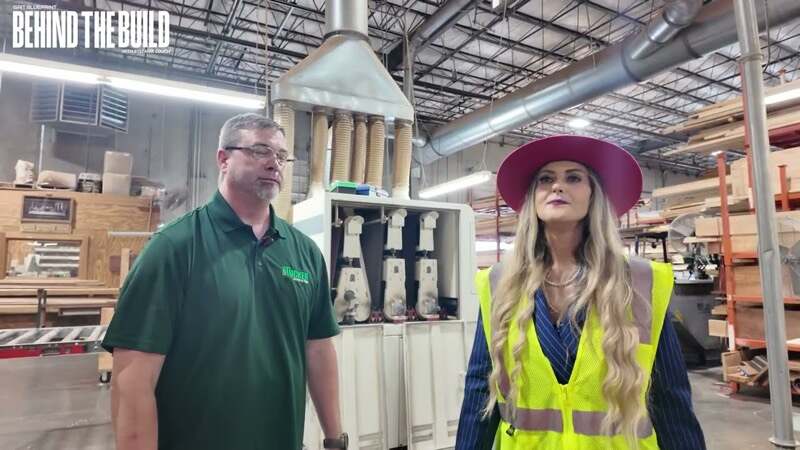
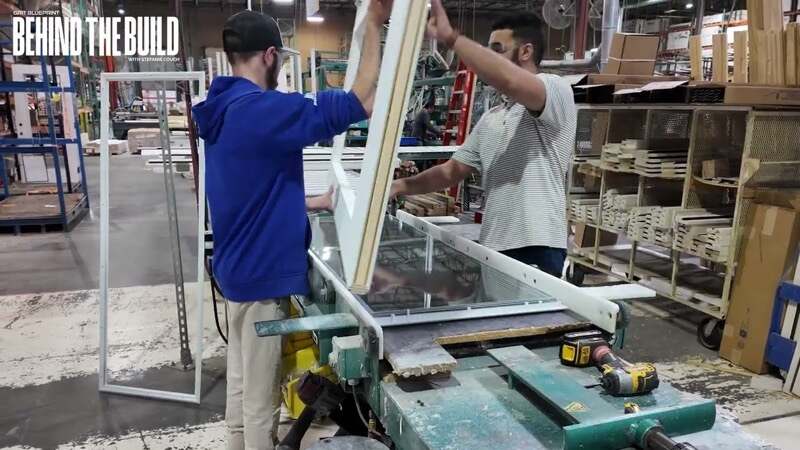
From the episodeHow a 70 Year Old Millwork Shop Operates: Behind The Build at Magbee Contractors Supply

Millwork is the doors, trim and stair parts that finish a house, and here is how to talk about it.
Lumber frames the house. Millwork finishes it. At most dealers, “millwork” means the doors, the mouldings and trim, the stair parts and anything a shop builds to order. Some companies count windows, cabinets or wall paneling as millwork too. In your first week, ask what your company means by it.
This page covers the trim, the stair parts and the shop. Doors have their own page: Doors 101. A note on spelling: “moulding” and “molding” are the same word, and you will see both on price lists.
Mouldings and trim, by where they go
The easy way to learn trim is by location. Stand in a room and look for each one.
| Name | Where it goes | Also called |
|---|---|---|
| Baseboard | Along the bottom of the wall, where the wall meets the floor | Base, base moulding |
| Base shoe | A small strip at the bottom of the baseboard, against the floor | Shoe, shoe moulding |
| Casing | Around a door or window, covering the gap between the frame and the wall | Door trim, window trim |
| Plinth block | A block at the bottom of a door casing, where the casing meets the baseboard | Plinth |
| Chair rail | Across the wall, partway up | Chair rail moulding |
| Panel moulding | On the face of the wall, making frames or boxes | Wall frames |
| Crown | Where the wall meets the ceiling | Crown moulding |
| Brickmould | Around the outside of an exterior door or window frame | Exterior casing |
| Jamb extension | Added to a window or door frame to make it as deep as the wall | Extension jamb |
General trade names. Regional names differ.
Word to know
The whole glossary- Profile
- The shape of a piece of moulding when you look at its cut end. Two casings can be the same width and have different profiles.
Never match trim from a name or a photo. Two pieces can share a nickname and still differ. They can differ in their curves, their thickness and how far they stand off the wall. To match what is in a house, ask for a short cut-off piece, or a tracing of the end with measurements.
What the trim is made of
- Solid wood: one piece of wood, named by species, such as poplar, oak or maple.
- Finger-jointed: short pieces of wood joined end to end with a zigzag joint to make long lengths.
- MDF: medium-density fiberboard, a product made from wood fibers and formed into trim.
- Primed: coated with primer at the factory. It still has to be painted.
Word to know
The whole glossary- Paint grade and stain grade
- Paint grade trim is meant to be painted, so joints and color differences in the material get covered. Stain grade trim will show through a clear or stained finish, so species, grain and color matter.
Settle paint or stain before you quote, because it changes which material you offer. Where a material can be used, indoors or outdoors, comes from the supplier’s documents.
Stair parts
- Tread: the flat part you step on.
- Riser: the upright board between two treads.
- Nosing: the front edge of a tread.
- Stringer: the sloped board that supports the treads and risers.
- Landing: a flat platform at the top, at the bottom or between two runs of stairs.
- Handrail: the rail you hold.
- Guard: the barrier along an open edge that keeps people from falling.
- Baluster: one of the upright pieces under a rail. Many customers say spindle.
- Newel: the larger post that a rail ties into.
Stair sizes, rail heights and the spacing between balusters are set by the building code where the house is. The plans, the builder and the local code official decide those. Do not quote stair parts from a customer’s guess at a number.
Stock, special order and custom
- Stock: what your company keeps on the shelf or in the yard.
- Special order: a catalog item your company does not stock and orders from a supplier for one job.
- Custom: made to a drawing or a sample, by your shop or an outside one.
Stock is usually the quickest to get. Special order and custom take longer, and custom work needs an approved drawing before the shop starts. One is not better than the other. It depends on what the job needs. Before you place a special or custom order, do two things. Learn your company’s rules on deposits and returns. Get the customer’s approval in writing.
Watch: How a 70 Year Old Millwork Shop Operates: Behind The Build at Magbee Contractors Supply.
Two pairs of words come up in that episode. Here is what they mean in general use.
- True divided lite and simulated divided lite: a true divided lite door or window has separate small panes of glass, each held between bars. A simulated divided lite has one larger piece of glass with bars applied to its surface so it looks divided.
- Direct set and sash set: on a transom (the glass above a door) or a fixed window, direct set means the glass is set straight into the frame. Sash set means the glass is set into a sash, the framework that holds glass, and the sash is set into the frame.
What a door shop or millwork shop does
A shop turns parts into finished product. These are the words you will hear.
- Prehanging: hanging a door slab on hinges in a frame so it ships as one unit.
- Machining: cutting a door or frame for its hardware, such as the hinge pockets and the holes for the lock.
- Running moulding: shaping boards into a profile on a machine called a moulder. The shaped cutters are called knives, and a custom profile can need a custom knife.
- Finishing: priming, painting or staining in the shop before the product goes to the job.
Shops differ. Some only prehang doors. Some run mouldings. Some build custom doors. Ask what your shop does in house and what it sends out. Magbee hangs all of its interior, exterior and custom door units in its own shop. Its website says the Winder shop assembles more than 500 doors a day. A distributor’s shop does the same kind of work one step earlier in the chain. Michael Tull explains this in The Real Reason Customers Buy Again.
Every job in a shop runs on a written order. If the hardware, the handing or a size changes after the order goes to the shop, tell the shop right away and change the order itself. A change that lives only in a text message is how the wrong door gets built.
How millwork is measured and sold
Word to know
The whole glossary- Linear foot
- One foot of length, no matter how wide or thick the piece is. Also written lineal foot. Ten 8-foot pieces are 80 linear feet.
Moulding is measured by length. Do not confuse a linear foot with a board foot, which measures volume and is used for lumber, or a square foot, which measures area. Trim is quoted by the linear foot or by the piece, depending on the item and your company’s system, so learn how your price list shows it. Doors and stair parts are sold by the piece or the unit. Custom work is quoted from a drawing.
What to ask a customer
Millwork requests rarely come in complete. A builder says, “Can you price 18 interior doors?” and half the choices are not made yet. Before you start typing, find out what the price is for.
“Is this for a budget, a comparison or an order you are ready to place? What is already picked out, and what is still open? Is the trim and hardware part of this, or is someone else handling it? Paint or stain? Who makes the final choice, and who approves the order? When do you need it on the job?”
Then read it back: “Let me check that I have it right. You need a budget for 18 doors. The style is still open. The homeowner will choose, and you will confirm the order details.”
Do not turn the date a customer asks for into a promise. Check it with your supplier or your shop first.
Checklist: before you quote trim or millwork
Go down this list before you quote trim or millwork. Any box you can’t tick is the step to go back to.
0 of 9 ticked
What stays product-specific
Profiles, sizes, species, where a material can be used, finishing steps, lead times and return rules depend on the supplier and on your company. Stair and railing rules depend on the building code where the job is. This page gives you the names and the questions. The answers come from the supplier’s catalog, your shop and the plans.
What to do next
Walk one room at work or at home and name every piece of trim in it from the floor up: shoe, baseboard, casing, chair rail if there is one, and crown. Then go to the moulding rack and find the same pieces by profile number.
Next on the product path: Rough Opening vs. Unit Size shows how to tell the numbers on a window or door order apart. When a word stumps you, look it up in the Building Industry Glossary.