
Cabinets and panels
What cabinet and closet panels are made of, and how to write one up right. Pick who you are and this page puts what you need first.
Cabinets and panels in plain English
A cabinet or closet panel is two things: a face and a core. The face is what you see and touch, such as a laminate or paint. The core is the board under it, such as particleboard, MDF, or plywood. The core decides the weight, how the panel holds screws, and where it may go.
TFL stands for thermally fused laminate. It is a printed paper soaked in resin and pressed with heat onto a board. The paper becomes part of the board. HPL, high pressure laminate, is a separate sheet. It is made from several layers and glued to a board. Many customers call TFL melamine.
The mistake is judging a panel by its face. A white closet shelf and a white cabinet door can look alike and be built very differently. Name the face, the core, the edges, and the back before you quote.
See it your way
Pick who you are. The page puts what you need first and remembers your choice on every product page.
For homeowners
Pick the look and the feel first. Then ask what is under the face and where the panel can go.
-
A look has two names
Texture is pressed into the face, so a woodgrain can feel like grain under your hand. A sample carries two names: the design and the finish. Write down both when you pick one.
-
A cabinet is a box with fronts
The sides, back, and bottom are the box. The doors and drawer fronts are separate choices, and so are the hinges, slides, and pulls. Framed cabinets have a face frame on the front of the box. Frameless cabinets do not.
-
Separate decisions
A Shaker look, a painted color, and framed or frameless are three separate decisions. An end panel that shows, a filler between a cabinet and a wall, and the countertop are often their own lines. Ready-to-assemble tells you how a cabinet ships, not how good it is.
-
One wall can be enough
Customers choose panels by look and feel: the texture, the color, and the grain. A panel does not have to cover a whole room to change it.
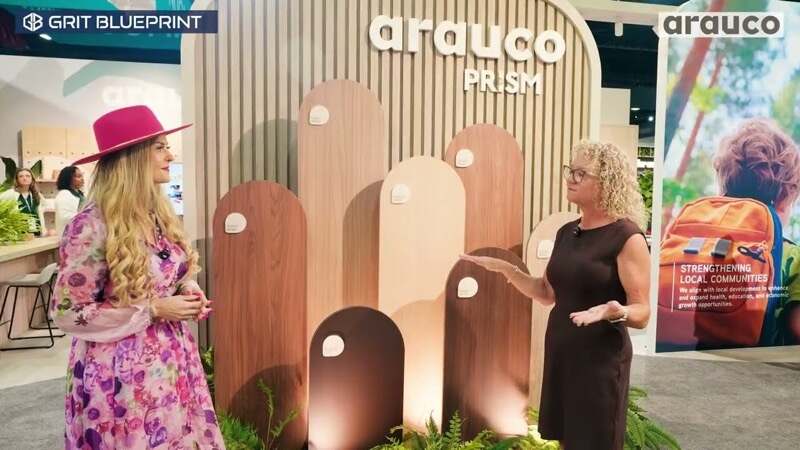
using a product like this as a backdrop can add so much to a room without doing a ton, just adding it to even one wall.
What to ask your dealer
- What is the core under this face, and how thick is it?
- Can this panel go in a room that gets wet or hot?
- Which edges will show, and how are they finished?
- Is the countertop HPL or TFL, and what does its maker say?
- What is in the box, and what is a separate line?
For pros and builders
Write every panel up by its face, its core, its thickness, and its edges. Then check the maker's documents for where it can go.
-
TFL or HPL on a flat surface
A vertical surface stands up, like a cabinet side. A horizontal surface lies flat, like a desk or a countertop. Formica says HPL is made for both, and that it is the only choice when the laminate is bent with heat around a rounded edge. Panolam says its own TFL is not for high-wear tops like kitchen countertops, or for places hotter than 275 degrees Fahrenheit.
-
Know the core
Particleboard is wood particles bonded into a panel. MDF is fine wood fibers bonded into a dense, smooth panel. Plywood is thin layers of wood veneer, with the grain of each layer crossing the next. Ask which core a line uses before you promise where it can go.
-
A panel is more than its face
A finished panel may have a face, a core, an edge treatment, and a backer. The backer is the layer on the back that keeps it balanced. Panolam says fire-retardant and moisture-resistant cores are available too. Do not pick a panel from its face alone.
-
Plywood comes many ways
The Arauco booth was at the International Woodworking Fair in Atlanta, Georgia. Its plywood came beaded, with a deeper groove, primed, and sanded to finish on site. Ask which one the job needs.
What goes wrong on the job
- A TFL top goes where its maker says it does not belong, like a kitchen countertop.
- The panel gets picked by its face, and nobody writes down the core.
- The edges get left off the order, and nobody knows who finishes them.
- A white shelf and a white cabinet door get treated as the same product because they look alike.
For dealers
Sell the look, then write down the core. Put a sample in the customer's hand and explain it in plain words.
-
Explain TFL with a sample
Start with what the customer already knows, and put a sample in their hand. Say it plainly: a decorative paper soaked in melamine resin and fused with heat to particleboard or MDF. Then ask a question to check that it landed.
-
Know who buys it
Cabinet shops, closet companies, store fixture makers, countertop makers, and furniture makers buy TFL. They often buy through a distributor. If you sell to any of those shops, expect TFL to come up.
-
Split the job
A remodeler asks for white melamine closet shelving and two white laundry room cabinets. That is two jobs: a closet system and two cabinet boxes with fronts. Each line on the quote names the face, the core, the thickness, and the edges.
-
Train the counter
Have a new person find a TFL shelf, a sheet of plywood, and an MDF panel. Look at the edge of each and name the face and the core. Then read what the TFL data sheet says about flat surfaces and heat.
Questions buyers ask at the counter
- Is that real wood? No. The grain is printed on paper and fused to the board.
- Is TFL the same as melamine? Many people call it that, and some makers do too.
- Can I use it for a countertop? Ask the countertop maker which laminate it uses.
- Will it hold up in my laundry room? Check the maker's documents for that room.
- Is ready-to-assemble lower quality? It only tells you how the cabinet ships.
For manufacturers
Distributors judge a panel maker on how well it makes the product. They also judge whether it can ship on a bad day and what else it makes. Dealers need samples with names they can write down.
-
Three tests a distributor runs
Jon Minnaert, president of Aetna Building Solutions, a distributor that sells Arauco panels, named three. First is how well the maker makes the product. Second is whether it can still ship if a plant goes down. Third is range, meaning what else it makes.
-
Build designs with your buyers
Arauco's seven Quietude designs came out of a two-year line review with its customers. Cathy Hummer, senior manager of TFL development and design at Arauco North America, said the trend in TFL is moving toward a warmer palette.
-
Give every sample two names
Dealers are taught to read a sample's label for the design name and the finish name. They are also taught to write both on the order. That way the next person who touches the order knows exactly what the customer chose.
They don’t just have one plant. If something were to happen, they can shift production, they can shift business over to serve, so our supply won’t be in jeopardy.
What dealers need from you
- Samples with the texture on them, labeled with the design and the finish.
- The core under each design: particleboard or MDF.
- Data sheets that say where a panel can go, flat surfaces and heat included.
- Which designs are stocked at the location that serves them.
- A plan for supply if one plant goes down.
Lessons
Short lessons in plain words, each one built from the people who make, sell, and install it.
-
TFL, HPL, MDF, or Plywood: What Is a Cabinet Panel Made Of?
Every cabinet and closet panel is a face on a core. The customer picks the face. You need to know the core.
Lesson · 8 min read
Read and watch
Plant tours, interviews, and stories from the people who make and sell it.



- What Is TFL? How Thermally Fused Laminate Is Made and SoldArticle · Oct 12, 2026
- Thermally Fused Laminate Explained: What’s New at IWF 2026Episode · Sep 29, 2026
- Why designers are choosing TFL over real wood #interiordesign #architecture #materialsClip · Sep 30, 2026
Words to know
What people say at the counter and on the job, in plain words.
- HPL A laminate sheet made of resin-soaked paper layers pressed into one sheet, then glued to a panel.
- MDF A panel made of fine wood fibers bonded together under heat and pressure.
- Shaker door A door or cabinet door style with flat panels and plain Shaker sticking around them.
- TFL A decorative paper soaked in melamine resin and fused straight onto a panel such as particleboard or MDF.
- Base cabinet A cabinet installed at or near floor level.
- Face frame The frame across the front of a cabinet box that surrounds its door and drawer openings.
- Filler strip A narrow finish piece that covers the space beside or between cabinets.
- Frameless cabinet A cabinet built without a face frame on the front of the box.
- Inset cabinet door A cabinet door fitted inside the face frame opening, flush with the frame.
- MDF trim Trim made from medium-density fiberboard, shaped and usually primed.
- Particleboard A panel made of wood particles bonded with resin under heat and pressure.
- RTA cabinet A cabinet shipped as parts to be put together, instead of factory assembled.
Who makes it
Manufacturers in the Grit Guide directory whose own record says they make it. The ones on our shows come first.









Rooms
Where it goes in a house, with the projects, lessons, and episodes for each room.
Kitchen
10 pieces
Closets and storage
4 pieces
Still to answer
Questions people ask about this that Grit Guide has not answered yet. They are on our list, with the people who know.
- What cabinets cost, and what changes the price Coming
- Particleboard or plywood cabinet boxes: which to choose Coming
- How to measure a kitchen for cabinets Coming
- Edge banding: what it is and which kind to use Coming
- Framed or frameless cabinets: which to choose Coming
GritConnected
The people, companies and topics that come up most across Grit Guide.
Top people
-
 Expert card Tap to open
-
Expert card Tap to open
Dori Shoshan Innovation and Business Development, Panda Windows & Doors Grit Guide Expert Watch their Behind the Build with Dori Shoshan
-
Expert card Tap to open
Gina Schaefer Founder, A Few Cool Hardware Stores Grit Guide Expert Watch their episode with Gina Schaefer
-
Expert card Tap to open




-
Bob Magbee Magbee Contractors Supply Grit Guide Contributor Watch their Behind the Build with Bob Magbee
-
Todd Tomalak Principal, Building Products, Zonda Grit Guide Contributor Watch their episode with Todd Tomalak
-
Noya Shoshan Director of Operations, Panda Windows & Doors Grit Guide Contributor Watch their Behind the Build with Noya Shoshan








Also named on this page
People and companies mentioned above, each with a page on Grit Guide.