Click any timestamp to jump to that moment in the video.
Introducing Ross Brouse
0:01 Ross Brouse: So one of the things I say when I'm talking to a lot of my clients and prospects is listen, when you're working with most of these IT providers, they profit on your problems. And the more problems you have, the more money that they make. I'm not like that. I charge you effective fees because my goal is to make your problems go away. So the more problems you have, the more dossi speed. me.
0:25 Stefanie Couch: Welcome to the Grand Little Crip Podcast.
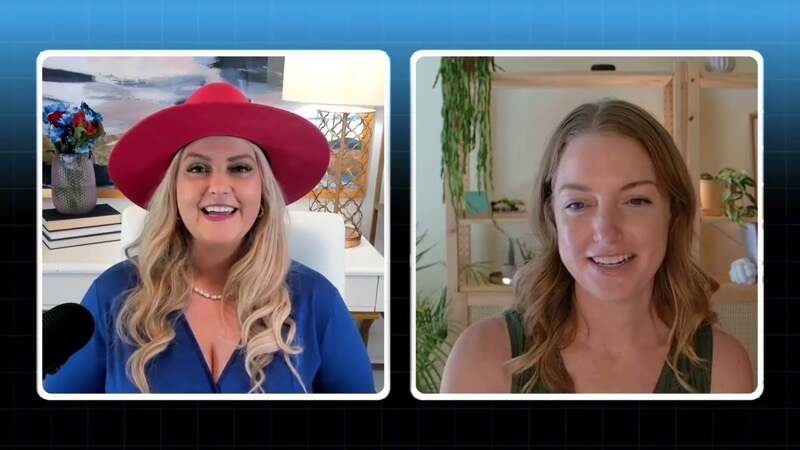
0:34 Stefanie Couch: I'm your host, Stefanie Chowch. This podcast is about branding, building, and business. It also highlights the grit that it takes to be successful in business and in life. Let's get started. Welcome to the Grit Blueprint podcast with Stefanie Couch. I am excited today to have my guest. His name is Ross Brouse. If you haven't seen him on LinkedIn, he is a LinkedIn infamous person that I met when I first started posting. Welcome to the podcast, Ross.
1:07 Ross Brouse: Thank you. Thank you for having me. You've been trying to do this forever, right?
1:10 Stefanie Couch: I know. It's uh hard to coordinate, kind of like herd and cat sometimes when you have two people that are busy, but we are here and we are making it happen today. So on a on a Friday afternoon, I'm excited to be here and talk and let the world kind of get to know you if they don't already. You have been in the main service provider space for a long time now, and I want you to kind of just tell people who you are and what you do.
1:35 Stefanie Couch: And you have a tie to the construction industry, which is really cool. We didn't realize that when we first met, but you definitely deal with people in our industry. So tell me who you are and how you got to where you are today.
From Film School to an IT Company
1:46 Ross Brouse: Yeah, sure. Wow, that's a big question. Where do I start?
1:49 Stefanie Couch: In three seconds or less. No. I
1:51 Ross Brouse: know, right? I'll try to make it as succinct as possible. I'm originally from the Midwest, though I live in the New York City area today. I've been in the New York City area since the late 90s. I came out here to pursue a career in film and television at New York University. And so I'm very into video production and audio production and things like that. After school, I decided that I wanted to have a family before I was the ripe old age of 65. I didn't want to start having kids at 65.
2:20 Ross Brouse: So I wanted to do that while I was younger. And I thought, you know what? If I stay in film, I don't think I'm gonna be able to do that.
2:26 Stefanie Couch: Yeah.
2:27 Ross Brouse: So I decided I'd go into computers. Yeah, for sure. I took a job doing web design, and that led me to web hosting. And the very first company that I built was a web hosting company in the early 2000s. Uh, and so that was, you know, I quit my job. I went out and I just took some money that I had from my father-in-law and I built this business. And wow, it was sure scary at first.
2:51 Stefanie Couch: Yeah.
2:52 Ross Brouse: But one thing led to another. And one of the people I had met through my web hosting days was my is my now business partner. And so 2012, right after Superstorm Sandy had happened here, we decided that there was a huge opportunity to really work with clients in a very relationship-driven way. And that's when we decided to start what we call an MSP, a managed services provider, which really is just a glorified acronym for somebody who does IT support and IT cybersecurity and things like that.
3:21 Ross Brouse: So that is when Continuous Networks, our business today, was born. And it has been growing and growing ever since.
3:28 Stefanie Couch: Yeah. And you have this cool model where people can have this big support team without having to pay 20 people in their department. Talk a little bit more about how you really help people and what your target audience is and your target client mix, how that works.
In-House IT Person or Outsourced IT
3:45 Ross Brouse: Let's talk about it in terms or through the lens of construction firms, right? Because I think this is really an interesting dichotomy that I see in all of the different construction companies that we speak to. So we'll meet, you know, a lot of these companies have 50, 40, 50, 60, maybe 70 employees that are working there. And some of them have a full-time IT person. I'm always wondering why that is. Like, what was the decision-making process that the CEO or the COO or whoever is managing the business decided that they should have a full-time IT person.
4:17 Stefanie Couch: Yeah.
4:18 Ross Brouse: But I I see it. And then there's other construction companies that I'm working with that don't have any. They're just used to working with outsourced IT vendors. And so I really find it interesting to see like what like I'm always wondering what the decision-making process is there. So we work with both of these different types of firms. And really the mentality, I think, between them is just a little bit different. Generally speaking, the people who have never hired an IT manager, they really want that IT vendor to do everything for them.
4:44 Ross Brouse: Like they want them to handle all of the support requests from their end users. They want them to deal with all of their security. They want them to manage all of their, you know, infrastructure, their internet service provider, all of those things. They want them to take care of it. Whereas some people believe that it's really important to have somebody there in your office all of the time. Now, not to say that that this isn't okay because I work with a lot of companies that actually have that type of model.
5:10 Ross Brouse: But I always wonder like, who is this person that that is taking this job and how do they handle it? Because it's not a one-person job.
5:18 Stefanie Couch: It's not
5:18 Ross Brouse: a one-person job. Like, if you look at a company that's got 300, 500, 1,000 employees, now maybe they've built an IT department that's got six people, eight people, ten people that are working full-time whose sole job it is just to manage IT. And so you've got this one person who only does a couple of things because IT is huge. It's like it's like saying you want a doctor on staff. Well, you can hire a general practitioner, but if you're a heart problem, they're not going to be able to do open heart surgery.
5:46 Stefanie Couch: That's the ideality because people don't think of tech that way. They think if you're tech savvy, like you should be able to do everything under the sun and not have any questions. I think it's the same thing with marketing. People don't realize the specialty of marketing, same way like social media and website and SEO and all these different things. There's just a lot of specialties within that.
6:07 Ross Brouse: Yeah, for sure. I mean, like I always say you wouldn't hire your proctologist to do brain surgery on you.
6:11 Stefanie Couch: Hopefully not. Sometimes I think with the you uh you talking about hiring people inside the organization, it's because they're so tired of people complaining about not having someone right when they need to be told, like, this isn't working, fix it.
6:27 Ross Brouse: Yeah.
6:28 Stefanie Couch: That's not always as simple as it sounds, but to have someone in at least to feel like someone's there they can talk to, I think it's helpful for them.
6:35 Ross Brouse: Yep.
Fully Managed and Co-Managed IT
6:36 Stefanie Couch: But you guys are really coordinating with those people, like you said, whether they're in-house or it's just running through their staff. What does that look like? I mean, what kind of offering is it a retainer where you just pay a certain amount and then you guys fix everything all the way down to like, you know, if cybersecurity is the only thing you need, you do that. How does that work?
6:54 Ross Brouse: We really work in two capacities. One is called fully managed, where we do all of the IT, one is called co-managed, where we work with people who are already part of IT inside of the organization. So in the fully managed, they hire us on a monthly retainer that provides them with a certain level of services. It's usually all of your support requests, it's usually all of your asset management, it's all of your patching, you know, patching all of your systems to make sure they're secure. It's monitoring all of those systems, it's backing up all of those systems, and then usually spending time with the company on a quarterly basis to understand what their goals are, what they really want.
7:32 Ross Brouse: So we can help them achieve it. I mean, then the co-managed side isn't much different. The big difference there is we really don't support the end user when that person is there. Because, like you said, generally speaking, they have that person on site because they are worried that they they're gonna have to wait and they don't want to wait on somebody who doesn't, who they feel like doesn't care about their business to get those types of support requests responded to. They've never worked with my company, and so they don't understand it.
7:56 Stefanie Couch: Sure.
7:56 Ross Brouse: Because if they did, they they wouldn't have that problem. That's really what it is. And so we help that person fill in all the other gaps. They're that general practitioner, and we bring in all those other specialties that they need to really take care of the IT environment properly.
8:08 Stefanie Couch: Yeah, I really love this model. My husband, Ben, actually worked for a managed service provider about five years ago for a little while, and it helped me understand what really is available out there. And there's a lot of IT people, a lot of cybersecurity people. What really differentiates you and your company and the service that you're providing from everyone else? I mean, I know you guys are different in a lot of ways. What is that competitive edge that you have?
Why He Charges a Fixed Fee
8:30 Ross Brouse: Yeah, I love that question. It's a question that everybody loves to ask, and it really brings me back to my core purpose, the reason why I do this work, why it's so important to me. My big beliefs that I think most people don't agree with out there is that IT has been getting done wrong for the past 40 years. Just been doing it completely wrong. And it's the fault of the people who are in my industry for setting this expectation with business owners and leaders about the way IT support is supposed to work.
8:56 Ross Brouse: So, one of the things I say when I'm talking to a lot of my clients and prospects is listen, when you're working with most of these IT providers, they profit on your problems.
9:07 Stefanie Couch: Yeah.
9:07 Ross Brouse: The more problems you have, the more money that they make. I'm not like that. I charge you a fixed fee because my goal is to make your problems go away. So the more problems you have, the more it costs me. And therefore, I'm motivated to make your problems go away. So when you're having fewer problems, that's a sign that the money you're spending with me is actually being very well spent because we took the time to really look into why these things were happening. We worked with you, we focused on those solutions to take away those pains that maybe you didn't even realize you were experiencing.
The Taco and the 15% Promise
9:43 Ross Brouse: And so that's a big differentiator that we have. The other big thing that we do that I think most other people that do what we do do not, is we really don't we kind of equate this to something we well, I'll put it to this way we have this metaphor that we use in our company of a taco. So we talk about tacos all the time because a taco really has
10:02 Stefanie Couch: taco Tuesday, right? Every week.
10:04 Ross Brouse: Of course we have taco Tuesday.
10:05 Stefanie Couch: I just want to make sure.
10:07 Ross Brouse: Tacos is like it's just in our blood and everything that we do. But I I love talking about tacos because I think most people love them. I think most people just enjoy eating tacos. I remember as a kid, I always loved taco night.
10:17 Stefanie Couch: Me too.
10:18 Ross Brouse: It's a fun way to communicate and everybody understands it. And so when you think about a taco, there's really five key ingredients. You got your tortilla, you got your protein, you got your cheese, you got your vegetables or your lettuce, and you got your sauce. That's what really puts a great taco together. Now, the way most IT companies offer their service is they give you a tortilla, they slap some chicken in there, they put a little bit of cheese on it, and they hand it to you, and they say, Here, eat it.
10:41 Ross Brouse: And I just think that's wrong. I think that's completely wrong. I think that you should be able to decide what it is you want. You should communicate to the people who are going to help you with your IT about what it is you want to achieve. For example, I started working with a construction company back in November. They remodel a bath and kitchen.
10:58 Stefanie Couch: Okay.
10:59 Ross Brouse: And so one of the things that they said to me is they're kind of their chief operating officer. She calls herself the controller. She was really struggling with some of the previous vendors that they had worked with because she was spending 15% of her day working on IT-related issues. And I said, Well, but why is that a problem? And she said, Well, first of all, it's not my job. And I said, Okay, well, that's a good reason. And then I looked at the CEO and I said, Well, why do you think it's a problem?
11:21 Ross Brouse: And he said, Well, because I need her to work on other things.
11:23 Stefanie Couch: I
11:23 Ross Brouse: need her focused on other lines of business that we have. I need her to focus on other initiatives that we have. I need her to focus on process. These are the things that are holding our business back from growing. And I said, Okay, perfect. So, in a perfect world, like what would this look like? How much time would you actually spend on IT? And she says, Well, I'd love to reduce it by 5%, but I'd love to reduce it even more than that. Could we get it down to 5% from Christine?
11:45 Ross Brouse: And I said, Here's the deal I'll make you. Within six months, I'm gonna promise you that we're gonna get you from 15% of your day on IT down to five. And if we can't do that, then don't pay me.
11:54 Stefanie Couch: Wow.
11:55 Ross Brouse: And she said, okay, great, fantastic. I'm part of our onboarding process. We sit down after about three months, two and a half months in, and we sit, we do this meeting. We call it our quarterly business review. And we sit down and we show them all the things that we've been finding, all the things that we've been doing, and all the changes that we've made based upon the pains and the wants that they've shared with us. So in this particular situation, she said, You've already brought me below five.
12:16 Ross Brouse: It's only been three months and we're already below five percent. I am got so much more free time. Like this is an entirely different situation than what I'm used to. And I love it because what she told me is, I want a steak taco, I want this type of cheese, I want my tortilla made this way, I want those types of vegetables, and I'd like this type of sauce. And I said, sure, I'll make that for you because that's what you want and that's what you deserve.
12:39 Ross Brouse: And that's just not how IT gets provided to most companies today.
12:42 Stefanie Couch: No, and I think that bespoke, really crafted method and the expectation being set up front, which I think a lot of us in business, we forget that part. We give a lot of information and we overwhelm people with what could happen, and we forget to ask them what even is important to them. I ask this a lot, what does success look like to you? And that's basically what you're saying. You're asking them how they want it and then say, okay, I'm gonna customize, which is more expensive on the front end, takes more time, but it actually works so much better in the end because they're gonna get something they care about.
13:16 Ross Brouse: Yep.
13:16 Stefanie Couch: Well, using your taco analogy, if you're really don't like steak and you're allergic to lactose, if I give you a cheese and steak taco, it doesn't matter how delicious this other person thought it was, you don't care about it. You're not gonna eat it. So it's really a great analogy. I like it, obviously, for multiple reasons. The branding is great, but it's really a cool thing to be able to give your customers what they actually care about. And that's how you build brand loyalty for a long time and build a very sustainable, unscalable company.
13:46 Stefanie Couch: So I love that you're doing that. I know you're working with the construction industry specifically, and you're also working with some other industry, healthcare, right? What other where else do you get into?
Why Healthcare and Construction
13:56 Ross Brouse: Yeah, well, I mean, we do have clients across many different industries. We have a lot of manufacturing, a lot of wholesale.
14:03 Stefanie Couch: Okay.
14:03 Ross Brouse: We do do some nonprofit, but we really focus our marketing dollars on healthcare and construction. And there's very specific reasons for that. I'm very passionate about patient care. I'm very passionate about helping healthcare providers to understand that patient care doesn't stop with physical health. It extends to protecting their data as well.
14:22 Stefanie Couch: Yeah.
14:23 Ross Brouse: Something that's very near and dear to me. And I love working with construction companies because I feel a strong affinity with them since what they're really looking for is to provide an amazing project, an amazing end result to their clients on time and on budget. And that's the same thing that we do in IT. We want them to achieve those results. We want to do it on time, we want to do it on budget with clear set expectations. And we work with a lot of different softwares, the same as they work with a lot of different softwares.
14:49 Ross Brouse: And when those things get in the way of us achieving our goals, it is a huge problem. And so I like construction companies because I feel that affinity with them because we we share so much commonality.
Old ERPs, Automation and AI
14:59 Stefanie Couch: One thing that I think we've talked about several times is, you know, innovation in tech with construction, not just on the service provider side of it, but more like AI and innovation automation, just the general antiquated nature of construction has really kept us, I think at least 20 years. I mean, that's probably a grace for a lot of companies, but 20 years behind the curve. What do you think we can do as an industry that's now going to be filled with people who have grown up with technology running it to get that up to speed?
15:33 Stefanie Couch: Because it does feel like to me a lot of times a real big gap. When you start to talk to people about AI and automation, they're using like a DOS-based system from 1986.
15:42 Ross Brouse: Yeah.
15:43 Stefanie Couch: How do you go from one to the other? It feels like a giant quantum leap to me.
15:47 Ross Brouse: Yeah, for sure. I mean, first of all, you got to be using an ERP that is up with the times, right? Uh if your ERP does not meet the requirements of today's standards, you're going to be hard-pressed to do that. And probably the inefficiencies that you're experiencing from your staff because they're using an antiquated system is costing you way more than you had ever even realized.
16:12 Stefanie Couch: I definitely agree with that.
16:13 Ross Brouse: Yeah, most people won't want to look at that, right? Because they know that as soon as they find out it would scare the hell out of them and and that they would be forced to start making changes, and change is scary. So I know like we've started heavily using automation as a way to interpolate human behavior when it comes to supporting them. So, for example, when humans ask for um IT support, sometimes they really don't know what they're asking for, what they're saying. And so we look for common phrases, we look for the way phrases have actually been assembled, and we put that into our ERP so that when those requests come in, we can analyze them and we can feed the IT technician data and information about what that person might be asking for, as well as what other items or assets it actually relates to.
17:00 Ross Brouse: So I think there's a huge opportunity in construction from a materials costing perspective and assembling what you need for a project to use AI to help you to get to gain that information and figure that out. I mean, if you just literally sat down with ChatGPT today and talked about the materials you were looking for, if you wanted to, you know, um overhaul a kitchen and say, well, I'm looking for this, I'm looking for that. What's the best way to find it? Where should I look?
17:27 Ross Brouse: Who's got the best prices? That's a very rudimentary example, but this is what I'm talking about is having that built into the systems where we're pulling that information, which is the same thing we're doing with IT, because we're looking for computers, we're looking for network gear, we're looking for items that are required to make all these systems run. And those prices change all of the time. And so someone says, I want this, and we go, well, it was X dollars, but 10 minutes from now, it's going to be $2.50 more than that.
17:55 Ross Brouse: So that's going to change everything. And we've got to have some way to predict how that's going to move and how we can make sure that there's enough margin in each one of those projects for us so that we can run a profitable business. I don't think it's any different for construction companies.
18:10 Stefanie Couch: No, I think it's just the adoption of it. You know, for lumber marketing, like the lumber market, it's the stock market, basically. It goes up and down every single day. And so you get weekly reports and all these different uh measurements. And I think that one thing technology is already helping with and is going to continue to help with is making that easier so that people can get pricing on commodity markets a lot faster. It'll be a lot more uh distinct and you know timely. And then also some of the ordering and in project management stuff, like you talked about, already coming out with great software.
18:43 Stefanie Couch: The ERPs to me need to be better in the industry. A lot of these, they're just really not great. I would say that the people that we saw when I was working at a large distributor, our ERP was so mangled up from being like kind of like a remodeled house where you're adding on this and adding on this, and then you turn into this big thing. It's not built for exactly what it needed to be built for, but we made it work. And I think that when we start making things work for a long span of time, you find these workarounds, like you were saying, that the people in the daily job, like the person typing it every day, knows what they're doing the workaround.
19:20 Stefanie Couch: The two problems I see that come from that is number one, training new people with 700 workarounds is ridiculous, right? I mean, it doesn't make any sense. There's no rhyme or reason to it. So you're you're really training people to do things they don't even need to be doing just to fix a broken system. And then secondarily, the higher up in the group, I think, of the executive teams most of the time have no clue the dollars and cents that are being wasted on time doing these workarounds.
19:49 Stefanie Couch: So when you start to show these things, and you if you had a CEO sitting next to an inside salesperson doing you know 20 minutes worth of workarounds on one order 10 times a day, they'd probably fix it a lot quicker. They just don't realize it. And it's because big picture thinkers don't have time to be thinking about how many keys you push to get to a screen, but we have to start looking at it that way because labor is a huge issue. All of these pay skills have gone up.
20:18 Stefanie Couch: We can't even get people to fill them. So, how do you fix the issue? You have a technology-driven generation coming in to change the industry and take over a lot of these jobs, and then you have new tech every day. We have to start prioritizing this. So the people who do this now, I truly believe, and we've talked about this, the companies that go all in on tech today will be the ones that rule the next 10 to 20 years.
20:43 Ross Brouse: 100%.
20:44 Stefanie Couch: That's gonna fix the problems with labor and all of those things that we can't fix any other way,
20:50 Ross Brouse: right?
20:50 Stefanie Couch: Then they're just gonna be so far ahead. And there are a lot of big companies working on this, but I believe it may actually be some of the small companies that are nimble enough to really get in on this and and try it and not scared, they're gonna be the ones that really come up out on top, in my opinion.
21:06 Ross Brouse: Yep. Oh, 100%. And I think it's tough, especially for a lot of the companies that are owned by people that are in their 60s and 70s. They're just they're not accustomed to these types of things. They didn't grow up with this type of technology. Um, and and hopefully in those types of situations, there are younger family members who are really in tune with what's actually happening there because yes, they're gonna be left behind. You can't compete with uh, first of all, I and I don't I want to be careful about how I say this because I don't want to say a human can't compete with a machine.
21:40 Ross Brouse: You can't compete with another human that is leveraging AI properly. You cannot. They are going to run circles around you, and the people who are learning how to use it effectively are able to generate margins beyond your comprehension, which means they can charge less, and you'll be squeezed. Left sitting there going, how are they able to do it at that price? Well, because they did it with half the staff. That's your most expensive cost in a business.
22:09 Stefanie Couch: Exactly. It's like a horse racing next to Henry Ford's car. It doesn't matter how fast the horse is or how amazing the horse is, it's never going to be the car. And then obviously that's just continued to evolve where like the horse only evolves so much, the car can keep evolving. And I think this tech is the same way. We need the people. And that's one thing I like to talk to people about in this industry is they get really scared of AI. And truthfully, there are some things that I hear about AI.
22:35 Stefanie Couch: I'm like, oh, they might take over the world. And then always teases me, like, you should be nicer to your chat GPT.
22:41 Ross Brouse: Thank you.
22:43 Stefanie Couch: She's going to come back and rule you one day, which could happen. So if this is being recorded by my chat GPT, I love you. But truly, people shouldn't be scared of being replaced by AI. They should be worried about partnering with AI to make their own skills smarter. And how do you get 70% of the work done up front by the technology? And then you nuance the last 20 to 30% in a world-class way that only you can do. And now you have something that is truly just amazing product.
23:12 Stefanie Couch: Copywriting is that way. Any kind of process can be that way. So that's the thing I would tell people in this construction industry is don't be scared to use it that it's going to replace you. Be scared of the person, like you said, that is using it that will replace you because that's a real deal. You know, you might be making a lot of money to do a lot of things and someone that comes in that maybe doesn't have the experiences uses the technology a way that they can replace you.
23:37 Stefanie Couch: So that's the cool part that I think people have a ground floor opportunity right now to really capitalize on this. So I would definitely say look into it. What tools, I mean, just from a perspective of AI from from automation, what tools would you say that you see could help people in the construction industry, whether it's a person or a company that you might throw out there other than Chat GPT, which I think most people have at least heard of?
The AI Tools His Team Uses
24:05 Ross Brouse: Yeah. Um, well, we use a tool uh, and and primarily it's been focused on the IT industry, but we're working on ways right now where we can build this tool into healthcare and construction companies once we get a better understanding of what their processes are. So, what are the things that really create bottlenecks for them using a lot of those workarounds, like you said? So, we use a tool called Roost. And Roost is an advanced um AI platform that is doing all that, it analyzes all that data that comes into our ERP and prompts the humans that we have to behave or act or respond in a more specific way.
24:47 Ross Brouse: I I it I would still say in the grand scheme of things, we're very much in the infancy of all of this. So I don't I don't want to set the expectation that people are gonna be able to go out there and all of a sudden do all these things and hire half the staff that they have today. That's not gonna happen. Um, at least not in the next 12 to to 24 months. But it's getting, it's now to now's the time to get familiar with what these technologies are and start to use them.
25:11 Ross Brouse: So Roost is one that we use a lot of. There's also um a one that I'm using. I can't, the name escapes me because I never pay attention to the name. I just see it in my browser. But we do a lot of prospecting of people. And so what it does is it looks at other businesses and um I can pull up their LinkedIn profile of the business owner. I can pull up information about them on their website. It goes into its AI platform and it pulls information that it knows about that person.
25:36 Ross Brouse: It tells me their disk profile, it tells me their decision-making process. So, for example, like I like I'm a I'm a high D in disk, so I'm very direct. When I'm talking to a C, I need to be very analytical. I need to provide a lot of data. If I'm talking to a high I, I have to be very much talkative and understand that they want me to like them.
25:58 Stefanie Couch: Yeah.
25:59 Ross Brouse: You know, so like I can I can cater my behavior accordingly. And I think for any construction company that's got a sales staff that's going out there and talking to people, they're gonna have to start to understand this. They're gonna have to understand the people that they're interacting with because sales has changed completely with these AI platforms, understanding who we're actually speaking to and how to speak to them. We can't just go out and push products. We can't just go out and push ideas. We have to find out about who these people are, what their pain points are, and how they make decisions.
26:29 Stefanie Couch: Yeah. And I think one of the things that you just touched on that's really brilliant is finding the technology maybe that you've been using, like a LinkedIn. We both are very prominent, you know, users of LinkedIn. We love LinkedIn. How do you use that now to take it to the next level where you don't have to maybe spend eight hours a day prospecting the same old way that you did to get more cold leads, that you can do a lot of that work on the front end with a tool.
26:56 Stefanie Couch: And then once they're warm or you know, hot leads, then you start to do it yourself. And I think that's the the part that's really cool is again pairing people with technology to get something that's a better byproduct than either one alone could ever have. And LinkedIn is, you know, a great way to do that. I mean, you it's a great segue into LinkedIn. You've utilized this for your business. What would you say to construction owners? Because I get this a lot in my uh LinkedIn, it's like, hey, look, I don't really want to be an influencer.
27:26 Stefanie Couch: I don't, I I know I can post my company page, but I just don't really have time. What would you say to those people that, you know, say social media is kind of just a waste of time for me? I'm not really sure how it applies to construction. What would you say in rebuttal to that?
Which Social Platform Fits Your Business
27:40 Ross Brouse: Yeah, I mean, wow, it's first of all, it's completely wrong. I completely disagree with it. Uh, but but second, I think you have to look at what your business model is and who your client is. Because there are some companies, some construction companies that I think would be well served by being active on LinkedIn because they cater to other businesses. They build office spaces, they do, they do things like that, or they build specialized, um, you know, specialized or provide specialized services to businesses. If you're not really catering to your other business, you're building private homes, if you're doing like home remodels, things like that, then you should be on Instagram, you should be on Facebook because that's where your clients are.
28:18 Ross Brouse: So I think it's about understanding what the different social media platforms do, where those people are, what those client, who those clients are, and make sure that you're investing in the right one before you just start investing in one. So I I I do think, and and I hear a lot of people, especially in the real estate industry, who get a ton of business over LinkedIn or I'm sorry, uh Instagram and Facebook, a ton. Um, and there's all kinds of strategies to do it.
28:42 Stefanie Couch: Yeah, and and for like you said, each platform is different. So if you get business from uh Instagram and Facebook, but maybe you want to find employees, be the only employees, LinkedIn could be good for that. So tailoring that content to what you feel like actually could work based on the platform is pretty important too, because you don't want to just you can cross post everything everywhere, and that's okay. It's probably better than not doing anything at all. But having a tailored strategy really works better to get your outcome that you want.
29:11 Stefanie Couch: And, you know, there's so many people ask about the algorithm and all these things. My best advice to people is just start and try something because it's better than not doing anything, even if it's not working 100% like it could. The better you get based on you trying things and figuring out what works is really the only way to do it. Unless you want to hire an expert, which is always what I would recommend because you don't have to pay that ignorance tax of trying something for
29:38 Ross Brouse: it's expensive.
29:39 Stefanie Couch: It's very expensive to be ignorant on social media, especially when you're trying to run ads and things like that. Hire a professional that knows what they're doing.
29:46 Ross Brouse: Yeah, for sure. It it reminds me of a saying that my marketing coach says all the time. Uh, she says, Nobody knows how good you are before they buy. They only know how good your marketing is.
29:56 Stefanie Couch: Yeah.
29:57 Ross Brouse: That applies to really every business. If you're looking for new clients, if you're looking for new projects, if you want to grow your business, why would anybody buy from you? Why would they spend tens, hundreds of thousands, millions of dollars with your firm to do this work when they don't know how good you are? But if you position yourself the right way from a marketing perspective, you're able to show off your work, you're able to show client testimonials, you're out there, you're you're visible, your people know your name, then they're gonna be more apt to buy from you.
30:27 Ross Brouse: And that's what social media does.
30:29 Stefanie Couch: Absolutely. And there's so such a big reach because if you're a company that's nationwide, it's very hard to do that word-of-mouth marketing everywhere. And you know, salespeople are expensive and they do work, but you want to warm that audience up before you get them to those super expensive salespeople, no matter really what you're selling. But inbound is always the best type of lead, in my opinion. And somebody that's already knows who you are, like you said, how do you know if you don't know that person?
30:54 Stefanie Couch: They might be the best builder or the best building supply, best glazer you've ever met. And if you're not there and don't know them face to face, you never know they existed.
31:04 Ross Brouse: Yep.
31:05 Stefanie Couch: And just like with you, I mean, I would never know you existed if I had not met you on LinkedIn. Like the likelihood of us, we might have met at a conference eventually, but the likelihood of us meeting and me knowing what you're doing and that you now service the construction industry, which I didn't even know when we first met. I mean, we met on LinkedIn. So it's really cool how that works. And I think people sleep on that a little bit because it is sort of a relationship-building handshake deal type industry still, but it is very quickly changing.
31:35 Stefanie Couch: And the people, again, that use this type of thing will be on the top in five to ten years when it's a non-starter, just like the internet, or like we're not gonna use that. We will, we don't need a website, blah, blah, blah. Yeah, tell Home Depot and Lowe's that now. Like,
31:50 Ross Brouse: yeah,
31:50 Stefanie Couch: I don't know how much what percentage of their sales are online, but it's a very steep amount, I guarantee you.
31:56 Ross Brouse: The best time to plant a tree.
31:59 Stefanie Couch: I wish I'd planted some more trees 20 years ago for me. But, you know, again, you and it the same thing as for personal branding. People that, okay, I don't have a business, I don't really care, I'm not gonna run ads. Start building your brand now because you don't need to wait until you need another job or until you want to start a business to showcase who you are and what you're about. Build your brand now, show people who you are, and then when you actually need it, you've already got two, three, four, five years of post that everyone does know who you are.
32:27 Stefanie Couch: So when you announce something new, they're like, oh, I know this person, I know Ross, he's cool. Whatever he's selling, I'll buy it, you know? Yeah, it's awesome.
32:35 Ross Brouse: Exactly right.
32:36 Stefanie Couch: Well, you you've been running a business for a long time now, and I am an entrepreneur about two years in now, and I know there's been ups and downs in every business I've ever heard of, and you've probably had lots of them yourself, challenges and all of those things. What critical lessons have you learned that you would give to a young entrepreneur starting out, you know, maybe early in a startup or even into some of the acquisitions and things where you're growing? What advice would you give those people?
Three Lessons From Running a Business
33:04 Ross Brouse: Well, first of all, um, the thing about going into business for yourself is kind of like having children. When you have children, it always seems like, wow, this is so hard. How do I take care of this little baby? I've got to feed them, I've got they're so delicate, I gotta care for them. Like, I'm worried that something bad's gonna happen. Like, what if I drop them? Like all these horrible thoughts go through your mind, and you're trying to protect this other life, right? And then you hear from people who have teenagers going, Oh, you have no idea what you're in for.
33:33 Ross Brouse: The thing is, it doesn't really get easier, it just changes because you grow and you invest in yourself. Um, and and so if you really are an entrepreneur, then you're just going to continue to find more ways to grow. The best thing I ever did for myself since I started a business, and it took me more than a decade to really learn this. This is like 15 years before I really started to learn this, was that there was no amount of money too great to invest in my own learning and growth.
34:06 Ross Brouse: That was the first lesson I learned. And it didn't matter. There were things that prior to that I would have said, There's no way I'm doing that. That's way too expensive. It was 5,000, it was 10,000, it was 15,000. And then I just found myself going, yes, here's my credit card, yes, here's my credit card, yes, here's my credit card. And I was gaining us, not everything was worthwhile. I knew that I had to have some bad experiences, but overall, I was learning so much more.
34:30 Ross Brouse: The second lesson I learned is that I wasn't good enough to just do that for me. I needed to start to do it for my A players, for my force multipliers in my business. I needed to give them the type of experiences and the opportunities that I was getting for learning and growth. That was huge for me, um, was learning that. And then third, I would say if you want to build a strong culture in your company where people really enjoy showing up every day, they enjoy the work that they do and they follow you, then you really have to build a strong core purpose for your company and you really have to have a strong value system that you live and die by.
35:08 Ross Brouse: Every decision you make comes back to that value system. You've got to document it and you've got to talk about it every single day so that there isn't a person in your organization that couldn't recite your core values, that couldn't recite your purpose, that couldn't tell you why you do what you do. Because when you have that kind of culture, that's when your business starts really growing.
35:30 Stefanie Couch: Yeah, I totally agree with that. And it's way more than just some words being posted on the wall and vinyl or something that you talk about at one, you know, Christmas party every year. You have to live them. It can't be uh values that are just for the corporate website. You got to talk about it, like you said, and actually show up and do those things that you're talking about. And that does make a difference. And I think giving people uh something to believe in and something that they want to drive towards is really the way that you get people to engage.
36:00 Stefanie Couch: It's not, you're never gonna be the company that is perfect, but if they know why you're doing something and where you're going and they also align with that, it's huge. And I think the generations that are coming up in millennials and Gen Z, because I am a millennial, we want that purpose and we need that impact. And I think Gen Z is the same way. They have to have something that they believe in, or they're not gonna go to work every day and do that thing.
36:26 Stefanie Couch: So it's only gonna get more important for companies, you know. Boomers, they're historically known for like they just go to work and they they work and they don't really care about that, they'll get that somewhere else. Gen Z, same thing. I mean, they just prioritize working. The next two generations are not gonna be those people. So I think that's a great point. And then I love the personal development aspect. For me, when I changed my entire outlook on life and became kind of who I am right now, and hopefully we'll continue to get better was when I started reading, I started listening to podcasts, going to networking events, doing masterminds, had to get courses, same thing.
37:00 Stefanie Couch: It's like if someone had told me that I'd spent the amount of money in the last three years that I've spent on personal development, I would have been like, holy crap, it's more than I made in a year. You know, it's worth every stinking penny because what I've done, what I've learned, who I've met, it's not in the book, Who Not How. That's the thing that I think has really been cool. And we actually met through a mastermind on LinkedIn, just the people in our lives that come into our circle because of things that we're doing to bring ourselves development, it's valuable.
37:31 Stefanie Couch: And we can't understate that. So I I think that's a great point for people that are young. And if you don't have money, if you don't have 10 grand to spend on a high-ticket course yet, that's fine. Guess what? There is like a million trillion dollars of the stuff on YouTube that or podcast that you can listen to and learn so much. Sometimes I get more value out of that than I do even the more high-ticket things because there's such a broad range, and you can listen to people that even if you had a million dollars to spend on development, they wouldn't be able to be accessible to you in a they just don't have time to do that.
38:04 Stefanie Couch: But they will do a podcast and then you can listen to how they built their business. So I think it's huge not to be understated. That's great advice. And I'm glad that we met there, Master Rod. So glad you're you're developing yourself so that we can meet. The last question I want to ask you is really what do you see for the future of your business and and what's next? And especially as it pertains to the construction industry, we've talked a lot about you know, tech and all these different things.
38:30 Stefanie Couch: How do you think construction owners can help themselves now be ready for what's coming in the next five to ten years, which is gonna be probably a pretty substantial change in how we operate and what excites you the most in your business and in the business of others?
38:44 Ross Brouse: Yeah. Um, wow, there's a there's a there's a few questions there, I think.
38:48 Stefanie Couch: Last question, times three.
Fear, Technology and What Comes Next
38:50 Ross Brouse: Yeah. Um, yeah, I mean, there's a there's so much fear that I see when I meet so many of these business owners. They're so afraid of being taken advantage of, they're so afraid of losing their money um that they're pennywise and pound foolish. And I and I get it. I think there's a lot of snake oil salesmen out there that are trying to push these ideas, but it it's closed them off to the opportunities that that are out there for them to actually make a real change and do something that's that's going to help their business really grow.
39:24 Ross Brouse: Um, or even if that's not what they're looking for, if it's more of a family style business, just to make it a better environment, to make it work better. Um, you know, I I I think that one of the big things that most business owners are missing is that they cannot run their company without technology.
39:41 Stefanie Couch: Yeah.
39:41 Ross Brouse: Show me one that is running efficiently without the use of technology. Now you may be old school and think, why can't we just go back to paper and filing cabinets? Um, and that's fine, but that's not the way the world is moving. The world wants these things to be convenient, they want them to be easily uh, you know, right at your fingertips.
40:00 Stefanie Couch: Yeah.
40:00 Ross Brouse: And you either go with it or you work against it and die. You have to make a choice. And, you know, IT and how your IT runs is such a critical component of that. And I think that they really need to find IT people who have this mentality that IT is more than just fixing systems. IT is about providing results for companies that are fantastic because it's done through technology, whatever that is. And it's a big, big, big thing. It's not just, you know, make my computer run faster.
40:32 Ross Brouse: It's yes, how can we get this system integrated into our ERP to bring some artificial intelligence to make our people faster? How can we just make their experience better so that they're not feeling frustrated and don't want to come to work because they hate their jobs? Like, how can we really dig in and start to ask these questions and understand how we can support them? I'm a servant leader, so my big belief is I want to give the support to the people who are out there doing the work.
41:00 Ross Brouse: I don't like to bottleneck myself. I don't like everybody depending on me. I always tell my staff, if you had to ask me that question, then we need to figure out why you had to come to me because I don't want you to have to ask me those questions. Those are decisions you should be working on with your teams and you should be solving them without ever having to bring them to me. If you want to give me an update later, I like that. I appreciate those updates.
41:22 Ross Brouse: Those are important for me to make the bigger decisions, but I don't want to stand in your way. And so a company to grow and to really be profitable where people are happy, it needs that. It needs people who can work autonomously and understand the intentions of the business owner and the business leaders. So that that that's something that I think that, especially when it comes to construction, they really need to focus on because ultimately, if they want to deliver these projects on time and on budget, they're gonna have to do that.
41:49 Stefanie Couch: Yeah, absolutely. I I think it's beautiful to say that about the money spent now. Same thing with marketing that I see. I think marketing and tech are sort of similarly uh unimportant to a lot of these businesses because they feel like the first thing that could be cut to me. It's what I get for feedback. Now, some businesses are cutting edge and they're worried about cybersecurity and they're worried about social media and they're doing all these things. But if you can look in the ROI long term of what happens if you spend that money now, and it may seem like a ton of money up front, but you will not get returns the second day.
42:24 Stefanie Couch: And I think that's looking at it as a long game is how do you, if you're in a business where you want to scale and grow, especially if you're trying to hockey stick or add locations and all these things, the more stress that you put on the business with using that old way of pen and paper or maybe word of mouth marketing only or whatever, the bigger it grows, the less that holds. It's like a balloon that's holding a long weight. Eventually it's gonna burst. And you have to think about that long game.
42:50 Stefanie Couch: So invest now and fix it now on the foundational side. And then when you get to be so much bigger or you're really growing, you don't have to worry about it breaking because you've built the house, not to use a construction reference, but you've built the house with this foundation. So you want to add a fifth floor later, you're okay because you built the right the first floor the right way. So I think tech is coming even more than it's ever come before, but cybersecurity and all these things, people don't think about it until you go to your computer and you can't receive an order because someone's hacked in or, you know, whatever malware, whatever's happened.
43:26 Stefanie Couch: You don't want to wait until that day to figure out a partnership that works to help you through that. It's already going to be bad enough to fix it. You certainly don't want to wait until 911's needed to like go to the doctor for the first time in 20 years. So I think your service is huge for people that don't want to go find 20 IT people to hire. You've already got them and they're already trained and you already have a system. So if you are listening to this and you're in the construction industry or any other industry and you want to talk to Ross about managed service providers, where should they contact you?
43:56 Stefanie Couch: How do you how do they get in touch with you?
43:58 Ross Brouse: Yeah, so my email is Ross at continuous.net, C-O-N-T-I-N-U-O-U-S.net. That is our website, continuous.net. You can contact me through the website as well. You can find me on LinkedIn. I'm just Ross Brouse, R-O-S-S-B-R-O-U-S-E. I like to keep it simple, one syllable per name. Um and I'm I'm pretty easy to find. I'm I'm out there and I don't think you'll have trouble. Uh you can also just Google me. You'll probably find several pages on Google. Um, I'm definitely not hard to track them.
44:26 Stefanie Couch: Yeah, and and you are definitely the person that I would call if I needed anything tech related, especially this industry, because you do know and understand it. So if you're looking, if you're even just curious about this conversation, please contact Ross. Tell him I sent you, and maybe he'll send me something in return, just a smile and a pat on the back. But I am really excited for you and what you're doing, the industry, and just glad to call you a friend. So thank you so much
44:48 Ross Brouse: for
44:49 Stefanie Couch: being on the podcast today. And thank you for all our listeners with the grit blueprint. And we will talk to you in the next episode.