Should a Contractor Hire an IT Person or an IT Company?
One full-time IT person, an outside IT company, or both. Ross Brouse of Continuous Networks lays out the choice for a construction company with 40 to 70 employees.

A construction company with 40 to 70 employees has three choices. It can hire one IT person, hire an outside IT company, or do both. Ross Brouse says the one-person option is the riskiest on its own. Brouse owns Continuous Networks, an IT company in the New York City area that works with construction firms.
His case is that IT covers too many specialties for one employee. So a firm with an in-house person still needs specialists behind them. The deciding question is what you want IT to free your people to do.
Brouse runs an IT company, so what follows is his description of his own model. It is still a clear way to think through the choice.
What is a managed service provider?
A managed service provider, or MSP, is an outside company that runs a business’s IT for a monthly fee. Brouse and his business partner started theirs in 2012, right after Superstorm Sandy. He describes the term as one “which really is just a glorified acronym for somebody who does IT support and IT cybersecurity and things like that” (2:51).
Can one IT person run it all?
Brouse doubts it. Among the construction companies he talks to, those with 40 to 70 employees split two ways. Some have one full-time IT person. Others have never hired one. They expect an outside vendor to do everything: answer support requests, handle security, manage the equipment and deal with the internet provider (3:44 to 4:44).
He compares the one-person setup to “saying you want a doctor on staff” (5:18). A general practitioner is useful, he says, but cannot do open heart surgery. A company with 300 to 1,000 employees may have an IT department of six to ten people for that reason.
Fully managed or co-managed?
His company works two ways (6:54):
- Fully managed. The outside company does all of the IT on a monthly retainer: every support request, asset management (tracking every computer and device), patching (installing the updates that fix problems and close security holes), monitoring, backups, and a quarterly meeting about the company’s goals.
- Co-managed. The company keeps its own IT person, who handles the day-to-day requests from employees. The outside company fills in everything else. In his doctor comparison, the in-house person is the general practitioner and the provider brings the specialists.
Firms usually keep someone on site, he says, because they do not want to wait on a vendor who seems not to care about their business.
Why does the way you pay for IT matter?
Because it decides what the provider gains from your problems. Brouse argues that when a provider bills by the problem, more problems mean more money for the provider. He charges a flat monthly fee instead. “I charge you a fixed fee because my goal is to make your problems go away. So the more problems you have, the more it costs me,” he said (9:07). Fewer problems, in his view, is the sign that the money is well spent.
He also wants the customer to say what they want instead of taking a standard package. His company explains it with a taco. Most IT companies, he said, “give you a tortilla, they slap some chicken in there, they put a little bit of cheese on it, and they hand it to you, and they say, Here, eat it” (10:41). His view: “I think that you should be able to decide what it is you want.”
The remodeler whose operations chief got her day back
The example Brouse gave was a kitchen and bath remodeling company. He began working with it the November before the interview. Its chief operating officer, who calls herself the controller, had been spending about 15% of her day on IT problems. That was after working with earlier vendors.
Brouse asked why that was a problem. Her first answer was that IT was not her job. Then he asked the CEO. The CEO said he needed her on other lines of business, other initiatives and process. Those were the things the CEO saw holding the company back from growing (10:58 to 11:23). She said she would love to get it down to 5%.
So Brouse made a promise: “Within six months, I’m gonna promise you that we’re gonna get you from 15% of your day on IT down to five. And if we can’t do that, then don’t pay me” (11:45). About two and a half to three months in, his company held its first quarterly business review, a meeting to show the client what it had found and changed. By his account, she told him, “You’ve already brought me below five” (11:55).
What else does a contractor need to fix first?
The main system the business runs on. “You got to be using an ERP that is up with the times,” Brouse said (15:47). An ERP is the business system that holds orders, inventory, purchasing and accounting. If it no longer meets today’s standards, he says, the time staff lose working around it probably costs more than the owner realizes.
He sees owners hold back out of fear of being sold something useless, and calls it being “pennywise and pound foolish” (39:08). His summary: owners “cannot run their company without technology” (39:42).

Watch one order go in before you hire IT help
An IT provider can keep your systems running. It cannot see which steps your people invented to get around a system that stopped fitting the business years ago. When the same delay keeps happening, follow the work and ask what depends on one person remembering. Often the answer is a workaround only one employee knows.
Stefanie Couch spent years at a large distributor whose ERP had been added onto like a remodeled house. She said it during this episode: “training new people with 700 workarounds is ridiculous” (19:19). Her test is to have the owner sit next to an inside salesperson and watch one order go in. If the same 20 minutes of workarounds happens ten times a day, you have found what to fix first. You have also found what to ask any IT company about. She also made the point that most owners only think about security on the day they cannot receive an order. Pick the partner before that day. And before you sign with anyone, read how to test store technology before you sign a contract.
What to do next
- For one week, have the people who handle IT problems now write down how much of their day it takes. Start with the person everyone goes to when a computer breaks.
- Write the goal in your own words, the way the remodeler did: who should get time back, and how much.
- Sit next to one person entering an order and count the workarounds.
- Ask any IT provider whether it would be fully managed or co-managed for you. Ask how it charges and when it will review results with you.
- Decide who owns backups and security today. If the answer is nobody, start there.
More on tools and teams: start an AI committee, even if you run one store and how new software cut one company’s quotes from days to an hour.
Questions people ask
What is a managed service provider?
A managed service provider, or MSP, is an outside company that runs a business’s IT for a monthly fee. Ross Brouse, who owns one, calls the term a glorified acronym for a company that does IT support and cybersecurity.
What is the difference between fully managed and co-managed IT?
In Brouse’s model, fully managed means the outside company does all of the IT, from answering employees’ support requests to backups. Co-managed means the company already has an IT person on site, who handles the day-to-day requests, and the outside company fills in the specialties that person cannot cover.
Does a 50-person construction company need a full-time IT person?
Brouse says some firms with 40 to 70 employees have one and some have none. His view is that IT is too big for one person, the way a general practitioner cannot do heart surgery, so a company with an in-house person still needs specialists behind them.
What is patching?
Patching means installing the updates software makers release to fix problems and close security holes. Brouse lists it, with monitoring and backups, as part of what his company does on a monthly retainer.
What should I tell an IT provider before I sign with it?
Tell it what you want to achieve, in your own terms. In Brouse’s example, the goal was to get the operations chief from 15% of her day on IT down to 5%, and the provider reported progress at a quarterly review.

Watch the full interview
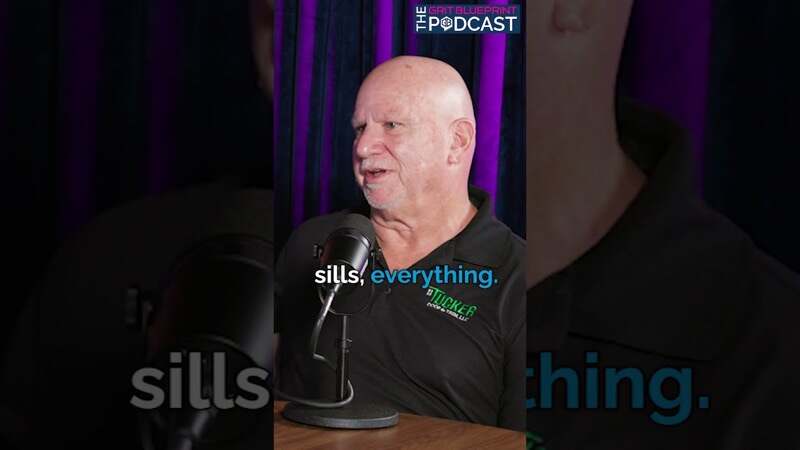
IT Vulnerabilities and Business Disruption, with Ross Brouse of Continuous Networks. Time stamps are from the podcast audio.
Ross Brouse of Continuous Networks explains how outsourced IT works for construction companies. He also explains why he charges a fixed fee. And he explains why an outdated ERP has to be fixed before AI and automation can help.
A Grit Guide original. This piece is built from our own interview.