Click any timestamp to jump to that moment in the video.
Introductions: Doors and Music
0:01 Stefanie Couch: Welcome to the Grip and Grip Podcast. I'm your host, Stefanie Chowch. This podcast is about branding, building, and business. It also highlights the grit that it takes to be successful in business and in life. Let's get started. Welcome to the show, John. Thank you for joining me.
0:29 John Wheeler: Yeah, thanks for having me.
0:30 Stefanie Couch: It's rare that two people that love doors as much as us get on a podcast together. I'm not sure. Maybe this might be the first time ever.
0:38 John Wheeler: It might be, yeah. Doors, doors and music.
0:41 Stefanie Couch: That's right. It's a weird combination that we have in common, which I think is why I like you so much from the get-go. But I'm excited to have you and talk a little bit about your background. You currently work at Paradigm, which is a software. I'll let you explain a little more in depth, but we've actually done some projects with customers that are implementing Paradigm, then and I, my husband, uh, through our company. And we've gotten to know you and several of the other team members and really some innovative stuff that you guys are doing over there in a place that's very much needed in the industry.
1:10 Stefanie Couch: So I'm excited to get into the nitty-gritty on that.
1:13 John Wheeler: Yeah, for sure.
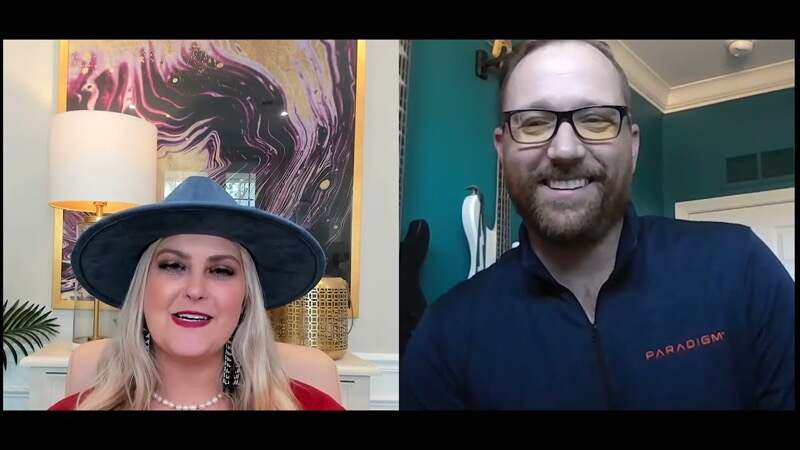
1:14 Stefanie Couch: Well, tell me a little bit about you. Who is John Wheeler, the music man? I see your guitar behind you, and the software salesman, the door guy. Who are you and how'd you get to where you are today?
From the Lumberyard to Lowe's to ABS
1:27 John Wheeler: Yeah, good, good question. So uh I guess that all of a lot of it started back, you know, always liked music. We'll get into that in a in a bit, but it all started, you know, my dad worked for kind of a door company, those big accordion doors that go between like huge conference rooms and a hotel or like between the chapel and a uh basketball court, like a church and stuff. And I would watch him, you know, prepare for presentations and do stuff like that.
1:55 John Wheeler: And you know, I'd try to earn extra money to buy you know basketball cards or whatever else it was. And uh yeah, so I would I would be putting together binders for him and presentations and printing stuff out and things. Um so the presentation part for sure started there. Uh, but really, if you're talking about the building industry, uh right out of high school, I got a job at uh a lumber yard, and like that's where I learned how to speak builder, um
2:22 Stefanie Couch: you
2:22 John Wheeler: know, and where I learned that I really, really liked the smell of lumber, and like you put it up and it smells great, um, you know, and the way that it looks and feels and it stacks up and everything, you know, lines up and things. You know, and then when you get to a lumber yard, you know this from your background, there's people that have been doing what you're about to start doing, they've been doing it for you know 30, 40, 50 years for some of them.
2:48 John Wheeler: And so just soaking all of that up and like this knowledge that was so foreign to me.
2:53 Stefanie Couch: Yeah,
2:53 John Wheeler: um, yeah, they they was it was like they were it was another form of English that just came supernatural to them. Um and it's funny, I got fired from there for not showing up, and we'll get into to film up later on. Yep, yeah, that uh that was a good solid learning experience. I was I was out on my own and had bills to pay and things, and uh yeah, they handed they told me they were gonna fire me if I showed up late again, and then handed me a check the next time I did.
3:23 John Wheeler: So
3:24 Stefanie Couch: then
3:24 John Wheeler: yeah, good learning experience. Um, you know, and from there they were started opening up a Lowe's uh right down the street from where I was living at the time, and I just stopped into the trailer and uh talked to Sean Parks, who was gonna be the the uh the store manager there, and he goes, I think we're gonna stick you with your your history and stuff, we're gonna put you back in the the door and window department. And I'm like, I don't know anything about doors and windows.
3:48 John Wheeler: He was like, Well, Meek sells them. And I'm like, Yep, they do. And he goes, That's good enough. And so Sean Parks took a took a chance on me. Yeah, that's all we need. And uh, you know, also started getting more serious with the the band that I was with, like at the time. So that's when kind of that the music thing starts to come in. But yeah, Sean Parks, uh, I think he's up in Idaho now, but he took a chance on me. Um, you know, just threw me back there.
4:16 John Wheeler: And it was just like the lumber thing. I got back, I didn't know anything about the ins and outs of doors and windows, and talking to people about their projects and like learning about the doors, talking to the the reps for the different companies just blew my mind. It was so interesting uh to learn all that. So after a few years of that, um selling projects, doing takeoffs, doing all that fun stuff, um ABS approached me and said, Hey, we would love to have you as a a salesperson on our on our team.
4:49 John Wheeler: You know, and there's a guy named uh Ray Fletcher. Uh later I would find to know him as old man Ray. But you know, Ian took a took a chance on me and said, you know, we're gonna hire you up. And I remember that was one of the one of the only times I can remember fist pumping. I was so excited to get this like your job. And uh when once I got there, you know, I kind of felt like you know, this is this is really like my time, my time to shine.
5:14 John Wheeler: I was always been determined to be the best. I'm upset when I'm wrong, I'm upset when I'm like second. And so I I got thrown into a pool of I don't know, 10 10 or so salespeople, and they're like, Yeah, if you put in 20 orders a day, you're doing all right. I was like, I'm gonna do like 50 orders a day. I remember the first time I did that, everybody like basically fell out of their chair.
5:36 Stefanie Couch: Now he's proved it can be done.
5:38 John Wheeler: Yeah, second set in the bar, I think. And it's not to like brag or boast. I I was just like so motivated to like learn everything that I could, and I was excited about it, and like I was just wanted to put in order because I wanted to type, you know, green screen, type in these SKUs and build a pre-hung unit and stuff. Um, and I think that that drive just led, I did everything. I ran a sales team, I did you know, built websites, I did marketing stuff, did huge presentations for some of uh our biggest customers.
6:11 John Wheeler: Um, and I was always that guy that you'd bring in for like likability. Um, you know, otherwise it's people just you know monotone and talking, whatever.
6:19 Stefanie Couch: Yeah.
6:20 John Wheeler: But just like with uh you know the Lumberyard and Lowe's, you know, learning from the people that are around you. You know, again, there was 30, 20, 30 year vets that were on the team there, and they they were willing to like tell you about things if you needed to know.
6:35 Stefanie Couch: Yeah.
6:36 John Wheeler: Um, and learning, soaking up all of that, you know, and kind of frankensining when you are, you know, in your your work life and what that looks like. I also during that time got a uh degree in architecture, which is always something that was super exciting for me.
6:51 Stefanie Couch: That's really cool.
An Architecture Degree and the Move to Paradigm
6:52 John Wheeler: Yeah, that was fun. It's just drawing pretty pictures, and it's funny talking with you know home builders and manufacturers and stuff, these architects get such a bad rap, and I understand why. You know, an architecture school, it's basically art school with like a rule that you gotta just dug draw, draw whatever, you know, we'll somebody
7:11 Stefanie Couch: figure it
7:11 John Wheeler: out.
7:12 Stefanie Couch: Whatever's natural. Someone has to build it, or you try to buy it, and it's like this is gonna be eighty thousand dollars for this front door that this architect through. Nope.
7:25 John Wheeler: And the you know, the pattern in the siding's gotta match up with the grid pattern in the window, and it's that seems easy when I got my ruler and pencil.
7:33 Stefanie Couch: It's all good when you're thinking it up at the drawing board. Yeah, a lot of ideas are like that for me too.
7:39 John Wheeler: Yep, and it's it's just ideas in general, but yeah, the architects get a real bad rap, and I I I take every opportunity to make fun of myself. Then from there, um I decide I love the industry, all of the the drama and the nuance, and you know, just everything that goes along with it. I love everything that goes along with it, but you know, we had good people at ABS, and I my path bumped into all of these good people, you know. And so I said, I'm gonna try to do something different you know with what I'm doing, but I I don't want to leave the industry.
8:15 John Wheeler: So I uh reached out to to Ted, who's my boss now, and he he took a chance on me, just like everybody else, you know, underqualified for the job that I was going for, um, but somehow sweet talked him into letting me come aboard. Um and that was a huge learning experience coming from a place where I knew everything about everything, and I knew everybody, and I knew exactly if somebody said something, I knew exactly what to do. And it took me about six months, um, and I still struggle with it that I'm the dumb one in the room.
8:48 John Wheeler: Like
8:49 Stefanie Couch: most
8:49 John Wheeler: times, even though I'm supposed to be the smart person, I'm I'm the dumb one, and there's so much, it's just opened up this whole other world to me. And when you're talking with customers,
8:58 Stefanie Couch: it's like some door nerd speak, and then you're still the expert.
9:01 John Wheeler: And it's funny. I went uh I was in the middle of Kansas talking some door nerd stuff, and I saw something out on the shop floor that I had never seen before. And so, like, right back to it. I thought you know, this this company or you know, this door stuff that I did for I've done for almost 20 years now. I was like, I don't know what that is. Like what you have to explain to, and I was now right back into the the dumb person in in the room, which is it's good how you learn stuff.
The Industry Has Its Own Language
9:28 Stefanie Couch: Now I as a door nerd, I want to know what it was, so we'll talk about that offline. But it's it's really cool how first thought of that is number one, we're the old people that have been in this 20 years now. Like I just want I would just like to bring that to the forefront. Um, because holy cow, how did that happen? But the other part is that there is all this really cool knowledge that people who aren't in the building industry, or maybe even people that just when I was selling building materials as a dealer at my dad's lumber yard, it's a very different conversation when you start being a manufacturer and you're actually using all these parts and components.
10:03 Stefanie Couch: Because if you call someone and say, Hey, I need a 3.0, six-panel, you know, fiberglass door, it needs to be a right-hand end swing, bronze hinge, bronze seal, you're pretty good, like four or nine jams, you know?
10:14 John Wheeler: Yep.
10:14 Stefanie Couch: That's it. You you get that lingo you're in. But then when you have to know all the other stuff that goes behind the curtain to make that happen. So my mind was blown the first day I walked in to Boise Cascade, and they were like, Hey, you gotta order the transoms that go on this, and the sash size is, and then we gotta figure out what kind of sash it is, and you know, blah, blah, blah. And I'm like, uh, okay, because I just always set a 3-0 door with 12-inch transom.
10:41 Stefanie Couch: Like, that was it, right? I didn't know all that stuff went into it. And there is a whole nother language that comes with this business, and we're talking doors, but you add windows, you add tricks, you add or composite decking of any kind, you add engineered wood, like everything has their own lingo, and it's regional. So the people in Texas call it something different than in Georgia and different in California, I'm sure.
11:03 John Wheeler: Even location being the same, same company in different locations, all different
11:07 Stefanie Couch: it's crazy, and I don't think people really were understand or grasp that until you're in the weeds, and that's where you start to feel like, holy cow, I don't know anything.
11:16 John Wheeler: Yep,
11:17 Stefanie Couch: I've got to learn everything, and it's overwhelming. I mean, I I do see that, and uh that's what I want to come back to that at some point when we talk about the next generation, but my story is very similar to that. So I I I hear that and also love the lumber business. You know, you're talking about loving the way it smells. Like, is there anything better in the world than a yard that has cedar on it where you walk through? Like, if I close my eyes and just smell that in my mind, it's home.
11:42 Stefanie Couch: Like, it feels like home again. And I don't think you can take that out of someone once they start to love that. It is kind of an industry that grabs you.
11:50 John Wheeler: Yep, it for sure does. And we'll we'll talk about later on. I think the your first day on the job and how that that goes. Nobody makes it here on on on purpose. They get into it on accident.
12:04 Stefanie Couch: Weird story for most people, right? You're either born into it or you get there in happenstance, like you said. I mean, and I would like to change that perception. I would love to have people that are in high school say, I want to go sell building materials, or I want to work in a lumber yard, or I would like to work at a software company that's doing building materials software, whatever it is. I want to go build houses. And this be like a thing that people want to do, like working at Google, which is not so lustrous right now since they've laid off like people.
12:35 Stefanie Couch: We everything is cylindrical and we know that, but I want this to be an industry where people in the next generation feel that kind of drive to look into this at least to at least explore it.
12:47 John Wheeler: Yep.
12:48 Stefanie Couch: Well, your story obviously doesn't end with you getting the paradigm job, but I want to go back because we are both music people also, and you have some guitars behind you, like we talked about. It's always something on the calls that I notice, and I love the fact that you're musical. So tell me about your rock star journey because you're not just like a cannot that kind of hangs out and plays guitar, like you've been on tour, you've done the whole deal. So, how did that happen and what was that like?
What Touring With a Band Taught Him
13:16 John Wheeler: Yeah, that's uh I learned learn lots of things that I still use today from doing that. You know, it started off with just four of us kind of messing around. Um, you know, we'd play at like a coffee shop or you know, a friend's house or whatever.
13:29 Stefanie Couch: Yeah.
13:30 John Wheeler: Uh but then it it turned into something that was it was more serious, you know. Like you mentioned, we we played on work tour, and you know, when you get to when somebody gives you the chance to play, you know, 12 dates or whatever it is on on work tour, it it means something, right? They're putting themselves on the line, you know, taking the chance on you, and you know, you've told them that you can do this, and you know, so now you gotta follow through.
13:56 John Wheeler: So preparation is key, you know, making sure that you know all the details are ironed out. You know, the architecture days, favorite one favorite architect is Mies Van Derow, and he says God is in the details.
14:06 Stefanie Couch: Yeah,
14:07 John Wheeler: you have to even if you don't use it and it doesn't come up, you have to know all the different scenarios. So that helps you get road ready. Um, you know, you travel around a lot, I travel around a lot, and you know, it's natural to me to be in a different spot and sleeping on you know an airport or you know, grabbing a bite to eat somewhere or running through an airport and all that. Um
14:31 Stefanie Couch: hard to be a diva when you travel that much. Like you gotta have your shit together a lot. Like just get through whatever and I it does build a certain resiliency, actually. I think travel really, whether you're touring on a music tour or going on a tour trying to sell doors, it doesn't really make a difference. You're just uncomfortable out of your norm situation, and you have to be adaptable.
14:52 John Wheeler: And yeah, you gotta figure it out. And if you brush your teeth, like one nailed it. Yeah,
15:01 Stefanie Couch: we always brush our teeth before sales calls, just to be clear to anyone listening to this podcast.
15:06 John Wheeler: For sure. Yeah, that that sounded gross, but I wanted to be tattooed on my arm, so stuff just comes out.
15:13 Stefanie Couch: Oh, so for those listening, what was the name of your band and what genre was it in?
15:18 John Wheeler: It was three weeks yesterday. Uh um, and we were kind of like pop punk rock type of type of feel. We called ourselves pirate rock because it was fun. Okay. Yeah, but it it wasn't emo, but it wasn't not, and it wasn't screamo, but it wasn't not. It wasn't like blink on 82, but it had kind of all that mixed up together.
15:38 Stefanie Couch: That's awesome. So you did the tour today in your life. Do you have a lot of music? That's one of my like bucket lists. I will have more music in my life moments that I write my journal every day. Um, it also involves a Steinway piano that I can yet to afford, but it will happen. I'm manifesting that. But what does that look like for you today? Because I know you have a family and you're busy with work.
16:02 Speaker 1: Yeah,
16:03 John Wheeler: sure. That's uh so um we bought this house four years ago or so. We always lived in a small place, but my wife, who's smarter than I am, figured out like how to get a house with things like an office that I'm standing in and stuff, which allowed me to be able to put these on the wall. So if dinner's cooking or doing something, I got five minutes, you know, I can just grab one of these off the wall. I have my uh effects pedal board.
16:28 John Wheeler: Um, some of it is right here below me, um, as well as like some keyboard things that you can't see. And then upstairs on my nightstand, I have like a recording setup. So it's got an iPad and like a digital interface and some things, and I can jot down ideas and stuff, and that happens probably every night.
16:46 Stefanie Couch: That's really cool.
16:47 John Wheeler: Okay,
16:48 Stefanie Couch: we're gonna do something together musically. I'm I want to do that. We have to make this happen because I think it's um I'm not sure what happens when like a pop opera person meets a pyro punk rock person, but we're gonna see what happens. It's gonna be really interesting.
17:06 John Wheeler: Should be fun.
17:07 Stefanie Couch: We'll read a really great song about doors.
17:11 John Wheeler: I can only imagine it would sound like Saturday morning cartoons with like rock and opera mixed together.
17:16 Stefanie Couch: Hey, Evan Essence does uh one song, La Cremosa, that's uh starts with like an opera and Mozart in and then it goes to Evan Essence. So it can definitely be done.
17:26 John Wheeler: Yep.
17:27 Stefanie Couch: I love it. Well, let's get back to them to the doors and the paradigm and all the things that we're doing. And I know you and I talk a lot about this. Tech is not something that the building industry has been known for historically. Uh fax machines are still alive and well in some of our building materials locations that I've seen. And there's a lot of I guess hesitancy to adapt to tech. Also, there's so many different acquisitions going on, and all these things are happening that people are mixing their ERPs, they're using, they're using different processes, and they're trying to come together with best practices.
18:05 Stefanie Couch: You're doing a lot of helping people figure that out with paradigm. And I want you to talk a little bit about how you're really being a bridge between manufacturers and dealers, and then their end users who are buying these products in the mill workspace. So windows, doors, that's really where you guys bread and butter. Talk a little bit about paradigm, what you do, exciting things y'all have going.
What Paradigm Does: Solving Challenges
18:29 John Wheeler: Yeah, we uh so at Paradigm, I used to say that I when somebody asked me what I did, I would say I sell software, and there's uh an older gentleman named Rick Cross called old man Rick uh here. And he says
18:42 Stefanie Couch: cross, we love you.
18:44 John Wheeler: Well,
18:45 Stefanie Couch: I don't like you, I can't speak for dogs.
18:47 John Wheeler: Yeah, don't let's not get too excited. Um he uh you know he says, no, we solve challenges, and it's it for the building products industry, so there's plenty of challenges and things uh that the industry is faced with, and our software is designed to solve or at least help in the right direction with those things, you know. The everything's built off of our customers' success, and yeah, it's really exciting to see you know somebody roll something out and actually see success or accomplish, you know, they have this vision, and it might take five years to get that fully realized.
19:24 John Wheeler: But seeing that, you know, hey, I reduced my contract errors almost completely, you know, right? They were 90 99, now they're like three percent contract errors, or you know, all of my orders, my fax machines unplugged. That's a that's a huge milestone. And
19:39 Stefanie Couch: yeah, praise the Lord.
19:41 John Wheeler: You know, or you know, our NPS score, which means that people love us, you know, went up to it's up at like 55, which is like unheard of in this industry. But
19:50 Stefanie Couch: that's awesome.
19:52 John Wheeler: Just solve many challenges. You know, we we rarely go in and just like show a bunch of buttons and say, like, yeah, if you click here and you click here and you click here, it's really like what are you trying to accomplish? And then we have this like huge tool belt that we can use to help you get there.
20:08 Stefanie Couch: Yeah, and there are uh when you say huge tool belt, there's so many ways to kind of get to the end road there because everyone's businesses are different. And I think that's one thing I've seen a lot. I came from a dealer background of my dad's. I it was a very small one location lumberyard. I worked with a very large distributor that was growing their middlework business for over 10 years, helping them scale and grow that business. And software was a problem there. It was a problem in my dad's lumberyard, it was a problem in other places that were my customers.
20:40 Stefanie Couch: Everyone's trying to solve the same issues, but it's all very different based on where you are and who you're serving as your customer and your end user. And that looks different based on the solution that paradigm can provide. So you guys are really bespoke and helping people figure out what works for them, which I love. It is something that I think will continue to be more and more important as millennials and Gen Z come into the industry because they are not going to use the fax machine that is in the corner.
21:08 Stefanie Couch: Um, they will not know what it is. So just to be clear, like software is key. We grew up on software, we grew up with a computer. I played organ trail and died of dysentery when I was in second grade. It was my favorite part of school. I loved it. We got to go one day a week for like one hour, and I cherished every moment.
21:28 John Wheeler: Yep.
21:29 Stefanie Couch: And
21:30 John Wheeler: though you don't need it,
21:31 Stefanie Couch: 100%. Definitely have to have it in the wagon. But Gen Z is even different. Like they've grown up with phones with the internet and all these technologies is right there in their fingertips for their whole life. They will demand this. So, how does your background with knowing lumbery arts, knowing Doors and Millwork, knowing the distribution space, how does that feed into helping with that customer bridge you're providing and also the development of like what really does matter to these? Contractors, these customers in Paradigm building their next things.
E-Commerce, Data and Connected Systems
22:23 John Wheeler: Yeah, I think uh you know, just one highlights that with that we hear all the time is like configurable e-commerce, and you and I have talked about that.
22:31 Stefanie Couch: Yeah.
22:32 John Wheeler: Um, you know, taking taking the one, you know, I have my dealer channel over here, my retail channel over here. How do I get that closer to a dumb homeowner like myself, right? Give me so I can go in there and have all the education that I want, and then you know, configure the products and maybe even buy them, you know, right there. The data and uh like deep analytics, and you know, that even gets into some of the AR um and or like AI and virtual reality stuff, getting into some of that and be able to visualize um products on the home, but they'll also be able to visualize what your business is actually doing using data and deep analytics, and then you know, making decisions that are based off of facts rather than you know, gut feeling.
22:59 John Wheeler: The gut feeling's part of it that'll never go away. But
23:01 Stefanie Couch: yeah,
23:02 John Wheeler: um, and I think the the last one uh it's kind of two different things, but like having one system that's up in the cloud, which makes it fast and all that fun stuff, but being able to then integrate that to other systems, you know, when we're not we haven't adopted a lot of technology as far as the industry is concerned, and so being able to be open enough to plug in in multiple different ways to multiple different systems where it needs to be plugged into. That could be a a cabal machine that's got an awesome API, and like, hey, I I click order on the button and like I tell the machine what to do, you know, it's that's life-changing for some of these these door shops that you're at.
23:41 Stefanie Couch: And shout out to Nate Cabal and his team to like what they do with those machines is crazy. Like, I love those machines, they're amazing, and it's only getting better. Like every year they come out, and there's other manufacturers that are doing good stuff too of machinery, but that to be able to talk to that, think about the human error that's taking out. I always think about that because we had a lot of people working in a door shop in one location, like you know, 100 people in one location, 200 people in one location.
24:11 Stefanie Couch: That's a lot of people that could do the wrong thing or make the wrong choice on a button, or and not that it can never be wrong with machines, but the more you can automate things, and that's true in everything from operations to sales to marketing, the more we can automate and systematize things, the less human error, and also the less humans you have to have because we can't find people to do this stuff. It's not like people are lining up to take these jobs to build doors.
24:37 Stefanie Couch: There are people, and that's awesome. They're great teams, but we always needed more people almost at every single location that I've seen in the US, every place you look has a listing for door shop material handler, door shop builder, door shop whatever it is, salesperson, whatever the job is. We will have to keep automating. So with Paradigm being able to talk to the machines and then talk to the ERPs, I mean, it's pretty awesome. I I think it's probably a 50% reduction on labor, just not having to do the quote and then the sales entry twice.
25:12 John Wheeler: Yeah,
25:13 Stefanie Couch: doing that one thing. I think it saves 50% of your time.
25:15 John Wheeler: And you see, you know, you mentioned all the job listings and it's you know, everybody's project list, everyone that we talked to, you know, this project's competing against these five projects over here, and which one goes first? And it's not necessarily that we're you know, we're not getting rid of anybody, but you can take the that 50% of labor and oh now we can like implement these changes out on the shop floor, we can implement this on our sales team. Hey, let's grab a CRM and then plug that in.
25:41 John Wheeler: And you can do all of these things because now you have the efficiencies to to help that out.
25:46 Stefanie Couch: Yeah, foresee a future where the like elimination of jobs, it's just that the jobs get higher quality for people to move up or to you know do different things, like you said, to expand.
Capturing 30 Years of Tribal Knowledge
25:58 John Wheeler: Yep. Yeah, and I think that you know, part of that also is there's an aging workforce. You know, we've we've talked to plenty of people where you know, I'll just throw, you know, Kevin, for example, has has like done um, you know, he's done the scheduling at this company for 30 years and he's seen it evolve and grow. And
26:16 Speaker 1: if he
26:18 John Wheeler: hasn't had a day off in 10 years or whatever it is, or um
26:22 Speaker 1: when
26:23 John Wheeler: I was out in in uh Kansas, there was a lady, and it's if she's not there, they don't make doors, and you know they they kind of plan things around her. And so implementing some of those seasoned veterans
26:34 Speaker 1: with
26:35 John Wheeler: digital tools, and so let them you know put that tribal knowledge into a machine so when it's time for them to move on and you know live in Cabo or wherever they're gonna live, you know, you don't lose that knowledge. And then, like you said, things still flow out on the shop floor, you're still super efficient and you know, kind of building some of that into there.
26:54 Stefanie Couch: Yeah, and that's another problem that Ben and I are trying to solve with our business uh construct you with our training is how do you train the next generation with 30 years of knowledge from someone's head that I mean it's impossible to do it fully, but the good training programs can at least get people in the door to understand what is an interior door, what's the difference between hollow core, solid core, MDF, silent rail, all these little weird nuances like why is an engine three-quarter door always an exterior?
27:23 Stefanie Couch: Why are there engine three-quarters and engine three-eights options in interior? I mean, I'm getting into the weeds because that's like literally top, top stuff. That's not an in the weeds. That's day one, you would need to know that to sell doors. So, how do we educate these people that come out of high school or come out of college and have only walked through a door before? They don't know anything about what they're looking at. We're trying to solve that with education that they like with technology, which is a giant undertaking, but we have to start somewhere, right?
27:54 Stefanie Couch: You got to start with the basics and then hopefully they catch on. But to capture this knowledge of these people that have been on the floor building doors or shipping or staging, scheduling for 30 years. And I think the statistic is one in four people in our industry are going to be retiring in the next five years.
28:14 John Wheeler: Oh wow. I haven't heard that. That's crazy.
28:17 Stefanie Couch: Yeah, and that's that's everywhere, like in all construction, but that's giant, and that's only the next, you know, four or five years. What happens in 10 years? Probably most of those people we're talking about will be retired. And they'll be working very small hours to just keep, you know, we have to find a solution. And my thought is that your competitive edge is your people and it's your technology. Those are the two things I believe in this business are true competitive edges. If we can find the technology to train the people that are different types of people, millennials and Gen Z, to be the next gen, we'll solve the problem.
28:53 Stefanie Couch: And whoever does that fastest and most efficiently will win the game.
28:58 John Wheeler: Yep. That's a
29:00 Speaker 1: a
How a Door Will Be Sold in 10 Years
29:01 John Wheeler: hundred percent the case. I love my favorite question as of late, and I I asked you this at our our annual conference
29:08 Speaker 1: in
29:09 John Wheeler: 10 years or five years, you know, how is a a window or door gonna be sold?
29:14 Stefanie Couch: Yeah.
29:15 John Wheeler: Most people are they they race, they they say something, oh, you know, there it's always gonna be X, but then they kind of like sit back and think about it, and it's exactly what you talked about. It's not the way we're doing it now. I don't know exactly what it is, but it for sure isn't what we're doing.
29:30 Stefanie Couch: I mean, I it can't not be online. It doesn't now maybe some like super, super, super custom thing is not, but it's just like every other thing that's more of a commodity now is being sold online. They we will, they will, someone will figure out how to do that. It will be an Amazon type model, it may be somebody else, the dealer, or somebody's distributors selling online, but someone will be doing it, and then the people who refuse to adapt and get online, they will be shut down like Blockbuster and Kodak because they refuse to adapt.
30:02 Stefanie Couch: You know,
30:03 Speaker 1: we had a
30:03 John Wheeler: wonderful customers that are are getting close with some e-commerce stuff, and it's
30:08 Speaker 1: it's
30:08 John Wheeler: so exciting to work on stuff like that, you know, because you you see them, like I mentioned earlier, they have this vision and they come to you with it and they say, I want to do X, and you're like, We could we can help you do that.
30:19 Stefanie Couch: Yeah,
30:20 John Wheeler: and they're they're getting really close, and then you can tell you just know it's gonna be successful, right? You've done all the planning and everything, we just need to get it done. And there's we have a couple customers that are getting uh really close, and you I've just I can't wait to see it work because just like we said, it it has to. It's and it's not not because we're so great, it's not you know anything like that. It's because when it's it's a need in the market, and they're
30:45 Stefanie Couch: just telling us what it wants, the consumer is asking for what it wants. Now, it may not be like every single person in the world is saying, I want to buy doors online, like no one's probably sideplane to say that yet. But at the end of the day, if you look at the trends for every other product, it is online,
31:03 John Wheeler: yep,
31:03 Stefanie Couch: you know, and it will be, and that's the same thing I feel like with social media. With I talk a lot about personal branding. If all the other industries have been successful with that, our industry will eventually become that. It may take an extra five, 10 years, but it will happen. It always does. It's just like the internet. I mean, I remember writing up tickets at my dad's lumber yard by hand on a three-ply carbon copy machine. And one day we got a computer with triad, is what it was called, ERP at the time, and it changed my whole life.
31:37 Stefanie Couch: And I remember when I was eight learning the 2408 PC skew for PUDs, and like that's the first skew I ever learned. I still remember it, and that changed our whole business one day. So that's the same thing with this. It'll happen, and we talk a lot about e-comm. You know, there are limits to what I feel like consumers should have to know to be able to buy doors, but the dealers already know this stuff, so it may still be through a dealer that this is happening, but it's gonna be like, hey, I like this door, I like the way it looks.
32:07 Stefanie Couch: Here's my price range. And then we ask you a few questions about hey, do you have two by four walls or two by six walls? Do you like a this color seal or this color seal? They don't have to know what a seal is to know if they like silver or bronze. Like it's pretty simple, right? Pick the things, move on. Just like buying a car. Do you know every little inner working about the engine, or do you want to know what color it is and what the interior looks like?
32:29 Stefanie Couch: I mean, it's if you want to know or stuff.
32:33 John Wheeler: Was it gonna be slow?
32:37 Stefanie Couch: Like, and are there safety features? And that's the stuff people care about. And it's the same thing with I think doors or any other building material product for that matter, it will come. So for those of you who are like, this girl's crazy, she probably is, but not because of this thought. It's not because of e-comm. And it's the same thing with marketing, like I said, it's coming. So if you're sitting at your lumber yard or in your distribution location thinking, I have a lot of great relationships with contractors or with builders or with dealers, I don't need social media, I don't need marketing, I don't need this.
33:12 Stefanie Couch: Millennials and Gen Z are coming for you, boo. Like they're coming and they will demand it. So you better start thinking about it now. So you can be ahead of the curve. You want to be tip of the spear on this stuff. You got to. At least test it. Don't like you don't have to spend 17 million dollars on social media ads. Just try it, just post it on the phone. Like, what could what's the worst?
33:33 John Wheeler: It's funny because the you know, you you talked about where the consumer stops and like the dealer picks up, and where the dealer stops and the distributor picks up. You know, if you you think about two-step distribution, you're really having somebody else, you're giving them all the tools and letting the dealer place all the orders, and you just kind of sit next to the cash register and make sure it doesn't and uh
33:56 Speaker 1: you can
33:57 John Wheeler: do that with a homeowner, you know, getting closer and closer to the the actual builder or the homeowner or the contractor that's that's buying and touching the the door when it gets there or the window or whatever, and then giving them you know, wrapping that in education. Hey, I I told you I was a homeowner. Here's some more education on top of all of this stuff. So now I'm educated enough to order this thing, but I might not install it. I might still go to my you know local hardware store and get it installed, but putting the the power of the hands closer to that that end user, whoever that might be, and giving them an experience that they want or need or you know, whatever it is.
34:37 Stefanie Couch: And some homeowners are never gonna do that, they're always gonna call a contractor or building supply, and that's fine because there's some builder that I I remember I had a guy that bought like doors all the time from us at my dad's lumber yard. I mean, every day. And every single time he bought a door, he would say, Hey Seth, what's the roof opening on this 306A in-swing door? And I'd say, Hey, Steve, it's 38 and a half by 82 and a half, the same thing it was yesterday when you asked me, and 42 times before that.
35:04 Stefanie Couch: Because he wasn't gonna learn it and he didn't care. And some people are always gonna be that. And you that's where the value add comes in. But we've talked a lot about what is the value in 10 years of two-step distribution? And I think where it comes in is these people that are winning on like the manufacturing side that have the real value add components, the trusses, the engineer wood, the doors, the windows, things that are being manufactured, that's the value. So for me, when I look at like where can we win in distribution in two-step, that's it.
35:34 Stefanie Couch: And I think most good distributors have figured that out and they're going all in on these things because they see what's coming, they see the writing on the wall. Um, and that's the thing is like some of these building material dealers now are bigger than a lot of the distributors are. It's not a game of volume anymore for them. It's got to be how do we add value? And you can do that by training, you can do that by technology, you can do that by your people, service.
35:58 Stefanie Couch: That there's still ways to win. It's just different than it was winning last year or 10 years ago.
36:03 John Wheeler: Yep. Yeah, and the principles are still there. You know, you mentioned the partnership and relationships and things. That'll never go away. That's that's the what the the this whole thing, you know, from the the concrete up to what every what makes the
36:16 Speaker 1: building industry like tick is those relationships. So, and the people that are gonna be successful keep that around, then yeah, augment just like you said, augment the the process
36:26 John Wheeler: where
36:27 Stefanie Couch: you think just don't be scared of the tech that it's gonna take that away because it's not. It's just the people that use technology with the relationships, with the service, with the great products, and they partner it with that technology, they'll be better than the people that don't.
36:41 John Wheeler: Yep.
Using AI for the Small Tasks
36:42 Stefanie Couch: You know, it's like people say, oh, AI is gonna take all these jobs. Tell me how, where they're gonna take jobs that no one wants to do anyway. It's gonna take a job to wait that we can't find people to hire for the amount that they should be paid for those jobs. People that use AI will be more competitive, more hirable, more promotable, and stronger candidates than people who choose not to use AI. That will be where you get lose your job over it, is somebody that partners with AI to be better because you can be an expert at anything with Chat GPT.
37:14 Stefanie Couch: Like now, still there's some bull crap on chat GPT. So if you're listening to this, always tell it to cite the sources because it'll make stuff up if you don't do anything about AI. It will find an answer, it will not be true.
37:25 John Wheeler: And proof read the email as you have it due.
37:28 Stefanie Couch: Yeah, use it with caution, but use it because it is it is here, it's coming. I'm doing a keynote next week on it to an industry group. AI is is a big part of how we get these small tasks that a human doesn't have to do to get done. And I think that's powerful. So
37:47 John Wheeler: my my favorite question, I was just with one of our customers, and I asked the owner of that company that that my favorite question, you know, where's it gonna be in 10 years?
37:57 Stefanie Couch: Yeah.
37:57 John Wheeler: And he could not stop thinking about it. And when he got back to his office, he asked Chat GPT uh the same question a few different ways, and it spit out you know the the digitalization and automation. I got the list in front of me, you know, prefabricated and and modular solutions, integrated smart features, you know, customization, personalization,
38:18 Stefanie Couch: really,
38:19 John Wheeler: you know, the product stuff. It's got to be energy efficient, sustainable, advanced material technology. And it was like that nailed it. I didn't have to sit and think. This at least gives me something to build on.
38:31 Stefanie Couch: Yeah.
38:31 John Wheeler: And then you go from there. Or you know, I don't want to type out an email. I'm just gonna tell AI, hey, type out an email, make it sound nice, don't be too direct, and then you proofread it and send it. Now you have more time to do other stuff.
38:43 Stefanie Couch: The stuff that only you can do.
38:45 John Wheeler: How
38:45 Stefanie Couch: can you how can you utilize your amazing human brain for the things that only the amazing human brain can do? That's how people should look at AI instead of as a competition, as a, oh my gosh, they're gonna take over the world. Now, look, AI may take over the world one day. And I can't I want to be on the record for saying that it could happen, but hopefully we have parameters in place to not do that. But at the end of the day, it's a tool that people are using.
39:12 Stefanie Couch: If you choose not to use it, you're gonna get left behind, just like if you choose to keep your fax machine and not get on an internet system 20 years ago.
39:19 John Wheeler: I like that um the things only you can do.
39:23 Stefanie Couch: Things only your human brain can do. Because there's so many little tasks that you know, we have a a tool coming out where we can automate certain things like Google reviews. Okay, well, every time that you invoice a customer, we can automate to give you an email to that customer to say, Hey, would you like to give me a Google review? Here's the exact link. You click one thing and then you go review it. Then AI can actually go in and you can teach your AI what you want it to say, and it can actually respond to the review.
39:52 Stefanie Couch: Like, oh, thank you so much for your compliment on John. He is one of our you know amazing sales leaders, and we're so grateful to have him. We're amazed that the software is doing what it's doing for you. Please let us know if we can support you in any way. Guess what? A human didn't have to do that. And Google prioritizes reviews that have a reply to the review, so you instantly get better reviews because of that prioritization. You never touch it. Because who has time to go reply to 400 reviews if you got 400 in a week?
40:20 Stefanie Couch: That's a lot of time, right?
40:22 John Wheeler: So
40:23 Stefanie Couch: at the end of the day, I think there's just some easy little check boxes we can take off the list that you don't have to mess with.
40:29 John Wheeler: Yeah, 100 100%.
Attracting Young Talent
40:32 Stefanie Couch: Let's talk about young talent. So we're both we're both young. I'm gonna give us that compliment. It's probably not true anymore.
40:39 John Wheeler: That's all right. 20 20 21 for me.
40:42 Stefanie Couch: We used to always be the youngest ones in the room, and I was like so proud of that. And now there's like 15 people that raise their hand that are younger than me, and I'm like, this is one of you, like, holy cow. But we do have a lot of young talent that we're trying to attract into this industry. It's not a super sexy business. Like we talked about, it's very nuanced. There's a lot of technical stuff that you probably wouldn't know unless you were already in the business.
41:07 Stefanie Couch: It's not like Instagram where you probably have seen it your whole life. What would you say to someone who wants to get into either the the lumber business, the the technical side of the business, millwork, or even selling software for the industry that wants to get in, they're not sure where to start. Why would you say that people in young roles would want to come into this business and stay?
41:31 John Wheeler: I got a lot of good thoughts on that. Um, like we talked about earlier, right? You you almost never get here on purpose.
41:40 Stefanie Couch: Yeah.
41:40 John Wheeler: So many stories you talk about, oh, yeah, you know, I needed a job and I got it, and you know, I've been here for 25 years, and they're like running the company, you know, general manager type person. Um, but you know, pay attention to the the the nuance and drama, um, you know, and the the beauty of the industry. You know, think about the end result, you know, people moving into their their new home that they're so excited about, or you know, they're
42:07 Speaker 1: actually
42:08 John Wheeler: reducing energy bills and the things like that, and then the the drama of the industry is is fun and new products and trends and things. Um, you know, you're a part of the biggest industry in the the country, right? The the building industry drives the whole thing. Um, you know, and then think about the things that you can take from this. If if one of the building industry is not the end goal for you, think about what you can take, right? There's disruptive ideas that come out all the time, and like understand like
42:36 Speaker 1: how one
42:37 John Wheeler: of the brought that idea in, they realized the problem, and then they disrupted the industry because it happens in this industry um you know quite a bit.
42:46 Stefanie Couch: Yeah,
42:47 Speaker 1: and so when
42:48 John Wheeler: figuring figuring out some of that, and then if you're a company trying to attract um you know younger talent, don't necessarily say like, hey, come here and stay here in the building industry, you know.
43:01 Speaker 1: Yeah,
43:01 John Wheeler: maybe play your play yourself as a stepping stone. There's so much stuff that you can learn here, and you know, the the relationship building things that are so important and lacking in in other you know industries and things, you can learn so much about that, and but really talk about you know, you can you can you're impacting lives and changing things, you know. You you actually have an impact on the the nation and things along that line, you know, and then paid internships, that's a way to get somebody in, you know, that will pick your opportunity over another one.
43:36 Stefanie Couch: Sure.
43:37 John Wheeler: You're paying it might be you know half of what they should make, but you know, that getting paid to do something for school that might be a way to you know flag something for it. But you know, hey, you if you want to be an architecture um or an architect, you know, come come work for us and you know we'll show you how to do
43:56 Speaker 1: a lender
43:57 John Wheeler: takeoff.
43:57 Stefanie Couch: Okay.
44:00 John Wheeler: Doing different things like that and just telling people that you can you can learn a ton here. We know you won't be here forever, but like come over here. It's a great company. You know, we're we're the biggest employer in the town sometimes.
44:11 Stefanie Couch: Yeah.
44:12 John Wheeler: You come come work for us and you can move on to something else. But you know, we we have these tools to teach you.
44:19 Stefanie Couch: There's also a lot of money to be made in this business. Like that's not to be understood. There are people making millions of dollars a year doing things in construction all the time. Not me and you, but it's somebody. I know a few of them. But the thing is, like you you can make a lot of money and make a great living working for a company that's doing amazing things, you're helping people, like you said, and you're making a wonderful living for your family. And really good point, you don't have to have a college degree for a lot of these jobs.
44:49 John Wheeler: Yep,
44:50 Stefanie Couch: you don't have to get student form, you don't have to do any of that. You can come straight out of high school, day two after graduation, and go do a lot of these jobs, and they will train you. Some places have training programs.
45:02 John Wheeler: Yep.
45:02 Stefanie Couch: I think that's a we've already talked about this a little bit, but for employers to draw young talent, if you don't have any sort of training program or a career path trajectory that's very clear, millennials and Gen Z are going to be acting. They might come when they have to, but they will not stay because they prioritize all the studies show, like everything that Gallup's done, Sherm, all these different organizations that study like talent and millennials and Gen Z and what's happening with them. They care about work-life balance, they care about their dogs.
45:34 Stefanie Couch: I care about a lot about my dog, just to be clear. They care about having homes with like yards for their, you know, their animals and they're doing gardening, they're doing all this thing that other generations didn't do, and they care about their development.
45:46 John Wheeler: Yep.
45:47 Stefanie Couch: They want to be poured into and they want to be developed strategically, not like, well, we could get you a mentor and you'll probably maybe in 20 years be doing X, Y, and Z. No, they want to be like, hey, first six months of the job, this is what it looks like, and here's how we're going to develop you. Second wave, if you you know go into ops or you go into sales, this is what it looks like. And there are some companies out there that do a really great job at development.
46:12 Stefanie Couch: There are some that have zero. So again, competitive edge. If you want top-tier talent from schools, colleges, young people, or even millennials that have already been in the workforce for 10, 15 years, that's how you get them. Bring them in, show them how they can advance, and then do what you say you're going to do on the training, and they will probably stay actually a lot of times. I mean, they want to be at a place where they're appreciated and they're trained and they're developed.
46:37 John Wheeler: Yeah. And the the appreciation, I think that comes naturally in this industry. If you help
46:42 Speaker 1: help
46:43 John Wheeler: somebody do something, they're appreciative, you know, right? You know, the new person shows up and they they do something right. You know, somebody's gonna tell them, yeah, you did something great today. You know, good, good work on that, and that positive feedback is something that I've got throughout the years, and it's funny because it comes from an industry that seems so gristled and you know, not like that, but it's it really is underneath you know all the the lumber and concrete and doors and things, it's touchy-feely and squishy.
47:11 John Wheeler: But
47:12 Stefanie Couch: yeah, I think there is a lot of really, really great people in this industry. I always say salt of the earth type people that most of them care about other people that they're working around,
47:21 John Wheeler: yep,
47:21 Stefanie Couch: and just really good people to hang out with, like just to be able to come to work with and say, like, these are my teammates every day.
47:28 John Wheeler: Yeah, the the teammates is huge. It
47:31 Speaker 1: I don't when
47:31 John Wheeler: it's really, really rare that you you walk into an organization and it doesn't feel like a family that's been together forever or a band that's traveled around and like been through the ringer, right? Most people went through the recession, they went through COVID, and they're just like, Yep, when we're happier together because of all that kind of stuff.
47:51 Stefanie Couch: It's hard to leave a place when you feel that kind of affection for some of your coworkers, even it's not all of them, but some of them, even if you have another opportunity or you want to go do something else, like you kind of long for that camaraderie. It's hard to replicate that when you've been through so much together. So I do think people stay sometimes because of that. If you build that culture, I mean, it's hard to deny that when you walk into a place and you can see that in a lot of these businesses that, like you said, have people 20, 30 years and then even younger people that have been there since they're 18 and now they're 35.
48:20 Stefanie Couch: I mean, that's see a lot of
48:22 John Wheeler: ABS for the majority of uh a good majority of my life. I'm 41 and I was there for 15 years.
48:28 Stefanie Couch: Yeah, a long time.
48:29 John Wheeler: Chunk of my life.
48:31 Stefanie Couch: And then valuable lessons. Like you couldn't, I know for me, I couldn't be doing what I'm doing now if I hadn't have spent the last time doing what I was doing at my old job for 10 years, and then time before that with my dad. So we built on our successes and the challenges may be different, but just like you said with your band, I believe that everything in life can teach you something for your next step in life. It may be a failure that teaches you, it may be a win that teaches you, and probably a combination of both.
48:59 Stefanie Couch: But you learned kind of planning and strategic, you know, thoughts on how to line up the tour for a band. Now you use that in your sales career and your travels and all these things. You'll use whatever you're learning today and whatever you do next. So it's really cool how that happens. And I think for young people, I if someone is listening to this, don't underestimate the job now that you don't feel like is where you want to be or exactly what you're doing is like not your end goal.
49:26 Stefanie Couch: Because number one, it's it's a sprint for your first part of your career. You want to get a lot of under your belt experience. I know that, but it's a really a marathon, and you've got to look at it that way. I sometimes got very impatient. I'm not a patient person, and I I would like to have said to myself, like, slow down, Cowgirl, like you're gonna get there. You just gotta give it some time. And I eventually did, but I spent a lot of time thinking about things that didn't matter because I was just trying to rush things so much.
49:55 Stefanie Couch: So give it time. Gen Z, especially, I think, deals with that wanting to like be in a really high position the first day of the job. That's not realistic. Um
50:05 John Wheeler: you would fail also,
50:06 Stefanie Couch: exactly, because you don't know what you need to know and you have no idea what you don't know, which is the scariest part.
50:11 John Wheeler: And you don't you don't have the respect either of the people around you, you know, not not to say the young people can't be like leaders of companies. We have customers where the the second or third generation, you know, in their late 20s, are running the organization, and it's you know, and they're super successful, but just like you, they like grew up when they were three years old, they were playing tag you know out on the shop floor and they they understand how it works. They they've seen their parents or grandparents or somebody, you know, go through the the ringer of you know how important it is.
50:42 John Wheeler: Because like I said, there a lot of our customers are in these small towns who are the biggest employer there, and that that that weighs on you, right? That has to be a part of every decision you make. Yep.
50:52 Stefanie Couch: Yeah, 100%. Well, I'm gonna ask you one last question. I have loved our conversation today. You're always we have so much fun together. Um, it's usually over a beer at a show or something, so this is cool to have a different medium. This podcast is called the grit blueprint. So I want to ask you, you know, you've been through a lot, you've seen a lot, you understand this industry. What does the word grit actually mean to you, whether it's in work or in your personal life?
51:20 Stefanie Couch: And how is it kind of played into who you are as a person today and who you want to be in your life as you continue?
What Grit Means: Show Up and Trust Yourself
51:27 John Wheeler: One that is a good, good question. I think uh for me, there's not really you know the work-life balance, you know, I fall into that that group. Um, you know, I I flow in from one one to the next. So um kind of my my personal life and and professional life, you know, kind of kind of meet in the middle. Um, you know, but one of the things that I think is great is uh doing doing things that are scary, like going on a podcast, like doing that for the first time.
51:56 John Wheeler: You know, I my wife told me earlier, she said, you're you're excited for this, aren't you? Like I'm overwhelmed and like nervous and very excited to do it. Um, you know, doing something like that is is good. Uh getting yourself out there and it builds up your your grit and determination and it your resilience and you know things and failures and things will bounce off of you a lot more the more that you do that.
52:20 Stefanie Couch: Yeah.
52:22 Speaker 1: And there
52:22 John Wheeler: one there's a uh a music quote from a group called Lights, and it says you don't have to feel safe to feel unafraid. So you know that's it always always gets me such a good line and so true.
52:36 Stefanie Couch: Yeah.
52:37 John Wheeler: The next one for me is is showing up, right? Whether that's
52:41 Speaker 1: being
52:42 John Wheeler: a parent and just showing up to activities, picking your kids up from school, sitting down on the floor and playing Legos with them, or that's you know, showing up for work on time. I'll learn that when I was 19 the hard way. Um, or things, meetings that you don't want to have, uh, you know, just always show up. And part of that is you know, doing what's right when it's time to do it, right? And that could be you walk through with a um, you know, the owner of a company and they're walking through and they see you know a garbage label on the floor, they'll pick it up and they'll throw it in in the garbage.
53:16 John Wheeler: Um, you know, and just like at home, you walk through and you see a toy on the floor, you you put it where it goes.
53:21 Stefanie Couch: Yeah.
53:22 John Wheeler: Um, and doing that repeatedly, because if you do that with the small stuff, you're gonna do that with the hard stuff. And so you know, doing what's right when it's supposed to be done is important. Um
53:34 Stefanie Couch: how you do anything is how you do everything, is one of my favorite quotes.
53:39 John Wheeler: That's a good one.
53:40 Stefanie Couch: Because I mean, it really is true, and I think when you show that to your people uh as a leader, also like that person that picked up that tag that's on the garbage floor puts it in the garbage. Someone else saw that person do that, so now they know that's what they should do. Your kids are seeing you pick up toys eventually at some point in their life, maybe not today. They'll know they'll know that they should pick up the toys too. But how you do anything is how you do everything.
54:08 Stefanie Couch: I say that a lot because it's so true.
54:10 John Wheeler: Yeah. Two or three more things. Um to shut up, when to speak up is also important, but like no know when when to shut up, right? When have you said enough? When is it not the time to say something? Um, that helps with relationships, it helps with not looking dumb, which I do a lot. Um, that's all right. But be okay with being wrong. You know, if you do, we do sales trainings um twice a year, you know, as well as some other stuff. We all get together and do sales trainings.
54:43 Speaker 1: And I
54:44 John Wheeler: know everybody gets so annoyed with I talk the entire time. I answer every question, I'm I'm sitting in the front, but that's the only way that I learn. I throw myself out there and I give wrong answers all day long. Get told why it was wrong, and that's how I learn. Um, and then uh I got a coworker uh that's been here forever. His name's Brant Olson, and I tried to emulate what that guy did for forever. He was he's like God's gift to paradigm. I s I swear.
55:11 John Wheeler: He's done everything, he's been everywhere. Um, he's super smart, his brain works in a way that mine doesn't. And I tried to emulate that, and it it didn't work. And so I took bits of him that I liked. I took bits of you know, Rick that we both know, and Ted, um, you know, and then people across the organization, as well as all my my previous experience. You know, I talked about old man Ray Um and everybody else. Um, but Frankenstein that together and build your like ideal self.
55:41 John Wheeler: Take the bits that actually work for you. Brant told me this is where Brant comes in. I got away from that. Brant Brandt told me this is about a year and a half into it. And I I go, dude, I had you know five or six calls and and like long demos with people, and I didn't mess them up, but they didn't feel great. And he goes, You just gotta trust yourself. And you know, that that's totally Brandt. He says like four words and it's everything you needed to hear.
56:12 John Wheeler: It's so annoying because I'll talk for 45 minutes and he's like, Yo, just trust yourself. Damn it. That's the the biggest thing, like knowing you know, all of the other stuff that I've said, you know, things doing things that are scary, showing up, you know, doing what's right. Just
56:28 Speaker 1: want
56:29 John Wheeler: to trust yourself that you know how to do this. You just need to figure out maybe you know, the preparation. That's where the preparation comes in. But at the end of the day, you know how to do it and trust yourself. So when you jump off that cliff, there's there's something, something there of a tree branch to grab onto, or at least it's you know, it's not cactuses like you see in the commercials when you all the way down.
56:50 Stefanie Couch: Yeah, I think that's such a good point to close with. It's really that ending of
56:55 John Wheeler: when
56:55 Stefanie Couch: you have to embrace yourself and your own strengths and your abilities the way that you do it. Stop trying to like fit into someone else's reality and do it like they do it, because you're just gonna be a crappier version of them instead of being the best version of you, which is always gonna be a culmination of like everything you've learned and taking, like you said, bits and pieces of each person. But no one is gonna do it like I will, and same thing with you.
57:21 Stefanie Couch: And once you embrace that, that's why I love the strengths development stuff so much, is once you know what your strengths are, and then you lean into that and try to hone those and really make them superpowers, and you're trying to do it the way you should do it for your strengths.
57:34 John Wheeler: Yeah,
57:34 Stefanie Couch: that's like hockey stick growth, exponential growth can happen then because you've stopped trying to fit into a mold that you are not gonna fit into. No matter how you move and try and contort, it's not gonna happen. So
57:48 John Wheeler: you understand where you need to put in the work so you can because you you have to put in the work to like real part of you, but once you understand what that is and what path you're going down, you know, then you can focus all, you know, whether it's reading books or watching videos, you know, getting another degree, whatever it is, once you figure that out, now I'm on that path, and that's what's going to shoot you up.
58:12 Stefanie Couch: I love that. Well, that's such a good way to close because I think that's the essence of it's grit, but it's grit your style, you know. And that's the thing is that you you you can't have any waltz's path, and you shouldn't want to, because it wouldn't be authentic to you anyway. So you're a rock star, we already knew that. I should probably make you play and sing a song, but I'm
58:31 Speaker 1: not
58:31 Stefanie Couch: going to. But maybe next time we'll just do like a musical episode of the podcast, which should be really interesting. I saw a family guy episode where like they sang the whole thing and he had a theme song as he was walking, and I really thought like we should try that in real life. It'd be pretty fun.
58:46 John Wheeler: It'd be more like the other Family Guy episode where they they Peter and Look think they're singing really well, but they're not because it
58:53 Stefanie Couch: would only be fun for us. Thirty seconds into the podcast, I'm never unfollow, I'm never listening to this again. Well, thank you so much, John. I'm really appreciative of your of your friendship and all the knowledge that we've shared together. I can't wait to keep building amazing technology and doing great things and changing the milwork world, hopefully, together. So I love that. You're awesome. And for the listeners out there, we will hear from you on the next Grit Blueprint podcast. Thank you.
59:24 John Wheeler: Thanks. Um