How to Test Store Technology Before You Sign a Contract
Adam Gunnett of Busy Beaver asks one question and runs a 30 to 90 day trial. He wants a way out in writing.
For educational purposes only: general information, not legal, tax, financial or safety advice. Check your local codes and talk to a qualified professional before you act. Disclaimer

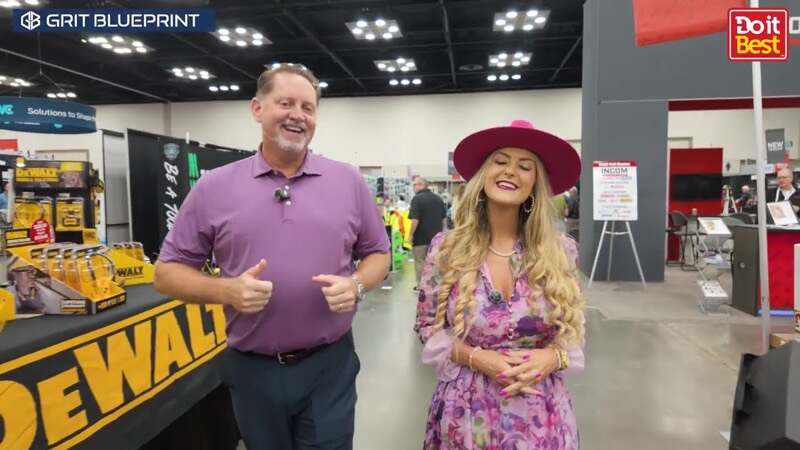
To test new technology before you buy, do three things. Make the vendor name the problem it solves and how success will be measured. Run a trial of at least 30 days with the store employees who will use it. Get a way out written into the contract. That is how Adam Gunnett decides what gets into his stores. He is VP of Business Intelligence and Strategy at Busy Beaver Building Centers, a 19-store home improvement chain based in Pittsburgh.
On Adam Gunnett’s second day at Busy Beaver Building Centers, the company’s email system crashed. He had joined in 2015 as an entry-level IT tech with no hardware retail experience. Within six months he had to put in a new point of sale system. That is POS, the registers and the software behind them.
Today vendors pitch him all the time. On the floor of the National Hardware Show in Las Vegas, he explained how he decides what gets in. Some of what he bought did not work. The steps below come from those misses.
Here is a short test plan for the next piece of technology someone pitches you. It names the problem in one sentence and how you will measure it. It sets a trial with the people who will use it and a way out if it fails.
Step 1: Ask what problem it solves
Gunnett starts every pitch the same way.
“So I ask, what’s the problem you’re solving for? Give me a real-world example of how this is going to help my end users and make them more efficient. And what does success look like? How do you measure that?” (1:42)
End users are the people in the store who will touch the tool every day. He asks because of what he sees, especially with AI. Engineers find something clever, then go looking for a problem that, in his words, “doesn’t really exist.”
Step 2: How long should a technology trial last?
At least 30 days, in Gunnett’s rule, and newer vendors will often agree to 90. You will hear vendors offer a proof of concept, a trial period or a pilot. Gunnett uses a term he borrowed from a colleague in another part of retail: proof of technology.
“They prove the concept in the sales pitch, but I need to prove that the technology is actually going to work, and work for me,” he said (9:13).
Point of sale setups differ a lot from one company to the next. So a tool that fits one retailer may not fit yours. The goal is for the employees who would use it day to day to see one thing. Does it live up to what was promised?
Step 3: Why ask for an exit clause?
Because a tool that works for other retailers may not work for you. An exit clause is a contract term that lets you leave if the product does not work. Two purchases taught Gunnett to ask for one. He did not name either product.
The first was a supply chain and inventory tool that Busy Beaver bought with no trial. “It worked great for other retailers, but it didn’t work for us,” he said (10:38). Part of the reason, he said, is that the company may not have been ready for how much the tool would have changed the way the business runs. The second was an e-commerce platform he was excited about that did not pan out.
What he does now: evaluate, run the proof of technology and have exit clauses.
Step 4: Plan the change for the people
Gunnett calls bringing in a tool a change management process. Solve a problem the team feels. Work out what has to change in the way the job is done today. Then get the team behind it.
“Once you get the buy-in, the momentum starts and adoption gets higher,” he said (2:52).
On the point of sale project, that meant listening first. He involved operations, merchandising and finance. He wanted to learn how they used the old system and how they would use the new one.
Step 5: Buy for the sales floor first
“So we’re not necessarily looking for the cool tools for us at the headquarters or store support office. We want to empower frontline employees,” Gunnett said (12:57).
His example is electronic shelf labels, which are digital price tags on the shelf. A few Busy Beaver stores have them. Changing price labels was a job nobody was assigned to full time and employees did not enjoy. With that task gone, he said, store culture improved because employees get to help customers. That is what many of them want to do.
He also described an AI app. It lets a part-time high school student answer the kind of question that used to need Bruce. Bruce is the employee who knows every department. He named two platforms his stores use for frontline staff, FastQuery and Zipline. Those are his choices for his stores.
Asked for the biggest technology mistake independent retailers make, he answered with a belief: “That technology is a silver bullet that solves all problems.” (18:05)
Step 6: Fix one problem at a time
The same advice comes from the selling side. John Wheeler is a sales technician at Paradigm, a software company that serves window, door and millwork businesses. Earlier in his career he worked at a big box store and at a distributor.
He sees companies set out on a digital transformation, “but they get 10 things from every department and it’s impossible for anybody to do that” (5:35). His method is shorter: “solve one challenge, identify it, solve it, iterate and repeat the process” (29:16).
He also said that starting in a spreadsheet is fine as a proof of concept.
Step 7: After you buy, how do you keep software costs down?
Count the licenses, every one, and match them to the work. A license is the right for one person to use a piece of software. Software is often billed per license.
Jason Blair is CEO of Tal Building Centers, which has 29 locations and more than 400 people. “We have learned that we have to be very disciplined about every single computer license,” he said (5:54). Tal looks at what each person needs and what each person is really using. That covers its office software, its main business system and the add-ons. Someone who can do the job in the web version of a spreadsheet program does not need the desktop version. His name for the risk is death by a thousand licenses. (How Tal set up its AI rules first: start an AI committee, even if you run one store.)
New tools also take time to sink in. When Blair told his team they were not moving fast enough, they answered: “we’re moving as fast as we can absorb as a company” (8:51). He said it was good for him to hear.

Test it on one problem before you buy
Gunnett’s first question does the hardest work before any money moves: it makes the vendor name a real problem. Any change in a store or a yard should follow the same order. Name the problem and the improvement you want.
Bring in the people who know the work. Pick a test small enough to run in one store or one department. Tell the team what is changing and why, train them, listen, and then decide what to keep, adjust or stop.
Keep it simple enough to use on a busy day. Stefanie Couch, who hosted the interview, said it on the show floor: “Implementation is harder, but adoption is almost impossible when it’s super complicated” (2:22). A trial that ends in a no has still paid for itself: it shows you what you do not need.
What to do next
- Write the problem in one sentence. Name who has it and how you will know it is fixed.
- Ask the next vendor Gunnett’s questions out loud and write down the answers.
- Ask for a proof of technology: 30 days or more, in one store. Have it used by the people who would use it every day. Ask them for a yes or a no at the end.
- Read the contract for the way out before you sign. If there is no exit clause, ask for one.
- Put a date on the calendar to review every software license: who has one and who used it.
Gunnett’s wish for every independent retailer in the next 90 days: “To realize that if they think they’re behind, they’re not, because everyone’s behind with AI. It changes so quickly. They just need to start doing something today.” (18:42)
John Wheeler works for Paradigm, which sells software to this industry. His interview was recorded for Paradigm’s Industry Insiders podcast.
Questions people ask
What is the difference between a proof of concept and a proof of technology?
In Adam Gunnett’s words, a vendor proves the concept in the sales pitch. A proof of technology is the trial that shows whether the tool actually works in your stores, with your systems and your people. He asks for the second one before he buys.
How long should a software trial be for a hardware store?
Gunnett’s minimum is 30 days, and he says newer vendors will often agree to 90. The point is to let the employees who would use the tool every day see whether it does what was promised.
What should I ask a technology vendor before I buy?
Gunnett asks three things: what problem the tool solves, for a real example of how it helps the people who will use it, and how success will be measured. If the vendor cannot name a problem your team has, that is your answer.
Why do new software tools fail at independent retailers?
In the cases in this article, a tool worked for other retailers but did not fit the business, the company was not ready for how much the tool would change, or too many projects started at once. Gunnett now runs a trial and gets an exit clause; John Wheeler of Paradigm solves one challenge at a time.
Watch the full interviews
Adam Gunnett of Busy Beaver, John Wheeler of Paradigm and Jason Blair of Tal Building Centers.
Adam Gunnett, VP of Business Intelligence and Strategy at Busy Beaver Building Centers, explains how he tests retail technology before committing: ask what problem it solves, run a 30 to 90 day proof of technology, and get the team's buy-in.
A Grit Guide original. This piece is built from our own interview.