Click any timestamp to jump to that moment in the video.
Business Philosophy and Family Legacy
0:00 Chip Cofer: Our end goal is to be competitive. We want people to be able to walk in here and buy material at a competitive price. We want to make up any difference. We can feel like we can do it with our knowledge and with our service.
0:11 Stefanie Couch: You are playing a decades and centuries game. You're not worried about just tomorrow and what the P&L says at the end of the month, because you know that it's got to be about everything going forward decades and decades later. What excites you the most about the future of Comfort Brothers?
0:27 Chip Cofer: The next generation. You know, I had that opportunity. It came a little sooner than I wanted it because my dad passed away when I was 70. It's so rewarding. I really enjoy what I do. I love coming in here. I love being around the people. You know, the best part about my job is I get to work with my family every day. I've got three nephews that work here. My daughter works here. I'm so blessed to be surrounded with so many family members that help me in so many ways.
0:52 Stefanie Couch: Welcome to the Grit Blueprint podcast, the show for bold builders, brand leaders and legacy makers in the construction and building industry. I'm your host, Stefanie Couch, and I've been in this industry my entire life. Whether we're breaking down what's working in sales and marketing, new advances in AI and automation, or interviewing top industry leaders, you're going to get real-world strategies to grow your business, build your brand and lead your team. Let's get to work.
The History of Cofer Brothers
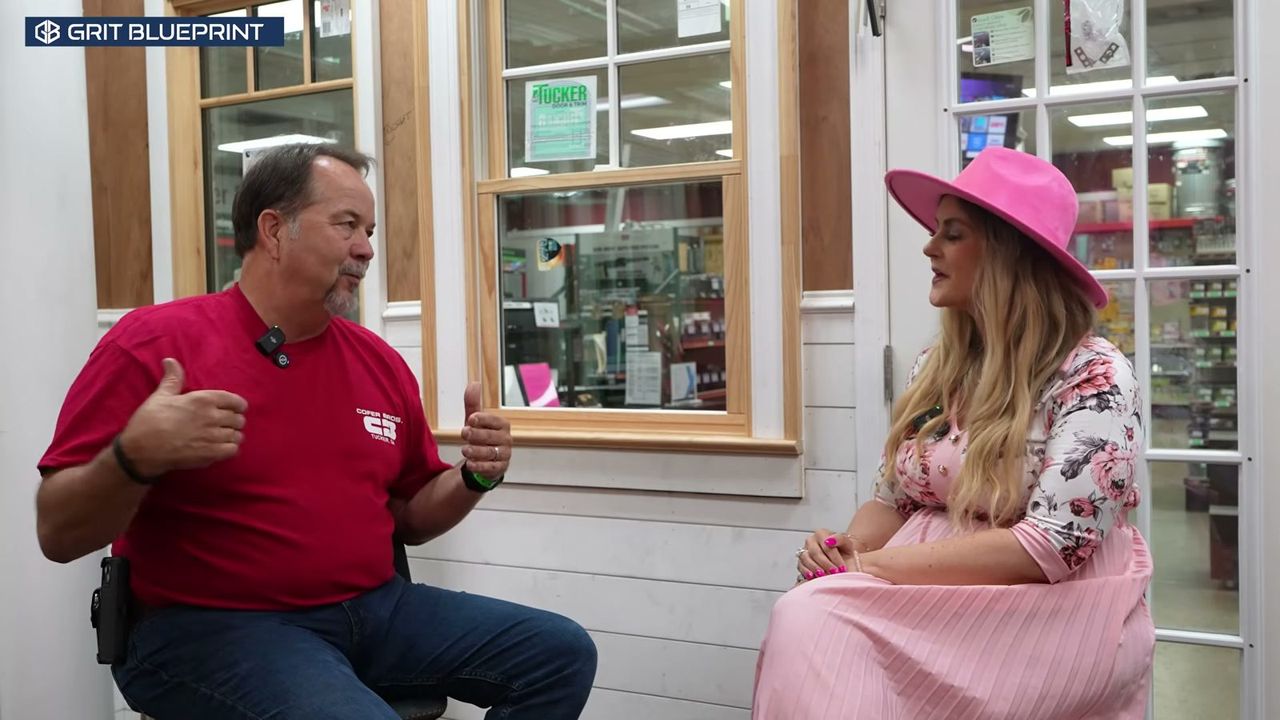
1:28 Stefanie Couch: Welcome to the Grit Blueprint Podcast. I'm your host, Stefanie Couch, and today I'm on site at Cofer Brothers with owner Chip Cofer. Welcome to the show.
1:36 Chip Cofer: Thank you.
1:37 Stefanie Couch: I'm really excited to be here. This is a family-owned lumberyard, which is my favorite thing in the world, and you guys have been up in a long time. So tell me a little bit about Cofer Brothers and the history.
1:47 Chip Cofer: Yeah, we started in 1919 with my grandfather and my great uncle and they were just dyed-in-the-wool retailers, yep. So we started off in the back then they called it the dry goods, which was a lot of household-type items and farm items and so on and so forth, and we got into the grocery business and then we actually had, as the business grew, this was a stopping off point between Loganville, snellville and Decatur it was Tucker, so that's how we ended up in Tucker. And then as the business got larger, we opened more stores.
2:24 Chip Cofer: A lot of times family members went to run other stores. Neither it was a make it or don't kind of mentality. And then my dad after the war, after World War II, and he decided that he thought it was good to be into the building supply build at the side of the business because there were so many homes being built. So we started off with a lot of masonry products and so on and so forth and then grew into some lumber items. And then he decided to bring it over here on this piece of property and open up a full building material store against the wishes of my grandfather, by the way, but he opened this up and got it going and then we had never.
3:02 Chip Cofer: But shortly after that we got it down to just where we had two stores, which was this and the department store we called it across the railroad, and we liquidated that in the 70s because North Lake Mall was going to open and there's no way we could compete with that. So liquidated that. Then all we have is the building material and there we have just had this one store all these years and we've been very much concentrated on the eastern side of Atlanta basically, and just had a.
3:30 Chip Cofer: Really, you know, we've built this business on having good relationships with builders and family builders and so on and so forth.
3:37 Stefanie Couch: Yeah, and you guys are right in downtown Main Street Tucker. You're a landmark here in this town and I'm sure it's changed a lot even since you've been here. When did you start in the business? And tell me about your evolution, because I know you started in your favorite place, which is out in operations on the lumber yard. So tell me a little bit about your background in the lumber business.
Leadership and Team Building
3:58 Chip Cofer: So it was. We lived growing up. We lived about two miles from here at the most maybe about two miles, and I rode my bicycle everywhere. So I would come up here after school sometimes definitely on Saturdays, because we worked on Saturdays and just do anything. I could Usually something with an engine, you know, like a forklift or a golf cart or do something. I just love being up here, love doing the different things. That makes you know that the business does to operate. So I love being outside, I love getting to know the guys and I'd ride on a truck and help them unload it.
4:34 Chip Cofer: I would ride on. We had a couple of larger trucks. I'd ride on them and do the same thing, and so I just grew up doing this. This is what I've done. I've had a couple other jobs, but this is really my. This is what I love doing. Yeah, you know and it's just been, it's hard to get out of it.
4:47 Stefanie Couch: Once you get in it really is, and we have sort of an interesting connection. So we actually my family, also had a lumberyard in a different near East Point near the airport, and my dad used to come pick up some stuff here and they exchanged materials a few times and stuff. So my granddad also had a lumberyard in Atlanta and it's something really special about the fact that you guys are still here, still doing this. 105 years Is that the right count?
5:11 Chip Cofer: 1919.
5:12 Stefanie Couch: 1919. So I love that your family is also taking this over. So a lot of lumber businesses. You have succession planning and you don't know what's going to happen, but you guys have a plan. Tell me a little bit about the next generation.
5:25 Chip Cofer: I've got three nephews that work here. My daughter works here full-time, and so they're here to learn as much as they can. I want to retire someday or get into some kind of a semi-retirement. They're coming on and they're learning as much. We spend as much time as we possibly can trying to show them why we do, how we do things, why we do things, and a lot of it's uh is a modification from what I'm sure my grandfather taught my father, my father taught me, sure.
5:53 Chip Cofer: So you know, you change with the times as much as you can, but you so you embrace. You embrace some of the new technology, some of the new social media. You embrace that as much as you can. But I think it's important to remember your roots too and find that balance, because it's there. You just have to find it and get everybody to buy into it and be okay with it. I have to bend a little bit, and they have to bend a little bit, and that's how we get through it, yeah, and some of the ideas are a mix, like you said, of the old and the new.
6:19 Chip Cofer: Yes.
6:26 Stefanie Couch: That's what I love about this business so much is what makes it so great. It probably won't ever change the people, the service, the way that people care about what we're doing, the actual craft of building homes and building community and making things for people to live the American dream. That's never going to change. But how we do it, how we go to market whether you're online or in the store that might change in the future. So embracing, that's great.
6:46 Chip Cofer: Agreed, agreed. I think there's a lot of things that there's a lot of things in our business at least what I've seen so far that AI cannot, you know, duplicate or copy. I think there's a lot of things that it probably it's going to possibly make it better, yeah, but there's a lot of just and we try to practice the golden rule. I mean, just treat people like you want to be treated. It's really not that difficult and just. You know, I try to always be available.
7:13 Chip Cofer: I try to always smile at people, make them feel comfortable to come here and want to come back, because we've all been in other stores, we've all been to bigger stores and different stores and when you don't feel like you're welcome there and you don't feel like you feel like you're an outsider, you just don't really care about going back.
7:29 Stefanie Couch: Yeah.
7:29 Chip Cofer: And I just want to make it where people enjoy. It sounds cliche, but I just want people to enjoy their experience.
7:35 Stefanie Couch: Yeah, absolutely, and you guys do a lot of that with your employees to trying to promote from within and moving people through the organization and training. What is the word leadership mean to you and what do you think it means every day to your employees that are here and your team members?
7:50 Chip Cofer: Set an example, just set an example. I've always been one to. I don't ever ask anybody to do something that I either haven't done or won't do. I think it's very important for the organization. Anybody male or female, doesn't matter when you're not in management. So I don't like the words that you can use for people that aren't in management, but I think it's very important for those people to know that you're here, you're vested, you're in it and you will do whatever it takes to make sure that you get through this, that you're going to lead this company and that it's going to be a place for them, because that's what they want.
8:26 Chip Cofer: They want to know that they've got a future here. And when you've got a business that's small, you know we can't offer, it's hard to offer some of the you know the stellar things that are thrown out to people, that companies that are so much bigger, or government jobs or whatever. But so you have to. Just you know you have to figure out another way to do it.
8:46 Stefanie Couch: Yeah.
8:46 Chip Cofer: And just to make people feel special.
8:47 Stefanie Couch: And you can feel that when we were walking through the yard. And you have your team, you can feel that energy here and it's very obvious when I've come in here multiple times that you guys have something, that they can walk in your office and talk to you and it's no big deal, it's just another day, right. And to you and it's no big deal, it's just another day, and you're breeding that into the now, the next generation and your customers feel it and your people feel it.
9:10 Stefanie Couch: So I think that's cool. And that's why this business is still here 105 years later and hopefully it'll be here another 105 years. Tell me a little bit about your actual business. So what do you guys love to sell? Who are you selling to? Because you have a little different model, because you're here in Atlanta, which is where the studios are, but you guys are in the contractor builder business.
9:31 Chip Cofer: You also sell to homeowners. Tell me about that a little bit. I think a lot of the if there's a business mentality to follow, it's just being quick on your feet, you know, and don't try to funnel down too much. Try to keep a broad base as well as you can. You can't be everything to everybody, but you can be a lot to a lot of people and our history goes back to single family home builders. A lot of them were. They were second, third generation and we had a long history with them and we always had a saying about or a inner working within ourselves here.
Adapting to Market Changes
10:06 Chip Cofer: Be careful if you say something to somebody or talk about somebody, because you don't know who's related. You don't know who's this and who's that.
10:13 Stefanie Couch: Yeah, that could be someone's cousin.
10:14 Chip Cofer: That's right. You could be saying something about somebody's brother-in-law or cousin or whatever. That could get you in trouble. So you have to treat everybody with utmost respect. You have to treat everybody with utmost respect, and we've been through so many ebbs and flows in the market and we'll call it depressions, recessions, whatever but when 2009 and 2010 came, and that was probably the worst years we've had, Dark days in Atlanta. Yes, in this century, and we have a reputation. Yes, in this century, and we have a.
10:49 Chip Cofer: Well, it's factual, we've never laid off anybody for slow business, and so I'm trying to figure out. You know how we're going to walk through this. I don't want to be the third generation.
10:59 Stefanie Couch: I don't want to be that guy that has to start laying people off.
11:02 Chip Cofer: We cut hours, we did this, we even did furlough days, which I wasn't even sure how to do that, but we did furlough days. We did everything we could to crank it down as much as we could. I called it circle the wagons.
11:13 Stefanie Couch: Yeah.
11:13 Chip Cofer: Phase one, phase two, phase three. And we got to phase three and that's when I was introduced to the movie business coming into town by a really good friend of mine from Tucker, yeah, and he told me about it and he said it's right in your wheelhouse, this is something that y'all can really do well with. And it was just. It was just by a God thing that a guy called me like the next day and almost just echoed exactly what he said, and then we just jumped into it and just started solving problems for know just anything they need to get, we got it.
11:50 Chip Cofer: We make it happen yet tomorrow, yeah, yeah, and you just, we even had shirts that said no is not an option. Yeah, you know, because that's what we had, that's how we had to do it. Yeah, and we developed a small team to really concentrate on that part of the business. So that movie business really helped us. And it's the studio supply side of it. We're not meeting movie stars or anything like that. We're just supplying the material they need to build sets, like anything. It was a whole learning curve to figure out what that was and what they needed.
12:18 Chip Cofer: It was different material. But we jumped into it. We had a can-do attitude, we had a, you know just, whatever it takes. That's the way we looked at it, yeah, so we went into that. We've always embraced our remodeling business. We've always embraced a walk-in business.
12:17 Stefanie Couch: Yeah, you guys have a hardware store here. Yes, you are open to the public and a lot of yards are not, but you guys love that business, you love the remodeling business and your tagline. You guys really go through, count on Cofer. So what does Count on Cofer mean to you?
12:52 Chip Cofer: You know we're going to be here every day and we're going to do what it takes and we're going to treat you like I mean again, I hate to throw this cliche we're going to treat you like family. I mean, if you need something, we're going to treat you like family. I mean, if you need something, we're going to help you get there.
13:06 Stefanie Couch: In the best way. Yeah, the family.
13:08 Chip Cofer: You like Good family members, yes, the one you get along with. And it's not all about dollars and cents and profit on that particular. It's about taking care of people. And a lot of this bled over from some of the movie stuff we were doing, because it was just a matter of just solving problems, making stuff happen, and that just bled over into all of our business after that, because we wanted to treat everybody the same way and so that helped really propel our contract. Our walk-in business was doing well, our remodeling business was doing well, some of the insurance fire repair type business was doing well.
13:44 Chip Cofer: In the meantime some of the builders were getting back on their feet and trying to get back. Some of them didn't, and so we knew we felt like that was going to be, probably not like it was, and so we kind of looked at things like a three-legged stool. You know that we've got three solid legs One will back off, one will come back, one will do this, one will do that. As long as we keep all those legs on the ground and keep moving, we'll be okay.
Service Model Evolution
14:06 Chip Cofer: And that's been. That's how we've looked at it and that's what's worked with us Love it.
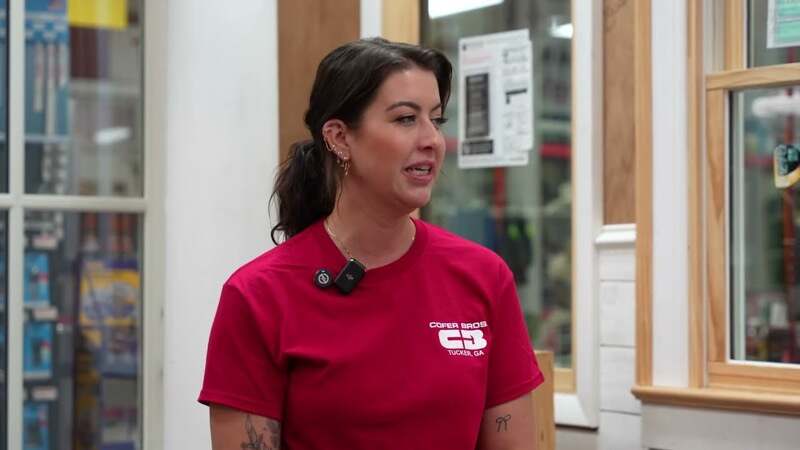
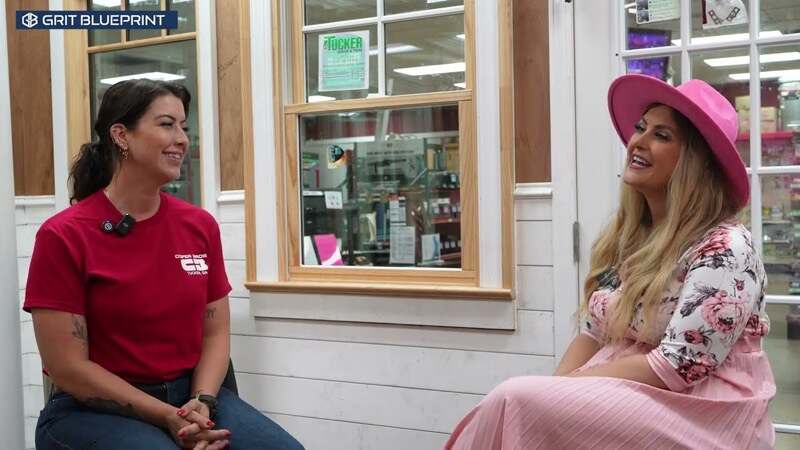
14:10 Stefanie Couch: Tell me a little bit about what it's like working with Katie, your daughter, and now that she's going to be the next generation, tell me a little bit about that no-transcript.
14:39 Chip Cofer: Are you being my dad now or my boss?
14:42 Stefanie Couch: I need to know what you are right now you might to have like one of those labels like a dishwasher cleaner, dirty dad or boss.
14:47 Chip Cofer: Yeah, that would happen to me, but it's good and she's in my nephews and they've all just worked real hard and you know I've got. I'm just. I'm so blessed to be surrounded with so many family members all over the place that help me in so many ways and it's exciting because you know I think you talked a little bit about it's not all about dollars and cents.
15:09 Stefanie Couch: And one thing that I find with independent businesses, especially those who have been around this long, is you are playing a decades and centuries game. You're not worried about just tomorrow and what the P&L says at the end of the month, because you know that it's got to be about everything going forward decades and decades later, and that means you have to build these long-term relationships with your team, with your vendors, with your customers, and you can't do something that's good for today and it will hurt you in a year or five years.
15:40 Chip Cofer: That's right.
15:41 Stefanie Couch: How do you think about vendor relationships? Because I know you have an interesting take on it that I love and you have some really great vendor relationships. So tell me a little bit about how your partners help you.
15:50 Chip Cofer: You know my dad prided himself on having some direct connections with mills and so on and so forth and I know that's important to some people and I know that can help in some ways. But you know, our end goal is to be competitive in some ways. but our end goal is to be competitive and we want people to be able to walk in here and buy material at a competitive price and we want to make up any difference with whatever we need to do, we can feel like we can do it with our knowledge and with our service.
16:21 Chip Cofer: We always try to buy the utmost best quality we can find. So that rounds out the whole package. But when things got so bad like we were speaking about 9 and 10, it wasn't that profound, but I just knew that part of what we need to do in the future is really bond and build a bond with our suppliers. Because we don't need to be out on an island by ourselves. We don't need to be waiting on some I won't name any names, but huge companies that don't really care about us.
16:51 Chip Cofer: Right, and if we need something, we need to have a bond and a relationship with the local, the regional or national distribution centers that need our business. Yeah, just like we need them.
17:07 Stefanie Couch: I bet that came in handy in 2020, didn't it?
17:10 Chip Cofer: Oh yeah, absolutely yeah, it absolutely did. So we basically almost married some of these people in these businesses and got a really good relationship with them and we're there for them and they're there for us, and there's things we can do to make their life easier and there's a lot they can do to help us. And, yeah, when COVID was here, absolutely we didn't run out of material. Yeah, partnerships are the whole thing in this business, and I'm not interested in trying to cut through them and get them out of the way so we can save 5% or something somewhere else and not have that connectivity.
17:45 Chip Cofer: Right, because you need that, we all need it. I mean we need it in our personal lives A hundred percent you need to have connectivity.
17:52 Stefanie Couch: Yeah, and I think that's. You talked a little bit about AI and you know I love AI, I use it a lot, but the one thing that it will not replace, but I think it will help us with, is having more time to do the thing that only us and our human selves can do, which is connect with others and build relationships with people and really show up and give that service. And so I think that it is like, hey, the next generation will use AI in our business and hopefully it will take away some of these little mundane tasks that need to be done, that then we can go do the thing on the job site or at the desk with someone.
18:25 Stefanie Couch: You guys have a really open area here in your shop that we're sitting in, where you have desk and you have people that can come sit down and have a conversation with someone. Tell me a little bit about your team out here on the floor and how they're helping people.
Next Generation and Gratitude
18:38 Chip Cofer: So that gets back. You know that ties into the COVID thing, because before COVID we had had years and years and years of a we call it the horseshoe. You know it was bar height. You know, a horseshoe that you had to go in and come out of, and different hardware companies that we'd had over the years had different concepts. And we should try this, we should do this. This height is better than this height. This is in the back of the store. So the front store, and we usually always go for a little while and go.
19:07 Chip Cofer: You know that ain't working. You know, let's, we're going to do it our way, you know. And we had to redo it. So we had this sales counter, much like you would see at Napa, okay, and the salesmen were stationed there with their terminal, you know whatever they had and they wrote up. Somebody walks in, you write to them. There's somebody right here next to you. You know whatever Conversations can be heard from everybody and all that. And it worked. I mean we didn't know any better.
19:33 Chip Cofer: I mean that just kind of works, you know. So when COVID came, we had to redo it. You know you had, you had all the the distances. you had Plexiglass and masks everywhere, the masks, the social distancing, the arrows where to walk, and so we had to buy into all that. And we were an essential business. So we were able to stay open, sure, but we had to regulate people coming in that store. We've never done that, so we had to lock the front doors. We had a side door we have to hold everybody out there which then we had to have a tent out there for people, you know, for the rain or whatever, yeah, so we held people out there.
20:12 Chip Cofer: We had radios in here. Everybody had a number on their desk and you'd say, all right, they'd call in, all right, I'm through, we can send them in to number two. So we'd get the message out, send them in, they're going to number two. So they'd fill me in and we'd get them. We'd make sure they go to number two. And they had, Literally, we had folding tables with chairs in a couple of chairs and people would sit at that folding table. They'd write the tickets up.
20:37 Chip Cofer: Well, we observed how much you know each. You know a typical common sale, an average sale was going up in value. Now, a lot of that. It's hard to put your hands and arms around it because you don't know if it's because nobody else has it, they can't get there, whatever. But our walk-in type remodeling homeowner that side of our trade just took off like a rocket and so, as COVID started relaxing their conditions, we thought you know, maybe it's time we have desks. I mean, it's so simplistic, but it was something that we just never did.
21:15 Chip Cofer: So we went to a used office place and bought these, you know five desks that match for once, and we stacked them in here and put everybody in here at their own nice big desks and have seats that people can sit at. And it's just been wonderful.
21:29 Stefanie Couch: It's really about that personalized service that you guys have experts here. You have people out here that have been here what 30, 40 years?
21:34 Chip Cofer: That's over 40.
21:37 Stefanie Couch: And they know what they're talking about and they know the business, they know the products, they know what you shouldn't do, what you should do, and people crave that today because there's not a lot of people that have a lot of experts. That's y'all's competitive edge. I love it and I think that that's something you can't get at, we'll say, a larger retailer down the street. It's very hard to replicate that.
21:56 Chip Cofer: Yeah, yeah. And we want them to be comfortable. We want them. You know we got a little dish of chocolate on their desk and you know we want people to come in and be comfortable and spend the time they need to spend. Nobody's in a rush, nobody's trying to get them out of here, and we want them to be feel comfortable about what they're buying and then come back.
22:13 Stefanie Couch: Yeah, conversations and candy are pretty good selling edge.
22:16 Chip Cofer: You better believe it. I love it.
22:19 Stefanie Couch: And you guys have a lumberyard cat named Lumberjack. So for me. That's the ultimate selling point. He may or may not be in my bag when we leave today but I do want to play a lightning round. So are you ready for the lightning round questions.
22:29 Chip Cofer: Maybe Okay.
22:31 Stefanie Couch: I know you like cars. Yes, what's your favorite car you've ever had?
22:35 Chip Cofer: I own a. Well, my first car was a 1970 Trans Am, so that's gotta be probably my favorite.
22:40 Stefanie Couch: It's a pretty good one. What color?
22:42 Chip Cofer: It's white with a blue stripe. Okay.
22:43 Stefanie Couch: That is awesome. What is your favorite product to sell here in the store? What's your favorite thing In the whole place, in the whole place, lumber.
Lightning Round and Final Reflections
23:00 Chip Cofer: Lumber, yeah, okay, if you could do anything for a day, if you weren't in charge and you could do anything, what would you do? I love machinery, okay, and so I used to drive to Memphis a good bit and they have a huge yard where they unload intermodal trailers and they have a crane that is probably four times the size of this building that goes up and picks up these containers and sets them on and off chassis. And I always said, if I could get a birthday present, let me operate that crane for one day.
23:27 Stefanie Couch: You know that the average crane operator in the US is 82, so that could be your second career in about 20 years, when you get ready to retire.
23:35 Chip Cofer: Here you can go drive a crane I love that that's hilarious.
23:40 Stefanie Couch: I know that I like that you knew so quickly what you would do. Like you 've already really thought this one out. What excites you the most about the future of Comfort Brothers?
23:49 Chip Cofer: The next generation, because that's something that I really, you know. I had that opportunity and it came a little sooner than I wanted it, because my dad passed away when he was 70. And it's just, it's so rewarding. I really enjoy what I do. I love coming in here, I love being around the people. It was when I had my wife passed away a few years ago and we'd been married 35 years, and when she was in the hospital for quite a while I still I came to work Because walking in this door made me just feel so.
24:27 Chip Cofer: It was therapeutic and I just wanted to be here Because I just felt that closeness with everybody when I was therapeutic and I just wanted to be here because I just felt that closeness of everybody when I was here and that's I mean. I don't know how to really explain that thoroughly other than just to tell you that it's a culture and it's just. We really are an absolute family here.
24:49 Stefanie Couch: Yeah, and you mentioned your wife. I know you told me last time we talked that she said that she liked the thought of sometimes you do get to choose your family. Yeah, and you mentioned your wife. I know you told me last time we talked that she said that she liked the thought of sometimes you do get to choose your family.
24:57 Chip Cofer: Yes.
24:57 Stefanie Couch: And I think that's really cool. When you do build something that you don't come to because you have to, you could do whatever you could sell. You could do anything you wanted to. There's so many options in today's market, but you're choosing to come and build the next generation and let them build this with you and I love that. So I love this business, you know that, and it's a fun place to be. Maybe I'll come drive a forklift and spin around one day. I'm not forklift certified but I can drive one, so I'm really excited we got to talk.
25:27 Chip Cofer: Thank you for your time Chip, Absolutely Thank you.