Click any timestamp to jump to that moment in the video.
Stefanie Couch on Inside the Spec: Building Materials Marketing
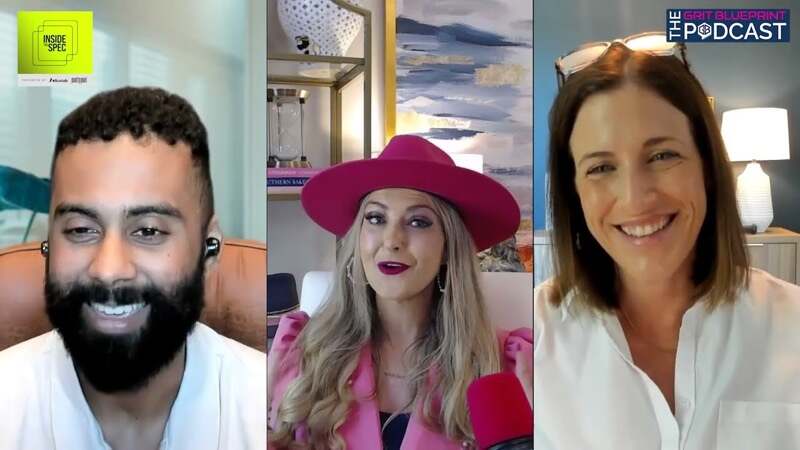
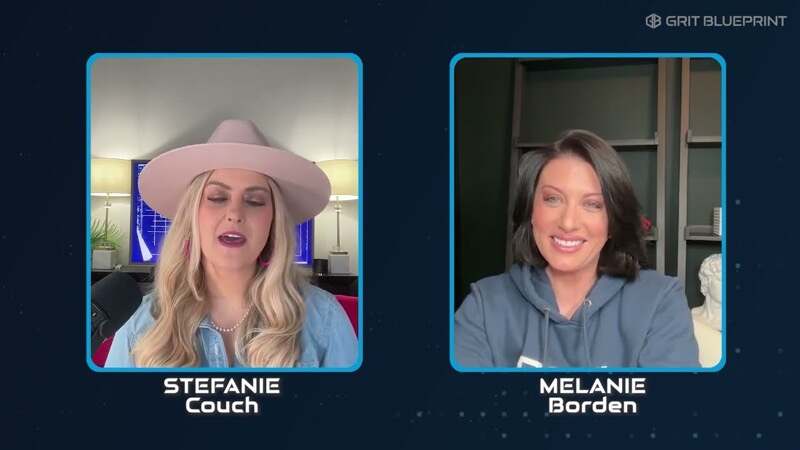
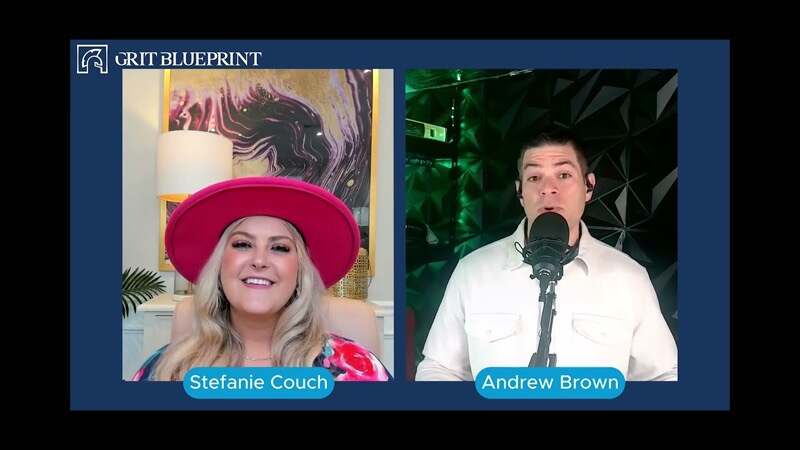
0:02 Stefanie Couch: Welcome to the Grit Blueprint Podcast. I'm your host, Stefanie Couch, and what you're about to hear is a conversation I recorded as a guest on another podcast. We're sharing it here to bring you a fresh perspective on building, leading, and navigating the real-world grit it takes to move forward.
0:22 Megan Kacvinsky: Hi everyone, and welcome to Inside the Spec. I'm Megan Kacvinsky, your co-host and CEO of Point to Point. We are a sales and marketing agency built for mid-market specified product manufacturers. I'm joined today by my esteemed co-host, Vardhan Mehta. He's CEO of ACELAB. ACELAB is a technology platform that brings together architects and manufacturers earlier in the design process to make more informed product decisions. Today we are thrilled to have Stefanie Couch with us. Stefanie is the founder of Grit Blueprint, which she is uniquely qualified to have founded and run, because she has an amazing background in building materials and the trades, with all sorts of different roles and perspectives throughout her career. So thank you, Stefanie, for joining us today.
1:13 Stefanie Couch: Thank you for having me. I'm excited to talk to you both.
How a Lumber Yard Kid Built Grit Blueprint
1:16 Megan Kacvinsky: Stefanie, you and I just had a chance to meet. I've certainly seen you on LinkedIn and the socials and been intrigued by you and your content, but I wasn't really sure who you were. I thought your story was wonderful when you told it to me, so can you tell it to our listeners as well?
1:32 Stefanie Couch: Thank you. I actually was born into the building industry. My granddad started a retail pro lumber yard in Atlanta, Georgia in the '60s, and my dad and his brothers continued that into the next generation. When I was five, we moved to Northeast Georgia and started our own retail lumber yard in a real custom area with mountains and lakes. It's kind of a vacation spot for a lot of people in Atlanta, and we did that for 24 years. I worked there pretty much my whole childhood and just loved it. I got obsessed with the business. I wanted to learn every single thing I could about it: the products, the people, all the things. Then I went to a two-step distributor for 10 years and helped them grow and scale their door business from pretty much a startup into a 10-location business. Four years ago, I started a business with my husband, Ben, who's my co-founder, called Grit Blueprint. We help people in the building materials industry, and a little bit of the greater building industry, scale and grow their businesses through modern things like marketing and media. We really like to come in and talk start-to-finish go-to-market strategy. We do a lot of branding and websites, and also things like personal branding and media that are a different spin on showing the story of what we do in this industry.
2:53 Megan Kacvinsky: I liked what you said when you and I spoke. You said, I'm not here to do it the same way. I'm kind of a contrarian. If there's a different way to do it that works and drives results, that's the path I want to take.
3:08 Stefanie Couch: Yeah. I think that's kind of obvious. I'm not like a lot of people in this space, or really anybody. I don't meet a lot of Stefanie Couches. I'm a weirdo. So that's kind of my way, and I just decided to embrace that instead of trying to be like everyone else. I thought, what if I just decided that I am who I am, and help other companies stand out in the same way?
3:34 Megan Kacvinsky: Well, that sounds like a whole separate conversation about how you got so comfortable with that, but we'll dig into that in a different episode. I love that. Where you've caught my attention the most is on the media side, in some of the content that you and your team produce. You have a really unique way of going about it. Tell us more about your methodology, how you figured it out, why it's working, where it's going. Tell us some stories.
Why Building Materials Companies Need Project Proof
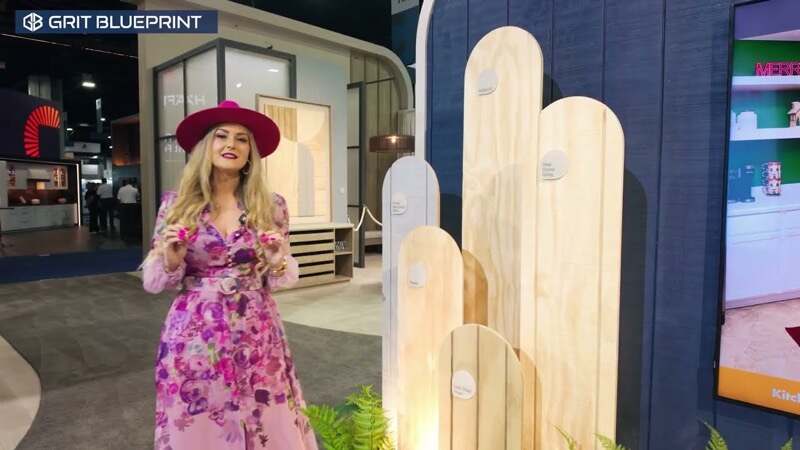
4:06 Stefanie Couch: When I was at my dad's retail lumber yard, we did a lot of really high-end custom homes on these beautiful lakes, in Atlanta, and all these different places we were servicing. I remember one house that took us over two years to furnish from start to finish. It was around a 30,000 square foot custom home in Alpharetta. I was so amazed by this property. It was absolutely stunning. They used some really cool products I had never used before that we had to source and custom bring in for them. And I think about this: I have a picture or two of me and my dad during the framing stage, standing in the foyer where the front door ended up. I don't have one picture of anything from it other than that. That picture is the only thing I have to show for that 30,000 square foot, two-year project. That was something we could have hung our proverbial hats on, saying, hey, we did this. The builder and all the people involved said these things about working with us during that process. But we didn't have any of that. That was a long time ago. My dad was in business at a time when we didn't have a website, and it didn't really matter. We did great without one. Different times now. But I often think about all of those things we did that we never had any pictures or any proof of, to build authority for the next 30,000 square foot house where someone says, can you do this? I really think business is about building authority and trust to say, hey, I can do the thing that you want to do easily, because it's what I do. The more people can show that story, the more people understand, hey, this is the person who can guide me through this process. Sort of like a Sherpa taking people up the mountain. We know the mountain. We know how to get to the top, and we're going to make sure everything goes as smoothly as possible. There still might be some bumps along the way, but we can help you get there. And proof is media. It is pictures. We're selling beautiful products. We're building American dreams for people that are sometimes unimaginable. Like 30,000 square feet, to me, at the time. I remember thinking, number one, I cannot believe anyone wants a house this big, because then you have to keep it up. But second, some of the products we put in there were things I'd never even seen. I didn't even know they existed. Wouldn't other people love to see those? And wouldn't it be easier to sell more of them if other people did see them? That idea really stuck with me. So what we do today at Grit Blueprint, and how I started this, was sharing things I saw that I thought were cool, different, stood out, or were remarkable in some way. That might be a custom front door, a pivot door that's four foot by 12 foot, or it might be a really great person working on a job site somewhere. I'd ask them questions like, hey, how'd you get into this industry? Why are you doing this? What do you love about this job? What do you hate about it? What's the hardest thing, the easiest thing? All those different questions about people and their stories, and then the products that we sell. That's really how it started: a curiosity about what would happen if we started telling these stories. Now we work with clients and the people they want to showcase, to tell their stories and the projects they're working on.
7:36 Megan Kacvinsky: I have so many questions about this. But first, I still can't imagine wanting a 30,000 square foot house and keeping all of it up. No, thank you. But I wonder, if we all moved in, would they even notice?
7:54 Stefanie Couch: There'd be a lot of yelling. That's what I was thinking. My husband and I yell at each other up and down the stairs in a very cool townhouse. I can't even imagine 30,000 square feet. You would get lost. Too big for me, anyway.
Thermally Modified Poplar and Custom Millwork Design Ideas
8:08 Megan Kacvinsky: So what were some of the products in there where you thought, I wish other people could see this? That was the genesis of this idea.
8:15 Stefanie Couch: They had some really cool things in the bathroom. I remember that spa-like feature, a sauna room. This was before some of the products you see now, like pivot doors. That wasn't a thing then. So there were some products like that, really early, that they did custom. And on the finishes side, it was exquisite how they chose things. They curated things from galleries. The people going in were really picking things that all went together to make a moment in each room. I think about that now with certain things I see. I work on a show home with one of our clients and an architect client of mine, Lew Oliver, who is absolutely incredible. He designed Trilith, he's designed Avalon, he's designed all over the world. Lew and I have partnered on some things with the company that sources these products for him, Magbee, which is a contractors supply in Atlanta. We've done a few projects together, and one of the ones we featured on Behind the Build is called Burton. It's a community in the place I grew up, on that lake I keep referencing, Lake Burton, where my dad furnished so many homes. They did this amazing custom millwork wall that Lew actually drew, this panel molding, and they made it out of poplar. Poplar usually gets painted because it's kind of a cheap wood. It's not something you see stained a lot. They did this 14-foot wall on the back side of the primary bedroom, right behind the headboard of the show home, and it was all poplar that they decided to just clear coat. And they made it out of thermally modified wood. So it was a really cool product, a cool panel as far as the molding profile, and the species was odd. It was a stunning moment. I can send you pictures to show people what we're talking about, but it was a real wow factor in that home. There's only one of them in the world right now. Once something like that catches on, it can really be something. People think, hey, I've never thought of that, and then they can bring it into their home or their project.
10:30 Megan Kacvinsky: Yeah. I have a client that does thermally modified wood, and they've been struggling with the poplar line. I'm not active with it anymore, actually, because it is challenging to get people to think about a product like poplar differently, and the opportunity that exists with it. So that's close to home for me too.
10:50 Stefanie Couch: It is. I'll have to send you the video and pictures and see what you think. It was inside, so that was a little easier. And one cool thing they did was at the top, with the crown molding they matched, they painted it on one portion where it ran up to the stain grade. So it's painted on three sides, and one side is stained to match the actual panel molding. Just a lot of really cool, weird things: curved walls, interior transoms, stuff you don't see. I love to show that, because most people selling building materials, and I'm not even talking about builders, I'm talking about the people whose job every day is to sell and specify building materials, if you've never seen it, you may not know it could be specified or ordered for that project. Once you see it, you can take it and iterate on it to make it your idea for that exact project. All it takes is knowing it exists. That's what we're trying to do: help show it. And I love to show high-end projects, because we all make more money and feel a lot happier when we make margin on those things. So I love doing that with high-end windows and doors and millwork, and pieces that maybe no one knows exist.
How Video Content Trains Building Materials Sales Teams
12:01 Megan Kacvinsky: You've mentioned Behind the Build a little bit, but I don't know that you've really explained exactly what it is, how it works, what your team does, and what a manufacturer or brand may use you for. It sounds like you have some different use cases, even from just the architect and the contractor supplier. So tell us more about Behind the Build.
12:21 Stefanie Couch: It really started with me being curious about what would happen. I used to do a lot of training at my two-step distribution job. I was in a classroom-type conference room setting, training either customers or my own team, and working with manufacturers. There's so much technical information. I started in the industry at the age of five. I was literally born into it, but I started ringing up two-by-fours at my dad's lumber yard when I was five, much to the dismay of the people who worked there, who were like, what is this little brat doing at the computer? I also promptly spilled a Mr. Pibb on the keyboard right after I started working there. So there was a lot of learning curve, and I knew how long it took me to get all of that knowledge into my brain about these little nuances. Why would you use this product versus that product? When is something worth the splurge for certain features and benefits? So I started making those types of videos. I would go out and see things and say, hey, here's a really cool transom we built, and this is the difference between a direct set transom and a sash set transom. When you say that out loud, if you've never seen it and you don't know it, you're like, what is she talking about? But if I take a picture or video and actually show you, hey, this is glazed directly into the frame, this is direct set, this is what it looks like, and here's a sash set transom, it clicks. In the South, we use a lot of sash set transoms. In Atlanta, that's all we used when I was building doors and windows for the company I worked for. But a lot of other markets don't use sash set transoms. A lot of manufacturers, like Therma-Tru when we were selling them, would only sell their decorative glass transoms in two sizes, 12-inch and 14-inch tall, and only in direct set glass. So when I was explaining that to my team, it was easier to show them a video or a picture. Or if you had it in person, obviously put it in their own hands. But with learning the way it is now, we need to use the resources and teach people the way they like to be taught, which truly seems to be video. Video is easy to understand. You can pause it. You can watch different portions at different times. That was the genesis of the idea for me: we need to train people to understand our products, because I believe understanding them, and then being able to sell or use them in a way that helps our customers, is how we all win. From there, we decided we were going to go into the factories. We were going to show how these products are built, manufactured, and assembled. We were going to talk about why you would want a career in this building materials industry, or out in the field building homes. Why does it matter? I think now with AI, people are really starting to perk up to the idea that maybe I should figure out how to do something different, because my job might be going away if we don't figure this out. So we started with manufacturing facilities, and then we kept going into more projects. Now I love to pull the thread all the way up and down the channel. This is made here. Then it's sent to a distributor, whether it's a two-step distributor that's assembling it or it goes straight to a dealer. From there it goes to a contractor or homeowner who uses it to create a final product. If we can show that from the tree being cut down in the forest, maybe even the tree being grown in the forest with someone like Sierra Pacific, all the way to the moment that window or beam is installed in the home, it's super cool to show that all the way through. I think it helps people understand what we do and why it's important.
Brand Strategy for Manufacturers: Stop Competing on Price
16:19 Vardhan Mehta: Stefanie, I want to switch gears a little bit to your thinking around the value of brand and authority for revenue growth.
16:28 Stefanie Couch: Yes.
16:29 Vardhan Mehta: It's a pretty unique take, and I don't think there have been many people who can actually show results from their thinking and ideology like you have. There are a lot of people in this industry, across every stakeholder group, manufacturers, distributors, dealers, who have been taught that the only way to grow your business is you've got to play golf, you've got to drink the bourbon, and that's how you're going to grow.
16:59 Megan Kacvinsky: Yeah.
17:00 Vardhan Mehta: What would you tell them about your strategy and some of the patterns you've seen, even doing this for your own brand?
17:09 Stefanie Couch: Yeah, absolutely. Well, I never want to be the girl to take away the golf and the bourbon. So I just want to start there. We can keep the golf and bourbon. Keep the Woodford Reserve. Don't come for me. But traditionally, like you said, hunting, fishing, golfing, bourbon drinking, those are very traditional ways to build relationships, which are really important in our business. I think that's never going to change. I still believe relationship building is the core of business in general. It's an ultimate leverage point. But how we build relationships today is a little different. So I'll start with my definition of brand. I actually took this from an entrepreneur I admire a lot, and I think it's a really simple way to understand it. Branding started with cattle. When a farmer or rancher had cattle and didn't have enough land to feed them, they had to let them free range. So they started to use a brand, a mark, to say this cow goes with this rancher. Everybody knows Yellowstone and John Dutton. You see that memorable Y in your mind, and you knew right then, no matter where that cow was, that it belonged to John Dutton. When we think about branding in the simplest terms, it's really two things that are associated together. You may think of this person with this product, or this ideology with a certain politician, whatever two things go together in your mind. When you think of Walt Disney, you might think of theme parks or fun or some childhood memory that is so beautiful in your mind. Those are the things we're trying to create when we talk about creating a brand. It's an association with a thing you either want to be known for or really don't want to be known for. Brand can be positive or negative. You might get associated with something and think, man, I didn't really want to be associated with that. That's why we have to curate and think about it up front. What's our strategy? Number one, what do we want to be known for? And where do we take a hard stand and say we're not known for this? If you're trying to be a super sustainable company, then you've got to think about how the things you do to make pricing lower might hurt that sustainability mission. Or maybe you're trying to be the cheapest. I'll say this: I hate competing on price. It's my absolute least favorite thing in the world. I think brand helps you not have to do that. It might be one of the only things that truly creates a differentiator, so you're not just competing on price. Because unless you're the absolute lowest, boy, it sucks to be in the middle. You're either going to be the premium option or the lowest, and everybody else in the middle is dying a death by a thousand paper cuts. So how do you get to a brand people will choose? When I think about how important that is, I think there are a lot of people who woke up this morning and made a cup of coffee in their $29 Walmart coffee maker. It was perfect and tasted delicious. I also think there are people who woke up and made a cup of coffee in their $5,000 top-of-the-line Miele coffee maker that's installed in their cabinetry. And both of those made a black cup of coffee. Now, maybe the Miele made a cappuccino with heavy cold foam, whatever. But at the end of the day, the core product is coffee. Someone chose the $29 option, someone chose the $5,000 option, or someone chose the Dunkin' option.
21:04 Megan Kacvinsky: Yeah.
21:05 Vardhan Mehta: I didn't know until now that we were sponsored by Dunkin', but we appreciate it.
21:13 Megan Kacvinsky: Someone chose to outsource the coffee making. Donut Friday.
Why Brands Missing From AI Search Become Invisible
21:18 Stefanie Couch: And that's the thing. People choose based on what's important to them and the type of experience they want. I believe that in the building materials industry, we have the option to build a brand based on what we want to be known for and associated with. That process takes a long time. It's probably going to be relatively expensive, and it's going to take a lot longer than you want it to. But if you do it and you do it well... there are some brands, and I won't mention them, three or four brands that probably come to mind for all of us instantly, that have been paying that tax to build their brand for years, for decades. The value of that is something no one can put a number on, because they cannot be caught. So you start to say, well, if they cannot be caught, what's the point? The point is that you cannot wait any longer if you haven't already put this in your "this is important" column. I believe the companies that do not do this will either be a straight-up commodity, or they will be completely consolidated and will not exist anymore in the next one to two decades. Because of the way buyers are researching, and the way AI is bringing brands to the forefront, if you are not in that top tier, you're completely invisible. The worst thing that can happen to a person or a brand is for people to be indifferent about them. Indifference is the enemy. It's not necessarily, hey, I'm completely invisible. You might be sort of visible, but you're not visible enough to really be chosen. That's what I'm rallying around: let's build a brand that gets you in the spotlight enough for people to say you're the first choice, or at least so you're coming up when ChatGPT gives some options. Because if you're 15th out of 30, you're invisible and people are indifferent about you. They don't love you and they don't hate you. They just don't think of you. And I can't think of anything worse.
How to Escape the Sea of Sameness in Building Materials
23:15 Megan Kacvinsky: Yeah. And all the Zonda research coming out about brand and association has been really interesting, and I hope enlightening, to brands in the building materials space. At the core, you could say we're in one of the most commoditized industries that exists. But at the same time, there's so much innovation and technology and differentiation if you really dig in. The industry just doesn't treat itself that way. Because we've been so sales and operations focused and not very brand focused, you get a sea of sameness. Two weeks ago I had a chance to go to an event and hear Gair Maxwell speak. I don't know if you know who he is. He wrote Big Little Legends, and he's all about creating a category of one. He's a phenomenal speaker. I just wrote a post about it, because he encourages everyone to look at your website and your competitors' websites. There are probably five words everyone is using to describe themselves. Whether it's windows or wood or roofing, you could probably pick the same five words across the whole category: trusted, years of experience, built for specification. But why? It's all the same blah, blah, blah. So I really agree with you, Stefanie, on this whole segment. It does take bold thinking and bold leadership, because it isn't common in this industry to think about brand-forward strategies. It takes a bold leader with a vision, and it's not going to happen right away. Your investors and your leadership are going to be eager to see results quickly. Brand can help, but not as fast as, say, a sale, which moves you in the opposite direction.
25:21 Stefanie Couch: Yeah. Like Warren says, it's compounding interest, and that's the most powerful thing there is. But on day six, it doesn't really matter. If you want results today, then we need to go pound the pavement like you've been doing the last 30 years. Probably not very well, because I also think a lot of people are horrible at sales and don't really know what the heck they're doing, and their sales team is doing basically nothing. They think they're hitting the pavement, but they're really not. They're going to the same account, they call and go to lunch with the same person every Friday, and that's their work. There's a lot of work we need to do in this industry to key in on certain things. Branding is a long-term play you build on, and the other stuff is the blocking and tackling. We have to have all of it, because without one or the other, it doesn't work long term. I also think people have a much more short-term vision than we should. Branding is a decades play. It's a centuries play. When some of these companies are consolidating, it's really hard to think about what's going to happen in 10 years when maybe the private equity company that just bought them only cares about the next three. That's another thing that works against the branding initiative. But it doesn't matter, because even if you're willing to sell in three to five years, you want the best multiple. You still need to show this company is going to be even more valuable in five more years once you sell it to the next buyer. So it helps your multiple. It really does help, short term or long term. Three to five years, I mean. Three days? Who cares. But we all need to be more visible. Vardhan, that goes back to your point: visibility is an authority builder. And what visible means today is a little different. You mentioned hunting and fishing a little bit in jest, but that really was how people saw their reps. Their relationships in this industry were all in person. When I was growing up, I had salespeople who came to my lumber yard every one to two weeks. They sat on the same stool for 30 minutes to an hour, if we could get them out that quickly. Sometimes they stayed three hours. That was how we built a relationship with them. We talked about football or whatever it was. Now you may not want to do that, or maybe you can't touch all of those customers every week. So hopefully you're doing it on LinkedIn, on your website, on third-party platforms that build authority. Maybe you're making videos about the job sites you're going to. If you're doing it well, you can touch the audience you're trying to reach so much more often than in person.
28:15 Vardhan Mehta: And then you still do the in-person stuff, which helps. I do feel like there's a very interesting tension here that a lot of our audience probably experiences every day, the sales and go-to-market people at any manufacturer or supplier. Your executives probably want you to optimize for what's going to generate revenue tomorrow. At the same time, there's this long game to be played, and if you're not playing it, somebody else is laying down the groundwork, which will start to have a meaningful impact in no time.
Personal Branding for Executives: Why Leaders Go First
28:53 Vardhan Mehta: What is your advice for executives who might be listening right now on how they advocate for this internally?
28:53 Stefanie Couch: One of the things I think people miss the most, that is a huge play, is executives building their own brands for the company. There's so much research around founder-led brands especially, and brands that have executives who are out there. They're 11% more profitable, according to Forbes. I think about what people in these organizations do, what I do in my own organization, to try to be 2% more profitable. And you're telling me that by your executive having a voice out there and being a visible authority in the industry, you can be 11% more profitable? I know people who have spent hundreds of millions of dollars trying to get there, and it doesn't happen. So the starting point is this: as an executive, if you think this is important, show up and do it yourself. If you want to be the person who says we have to build a brand, then build a brand yourself, so that when you walk into the room, people at least know enough about you to know who you are, what you're about, and hopefully what you sell or the type of impact you're making in the industry. If you personally lead by example, that's a really easy thing to follow. I was actually talking to one of my clients this week about great founders. Great founders call their shot. They say, I'm going to do this. This morning I saw that Gary V posted on LinkedIn. For those of you who aren't in the marketing world, Gary Vaynerchuk is a marketing guy who's been out there a long time. He's called his shot before: hey, Instagram's going to be the next thing, and he was right. TikTok's going to be the next thing, and he was right. This morning he posted that he's building this thing called VeeFriends, which is a character series, sort of like Pokémon on steroids. Pokémon meets Walt Disney meets Gary V's wild brain. And he said, I'm going to be the next Walt Disney. This is going to be a huge thing. I'm calling my shot. I had just talked to someone about that. You have to call your shot. If you're bold enough to say, this is what we're going to do as a team, I'm going to lead the way, and whether it works or doesn't, I'm going to be out front, that's a pretty big deal. It's really hard for people not to want to follow that. So my best advice for executives who want to push their team to do this is to show how important it is to you. If you show it's important, other people will follow suit. Maybe the people you want to sell more could post on LinkedIn every single day for two, three, five weeks, or once a month for four months, and they get more sales immediately because of it. When we talk about brand big picture, yes, it's a long game. But there are a lot of short-term quick wins you can get from doing this. Personal branding with your sales team and your executive team is, I believe, the quickest way, because people follow and trust people. People buy from people. No one really cares about your logo, and they certainly don't care about your company story. Period. They just don't. We can try to make them care about that, or we can help them understand how we, as people, help them in their business, either by reducing friction or driving revenue. Hopefully you do both. Those are the two things I think businesses can do. You can help people reduce friction in their business, or you can help them drive revenue. If you can figure out the magic to do both, it's amazing. So how do you, as one person, talk about how you're doing that for others, and stop talking about your story? Because nobody cares. Nobody cares that you have great people who have been working in the business since 1926. That doesn't affect them today. What matters is that you've been solving the problem, and you give great detail about exactly what that problem is, to the point where they're lying in bed at night thinking, damn, if I only had a solution for this one thing, my life would be so much easier and I could sleep a little better. Then they get online and see that you have the exact solution to the problem that's keeping them up at night. What better marketing is there than that? Especially if it's true. We hope it's true, because I don't believe in BS marketing bro stuff. We have to be truthful. Don't say you can do something you can't, because then it's reverse trust.
LinkedIn for the Building Industry: Your First Post
33:16 Vardhan Mehta: I just want to react to that real quick, because one way to read what you're saying is, I don't have expertise in this area. Stefanie, you obviously know a lot about it, and there might be others out in the world, but it's not me. Another way to look at the same thing is that you're already impacting your brand even when you play golf. You're sharing stories about a project you just did. You're walking the person you're playing with, who's probably a prospect or already a customer, through some of the newest things with your products, or the problem you helped solve on a project. That's the content. You're not asking anybody in this audience to take some kind of course to become an expert on brands. It's just sharing the same authenticity and how genuine they are one-on-one with a customer. You could do that in a way that actually scales if you also focus on a brand, right?
33:57 Stefanie Couch: Beautifully said. Absolutely. You can do the exact same thing one-to-many. There's one big thing I find people struggle with, and I struggled with it when I was starting. I was working for a big company, so I wasn't sure how they would react to me posting. I was posting a lot of things about products and stuff like that. Then I started posting a little more about what we were doing. We were building and scaling this business during COVID, which was super hard. We had people problems and machinery problems and product problems and every problem under the sun. We were figuring out in real time how the hell we were going to open this door shop in the hardest time in the world. I just started posting some stuff about it, and it started getting real traction. I didn't know what I was doing. I was just trying to figure it out. I wasn't even a marketing person. I didn't go to school for marketing. I was a broad field social science major who minored in opera. Like, what the heck? And I'd been a salesperson my whole life, so I knew how to get attention, because that was sort of a natural influence quality I had. I thought, what's the worst that can happen? But where I see people get hung up is that all they think about is what's the worst that can happen. Then they play out like 400 horrible things. We're all personally so worried about the judgment of others. And listen, people will probably judge you. Some people are going to say, what's that girl in the pink hat posting on LinkedIn again? But as many people as say that will also say, whoa, look at what this person just posted about their product. I didn't know they had that. That's really cool innovation they spent $40 million on that I didn't know about. I could use that on my next job, or I'll call them for my next PO. What happens if it works? We all think so much about the judgment and the fear. That first post is going to feel real weird. If you're not used to doing this, it's going to feel like you're out of your skin, like you shouldn't be doing it. But number one, most people probably aren't even going to see your first post, because you probably don't have enough following for anybody to even care. No one's going to see it anyway. It's sort of like performing for your parents. They're going to clap for you. The people who really like you are going to clap for you. If you're a leader in a company, you have a built-in audience in your own company, so they're definitely going to clap for you. From there you get more comfortable as you do it. But that's the best advice, what you said: say the thing you would say on the golf cart to the person you're talking to one-on-one. Or sometimes, if I really don't know what to post, I'll post the thing that motivates me. Some of my posts are literally Stefanie talking to Stefanie. There are days when I'm building this business, I'm talking about a category of one, I'm trying to build something that's never been built. Vardhan, I know what you're doing is the same way. We're trying to build category-of-one businesses that everybody thinks are weird and probably don't even understand. That is really hard. Any business is really hard. Megan is out there every single day building things with people who don't know if marketing is valuable or not. What we're building is hard. So when I wake up in the morning and I'm like, why the heck am I doing this? Sometimes I'll post why I'm doing it, to myself, on LinkedIn. Once I write those 700 characters with my own hands and think it through, I'm like, okay, let's go. Let's go one more day. If you post one thing, and then try one more day to post one more thing about whatever is on your mind, after a while it's going to feel more natural.
Why Standing Out Beats the Messy Middle
38:04 Vardhan Mehta: Yeah, and I feel like another interesting angle here is the culture shift we're all naturally experiencing. I was at an investor event in DC yesterday, hanging out with a crew from Denmark. In Denmark, the kids are taught in schools, and everybody generally knows it socially, a phrase that basically translates from Danish to: you're not that good, so don't try too hard to stand out from the crowd. I was like, whoa, what a way to spread that mindset: don't try to do something too unique or too special, just stay in your place. And I don't think it's only Denmark. So much of the world teaches you to stay in your lane, don't try to do too much, and life will be okay.
39:04 Stefanie Couch: Yeah, if you're good enough. And I think that's such a good point. The Danish translation cuts a little more to the heart, right? But we're safe in the place where we feel comfortable, where we don't stand out. If you don't stand out, you're okay. No one's going to pick you out. I think about this from a personal security standpoint probably more than most people. I do stand out, which means I'm a target in a lot of ways. A girl in all pink with a pink hat and long blonde hair does look different than a lot of people. So the thing that helps you could also hurt you, and that's true in business as well. But hell, if you don't take any risk and you're just in that messy middle, which is where all good businesses go to die, where you're not growing, you're not innovating, you're not standing out, you will eventually die. If you don't think that's true, go look at Blockbuster and Kodak. They stood out. They were amazing companies for hundreds of years. Kodak invented things, and what most people don't know is that they actually invented the digital camera and digital film. They had the technology. And you know what they said? This will take too much of our business. We sell way too much film. We're going to hide this under a bushel. We're not going to let this light shine, because if it gets out, it could hurt us. What they should have done is put themselves out of the film business and into digital before anybody else did, because eventually someone else figured it out and put them out of business. So if you choose to be in the messy middle and not stand out, maybe you aren't good enough. God knows I'm not good enough to be doing what I'm doing, but I'm doing it anyway and figuring it out. I don't know a lot about a lot of things, but I am so determined to put my best foot forward and figure it out. I will fail, and I'll probably show my failures, because I actually think people like that a lot more than we believe. We're human. Who wants to watch some perfect human make us feel bad about ourselves? Nobody. I love watching entrepreneur documentaries. On The Diary of a CEO, Steven Bartlett has this behind-the-diary type series showing the making of the thing. He shows himself on a plane, in first class, so I don't feel too bad for him, but on a plane for the 15th time this month, dead tired, going to do this thing everyone thinks is super shiny and awesome. He's so tired, and he's not sure he's going to make this speech as sparkly as it should be because he hasn't slept. Those are the things I like to see, because they let me know I'm not alone. I'm not the only one going through this. Everybody struggles. So when you think about what you're doing and what you're showing, that's what you should be thinking: I want to stand out, because if I don't, that means nobody cares about me. If your brand is in a lineup, you want to be the one people point to and say, that one. It's sort of the reverse of what we're taught. We're taught to go with the grain, don't swim upstream, don't stand out, don't make noise. And females especially are taught to be quiet, be polite, and be pretty. The quiet, polite thing never really resonated with me. Now, I am Southern, so I do say yes ma'am and bless your heart, and that's not a compliment, by the way. My mom still asks me, hey, did you say thank you? I'm like, Mom, I'm 39. I've been saying thank you since I was born. Yes ma'am, I did say thank you. But we're taught to be quiet and go with the flow. What if we didn't? What if we shook some shit up? What if we decided to stand out? What if you decided to take the risk? What would happen to you personally, or to your company? There are calculated risks. We don't jump all the way off the cliff every time. But you cannot stand in the shadows and hope to also stand out. There has to be risk, and with no risk, there is no reward. So we have to make the choice that we're going to be the one who stands out. We might not make it, but it's worth the risk.
43:27 Megan Kacvinsky: That's amazing. I'm going to have to play this back to myself in the morning when I'm getting ready. You're better than your LinkedIn posts. That was awesome. I'm actually going on an executive retreat where I get two days of space and place in nature to ponder what's next. I think in the morning I'm going to replay this and say, get even more uncomfortable. I'm pretty uncomfortable already. What else can you be doing? It is so hard, though, to motivate yourself.
How Founders Stay Motivated Through Hard Weeks
43:57 Stefanie Couch: It is. This week has been a tough week for me. A few things have happened, and it's hard to know that things can be so good and so hard at the same time. The better you get, the harder the challenges get, because you keep pushing yourself. So you still don't know what you're doing. We're all founders here. What you're doing now is way easier than the thing you thought was impossible back then, but you keep pushing to the next level. So you're still not prepared for what you're trying to do, because you keep leveling up, and so does the challenge. I think of Nintendo. I grew up playing Nintendo 64. I'd still love to spend all my days trying to beat Bowser. At the start it's a baby Bowser, right? But that baby Bowser is pretty hard when you don't really know what you're doing. Then you get to the last level of the castle, trying to save Princess Peach, who I think might have been in cahoots with Bowser. You get to that last Bowser, and this thing is hard. But once you beat it, you beat it. That's the thing. You've got to keep leveling up, both in what you're prepared to do and in how hard it's going to be. If you knew up front how hard it would be, you probably wouldn't keep going. That's why we have little incremental wins that keep us going every day. That's what's keeping me going. On a hard week, I also look at my husband, who's my co-founder, and that helps a lot. I let myself have a rage day every two or three months where I'm like, why is this so hard? I just get really mad. Then I wake up the next morning, usually write a bunch of stuff down, and say, let's go conquer this Bowser. I call it warpath. That's one of our hashtags. We have stickers at Grit Blueprint that say #warpath. I have a lot of motivational bracelets I wear, so I'll look down at them, and when I need to be on the warpath, I have a shiny gold diamond bracelet that says warpath. They're not real diamonds, by the way. They're crystals. But it keeps me going.
46:07 Megan Kacvinsky: That's awesome. Well, Stefanie, you've been a great guest to have on Inside the Spec. Thank you so much. I think you may have another opportunity in your career as a motivational speaker, too. You've done great stuff today for our listeners. So thank you for joining us. That's the end of this episode of Inside the Spec. We hope you found value in the content today, and that you'll join us for the next episode.
46:34 Stefanie Couch: Thank you for listening to the Grit Blueprint Podcast. If this episode helped you think a little differently about how to show up, share it with someone in your building world who needs it. If you're ready to turn visibility into growth, head to gritblueprint.com to learn more and book a call to talk to us about your growth strategy. Until next time, stay unmistakable. gritblueprint.com