Click any timestamp to jump to that moment in the video.
Known Only for the Company Logo
0:00 Transcript: I am so excited to be here and thank you for joining us at the first NHS build women how women rise day and I am Stephanie Couch and for a long time when I introduced myself I actually would say something like hi I'm Stephanie Couch and I work for insert company here I actually started in my dad's lumber yard when I was a really young girl and I was about five years old six years old and I started started going to work with my dad and I loved it from the first day and I thought that business and hardware and lumber was my future.
0:38 Transcript: Turns out I was right about that part. But after I went to college, I went back to my dad's lumber yard for a while and then he ended up selling that business and I went to a very large Fortune 500 distribution company and I worked there for 10 years where I helped them grow a big division of a door company. We actually built and sold interior and exterior doors. And so I went everywhere all around the country meeting people and I was 100% about their logo.
1:08 Transcript: And it was a great job, a great company. I learned so much that has helped me do what I'm doing today. But I really wasn't that worried about my personal brand. I was a lot more worried about the company logo. And so one day I was posting on LinkedIn. How many of you post on LinkedIn or have a LinkedIn? Anyone here? Okay, great. Because we're gonna talk a little bit about LinkedIn in depth today.
1:32 Transcript: One day I decided I was ready to move forward with a new career. I was going to stay in the industry, but I wanted to start looking. And I realized that everyone who knew me only really knew me for that logo that I had that I wore all the time. And they only knew me for that company name. and I was Stephanie Couch with insert company name. How many of you have ever felt like you don't have an individual identity outside of your company or your title?
2:03 Transcript: Anybody? I think it's really common and there's nothing wrong with that because if you work for a great company, it can be really fun to introduce yourself and talk about what you're doing. But I started to talk about something a little different because I left and went and worked somewhere else. And so I was speaking, I was doing lots of different things on the circuit and I got invited to work to speak at HBS dealer.
2:28 Transcript: So there's actually multiple women here today speaking with me that we actually met at this conference. It was a top women in hardware conference. If you're having a trouble since we decided now to have a drum solo, great timing. Um, let's grab headsets. They're giving those out. I'm just going to pause for just a second so y'all can hear me because it is quite loud. We got music, drums, and me. It's like all competing.
2:54 Transcript: Who's going to win? Who is louder? I assure you I will win that battle. All right. So, what we ended up doing was getting invited. I got invited when I worked for that company to speak at Chicago, the top women's conference. And so, I ended up leaving that job and going to a whole new company. And I was really excited to be able to introduce myself as myself with this new place.
Fired the Friday Before the Conference
3:19 Transcript: And then something crazy happened on a Friday, the day before that conference, I got fired from my job and I had planned to be on a panel with three other amazing women, which I actually was already way under. So, one of them was a CEO, one of them was a senior vice president at Lowe's, and the other one was a senior vice president at a very large technology company in the industry.
3:51 Transcript: And there I was, a director of sales at a smaller company anyway, who now was nothing because she had been fired on the Friday before this conference. So, I thought to myself, wow, this is going to be an interesting week, but I wasn't going to let that deter me. How many of you have ever had a big like problem or something crazy happen right when you're going after something big that you really wanted?
4:16 Transcript: Anybody? I feel like life does that just test us a little bit at the time that we most need to be tested. And I also feel like that is how we become who we really are. And I figured out at that moment that I needed to brand myself and be remembered for me because I no longer had a company logo and I had already started working to start my own company, Build Women and Grip Blueprint.
4:40 Transcript: And my husband had actually quit his job. So not only was I now unemployed, but so was Ben by choice on his end. And so we decided that we were going to start this company. We had already started in September. I got fired in November. And here I am on this stage in Chicago with these amazing, brilliant women and me. And the moderator did know that I no longer had a job.
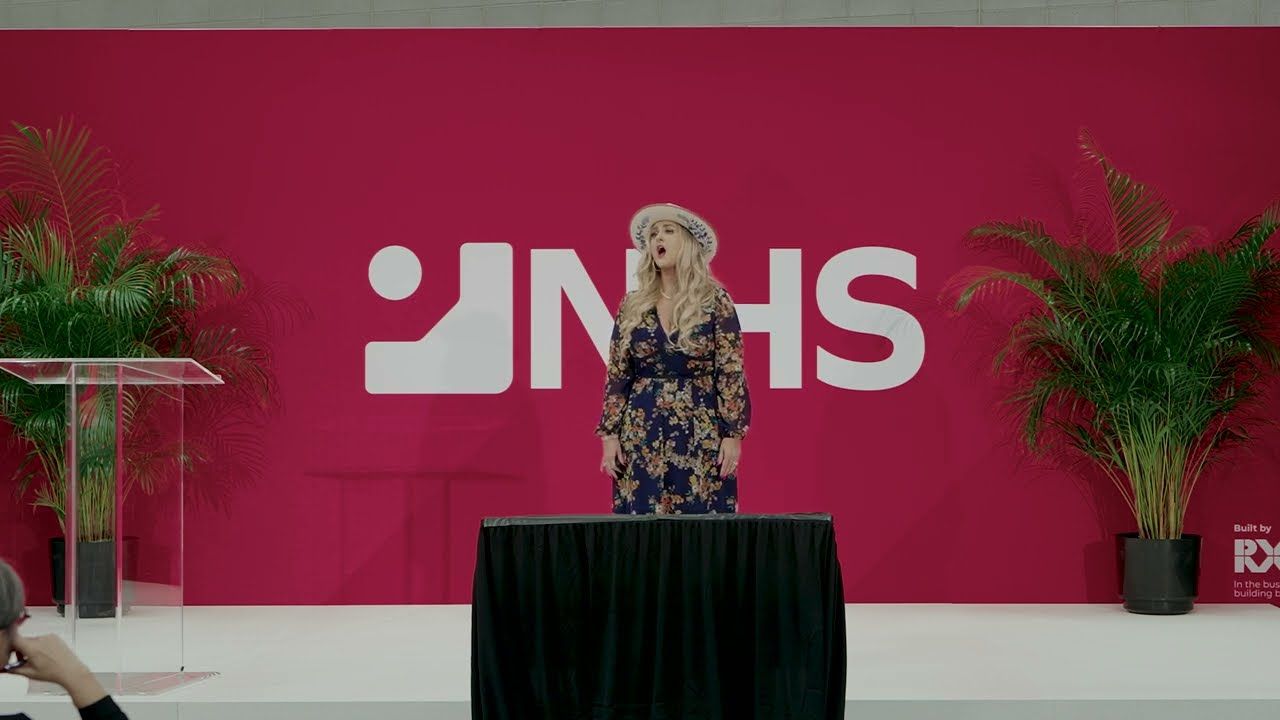
5:03 Transcript: And so she said, "Hey, everybody, introduce yourself and then tell us one thing that we would know never know about you." And so I thought, well, this is my moment to not have anyone else ask me where I work the rest of the weekend. And I decided that I was going to share a fun fact about myself that made me very different. At the time, I wasn't wearing a hat, but I was wearing a dress and I looked different than all the other women on the stage.
5:29 Transcript: And I stood up and I said, "Hey, I'm Stephanie Couch and I grew up in this industry and my fun fact that no one would know is that I am a classically trained opera singer." And I knew that probably that would deter the attention away from the fact that I didn't have a job anymore. And I was right because the whole audience, it was around 600 women at the time, said, "Sing."
5:54 Transcript: And so I looked at the moderator and I said, "Would you like me to do that?" And everyone said yes. So I just stood up and in my moment of great despair over how am I going to pay my bills? Am I going to be able to make it on my own? I decided to step into my personal brand as who I really was. And I stood up and I sang Mosart.
6:17 Transcript: So, I'm gonna give you a little snippet today. Y'all want to hear?
Branding Is Reputation Done in Public
6:52 Transcript: Prince Amen. Thank you. And I figured out that that was kind of the start of me being who I actually already was because personal branding is not about logos or titles. It can be. It's really about you and what you want to be known for. The definition of branding is actually reputation done in public. How many times have we seen someone that we recognize from TV or social media or maybe something in the industry and you feel like you know that person even though you've never met them.
8:10 Transcript: The first thing that I always hear when I start talking about personal branding is, "Well, I don't want to be famous." And that is not what personal branding is about. I also hear this one a lot. I don't want to be an influencer. Anybody here feel like if you started posting on social media that you would be looking like you're trying to be an influencer? Anybody ever felt that way? Okay. I've seen this so many times and it's not about that.
8:38 Transcript: But I do understand the fear. And then the next thing that I hear all the time, especially with women, is I don't want to seem like a showoff. I don't want to seem like I'm bragging, but you are sharing your story and your expertise. And if no one knows who you are and what your unique value is to the world, you better believe that they're not going to remember you when you most want them to.
9:03 Transcript: They're not going to think of you first. And we all want to be the first choice when someone thinks of an expert in our field, whatever that may be. You want to be the one that they think of. How many of you would love to never compete on price again in your business? Like, can I get a amen for that? No one wants to be the cheap person, right? You want to be the premium solution.
9:27 Transcript: Branding yourself is a great way to do that. Whether you work for someone else or yourself, it works. If you're a salesperson or an operations person, you're selling ideas to people. This is a way to get them through the finish line. It's really about what you're known for and about having influence. So, I talk a lot about not being an influencer, but we all want to have influence over other people. Anybody here ever need influence to get a decision that you want to get made done at work, at home?
10:01 Transcript: Anybody have kids in here? How many of you would love to influence your kids to do something and you're just not very successful? So maybe if you build your personal brand, they'll care. No, they probably won't. Just don't take that piece of advice. That's bull. I just made that up. All right. What is personal branding? It's an expression of your values, your personality, your unique selling proposition to the world. It's how you stand out in a crowded digital marketplace where there's people and places and things everywhere.
10:33 Transcript: It's how you cut through the noise. How many of you would say that you have a personal brand? I want you to raise your hand if you think you have any type of personal brand at all. All right. Well, the answer is you actually do have a personal brand. Even if you don't think you do, because when you walk out of the room, they either think something about you or remember something about you.
10:59 Transcript: And it may be really great and it may be exactly how you want to be known or it may not be. So if you're not sure how you would rank your brand, I want you to think about it in some levels. So level one is you have no idea what a personal brand even is or why someone would care about it. Level two is you have a brand, but you're not really trying very hard to make it intentional.
11:24 Transcript: Level three is you're working. You're posting. You're talking about things that you care about. And level four is you're Taylor Swift and you are everyone knows you everywhere. Anyone in here, can you identify kind of where you I just want you to think about where you think you land on this scale? How many of you believe that this is important? What I'm talking about? Like you would if I gave you the key to it today, you would go do it.
Why a Personal Brand Outperforms a Logo
11:51 Transcript: Okay. Well, I'm about to do that. So, good good luck. Let's take some notes. if you want to take pictures of the screen and I can also get you these slides as well if you're interested. So, why does your personal brand actually matter more than your company brand? Here's why. Because your personal brand actually will convert higher than a company brand will. And here's some statistics to prove that. So, 33% of buyers trust a logo, that thing that you wear on your polo shirt, the thing on your business card.
12:22 Transcript: But 90% of people trust recommendations from a friend or even a stranger on the internet. That's the cool part about this is it doesn't have to be some trusted confidant that you love and know. It can be a random person. How many of you have ever asked your server at a restaurant what's your favorite dish? Anybody ever done that? Why do you believe that person? You don't know them. You don't know if they like the hamburger or if it's Anybody ever have them recommend the most expensive thing on the menu as their favorite?
12:53 Transcript: Also, another little psychology. The lobster is amazing. You should try the eight pound lobster. It's only $752. Uh I think that's awesome because it does work and we know it. We can all think of situations in our life that we've had that happen to us. But here's a few more statistics. 50% of professionals with a personal brand that is strong receive interest from new employers compared to only 14%. So, I'm going to talk about LinkedIn in a few minutes and we're going to dig a little bit deeper into that because it's my favorite platform.
13:26 Transcript: But if you don't have any sort of presence and you might eventually think you want to do something else even at your current company or you want to start your own business, you want to get a promotion, this is a great way to get actual solicitations for new jobs. 57% of employers are less likely to actually talk to someone if they can't find you online. Anybody here do research on someone or something before you you actually talk to them?
13:56 Transcript: Why would we think that you're going to do that and the other person's not going to do it with you? I call it going to school on someone. So, when I'm going to have a meeting with a company or a person, I now, this is a whole different topic, but I go into this cool AI thing called Perplexity. If you want a little tidbit extra AI tool called Perplexity is the best research tool there is out there.
14:19 Transcript: And I could go put Allison Flat George's name in and it's going to tell me that she works for Do It Best Group. They just acquired True Value. It's going to tell me that she has a history at all these places she's worked. She started in engineering. She went to branding. She goes to marketing next. Now she's the VP of marketing at Do It Best Group. It's going to tell me all that going to school on her.
14:43 Transcript: And the only reason I know that about her is because it's online somewhere, whether it was through PR, somebody at a company put it out, or it's probably from her personal LinkedIn. LinkedIn is annexed by Google and it actually will show up in searches. So, if you don't have an updated LinkedIn profile, today is the day, my friend. You can do it during the lunch break in 2030 minutes and at least have a presence there.
15:10 Transcript: All right. How many of you would love if I gave you 11% more profit to your bottom line at your company every year? Would you take 11%. I know people who have done insane things with their business to try to get 5% more profit. Companies that have a CEO with a strong personal brand are 11% more profitable than those that don't. If you remember nothing else, that statistic right there is pretty powerful because that's what most companies care about, the bottom line.
15:42 Transcript: And employees stay longer. They're encouraged by seeing their staff and their especially executive team online. So that's a really cool statistic that you can lean on. They're optimistic about their company's future, too, because they know what's going on because they're seeing it online. So this is not a luxury. This is not a a would love to have this. This is a mustave and it is for everyone. So, I'm going to dig in a little bit more.
What It Does for Owners, Employees and Teams
16:07 Transcript: Anybody in here an entrepreneur? I know I spoke with several people already that are entrepreneurs. Okay, awesome. Like, can't wait to after this. I want to hear about y'all's businesses because nothing better than hearing that. If you really want to stand out as an entrepreneur, you give away and talk about your expertise. One thing that I hear a lot and this is a really big block for most people is well if I tell all my secrets then everyone will have my secrets and they won't buy my thing.
16:37 Transcript: And I have found that to be absolute opposite of the truth. If you tell all your secrets 99.9% of people are not going to do the thing you're telling them to do for free ever. There will be probably 0.01% 01% that will go build their own empire and they weren't going to buy from you anyway because they're a DIYer. They're always going to paint their own room. They're never going to hire the painter, which is fine.
17:01 Transcript: But your perfect client is watching you talk about the problem that you solve every single day online or wherever you're speaking, whatever you're doing, they are watching you in action doing the thing that they need you to do for them. And they're going to know that that's your expertise. So, if you're scared of sharing your story and your actual secrets online, I dare you for 90 days, just start posting. 90 days.
17:30 Transcript: And if I'm wrong and your life's secrets are spilled and you never get another client because of it, then you can call me, send me some hate mail. But I don't think I am because it works. And a lot of other entrepreneurs like Gary Vee, people like that, he talks about this. He's a real marketing genius. and he says, "I have the biggest media company in the world. He has an agency, Vayner Media is the name of it."
17:52 Transcript: And he tells everyone that he talks to all the free advice, yet they still want to buy from him and them be managing their media company. And he'll say, "You can do this yourself. It would be better." And they say, "No, but I'm not going to." So, just know that your perfect client is not going to care about that. It's only going to magnetize them to you. For employees, who in here works for a great company?
18:16 Transcript: Awesome. Pretty good smothering of of people in here. Great group. A strong personal brand actually helps you be a billboard in your company for others. So people come and see that you love working there. You're incredible and they might like working there as well. So it's a great recruiting trick. And on top of that, if you want to be promoted in a large company, you could get lost in the sea of sameness.
18:45 Transcript: So, how many times have you seen a job posting for the perfect job in your company and you've been like, "Man, why did they not come ask me about this job before they posted it?" Anybody ever felt that way? I sure have. It was not a good feeling. And if you are actually building your brand online or in your company in real life, you can mitigate that risk because they're going to think of you first because that's what you're known for.
19:11 Transcript: And then who has employees or a team that works for them? If they build their brands, it is a great recruiting tool. People get really, really scared of this one. And here's why. They're afraid if their employees brand and they're awesome, then they're going to actually get lost because they're going to get recruited away. And that can happen. But if you're a great enough place to work, Richard Branson actually always says, "I want to be such a great company that people want to work for me even though they could go work anywhere else in the world."
19:43 Transcript: So, you've got to be a culture. My friend Gina here is an amazing business owner. She has 13 plus hardware stores in the DC and surrounding areas. And she always talks about, and she's going to share later, building a culture that people want to stay and thrive in. If your employees are showing that out loud, they're living it. It's going to help bring other people in. So, where do you start? How do you get started on this brand building thing that I keep talking about?
Step One: Confidence Is Built Through Courage
20:11 Transcript: You're going to start with confidence. So, what you tell me is, well, that's great. You just got up on stage and talked about this for however long. I'm not confident. I don't believe I can build a brand. I don't think I have a story worth telling. And if you are thinking this is me sitting in this chair hearing you say this, the truth is that confidence is built through courage. You don't just wake up confident.
20:37 Transcript: You do things, you take actions and you move forward in a way that builds experience and that is how you build confidence and it does take time. But I want you to start by building your unique brand. I would love for you after this to write down a few words, even just one word that you would like to be known for. I want you to think just a moment. Is there something that comes to mind when I say that?
21:06 Transcript: Is there a word that you want to be known for in your industry, at your company? You want to be the go-to for that thing? I wanted to be known as a business strategist, someone who could go in and help businesses grow. And that's what I'm trying to brand myself for. And I've worked with a lot of clients now and that's what I'm getting to do. But it's because I intentionally set out to show
21:31 Transcript: that. No copycats allowed. It's really easy to look around and see like, oh, look at these people doing this thing and she's doing that and I could do this. And you can mimic things you love about other people's brands. There's never a true 100% original. But you want to be who you are. So, if you are not a vivacious, loud blonde that likes to get on stage and sing opera, then don't act like you are.
21:57 Transcript: I know that's what you were thinking. You were going to do that next. I mean, if you want to try it, there's hair color probably at the CVS down the road. But the truth is that you are the best version of you because you're the only one. So, don't try to copy other people. Just be who you are. And so if you want to pick a brand vibe that feels like you, Gina and I were laughing about this earlier.
Step Two: Find Your Zone of Genius
22:19 Transcript: We couldn't be more polar opposites. I'm wearing floral print and hot pink heels and she's wearing black and Prada beautiful Prada shoes usually. And I am opposite of her. But it's beautiful because we still are both powerful amazing women. And you get to be whoever you are, a powerful amazing woman or man with your brand. The second thing, and this is one of my favorite exercises for people to do, you need to sit down and actually write this down, is find your zone of genius.
22:49 Transcript: What are you really amazing at? So, you see that little dot in the middle of those three overlaps. This is where your skills, your passions, and your talents overlap. I love the hardware and lumber business. I have my whole life. That is a passion of mine. I am talented at growing businesses and finding ways that people don't see to brand people so they stand out, companies and people. And one of my skills is website design or creative design.
23:20 Transcript: And so if I put those together, then my zone of genius might be building an amazing company brand for someone that converts more leads and sells more than they've ever sold. So that's just one zone of genius and you could have multiple ones. It can be personal or professional, but I want you to think about where these things overlap and how you can actually do this exercise. So, if you're gonna take a screenshot, this is a good one.
Step Three: Share the Good and the Bad
23:46 Transcript: The three things you want to write down, I would write down one or two for each lo each each section and see how those interlap and what you might actually be missing. That's your zone of genius. Or maybe you already know exactly what it is. The third step is to share. I like to call this living out loud. Probably shocks you that I like to live out loud. But you are actually gonna show the good, the bad, and the ugly because nothing in life is ever without failure, without missteps.
24:19 Transcript: I just told you earlier a story about me getting fired. I never had been fired before. I had never even been sent to the principal's office. I was literally the golden child. Goody two shoes. always did everything right. And that day that I went home and told my husband I just got fired, I was actually really relieved because I hated that job and I was going to quit anyway and they made it a lot easier on me to go do my thing.
24:44 Transcript: But I was like, what am I going to tell people? People are going to think that I'm worthless because I got fired from this job that I just posted everywhere on LinkedIn. I mean, they were posting me. I was posting me. It was like, "Oh, you're working here now? That's amazing." Not for long. just stand by. And so you want to share all the good and the bad. Now you get to choose how much you want to share.
25:11 Transcript: But if it's something that is part of your story, especially after it's been a little time, I want you to share that. And then be authentic, be yourself, and be real. Because nobody likes somebody that's fake. I think that's one of the coolest things is when you meet somebody in real life and you're like, "Oh, they're exactly like they were on LinkedIn. That's why I have to wear a hat even when I
25:34 Transcript: sleep. It's really hard. Who loves Bnee Brown in here? Anybody? What an amazing woman. When Bnee actually started her journey, she was a professor in Houston. and she almost did not give her TED talk, which is really what made her totally famous and got her all the way to book deals and all these things because she was worried that the other professors at University of Houston would not think she's serious enough because she was going to talk about the topic of shame.
26:11 Transcript: And so she actually did this talk and she cried on her couch for two weeks afterwards because every day she would look and it was getting more views on YouTube and she was like, "Everyone's going to know about this." And boy, I bet she's glad now that she did that talk because she charges $500,000 for a keynote that's an hour. So shame me all you want. Let's go. But she actually says, "Authenticity is the daily practice of letting go of what we think we're supposed to be and embracing who we actually are."
26:42 Transcript: And that's a lot harder to do in real life when people are judging us. But the best thing to figure out is what do you want to be known for and who are you already? And I'm going to give you a little exercise to do it. So, you don't have time right now, but if you want to take pictures, there's three questions I want you to think about in your daily life.
27:00 Transcript: What three topics do you feel the most comfortable talking about in your world? Maybe it's business, maybe it's LinkedIn for me, maybe it's my golden retriever. It definitely is that for me. So, if you want to spend a few hours later talking about Heidi Pearl, the golden girl, let me know. But you have something that people come and they talk to you about and you could just talk for hours. Who can think of one thing?
27:25 Transcript: Anybody? All right. Awesome. The next question is, what are you getting asked about? So, this actually is usually sometimes a technical expertise. So, Christina over here filming in the chair, she's actually a best-selling author and one of the leading marketing experts in the world. You probably wouldn't have known that unless I just told you, right? Unless you looked her up online. But I ask her all the time about marketing things. What should I do on this strategy?
27:56 Transcript: what should I do about this thing? And so, if you start to get asked a lot at your work or in your personal life, one thing I get asked a lot is, "How do you do your eyeshadow?" I mean, I I don't know why, but I get asked that a lot. So, maybe I should put out a video on how I do my eyeshadow. Or maybe it's something like, "Hey, Gina, you have 300 employees.
28:18 Transcript: What would you do if an employee had this situation?" And then she could give you her advice. So, think about the questions that you get asked a lot because obviously you're an expert in that area if people come to you and ask you questions about it. And then the last one, and this one gets a little more vulnerable than if you want to share a lot or share a little, you choose.
28:39 Transcript: What are the three life lessons or struggles that you would share openly? So, is there a time where you have a story that you think would help a younger version of you? That's often how I think of it. is the day that I left my job that I thought I was gonna be at my whole life, the rest of my life. I wasn't sure who I was anymore. And so I started asking other women that were powerful women that had left a career after 10 to 15 years.
29:07 Transcript: And I started asking them where they would go from here and what they would do. Hold on just a second, guys. We're going to get a handheld.
Step Four: Leave Their Judgment Behind
29:22 Transcript: All right, number four. I think we're good. Leave their judgment behind. This is the hardest one. We are as humans psychologically prepared to look around us and see what other people think. This is a survival mechanism. This is not something we can just turn off. I spent so much time in my early career asking myself, what do people think about this? Am I doing this the right way? Are they going to judge me?
29:52 Transcript: Do I look fat in this outfit? Am I smart enough to do this job? Is my nose too big? All those questions that you might ask yourself. You will never please everyone. And you will never get to a point to where every single person likes you. Someone here, maybe in this audience, maybe not, is looking at me thinking, "This girl is not a good speaker. She's been doing she got fired. She must not be as good as she thinks she is.
30:26 Transcript: I don't like her hat." If you said that, you're crazy. But someone here doesn't like me. And you know what? Let them. That's another person, Mel Robbins, that is an amazing woman who used to struggle with dehabilitating anxiety to the point that she could not get out of bed. And now she has the biggest podcast in the world. And the reason why is because she decided to just be who she is and say, "Screw the rest.
30:57 Transcript: I'm just going to be who I am." And it's really hard to do that all the time. But if you can just let people think what they will about you no matter what because they're going to and don't let it affect your actions. How many times have you let someone stop you from doing something that you really wanted to do because you were worried about what they would think? I want you to just like sit with that for just a second.
31:24 Transcript: And then the second question is did you even care about that person? Because most of the time the random people in the world that we let stop us from doing things, the big things in life that you were put on this earth to do, you don't even like them. That random person on LinkedIn or at your job that you're like, I can't stand that person. You're worried about what they're going to think when you do that thing that's a little different than what you've always done.
31:55 Transcript: So, I just say, kiss it goodbye and don't worry about it. because you're never gonna please them. And my favorite is that once you get big enough or loud enough to get haters, that means you're doing something right because you're out there talking about something that people actually care about. So haters mean you made it. Step five is to start building with intention. So I want you to just put one goal out there of what you want to do.
Step Five: Pick One Platform
32:25 Transcript: And the first thing I'm going to tell you is just to pick a platform online. You cannot post on every single platform. Gary Vee, that same guy I talked about, he has a content team that he pays $80,000 a month to run his content in empire. That's how he posts 200 videos a day on social. If you could just post once or twice a week just to start, you would just start to feel better like you're kind of getting a little more into the group, right?
32:54 Transcript: And I like LinkedIn. So, everyone in here is either in a B2B or B TOC role where your people that you sell to or that you want to be known by are on LinkedIn. I can almost guarantee that. And I get people that say, "Well, no, they're not." I think today LinkedIn is the most undervalued platform because it's easy to grow on and it's free. It's literally free. So, how many of you have ever posted on LinkedIn?
33:22 Transcript: Yes. That's awesome. How many of you have ever posted on LinkedIn and gotten like zero likes and no one cares? Me, too. So, I started posting on LinkedIn right before I got fired. It was almost like I had an inkling that it was coming, right? And I had no views. Nobody gave a crap about what I was posting. I was just posting into the never neverland like a tree falling in the forest every day at 9:00 a.m.
33:48 Transcript: and no one cared. But very quickly, I started to grow a small group of people that cared about what I was saying. And then I was able to get in the last year around four million views. I have around 30,000 followers. And the biggest thing is I've gotten business from it, speaking engagements, friends, and I've also had opportunities to do and see things that I would have never have gotten had I not started posting.
34:16 Transcript: You do not have to have 30,000 followers to make LinkedIn advantageous. I know a woman, she has 5,000 followers and she does something very, very niche. She teaches healthc care coders, you know, like the people who bill for insurance how to optimize their business as a healthc care coder. Super niche, right? She made $2 million last year with those 5,000 followers. How many of you would take $2 million to post on social media a few times a week?
LinkedIn Headline, Banner and Posting Rhythm
34:49 Transcript: I would. Sign me up. So, don't think you have to have this huge following and you don't have to be an influencer. Just tell your story. A few things I'll tell you is your headline is really important. That shows people who you are and what you're about from one little reading of a 60 character note. So, if you're not sure what a headline is, under your profile picture, there's a little area that says Stephanie Couch, my name, and then under it, it says building industry growth strategist.
35:19 Transcript: You can have whatever you want there, but that's important to make sure it's more than just your job title because what happens if in a day you don't have that title anymore or what if you want to be known for something else? The second thing is the banner. So, anybody have a cool banner on your LinkedIn that has a something that's something that's unique to you? All right. Maybe I need a handheld.
36:02 Transcript: Can you guys hear me? Okay, I'm back. Just kidding. We're just making sure y'all are paying attention. The banner is pretty cool because it gives you a little time to actually show your personality a little bit. So, if you want to have a luxury brand, you could have a banner that kind of shows that a font that looks higherend, your colors look higherend, maybe it's got a beautiful picture of your product or something that you're doing.
36:25 Transcript: If you're an author, you could have a picture of your book there. You could have a lot of different things, but just make sure it's something that shows who you are and what you're wanting to see because your LinkedIn is really like a landing page or a website for you personally. So, you don't have to spend $12,000 on a personal website. Just update your LinkedIn. I get asked a lot, how many times should I be posting?
36:48 Transcript: This is a recommendation. Don't freak out on me. If you only want to post once a week, that's a lot better than zero times a week. But three times a week is enough to make people see you and start to remember you. And it's also enough for you to start to feel comfortable. How many of you have ever done something and then you waited like a month or two and didn't do it again and you're like, I don't remember how to ride this bike.
37:11 Transcript: Anybody? The more you ride the bicycle or post on LinkedIn, the more you're going to be muscle memory to do it. So, you'll feel a lot more comfortable. And you can pick three or four things that you want to talk about all the time. Maybe it's something that goes around your exact job and you break it down. So, if you are a social media manager, I'll just give you an example. You could post about something like, "Hey, here's how I get content ideas with AI.
37:36 Transcript: Here's a lesson that I learned posting something that got no likes and how you can avoid that." And then the third thing could be, "Here's a day in the behind the scenes of me at my job." People love behind the scenes content. Have you guys ever seen those construction videos? I hope that you have because they're like the best where someone's literally doing nothing but like laying concrete and they're just I'll watch them for like 20 minutes.
38:00 Transcript: They're just like brushing concrete. You're why am I watching this? But it's awesome because it shows you how people do their jobs and I see those videos get millions of likes or millions of views. So if you decide to post I don't know what's going on here. Okay. If you decide to post about your boring job, just know that people might not find it so boring. You might get a million likes and go viral.
38:28 Transcript: And then networking. So, we're here at this amazing conference. Let's say that you meet someone, you get a business card. Anybody here ever taken that business card home or it goes to Never Neverland and you never talk to that person again? I do that a lot. It's hard to keep up with everything. But if you connect with them on LinkedIn, you can at least see them posting and you're going to be posting and they're going to see you and you can send them a message and network.
38:53 Transcript: Don't be too pushy or salesy. No one loves buy my thing, buy my thing, buy my thing, buy my thing. I like to do 80% posts that are not salesy and around 10 to 20% that it's like, hey, here's my offer if you're interested. Cool. If not, keep getting my free content. And then recommendations is a big one. Who uses LinkedIn to get recommendations on their LinkedIn profile? Anybody? I know Gina does.
39:19 Transcript: Christina. Awesome. So, this is a great way to send someone that you've worked with in the past, you currently work with a recommendation request. And you can use that anywhere. You could use it on a resume. There's no limit to what you can do with it because it's published, right? So, it's not like you just made it up. Um, it will be legit. You do have to be connected to the person on LinkedIn to get that.
39:42 Transcript: I already talked about this. Document your journey. Show the behind the scenes. And then I want to say this one more time because this is the most important thing that people trip up on. You will never please everyone. And someone at your work or someone at your life is going to be like, "Saw your LinkedIn post today, influencer." I say that from experience if you can't tell. But I want you to take constructive criticisms criticism to heart because sometimes they do have a valid point.
40:08 Transcript: Maybe you do h you're leaving some things on the table, but just don't let it stop you. And just know that I would say six to 12 months of posting three times a week is what you should expect before you ever see any kind of feedback that's positive on it. If you get it sooner, great. Other platforms that you may want to try, if you are a great writer, LinkedIn is good, but also you can do articles or blogs.
40:34 Transcript: If you're great on video, there are Tik Tok, Instagram, YouTube. You can do long form or short form. If you don't want to be on camera, but you like to talk, podcasting is a great great medium. So, there's lots of options for you. All right. If you're taking notes, this is a good good picture snap. One thing that will save you a lot of time is if you actually sit down one day a week or one day a month and create the content all at once.
Perfect Timing Is a Myth
41:02 Transcript: If you can get your headsp space right and start to really bulk create and schedule, you don't even have to think about it and then you can just go on and engage with people and comment after it post. The next thing is perfect timing is a myth. It does not exist. How many of you have thought about doing what I'm talking about right now but haven't? Anybody? Okay. You're never going to have a better moment than right now.
41:28 Transcript: You don't have time. You never will. You're not ready. You never will be. You're not good enough to post and get a million likes. How would you ever be unless you posted to start trying? We grow through experience and action taking. We do not grow through thinking. I know that's hard for some of you to hear because you are really good thinkers. But you can have the most brilliant, beautiful plan and if it never comes to the action stage, it doesn't matter.
41:59 Transcript: It may have as well never have happened. So take bold action, please. Your dream is literally behind your first step. That standing up on stage and doing the thing that you don't want to do, that's scary to you. That's probably the thing you're being called to do. And I say stage theoretically. It may or may not be on stage. Whatever it is that scares you the most, but you feel a calling to do, there is a reason for that in your life.
42:29 Transcript: And if you're really not sure, you can hire people to help or watch all the free content online because there is amazing content. But don't watch 17 YouTube videos and never post. You've got to do both. It can be overwhelming. So just know one platform, one thing at a time. And then this is the biggest thing that I'll leave you with. You cannot fail if you refuse to quit. It may take years.
43:01 Transcript: It may take decades to get where you want to go. But if you will not stop and you will not quit, you will be successful. Probably more successful than you could have ever dreamed. But it might take 10 years. Are you willing to spend a hundred days, a thousand days? How many how much time are you willing to commit to your dream before you decide to quit because it's not working? Whatever the number is, multiply it by 10 and that's probably what it's going to take.
43:33 Transcript: But if you're serious about being what you could be, your best version of yourself, this is what it's going to take. And it will be so worth it, if you will.