Click any timestamp to jump to that moment in the video.
Why Every Job Is Sales or Sales Support
0:01 Jason Blair: In the organization, we're very open as to what our sales and profitability goals are, so that as people engage in their daily job, they know that their job is achieving those results.
0:10 Stefanie Couch: That's such a great point. And I do see a lot of people, especially in privately held companies, sometimes holding those numbers super close to the vest. And I understand sometimes not wanting to share every detail, but if there's no scoreboard, it's really hard for people to know if they're winning or losing or hitting the mark or not.
0:26 Jason Blair: It starts by looking in the mirror and asking yourself, do I believe that my team understands the goal? If the answer is no, or maybe, if it's not 100% yes, then I think it's just simply starting with helping them connect. Here are the goals, here's my job, and here's how my job supports that. Whether you're an AP clerk or a forklift driver or a salesperson, don't be afraid of, especially in the independent world, of sharing. They want to know how they're contributing to the greater good. Don't be fearful of that part of it. I found the more transparent we are, the better.
Welcome to the Grit Blueprint Podcast
0:59 Stefanie Couch: Welcome to the Grit Blueprint Podcast. I'm your host, Stefanie Couch. This is a spot where leaders talk about the stories, strategies, and systems that win in the building industry. We unpack how leaders and brands build their reputations and become unmistakable.
Introducing Jason Blair of Tal Building Centers
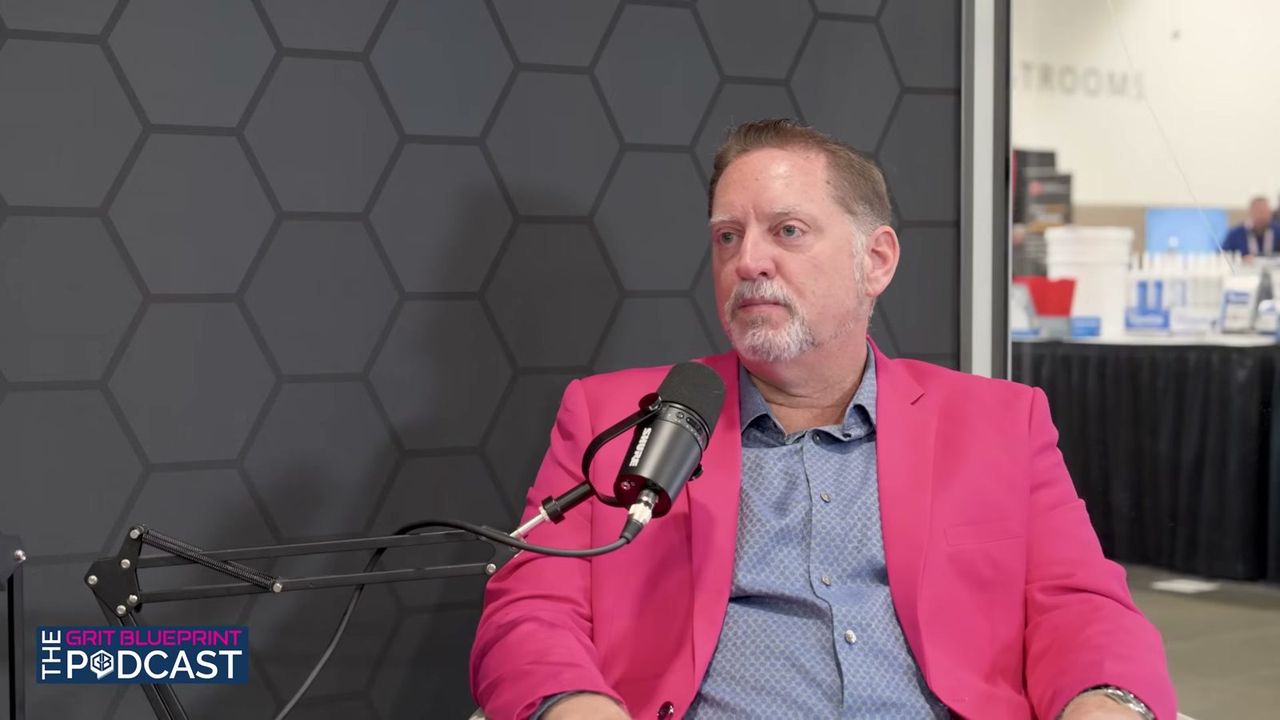
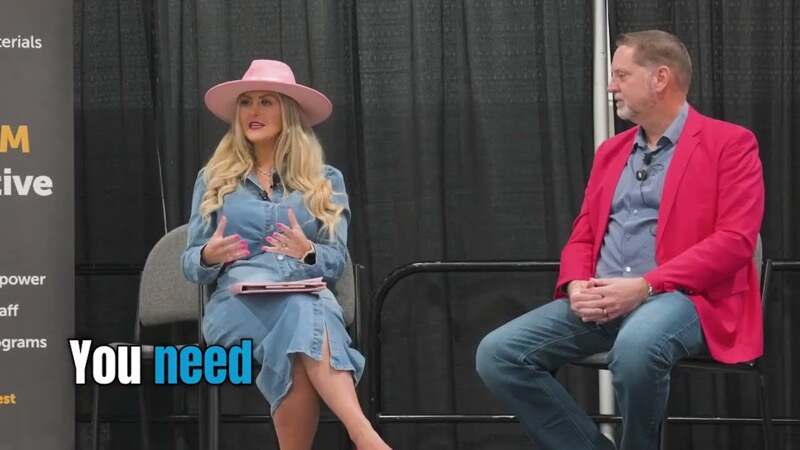
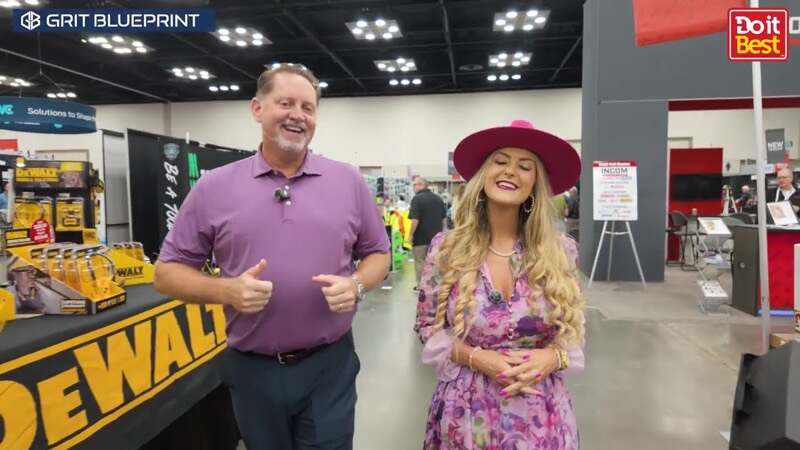
1:20 Stefanie Couch: Welcome to the Grit Blueprint Podcast. I'm your host Stefanie Couch, and today I'm coming to you live from the Do it Best True Value Spring Market floor in Denver, Colorado. Welcome to the show, Jason Blair, CEO of Tal Building Centers.
1:33 Jason Blair: Thanks for having me. I'm excited to be here.
1:34 Stefanie Couch: And you picked the right color, my friend.
1:37 Jason Blair: I did.
1:37 Stefanie Couch: Thank you so much for wearing my pink. I love it.
1:40 Jason Blair: My pink suit.
1:42 Stefanie Couch: You look great.
1:42 Jason Blair: Thank you.
1:43 Stefanie Couch: I think you should maybe make this your new uniform.
1:46 Jason Blair: We'll see.
1:48 Stefanie Couch: Well, I'm pumped about this conversation because we have a lot to talk about. We're actually gonna talk about sales and some of the things that you're doing in your business, but I want to intro you first. You are Jason Blair, the CEO of Tal Building Centers, a family-owned building materials center company across the Pacific Northwest. You have doubled this business in size under your watch. 28 locations, 500 employees, 225 million in revenue, and you have over 35 years of experience in the industry leading teams. You actually worked at True Value, Wilco, Foxworth Galbraith, and now you're on the board of directors for Do it Best.
Why Every Role in a Building Supply Company Is Sales
2:31 Stefanie Couch: So we're here at Market and this episode actually came to be because we are connected on LinkedIn, which is also one of my favorite places to hang out. And you responded to a post that I posted. So I want to read this. It is about sales or sales support, and that basically everyone is either one or the other. The post said every single function in business is either sales or sales support. Period. HR, IT, ops, admin, legal, marketing. It doesn't matter. Every single person in a company should know their role and how it helps the company either make or save money. And then I talked about John F. Kennedy and how when they decided to go to the moon, he went to NASA, and the janitor, he asked him what his job was, and the janitor said, I'm taking a man to the moon. So I want to talk a little bit about this post, because you reached out to me afterwards. So welcome to the show. Let's just dive right in. What made you reach out to me and say, we need to do a podcast about this topic?
3:26 Jason Blair: Yeah, it was really appropriate timing because we had just been walking through with our sales organization and the rest of the supporting staff, our initiatives for 2026, and making sure that the entire organization understood those. Part of what we talked about was this whole idea that every day when you get up and you go to work, you need to know what the results are you're trying to attain. And those are more sales dollars, more margin dollars, the components that make us a more profitable and successful business. It just resonated with me that it was just an interesting timing of what we are working on delivering as an organization. It's a story that I think you have to make a part of your culture and tell over and over and over again to drive success with it.
4:10 Stefanie Couch: Yeah. And I mean, we both come from a sales-based background, so of course we're thinking about sales and revenue. But oftentimes some people have never been really in that side of the business in a technical sales role, but it is really important. And I think that's something that we can all be thinking about. Warren Buffett has one of my favorite sayings: what's the number one rule of business? It's don't lose money. And we all need to be thinking about that.
Giving Your Team a Mission Bigger Than a Job Description
4:34 Jason Blair: Yeah, for sure.
4:35 Stefanie Couch: I used that story about NASA because that is one of the coolest things I think about is a big mission, like a really big goal that everyone's pushing towards. How do you get people to actually do that? When you're giving people purpose, it's not just their job description. And what does that look like at Tal?
4:52 Jason Blair: So one of the foundational cores of our culture is a book called The Oz Principle. It's something I learned back at my time at True Value, and something that's been a big, big part of my leadership journey. It really formed who I am. One of the components is this idea that doing your job is achieving the results. To your point, a truck driver isn't just a truck driver. If I were to ask a truck driver what their job is, what I'd want is a desired answer is something along the lines of, my job is to safely deliver material to the job site on time and at high quality for my customer so that they can do their work on time, so they'll continue to shop with us and drive those revenue goals. And that's hard. To have everyone in the organization understand that, first of all, they need to know what the goal is. So we've made it very clear in the organization. We're very open as to what our sales and profitability goals are, so that as people engage in their daily job, they know that their job is achieving those results.
6:01 Stefanie Couch: Yeah, that's such a great point. And I do see a lot of people, especially in privately held companies, sometimes holding those numbers super close to the vest. I understand sometimes not wanting to share every detail, but if there's no scoreboard, it's really hard for people to know if they're winning or losing or hitting the mark or not.
How Often CEOs Should Share Sales Goals With the Team
6:19 Stefanie Couch: So how do you do that? Do you do that yearly and then you check in quarterly, or what does that look like?
6:24 Jason Blair: It is actually a little more frequent than that. We ask that our leaders, I do a weekly video for the entire company. So usually on Tuesday of every week, we have a product called the Tal Weekly, which is a newsletter to all employees. I frame it up as, there's something important for everyone in the letter. Not everything is important to everyone. There's topics that may not be relevant to every job role in the company. But that is our vehicle to talk about that. So on a monthly cadence, I recorded one this week that talked about our February results and how we are doing and how we're tracking towards our goal. And then we ask our leaders to do the same. We do monthly meetings with our sales team. They're one-on-one meetings, so they're understanding where they're at to their goal. I would hope that they would know what their goal was anyway, but being able to articulate that and then feed all that back up through the organization. Our cadence is intentionally very frequent. That way we have the flexibility. If we have a newer leader in a branch that needs to hear that over and over again so that it becomes a part of who they are and they share that with their group over and over, that's the direction we go. I'm gonna reiterate it on those milestones throughout the year, but not in a specific prescribed way, but intentionally that way.
How to Run a Weekly CEO Video Update That Actually Works
7:42 Stefanie Couch: I love that consistency and that cadence. I think that's something a lot of people miss. We all have really good intentions, but we have so much stuff going on. So for leaders out there that maybe are like, hey, that's a great idea, but I don't know if I have time, or how do you produce that? Let's get a little tactical on that. How do you make the video? What kind of setup do you have? Are you using software or something like that? How are you sending this out?
The Exact Tools CEOs Use to Record Team Updates
8:04 Jason Blair: Yeah, so it was a bit of a learning journey for me to figure out what worked well. I use Loom as my recording, my deliverable. I originally recorded in Loom and I found that the quality of the recording wasn't as high as if I used Teams. So what I do is I use Microsoft Teams and I have a meeting with myself. I record the meeting with myself. I then download that meeting and upload it into Loom. I use the Loom transcript tool to edit it myself. I don't have to involve anyone else. I know we're gonna talk about AI later, but really I'm using the AI tools built into Loom to create an output. I have a little bit of a cover that goes over it that says it's Tal, and I figured out a few nuances and I correct some of the transcript. Really important, think about, if you're going to go down a path like this, what the end user's experience is gonna be like. In our stores, not every computer has speakers. So one of the learning curves we had was we need to make sure that we had closed caption in there. Getting that right and then reading it, making sure that the wording of that. All in, from start to finish, I can do a 10 or 12 minute video, which is about all that I would want to do weekly, in probably 30, 40 minutes. That's not a consistent time period. I might, because the uploading takes a little bit of time. It's great. When I do guests on Teams, it comes out wonderfully. It's a comfortable product to use. They don't have to worry about the Loom side. The Loom thing is really easy because you don't have to have a license to access it. So you can share it with people inside your organization, people outside. When we do our vendor of the year awards, Renee and I, my purchasing director, we record videos for those companies, thanking them for winning the awards. It's been a learning curve, but been great.
9:53 Stefanie Couch: Loom is one of my favorite tools, and we use it all the time in our business. Loom is great for recording, for teaching people stuff. The transcript feature is really great. If you want to just record something and then get the messaging, sometimes you just need to talk through things. And Teams can do the same thing as well. Just start recording and then you don't have to even use the video, just use what you say to it.
10:15 Jason Blair: Yeah, you're right. We did a project. We moved to BisTrack a couple years ago. We've had an ongoing project called Mastering BisTrack, so we learn new things about BisTrack in the organization. The IT team uses Loom to do screen recordings and then creates that transcript that outputs, and then we actually assign that to people in the organization so that they watch it. It's a great product. It is the paid version. Somebody in the organization needs a paid version. It's very reasonably priced.
10:42 Stefanie Couch: Yeah, absolutely. So many great tools.
Tal Building Centers Mission: Building Better Communities
10:44 Jason Blair: Yep.
10:44 Stefanie Couch: Well, I want to talk a little bit about mission, because you talked a lot about purpose and mission. What is Tal's mission, and how do you get people to get on board? Going back to JFK, how do you get people to want to go to the moon and believe that it's worth all the hard work that it takes to get on that ship or send someone else to the moon?
11:04 Jason Blair: Yeah, this has been an ongoing journey for us. Our mission statement is, we help build better communities. And we mean that through supporting the communities. That can mean a lot of different things to a lot of different people. We're a building supply company, so you could interpret that as we supply and want to physically build things. I don't know that that's my particular vision of it. It's partly that we want to be a good employer, a great employer in those markets. We want to be a great retailer where we have retail stores. We want to be additive to the communities that we serve. As we've grown, we've had our share of growing pains associated along with that. I would define us as a collection of companies. We're not a chain. We have 16 brands, and 16 brands is challenging to manage.
11:51 Stefanie Couch: Yes.
11:52 Jason Blair: We have great locations. We bought great companies. We have great people that work for us. But integrating all that into a behind-the-scenes similar process so we can gain efficiencies and do those things, all of that in a, coming off of COVID, and coming into, the Pacific Northwest has been slow the last three years, and it's been an interesting challenge. But at the core, I think it's just continuing to talk about what that mission statement is, and to continue to reaffirm your culture. I'm a big believer in that company culture is really important. And picking a culture, I was able to pick a foundation to come with me with the Oz Principle, and then just continuing to use it as an organization. One of my fundamental beliefs is that when you pick a direction of something like culture, you need to stick with it. Because the risk is, it's the topic of the month or the topic of the year. You see so many big companies churn through that. Culture that feeds a vision and mission, core value statements, takes a lot of time.
13:01 Jason Blair: It's a marathon, a very long marathon. Not a short sprint, and not something that you want to waiver from.
Why Company Culture Is a Marathon, Not a Sprint
13:07 Stefanie Couch: Yeah. People buy trust, and that type of culture building is really around trust. And like you said, if you're wishy-washy, or you have too many things, or not something that you stick with, you lose that trust. And once you lose it, it's really hard to get it back.
13:22 Jason Blair: Agreed.
13:22 Stefanie Couch: And I do believe people want a place they can work that they can feel a part of a bigger purpose. I think it's very important to most people. Even if everyone needs to make a living and everyone wants to do well for their families, a lot of people want something more. So being able to have that in your work is a really important thing for a lot of people.
13:42 Jason Blair: It is.
13:43 Stefanie Couch: This episode of the Grit Blueprint Podcast was sponsored by Do it Best Group. Do it Best Group is the largest co-op in the world, and they help independent hardware and lumberyards all over North America win. Do it Best offers services, products, and people that can help you win long term. They are the champion of independence.
How to Read a Building Supply Store's Culture in 5 Minutes
14:04 Stefanie Couch: You've been very successful. You've doubled the size of Tal in just a few years. I managed over 1300 accounts when you were at True Value. You've been growing businesses a long time. When you walk into a new company or a new acquisition, what is the first thing you look to, to know and to see about the culture? And is it actually what the culture thinks it is? Is the mission statement on the wall what actually is happening in the walls? That's always something I ask. How do you know that?
14:34 Jason Blair: Yeah, it's tough. I want to just make a comment before that. Doubling the size of Tal and managing 1300 accounts at True Value and having all that success in my career, when I come to a show like this, it reminds me of all the people that helped me make that happen. It's wonderful being here and knowing all the people I know. But also knowing that I wouldn't be here today without some incredible people helping me on my journey. I didn't grow Tal. I didn't double the size of Tal. An army of people doubled the size of Tal. I just happened to be the guy that was at the top when it happened. I mean that sincerely. That journey, you learn a lot along the way. In my career, because of the roles I've had, I've been in a lot of stores. Hundreds and hundreds of stores. And there's this general gut feel that you get when you go into an operation. In general, these stores that we've purchased, part of our journey of purchasing a store is understanding the company culture. Because if it's a company culture that we feel like is gonna be hard to integrate, it's a consideration when we're buying. There's been a couple of opportunities along the way where we felt like the company culture wasn't something that we would be able to sustain. Making an acquisition is disruptive to the culture that's there. That's the reality of it. It's hard for everyone along that journey. But knowing that you have good people in place, and when I walk a store, it's pretty evident. Are they sales driven? Are they prepared to be sales driven? I always say that a store walk should start way out in the parking lot, like way out, as far out as you can get. What does the facility look like there? And then journey in from there. Does it continue the whole idea of a sales journey along the way? Are there people greeting you? Is it clean? Are the trash cans emptied? Are the end caps full? Are the pegs full? Do you have the same price tags on everything? Do you have handwritten signs or computer generated signage? Is there clutter everywhere or not clutter everywhere? Are people in uniforms? Do they have name tags? Are they smiling? There's a whole lot of things that happen all at one time that drive that output. That doesn't mean that every operation has to be the most beautiful, shiny facility. In my career, I've seen some of the most sales driven operations. We have one that is just physically not a great location. And that's okay. They're super sales driven, very profitable. They do an incredible job. If we could pick it up and put it in a new facility, I would. But that is in the books right now.
How to Train Customer Experience and Charisma in a Dealer Team
17:20 Stefanie Couch: Well, and I think the little things matter, and that's the stuff you need to be paying attention to. Whatever your location is, maybe you don't have the most beautiful, shiny, aesthetically pleasing building. But how can you make what you have the best it can be? And then also be thinking about with your teams, training, those little things. I think that's so important. How do you train people? What you just described to me is basically charisma and customer experience. Smiling, engaging with people, being helpful. How do you train that into people maybe that aren't naturally that way? Some of us, I'm from the south and I like people, so I'm just born that way to say hello to everybody I see. But what about people that aren't that way? How do you train that?
18:06 Jason Blair: Well, I think you have to be mindful of the community you're in, because the personality of the community is important. You can upset that apple cart by being too far in that direction. When it comes to charisma, it starts with the leadership team being the example of that. When I'm walking the stores with my COO or a VP of operations or a VP of sales or a regional director, whatever that level is, if we're not greeting customers and asking if we can help them and doing those things, and the rest of the world is seeing that, I believe that that branch leader needs to carry that torch and set that example and drive that. Part of the beauty of the Oz Principle, the foundation, is a culture of accountability. Part of a culture of accountability is holding each other inside of an organization accountable. The longer that we continue to do that, the more of that we see. So it becomes a bit of peer pressure of, hey, let's all do this together. But also part of that is, again, all the way back to if they understand what the goals are, they know what the result needs to be. That starts to drive all of those components together. And it's a journey. If somebody is naturally very introverted, it's hard, it's a lot of work for them. I'm not an introvert at all, I'm an extrovert, so it's easy for me to greet people. But I realize that's not always the case. Giving them the tools to do that in the way that makes sense for them, or also thinking about making sure that their role in the organization is in the right spot. That leverages their strengths. If you're somebody who's just, it's gonna be really hard to get up every day, if you've got to be the quote unquote Walmart greeter and you don't want to greet people, probably not the role you should be in.
19:58 Stefanie Couch: Yeah, exactly. Letting people use their strength is something I really definitely believe in. I think you can exponentially grow your strength so much easier than growing just a little bit of your weaknesses or your lesser quality. I love that answer. You said something that made me think about an example in my career when I was setting up door shops. When I worked at a two-step distributor, we used to walk the door shop a lot, and my boss was a regional manager, and we'd go out and walk, and he would always pick up trash. Sometimes I wouldn't be walking with him, I'd just see him doing it, and the other people in the shop would see him, who was pretty high up in the company, picking up trash, their water bottles that they had left, or whatever it was. That is really important, because if he had walked by that trash and not picked it up, then how can you ask them to not do the same thing?
Leading by Example in a Lumber Yard
20:51 Jason Blair: I agree. I have the same example just a week ago. I was walking a location with a new manager, new in place, also new and first time as a branch leader. The yard was a little dirty and it was simple stuff to pick up: banding, stickers, last strip. My COO and I were together, and I turned to him and I said, I bet you in about three minutes we can clean this entire section of the yard up. And he said, let's do it. And so we started doing it, and then the branch manager saw us doing it, he joined in, and then the load builder was building loads, probably a little unconsciously saw what we were doing. And then you kind of watched what happened. Just another 10 or 20 minutes later, he's taking more time to build, to be a little cleaner in what he does. I agree with you 100%. You have to lead by example. Walking by that piece of banding and not picking it up, or that nail or whatever it is, is just not the right thing to do.
21:46 Stefanie Couch: Yeah, it really is the little things. It's interesting because we always think it's these giant leaps, but usually it's tiny little steps.
AI as a Sales Support Multiplier for Building Dealers
21:54 Jason Blair: Yes, it is.
21:55 Stefanie Couch: Well, I want to talk a little bit about AI as a sales support multiplier, because we're gonna do a panel later about AI and talk really deeply about that. But tell me about Project Clarity. You actually had something that you did recently. Tell me what it was, how it changed your perspective, and what actually you did with it in your company.
Project Clarity: Using AI to Fix Department Friction
22:13 Jason Blair: Yeah. Leading up to what ended up being called Project Clarity, I had dabbled in AI, maybe used it a little bit for some email work and light things. Nothing too deep. I had a challenge with three departments that reported to me, where there was friction, is how I would define it. A bit of friction between the departments. Not overtly like a battle, but just something wasn't right. So I took a separate notepad, and for about a three-week period, every time I felt like something like that happened, I just wrote a short description of what happened from my perspective. If somebody else made a comment, I wrote that down. Fast forward, I end up with two or three pages of notes. What I did is I opened my phone up and I opened chat, and I took pictures of it and I put it in there. And then I gave it a prompt that basically said, I'm having a challenge between these three departments. These are the notes I've taken. Here's a little bit of information of how it's set up structurally. Help me understand what's going on. And then it went down this process of asking me some questions. And then we ended up with what felt like one of those very simple, sort of smacks in the face. But it was, at the end of the day, your team needs clarity. They don't understand, their job, what they're actually doing do not align with their job title and their job descriptions, and the perception of what they're doing by others in the organization. So the end result was what I describe as a three-circle Venn diagram. We said, we have a job title and a job description, we have what they're actually doing, and then we have what the field believes that these teams are doing. Field could be replaced by other department, other people. It created a guide for those leaders to go out and have cross-functional conversations to come back and say, okay, how do we make that overlap of that Venn diagram as great as possible? The end result of that was we changed titles, we changed job descriptions, we changed structure. It ended up leading to a longer term, a little bigger structural change. But in the meantime, it really helped clarify some things and it generated some process change. We use a ticketing program called Tal Connect internally. So if we have like a UPC that's not working, description's wrong, we bring that in. Well, these departments were dealing with that, and that was some of the underlying friction. Some of it was just simply the process was a little funky, wasn't going in the right direction. And the reason was, because somebody in IT was looking at somebody's job title and saying, that probably should go there. Well, that wasn't what that person was really doing. So it was a bit on us as leaders of cleaning all that up. It was my first like aha moment of, I just hired a consultant, and I probably spent maybe 90 minutes doing something that could have taken weeks to do.
25:11 Stefanie Couch: Yeah.
25:11 Jason Blair: It was incredible for me. So it really changed my mindset on how to leverage AI.
How to Use AI Without Losing Your Voice
25:15 Stefanie Couch: Well, and I think that's one thing that people maybe aren't quite unlocking yet, that I see as a big unlock for me in my business as well, is you don't have to always do the initial work in AI. Most of your calls on Zoom or Teams or whatever are recorded. I have a little AI recorder that will record transcripts. But you can also use handwritten notes. I still love to write by hand. I'll always love a pen and paper. It's just one of my things. You can write your notes, write your thoughts. You could also speak it into your phone or however you want to do it. And then put that into AI and just ask it questions. I think that idea of prompting multiple times, where it almost interviews you, that's super important. Because most people don't give it enough information to really get good in-depth answers. And especially with something strategic that's very nuanced to like what you just described, they may need to know more about the background of the people and the background of the problem and the positions and all those things. So it's really important. You have now become an AI-friendly company, but you're really innovating, and I absolutely love that. How much is AI and the process and all of the things that are happening right now changing your business in the day-to-day?
How Tal Building Centers Built an AI Committee
26:33 Jason Blair: About 18 months ago, 15 months ago, we created an AI committee. The root beginning of that was because I was afraid, well, I knew we needed to have governance in place quickly. And we were able to do that. We did the basics and put a policy in our handbook. Then we got our arms around what tools are being used out there. It's new for all of us. We learned that we've got a half a dozen tools or so the company's using independently. Got our arms around all of that. And then it's been, what does AI mean to us, Tal, and how do we want to leverage it? And then what is the process around those components, so it doesn't just run wild and free? The team has done a really good job of defining AI for us as something that's an additive tool to our world, not something intended to replace the people that work. It's intended to make them better at their jobs. Now, does that drive efficiencies? And when we grow again, does that mean that maybe I need to add less clerical people on the back end? Probably, because our people are gonna be more efficient at what they do. The other, I think, sort of unintentional outcome of this, is I look at it like when I did Project Clarity, I've done some other projects. As you get older, it's harder and harder to learn. It's just harder. It's not that I'm not willing to learn, but I think it's harder. AI has become like my friend in teaching me. I learn a little bit each time. It learns, I know it's learning a little about me, because it aligns language to more of the language I use. But it'll format my thoughts in my head without being overly influential. You speak to this a little bit. You got to be careful because it can influence you. But if you're thoughtful about what you want from an output, or what you believe you want, as long as you continue to guide towards that and not let it overly guide you. I've learned a lot about myself. It's identified some weaknesses for me, which are good. It substitutes in some of that stuff and does some of the things I don't like to do. And it's just fantastic. So as an organization, that's the ultimate goal. But then it's also to make sure that we have the right components in place to say, look, as we start to utilize it to deal with something that's frictional in the company, that takes a lot of heavy lift. How do we teach it to do it? Then how do we stay involved as a human person in the process to check the work and then live in this world of trust but verify?
Why You Still Have to Fact-Check AI
28:56 Stefanie Couch: Yeah, absolutely. We need to do that. I get asked that a lot. Well, how do you know if it's right? You read it just like you would if someone else gave you something and said, send this to your team. You would read it before you put your name on it. Read it, because AI's doing the same thing. I do some really long, extremely technical stuff with it, 40, 50 page reports that come out of it, and I read every word. Because I can't not do that and then say, oh crap, that thing was really not true at all, and I put my stamp on it. It's still your brand and your reputation, so you got to fact check that.
29:28 Jason Blair: Yeah. I was using it to do a board report, and I was going through some metrics for our '26 planning, and it created a graph. I looked at the graph and I was like, wow, that's a metric I've never heard of before. So I asked it, where did it get that from? And it just told me it made it up. I was like, oh yeah, I'm probably not gonna record that.
What CEOs Should Say to Their Team on Monday Morning
29:47 Stefanie Couch: Oh gosh. Well, at least you ask up front. One of the questions I wanted to ask you: for people out there that are trying to grow their business and they don't know, there's a lot of things to do. If there's a dealer walking the floor right now, they know that they've got their people on the team who are just kind of showing up, punching the clock, doing the job, but they don't really know how their job and their mission connects back to growing the business, to that sales-type support role. What conversation do they need to have on Monday morning? What can you have as a dealer, an operator, a president, a CEO with your team to get them motivated on Monday morning when they get back to their stores?
30:25 Jason Blair: I think it starts by looking in the mirror and asking yourself, do I believe that my team understands the goals, and that they're simple? They're smart goals, and there's not 10 of them. There's a few, and they're clear. And then you go back and you make sure that if the answer is no or maybe, if it's not 100% yes, then I think it's just simply starting with helping them connect. Here are the goals, here's my job, and here's how my job supports that. Whether you're an AP clerk or a forklift driver or a salesperson or a branch leader, helping, making sure that each one of them understand how they support whatever that greater goal is. And don't be afraid of, especially in the independent world, of sharing. They want to know how they're contributing to the greater good. Don't be fearful of that part of it. I found the more transparent we are, the better.
31:19 Stefanie Couch: I agree with that. When you leave it to chance, or leave people to fill in the blanks themselves, you are usually not gonna like the answer. A lot of times it's way more catastrophic than the reality. We make up a lot of stories in our own heads. I do, I know for sure.
Lightning Round: Best Sales Advice and What Grit Means
31:34 Jason Blair: Surely, yeah.
31:35 Stefanie Couch: Well, I want to hit the lightning round. Are you ready for the lightning round?
31:40 Jason Blair: I'm ready.
31:41 Stefanie Couch: All right. What is the best piece of sales advice you've ever received?
31:42 Jason Blair: The harder you work, the luckier you get.
31:44 Stefanie Couch: I love that. You've been in the industry 30 years. What is something that you believed early on, but now you've completely abandoned or changed your mind about?
31:55 Jason Blair: That everyone had to agree with my opinion.
31:59 Stefanie Couch: All right. What is one AI tool that you would tell someone, every business owner, to try this week?
32:05 Jason Blair: Chat is the one I like. It's also the first one I've used quite extensively. So Chat, ChatGPT. We call it Chatty. It's an old friend of mine for sure.
32:17 Stefanie Couch: All right, fill in the blank. Grit is blank.
32:21 Jason Blair: Grit to me is picking a direction for your organization and sticking with it, especially when it doesn't feel like it's the right direction. Because the hardest journey usually presents the best results. And sometimes it's easy to give up on the way.
Why 35 Years in the Building Industry Still Drives Jason Blair
32:39 Stefanie Couch: Yeah, I love that. All right, last question. You started in this industry painting, stocking and putting shelves together as a kid. Now you're a CEO, you're on the board at Do it Best, and you're managing a $225 million company. Somewhere between Jason the kid and Jason now, something in you refused to quit to build this amazing career. What drives you to do what you're doing?
33:04 Jason Blair: It's the people in this business. From my early career to today, I've been blessed to work at people-focused, and I mean I should say relationship-focused organizations, whether that was leading a sales team, or leading a branch, or stocking shelves. I've had incredible mentors at every step of the way. I still have a lot of those relationships today. Some of those folks are here in this building right now. The customers, I think about how many customers from my True Value time, I've talked with 15 of them in the little bit of time here. To me, that is what keeps me doing what I do, because I love that part of it. It feels good. It makes me want to get up and go to work, even when those days are really, really hard. Because there's plenty of other journeys and paths and things you could chase in your career. But this industry has been really good to me. I've been here for 35 years, and I think at this point it's where I will end my career.
34:03 Stefanie Couch: Yeah, it's a beautiful industry, and like you said, amazing people, and products, and all the things we have are so cool. But the people are what makes it a really special place.
Where to Connect With Jason Blair and Tal Building Centers
34:13 Jason Blair: Agreed.
34:14 Stefanie Couch: Well, thank you so much for coming on the Grit Blueprint with me. And I'm excited for people to listen to this and take some of this advice back and go inspire their people to be the best salespeople they can be, even if they're not in a sales role. So we will see you on our next episode.
34:28 Jason Blair: Thanks for having me.
34:29 Stefanie Couch: Thank you for listening to the Grit Blueprint Podcast. If this episode helped you think a little differently about how to show up, share it with someone in your building world who needs it. If you are ready to turn visibility into growth, then head to gritblueprint.com to learn more and book a call to talk to us about your growth strategy. Until next time, stay unmistakable. gritblueprint.com