How to Make Sure Every Employee Knows the Goal
Jason Blair is CEO of Tal Building Centers. He tells everyone from the forklift to the front office what the sales and profit goals are. Here is his routine in five steps, with one more example from Quaker Windows.
To make sure every employee knows the goal, keep the company goals to a few and share the real numbers. Tie each job to them in one sentence, and repeat them on a schedule. That is how Jason Blair, CEO of Tal Building Centers, gets everyone from the forklift to the front office pulling toward the same sales and profit targets. Quaker Windows does the same thing under another name, open-book management.
Ask a truck driver at Tal Building Centers what the job is. CEO Jason Blair does not want to hear a job title. The answer he is hoping for sounds like this: “my job is to safely deliver material to the job site on time and at high quality for my customer so that they can do their work on time, so they’ll continue to shop with us and drive those revenue goals” (4:51).
Tal is a family-owned building materials company in the Pacific Northwest. Blair describes it as “a collection of companies” with 16 brands, built by buying companies (11:03). Getting that many stores to pull in one direction starts, he says, with one thing: “they need to know what the goal is” (4:51).
Here is the routine he described, in five steps. It comes with one more example from a window manufacturer that runs on the same idea.
How do you communicate company goals to employees?
A short list of goals every employee can repeat, a regular way to report on them, and one sentence for each job that says how it helps.
Step 1: Check whether your team knows the goals
Blair starts with himself. “I think it starts by looking in the mirror and asking yourself, do I believe that my team understands the goals, and that they’re simple?” he says (30:24).
His test for the goals themselves: “There’s a few, and they’re clear.” If your honest answer to his question is no or maybe, the next four steps are the fix.
Step 2: Share the real numbers
Tal tells employees what its sales and profit goals are. “We’re very open as to what our sales and profitability goals are, so that as people engage in their daily job, they know that their job is achieving those results,” Blair says (4:51).
Host Stefanie Couch noted that many privately held companies keep those numbers to themselves. She also named the cost: “if there’s no scoreboard, it’s really hard for people to know if they’re winning or losing or hitting the mark or not” (6:00).
Blair’s advice to independent owners: “Don’t be fearful of that part of it. I found the more transparent we are, the better” (30:24).
Step 3: Tie each job to the result
Blair’s script for a Monday morning is one sentence long: “Here are the goals, here’s my job, and here’s how my job supports that” (30:24).
He wants every person to be able to say it. His list: “Whether you’re an AP clerk or a forklift driver or a salesperson or a branch leader.” AP is accounts payable, the desk that pays the company’s bills.
The idea comes from a book he has used for years, The Oz Principle. The part he repeats is that “doing your job is achieving the results” (4:51).
Sometimes the tie is broken because the job on paper is not the job being done. Blair found that out when he noticed friction between three departments that reported to him. He kept notes for about three weeks, then sorted them with an AI chat tool.
What came out was three circles to compare for any role. The first is the job title and description. The second is the work the person actually does. The third is what the rest of the company believes that person does. The goal is to make the three overlap as much as possible. Tal changed titles, job descriptions and some of its structure as a result.
Step 4: Repeat it on a schedule
Blair records a video for the whole company every week. A newsletter to all employees, the Tal Weekly, goes out on Tuesdays. Once a month the video covers results against the goal. Branch leaders are asked to do the same. Each salesperson gets a monthly one-on-one meeting about where they stand.
“Our cadence is intentionally very frequent,” he says (6:23). A newer branch leader may need to hear the goals many times before repeating them to a team comes naturally. Blair talks about company culture the same way: “It’s a marathon, a very long marathon” (13:00).
The setup is simple. Blair records himself in a Microsoft Teams meeting and edits the recording in Loom. He adds captions, because not every store computer has speakers. He says a 10 to 12 minute video takes him 30 to 40 minutes.
Step 5: Show it with your own hands
Blair tells a story from a yard walk with a first-time branch manager. The yard needed a cleanup. There was loose banding, the straps that hold a unit of lumber together. There were also stickers, the thin strips of wood that separate layers in a stack.
He turned to his chief operating officer and said, “I bet you in about three minutes we can clean this entire section of the yard up” (20:50).
The two of them started picking up. The branch manager joined in. Within 10 or 20 minutes, Blair says, the employee building loads nearby was working cleaner too.
“You have to lead by example,” he says.
What is open-book management?
It means sharing the company’s results with the employees who produce them. Quaker Windows, a 76-year-old family-owned window and door manufacturer, runs on the same idea under another name. Chip Gentry, its chief legal officer, credits the company’s people and “our open book management, our open door management” (4:58).
“There’s profit sharing involved,” Gentry adds. Profit sharing means paying employees a portion of the company’s profit. He ties that openness to how long people stay. He says one engineer has been with Quaker for almost 50 years.

Three goals at most, then ask people to say them back
Blair keeps the goals few and clear. One to three is plenty. A list of nine goals is a wish list, and the team will quietly pick their own three.
Once the list is short, the work is communication. Leaders explain the vision and skip the next step. Experts skip what feels obvious to them. So say each goal in plain words. Give a real example from the yard or the counter. Then ask people to tell it back to you. Asking three people in three jobs, step two below, is how you find out whether the message landed.
If the answers do not match, look first for an expectation that never left the leader’s head. Do that before you decide anyone is not trying. A team cannot build a goal it has never heard explained.
What to do next
- Write this year’s goals on one page. If there are more than a few, cut the list.
- Ask three people in three different jobs what the company’s goal is this year. Compare their answers with your page.
- Pick one channel you will repeat every week or month: a short video, a newsletter or a standing meeting. Put last month’s results in the first one.
- Take one role and fill in the three circles. Those are the title and description, the real work, and what others think the job is.
- On your next yard or store walk, pick up the first piece of banding you see.
Want to turn the goals into numbers a sales team can act on? Read What to Measure on a Sales Team Besides Total Sales. For the leadership book behind owning the result, see Own the Outcome: Leadership Lessons from Extreme Ownership. For the yard side, see How a Lumberyard Cut Truck Turnaround From 52 Minutes to 12.
The interview with Jason Blair was recorded for an episode sponsored by Do it Best Group.
Questions people ask
How many goals should a company share with employees?
A few. Jason Blair of Tal Building Centers asks whether his goals are few and clear before he asks whether the team understands them. A short list is easier to repeat and easier to tie to each job.
Should a privately held company share its sales and profit goals?
Blair says yes and that the more open Tal is, the better. People can only tell whether they are winning if they can see the score. Quaker Windows goes further with open-book management and profit sharing.
How do you tie each job to the company goal?
Give every person one sentence: here are the goals, here is my job, and here is how my job supports them. Blair wants an accounts payable clerk, a forklift driver, a salesperson and a branch leader all able to say it.
How often should leaders repeat the company goals?
Often and on a schedule. Blair records a weekly company video and sends a weekly newsletter, covers results against the goal monthly, and has salespeople meet one-on-one every month.
What is open-book management?
It is sharing the company’s financial results with the employees who produce them, often alongside profit sharing. Chip Gentry of Quaker Windows credits it, along with an open-door policy, for how long people stay.

Watch the full interviews
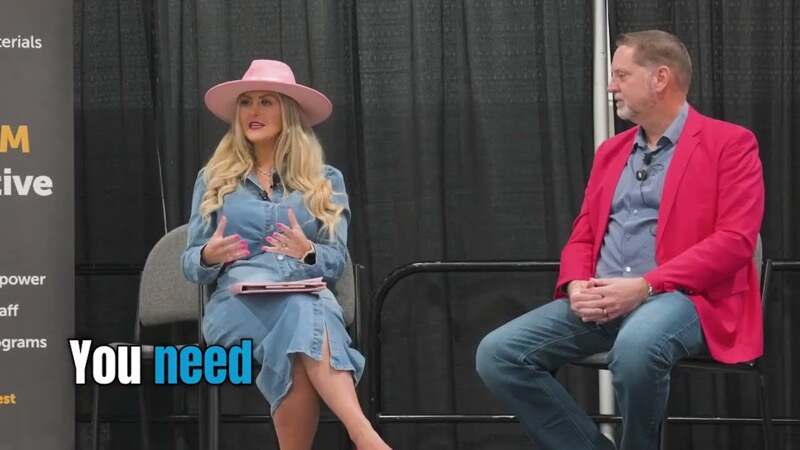
Jason Blair of Tal Building Centers and Chip Gentry of Quaker Windows.
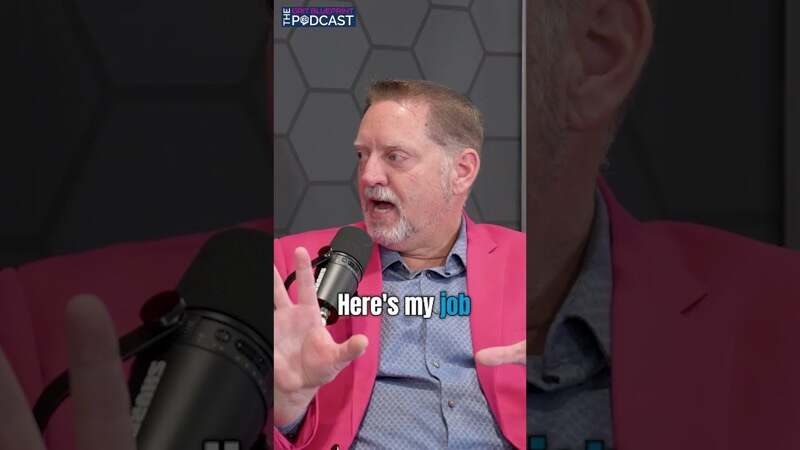
Jason Blair, CEO of Tal Building Centers, explains how he ties every job to sales and profit goals. He uses open numbers, a weekly video to all employees and store walks. His leaders pick up the banding themselves.
A Grit Guide original. This piece is built from our own interview.
Episodes in this piece
Sources
- How To Grow Your Business with Clear Goals & Leadership Culture That Works (Grit Blueprint Podcast interview with Jason Blair, CEO, Tal Building Centers; quotes at 4:51, 6:00, 6:23, 11:03, 13:00, 20:50 and 30:24 on the transcript clock) Grit Guide
- Build Loyalty Like a 76-Year Family Business: Chip Gentry, Chief Legal Officer at Quaker Windows (Grit Blueprint Podcast interview with Chip Gentry, chief legal officer, Quaker Windows; quotes at 4:58 on the transcript clock) Grit Guide