Click any timestamp to jump to that moment in the video.
Welcome and How They Met
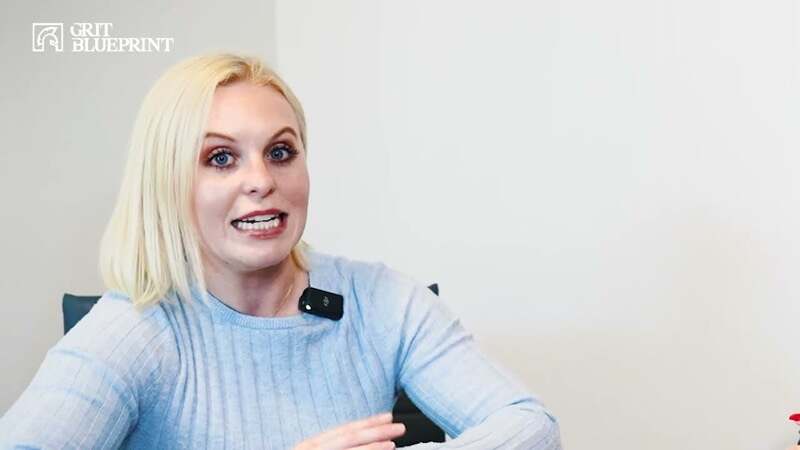
0:03 Stefanie Couch: Welcome to the Grit Blueprint Podcast. I'm your host, Stefanie Couch. This podcast is about branding, building, and business. It also highlights the grit that it takes to be successful in business and in life. Let's get started. Welcome to the Grit Blueprint Podcast with Stefanie Couch. I am excited to have my guest here today, one of my dearest friends. Her name is Keely, and we actually met when we were living in Orlando last year. Welcome to the show, Keely. Thank you for joining me.
0:33 Keeley Ehrenreich: Thank you, Stefanie, for having me. I'm so excited and elated to be a part of this.
0:39 Stefanie Couch: Well, we didn't realize when we first met, but we were actually neighbors in Orlando, lived in the same subdivision. Kind of crazy how the universe works. And we also both have an affection for pearls, which we're both repping today. And other things in common a love of dogs and brunch and all these other things. So we headed off very quickly, and you came to one of our Build Women events, and I found out that you actually are in the construction industry. So I want to hear and let our audience hear all about you.
1:07 Stefanie Couch: Tell me about you and your background and what you're doing today and how you got there.
From Nursing School to Roofing
1:12 Keeley Ehrenreich: So a little bit about me. My background is in my undergrad is health service administration and my I got my master's degree in business administration. So when I was in the healthcare background, I did a lot of healthcare and I realized that I needed something to do while I was in nursing school. And so I started working for a roofing company, not knowing anything about it. Nothing. Um, this is over 12 years ago in South Florida where I'm originally from. And so I learned the basics.
1:40 Keeley Ehrenreich: I learned permitting. I got to go up on roofs to learn it from a very visual learner. So I got to go up on roofs. I ended up um estimating for that company. And so my roof knowledge just took off from there to then realizing I had a real love and passion for the construction world. So I completely bridged over and left the healthcare side completely. And I've been um into construction for 12 years now. And so throughout the years, I've worked on both the residential and commercial side of roofing.
2:10 Keeley Ehrenreich: I uh for about three years, I worked in windows and doors. Um, and then realized that my true passion was roofing. And so I've been back in the roofing industry for a little under a year at this point. Um, I currently work for a really large company in Central Florida called 3MG Roofing. Uh, where the premiere roofer for UCF, and we do a lot of residential and commercial, and I am our assistant operations manager. And we have a team of about 300, so it's pretty big.
2:38 Keeley Ehrenreich: Well,
2:39 Stefanie Couch: that's a big company, especially with you know, it's something like roofing to have that many employees, a lot of crews,
2:45 Stefanie Couch: and a lot of
2:46 Stefanie Couch: moving parts to keep up with. I love that we both have a window and door background because you know, as I'm I'm a door nerd. So we bonded over that pretty quickly too. Had some uh you worked for a place I used to sell doors to. So it was really cool to talk through that. And just I think life's funny how you find connections with people that you it's not always in construction, but there's so many people that you meet that have some kind of tie to the construction industry, you know, either that someone in their family does it or they did it or they still do.
3:16 Stefanie Couch: And I love that about the fact that you can connect to people. And obviously, you're a woman in a very male-dominated space in the roofing industry. You know, I don't know if I've ever seen a female roofer in my in my personal life, you know, it's always been men. What kind of challenges and also opportunities have you seen being a woman in such a male-dominated space? And how have you overcome and really capitalized on those things?
Being a Woman in Roofing
3:41 Keeley Ehrenreich: So it's not an easy task to be a woman in this industry. As you said, it's very male-dominated. And so finding your niche within that to kind of be a problem solver and show why those problems work and how you can fix them was my biggest strength. And it's part of why I went back to school to get my master's degree. So I not only had the knowledge of it, but I had a degree to back it up because I felt that with those two things, I can be a powerhouse and really prove what I can do.
4:08 Keeley Ehrenreich: Um, over the years, I found many times where I've had to prove something and say, hey, and this is my idea as to why this water would not work, and here's why. And then for, you know, a male to say, Oh, that's not true. You don't know, you don't know, to then at another point in time, oh wait, you were actually right. And it's like, well, this is why, this is how I got my information because it may have happened to me in the past. Um, and so you know, those hurdles come and I look at them as challenges and I look at them as a way to continue to make waves in the industry.
4:38 Keeley Ehrenreich: And I never look at something as a negative, I look at, hey, I learned something and this is how I'm gonna build and and grow from it, and to put that as another tool in my my tool jacket to kind of help out, and then to teach other women the same thing too. Like, don't be afraid to say something because men do it all the time. So why can't we
4:58 Stefanie Couch: be
4:58 Keeley Ehrenreich: given the same grace to do it? And so finding that and then getting the respect when you start to do that and the information you provide is correct and accurate with consistency, then you get more of that respect. Um, I have, you know, lost, like not lost, but left jobs in the past because it was the same redundant thing over and over again, and it hurts something that you helped build. Um, I'm thankful where I'm at now. There are women. Um, we actually have a woman who is one of our salespeople that gets up on roofs, and it's it's amazing to see that that uh they they embraced women in this in this office and in the
5:39 Stefanie Couch: I'm sure she gets mad respect on the job sites too, because you know, it's to be able to do things like that and just hold your own, it's a powerful thing. And not every woman in construction has to do that kind of stuff. Some women are, you know, sells jobs in the office or whatever they're doing, but there are a lot of powerful women in the trades that are out there doing it on the job site every day, in the heat, in the cold. Um, and I just admire those women.
6:04 Stefanie Couch: And I think that there's a lot of things that are out there that people don't realize. Like, hey, this could be something you could go do, and opportunities are there. So I think it's important to show young girls what's out there and even young women in college, you know, hey, there are so many opportunities to have a great career, make a good living, get great training within the construction industry. And there's it's not all sunshine and rainbows, but there's not that in any job. Every job has I think the more we can talk about it.
6:35 Keeley Ehrenreich: And that's kind of why like I enjoy the space I'm at now. And it's like my other half, um, Garland P is like, I've never seen you this happy. And I said, and I always tell them I said it's because I'm in a space that I'm respected as a person. Here it's not looked at as male or female, it's what do you bring to this table as a person? And so it's amazing to have that feeling.
6:56 Stefanie Couch: Yeah, and it's wonderful when you find that place and also a place that you can grow. Like you, I think you're in a spot where you've already only then there, you know, however much time you've already moved, moved around and moved up and developed, and you're getting more responsibility. And then, you know, there's just so much room for growth and runway for that. And I think that's important to have a career where you can develop and grow. And I think we should, as an industry, prioritize development better, which is one reason why we're, you know, build build gen next in my company is coming up with a university to teach people training in the development space of soft skills and technical skills, because then the more you have, like you said, in your tool belt, the more you can really feel confident.
7:38 Keeley Ehrenreich: Exactly. And then it's empowering those around you too and using that knowledge base. And that's something I've started doing more is is letting the other women in the office know, like, these are the different things I'm doing. Let's do some things together. So it's it's kind of cool being able to do that.
7:51 Stefanie Couch: Yeah. What what would you say to a young woman that's coming in and maybe she's not confident, she's not sure of herself. What would your best advice be to her to thrive and really feel comfortable in this industry?
Advice for Someone New: Mentors, Notes, Failure
8:01 Keeley Ehrenreich: Find your mentors and lean heavily on them in the beginning. Take lots of notes. I am a note taker. I always have my pen and paper with me. And don't be afraid to fail because every time you fall down, you can get back up. That's the biggest thing for Mool.
8:14 Stefanie Couch: Yeah.
8:14 Keeley Ehrenreich: I can tell you, I can't even count in more times I've failed, but I've gotten back up and I've learned from those mistakes. And I've utilized those issues in the past to grow better. So it's don't be afraid to fail and don't be afraid to succeed.
8:28 Stefanie Couch: Absolutely. Those failures, boy, they sting, but they are great teachers. They
8:32 Keeley Ehrenreich: are.
8:37 Stefanie Couch: Yeah. No, those uh those ones were I've fallen flat on my face. I will never forget, that's for sure.
8:42 Keeley Ehrenreich: And that's how you grow, and that's how you teach other people hey, don't do this and this is why I have a personal experience. So and
8:48 Stefanie Couch: yeah, absolutely. No, a hundred percent. I would be interested to hear your thoughts since you're on you know the roofing side of things, and obviously there are lots of things with solar and all sorts of stuff on trends. What trends are you seeing in the building industry that interests you or that you think are really cool from you know, maybe a product side to technology, whatever it is
9:08 Keeley Ehrenreich: that
9:08 Stefanie Couch: you're seeing and in your career?
Solar Roofing in Florida
9:10 Keeley Ehrenreich: So solar has taken off in Florida, um, which is great because we are the sunshine state. Um, and we actually are the premier solar roof, uh shingle roofer for GDF. So that side of everything is starting to grow. We do not only shingle, but we do um PB as well. Um, so we dabble.
9:27 Stefanie Couch: So explain that for people maybe that are listening that don't really understand what that means.
9:31 Keeley Ehrenreich: So it's not so much a shingle where it is another accessory that we could put on for at energy savings for your home. Um, it's used a lot for like pool heaters and things like that in Florida. Um, so that's something else that we do on this side as well.
9:47 Stefanie Couch: Yeah, construction in Florida, for those of you who are not familiar, is a whole different beast. I lived there for about a year. Obviously, uh we talked about that already. And I was very interested to walk around and see how homes are being built. And, you know, a lot of it is blocked in most areas in Florida, uh, instead of being framed walls with a slab. And so it's it's a lot different thing. And then you have all of this amazing sunshine, like you said, and the energy bills and and a lot of the things in Florida are are actually really high.
10:17 Stefanie Couch: So solar is something I think that's really cool to talk about. And I love that um, you know, you guys are are offering that and also having some of the things that you know maybe you don't particularly think about, like technology and things like that, are really cool to see coming into an industry that's kind of a little antiquated most of the time. It
10:35 Keeley Ehrenreich: is
10:35 Stefanie Couch: to see that up and coming trend.
10:37 Keeley Ehrenreich: And then to have, you know, the manufacturer to come in and kind of teach us and help us grow, and then us kind of giving our feedback too, that we can help develop a better product has been a lot of fun to do that as well.
10:48 Stefanie Couch: Yeah, that's really cool that y'all are getting that opportunity. Well, what one thing that I want to talk about that you do, and I don't want to miss this, like I think is so special, and this was not in the preview of the questions, but you have a really special organization that you're a part of, and you shared with me about that when we were in Orlando. Didn't ever get to come to one of the events. I'm hoping that we can do that soon. Talk to me about that.
11:11 Stefanie Couch: What it's what is this about? Why why do you do it and how did it get started?
Events With Jonathan and Jonathan's Landing
11:15 Keeley Ehrenreich: So um the part that I helped co-found is called Events with Jonathan. Um, when I was finishing up my master's degree, our capstone project was helping um the founder of Jonathan's Landing uh do a lot of work, um kind of research because he wants to build Jason Eichenholtz's is the mastermind behind events, which are excuse me, Jonathan's Landing. He wants to build a 500-bed facility and create at least 5,000 jobs for people with autism. Um 500-bed facility, and it looks, it'll look more like a hotel than anything for people to be able to live on their own.
11:48 Keeley Ehrenreich: The issue is that after the age of 18 is when people start to lose their um benefits through the government. And so parents still have to support their child, you know, regardless. And then what happens when that that parent passes away? Where's their child gonna go? So by creating this 500-bed facility, it's giving parents, 500 families, a location for their child to go that way, it takes away the barriers and the what-ifs. And so when we were doing all this research, I thought to myself, like, this isn't gonna be built for about five years.
12:21 Keeley Ehrenreich: We need to create stepping stones within the community to keep it relevant while we're doing the research, um, breaking around and things like that. So uh my employer at the time had a suite at the Amway, well, now the Kia Center, um, where the magic play, and he wanted to do something philanthropic. And I said, I called Jason, I said, Hey, I have this idea. What do you think? And so last season was our first um inaugural season of events with Jonathan. And so what we did, we had eight suite nights where we had different suite donors running their night a night, and we had different groups um or people with autism and special needs.
12:58 Keeley Ehrenreich: Um, we had veterans with PTSD come into the suite. We get a total of around 16 to 20 tickets, and 16 of those tickets go out to the organization. We provide all the food. Um, and so they get to enjoy a night at a game. But for someone without any kind of disabilities, you take that for granted. But these are people that under normal circumstances, they can't go and sit in front of people. And so they're able to enjoy this time. And the amount of fulfillment that I've gotten for that emotionally is insane because these people come to you and tell you, I would never have been able to do this if you wouldn't have given this to us.
13:33 Keeley Ehrenreich: So giving that opportunity
13:34 Stefanie Couch: to
13:34 Keeley Ehrenreich: people that, you know, learn a little bit different is it's huge for me because the thing is, you know, we like I said, we take these things for granted. And as a society, I've noticed that we will define the person with the disease prior to finding the person. And so I'm trying to change the paradigm to define the person and let that person define the disease that they have. And so this second year, um, the magic are now working with us as is Levy Services, who does all the food for the Magic.
14:05 Keeley Ehrenreich: They donated all of the food to us, and to kind of understand the cost of that is anywhere from 18 to like $2,200 for each game that Levy has donated.
14:15 Stefanie Couch: That's huge. That's so exciting. I didn't realize that. I I think it's just such an amazing organization, and I love that. I didn't even realize that about the 500 beds that he's doing that too. I knew what you were doing. So if anyone's in the Orlando area and would like to be a part of this, please reach out to Keely. She is on LinkedIn, and then we're obviously going to have her information here. But this is a great charity that is just doing amazing things. And so if you have sports tickets or if you want to donate money or time, any of these things, just reach out to Keely.
14:48 Stefanie Couch: I think this is just such a good, a good cause. My sister was a special ed teacher for 11 years, and she dealt with a lot of uh families with autism. And that was really most of the kids in her class were autistic or something, you know, in Down syndrome, different things. And it was just the coolest thing for her to be able to really change those lives for a long time. But at school, right? And like you said, after they get home or they get older, it's a lot of times a really hard thing for the parents.
15:16 Stefanie Couch: So even to have those kids be able to have a night out, you know, where they can just go have fun and the parents can have a little time to have some fun themselves, it's very powerful. So thank you for sharing that. I wanted to just make it.
15:27 Keeley Ehrenreich: It brings tears to my eyes every single time, just because you know, we've been doing this for this is our second season, but every single game you have people come up and they're like, thank you, because we wouldn't have been able to do this. So it's
15:39 Stefanie Couch: yeah,
15:40 Keeley Ehrenreich: it it's it fills, it fills my cup every time.
15:45 Stefanie Couch: And I think it's important in like to have things that are purposes that you believe in that don't have to do with making money or aren't just about succeeding or any of those things. I think it's really important. So I love that you're doing that. So one other thing uh regarding your personal and professional development that I want to talk about. You already spoke that you went back and got your MBA, which is amazing. And you have done a lot of different things over the years, I know to develop and you're reading and you're learning and all these things all the time.
16:13 Stefanie Couch: What do you think is the biggest advice you would give to younger people, especially women, that want to get more personal development, maybe maybe they don't know how to develop themselves, they don't know how to ask their employer for that, or maybe there's not a budget for it. What would you say that that I guess weighs on your career? And how could you maybe get around that if you don't have a program at your work that develops you?
Finding Free Training Without a Budget
16:37 Keeley Ehrenreich: I mean, reach out. There's so many different in the within the community, there's so many different places that offer free trainings, offer free classes like Winter Park, um, where we're located in. They have all these different things with the Chamber of Commerce. So I think the most important thing is reach out to your local chamber of commerce because there's so many things that they offer that I didn't even know about till last year.
16:58 Stefanie Couch: Yeah.
16:58 Keeley Ehrenreich: Um, that don't get advertised. Look on Eventbrite, you know, you search for keywords, look on LinkedIn, reach out to your network. That's something I learned at Rollins is we all have networks, and so everybody knows something is rely heavily on your network because that's gonna get you so far in life.
17:17 Stefanie Couch: Absolutely. And if you don't feel like you have a good network,
17:21 Stefanie Couch: there are ways to do that
17:22 Stefanie Couch: through building a brand, through building, you know, LinkedIn, all these things that I talk about a lot, but also in-person networking, you know, like you said, go on Eventbrite and see what's happening in your 10 to 15 mile radius of your community. If you don't live in a big city, maybe you need to do it online. But there's a lot of things that are open to the public that you could go and do women's groups, you know, career-based groups. Maybe it's something with a community organization like you were talking about earlier, that you can build those network partners that you don't know what you're gonna end up being able to do with those people.
17:55 Stefanie Couch: It might be a business partner, it might be a former, a future employer, it might be someone who's a friend or a confidant, it may be someone that, you know, has a customer relationship that they could buy from you tomorrow. You just never know who you're gonna meet. And then really being able to leverage those relationships, I think is important because, you know, as we talk about and how women rise, like a lot of times we build the relationships, but we don't leverage them. So how do you use your network um to help others and also to use it to help yourself and grow and thrive in in your network?
18:25 Stefanie Couch: I think it's great advice.
18:26 Keeley Ehrenreich: And if you don't have something, make something. That's the other part is make it.
18:33 Stefanie Couch: That's one reason why I started building women is because I felt very alone when I was a woman in the job that I was in before. I got to a certain point, I looked around and I was like, man, this, I really wish I had someone to talk to about this that understood that had kind of been through it, maybe not the exact scenario, but was a woman in this construction industry. And there are organizations like that, but I just didn't feel like there was a place that I felt at home.
18:58 Stefanie Couch: And I never wanted a woman to feel that way again. So I thought, you know, I'm gonna just start something myself, just like you just said. And then as that's grown, it's been really cool to see how it's you know it's affecting women in the way hopefully that I wanted it to when I was looking for that. I wish 25-year-old Stefanie had have had build women, you know.
19:18 Keeley Ehrenreich: And I have to give a special thank you and shout out to you because you're the reason why I came back into the earthing industry. You reminded me of the passion I had. So I can't say thank you enough. I am in such a great spot. You met me when I was like not in the greatest spot, and just talking to you, you reminded me who I was, and you reminded me of the passion I had. So I cannot say thank you enough.
19:42 Stefanie Couch: You're welcome. Thank you for sharing that. That's really sweet of you. And I I am so glad you're back doing this because you're so damn good at it that you shouldn't be not doing it. Um, so you're obviously thriving because you're in your zone of genius, and I love to see women especially find that and then embrace it fully. So it's awesome to see that. Thank
19:59 Keeley Ehrenreich: you so
19:59 Stefanie Couch: congratulations on your success. And I know you're only gonna be more successful.
20:03 Keeley Ehrenreich: Thank you.
Claiming Your Achievements
20:04 Stefanie Couch: Um, I want to talk about how women rise. So, how women rise is a book that I love. It's something we are building out. Um, our first Build Women University course is going to be this book and really going over what are the 12 habits that women have, and every woman doesn't have all 12, but there are 12 main things that women do that hold us back professionally. And so I want to talk through a few of them. We don't have time to go through all 12 today, but I want to ask you just kind of your your opinion on some of these and get some advice for women that might be struggling.
20:34 Stefanie Couch: And the first one, I believe is one of the biggest ones that most women struggle with. It's really not claiming your achievements. So you assume that other people will notice them spontaneously, just you know, um noticing what you're doing, and you're not gonna go say, I did that, that was me. I, you know, here's what I did this week, here's the win I got. So, how important is the principle of claiming those achievements versus what we're also taught of not being arrogant and there's no INT?
21:04 Stefanie Couch: Uh, I find that's a very hard thing to balance. And how do you balance that in your job and your career to where people know what you're doing and what you're you're succeeding at, but they're also not thinking like, oh gosh, that girl, she just all she does is talk about herself. Where's the balance of that?
21:19 Keeley Ehrenreich: I think the balance is celebrating everybody around you with the small ones and the big ones. And so when it comes time for your own, if you don't bring it up, um, hopefully somebody else will, but if someone doesn't, you're not afraid to say, hey, this is what I got done this week. But I think the balance in celebrating your team because everybody contributes to winning. And so if you celebrate your team, what like I said, well, it's your turn. It was like, okay, that's awesome that you did that.
21:43 Keeley Ehrenreich: So I think that
21:44 Stefanie Couch: yeah,
21:45 Keeley Ehrenreich: that for me was the biggest part of it. And it was it was learning how to speak up and say something. And I figured, how do I work on it with everybody else first? I'm like, oh well, that's easy. Celebrate everybody else.
21:55 Stefanie Couch: Yeah.
21:56 Keeley Ehrenreich: So
21:57 Stefanie Couch: that's a great piece of advice. Like, really. Good answer because if you're always doing that for others, it doesn't feel unnatural for you to do it for yourself because they almost are like, Why aren't you talking about what you're doing sometimes? So then when you do it, yeah, it that's that's really great. Can you tell me about a time maybe where you struggled to claim that achievement, you know, and how did you handle it to get your point across of what you were trying to say?
22:22 Keeley Ehrenreich: So, with um working in you know this Mel W industry, is there was a time that a project manager um was let go in the middle of a major project. So I just picked it up and I managed the project. I was doing, I did a really large amount of change orders for it. I was ordering the material, I was staging, did everything. And
22:46 Stefanie Couch: I
22:46 Keeley Ehrenreich: basically was the project manager on top of running my other day-to-day duties. And so at the end of it, I was like, hey, you know, we got it done, everything passed, we gained another 30% in revenue on this job. And so that was my first time. I was like, okay, I need to say something if I do something that including you know increasing the revenue on a project. So
23:07 Stefanie Couch: that's a big deal. And so what how did you do that? Did you just go to your supervisor and just tell them about it? Yeah,
23:13 Keeley Ehrenreich: I was like, here's what I and I had a chronological order of like everything that got done, and everything that I did to make sure that the job was completed from start to finish, all the inspections passed, everything was paid in full, all everything was done. So I was like, here's everything that got done, and here's what I did to ensure that it was completed and our customer satisfaction was great on that project.
23:33 Stefanie Couch: That's awesome. Yeah, I think keeping good notes and knowing what the timelines are and what actually you did is powerful because data is hard to argue with and metrics are pretty solid usually. If you say, hey, here's the numbers. A business person in his supervisory position is going to understand that. Don't go with feelings, go with facts. So make sure you have that buttoned up and don't wait until the very end of the job to try to recant that and recount all those little numbers. Be documenting as you go.
24:07 Stefanie Couch: And I think that's on a job site or with any kind of negotiation. Make sure you have your facts ready because they're hard to argue with. And uh trusting someone on something is a lot different than seeing it in writing.
24:19 Keeley Ehrenreich: Exactly. Exactly. It's
24:21 Stefanie Couch: absolutely,
24:23 Keeley Ehrenreich: you know, and document because in the long run it's only going to help you and benefit you. That way you have all the documents, you have all your ducks in a row. I mean, we always talk about not having ducks in a row, and this is one thing you can document facts. You get reports to get those facts too, and that's always important.
24:36 Stefanie Couch: And on the other flip side of that is that sometimes we do screw up and we have blind spots and we have things we can we can always improve. I think any business, any person. And so when you're documenting like that, a lot of times you can see where things went wrong, like literally on paper, because you look at that and say, okay, well, here's the timeline, and then this is kind of where it got off, and here's where that problem lies. Maybe it was a product, or maybe it was a person, or maybe it was you.
25:02 Stefanie Couch: And so you can the next time innovate that to say, I'm not gonna let that happen again, or I'm gonna really hone in on this part of the project and watch this closely because I know that this is where the last project went wrong.
25:14 Keeley Ehrenreich: Exactly.
25:15 Stefanie Couch: And so when you document that and you have you have some sort of track or paper trail, you can really do that. If you don't, if you don't do that, you're just gonna be hoping and guessing that you find the right problem to innovate and pivot to next.
25:27 Keeley Ehrenreich: Exactly.
Consistency, Checklists and Helping Your Team
25:30 Stefanie Couch: Awesome. All right, let's move to number two, which is sort of similar to number one. It's expecting people to spontaneously notice your contributions. So you're working away, and you know, I think one thing that people forget because we all think about ourselves. I mean, most people, their name is their favorite word in the English language, and they love to know what you know they're doing, they're counting their contributions internally, but they expect that their boss, their team, their the you know, C-suite, however far up it goes, just knows what they're doing, right?
26:06 Stefanie Couch: They know those little nuances. If you unpack this and you think about this from the perspective of a manager, which I learned this lesson really quickly when I became a manager of 10 people, was oh yeah, they have no idea what I'm doing because they have a million trillion things going on. This is not about me. And it's very hard to see that when you're an individual contributor sometimes, and it is all about you to you in some respects. So, do you think it's important for a boss to understand and see those achievements and not have to draw attention to yourself?
26:43 Stefanie Couch: And if you think that that's kind of how people are perceiving it, how would you caution people to not fall into that trap and make sure they are documenting and talking to their manager about that on a regular basis?
26:56 Keeley Ehrenreich: I think the biggest part is follow up, follow through, especially when you're managing a team. Be consistent in your message, um, be consistent in your documentation. And that way it's you're written to repeat with the same thing. That way everybody knows your expectations, what you expect of them, and what they can expect out of you. I think that's the biggest part is you know, going through job files, documenting in them, having your own internal checklist of things that you need to get done and doing that over and over so that it the consistency is there.
27:26 Keeley Ehrenreich: And having that consistency, it will drive your metrics because you're constantly doing stuff. And the other part of it too is going and supporting your team as well. I think that's huge in teamwork. And if you see something missing, don't just always go and say something, just go and help them out and do it because it shows that you're a team player and you're here to help the company as a whole versus just being doing yourself, yourself, yourself. And I think in doing all of those things, people will see that you're doing that.
27:56 Keeley Ehrenreich: Your C-suite will see them, and so will your colleagues, and they know that you're a dependable person.
28:02 Stefanie Couch: Yeah, I think that's important, especially as a leader, that you're willing to go get in the trenches sometimes with your team. And it doesn't always have to be that way, but sometimes it's something as small as like I used to see people in my last job, they would walk through the warehouse and they would see a piece of trash on the ground. And instead of like going and yelling at someone for the trash being there, they just pick it up and put it in the trash can.
28:24 Stefanie Couch: And watching a senior leader do that is very powerful because then you as a individual contributor, like, well, number one, I better not let trash be on the ground and my boss have to pick it up again. But number two, it's like, oh wow, they're just one of us and they're out there helping and doing what needs to be done to make the job happen. So that is very powerful. And then as an individual, how would you say that you can advocate for yourself to make sure you are showing up and talking about your achievements and you're not just waiting on someone to see them?
28:52 Keeley Ehrenreich: Say something, you know, as I we talked about earlier, celebrate everybody else so you can celebrate yourself as well. So it doesn't feel weird that you're saying, Hey, I got this done because you're also celebrating your team. So I think that is the biggest take home of that is celebrate everything. And
29:10 Stefanie Couch: don't work too long.
29:11 Keeley Ehrenreich: I'm sorry,
29:12 Stefanie Couch: don't wait too long to do that. Like, don't wait till the end of the year when you have a review. That was one of my biggest peeps. Like for me, was I don't 12 months of telling somebody what you did is a long time.
29:24 Keeley Ehrenreich: It is, it is
29:26 Stefanie Couch: yeah. So, how do you do that in your job? Are you documenting that? How are you keeping up with what you're accomplishing and and making sure that your professional leaders are seeing that?
29:35 Keeley Ehrenreich: Well, we have spreadsheets of the different things that we do and we mark them complete and things like that. So it's knowing what got completed, and then you can just go into our company documents and see all the documentation and things like that. So it's and one
29:48 Stefanie Couch: so you have a system.
29:49 Keeley Ehrenreich: I'm sorry.
29:51 Stefanie Couch: They have a system that's working,
29:53 Keeley Ehrenreich: and then you know, just documenting it, knowing that that job got completed, that's how we know, okay, this got dug, this person handled it. So
30:00 Stefanie Couch: yeah, that's awesome. Well, I think that that's a big one that women miss out on a lot. So I I would just say, especially if you're young and you want to kind of stay quiet and keep down low for a little while and just kind of keep your head down, um, make sure that people do know what you're doing and and that you appreciate your contributions and don't wait too long to speak up about people. So, and I love the teamwork aspect of it that you you also are helping your team
30:26 Stefanie Couch: because
30:26 Stefanie Couch: I've had a lot of people that will say, like, hey, she did that and she killed it, you know. I think as women, for us to be able to pull other people up as we climb is a big deal, and to not have a mean girls culture where you're just trying to like stomp over the dead bodies of the other women that you've walked over to get to the top. And I've had moments in my career where I felt that way, like there's only one spot and I'm gonna get it, and that's it.
30:50 Stefanie Couch: Like we're gonna fight to the death for it. And unfortunately, with so few leadership roles with women, sometimes that happens. But I think the more that we can reach around and to, you know, hold hands and say, we're stronger together and we're gonna pull each other up, that mentality will get us a lot further than that backbiting. And there's like a lot of girl and girl clock crime that I see. And I'm curious to see your like thoughts. Have you had a lot of that happen?
31:17 Stefanie Couch: And if you have, like, how have you handled that?
Gossip, Trust and Mentors
31:20 Keeley Ehrenreich: In the past, I have, and that's when I've sat there and sat back and kind of looked at everything. And it's it's it takes so much energy to do something negative that I'd rather take that energy and do something positive. And I've had in the past where I had a friend that asked me to get her job, and she, you know, was there was issues with the company, and I had confided in her because she was one of my best friends of all the issues prior to bringing her on board, and so you would never have thought that she would have turned around and like backstab me and go to the owners and say she said this and this and this.
31:51 Keeley Ehrenreich: I'm like, thanks. You know, nothing's perfect, and sometimes you just need someone to vet to someone you think you trust, and so that's just went out the door, and so in turn, I'll you know, I don't do that anymore because you never know. And so now I'll look at things and see where where it's broken so I can kind of give a solution as to what can get done to fix that issue.
32:18 Stefanie Couch: Yeah, yeah, and I think that's a good lesson on the gossip thing too, because I've fallen, I think it's really easy to fall a trap to that as like, well, this is what I heard. And part of that is communication being strong in the company where you don't have to fill in the blanks, because I think people start to do real crazy things when they start filling in the blanks and tell themselves stories about what's happening, especially when it deals with their livelihood and they're scared because fear will do a lot of things to people.
32:42 Stefanie Couch: So I think the more you can communicate as a company and also have that policy in your life. I've tried very hard to cut that out of my life. It's like not gonna just gossip all the time about this. And even though sometimes it's fun to be that type of you know, conversation, it actually does really hurt you a lot. And so I learned that lesson the hard way. And I think a lot of other people, not just women, I mean, men got I know men that gossip more than any woman I've ever met.
33:06 Stefanie Couch: So it's just part of the culture. But I think really trying your best not to be a part of that, it does keep you from being in the middle of some of the drama that maybe people like to make in a situation like that where you probably didn't really do a whole lot wrong. You were warning her ahead of time before she even worked there, but then she went and used it against you. But that drama got created either way. So how do we like just stop it at the beginning?
33:30 Stefanie Couch: It's we control what we can control, which is ourselves. And
33:34 Keeley Ehrenreich: the other thing, too, is I learned from that is reach out to your mentors and say, I'm having X problem. Here's what I'm thinking. What have you done in the past if you passed away like this? What have you done and what do you suggest I do to fix it? And and mentors are a huge reason for the success, success I've had thus far. So it's reloading. Yeah, that's
33:53 Stefanie Couch: awesome. Especially if they're not involved with the company or even the industry. I found that sometimes the best mentors are people that don't really understand the nuances because they see things maybe a different way than you do because you're so entrenched in it day-to-day. And so they don't they see it from a whole different view, and that's a powerful thing too.
34:10 Keeley Ehrenreich: Yeah, and it's they it they like you said, it gives they think of things differently because it might be somebody in the medical field that'll say, This is how I did this. And it's like, okay, and that's a whole different perspective. So it makes you think differently going forward.
The Disease to Please
34:22 Stefanie Couch: Absolutely. Well, the last habit that we're going to cover today is the disease to please. That people pleasing, that a lot of girls are bred very young to be quiet, be perfect, make sure everyone's happy, say please say thank you. I know um we're both from the south, and that is a very southern thing. My mom made sure that I knew to say please and thank you, like to a fault. And I'm curious, have you ever said yes to something at work or in your personal life that you knew was gonna offer you very little benefit as far as like you're not gonna learn from it, you're not gonna grow, but you said yes because you thought that you needed to or you wanted to please the person that was asking you to do that.
35:03 Stefanie Couch: And tell me about that and how that worked in your career.
35:07 Keeley Ehrenreich: Well, on a personal note, yes, it has, and it's trying to always be that friend. And so something again that you taught me is you can't always be a friend to everybody, you've got to take care of yourself first. And so um, last year I kind of did a lot of soul searching and realized that I was giving a lot of my energy and effort to people that weren't returning it, and I don't always expect people to return it, but when you constantly help someone that needs to constantly lean on you, and it's like 24-7, 365, it's like I have kids, I have a spouse that I need to take care of also.
35:39 Keeley Ehrenreich: So when that person is taking away from you and it's like you have nothing left in the cup, there's a saying about like if your cup is empty, you can't give back.
35:49 Stefanie Couch: Yeah, and
35:49 Keeley Ehrenreich: so worrying who those emotional vampires are and removing them from your life, if that's all they ever do, is is suck you dry, basically, and they never have anything to give back. And so I've learned last year was a big learning year for me, and I stopped caring about what people thought about me in that aspect because I know what I do, I know what I give, and I know that if I make a mistake, or if someone can come and tell me, hey, you made a mistake or whatever, I'm gonna take that criticism so that I can grow.
36:21 Keeley Ehrenreich: But people who are, you know, trying to judge me for any other thing, like my weight and everything else, like that, none of those things can pay any of my bills. So I don't care. And it took a lot to get to this point, but here I am, and I love it. And it took a lot of emotional weight off of me doing it.
36:40 Stefanie Couch: I love that you've done that work, and I think it's always a constant battle, especially for women. Um, one of my mentors that I love for reading books is Jamie Kern Lima. She actually invented it's it cosmetics and sold it for a billion dollars and all these things. And I heard her on social media this week, she's about to release a new book, and uh she she said, How much has your weight and your thoughts about your weight, the judgment that you've put on yourself because of that, how much has it already taken from you?
37:09 Keeley Ehrenreich: A lot,
37:10 Stefanie Couch: and how much are you willing to give that you haven't already given? She was telling a story about she had
37:15 Stefanie Couch: sold
37:16 Stefanie Couch: this huge business, it was like four billion dollars or something crazy. She's you know, worth all this money, she's done everything, and she was still worried about going to the swimming pool on vacation with her little girl. And she said, I
37:31 Keeley Ehrenreich: actually did a TikTok about it.
37:33 Stefanie Couch: Yeah, and I thought and it hit me like a ton of bricks. Like, you know, I struggled that a lot more in my younger years than I do now, but it is a real thing, and it's not just women who are overweight, it's women who are underweight, it's women who don't like their hair, they don't like their nose. It doesn't, the weight is not even that's just a one thing.
37:51 Keeley Ehrenreich: Exactly.
37:52 Stefanie Couch: It's about finding a way to love yourself and believing in yourself beyond anybody else's judgments, which is really fucking hard. Like I'm just gonna say what's really hard. And there's never a day where you're like all the way there, you know, like maybe on Monday you are, but come Tuesday, right? But it's a constant learning of like, I do love who I am. I am still a work in progress. I want to be healthy, I want to be all those things, but you don't let that define or stop you.
38:22 Stefanie Couch: You know, how much have you already given to that? How much energy, how much time, how much have you lost because of it that you won't get back?
38:29 Keeley Ehrenreich: Exactly.
38:29 Stefanie Couch: So I love that you brought that up because I think it's something that most women deal with. We all have something. You know, a supermodel has something just like you and I have something, just like every other woman has something that they don't like, that they're not it maybe not even external, maybe something they they don't like their, you know, the way they think about something or their voice or whatever. But you have to embrace who you are. And I think if I could give one piece of advice to a 25-year-old me, I would say stop trying to be like everybody else.
39:02 Stefanie Couch: Stop trying to fit into this mold of what you think success looks like, of how you think you're gonna get there, and start figuring out what you are actually world-class at, what your true zone of genius is. And you said this earlier. Get back into that, find it, lean into it, and then you're gonna figure out you're happier, you're more fulfilled, you're letting you're less likely to quit because even though it's hard, it's your thing, right?
39:26 Keeley Ehrenreich: Exactly.
39:27 Stefanie Couch: And if you can find that early, like holy crap, if I had found that at 25, I don't even know where I'd be. I I don't like to think about it because I feel like I wasted a lot of time trying to be a man in a management vest doing a county, which is like the least likely thing I'd ever do.
39:45 Keeley Ehrenreich: Wanna I'm saying it's a lot of years, and now I don't I don't harp on the years lost. I look at how many years I had ahead of I have ahead of me to enjoy everything now. So
39:57 Stefanie Couch: yeah, absolutely
39:58 Keeley Ehrenreich: learn those tasks to be a freight train going forward to plow through it all.
40:04 Stefanie Couch: Yeah, absolutely. So, my last question for you I ask everyone this is what advice would you give a 25-year-old Keely? And then what does the word grit mean to you?
Advice at 25 and What Grit Means
40:16 Keeley Ehrenreich: So never give up. Um, 25-year-old self, me. I I was I was still in the middle of a divorce. I had four kids under the age of five. Um
40:27 Stefanie Couch: Wow.
40:27 Keeley Ehrenreich: I didn't know what I was doing with my life. It was a very bad part of my life, and I thought that my world was crumbling around me. And today I can stand tall and say, never give up. And whatever a negative you're given, use it. Find the positive in everything and build from that. Never look at everything as a negative because if you do, you're gonna sit at the bottom, you're gonna sit on the ground, and you're gonna cry. Find the positive because every lesson has a positive.
40:57 Keeley Ehrenreich: Find those and get up and keep moving. Don't give up. I
41:02 Stefanie Couch: love that.
41:02 Keeley Ehrenreich: Rely on your friends, rely on your family, rely on your network. And if you don't have it, make something out of it. Like you've done, like I've done. Like create it, do it.
41:13 Stefanie Couch: The
41:13 Keeley Ehrenreich: other 25-year-olds have somewhere to go. Do it.
41:17 Stefanie Couch: I love that. That's great. And then what does the word grit mean to you?
41:21 Keeley Ehrenreich: Grit to me means is is building something and and getting through the nitty-gritty of everything and and figuring out your fingerprints and your blueprints and building something from it. Everything starts from something. A house has to be built from blueprints, and so you build your own. And sometimes it's okay to start from scratch and redo, and that's part of the grit of it all is get dirty, make mistakes. You know, magic school bus, what did it teach us? No,
41:51 Stefanie Couch: that's a great reference. Great way to end this with a little magic school bus. I love that.
41:55 Keeley Ehrenreich: So, you know, make mistakes, get messy, but have fun and do it. And you're gonna make mistakes, just learn from them and move forward. That's and don't be afraid to make mistakes and don't be afraid to get dirty because it's fun.
42:08 Stefanie Couch: I love that. Thank you so much for coming on the group blueprint with me. I'm I'm saber on person, but I'm glad to see your beautiful face and your energy is just so contagious. And I think that um the more the world has people that are like you that have that great positive outlook, the better off we would all be. So thank you so much. I'm glad to call you a friend, and I am glad for the world to get to know a little bit about you.
42:31 Stefanie Couch: If you want to connect with Keely Sheas on LinkedIn, we'll drop that link in those show notes here. And I appreciate all of you for listening. Join us next time on the Grit Blueprint with Stefanie Cat.
42:43 Speaker 1: Thanks for joining us on the Grit Blueprint. If you're a woman who's ready to build your brand, lead with impact, and make your mark on the world, visit buildwomen.com to learn more about how we can help you build your personal brand. See you next time on the grit blueprint.