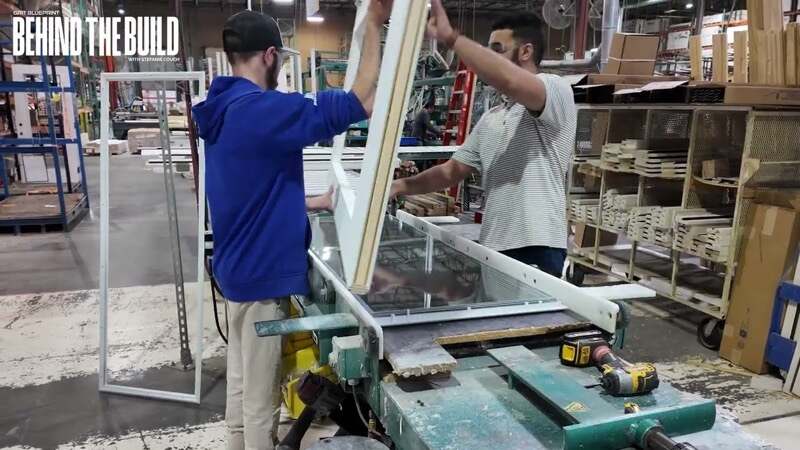
How to Get Into Estimating When You Started Somewhere Else
Neither woman trained to be an estimator. One started answering phones at a glass company. The other took a roofing job while in nursing school. Both learned the work by getting close to it.

Most people become construction estimators by starting in a nearby job and getting close to the work: customer service, permitting, the shop floor, the jobsite.
An estimator works out what a job needs and what it will cost from the plans, usually starting with a takeoff, which is counting and measuring every piece of material on the drawings. Melanie Dettmer got there from a glass company’s customer service desk. Keeley Ehrenreich got there from a roofing job she took during nursing school.
Neither of them trained for it. Here is what they did.
Start in the job next to it
Dettmer left college after her first stretch of it and, by her account, was still figuring things out. A friend from high school in Red Wing, Minnesota, was working at a glass company in Bloomington. The friend told her about a customer service opening. She took it. That location closed about a year later. She moved to another glass company in Minneapolis with many of the same customers.
Customer service there meant orders, customer questions and covering the phones. It also meant hearing every day what the estimators and the shop were doing.
Ehrenreich’s start was even further away. About 12 years before we talked, she was in nursing school in South Florida and needed a job. She went to work for a roofing company knowing nothing about roofs. “And so I learned the basics,” she says. “I learned permitting” (1:39). Permitting is the paperwork that gets a job approved by the local building department before work starts and inspected after. She also went up on roofs to see the work for herself, because she learns by seeing. She ended up estimating for that company and left healthcare for good.
How do you get from customer service into estimating?
Get curious about the estimating work and let the people who do it see that. Dettmer got interested in storefront estimating. Storefront is the aluminum-framed glass system on the front of shops and office buildings, and estimating it means pricing the aluminum, the glass and the door hardware together.
The people building the door frames in the fabrication shop noticed. So did the estimator at the time. “Oh, you could really do this,” she remembers him saying (3:36).
She made it her goal. “I wanted to get into estimating, and that was kind of the next step up,” she says (4:02). She got the job. It was 2006, and she and another woman were, in her words, “the only two female estimators.” From there she moved into project management, high-volume projects and project sales, estimating jobs for general contractors.
What do you need to learn to become a construction estimator?
Reading plans, first. Dettmer and her coworker took a glass and glazing blueprint reading course through GANA, the Glass Association of North America. Blueprints are the drawings a job is built from. Estimating starts with reading them correctly.
Then the parts. Glass, doors and hardware come with a long list of pieces most people walk past every day without a name for them: closers, thresholds, pulls, locks. Dettmer remembers the day it clicked, with help from a coworker who believed in her: “oh, I could estimate metal. I know what a flush bolt is” (22:09). A flush bolt is the bolt set into the edge of the second door in a pair, so that door stays shut while the other one swings.
Ehrenreich’s list was different because her trade was different: roofing systems, permits and what can go wrong on a roof. Her advice for learning any of it is the same. “Find your mentors and lean heavily on them in the beginning. Take lots of notes,” she says (8:00). She carries a pen and paper everywhere.
Learn how your job fits the others
When Dettmer starts somewhere new, she gets to know her coworkers before anything else. Her opening question is “tell me about your job” (37:41). Their answers show her where her own work fits and what each person needs from her. They also show who will help when she makes a mistake.
That matters for an estimator more than most. The estimate feeds purchasing, the shop, the crew and the customer. A missed detail in the takeoff becomes a wrong order, a remake or a crew doing a job twice. For the dealer version of this, see the window and door order checklist and seven questions to ask before you price a job.
When people doubt the new estimator
Both women had to prove themselves. Dettmer remembers customers at will call, the counter where contractors pick up orders, making eye contact only with her male coworker even when she was the senior person. Her coworkers set them straight. “I don’t know why you’re asking me. She’s the one who knows everything,” she recalls one of them saying (15:29).
Ehrenreich says she has explained why something on a roof would not work, been told she was wrong, and heard later, “oh wait, you were actually right” (4:07). Her answer was to keep being right, consistently. She went back to school for an MBA so she would have a degree to go with the knowledge.

Learn the questions that change the order
Most new estimators and order writers are missing the questions. People learn what a product is called before they learn which questions decide whether the order is complete. So learn the product and the process together. For each item you price, ask what detail would make it wrong when it shows up.
Stefanie Couch told a story on Dettmer’s episode from her own door-selling days. A multifamily job needed about 300 fiberglass entry doors, each with two peepholes for accessibility, bored at the factory. The height went in wrong. In August heat, her management team went out and rebored every one. Her fix afterward was a rule. Every peephole location gets checked and signed off by the customer, with a picture, before the order goes in.
That is the job. An estimate is a list of questions answered correctly before anyone cuts anything.
What to do next
- If you work next to an estimator, ask to sit in on one takeoff this month. Take notes on every term you do not know.
- Ask your trade association or your main supplier whether they offer a blueprint reading course for your trade. Dettmer’s came through a glass association.
- Walk the shop or a jobsite and learn the names of ten parts. Ask the person who installs them what goes wrong.
- Pick one mentor who estimates and one who installs. Ask each for 20 minutes a month.
- Start your own list of the questions that change an order in your trade. Add to it every time something comes in wrong.
Brand new to the industry? Start with how the building industry works and the building industry glossary. Glass people: Dettmer now works at the National Glass Association. Our piece on bringing the glass company in early shows where estimating meets design.
Questions people ask
What does a construction estimator do?
An estimator works out what a job will need and what it will cost, from the plans. Most estimates start with a takeoff, counting and measuring every piece of material on the drawings, then add labor and price.
Do you need a degree to become an estimator?
Neither estimator in this piece started with estimating training. Melanie Dettmer moved up from customer service and took a blueprint reading course; Keeley Ehrenreich learned permitting and roofs on the job and later earned an MBA.
How do I move from customer service into estimating?
Show interest in the estimating work, learn from the shop and the estimators, and tell your manager it is your goal. Dettmer did all three and got the job.
What should a new estimator learn first?
Read plans correctly, learn the names of the parts in your trade, and learn which details make an order wrong. Ask installers what goes wrong in the field.
Watch the full interviews
Melanie Dettmer of the National Glass Association and Keeley Ehrenreich on operations leadership in roofing.
Melanie Dettmer of the National Glass Association went from customer service to estimating and project sales in glass. She explains how to learn a technical trade, ask for help and build allies from the first day.
A Grit Guide original. This piece is built from our own interview.
Episodes in this piece
Sources
- Enabling Women In Construction & Trades: Melanie Dettmer, National Glass Association (Grit Blueprint Podcast interview with Melanie Dettmer, National Glass Association; quotes at 3:36, 4:02, 15:29, 22:09 and 37:41 on the transcript clock) (May 2024) Grit Guide
- Operations Leadership In The Roofing Industry: Keeley Ehrenreich, 3GM Solutions (Grit Blueprint Podcast interview with Keeley Ehrenreich, assistant operations manager, 3MG Roofing; quotes at 1:39, 4:07 and 8:00 on the transcript clock) (December 2024) Grit Guide