Click any timestamp to jump to that moment in the video.
Meet Megan Shapiro
0:01 Stefanie Couch: Welcome to the Grant Blueprint Podcast. This podcast is about branding, building, and business. It also highlights the grit that it takes to be successful in business and in life. Let's get started. Welcome to the Grit
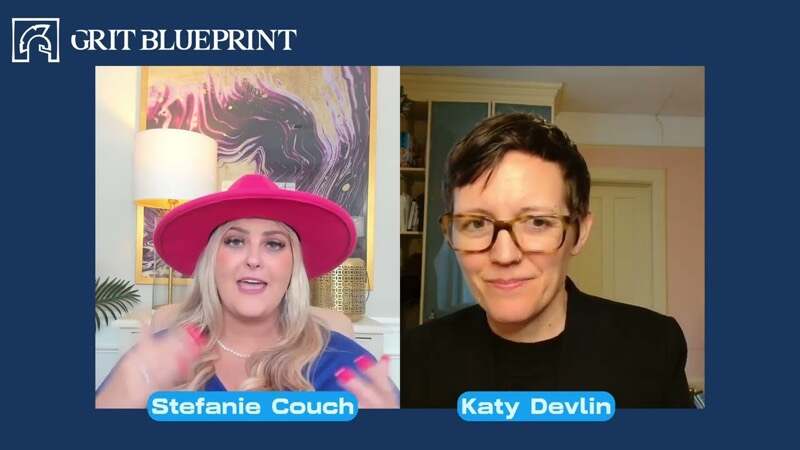
0:28 Stefanie Couch: Blueprint podcast with Stefanie Couch. I am excited today to introduce my guests. We actually met via LinkedIn, and she is another amazing woman that I have just met through this platform. So many cool clip-like connections have come from LinkedIn for me. So want to start by saying that I'm grateful for that. Megan Shapiro, welcome to the Grip Blueprint. Hi, thanks so much for having me. And you had a really cool background because you're not just in construction, you're also in law, and you have combined those two things to make a wonderful career.
1:00 Stefanie Couch: So tell me a little bit about your background, what you do, and how you go to market, because it's a little different than a lot of lawyers.
Falling Into Construction Law
1:07 Megan Shapiro: I try. Um, so I've been an attorney full-time since 2010, and I started representing construction companies initially in about 2012. It was sort of by accident when I started at the firm that I'm currently at as uh what I like to call a baby lawyer. They could much smaller construction practice, and it wasn't super well regarded amongst the attorneys here. It was sort of the thing that the new people were uh inherited to sort of take care of.
1:40 Stefanie Couch: So
1:40 Megan Shapiro: when I was the young attorney that came on board, they sort of handed it over to me. It was basically one client. I got super lucky though, because that particular it was a subcontractor, they hired a new general manager right around the same time that I started as a firm. So he came in, I came in at the same time, he was looking at their PL statement and was sort of like, this is kind of a big budget for legal. I kind of want to dig into this myself.
2:06 Megan Shapiro: So he and I sort of collaborated, put our heads together and said, Well, you're new to this, I'm new to this, let's just figure out our own way to do it. And it was sort of fake because I like to say I fell into construction law and then fell in love with construction law because it was kind of game over from there. It didn't take long before I went to the partners at the firm at the time and I said, Hey, you know what? This doesn't have to be the thing that we pass off to the new kids when they come in.
2:30 Megan Shapiro: I will take ownership of this. I enjoy it. I love it. I'm in, I'm sold. And so he and I continued to build up our methods, policies, and procedures, how we like to handle the cases. And then I built out the practice and expanded it. And now my personal practice at the firm is probably about 90% construction. Um, mostly subcontractors, some GCs, some owners, but mostly subs. And about six months ago, I sort of was doing an inventory of my career. And I said, you know what?
A Framework for Proactive Risk Management
3:01 Megan Shapiro: There's a lot of lessons that we've learned through litigating these same issues over and over and over again in the last almost 15 years. Maybe we should start to put those in practice on the front end. And so I started putting it all together, creating a framework for proactive risk management. And now I'm in the process of distilling that all down, putting it into an online course that isn't sub-specific, isn't trade-specific, isn't GC specific, isn't even state-specific, so that I can help more construction leaders apply the lessons that I've learned through litigating these cases on the front end and help them increase profits through proactive strategic risk management.
3:40 Stefanie Couch: That's awesome. I love how you basically got something that was kind of the castaway and turned it into something really awesome that now I'm sure makes a lot of money for the firm and also helps a lot of people. And I it made me think of a quote I was thinking about innovation. And it talks about innovation is really you seeing something that everyone's already seen a million times and thinking of it in a new way that no one's ever thought of. And that's how sounds like you did with this job.
4:08 Stefanie Couch: And now you've turned it into something even more innovative with your course that is kind of not specific to any state, it's not specific to any certain trade. So that you can really take this and start thinking about proactively hey, how do I not get sued? How do I not do this thing that gets me in trouble? Because construction, especially if you're in the job site area of construction, you're actually working in the trade, the trades or with, you know, a job site, it's very risky.
4:35 Stefanie Couch: I mean, there's a lot that can go wrong. Physically, you can get hurt, people can get injured, timelines, money, you know, there's weather stuff you can't control. There's just so many things that can happen. Tell me a little bit about, you know, generally, like what kind of problems are you trying to mitigate on the front end? Give me some examples of what you're seeing the most of with these people having issues that they could fix on the front end a little easier.
Where Risk Shows Up on a Project
4:58 Megan Shapiro: You know, it's really all-encompassing. I don't know that I would say there's sort of one area that I see more often than others because there's so many ways that a proactive risk management strategy can be implemented to increase the bottom line. It includes everything from contract negotiations at the beginning of the project, identifying key contractual provisions that should be redlined and negotiated in a different or better way. It includes how you handle potential delay claims, whether you're the one that's trying to enforce liquidated images or you're the one that's trying to guard against liquidated images.
5:35 Megan Shapiro: It includes things like uh higher-level business considerations, like thinking about the overall trends and the economic forecasts that are coming in the next one year, five years, 10 years down the line. So that's the great thing about the course that I'm working on. It takes module by module and looks at each individual different facet of the business because there are small to large improvements that can be made in a lot of different areas that all contribute together to increasing that bottom line.
6:04 Stefanie Couch: Yeah, and even fixing one or two small things can make a giant difference overall. Absolutely. A lot of times people are so busy. I know in my business, it's I'm not building houses, but I am doing a lot of things at one time, right? Especially with a small business, entrepreneurship is uh like being an octopus and hoping that you don't drop things. And a lot of times you don't have all eight legs going at one time. So you got to figure out how on the front end you can think about these things and then not forget about them until they become a 9-1-1 type situation where you really need someone like you.
6:40 Stefanie Couch: Uh, we really like you, but I would rather talk to the front end than on the on the legal side later, right? Once I've screwed something up. Tell me about the course. How is it gonna work? Is it gonna be um like on at your own pace or what's it gonna look like?
How the Self-Paced Course Works
6:56 Megan Shapiro: So it's gonna be self-study at your own pace. It's my sort of one-to-many model of applying the frameworks, uh, lessons, policies, and procedures that I've identified. And so it's online, it is access for a period of time. I haven't quite decided exactly how long I'm gonna give access to the course, but it is self-paced, self-study. I'm sure once I launch, at least for the first couple of times, I'll make myself available for questions as people get going through it, because it is a new course. And I'm sure there will be some my blind spots of my own that I didn't necessarily anticipate as the course rolls out, and I'll be tweaking and constantly improving it.
7:34 Megan Shapiro: So I'm sure I'll make myself available to answer some questions. But yeah, by and large, it's going to be designed so that people can do it when they have time, do it at their own pace. It'll have worksheets and frameworks and blueprints and things like that so that they've got tangible takeaways that they can apply going forward. And I really know how busy construction leaders are because I represent them every day. And they have truck, they have trouble even finding time for their tree and their schedule.
7:59 Stefanie Couch: So
7:59 Megan Shapiro: I know what a luxury it is to have the time to do something like this to invest in it. And so I wanted to make it as easy as possible for them to consume on their own timeline to make it more likely that they'd be able to benefit from these strategies.
8:13 Stefanie Couch: Yeah, it's the easier and the quicker you can absorb information and go with it, the better off in any career, really. But especially when you have crews that you're getting calls all the time from and all the different things that they deal with.
8:24 Stefanie Couch: Well,
8:24 Stefanie Couch: in addition to the course, you're still practicing law and you're you're helping people in the state of California, right?
8:31 Megan Shapiro: Yes.
8:31 Stefanie Couch: So if someone is in the state of California and needs representation in this jurisdiction of construction law, you're there. And I'm sure that you stay very busy with that.
8:42 Megan Shapiro: I do. Yeah, it's still my full-time job. So I'm actually in my office at my law firm right now. And so that's why the course is sort of like rolling out slowly because I'm trying to do it in the scenes of the day, uh, weekends, evenings after my son goes to bed, things like that. But um, yeah, I I I'm licensed to practice in the entire state of California. My personal practice, like I said, is about 90% construction, but the firm itself is a full-service business firm.
9:06 Megan Shapiro: So we do represent businesses other than just construction businesses. So anybody in California that needs that sort of holistic, proactive, 360 support approach, we can help you.
9:17 Stefanie Couch: Welcome. Well, you are a woman in construction, you're a woman in law, which are two male-dominated industries where there's a lot of men. I mean, I kind of laughed when I thought about this question because I I initially think legally blonde, which is one of my favorite movies. You may hate that reference. I don't know. But it, you know, they made a whole movie about basically her not being able to be herself and also be a brilliant lawyer, which we know is a complete not truth.
9:47 Stefanie Couch: But if you think about you and where you're intersecting those two things, talk to me a little bit about some of the challenges that you've seen and maybe not even your own challenges, but with other people around you, maybe women that you're representing uh as part of your clients and some of the challenges that women in construction are seeing.
Male Dominated or Male Populated
10:09 Megan Shapiro: It's a really interesting, unique position to be in, sort of feeling like I'm coming from two male-dominated professions. Uh, although I guess we're not supposed to say male-dominated anymore. I think we're supposed to say male populated. I that's
10:22 Stefanie Couch: what we can say whatever we want because it's still 90% men. And if you look up the word dominated, it means that there's majority of men in the industry. So I say dominated because that's what I want to say, and I don't really like people telling me what to say.
10:35 Megan Shapiro: I like that because I'm
10:36 Stefanie Couch: cast. So you do you. If you want to say populated, say populated.
10:41 Megan Shapiro: Well, you know, I'm glad you said that because certainly from the law side, it feels dominated. And I mean the literal definition of the word dominate.
10:51 Stefanie Couch: Um, when people comment on my, you got me on my soapbox a little bit here, right? When they comment on my post as a man saying stop saying male dominated, I'm like, hey, uh this FYI, when it gets to be 51%, then you can call me and say stop saying male dominated. But until then, I'm gonna say whatever the fuck I want to say. So let's just get off my feed there, Bucko. Anyway, that's a whole other thing. So like we don't want to fired up on that one.
11:17 Stefanie Couch: But I mean, I have people that do that, and I think it just goes back to like whatever label you feel like is what you want to use, or whatever label you don't want to use, if you hate being called male dominated, then don't ever say that again. I'm cool with it, but don't tell people what to say. Like, come on, people.
11:34 Megan Shapiro: Yeah, I love I love your take on that because I think I did you may have seen I did a post not that long ago on LinkedIn that was talking about the importance of defining terms. And I think this plays right into that because there is something about the idea of using the word dominated, and I'll speak to the legal side because I always have this weird tension, right? I I self-identify as a woman in construction, but I really feel like I'm more like construction adjacent.
12:00 Megan Shapiro: It feels like they're gonna women like you, right? That are actually like you know, hard hats, boots, you know. So I I try to be respectful and make sure that there's a clear delineation that I'm not trying to do this like imposter thing. I'll speak to the dominated part of it from the legal side. I think that using that word is important in terms of identifying the challenges that go along with it and making real impactful changes going forward because if you start saying things like male populated, it's I guess a great ideal that I'd love to get to a point where I feel confident that that's accurate.
12:36 Stefanie Couch: Yeah.
12:37 Megan Shapiro: Then speaking for law, it's not. And that goes to the idea of what we need to be doing to make changes within these industries.
12:45 Stefanie Couch: Absolutely. And I would love to just not even here's the thing. I actually get really sick, and it's funny because I have a company called Build Women that's a women's leadership company for construction. But as a woman who's done a lot in the business world and who has been very successful and also had some horrible failures, I've done them both. I am way more than just a woman. And I mean, I am more than just a female speaker, female business owner. Like I can walk into a room with 50 men and feel 100% okay because it's been my whole life that way.
13:15 Stefanie Couch: And I can go into a business and know no other woman in it and work with all the men, and I'm I'm great. I'm fine. I'm more than just a woman, and so are you. And unfortunately, it is a still a big issue, especially in construction, because there aren't that many women. Unfortunately, I'm still walking into rooms a lot where I'm the only woman in this industry. That's why we keep talking about being a woman. I've hope that in 10 years, I don't have to ever say, women, I hope I can close down the women's leadership company and just make it a construction leadership company.
13:46 Stefanie Couch: Because at the end of the day, we don't want to have this conversation. I don't want to talk about being a woman all the time. That is a part of who I am, just like I like to wear hats. It's a part of who I am. It doesn't mean the only thing I care about is that thing. So I guess it's just a bigger conversation of like until we have that moment of where we can just, if we have parody, like we'll stop talking about women in general because we don't have a problem anymore.
14:10 Stefanie Couch: It's been solved. And I hope and pray that we are getting there. I mean, we got a long way to go, but I'd even take like 30% women in the industry. I would still, I'd stop saying male dominated at 30, you know? It's just it we have a long way to go. And I think that it's kind of a little bit of a narnia to think that well, that's not really a problem. Walk on a job site as a good looking woman and watch what happens with 50 men.
14:40 Stefanie Couch: Like see what happens. Maybe nothing, maybe it's atrocious. It still happens every single day. So in my LinkedIn comments will make that to be known.
14:51 Megan Shapiro: I get don't even get me started on your LinkedIn comments. Like,
14:54 Stefanie Couch: I got a DM this morning that was a humdinger. It was I sent it to my sister and my husband. I was like, this may be the worst, best one I've ever gotten. You know, immediately blocked in person. But um people just think they can say anything to anyone, and they do.
15:12 Megan Shapiro: Yeah, keyword warriors, it's safe behind the computer screen.
15:16 Stefanie Couch: In real life, though, that's the part that I I don't understand is like, like I said, on a job site, people say anything to you. Yeah. So we got a little off topic there. I think it's a good conversation um to talk about like what are you seeing as like challenges? We just talked about some of them, but from a perspective of someone who on the legal side, also on the you're seeing the construction side of people trying to break through that as women.
Women in Construction Events in Sacramento
15:42 Megan Shapiro: So I think one of the things that I've tried to do, and I know you and I have have spoken before um offline, at least off podcasts, about our uh our respective forays into the women in construction events that are becoming thankfully more and more prolific, right? There, there are more of them, they're getting bigger, they're happening all across the United States, and it's just getting it's getting to be bigger and bigger, which is wonderful. I happen to be pretty involved in the Sacramento Regional Builders Exchange because they have an increasingly robust women in construction programming.
16:15 Megan Shapiro: Instead of programming, it started out as one conference that unfortunately it was 2020 was the year that it launched, and so
16:22 Stefanie Couch: it
16:22 Megan Shapiro: was an online conference.
16:24 Stefanie Couch: Sure.
16:24 Megan Shapiro: Um, and it was pretty small. I moderated one of the breakout sessions at that first one. And now, four years later, it's going to be in September this year, and it has sold out the Sacramento Convention Center. And this year, for the first time, they have added additional WIC-related programming throughout the year. So instead of just having the conference in September, they're bringing in guest lecturers, workshops, things like that periodically throughout the year leading up to that. And I think it's wonderful. I I had the opportunity to go to the first, I think it was the first one of the year a couple of weeks ago.
16:57 Megan Shapiro: And it was all about confronting conflict with confidence. And it was a really powerful experience. I have been trying to, for my part and my involvement in their WIC programming, I'm gonna have my own workshop at the conference in September, and it's going to be designed all around sort of translating what people think of as lawyer skills into an empowerment-based skill set that women in construction can use to translate into what they're facing day to day in their actual jobs. So this year I'm actually focusing on um communication and the ideas and concepts behind empowered communication in the various different settings within the industry of, you know, within the construction industry, whether it's those conversations with your direct reports, whether it's those conversations with your supervisor, whether it's you have to actually do the cost to complete presentation for or the project that you're PMing on, whatever that is, uh I'm I'm hoping to take those sort of, again, traditional lawyer skills and translate them in a way that women in construction can really apply those in their day-to-day life to help them overcome some of those challenges.
18:13 Megan Shapiro: I do think, even though I still like to use the word dominated for the legal profession, I do think it is still very male dominated. I should look up the statistic and I'll share it with you if I find it. But I do think from a pure number standpoint, we do have more, a higher percentage of women in the legal field than we do in the construction field. Sure. So we are, I guess, a little bit further ahead. And so ideally, what we can do is we can take some of those strategies that have worked for women in the legal field and give those to women in construction to help bring them along too.
18:39 Stefanie Couch: One thing I'll say that I think is really interesting, you're obviously keying in on this, is that I find women sometimes get really scared of conflict and negotiation, which is funny because two of us on this podcast, I freaking love it. Like bring it on any day before 7 a.m. I'll I'm all in. Uh, I like constructive conflict, which I think is good, like having good debates and having good discussions, not just drama, right? That's a totally different deal. But at the end of the day, we need to teach those skills.
19:08 Stefanie Couch: But I think even if you had like the exact number of women in law and construction, you got women that are trained negotiators on the law side, right? So they are fighting for themselves, their clients, whatever, because they're trained to do it. If we can translate those skills to other women in other trades, other construction-related industries like you're talking about, then it doesn't really matter what you are. If you're a trained negotiator that's awesome at what you do, you're gonna be able to fight for yourself.
19:34 Stefanie Couch: Then you just gotta unclick that whole like limiting belief of I'm not worth this, I shouldn't ask for this. Because if you know how to negotiate and you know what you want and deserve, you're gonna go get it. Or you're gonna go somewhere else that will give it to you. I mean, at the end of the day, it doesn't mean you're gonna get a yes on every single time. Because like in sales, 27 yeses or 27 no's usually equal later a yes. You gotta be told no a lot of times.
19:58 Stefanie Couch: Maybe that's just them seeing your content, seeing your product, seeing you in their location. But most salespeople stop after number seven, they just quit after number five. But usually 84%, I think the number is, doesn't ever ask for a yes after number five. So if you ask the sixth, seventh, and eighth time, you're world class. Like all you have to do is just continue. You don't even have to know what you're doing, you just have to ask enough times. So if you also know what you're doing, like you're world class, right?
20:26 Stefanie Couch: That's the thing I want women and men also to know is these are skills that can be taught. These are things that can be practiced. And if you think that a lawyer goes in or a salesperson goes in or whatever it is, and they're the top 1% of their class or their, you know, whatever profession they're in the day that they start negotiating, you're wrong. Like, how many horrible like I've taken the wrong route to get to something like five million times already because I've been trying to sell stuff since I was like seven years old with Girl Scout cookies, right?
20:59 Stefanie Couch: I figured that one out really quick. When you have a product like FinMits, pretty easy to negotiate with a grandma. How many boxes do you want? And give me your check right now and I'll go cash that thing. But at the end of the day, you got to figure that out as you go. So just keep trying, and I think you're gonna get there.
Find Your Own Negotiation Style
21:14 Megan Shapiro: Yeah, I love that you talked about negotiations because uh I think you did see it. I did a whole week-long series of posts on LinkedIn about negotiation strategies and tactics with the idea of empowering people. It was based off of a presentation that I did at a prior Sacramento Regional Builders Exchange Women in Construction conference two years ago. So I did a breakout panel and I tried again to sort of empower women in construction with those skills. And so I took that uh presentation that I did and I broke it out into a week long series on LinkedIn and I included welcome
21:49 Stefanie Couch: to
21:50 Megan Shapiro: quiz to identify your own negotiation style. And I think that that's like a great place for people to start, especially for women in construction who want to who like what we're saying, who it's resonating with them, and they're like to hear. You know what? I do want to be better at this. I do want that skill set. It's a great place to start, is to figure out your own negotiation style because everybody has one, whether you know it or not, whether it's intentional or not, everyone has one.
22:12 Megan Shapiro: And so identifying what yours is is the best first place to start.
22:16 Stefanie Couch: Yeah. And two books that I love that I've read are um Alexandra Carter. She's a professor and mediator trainer, and she wrote Ask for More. And then the other one is Never Split the Difference by Chris Fawson. He also has a masterclass that's like, I don't know how many lessons, but you actually get to kind of practice it because some people read and they just don't get anything out of it. But there's those are just books. There's like a lot more, but I actually like Ask for More because it even talks about kind of some inward stuff more than about other people.
22:45 Stefanie Couch: It's more about you and kind of the mirror and turning it, and it's just an interesting take on things. So we can really learn how to how to be a better person at whatever you're trying to do. And negotiation is in everything you do in life. If you don't think you're negotiating with your family, spouse, or friends, like you are. It's just yep, how much are you willing to give or how much are they willing to give? That's always a negotiation.
Two Views on Negotiation Books
23:09 Megan Shapiro: So I'm I may end up totally derailing your podcast. And so this might be a conversation for offline, but I just I was just a guest on another podcast called The Uncommon Communicator. And I wanted to talk about negotiation. And he too is a big Chris Voss fan, never split the difference.
23:22 Stefanie Couch: Yeah.
23:23 Megan Shapiro: And I'm
23:23 Stefanie Couch: welcome
23:24 Megan Shapiro: opposed to Chris Voss. I like getting to yes. Um
23:29 Stefanie Couch: I think
23:29 Megan Shapiro: it's a better approach. But the reason I'm so turned off by Chris Voss is because he has this idea that that no is the start of a negotiation. And as a woman, I like immediately bristle at any idea that we should be putting out into the world that no does it mean anything other than no. So I'm really curious. Again, maybe you're like, let's talk about this offline.
23:47 Stefanie Couch: No, let's have the conversation
23:48 Megan Shapiro: against
23:50 Stefanie Couch: it. Um, absolutely, I see your point on that. I think that it depends on what you're asking. So I have used, would it be ridiculous for me to ask you to welcome this or think about this or whatever and then get the no there? Um, that would be like how I would use that, which I think is how he references. But I think with anything like Chris Voss of whatever it is, I personally like to take little snippets. I say this saying a lot, like take what you need and leave the rest.
24:17 Stefanie Couch: And so mirroring and some of these other, even the voice stuff, I don't really know if that plays with women because women don't have a lot of time. Well, I have a really loud voice, so sometimes I need to pipe down. Um, I've been telling told that since I was in kindergarten, like you're being too loud. That's another thing with women, right? But I think when you calm down, people do calm down because your voice is a little bit calmer. So maybe you can think about those things.
24:43 Stefanie Couch: And so, yeah, like I don't think everything he says is the Bible by any chance. That's why I mentioned her other book too, because it's actually a little different. It's kind of a different spin, but I think it's just as powerful to take maybe like two or three things from him and two or three things from you and her and life experience and just add them all together. All right. So let's talk a little bit about, you know, with with you going, we talked about risk management, all the things that are happening in construction.
25:10 Stefanie Couch: Let's talk a little bit more about you and who you are as a person and kind of where you see yourself going. Because I think what you're trying to do going from more traditional practicing to something that you're building these courses and having more of a one-to-many approach, it's very cool. And I haven't seen very many people do it. And I'm not sure if it's because you're just an innovative person and you you are like just doing something really cool. Do you what do you think the reason is that more people aren't doing that and sharing?
25:36 Stefanie Couch: Is it because of the legal issue? Maybe like you're only certified or you know, legally can practice in one place. And then what do you see your future looking like?
25:45 Megan Shapiro: That's a really, really interesting question. So I'm assuming when you're asking the question, you're asking me why more attorneys aren't taking that, taking that abroad.
25:52 Stefanie Couch: Yeah, exactly. Like people are, you know, they're they're in the weeds, I guess, practicing every day. And you don't I don't see very many people like on LinkedIn or social media. That's just kind of like a no-go area, I think. And I guess it's because legally you can't talk about things.
Why Attorneys Struggle on LinkedIn
26:07 Megan Shapiro: So attorneys just universally this is gonna. I'm always alienating attorneys. Every time I open my mouth, I'm just making but attorneys don't know how to use LinkedIn.
26:17 Stefanie Couch: Yeah, they
26:18 Megan Shapiro: either are stuck in the 2017 mindset of it's just for finding a job, or they
26:26 Stefanie Couch: welcome
26:27 Megan Shapiro: too afraid to say something controversial, or they haven't quite figured out how to say something without saying something that they can't say, right? So you kind of touched on that a little bit with this idea of attorney-client privilege, confidentiality. And certainly it's a challenge for me because if you look at the sort of archetypes, the blueprints of this is how you're supposed to market on LinkedIn, or reader for that matter, it's all about this concept of social proof, right? So we need to be like touting the success stories of clients that we've helped.
26:59 Stefanie Couch: Welcome
26:59 Megan Shapiro: to that. I mean, I can sort of try to anonymize things as much as possible. I can kind of change some facts and details as much as I can, but the rule for attorneys is actually incredibly strict. If anybody who knows the client could figure out from what I said that that is who I'm talking about, I have broken confidentiality. It's like it's almost impossible to figure out a way to tell those stories and share those successes in a way that feels still authentic.
27:29 Stefanie Couch: Well
27:30 Megan Shapiro: with still changing enough that I'm not gonna get in trouble. And so it's been really challenging. So if anybody who follows me knows, I don't really do that much. I don't talk much about sort of like my success stories, uh, because I just I really kind of can't. And I think that's a big hurdle. People don't necessarily know how to overcome it. I think that's one reason why attorneys uh aren't doing why we're not seeing more attorneys trying to be a little bit more innovative. I think a big reason though is because the field of law is still very much a traditional industry.
28:05 Megan Shapiro: It's still very much that concept of a three-piece suit to work every day, still male-dominated, still very much by the book, tall buildings, billable hours, and attorneys are very reluctant to change and to innovate and to look at ways that might um that might be a better, frankly, approach for potential clients. So it even for me, you know, I I I have a law partner, I work in a firm, I'm not a civil practitioner, it's not just me on the legal side at the law firm.
28:41 Megan Shapiro: And so even I have to sort of figure out how to overcome those challenges because it's not my business. Um and so I have to figure out ways to try to innovate the way in ways that I want to try to innovate, still within the confines of the fact that I'm mostly just an employee at somebody else's business. So that's kind of what led me to sort of do this side thing because I was like,
29:01 Stefanie Couch: welcome.
A Ten-Year Plan for the Practice
29:02 Megan Shapiro: I've got these ideas that I really want to pursue that I think could make a huge difference. And I want to be able to do it the way I want to do it. So I'm just kind of doing the best I can, trying to figure out how to do both things. And in terms of where I see myself, I mean, if I'm thinking really far down the line in 10 years, say, what I would love is to be able to combine both of these things under one roof.
29:29 Megan Shapiro: I think long-term vision, what I foresee is having of council relationships with licensed construction attorneys in different states across the country. So that when I service a construction client on the sort of proactive risk management side, if they do need that legal advice or they actually do have a legal issue that they need an attorney representation on or attorney legal advice on, I've got them covered. I've got that too. I've got Stefanie in, you know, Texas, right? Who's a licensed attorney who can step in on that side of it?
30:02 Megan Shapiro: So I I I guess you could say, in an ideal world, I'm building an empire.
30:07 Stefanie Couch: Yeah, I love that. The cool part about that is that you I found people want to learn, but then when it comes to the actual doing, they don't want to do it themselves. Well, they legally can't. Well, I guess technically they could represent themselves. That would be ill-advised in most cases, but they they're gonna find someone, right? So if you have that whole thing from start to finish, like you said, and then also you know and trust those people, so it's not just someone they Google and then it's the first name that's sponsored ads for that type of representation, then you can say, hey, I have these hundred people that I really know and trust, and they're representing me, you know, as one of my whatever affiliates or whatever you call it.
30:49 Stefanie Couch: And that's a good concept. I like that it's scalable, it helps you, it helps the client, it's a lot of value. So I think it's really smart. And I want to go back really quick to something you said on the branding side, because I think that's I haven't really thought through this that much before I ask you that question, but it was just what popped into my brain, like from a branding perspective, you almost have to do it as the social proof is based on just what you know to be true and not like actual facts of here's the case that happened exactly.
31:19 Stefanie Couch: But I do think, and I just interviewed someone earlier that wrote a book that was a business parable. And I think that you could take that concept and you could share parables like that in the attorney space, change everything. It's completely made up. It's you know, has nothing to do with any case you've ever worked. I mean, obviously you're gonna see like similarities in some things, but you say from the get-go, like, this is parable of the week, you know, because at the end of the day, welcome people do want those stories in those cases, like, hey, well, I know you're saying all these things, but like what could happen if this goes wrong?
31:56 Stefanie Couch: Like, yeah,
31:57 Megan Shapiro: what
31:57 Stefanie Couch: kind of cases would go wrong if I was in this business? And so I think you could use that approach and obviously say up front, like, this is a parable. Welcome to everyone that's read The Alchemist knows The Alchemist didn't really happen. But it's one of the best-selling books in the world right now. So, I mean, it doesn't matter that's our real story. It's taken from stories that could have happened to put together to make probably a better story than what really happened in real life.
32:21 Stefanie Couch: So just an idea from a branding perspective, because I do think that's tough. And then lawyers haven't adapted to LinkedIn, but neither has any other industry really, except maybe tech and like coaches. I mean, every coach in the United States of America is on LinkedIn. Uh and and like that's great. I mean, probably gets coaches. Like, I technically am a coach in a lot of ways, so it's good for them. But they're the ones I feel like that have like really taken to it. But uh, these more traditional industries, like you said, even construction, not really something that they see much value in, except every few years when they might want to start looking for a job, they might want to start looking for someone to hire, whatever it is, they're going on like that.
33:01 Stefanie Couch: But you go on people's profiles and it's like a desolate, you know, island that they went to a few years ago and left to just die for a while. And then then they start like updating everything, and you're like, oh, they must be looking for a job. You know, it's we'd be better off to just go put something on there every month, just in case, like so people know who you are. But the power of branding, right? No one knew who, you know, I would have never met you, you would have never met me.
33:27 Stefanie Couch: I mean, maybe, but probably not. Here we are. Like, so think about that in your brain when you when you're thinking, like, is this worth the time? Is this worth the risk? Well, it is. Doesn't mean you have to post on social media every single day, but it's probably worth it for you to start building your brand because who knows what you're gonna want to do in a few years, and it may not be under the same logo you're under right now, it may not be under any logo.
33:52 Stefanie Couch: So you got to be thinking about those things.
33:54 Megan Shapiro: Absolutely.
33:55 Stefanie Couch: Well, I'm really excited that we know each other. I can't wait to see what's next for you. I'm following you obviously on your post, and I know the course is gonna be incredible. You're very wise, and you have a lot of experience in this. What would you say that the word grit means to you? Because this is called the grit blueprint. So that's the last question I ask everyone. Grit is something that I love talking about because everyone kind of has a different view of it.
34:20 Stefanie Couch: So, what's it mean to you?
What Grit Means to Megan Shapiro
34:22 Megan Shapiro: Okay, I would say that's a great question, especially as a final question for all of your guests. I'd love that through line. Um, I would say that grit to me is really that sort of like can-do attitude, growth mindset, uh, fail, a refusal to give up, that sort of like, I don't care how many times I get knocked down, I'm gonna keep getting back up and keep trying, even if that means a pivot or um a complete rebrand, uh, you know, to sort of speak your language, what you do.
34:53 Megan Shapiro: Um yeah, I think to me that's really what it is. It's just that sort of like, nothing is gonna stop me from pursuing my dreams and my goals and my passions and what I what I feel in my soul is aligned for what I'm gonna do.
35:04 Stefanie Couch: I love that. Well, thank you so much, Megan. If they want uh the audience wants to hear from you, connect with you, you're on LinkedIn, and then you're give me your website.
35:14 Megan Shapiro: So my website is easy. It is Megan Shapiro. It's M-E-G-A-N-S-H-A-P-I-R-O.com. And on LinkedIn, I am at construction risk strategist.
35:26 Stefanie Couch: Perfect. Thank you so much, and we will see and talk to you on the next episode of the Grit Blueprint.
35:33 Megan Shapiro: Thank you.