Door Locks: Backset, Bore and Function Before You Order
A lock has to fit the holes in the door, do the right job on each side and match the swing. Ask all three first.


In this lesson11 sections
- What is door lock backset, and what is bore?
- Bored lock or mortise lock?
- Lock functions: what each side does
- Levers have a hand too
- Multipoint locks are prepped into the slab
- Who drills the door?
- What do lock grades mean?
- Order the door prep with the lock
- What to ask the customer
- What stays product-specific
- What to do next
From the episodeHow Doors Are Made On The Kval Door Machine: Behind the Build at Magbee Contractors Supply Part 2
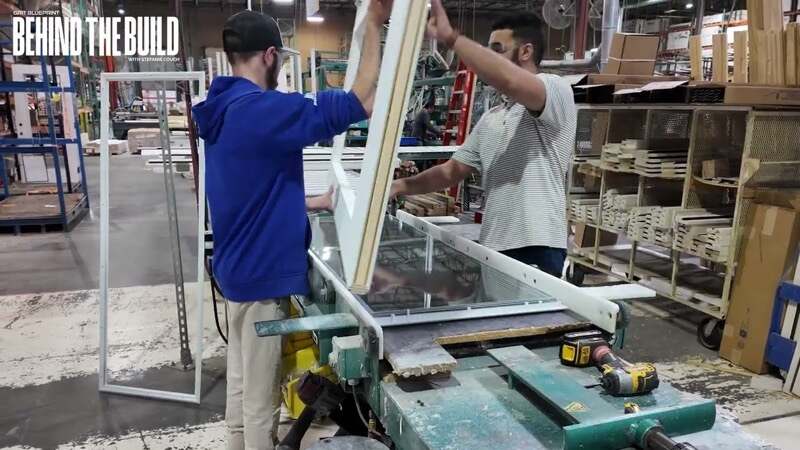
A lock has to fit the holes in the door, do the right job on each side and match the swing. Ask all three first.
Before you sell a lock for a door, check three things. The door lock backset and the bore holes: the lock has to fit the holes drilled in the door, at the right distance from the edge, in a door of the right thickness. The function: what each side of the door does, locked or not. And the hand, for levers and some other hardware. A lock that looks right on the shelf can fail any of the three.
Doors 101 named bore and backset. This lesson explains each measurement, the two main kinds of lock body, the common functions, multipoint locks and the questions to ask.
What is door lock backset, and what is bore?
The Builders Hardware Manufacturers Association (BHMA) defines backset as “the distance from the edge of the door to the centerline of the cylinder at the centerline of the door thickness.” Schlage’s parts glossary explains the holes: the cross bore is the main hole drilled into the face of the door where the body of the lock goes, and the latch bore, also called the edge bore, is drilled from the edge of the door into the cross bore for the latch.
- Cross bore: the big hole through the face of the door for the lock body.
- Edge bore (latch bore): the smaller hole in the door edge for the latch or deadbolt.
- Faceplate: the metal plate on the door edge around the latch. Schlage notes its shape depends on how the door was prepared.
- Strike plate: the plate on the jamb with the hole the bolt goes into.
- Latch: the beveled, spring-loaded bolt that catches when the door closes.
- Deadbolt: a bolt that Schlage describes as “operated only by using a key from the exterior or thumbturn from the interior.”
One maker’s door prep, as published
| Measurement | What Schlage lists | What to check |
|---|---|---|
| Cross bore | 2-1/8 inch diameter | Is the door drilled, and is the hole this size? |
| Backset | 2-3/8 inch or 2-3/4 inch | Which one is this door, and does the lock adjust to it? |
| Latch bore (edge) | 1 inch diameter | Is the edge drilled, and for which faceplate? |
| Door thickness | Between 1-3/8 inch and 1-3/4 inch | Is the door outside that range? |
| Jamb latch bore | At least 7/8 inch diameter, at least 1/2 inch deep | Is the strike side drilled? |
Quoted from the door prep checklist Schlage publishes for installing its door hardware. Therma-Tru’s glossary also gives a lock bore of “usually 2-1/8-inches.” Mortise, multipoint and some smart locks need different preparation. Use the instructions for the exact lock.
Schlage adds one more line: if the backset and door thickness do not match, “you may require the assistance of a carpenter or need to purchase a replacement door.” That is why the measurement comes before the sale.
Bored lock or mortise lock?
These are the two main ways a lock body fits a door. BHMA’s terminology guide describes a bored lock, also called cylindrical or tubular, as one fitting “round bored openings in the face and edge of a door.” A mortise lock fits “a rectangular shaped cavity in the edge of a door.” Changing from one to the other means a different door prep, so a bored lock will not drop into a door machined for a mortise lock.
Lock functions: what each side does
Function is how the lock behaves from each side. Schlage says the lock’s internal body, the chassis, is what decides whether its function is “Privacy/Bed & Bath, Passage/Hall & Closet or Combined Interior.” The names you will hear most are below. Schlage describes them in its guide to hardware for each room:
- Passage (hall and closet): non-locking knobs and levers, for doors where locking is not needed, such as a closet.
- Privacy (bed and bath): has a locking function, for rooms that need privacy, such as a bedroom or bathroom. Schlage notes it is not as secure as a deadbolt.
- Keyed entry: best for exterior doors, and for an inside room that needs more security, such as an office.
- Non-turning (dummy or inactive): a handle that does not turn, used as a decorative pull, often on interior French doors or pantries.
- Deadbolt: a separate bolt, worked by a key outside or a thumbturn inside, as defined above.
Write the function for every door on the order, by room. A line that gives only a finish and a number of doors is not an order. Our rule of thumb: a matching finish does not mean a matching function.
Levers have a hand too
Schlage’s glossary: “A left-handed lever has the door hinges located on the left side as you look at the door’s exterior.” A right-handed lever has them on the right. That is one lock maker’s rule, and the door maker may describe the same door with a different code. Check the lever on the lock maker’s chart and the door on the door maker’s diagram, as Left-Hand or Right-Hand Door? explains.
Multipoint locks are prepped into the slab
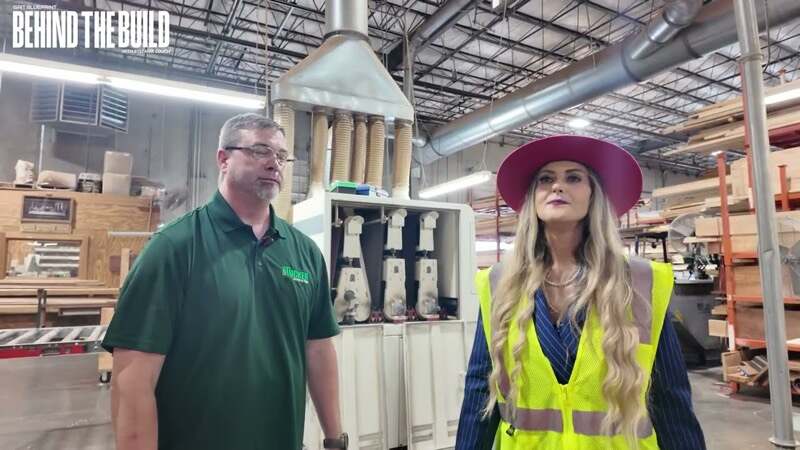
Andersen’s glossary defines a multi-point lock as a “lock that engages the sash or panel in multiple locations; activated by a single motion.” In the Magbee Contractors Supply shop in Winder, Georgia, Stefanie Couch pointed to one on a custom wood door:
It's actually gonna be touching and closing in multiple points locking, and it's made into the slab.
 Stefanie CouchGrit Blueprint, at Magbee Contractors Supply (4:24)
Made into the slab means the door is machined for that lock system before it ships. Tucker Door & Trim’s plant in Monroe, Georgia, has a station that does it. Jason Gert showed it to us:
Here’s a lot of the preps they do on here for the slabs, which is the multi points.
See it in Inside a 290,000 Square Foot Custom Door Shop. A multipoint lock has to match the prep for its own system, so name the system on the order. The word multipoint alone is not enough.
Who drills the door?
On a prehung door, the shop that builds the unit can do it. Nick, who builds doors at The Liquidators Company in Dawsonville, Georgia, described the work:
We get the slab in, we cut them out. We mortise them, we hinge them, we put the frame around them.
Watch the shop in Behind the Build with The Liquidators Company. Whoever does the prep needs the exact lock, backset and hinge details on the ticket. Prep done wrong is expensive to undo. Stefanie Couch has told the story of an early order of 300 exterior doors that came from the factory with the peep sights (the small viewers that show who is outside) bored in the wrong spot: in a Georgia August, her management team went out and re-bored every one. Hear it in her episode with Melanie Dettmer.
What do lock grades mean?
Grades come from testing. Schlage describes BHMA’s residential grading system this way: BHMA “grade residential door hardware performance in the categories of Security, Durability and Finish. A grade of ‘C’ is good, ‘B’ is better, and ‘A’ is best.” Schlage adds that “a grade of AAA is the best grade possible in all three categories.” If a customer asks which lock is strongest, show the grade the maker publishes for each category and let them choose what matters.
Order the door prep with the lock
Tell new salespeople to gather every detail on a checklist before they quote, and to have a second person read any high-stakes order before it is released, because whoever wrote it has looked at it too long to see the miss. For a multipoint lock, order the door prepped for it by the supplier nearly every time, instead of machining it later. After the 300 doors, Stefanie said, every peep sight location was checked and signed off by the customer with a picture, and it never happened again.
So treat the prep as part of the lock order. Construction, backset, bore, thickness, function by room, hand and finish go on the ticket together. If the hardware comes from somewhere else, get the model before the door is drilled.
What to ask the customer
“Which doors get which kind of lock: just a latch, a privacy lock, a keyed lock, or a deadbolt too? Is the hardware coming from us or from you? If you have it, what brand and model is it? Are the doors already drilled, or should we prep them? Do you want levers or knobs, and which side are the hinges on, seen from outside? Any multipoint locks on the tall or wide doors?”
Checklist: before you order a lock or prep a door
Go down this list before you order a lock or prep a door. Any box you can’t tick is the step to go back to.
0 of 10 ticked
What stays product-specific
Backsets, bore sizes, door thickness ranges, faceplate shapes, functions, handing, multipoint systems, grades and finishes belong to each lock maker and model. Fire-rated and required-exit doors have their own hardware rules that a code and hardware specialist answers. Do not change hardware on a rated door without that review.
What to do next
Take one prehung exterior door in your shop and measure the backset and the cross bore. Read the box of the lockset your store sells most. Find its backset, bore and door thickness range. Do they match?
The rest of a door order is in How to Read a Window and Door Order and How a Window and Door Quote Is Built and Checked. Learn more from Kwikset, Tucker Door & Trim and Magbee Contractors Supply. New words are in the Building Industry Glossary.
Questions people ask
What is backset on a door lock?
The distance from the edge of the door to the center of the main hole the lock goes in. The Builders Hardware Manufacturers Association defines it as the distance from the edge of the door to the centerline of the cylinder. Schlage’s door prep checklist lists 2-3/8 inch or 2-3/4 inch backsets for its locks.
What size hole does a door lock need?
For a standard bored lock, Schlage’s checklist calls for a 2-1/8 inch cross bore in the face of the door and a 1 inch latch bore in the edge. Other locks, including mortise, multipoint and some smart locks, need different preparation, so use the instructions for the exact lock.
What is the difference between passage and privacy locks?
A passage lock latches the door but does not lock, for halls and closets. A privacy lock can be locked from the inside, for bedrooms and bathrooms. Schlage names these functions Passage/Hall & Closet and Privacy/Bed & Bath.
Do door levers have a hand?
Many do. Schlage says a left-handed lever has the door hinges on the left side as you look at the door’s exterior, and a right-handed lever has them on the right. Check the lever maker’s chart, which may differ from the door maker’s handing code.
What is a multipoint lock?
A lock that secures the door at several points with one motion. Andersen’s glossary defines it as a lock that engages the sash or panel in multiple locations, activated by a single motion. The door has to be prepared for that specific system, so order it prepped by the supplier.
Episodes in this piece
- Inside a 290,000 Square Foot Custom Door Shop | Behind The Build with Tucker Door & Trim
With Albert Davis, Bryan Broadnax, Jason Gert and Tommy Ball
- How a 70 Year Old Millwork Shop Operates: Behind The Build at Magbee Contractors Supply
With Stewart Brandon, Bob Magbee and Melissa McDougald
- Tour a Custom Door and Window Shop in Georgia: Behind the Build with The Liquidators Company
With Bridget Roland
- Enabling Women In Construction & Trades: Melanie Dettmer, National Glass Association
With Melanie Dettmer
Sources
- Door prep checklist Schlage
- Door hardware terms and parts of a door lock Schlage
- BHMA Residential Security Grades and Functions Schlage
- Guide to Builders Hardware Terminology: Types of Locks Builders Hardware Manufacturers Association (BHMA)
- Glossary of Common Door Terms (Lock Bore, Edge Bore, Backset, Strike) Therma-Tru Doors
- Window and Door Glossary (Multi-point lock) Andersen Windows & Doors
- How a 70 Year Old Millwork Shop Operates: Behind The Build at Magbee Contractors Supply Grit Guide
- What door hardware is best for each room in your home? Schlage