
WatchBehind the Build

Inside a 290,000 Square Foot Custom Door Shop

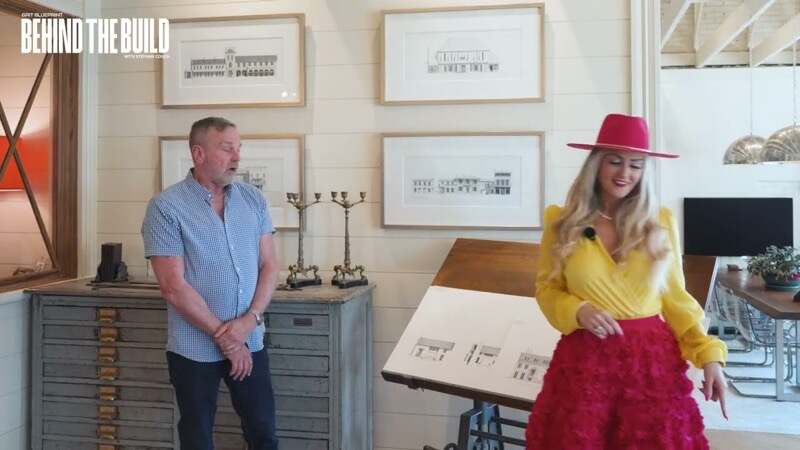
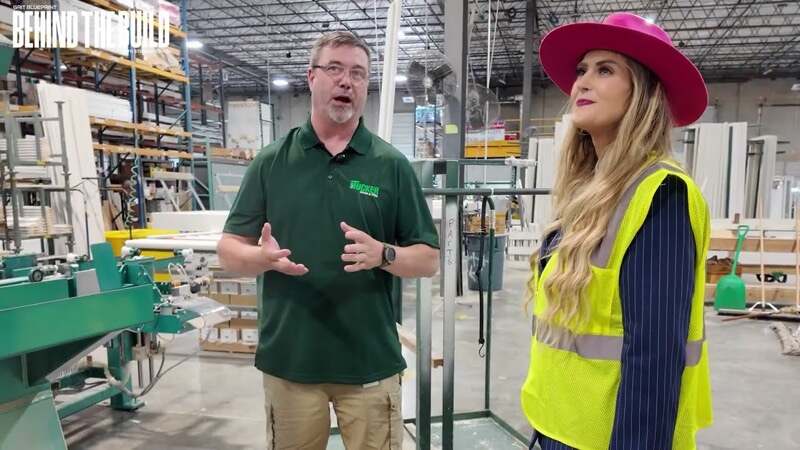
A walk through Tucker Door & Trim's door shop in Monroe, Georgia with Jason Gert: custom millwork, CNC work from AutoCAD drawings, simulated divided lite, and how the exterior and interior door lines run.

With Jason Gert, Tucker Door & Trim and Bryan Broadnax, Custom millwork, Tucker Door & Trim

10 min

ListenApple PodcastsAudio file

Disclosure: Tucker Door & Trim is a Grit Blueprint client.

What you’ll Learn

  1. Custom millwork is patient, skilled work. The people who build arch transoms from raw lumber and apply SDL bars take their time to send out a good product, and Jason says that skill set is very hard to get.

  2. A door shop career is built in steps. New people typically start in interior doors and work over to exterior, and the most involved units are built by people with 10 to 20 years or more.

  3. What is on the order decides how much a shop can build. The high capacity interior line runs about 800 slabs a day on repetitive work and drops to about 500 with casing and hinge changes.

  4. Custom costs more for a reason. A custom trim profile means getting knives for the molder before any lumber is fed through.

  5. Exterior doors usually ship first so the builder can dry in the house and run siding. Interior doors and windows follow.

Chapters

  1. 0:00Inside a 290,000 Square Foot Door ShopJason Gert, 28 years at Tucker Door, starts the tour of the 290,000 square foot building.
  2. 0:30What a Custom Millwork Shop Builds for High-End HomesTransoms, radiuses above doors, and custom glass dropped into doors, much of it in higher end wood.
  3. 1:17How to Build a Career in Custom MillworkBryan Broadnax started on a door machine in 1999 and worked his way up to custom millwork.
  4. 1:42How CNC Machines Turn AutoCAD Files Into Custom DoorsA CNC table with two eight-foot tables runs a program drawn in AutoCAD, including Stefanie's logo.
  5. 2:47Why the Best CNC Operators Love Problem SolvingTommy Ball programs and adjusts all the CNC machines and says the problem-solving never gets old.
  6. 3:53How a Molder Makes Custom Trim ProfilesLumber is fed past custom knives and milled down in stages into finished trim.
  7. 4:15What SDL Means: Simulated Divided Lite ExplainedWood or PVC bars are applied to a glass door in the lite configuration the customer wants.
  8. 5:01The History of Tucker Door & Trim in GeorgiaThe company started in Tucker, Georgia, moved near Stone Mountain, then to Monroe in 2000.
  9. 5:29Why Tucker Is Adding Another 100,000 Square FeetThe addition will hold bulk storage and let production flow from the back of the building to shipping.
  10. 5:59Inside the Exterior Door DepartmentExterior doors are one and three-quarter thick. Molded steel and fiberglass singles run on the first line.
  11. 6:20Dutch Doors, Cut Downs, and Custom Door SizesA custom line trims height, rips width and builds Dutch doors and small attic or crawl space doors.
  12. 6:41How Fiberglass and Steel Twin Doors Are BuiltThe fourth line builds twins, patio doors and units with sidelites or transoms, using the most experienced builders.
  13. 7:38Inside the Interior Door DepartmentUnprepped slabs go into frames, then get trim and hinges before delivery to the customer.
  14. 8:02How Many Doors a Shop Can Build in One DayAbout 250 slabs a day on one line, and 500 to 800 on the high capacity line.
  15. 8:27The Machine That Sets Four Hinges at OnceFour hinges at a time, fed by screw hoppers. Satin nickel is common, satin brass is new.
  16. 9:34When Exterior Doors, Interior Doors, and Windows ShipExteriors ship early so the house can be dried in. Interior doors and windows follow.

About This Episode

Jason Gert has been with Tucker Door & Trim for 28 years, and he walks Stefanie Couch through its 290,000 square foot building in Monroe, Georgia. First is the custom mill shop, where the crew builds transoms and radius tops from raw lumber, drops decorative glass into doors, and runs a CNC table from AutoCAD drawings. A molder makes custom trim, which costs more because knives have to be made first. In the SDL department, Albert Davis puts wood or PVC bars on glass doors in four, six, or eighteen lite patterns. SDL stands for simulated divided lite.

Jason then explains the door lines. Exterior doors are the one and three-quarter thick doors for the front, back, and garage entry. They run on four lines: molded steel and fiberglass singles, a custom line for cut downs and Dutch doors, wood singles and twins, and fiberglass and steel twins. Interior doors start as unprepped slabs that get frames, trim and hinges. One line runs about 250 slabs a day. A high capacity line that sets four hinges at once runs 500 to 800, depending on changes.

New people usually start in interior and work toward exterior, where most builders have 10 to 20 years or more. Tucker is adding another 100,000 square feet for bulk storage and better flow.

The custom mill shop

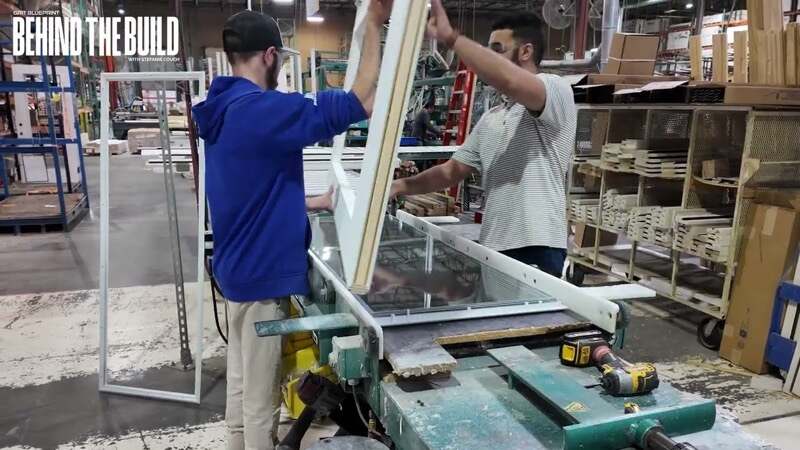
Jason Gert, production manager at Tucker Door & Trim, starts the tour where the hardest work happens. Tucker calls it the custom mill shop. This crew builds transoms, the glass panels that sit above a door. They make radiuses, the arched tops that go over doors, and some that stand alone. If a shape can be drawn in CAD, Jason says they can make it. They also cut open doors and drop in decorative glass. One finished piece was mahogany sapele, a high-end hardwood.

Bryan Broadnax has been at Tucker since July 1999. His first job was running a Kval Commander, one of the door machines on the production floor. He worked his way up to custom millwork, the job he says he wanted.

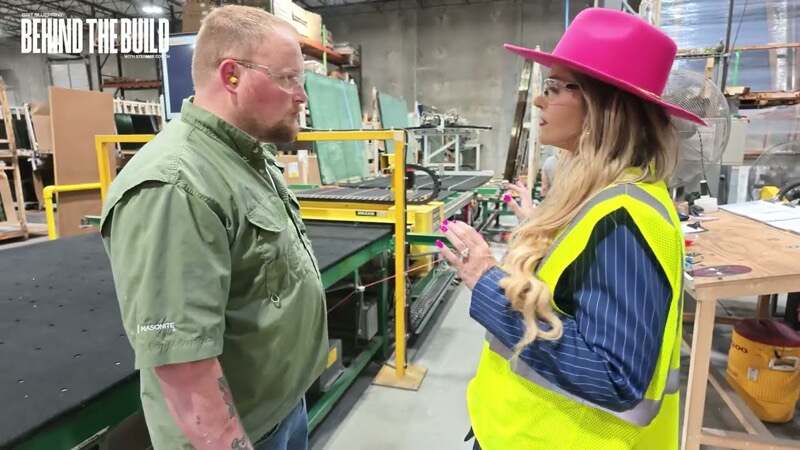
Next to the mill shop sits a CNC table, a computer-run cutting machine. It has two eight-foot tables, so the operator can run one job while he sets up the next. Vacuum holds each door flat. Jason Howard draws each part in AutoCAD, and the file goes straight to the machine. It swaps tools on its head and has a 90-degree tool for edge work. On this visit the crew had carved Stefanie Couch’s logo on it. Tommy Ball runs every CNC machine in the building and does all the programming and adjustments.

The same machines cut the preps for multi-point locks, which latch a door at several spots along its edge. They also cut the rabbet, a notched edge, on the arched transom tops. Then the crew glues and clamps each piece from raw lumber.

Trim, glass bars, and patience

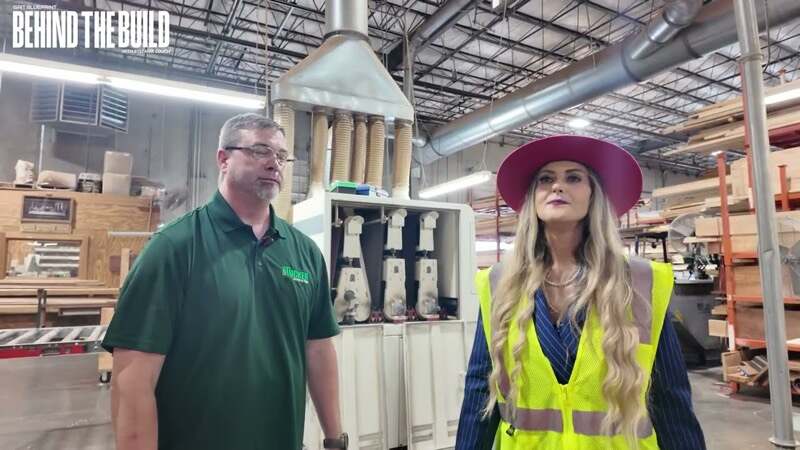
The mill shop also has a molder, a machine that shapes lumber into trim. For a custom profile, the shop first has to get knives made to fit it. Then lumber runs through, and the machine cuts it down in stages. That setup is why custom trim costs a little more.

In the SDL department, Albert Davis adds bars to glass doors. SDL stands for simulated divided lite. The bars, in wood or PVC, make one sheet of glass look like many small panes. Each small pane is called a lite. When the bars are on, the ticket goes back into regular production. Albert has 19 years in that department, and he treats it as careful work.

From Tucker, Georgia to Monroe

The company is named for the town where it began, Tucker, Georgia. It later used two buildings near Stone Mountain. When that lease came up, Tucker moved to Monroe in 2000. The Monroe building started at about 120,000 square feet. An addition followed, and today it is 290,000. Now another 100,000 square feet is coming.

Jason says the new space will hold bulk storage. It also lets Tucker rearrange the floor. Parts will come in at the back, move through production, and go out to shipping and staging. Most of the loading will happen in the new area.

Four exterior lines and the people who run them

Exterior doors are the one and three-quarter inch thick doors on the outside of a house. Tucker splits them across four lines. The first runs molded steel and fiberglass single doors. The second is the custom line, where doors are cut down in height or ripped in width. Dutch doors, which open on the top and bottom separately, come from this line, along with small doors for attic and crawl space access. The third, the Commander Line, builds wood singles and wood twins. The fourth builds fiberglass and steel twins with sidelites, the narrow glass panels beside a door, and transoms on top.

New hires start in the interior department and work over to exterior. The twin units on the last line take the most skill, because every tolerance has to be right. Jason says most builders on that line have 10 to 20 years or more, at Tucker or at other door shops.

Interior doors, hinges, and what ships first

Interior doors are the bedroom and bathroom doors. Tucker brings in unprepped slabs, which are door panels with nothing cut or attached. The crew hangs them in frames and adds trim and hinges. A regular line runs about 250 slabs a day. The high capacity line holds the machine Jason shows next.

Screw hoppers feed it. Quick dump hoppers let the crew switch screws for a new order.

Hinge finishes change with taste. Satin nickel is still common. Satin brass is new, to match the kitchen finishes and door handles buyers pick now, and Tucker stocks a satin brass hinge. Stefanie notes that decorative glass is not much in demand right now.

The tour ends with the order a house gets its doors. Builders want exteriors first so they can dry in the house, which means closing it up against the weather, and run siding. Interior doors follow, then windows. A dealer who knows that order can plan deliveries around it.

What To Do With This

  1. Learn to explain SDL in one sentence

    Simulated divided lite is a glass door with wood or PVC bars applied to it. On your next glass door order, ask which lite configuration the customer wants, such as four, six, or eighteen.

  2. Ask when the house needs to dry in

    Jason says builders typically want exterior doors first so they can dry in the house and run siding. Ask the builder for that date and place the exterior order ahead of the interiors.

  3. Flag custom work early

    Custom trim needs knives made for the molder, and custom glass, radius tops and SDL go through the mill shop before production. Tell the customer up front that custom is a little more expensive and why.

  4. Know which door goes where

    Exterior doors are the one and three-quarter thick doors for the front, back, and garage entry. Interior doors are the bedroom and bathroom doors. Sort a house order into those two groups before you write it up.

  5. Earn the next job in the shop

    Bryan Broadnax says you move up by working hard, showing you are trustworthy and caring about what you do. Pick one task this week and do it so well someone notices.

Plain English

SDL (simulated divided lite)
A glass door with wood or PVC bars applied to it in the lite configuration the customer wants.
molder
A machine that makes trim by feeding lumber past knives and milling it down in stages to the final profile.
CNC table
A machine that holds a door down with vacuum and cuts it from a program downloaded from an AutoCAD drawing.
exterior doors
The one and three-quarter thick doors on the outside of a house: the front door, the back door, and the door from the garage.
interior doors
The doors inside a house, such as bedroom and bathroom doors.
screw hoppers
The bins that feed screws to the hinge machine: a primary for the screws used most of the time and quick dump secondaries for changes.

Questions this video answers

What does SDL mean on a door?

SDL stands for simulated divided lite. Wood or PVC bars go on the glass so it looks like many small panes, in patterns like four, six, or eighteen lites. At Tucker Door & Trim, Albert Davis does this by hand in the SDL department.

How many interior doors can a door shop build in a day?

Jason Gert says one interior line at Tucker Door & Trim runs about 250 slabs a day. The high capacity line can reach about 800 on repetitive work. Casing and hinge changes drop it to about 500 in an eight-hour day.

Why does custom trim cost more?

A custom trim profile needs its own knives made for the molder before any lumber runs. Then the machine cuts the lumber down in stages to the final shape. That extra setup is part of the price.

Which doors ship first on a new house?

Jason Gert says builders usually want exterior doors first. That lets them dry in the house and run siding. Interior doors come next, then windows.

How do you build a career in a door shop?

At Tucker Door & Trim, new people start on interior doors and work toward exterior. Bryan Broadnax started on a Kval Commander in 1999 and moved up to custom millwork. He says hard work, being trustworthy, and caring about the work get you there.
The guests

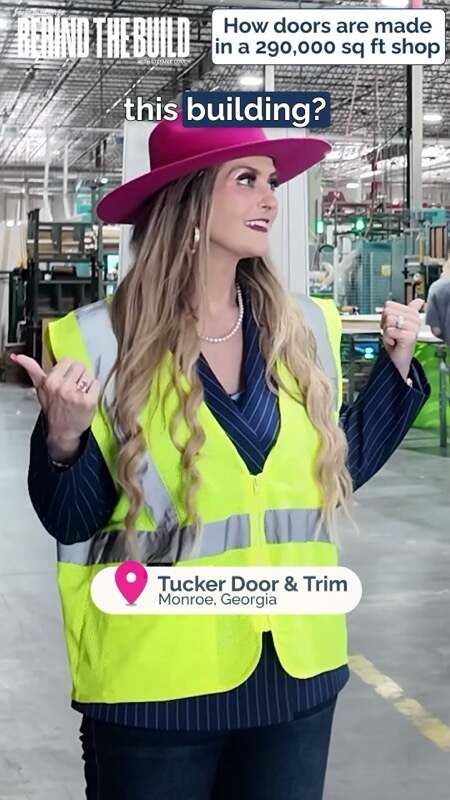
Hosted by Stefanie Couch.

In their own words

“I’m doing something different all the time. That’s what I like the most about it.”

Bryan BroadnaxHear this at 1:17

“These guys are real artists. You talk about making stuff out of raw lumber over here, just board footage.”

Jason GertHear this at 3:36

“This machine will put four hinges on at one time.”

Jason GertHear this at 8:27

“When I was on the line, which was many years ago, it was all brass. Everything was brass. What’s coming in new is satin brass.”

Jason GertHear this at 9:04

“If you work hard, if you show you're trustworthy and you care about what you do, then you can work your way up to custom millwork like I did, or even further if you want to.”

Bryan BroadnaxHear this at 1:17

“SDL is a skill set thing. It's not a rush thing you do. It's not a race or nothing like that. You have to take your time, be patient with it, because you want to send out a good product.”

Albert DavisHear this at 4:43

“These units take a lot more making sure your tolerances are correct, so it takes an increased skill set. Most people cannot just walk in off the street and start building these units.”

Jason GertHear this at 7:02

“I just love the problem-solving. It never gets old. The days feel short. It's always something different. It's nice just always having something new to do.”

Tommy BallHear this at 2:47

Clips from this episode

Full transcript

5 speakers · 10:29 · 16 chapters

Click any timestamp to jump to that moment in the video.

Inside a 290,000 Square Foot Door Shop

0:00 Stefanie Couch: Welcome to Behind The Build with Stefanie Couch. I’m here today at Tucker Door & Trim in Monroe, Georgia, and we are looking at a giant warehouse. Tell me who you are, what you do here, and what we’re about to go see.

0:12 Jason Gert: My name is Jason Gert. I’ve been with Tucker Door for 28 years. We’re fixin’ to go walk through the interior shop and then through an exterior shop so you can see what we do here.

0:20 Stefanie Couch: How big is this building?

0:21 Jason Gert: 290,000 square feet, and we’re fixing to add on another 100,000 square feet.

0:26 Stefanie Couch: Yeah, this is a monster. All right, let’s go see it.

What a Custom Millwork Shop Builds for High-End Homes

0:30 Jason Gert: This area here is our custom mill shop, is what we call it. These guys do a lot of our very high-end stuff. They make the transoms. They’ll do radiuses that go above doors. We do standalone radiuses. You basically can get it drawn on a CAD, and they can make it. They’ll take doors that we have open and drop custom glass in it. So if you want something with a decorative style of glass, we can drop it in. These guys will also do SDLs, just like that department. They do a lot of the more expensive end, because they deal with a lot of higher end wood.

1:05 Stefanie Couch: And we were watching him earlier, Jason, lay this up with this mahogany sapele.

1:10 Jason Gert: Yeah.

1:10 Stefanie Couch: So this is the finished product here.

1:12 Jason Gert: Correct. This is ready to go to production to have whatever done and then put in whatever frame.

How to Build a Career in Custom Millwork

1:17 Bryan Broadnax: I’m Bryan Broadnax. I’ve been here since July of ’99, so 27 years. First job here was running one of the Kval Commanders. Where I’m at in custom millwork is kind of where I wanted to be. If you work hard, if you show you’re trustworthy and you care about what you do, then you can work your way up to custom millwork like I did, or even further if you want to. I’m doing something different all the time. That’s what I like the most about it.

How CNC Machines Turn AutoCAD Files Into Custom Doors

1:42 Jason Gert: So this is another part of the mill shop area. It’s a CNC table. It has two eight-foot tables, so you can work on one project on one and set up another one. It uses vacuum and a box to hold the doors down. This machine can talk directly. We have Jason Howard inside who does AutoCAD.

2:01 Stefanie Couch: Yep.

2:02 Jason Gert: And this machine, he can download the program Jason’s drawn in AutoCAD, and he can download it to this machine, and we can run it off of this machine here.

2:07 Stefanie Couch: Is that my logo? He got my logo. That’s so cool.

2:17 Jason Gert: It also has multiple head tools that it can grab on the very end. They can swap those out, and it also has a 90-degree tool for edge work.

2:28 Stefanie Couch: I’m so excited about this. I’ve done a lot of doors and no one’s ever made me a custom thing, so I’m really pumped.

2:44 Stefanie Couch: It’s so cool. Look at the grain.

Why the Best CNC Operators Love Problem Solving

2:47 Tommy Ball: I just love the problem-solving. It never gets old. The days feel short. It’s always something different. It’s nice just always having something new to do.

2:56 Stefanie Couch: I know that you do great work out there, so I can’t wait to come out there and see it.

2:59 Tommy Ball: Okay. I’ll figure out something to run.

3:02 Jason Gert: Tommy is extremely, extremely knowledgeable and does some very fine work. Tommy’s in charge of all our CNC machines. He’s the one that does all the programming and adjustments.

3:13 Stefanie Couch: Thank you so much. I really appreciate you.

3:17 Jason Gert: It’s good, man.

3:20 Stefanie Couch: I love it. I’m pumped.

3:22 Jason Gert: Here’s a lot of the preps they do on here for the slabs, which is the multi points. Locking systems, that’s a lot of what he is doing. And then all the radius top for all the arch transoms, they do all that rabbet on this machine here.

3:35 Stefanie Couch: Okay. Gotcha.

3:36 Jason Gert: So that’s how they make them all. Then they’ll glue them up, clamp them up. These guys are real artists. You talk about making stuff out of raw lumber over here, just board footage.

3:46 Stefanie Couch: They can do anything.

3:46 Jason Gert: They can do anything.

3:47 Stefanie Couch: They can make it all. And they’re very rare.

3:49 Jason Gert: Yeah. It’s a skill set that’s very hard to get.

How a Molder Makes Custom Trim Profiles

3:53 Jason Gert: Also within the mill shop, we have a moulder. So this will make trim. We can make something custom. It’s a little more expensive because we have to sit down and get knives. They go inside it. We’ll feed lumber through it, and it’ll mill down in stages to get out a final product.

4:10 Stefanie Couch: This is the coolest.

What SDL Means: Simulated Divided Lite Explained

4:15 Stefanie Couch: Tell me about the custom department here. We talked to a few of your team from there earlier.

4:20 Jason Gert: Yeah, this is the SDL department. What SDL stands for is simulated divided lite. What they do is they take a glass door and apply some sort of bar to it, either a wood bar or a PVC bar, and they can do it in many different lite configurations that you want. Once they’re done with it, tickets are turned into production. It’ll go through production just like normal.

4:43 Albert Davis: What we do is put SDL bars on the doors. It might be a four-lite, a six-lite, or an eighteen-lite. SDL is a skill set thing. It’s not a rush thing you do. It’s not a race or nothing like that. You have to take your time, be patient with it, because you want to send out a good product.

The History of Tucker Door & Trim in Georgia

5:01 Stefanie Couch: How long has Tucker been here?

5:03 Jason Gert: Since 2000, when we moved out here. We started in Tucker, Georgia, then moved to two different locations over near Stone Mountain. Then that lease came up on that building, and we decided to move out to Monroe, Georgia in 2000.

5:18 Jason Gert: There’s been two additions to this. There was one addition to this building to start with, so we had 120,000 square foot or so, then we added on an addition, and we’re fixing to add the other one.

Why Tucker Is Adding Another 100,000 Square Feet

5:29 Stefanie Couch: Another 100,000. What are you gonna put in there?

5:32 Jason Gert: We’ll put all our bulk storage. And then we’re gonna rearrange production for a better flow, so interior department will go a little further up. Exterior department, which we’re headed to, will swing over and go where the exterior department is. That way, all the parts department will go in the back. So everything will come in from the back of the building here for production, and will flow through production, out to shipping to staging areas, and most of the loading will be done in the new area.

Inside the Exterior Door Department

5:59 Jason Gert: So this is our exterior door department. The way we have this set up, these are your one and three-quarter thick doors that’ll go on the outside of your house. So this will be your front door, your back door, your garage door going into your house, those side type of doors. We run all our single doors down here that are molded, steel and fiberglass. We’ll run singles on this line.

Dutch Doors, Cut Downs, and Custom Door Sizes

6:20 Jason Gert: Then we have a custom line where we trim doors down in height. We’ll rip them in width, whatever you need, and we do doors like a Dutch door, small doors that are cut down for attic access, crawl space access.

6:29 Jason Gert: So then the next line is gonna be our Commander Line. It runs all our wood singles, and builds all wood twins.

How Fiberglass and Steel Twin Doors Are Built

6:41 Jason Gert: And then our fourth line, on the very end, is gonna be fiberglass. That’s what these guys down here are building. This is our fiberglass and steel twins, so they’ll build your twin doors. They’ll build center hinge. They’ll do patio doors with a screen. We do singles with sidelites, twins with sidelites, twins with transoms on top.

7:02 Jason Gert: These guys are the most experienced builders. So our typical production flow for entry personnel is you’ll start in interior, and you’ll work your way over and through into the exterior department. This type of twin that you’re doing is a lot more involved. These units take a lot more making sure your tolerances are correct, so it takes an increased skill set. Most people cannot just walk in off the street and start building these units.

7:27 Stefanie Couch: Yeah, and a lot of these people have probably been over here a long time.

7:29 Jason Gert: Correct. Most of your guys are 10 to 20 year plus experience. And if they haven’t worked here, they’ve worked at other door shops.

7:37 Stefanie Couch: Sure.

Inside the Interior Door Department

7:38 Jason Gert: So this is the interior door department. What we build here are doors that are on the inside of your house. They’re like your bathroom doors, your bedroom doors, that sort of stuff. What we do is we bring in unprepped slabs, and we put them in frames. We apply trim, apply hinges, and then we’ll have those delivered to the customer in the door shop.

How Many Doors a Shop Can Build in One Day

8:02 Stefanie Couch: How many units can you guys build a day on interior?

8:04 Jason Gert: One line should be able to run about 250 slabs through it. We do have a high capacity line that you could get upwards of 800 slabs a day, depending on changes. If it’s a lot of the same thing, repetitive, pretty easy to go about 800. If you’re adding casing to doors or doing a lot of hinge changes and stuff, then you’ll drop down to about that 500 range, in an eight-hour day.

The Machine That Sets Four Hinges at Once

8:27 Jason Gert: This is the high volume line that we talked about earlier for the interior department. This machine is different because on the other two machines, you put one hinge on at a time. This machine will put four hinges on at one time. So that’s what allows this machine to run anything from 500 to 800 units, depending on what it needs, trim or no trim, stuff like that.

8:45 Jason Gert: All these are screw hoppers. You’ve got a primary and a secondary. Primary is the screws that you run 80% of the time. And then your secondaries have quick dump hoppers, so they can quickly be emptied out and changed out, and all this is blown up to where the hinges go on.

9:01 Stefanie Couch: Satin nickel, is that what you keep in here most of the time?

9:04 Jason Gert: We get a lot of satin nickel. When I was on the line, which was many years ago, it was all brass. Everything was brass. What’s coming in new is satin brass.

9:14 Stefanie Couch: Yep, I love the satin brass.

9:15 Jason Gert: Because you’re getting a lot of those interior finishes in your kitchens. Your door handles have got that satin brass, and we now are stocking a satin brass hinge. That’s becoming a little popular. So we always have to change. It happens with the doors. We bring in new door styles. Old door styles end up getting faded out.

9:30 Stefanie Couch: Yeah, like decorative glass is not really a thing right now. But it’ll come back.

9:33 Jason Gert: Correct.

When Exterior Doors, Interior Doors, and Windows Ship

9:34 Stefanie Couch: Talk to me about how the flow works. You’re doing windows and exterior doors at the same time usually, for houses, and then interiors later.

9:44 Jason Gert: Based on what our lead times are and how they’re building and what they need at certain times, they typically want your exteriors first so they can dry in the house, run siding and all that sort of stuff. So exteriors will really ship early, then it follows up with the interior doors and then windows.

10:00 Stefanie Couch: Every build has a story, and it starts with the people who have the grit to make it a reality. The best don’t wait to be noticed. They stand out. They’re unmistakable. Thank you for joining me on Behind The Build. gritblueprint.com

Next episode

More from Behind the Build

All episodes