Hidden Bookcase Doors: What to Know Before You Sell One
A hidden door is still a door. Murphy Door's CEO explains the measurements, the swing, the wait and the hinge before anyone promises a secret room.
Before you sell a hidden bookcase door, know four things: the measurements the maker needs, which way it swings, how long it takes to arrive and what hardware carries it. Jeremy Barker is CEO of Murphy Door. He says his doors ship prehung in a frame and start from three numbers. Those numbers are the width and height of the door and the depth of the jamb. In 2025 he put the wait at 4 to 6 weeks. And the hinge, he says, is where homemade versions fail.
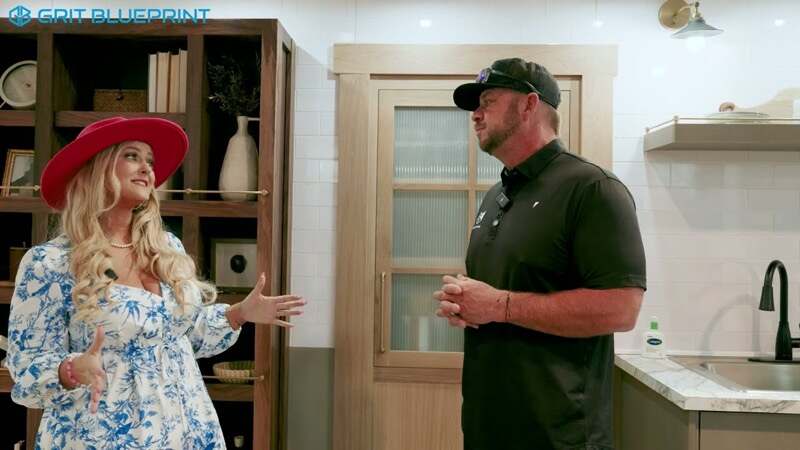
Barker showed Behind the Build around the Murphy Door booth at the International Builders’ Show. The booth was full of bookcases, bars, pantries and mirrors that open into rooms. Here is what he told us, in the order a counter person needs it.
What is a hidden door?
A working door made to look like something else: a bookcase, a cabinet, a mirror, a wall panel. The room behind it stays out of sight. Barker says the point is three jobs in one wall: “And the idea behind the Murphy door is like how do we get storage? How do we get space? And how do we get a door?” (2:46).
The secret rarely stays one. “But everybody tells everyone. So that is our best form of sales,” he says. When a door goes into a new neighborhood, he says, more orders start shipping to the same zip code.
Why did Murphy Door start with a hinge?
Because nothing else held. Barker was a firefighter and paramedic in 2012 when he built a four-seat theater room for his kids and went looking for a hidden door for it. Nobody was making them commercially. So he tried to build one.
So, we started with a hinge. Like I tried the three hinges on the side or a piano hinge. They just kept ripping the door off.
 Jeremy BarkerCEO, Murphy DoorFrom our booth visit, at 4:18
He borrowed the idea from a backhoe bucket: a pin and a pivot angle he could change. The hinge sold before the doors did. “We did $30,000 in sales for the hinge the first year,” he says (4:36). Cabinet makers helped him design the first doors after customers asked for them.
What does the maker need to build one?
Less than most customers fear. Barker says measuring is the biggest worry he hears. His list:
- Width and height of the door, outside to outside and floor to the top of the door.
- Depth of the jamb, the frame’s width through the wall. Our glossary calls it jamb width.
- Swing direction, for example left hand outswing. The unit ships hung that way. If door handing is new to you, read Left-Hand or Right-Hand Door? Confirm Before You Order.
- Wood and finish. Barker’s team can paint, but he would rather not: “It’s just really hard for us to finish it and not get it there scratched” (7:53). “We can prime it for you and then you just hang it.” Plan for a painter on site.
The unit slides into the opening as a prehung door, and Barker says it goes in with a handful of screws in holes that are already laid out. The trim needs no nails. “It comes pre-cut. It snaps into place,” he says (14:00). Murphy Door also has a 3D app that walks an installer through each step.
What happens if the swing is wrong?
On most custom doors, a wrong swing means a new door. Barker built his hinge around that pain. “The nice thing with our hinge is you can do in swing, out swing, left or right hand all with the same hardware. You don’t have to buy a bunch of different ones,” he says (5:33). His example is the contractor who arrives and finds “the light switch is on the wrong side.” The fix he gives the panicked customer: “Hey, no big deal. Just move the hinge” (6:10).
That is Murphy Door’s hardware. Ask any other maker the same question before you write the order.
Why not have the cabinet shop build it?
Because a bookcase door gets treated worse than a bookcase. Barker says many people look at one and think their cabinet maker can match it. His own first doors failed, he says, and he lists what kills them: slamming, and worse. “People get mad. They step on it and use it as ladders” (15:53). Murphy Door uses blades hidden inside each section so the unit cannot sag or twist, and hinges he describes as quarter-inch steel plate with ball bearings (26:34). The company says it has built a lot of them: “We’ve done 200,000 units” (15:30).
He still sells the hardware to people who build their own doors, and his advice to them is short: “you might as well start right with the right foundation, which is the right hardware” (28:10).
Two questions customers ask after the sale
- Will the fridge fit through? A hidden door takes up some of the opening. Barker’s answer is a top hinge pin that comes out: “all you do is slip that pin out” (26:56), lift the door off the pivot, move the big item through and hang it back.
- Can I add things later? Yes, he says: “almost every single piece of hardware you can buy later” (18:20). Locks, automation and cabinet doors can wait for the next budget. Murphy Door keeps the wood and color on file.
The advice that changed what Murphy Door sells
Barker started out thinking about panic rooms. Then a woman stopped at his small 10-by-10 booth. She had worked for Architectural Digest for years. He still does not know her name. He repeats what she told him:
Remember, only 1% of the world needs a panic room, but 99% of the world needs space. So don’t focus on what you’re trying to hide. Focus on what you’re hiding it with and create beauty and functionality in that unit.
Jeremy BarkerCEO, Murphy DoorFrom our booth visit, at 10:44 (Barker repeating a visitor’s advice)“She really did pivot our business,” he says (11:06). Murphy Door went from one-off doors for high-end clients to orders for tiny homes, short-term rentals and apartment buildings. As for timing, in 2025 Barker said: “Our lead times are still 4 to 6 weeks” (12:08). Count those weeks into the job schedule, the same way you would for any special order.

Sell the room, then the secret
A hidden door is a feature door, and feature doors sell best when they solve a problem in one room. So ask what the problem is first: more space, more storage or something different. Feature doors tend to land in one spot, such as a pantry, a laundry room or an office, and that one spot is where a wow factor belongs.
For the dealer they are upsell and margin items, so they are worth asking about. The visitor at Barker’s booth said the same thing from the other side: lead with what the door holds, and let the hiding be the bonus.
Then treat it like any other custom door order. A product choice connects to the order, the delivery and the install. Confirm the three measurements, the swing, the finish and the lead time in writing. If the customer wants a lower-cost door, compare it with the options in Barn Door, Pocket Door or Bifold?
What to do next
- Ask the customer which room it is for and what problem it solves: space, storage or a showpiece.
- Get three measurements: width and height of the door and the jamb width. Write the swing direction on the order.
- Ask the maker whether the swing can be changed on site, what the lead time is today and whether the unit comes primed.
- Book a painter for the finish if the door ships primed.
- Tell the customer which hardware, locks or automation can be added later. That way the first budget covers the door itself.
Watch the full booth visit: Behind The Build Product Spotlight: Murphy Door at the International Builders’ Show. For the basic parts of any door, see Doors 101.
Questions people ask
What is a hidden bookcase door?
A working door built to look like a bookcase, cabinet or panel, so the room behind it stays out of sight. Jeremy Barker of Murphy Door says the shelves are meant to be used for storage, not only for show.
What measurements do you need to order a hidden door?
Barker asks for the width and height of the door and the depth of the jamb, which is the frame's width through the wall. You also give the swing direction, the wood and the finish.
Can the swing of a hidden door be changed later?
On Murphy Door's units, Barker says yes: the same hinge hardware works for inswing or outswing, left or right hand, so a wrong swing means moving the hinge. Other makers may differ, so ask before you order.
How long does a hidden door take to arrive?
In the 2025 interview Barker put Murphy Door's lead time at 4 to 6 weeks. Lead times change, so confirm the current one with the maker before you promise a date.
Can a cabinet shop build a hidden bookcase door?
Barker warns that the hard part is the hardware, not the shelves. Hidden doors get slammed and climbed on, and he says that is why Murphy Door started with a hinge and sells it to people who build their own.
Watch the full episode
Behind The Build Product Spotlight: Murphy Door at the International Builders’ Show
Jeremy Barker, CEO of Murphy Door, walks the company's International Builders' Show booth: hidden bookcase doors, hydraulic beds, a hinge that swings either way, and the advice that turned a panic room idea into a storage business.
A Grit Guide original. This piece is built from our own visit.