Click any timestamp to jump to that moment in the video.
How Independent Dealers Compete With Building Materials Consolidation
0:00 Stefanie Couch: And you said, I want to make it hard for them to fire me.
0:01 Will Lummus: We want to make it hard by giving them exceptional service. If it wasn't for our customers, we wouldn't be here for a hundred years, and we won't be here for the next hundred years. We thrive by being different than the big people. We go to market a lot differently than they do.
0:16 Will Lummus: Independents are going to always have their niche. People are always the ones to go support local families, local communities.
0:23 Stefanie Couch: I saw a statistic this week. I think 92% have no succession plan. 92%. That's insane. And a lot of those people are going to be retiring in the next five to six years.
0:33 Will Lummus: In the past, my dad looked at it like, hey, six months before I retire, I'll call you to come in. We'll do the transition. It's not a six-month, it's more like a five-to-six-year plan.
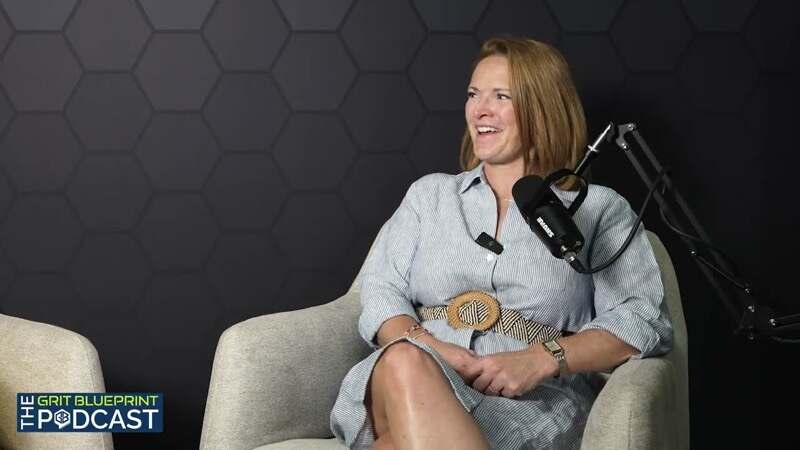
0:43 Stefanie Couch: Welcome to the Grit Blueprint Podcast. I'm your host, Stefanie Couch. This is a spot where leaders talk about the stories, strategies, and systems that win in the building industry. We unpack how leaders and brands build their reputations and become unmistakable.
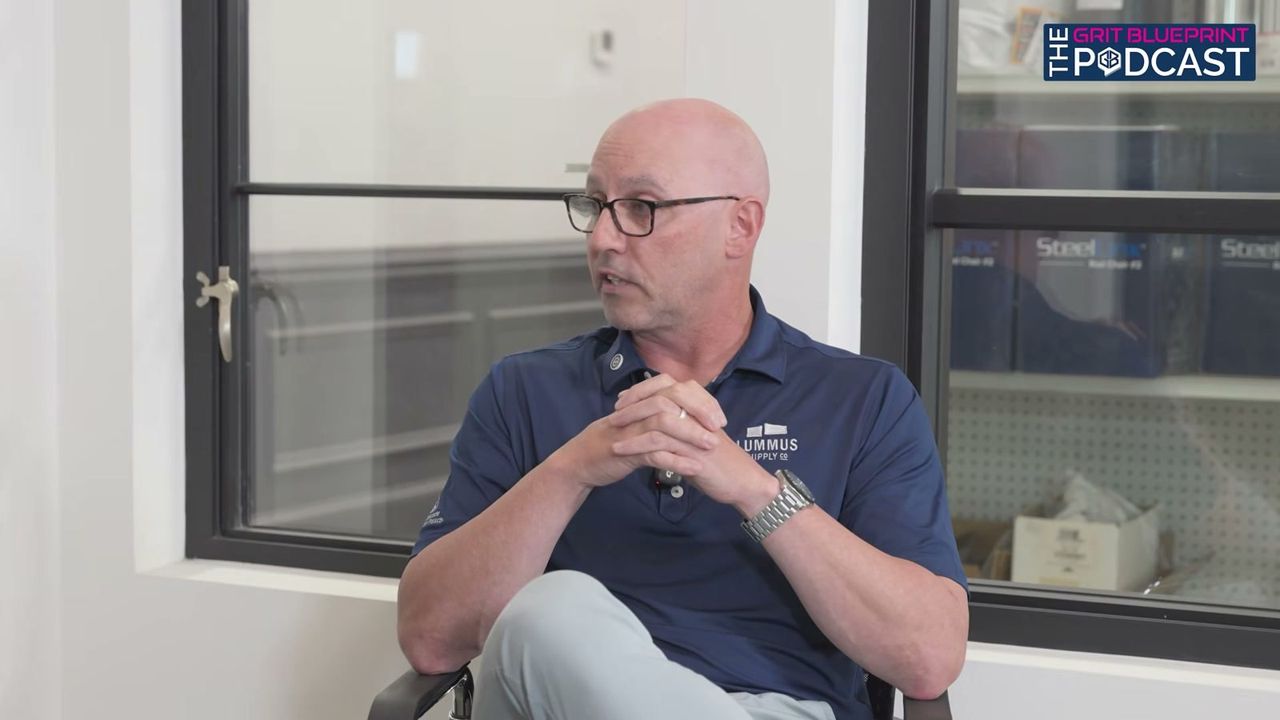
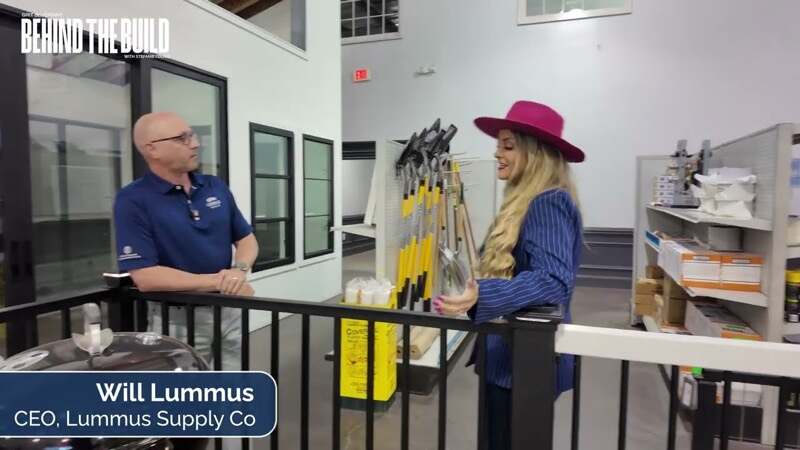
1:07 Stefanie Couch: Welcome to the Grit Blueprint Podcast. I'm your host, Stefanie Couch, and today I'm coming to you live from an amazing tiny home inside of Lummus Supply in Acworth, Georgia, with my guest, Will Lummus. Welcome to the show.
Meet Will Lummus, Fifth-Generation CEO of Lummus Supply
1:18 Will Lummus: Thank you. I'm looking forward to it.
1:19 Stefanie Couch: I've got an intro for you. So you are the CEO of Lummus Supply, fifth generation.
1:26 Will Lummus: That's correct.
1:26 Stefanie Couch: Like 1% of people get to fifth generation.
1:28 Will Lummus: Maybe even less than that.
1:29 Stefanie Couch: That's amazing.
1:30 Will Lummus: Yes.
1:30 Stefanie Couch: Family-owned building material supplier. You've been serving Atlanta Metro. This is your 101st year, right? So you hit a hundred last year?
1:38 Will Lummus: Yes.
1:38 Stefanie Couch: And your whole family has been in this business. It started as a sand and coal business, right?
1:44 Will Lummus: That is correct.
1:44 Stefanie Couch: Very interesting story, and your history is cool. I want to talk about what you're doing today a lot more. So you are not only on the board of the Construction Suppliers Association, but you are doing a lot in your own business to make sure that you hit the next 100 years.
1:58 Will Lummus: That's right.
1:59 Stefanie Couch: Our industry has seen a lot of consolidation every day. I read that Berkshire Hathaway this week just bought Taylor Morrison. Brad Jacobs is acquiring a lot of building materials distributors and dealers in this space. How does the independent not only just survive in the future, but how do you actually thrive?
How a 100-Year-Old Family Lumber Business Is Thriving
2:16 Will Lummus: Well, we thrive by being different than the big people. We go to market a lot differently than they do. I know there's still a lot of people out there who want to deal with the family businesses, who want to support the independents. And we kind of can. We are an independent, but we also kind of consider ourselves not a small independent.
2:37 Will Lummus: We have five locations, we have 90 employees, so we're doing things right. We're not a small business. We're not a great, huge business. We're right there in that little sweet spot in the middle. But independents are going to always have their niche. People are always the ones to go support local families, local communities. So I see us being relevant for another hundred years.
3:00 Stefanie Couch: And you're reinvesting in things like EWP saws and showrooms, technology and marketing, and things that you need to grow as well. So you're not just waiting and hoping that everything's okay in a hundred more years.
3:12 Will Lummus: Correct.
3:13 Stefanie Couch: What do you think the strongest independents are doing that is very different? You say you go to market differently. What does that mean that maybe some others, or big boxes, might be missing?
What the Strongest Independent Dealers Do Differently
3:21 Will Lummus: We're not selling on price. We sell on service. We sell on customer commitment. We sell on teamwork, integrity, family values.
3:33 Stefanie Couch: And you guys are furnishing and speccing out. I was just with your engineered wood department, and Todd, who I used to work with, was showing me a 30,000-square-foot plan that you guys are taking off on an engineered wood plan. Those people are not worried about price.
3:47 Will Lummus: No.
3:47 Stefanie Couch: If you're building a 30,000-square-foot house, you're probably not worried if an LVL is $1.02 a foot or $1.03 a foot or whatever it is. But you guys are really showing a lot on the high-end millwork, which is my favorite category.
4:01 Stefanie Couch: Tell me a little bit about that. So what do you do when someone comes in and they're like, I don't really know what I want, but I know I want a really awesome door, maybe something that stands out from the crowd? Talk about being different. What does that look like for you guys?
Selling High-End Millwork, Windows, and Doors on Service
4:13 Will Lummus: So, as you said, we're sitting in one of our tiny homes. We have two of these here at our Acworth location. We built these so a homeowner can come in and actually see what a full-sized window, what a full-sized door, feels like and looks like on the outside of the house. They're all sided, so it looks like a house when you come in. It gives it that feel.
How Showrooms Help Sell Building Materials, Windows, and Doors
4:35 Will Lummus: Before, we had the little cutout displays, and everybody said, oh, these are great, they open up beautifully. Then when they got them in their house, they're like, this thing's a lot heavier than I thought. So we wanted the bigger displays. So when they come in here and lift and open, they're actually going to feel what it's going to feel like in their own home.
4:52 Stefanie Couch: And doors and windows continue to get larger. We're sitting here with some that comparatively are big, but they're not as big as you see them out there. And I'm sure you guys are selling a lot of very large openings for these big houses. It's hard to visualize this on a sample that's two by three.
5:08 Will Lummus: Yeah, you can't. And that's the feedback we got from our customers and their customers, that we needed something larger scale. So that's when we decided to build these two tiny homes here in Acworth, to give our customers a larger scale of what it's going to feel and look like.
5:24 Stefanie Couch: I have a friend, Michael Tull, and he has a saying that I basically stole from him. It's “Show and tell and watch it sell.”
5:30 Will Lummus: Yeah.
5:30 Stefanie Couch: And it's true, because when you can feel things and you can see what you're actually looking at, it's very easy for you to say, hey, I can envision this in my home. And then, like you said, price is not the number one thing.
5:40 Will Lummus: It's not. They want it, they need it.
5:43 Will Lummus: And when they come here, we're giving them options. That's something we do a little bit differently than we think our competition does. We don't want to have just one or two vendors that we distribute. We're happy to say we distribute five, six, seven, because it's not up to me to tell you what needs to be in your home.
Give Your Customers More Vendor Options on Display
6:02 Will Lummus: You need to tell me what you want in your home. So with these tiny homes, we have all of our vendors on display. So you get to see a little bit of everybody. You make the decision, you tell us what you like, what's going to fit in your house, and then we can go from there.
6:17 Stefanie Couch: So one of the things that I get asked a lot, honestly from consumers, but also builders and even manufacturers, is there's so many options out there. You just talked about how you guys have five vendors, maybe sometimes with 50 options within that. What do you see that people are asking you the most? When people come in wanting windows or doors or engineered wood or Trex decking or TimberTech decking, or all these brands that are out there, what are they asking? What do homeowners really care about? And then I'll ask you what builders really care about, because I'm sure it's different.
What Homeowners and Builders Really Want in Windows and Doors
6:49 Will Lummus: So homeowners want more glass, they want more visibility. They want less walls in their homes. They want to be able to see their beautiful backyards, the mountains, the lakes. So that's what they're looking for. And that's why you see these doors and windows getting larger, because it gives you more natural light coming into the house.
7:09 Will Lummus: And that's what builders are looking for also. That's what they want in their homes. It shows better for them, especially if it's a spec house. You come in, you've got all this natural light coming into the house, you walk in the front door and you're able to look out a big 20-foot sliding door out back to see your backyard. It's what everybody wants.
7:27 Stefanie Couch: So you just mentioned a bunch of things that were emotional and visual, but not like how much vapor is inside this glass, or what is the 1% energy efficiency if we do this one thing, it's like 0.002% more efficient. That's what manufacturers talk about all the time. And you just mentioned nothing about that.
7:49 Stefanie Couch: Do people even care about that? Do you get asked questions like that? Because we're a marketing team, we're a branding team, and I see a lot of marketing that is about these little nooks and crannies.
Do Buyers Care About Energy Efficiency Specs?
8:00 Will Lummus: So on the R&R side, we do get asked that question, because those people are replacing windows and doors that are 30, 40 years old. They're not insulated, there's no R-value to them. So they ask those questions a little bit more than a new homeowner does.
8:17 Stefanie Couch: Okay, let's switch gears a little bit. I want to talk about leadership. So you took over a family business, and you have granddads and your dad and a lot of different people who have led this team, but you took over. Tell me when you took over and how you decided that you wanted to preserve the amazing parts of what made you guys great, but also evolve the things that would help you continue to win. What was that transition like, turning into a leadership role?
Leading a Family Business Through a Generational Transition
8:43 Will Lummus: So CSA had a large part in that transition. They have what's called a next gen group. I went through it, my brother's gone through it, my son has gone through it, my daughter's fixing to start it. They did an amazing job of helping us open our eyes to what it's like for the next generation to take over.
9:04 Will Lummus: And in the past, my dad looked at us like, hey, six months before I retire, I'll call you to come in, we'll do the transition. Where CSA taught us, it's not a six-month, it's more like a five-to-six-year plan.
9:17 Stefanie Couch: Yeah.
9:18 Will Lummus: So when I completed my next gen class, I sat down with my dad and we talked about it, and he says, well, it's time for you to come to Bolton. And at that time, that's where our corporate was. And he says, it's time for me to mentor you, for you to listen in on a few more things. So CSA had a huge part in helping us transition the correct way, and I feel like it was successful.
9:39 Will Lummus: You mentioned continuing on the family traditions. There was nothing for me to change, because we've been doing it for a hundred years. So I figured, if you're doing it for a hundred years and you're around for a hundred years, something's being done right. So a lot of those traditions we kept, and that's also part of being a family independent company. Even though we do have 90 employees, even though we do have to be corporate HR sometimes, we still want to have our core being around family.
10:03 Will Lummus: Supporting our family, because I always say all my employees are my family. You don't have to have the last name Lummus to be my family. You just have to be a part of my team.
10:17 Stefanie Couch: And you've got a lot of team members who have been here for a long time. I know you've had a lot of people who have worked here their whole career and retired. So it's a place that people come and they stick, which is a big deal for the culture. It speaks for itself.
10:29 Stefanie Couch: You're definitely doing a lot more of that, I would guess, with the next generation. So let's talk a little bit about Ashlyn, because I've been working with her a little bit on the social media marketing side, and she does a lot in the business. You talked about the next gen program. I am a daughter of a lumber man as well, so I resonate deeply with her and I see what she's doing. What excites you the most about watching her work with you and working with her? Because I know it comes with challenges and with opportunities.
Raising the Next Generation of Family Business Leaders
10:55 Will Lummus: Her passion. Just seeing the joy that she comes in with every day. She's excited about coming into work, and that, to me, is the best part.
11:04 Will Lummus: Because I told both my kids, I said, just because your last name's Lummus doesn't mean you need to come into the family business. I was very upfront with them. You're going to go to college, you're going to get an education, it's going to open you up to other avenues if that's the route you want to go. And I told them, I only want you to come into the business if you're as passionate as I am.
11:24 Will Lummus: And I have a pretty high passion for this business. And she has that passion. I see it in her every day.
11:32 Stefanie Couch: It's fiery, and I love it.
11:32 Stefanie Couch: I want to go back to the next generation conversation just a little bit, because I get asked about this a lot. I saw a statistic this week. It was talking generally about family-owned small businesses, but it was saying I think 92% have no succession plan.
Why 92% of Family Businesses Have No Succession Plan
11:49 Will Lummus: Correct.
11:50 Stefanie Couch: 92%. That's insane. And a lot of those people are going to be retiring in the next five to six years, which you mentioned usually takes at least that long to really figure out. So opportunities like next gen with CSA, what does that look like in real life? If somebody's listening to this and they're a next-generation leader, or would like to be a next-generation leader, and they want to know how can you get ready, what does that prep look like? What are you actually doing in that course?
The CSA Next Gen Leadership Program Mentors Upcoming Leaders
12:19 Will Lummus: It's a three-year course.
12:20 Stefanie Couch: Oh, wow.
12:20 Will Lummus: You meet twice a year with other independent future leaders. One, it starts a network. So you have other people who are like you, about the same age in the industry, who are coming up with their families. So you get to share some stories with them, where it might be a little easier to ask them than it is to go ask your mom or dad. So the networking is huge, but it also has other leaders who come in and talk.
12:40 Will Lummus: They go over real-life situations. They tell you about, hey, this isn't going to be easy, we're going to prep you for it. So it's just a lot of preparation, and knowledge is king. Knowledge is power. So the more knowledge you get from these courses, the better prepared you're going to be.
13:05 Stefanie Couch: I love that. And going through that with other people, like you said, that you can call and say, hey, what do you think about this, without having to ask your family, or just get an outside performance review on how am I doing and what should I be doing differently.
13:17 Will Lummus: Right before this podcast, I emailed a couple of my round table people asking a question, and within minutes I got responses.
13:24 Stefanie Couch: Did you ask them if you should wear a pink hat to this podcast?
13:26 Will Lummus: I did. The answer was yes, absolutely yes.
13:30 Stefanie Couch: Well, next time. There's always round two, Will.
13:30 Stefanie Couch: You said something to me the other day, and I wrote it down and I really like it, so I want to ask you about it. I asked you, what do you want to do to be valuable to your customer? What's the goal here? And you said, I want to make it hard for them to fire me. What does that mean to you? And what do you think that means to a builder? What would make it so hard for a builder to call and be like, you're out?
How to Make It Hard for Customers to Leave You
13:53 Will Lummus: We want to make it hard by giving them exceptional service. Our number one core value is customer commitment. We're in business for our customers. If it wasn't for our customers, we wouldn't be here for a hundred years, and we won't be here for the next hundred years.
14:09 Will Lummus: So I look at ways. I tell my team, we're a team. I tell my account managers, you're never going to be put on an island. You are going to be the main contact for this customer, but I'm going to surround you with industry leaders and show that customer that, hey, you don't just have one, two, or three people. You're going to have four or five people you can contact at Lummus Supply. That shows you our commitment to you.
14:36 Will Lummus: This is another reason why we go to market a little bit differently than some of the rest. It is an added expense bringing these people, but it separates us from others, I feel. So that makes it hard for the customer, because we bring so much more value to the table than just lumber, millwork, doors. It's what we do before, during, and after.
14:59 Stefanie Couch: And you were talking a little bit about how you're innovating with things like marketing and AI and CRMs and tracking. So tell me a little bit about that, because that's some of the things you're talking about, how you're investing in the business, not just for you and your internal team, but for the customer, because some of those processes will help.
Investing in Showrooms, Websites, and Marketing for Growth
15:16 Will Lummus: So everything we do is for the customer. Every decision we make is based on, will this help our customer? Everything we invest in is based on, will this help our customer? And if I continue answering yes to these questions, it's things we're going to invest in. Showrooms. Our customers said, hey, we need bigger displays. Well, here you go, we built two tiny homes.
15:33 Will Lummus: We're also in the middle of building a new showroom at our Alpharetta location that is for our customers. Our new website that you're helping us design is not for me. I get joy by telling my friends, hey, go check out my website. But I'm telling my customers, I'm building this for you and for your customers. This is going to give them some knowledge before they come into our showrooms. They can see our product catalogs, they can get information off of it.
15:59 Will Lummus: So I'm investing money now for the future, because if you wait, it's already past you. So I want to be on the forefront of it.
16:13 Stefanie Couch: And that's one thing I hear a lot of business owners who are on the cutting edge say. Hey, look, we may be having a little bit of a lull, which I'm not saying you guys are, but in general in the market, it's a little slow for some people.
Why Building Materials Companies Should Invest Before the Market Speeds Up
16:24 Will Lummus: Yeah.
16:24 Stefanie Couch: But you're not waiting until that moment to dig in, because you don't want to be the busiest you've ever been and then be trying to do these projects. You want to do it when you have opportunity coming, right from the get-go.
16:36 Will Lummus: And when you're not rushed into it, also.
16:38 Stefanie Couch: That's right. And we had such a crazy four or five years that sometimes I feel like we're finally getting able to take one deep breath, at least. That's somehow a good thing. And I think we're going to be able to continue to grow this thing. I feel really good about the next few years.
16:54 Will Lummus: I feel good about the next hundred.
16:55 Stefanie Couch: Well, I won't be here in a hundred years.
16:58 Will Lummus: Neither will I, but.
16:59 Stefanie Couch: But maybe somebody will be wearing a pink hat in a hundred years. Maybe somebody.
17:03 Stefanie Couch: All right, we're going to go to a fun lightning round. Are you ready for the lightning round? You've got a free afternoon to do anything you want. No one's calling, no meetings, no job site fires. What are you doing?
Lightning Round: Lake Days, Brisket, and Old-School Lessons
17:15 Will Lummus: Going to the lake.
17:16 Stefanie Couch: Okay. And what are you going to do at the lake?
17:18 Will Lummus: Get on my boat.
17:20 Stefanie Couch: Okay, love it. What's something that somebody would be surprised to learn about you, maybe outside of work?
17:26 Will Lummus: Whew. That is not a lightning round question.
17:31 Stefanie Couch: We have time. Tell me more.
17:33 Will Lummus: I love to cook. That's probably something people don't know. Love to cook, and not cooking in the kitchen, but anything and everything on a grill or smoker, I love to do.
17:47 Stefanie Couch: All right, so I'm coming over. Ben and I are coming over for dinner. What are you cooking?
17:50 Will Lummus: I can do brisket, ribs, the whole nine yards on the outdoor smoker.
17:55 Stefanie Couch: I'll be there on Friday.
17:56 Will Lummus: There you go.
17:57 Stefanie Couch: At the lake. All right. What is one old-school business lesson that you learned and you still believe?
18:03 Will Lummus: My dad taught me to always treat your employees right.
18:05 Stefanie Couch: Amazing. Build up your employees and they'll build the business for you, right?
18:08 Will Lummus: Yep.
18:09 Stefanie Couch: All right. What's one thing that people at Lummus might tease you about?
18:15 Will Lummus: I'm very quiet at work. I don't have the outgoing personality my brother does, so I'm more behind the desk. I like my reports. Ask Ashlyn.
18:30 Stefanie Couch: Who doesn't love a good report, really?
18:32 Will Lummus: Some people don't.
18:34 Stefanie Couch: Ashlyn doesn't have your appreciation for them, huh?
18:36 Will Lummus: She has it. My son does not. They're going to complement one another, because my son is more of an ops manager at our millwork distribution facility. He likes to be boots on the ground. He doesn't want to be behind a desk. Ashlyn does not want to be boots on the ground. She'd rather be behind a desk.
18:55 Stefanie Couch: And you talked a little bit about Reid, who's your brother, who's here in the business, and him being outgoing and doing different things than you. I think that's so important, especially in a family business, for each person to have their thing, their strengths, and be optimizing in the way that you automatically like to win. There's something really genius about that. A lot of people try to do everything. If you can just figure out what you naturally are really good at and just do it.
19:19 Stefanie Couch: So if you love reports, all for you. You can write all my reports and send them to me.
The Future of Independent Lumber Yards and Millwork Suppliers
19:23 Will Lummus: There we go.
19:24 Stefanie Couch: I may export some stuff to you.
19:24 Stefanie Couch: All right, last question. When you think about the future of independent lumber yards and millwork suppliers in the US, especially in the Southeast, what do you believe the winners will do in the next year? What is one big thing that you think people should be thinking about, maybe that they're missing, or maybe they're already thinking about?
19:45 Will Lummus: Technology.
How AI and Technology Are Changing Building Materials Dealers
19:46 Stefanie Couch: Okay. Can you tell me a little more about that?
19:48 Will Lummus: AI. I just got back from a CSA round table a couple weeks ago with nine other independents, and AI was the biggest topic. And unfortunately, none of us actually knew where we are with AI. We know we're here, but we don't know how high it's actually going to go.
20:09 Stefanie Couch: It's insane, because Ben and I, we do a lot. Personally, we use it in our business all the time, because we're trying to be a 90-person business with only nine people. But at the end of the day, every single week, something exponential changes. And it's not like, hey, you can now do this one little thing. It's like, hey, we recalibrated the entire rocket ship, and now we're going to Mars, and you didn't think you could go to Mars.
20:34 Stefanie Couch: But at the end of the day, AI is scary and it's a huge opportunity at the same time. I'm curious, because you're at this thing with nine people, you've got nine independent, really great business people. I know some of the ones you're talking about. What are they thinking? How are they trying to figure this out? Where do you go for this information, and what were some of the questions that the group's trying to figure out?
20:55 Will Lummus: That's where we don't know. We don't know where to go right now. Where's it going? We see it as it's going to help a lot, we believe, with takeoffs. AI-generated takeoffs. Right now they feel it's only 60, 70% correct, which, when you're building a house, you need to be 99 to a hundred percent correct.
21:17 Stefanie Couch: How long do the people who are building these softwares think it would take to get there? That's a big gap.
21:25 Will Lummus: That's where we don't know. It is a big gap. But does that gap get filled in a year, two years, three years? We don't know. We're still testing them and trying to get them more accurate. So we see a big advantage with AI when it comes to doing designs. Not only will they hopefully be a hundred percent accurate, they will be before we use them.
21:46 Stefanie Couch: Sure.
21:47 Will Lummus: It'll be a lot quicker. And that's one thing we spoke about. You'll be able to turn around designs in a day or two instead of two or three weeks.
21:57 Stefanie Couch: Well, and I don't think you take the human fully out of it. Somebody's going to have to check this stuff.
Keeping Humans in the Loop With AI-Generated Takeoffs
22:00 Will Lummus: Correct.
22:01 Stefanie Couch: And that's even with our team. There's a lot of things that AI can kind of do by itself, but we always, I call it 10-80-10. I'm giving it the human brain perspective, the strategy, the context, all the upfront. The 80% is AI, and then the 10% is me checking it. That's what you do when you have employees on your team too, and you're a leader.
22:22 Stefanie Couch: Usually you're giving them strategy and then they're doing a lot of it, and you're making sure it's right at the end of the day. So it's no different. We just need to make sure we don't think, hey, let's just give this to AI and go.
22:32 Will Lummus: And go, see you later.
22:33 Stefanie Couch: Right, hope for the best. That's crazy.
22:35 Stefanie Couch: But I'm so curious. This is the biggest conversation, I think, like you said, in our industry. But I do get really worried for independent companies that aren't thinking about this and really starting to get way deep, because Home Depot and Lowe's and all these big people are already five to ten years into the deep.
Why Independent Dealers Have an AI Speed Advantage Over Big Box Stores
22:55 Will Lummus: Right.
22:55 Stefanie Couch: But I do believe the advantage is bigger here, because if you fix it for your business, you can move quicker and then you can pivot. You don't have to do a $20 million project to get AI spun up. You can just open $20 ChatGPT.
23:09 Will Lummus: That's right.
23:09 Stefanie Couch: I love that. All right, we're going to keep this conversation going, because I need to keep in the know on the AI of what people are asking. And that's one of the things that we at Grit Blueprint are going to start doing, some more here's-what's-happening-this-week-in-AI type content. Pink Hat Takes is what we're going to call it, I think. So watch for those. If you're listening to this and you have questions specifically, we'd love for you to send them to us.
23:29 Stefanie Couch: I'm so appreciative of you. Thank you so much. I've known you guys for a long time, because you were one of my customers for like 15 years when I worked at Two Step Distribution, and now you're my customer again here at Grit Blueprint. So it's been great so far to work with you guys, and I'm excited to continue to watch you grow. Especially in my favorite category, which is millwork.
Closing Thoughts and Where to Connect With Lummus Supply
23:50 Will Lummus: There we go.
23:50 Stefanie Couch: All right. Well, thank you for joining us on this episode of the Grit Blueprint Podcast, and we will see you on our next episode.
23:57 Stefanie Couch: Thank you for listening to the Grit Blueprint Podcast. If this episode helped you think a little differently about how to show up, share it with someone in your building world who needs it. If you're ready to turn visibility into growth, then head to gritblueprint.com to learn more and book a call to talk to us about your growth strategy. Until next time, stay unmistakable. gritblueprint.com