
About This Video
At Faour Glass in Tampa, Jason Quimby shows Slimpact, a hurricane line of large glass facades with no visible vertical or horizontal framing. The jumbo panel is a 10 by 20 module made of four plies of half-inch glass, 5,000 pounds per panel. A pivot door carries 700 pounds of glass in a quarter-inch frame. Quimby says the line started about eight years ago with a client project, after the company heard that buyers wanted hurricane safety without the bulk.
In Miami, Jack Redden walks the ES Windows showroom. A bifolding door system goes up to 16 panels wide and keeps a five-inch frame depth no matter how many panels are added. A sliding glass door adds tracks as it adds panels, so its frame can reach 13 inches deep. The company’s 2020 sliding door goes up to 12 feet tall, 60 square feet per panel and 10 panels wide.
The last stop is Oz Machine, where a cutting and machining center finishes both steps in one station. Each company tells Stefanie Couch what it is looking forward to at GlassBuild in Orlando, November 4 through 6.
Three Florida stops, one trend
This episode is sponsored by the National Glass Association and GlassBuild America.
The tour visits three companies in Florida: Faour Glass in Tampa, then ES Windows and Oz Machine in Miami. Each stop shows the same push. Buyers want bigger glass and thinner frames.
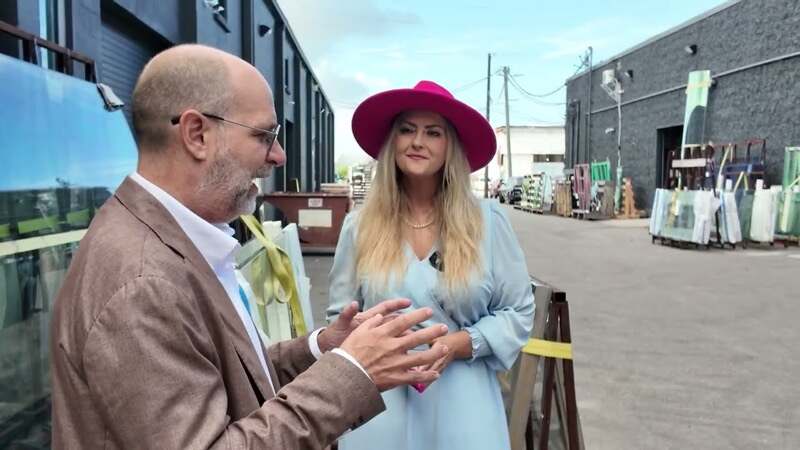
The first stop is the Faour Glass shop floor in Tampa, where 20 foot glass stands outside. Jason Quimby explains Slimpact, the company’s hurricane line. The glass walls have no visible framing, up and down or side to side. Hurricane glass is usually split into small panes by heavy frames, so this is a different look.
Hurricane glass at Faour Glass
Quimby says the technology can go up to 40 feet, but the largest size for the hurricane zone is 10 by 20. The company’s window walls, which run floor to ceiling one story at a time, range from 10 to 20 feet.
He also shows a pivot door. It turns on pins at the top and bottom instead of side hinges. The glass is triple laminated with SGP. Laminated glass is sheets bonded to a clear plastic layer, so it holds together when broken. SGP is a stiff type of that layer. He compares it to a Herculite style door, the all-glass kind seen at many shop entrances.
Anthony talks about a job on Sarasota Bay. It was a glass wall 24 feet wide and 11 feet tall in a bedroom. Standing there feels like being on the water. Renee Valdez says there are wind pressures the glass must meet in Florida. She says some conditions call for a stronger glass. Wind pressure is the push and pull wind puts on a window.
Asked what he wants from GlassBuild, Ralph says he wants to see what is new and coming next.
Bifold or slider at ES Windows
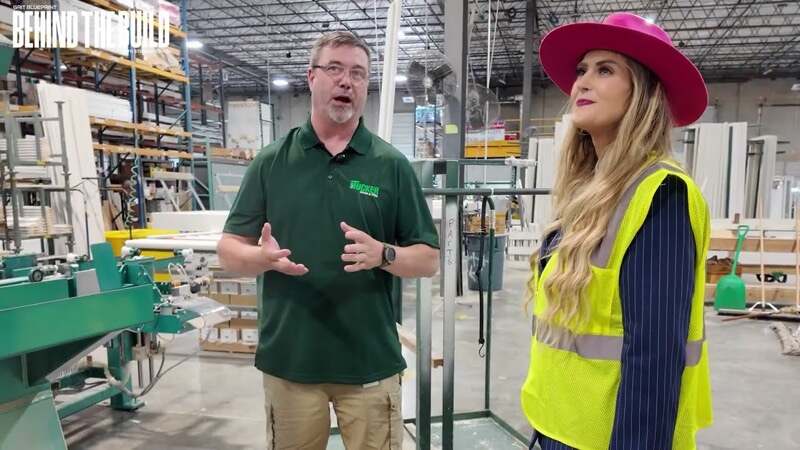
In Miami, Jack Redden walks the ES Windows showroom. A big view calls for narrow sight lines, which means less aluminum framing in the way. He starts with the BF 5010 T, a bifolding door system. Bifold panels fold against each other like an accordion to open a whole wall.
Redding asks what the T stands for, and the answer is thermally broken. A thermal break is a strip of material inside the aluminum frame that slows heat moving through the metal.
Then he compares it with a sliding glass door. Each pair of sliding panels needs its own track. So a 10 panel slider needs five tracks, and the frame can get 13 inches deep. That matters in Florida, where many homes have block walls with only so much room.
The bifold goes up to 16 panels wide. Redding also shows the 2020 sliding door, which has a thermally broken 2020 T version. It allows 60 square feet per panel and up to 10 panels. With five panels sliding each way into wall pockets, the whole back of a house can open to the outside. A pocket is a hollow space in the wall where a panel slides out of sight.
Why the trade show matters
Redding says the National Glass Association brings a lot of education tools, and he is a big fan of trade shows. A show puts new products in front of the people who influence projects. He notes that GlassBuild leans commercial, so ES Windows will show curtain wall and window wall systems there. A curtain wall is a glass skin hung on the outside of a building’s frame.
One machine, many steps at Oz Machine
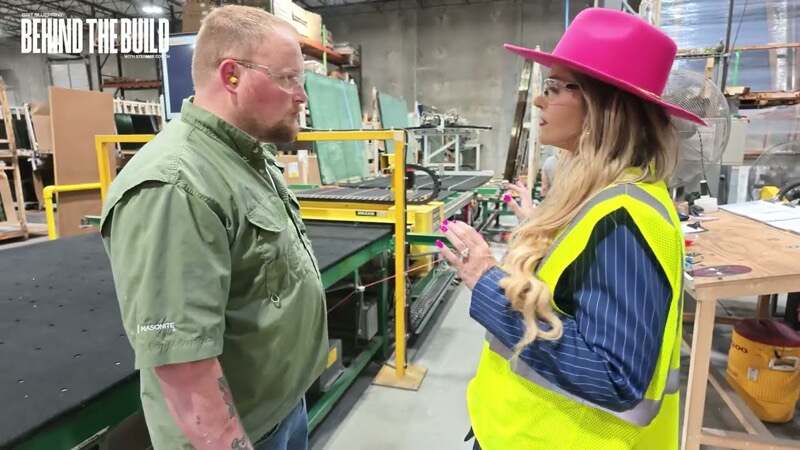
The last stop is Oz Machine in Miami, which builds equipment for fabricators. Fabricators are the shops that cut and assemble window and door frames. The machine on the floor is a cutting and machining center. Machining means drilling, milling, and notching the metal profiles for hardware.
For GlassBuild, the team plans to bring a double head saw, single saws, and a machine for frame machining. They like the show because fabricators can find machines, profiles, and hardware in one place. GlassBuild 2025 runs November 4 to 6 in Orlando.
What To Do With This
Learn What the T Means
On ES Windows model names such as the 2020 T, the T stands for thermally broken. Look for it when you read a product name or a quote.
Check Frame Depth Before You Quote
On a multi-panel sliding door, count the tracks and compare the frame depth with the wall it has to fit. If the wall cannot take it, look at a bifolding system.
Do the Panel Math
Take the square foot limit per panel and divide by the height to get the widest panel. Redding's example: 60 square feet at 12 feet tall gives a 5 foot wide panel.
Ask About Wind Pressure First
Renee Valdez says different conditions require a stronger glass. Ask your glass supplier or local building department what your job needs.
Plain English
- jumbo
- Slimpact's name for its 10 by 20 module, made of four plies of half-inch glass and weighing 5,000 pounds per panel.
- frame depth
- How deep a door's track frame is in the wall; on a sliding glass door it grows as tracks are added.
Questions this video answers
Should I quote a bifold or a sliding glass door for a wide opening?
Check the wall first. Jack Redden of ES Windows says a sliding door adds a track for every added pair of panels, so its frame can reach 13 inches deep. A bifold stays at a five inch frame depth no matter how many panels it has.
What does the T mean on ES Windows door models?
It stands for thermally broken. The aluminum frame has a break inside that slows heat moving through the metal. The BF 5010 T bifold and the 2020 T slider both carry it.
How large can a hurricane rated glass panel be?
At Faour Glass, Jason Quimby says the largest Slimpact size for the hurricane zone is 10 by 20. The technology can go up to 40 feet outside that zone. A 10 by 20 panel weighs 5,000 pounds.
What does a cutting and machining center do?
It cuts and machines window and door profiles in one station. Oz Machine says it does many operations at once, so the shop does not move parts between machines.
When and where is GlassBuild America 2025?
November 4 to 6 in Orlando, Florida. The companies in this video plan to show new products there, and ES Windows will focus on its commercial systems.