Click any timestamp to jump to that moment in the video.
Toolbox Vision: Quote, Order, Pay
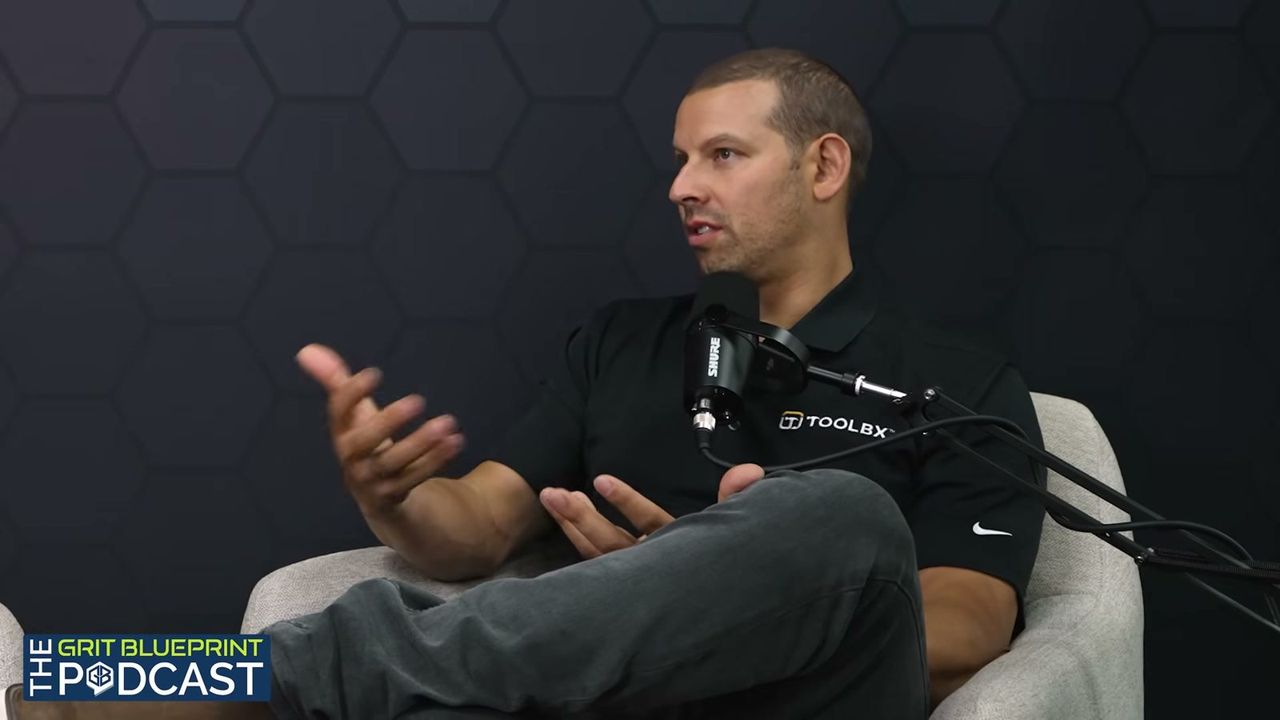
0:00 Erik Bornstein: We just create a digital toolbox so you can order, you can quote, and you can pay your bills really quickly digitally. We're fully integrated with all the major ERP systems. So quotes ordering and messaging all verticalized in one platform.
0:14 Stefanie Couch: There is a lot of competition out there and they have billions of dollars to spend on technology. So this levels the playing field and people can use this as leverage.
0:22 Erik Bornstein: We're really here to arm the dealer with a world-class technology team. We have over 30 engineers on staff. We've recruited some of the best engineers from Shopify, Facebook, Uber, and Amazon all working towards the same goal. I don't get excited when we just sell a dealer software. I get excited when they come up to me a month later and say, we've reduced our DSO by 20%. Thank you.
0:47 Stefanie Couch: I spent a lot of time when I was young running my dad's lumberyard in the car, meeting people at gas stations, getting checks. It would have been nice to be like, just put that into Toolbox. Welcome to the Grit Blueprint Podcast, the playbook for building unmistakable brands that grow, lead, and last in the built world. I'm Stephanie Couch, the founder of Grit Blueprint, and I'm a lifelong building industry insider. I was raised here, built my career here, and now my team and I help others win here.
Show Intro and Host Setup
1:21 Stefanie Couch: The truth is, you can be the best option in your space and still lose to someone else who simply shows up better and more consistently. Each week on the Grip Blueprint, I'm going to show you how to stand out, earn trust, and turn your brand into a competitive advantage that lasts. If you're ready to be seen, known, chosen, and become unmistakable, you're in the right place. Let's get started.
Partnership with Do it Best
1:51 Stefanie Couch: Welcome to the Grip Blueprint Podcast. I am your host, Stephanie Couch, and today I am here with Eric Bornstein from Toolbox. You're the CEO of an amazing tech platform that's taking our building industry by storm in the best way. Welcome to the show.
2:06 Erik Bornstein: Thanks for having me, Steph. Super excited to be here.
2:08 Stefanie Couch: Yeah, and we are actually accelerating a big partnership that you just started with Do It Best Group LBM. This week they announced that you guys are here at Market partnering with them to help their LBM dealers use technology to get paid quicker, to do all of the things that the pro wants in a lumber business.
2:27 Erik Bornstein: Yeah, I mean, do it best has been a great journey so far. And uh we're super excited to work with the different executives, particularly on the lumber side and also some of the dealers that we're already working with. Do it best doesn't bring anybody in easy. So we really had to execute on a few members' platforms before they even considered us, and we're just super excited to bring a lot of value to the dealers.
2:50 Stefanie Couch: Absolutely. You and your team are here, and it's really cool for me to see because I love technology in our industry, but sometimes it feels like the people who come up with this technology, they don't understand our business, but that is not you because you've got chops, you have 15 years of experience as a contractor. So tell me a little bit about how you got started there and what led you to create Toolbox.
Eric’s Contractor Background
3:14 Erik Bornstein: Yeah. So I mean, I started construction when I was literally 16 years old, sweeping job sites and worked my way up as a framer, as a site super, as a project manager, and eventually uh became an owner in my own construction business. And we scaled up that company very much like a startup. So we grew it to about a hundred employees in less than a five-year period. And we were doing, you know, single family customs, five million up to about 20 million. Yeah. And um, you know, the the partners and I were doing a lot of the project management ourselves.
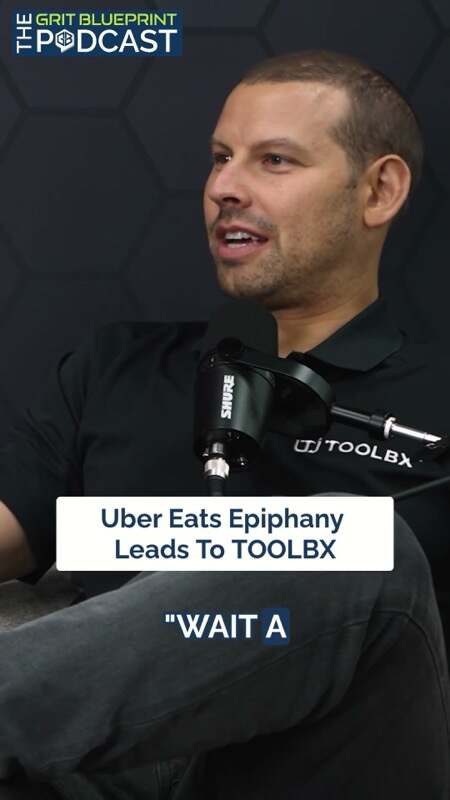
3:48 Erik Bornstein: We had a lot of employees, we had site people, but it was literally a moment where when I came in, I was working at my desk, and I just had a stack of invoices on my desk. And for me to save time, I needed to eat. And so I whipped out my phone, I opened up Uber Eats, and I'm like, wait a second, like, why can't I do this type of thing with my lumber yard? Why can't I go in and pay my bills really quickly?
Origin Story: AR and Uber Eats Moment
4:13 Erik Bornstein: Why can't I go get my receipts? And my accounting team was always asking me to call my suppliers to get my receipts faster. So that was really the premise of the word toolbox. Hey, can we just create a digital toolbox so you can order, you can quote, and you can pay your bills really quickly digitally?
4:31 Stefanie Couch: Yeah, and you absolutely have solved the problem that a lot of dealers have had, which is getting paid as fast as you possibly can. Yeah. It's very important. But you were also mentioning earlier to me that it's not just the dealer that benefits from that, because a lot of people are cost plus contractors. So, how does that actually affect the contractor when they can get paid easier by doing toolboxes AR programs?
4:55 Erik Bornstein: Yeah, absolutely. I mean, it allows the pro to get paid faster. So the faster the pro can get invoices from their supplier or their trade, the faster they can get paid. You know, typically we were cost plus, so we would our percentages were based on how much we build. Uh, every builder's a little bit different, but but typically you want to get those billing packages out every single month, especially for a custom home. And if you're getting invoices in at the end of the month or even a little bit late, it's gonna miss that billing package.
5:25 Erik Bornstein: That's the reason why a lot of the AR uh extends past 30 days, is not necessarily because the builder doesn't want to pay, it's that we didn't get the invoices in time fast enough. We couldn't invoice our clients fast enough, and now you're you're dealing with like 45 days before the package comes in.
Why Faster Invoices Reduce DSO
5:43 Stefanie Couch: Yeah, everybody bleeds when that happens. It's not fun for anyone.
5:46 Erik Bornstein: Yeah.
5:46 Stefanie Couch: Well, I want to go back and double-click on something you said earlier. So you're talking about your days in the construction world. You've done a lot of different things, but you mentioned $20 million custom homes. That's hard for a lot of people to fathom. And I've gotten the chance to walk with some of my customers that do a lot of custom home furnishing, some very large homes. What is a $20 million home look like? And what was this maybe just a little detail on it where you were building?
6:12 Erik Bornstein: Yeah, so uh we were building in Toronto, Canada. Uh we became one of the largest custom home builders and really became one of the best. And, you know, this is just a value that that we we take into toolbox is just being very much customer driven. It was a mix of luck at the same time where we really approached all the top architects. We were already doing a bunch of big projects under our belt. And we said to the architects, we're really willing to do whatever it takes to get the job done, whether it's responding to calls at two in the morning, like we were literally doing that.
6:42 Erik Bornstein: And, you know, it's just the details. I'm very detail-oriented person. We're talking like full marble slabs, everything custom when it comes to the millwork, 12-foot ceilings, 12-foot doors, extended soffits, extended casings, skylights that are all built out of custom fabricated metal, Vetrosca type type windows that are over a million dollars. So very high-end suppliers, very high-end products, and high-end trades as well.
Building $20M Homes: Craft and Process
7:10 Stefanie Couch: Yeah. And like you said, what the customer thinks about what you're doing is all that matters there because their opinion is what is going to get the job done. How long does a job like that take from start to finish to finish a $20 million home?
7:23 Erik Bornstein: Yeah, I mean, it really depends on how organized the homeowner is when it comes to their product selections. And what we used to do is we used to build out a what we called a like a tender checklist where the homeowner, we give them all the dates that they have to have everything selected by. So we were really organized as a home builder and we were one of the early adopters of project management software, which helped a lot. But making sure that the selections were done very quickly, making sure we kept the architects and the designer accountable as well, which isn't always uh the case or the easiest, um, but really allowed the the jobs to go quicker.
7:59 Erik Bornstein: So anywhere between, I would say, 15 months on the low end to upwards of 24 months on the higher end.
8:07 Stefanie Couch: Yeah, but for a home that big with that much detail, it's still pretty quick.
8:10 Erik Bornstein: Yeah.
8:11 Stefanie Couch: Well, I want you to tell me a little bit about exactly what Toolbox is and what it does, because there's a lot of softwares out there, there's a lot of different tech words. But because you're serving our industry and you understand it, I know you built a solution that solved a lot of your problems. So tell me exactly what this tool does.
8:28 Erik Bornstein: I'd say that the biggest feature of our tool is an AR customer account portal for builders. So we create a profile on the Lumber Yards website where the builder can log in, they can get their pricing, they can see all their invoices, they can see their statements, they can see their pricing with their ordering and their quoting, and they can pay all their bills online. Um, on the flip side, we give a tool to the dealer, and it's really a credit and AR collection tool where they can collect money a lot faster from their customers.
8:56 Stefanie Couch: Yeah, and like we said, cash flow is king. It's how a business, especially a smaller business, lives and dies. What about some of the other things? So I know that there's a lot of options with pros want special pricing, especially job pricing, custom pricing on things. How does that work in your platform?
What Toolbox Actually Does
9:12 Erik Bornstein: Yep. So we're fully integrated with all the major ERP systems. A credit account customer doesn't have to be a builder, it could be a credit account customer, can log in. They can get their specific pricing, they could build quotes with their pricing, they can send it to their customers. They can also place orders with their specific pricing. So quotes, ordering and messaging all verticalized in one platform.
9:33 Stefanie Couch: Yeah, and I like to work uh on the weekends and sometimes at weird hours, which many people in the building world do. It gives them the opportunity to do that on their own time when they have the moment to actually go on and do it. So if that's 11 p.m. or 5 a.m. where that lumber yard is closed, they can still do that.
9:52 Erik Bornstein: 26% of payments are happening on our platform after hours. Wow. Which is a pretty remarkable statistic that if you don't have 24-7 availability, you're just gonna be reducing the time that you're getting paid.
10:07 Stefanie Couch: Yeah. And a lot of times it is that they're just super busy. You have all the intention of calling or or running the check by or whatever you're doing, but you just don't get time. And then you turn around and it's 501, and no one's there to answer the phone. So I'd still rather have my money. So I think it's a really great idea. I spent a lot of time when I was young uh and running my dad's lumberyard in the car, meeting people at gas stations, getting checks.
10:29 Stefanie Couch: Uh, it would have been nice to be like, just put that into toolbox.
10:32 Erik Bornstein: Absolutely. And I'll I'll give you another example. And, you know, one of the reasons we started Toolbox, um, when we were scaling up our custom home business, we were growing our credit accounts at our lumberyard. And, you know, we had 30 sites going on at any given time. And it just so happened like that week we had like five or six projects all getting lumber at the same time. So we were hitting our credit limit really quickly. And I kind of got a call from a sales rep and he's like, or actually, it was my site super, and he's like, Hey, the lumber yard's not sending the product because we've hit the max on the account.
After-Hours Payments and 24/7 Access
11:06 Erik Bornstein: And I had to call his manager and say, Listen, like, I'm in a customer meeting, I can't like physically pay you right now. And he's like, Well, I just need a check. And I'm like, Well, how do I get a check to you that quickly? I've got trades on site. Yeah. And I was like, if there was a way that I can go in and pay online, this would just be game changing. And so that was another sort of inspiration to the platform that we've created today.
11:31 Stefanie Couch: This episode of the Grit Blueprint Podcast was sponsored by Do It Best Group. Do It Best Group is the largest co-op in the world, and they help independent hardware and lumber yards all over North America win. Do It Best offers services, products, and people that can help you win long term. They are the champion of independence.
11:54 Stefanie Couch: So, what are some of the other big problems that this is solving for the pro or for the dealer?
11:59 Erik Bornstein: Yeah, so I'll start with the dealer collection. So we can automate the collection process where they can send out automated text reminders, they can send out text messages to pay, which is a huge increase in easability with the way they pay. So text-based payments, ACH credit card, we can add convenience fees if they want. On the builder side, it's the ability to pay 24-7, seven days a week, save all your credit card or ACH information. That's nice. So you could just literally click a button. Uh, you don't have to be on your phone remembering, you know, routing numbers and and making making mistakes.
Hitting Credit Limits and Paying Online
12:37 Erik Bornstein: Yeah, absolutely. Yeah.
12:39 Stefanie Couch: Okay, what else does it solve?
12:41 Erik Bornstein: So it also solves the ability to um, you know, place orders after hours, get full visibility on uh reordering of material and creating lists. So I'll give you an example. When when I was building, um, I micromanaged a lot, not something I do in in the toolbox business, but I would always like send my team reminders like winter's coming, you got to make sure you've got some extra tarps. It's gonna be really cold. You got to get these different products. And so I was always sending reminders of, hey, this is gonna happen.
Sponsor: Do it Best Group
13:13 Erik Bornstein: Are you prepared? Do you have the right materials on site? With toolbox, where you know, the dealer is able to create lists for their builders. Hey, you know, we've fall is coming or winter's coming, you can follow the seasons. Here's our specific list of products that you can order to get your job site prepared. So kind of taking the dealer and turning them into a bit of a consultant in terms of, hey, this is what you need and really helping the builder, it's just going to create a lot more loyalty for that dealer.
Automating Collections and Text-to-Pay
13:42 Stefanie Couch: Yeah. And I think the ability to help people upsell their contractors in a way they want to be upsold, they often don't know about products. They don't know what's out there, they don't know what would be a good available option to upsell. So you're helping people do that. This sounds like a great product for the pro, but what does it do for the dealer?
14:00 Erik Bornstein: The dealer should be getting um more quotes more often. Uh, the amount of like net new quotes that they they've gotten, whether it's a house package or a material list, the ability to be discovered on the products that that you carry. I'll give you an example. When we were building, there were two types of air barriers. There was Tyvek and Typar. You know, now builders and trades and contractors, even homeowners, they go to IBS every year and they go and see all the thousands of products that are out there, whether it's new windows, new doors, new hardware, new air barriers, new exterior wood systems.
14:38 Erik Bornstein: How does a builder know that this is what you carry? So we help getting all that product online and we take it a step further where then the builder can actually see their pricing associated with that. So instead of always calling the sales rep, and you know, a lot of the times the sales rep isn't fully up to speed as well. So just having all that at your fingertips can really accelerate the back and forth communication that leads to slow, slow jobs.
Seasonal Lists, Reordering, and Upsell
15:04 Stefanie Couch: Yeah. And then also that customer service that really is world class, that's how you keep builders coming back for years to come.
15:10 Erik Bornstein: Absolutely. You're really educating builders on what's out there, what's in the market. Um, how do you install these things? Um there's just a big lack of knowledge that that is just getting lost because of all the selections that are out there.
15:25 Stefanie Couch: Yeah, certainly. Sometimes technology can seem overwhelming to people who are already busy and already have a lot of systems. One of the things that I want to go back to and just mention is you are completely integrated with ERPs. You have a great out-of-the-box solution that works with all of the major ERPs. Can you tell me just a little bit more about that?
15:45 Erik Bornstein: Yep. So we integrate with all the major ERPs. Because we work with so many dealers, we've gotten to know a lot of the nuances and different um sort of workflows within their business. And we've created the system around those workflows and made it pretty seamless to integrate.
16:03 Stefanie Couch: So you're here with do it best. You guys have a partnership for do it best dealers that are out there listening to this. How do they get started? And what kind of work are you doing with do it best that you might want to talk about already that's working?
Product Discovery and Pricing Transparency
16:16 Erik Bornstein: Yeah. So we just make it really easy to work together. We're at the show, we're doing demos. You know, it really comes down to what do you want out of the part? Like, what do you want out of the software? Um, you know, do you just want to get bills paid or do you want to get into the quoting and the ordering as well? We can we can provide both. So with do it best, you get preferred pricing. We've we've really tried hard to make it a lot more affordable, especially for a smaller dealer.
16:43 Erik Bornstein: We make it so you don't have to hire a huge team. You can use internal team members to to operate the system. And we've made the system really easy to use and easy to onboard. We have a whole onboarding team. We can typically get dealers onboarded in in less than six weeks. And then we also guide them through um how to get their customers adopted. So I don't get excited when we just sell a dealer software. I get excited when they come up to me a month later and say, we've reduced our DSO by 20%.
17:16 Erik Bornstein: Thank you. That just makes us feel great about what we're doing and really helping the independent and the dealer compete against, you know, the big box and the big players out there.
ERP Integrations and Easy Onboarding
17:25 Stefanie Couch: Yeah, and there is a lot of competition out there, and they have billions of dollars to spend on technology. So this levels the playing field, and people can use this as leverage to optimize things that people are already asking for that the pro needs and the big box may already have. So one of the things that we talked about is a lot of people don't realize that some of the people have a pro portal. Can you talk a little bit about that?
17:47 Erik Bornstein: We consider ourselves kind of like the outsourced RD team. So we're we're always seeing what's out there. We look at BFS, we look at QXO, we look at Home Depot's Pro Portal, uh, we look at Lowe's. You know, all these companies are going after the independence. Yeah. And so we're really here to arm the dealer with a world-class technology team. We have over 30 engineers on staff. Everything is built in-house. We don't outsource anything. We have some of the, you know, we've recruited some of the best engineers from Shopify, Facebook, Uber, um, and Amazon, all working towards the same goal.
18:25 Erik Bornstein: And uh, I think that's really our superpower, just how fast we can build new features, how fast we can integrate. And and we just we understand the builder and we understand the supplier. And we love visiting the suppliers as well. We learn something every time.
Competing with Big-Box Pro Portals
18:39 Stefanie Couch: Absolutely. Well, I'm excited for what you're doing in the industry. I love innovation and technology when it works and when it's simple, it's even better. And what your offering is. So thank you so much for telling me all about this. And I'm excited to be a part of a small part of your blast into the market here at Do It Best. And we're gonna talk tomorrow at another event about this. And I know that these dealers are gonna be excited once they see what this can do.
19:02 Stefanie Couch: So thank you so much for spending some time with me and joining me on the grit blueprint.
19:06 Erik Bornstein: Yeah, thanks so much for having me, Stephanie. It's been a pleasure.
19:08 Stefanie Couch: Absolutely. Thank you for listening to the Grit Blueprint podcast. If this episode helped you think a little differently about how to show up, share it with someone in your building world who needs it. If you're ready to turn visibility into growth, then head to gritblueprint.com to learn more and book a call to talk to us about your growth strategy. Until next time, stay unmistakable.