Click any timestamp to jump to that moment in the video.
Introducing Katy Devlin
0:01 Stefanie Couch: Welcome to the Grant Blueprint Podcast. This podcast is about branding, full data, and business. It also highlights the grit that takes to be successful in business and life. Let's get started. Hi, and welcome to the Grit Blueprint
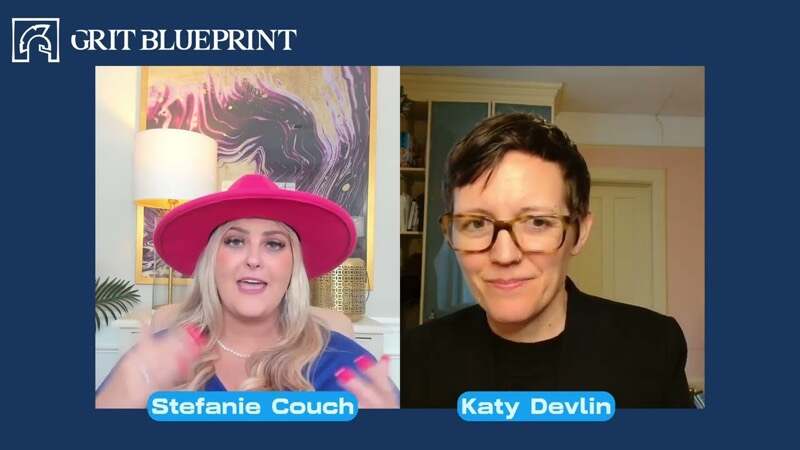
0:28 Stefanie Couch: podcast with Stefanie Couch. Today I'm excited to be joined by my friend Katie Devlin. Welcome, Katie. Oh, thank you so much, Stefanie. Thank you for being here. And we are excited to talk a little bit about the amazing things that you're doing in the glass industry. And we have some common friends and we met at Glassville where I spoke. You had me there to speak at a women's event. And we are just really excited to get to know you a little bit more today and ask some questions about all the amazing things you're doing and have been doing in your career.
0:59 Stefanie Couch: So I will first let you start off. Tell me a little bit about who you are, what you're doing, and how you got to where you are today in this amazing industry.
From Intern to NGA Content Director
1:09 Katy Devlin: Yeah, well, thank you so much for having me, Stefanie. It's great to see you. It's been really fun to uh work with you, you know, since glass builds. Um so I have been in the glass industry since I was in college. Uh I was 21 years old. I needed an internship. I was a journalism major, and there was this uh random little ad for Glass magazine out there. And I thought, okay, well, this will be six months. I'll just uh work this internship. And 20 years later, I like to say I'm the longest running intern in the glass industry.
1:42 Katy Devlin: Uh but you know, Glass Magazine is part of the National Glass Association, where one of uh the association's two publications. The other is window and door. Um, glass covers, you know, the whole architectural glass segment, um, everything from you know the folks that actually take the sand and make it into glass uh through the fabricators, um, all the suppliers that make that possible, um, going down to the contract lasers, the glass shops, um, you know, the folks who are in the field doing that amazing work and actualizing these spaces.
2:12 Katy Devlin: Um, so I I joined as an intern. They hired me on as a writer, and I have spent the last couple of decades just uh growing in my role there, and I'm currently the content director of the NGA. So I'm in charge of the magazines uh as well as the content for our big events like like Glassbuild.
2:31 Stefanie Couch: Yeah, and I was shocked. I truly had never seen anything quite like Glassbuild. I've been to a lot of shows, but I don't know what I expected. But 8,000 people and what I saw were what's not in my mind. So it's an amazing event, and I know that you've had a big hand in making it into what it is today. Tell a little bit more about how that event, you know, what what is Glassbuild? And I know we're about to go to another amazing event, BEC.
2:56 Stefanie Couch: Talk a little bit about what those events do for the industry and what the purpose is and what people are getting because I think it's a really cool thing that y'all are doing.
What GlassBuild Is
3:05 Katy Devlin: Yeah, I mean, Glassbuild is the industry's gathering place, right? It's it's the one uh it's it's the largest North American glass and fenestration uh industry event. 8,000 people, that's a heck of a lot of folks who care about glass, glazing, uh, windows, doors, you know, and we all come together and we can put on our glass nerd hats and really, you know, uh solutions share. We can see what's coming from the exhibitors. The technologies are amazing. You you asked about that a little later on. Um uh I mean it's it's just the place where you can learn, where you connect, where you can grow.
3:43 Katy Devlin: Um, you have you have to be there if you're in glass. Um,
3:47 Stefanie Couch: absolutely.
3:48 Katy Devlin: So that's been
3:50 Stefanie Couch: technology was crazy to me. Like when I walked through and saw these huge machines that are set up on the floor. Um, you know, some of them were like 50, 60 feet long, I think. It was very impressive. I was like, holy cow, this is such an amazing setup to learn from. I was actually really intrigued by the machinery, so it's pretty cool.
4:08 Katy Devlin: It is amazing, right? You know, you it's uh it's a special thing to get into a glass plant or any plant and see
4:15 Stefanie Couch: how
4:16 Katy Devlin: things work. But uh, you know, come to Glass Build and you can see it on the floor. You can see the uh insulating lines just running right in front of you, the robots that are lifting up lights and moving them from one place to another. It's exciting.
4:30 Stefanie Couch: Yeah, it is for sure. Well, I know that you have obviously been a woman in this industry for a long time now, and we're all working to get more women in this industry and other diverse groups. And I know NGA has a lot of things they're doing to really move forward that mission. Talk to me a little bit about that. And what would you say to young women that want to maybe explore whether it's glass or some other type of industry in this construction space? What would you say to them as a word of advice?
Women in Glass and Finding Mentors
5:03 Katy Devlin: Yeah, I mean, the glass industry, the construction industry, manufacturing industry, fenestration industry, these are all male-dominated businesses. Um and, you know, and we're in the middle of a labor labor crisis. Yeah. We have a huge uh pool of folks who just don't even realize that there are incredible opportunities for them uh in these businesses. Um so I think, you know, I've been really lucky being at the NGA. NGA is led primarily, I think we've got uh women in almost all of our leadership roles. Um it I have always had just incredible women mentors um to work with at the NGA.
5:47 Katy Devlin: And so even in the midst of this male-dominated industry, I feel like I've I've had a niche and I've really been able to learn from women in the field. Um, you ask about um our sort of NGA's mission in this. I I think it's what we've been trying to do at the Women in Glass and Fenestration event at Glassbuild and then at BEC is just to show that women are thriving and and um leading this in so many ways in the glass and fenestration industry. Um, if you can see it, you can be it.
6:22 Katy Devlin: Um and I truly believe, I mean, that's what you're doing with uh with your work is just you know, showing the next generation that this is possible. Um
6:33 Stefanie Couch: when I was in corporate, I remember, you know, some of the women that I would see out either on on an event or in a magazine or whatever it was, and it really was that moment in your brain where you think, okay, because she did, I also can.
6:49 Katy Devlin: Yeah.
6:49 Stefanie Couch: And the more people that can do that and we can showcase they are doing it and making amazing work out of it and thriving, then the better off we are as a group. And really as an industry, because it's been proven, I mean, we need, like you said, there's this giant labor shortage. It's not a nice to have anymore. It's a must-have. We have to fill those gaps and it will be filled the way we've traditionally done it.
7:12 Katy Devlin: Yep. Yeah, no, I totally agree.
7:15 Stefanie Couch: Yeah.
7:15 Katy Devlin: Yeah. So that's that's been amazing. Um let's see, you asked about advice for young women or uh, you know, new entrants into the industry. Um, I think find a mentor. Have you have you had some amazing you must have had some amazing mentors.
7:34 Stefanie Couch: I did. I had a few uh one woman that was a very strong mentor for me throughout my uh last few years of my career that was very high up in the company and she was in a different segment of the business, so kind of saw things differently than I did. That actually really helped.
7:49 Katy Devlin: Yeah, I I think find folks who you admire and who you want to work with. Um, I think I have I've been surprised at the response when you just asked the question. You know, um, I think uh the question, you know, can you tell me what your day-to-day is like? What's your job like? How did you get here? You know, this exact conversation that we're having uh really normalizes that process. Um and to have someone who just who knows that you are curious, who knows that you are looking to grow, um, you suddenly have an ally in in one space and then in another.
8:26 Katy Devlin: And um that's pretty it's pretty tremendous. Um Nicole Harris is the president and CEO of the NGA, and she uh I've worked with her pretty closely throughout my entire career, but I just feel so grateful for all of the you know, the conversations we've been able to have just about um everything from you know issues that a glazer might face, you know, the way she's been able to help me uh untangle some of that too, um, to just how to lead a team, you know, personnel management questions.
9:00 Katy Devlin: Um uh it's so important to have someone that you can talk to.
9:05 Stefanie Couch: Yeah. And I think one important thing that I want to point out is obviously we're two women talking about women in construction, but there are a lot of amazing mentors and supporters and allies that I've had that have been males. And we can't discount that. You know, it is great to have a female mentor, and I think you need more than one, most likely. And depending on where you are in your career, there may not be a female. There were a lot of times that I there was no one I could have asked that would have been in my job or in my place that I was working, those types of things that were females.
9:35 Stefanie Couch: So I had male allies and sponsors that helped me and mentored me, and that is important too. You've got to have a well-rounded group of people. So don't sleep on that as women in construction because they may know enough to help you get exactly where you want to go, and you don't have to, you know, worry about the fact that they're a man. So, men and women, we need everybody to get us to where we need to go as women in the next step. And I think that's an important thing, and we don't want to lose sight of that.
10:04 Stefanie Couch: But it is always very powerful to have a woman that, like you said, that has done it and you can ask exactly how they did it. So sometimes I think that challenge, like where are the landmines, right? What can I know that I don't need to go do based on what you've seen or learned? And boy, I would tell my 25-year-old self some stories like don't just you know, maybe just say that a little different or ask the question different. So I think the challenge part is important too.
10:30 Stefanie Couch: I love that. Well, speaking of challenges, tell me about a specific challenge that maybe you have faced being a woman in a male-dominated industry, like the glass and penetration industry, and how you've overcome that. I know I'm sure as a young out-of-college student to now, there have been lots of challenges in your career. Tell me about some of those and how you've overcome them.
Getting Taken Seriously Early On
10:52 Katy Devlin: Yeah, I think it is so easy for women to be discounted, especially young women. Um, I have, I'm, I think I'm a familiar enough face in a lot of the um a lot of our events now. Um folks have seen me in the magazine for a while, so so they know who I am. But when I was starting out walking up to to booths, you know, kind of doing hold calls, whatever it might be, it was it was tough to be taken seriously. Um and I think the advice that I would give to my you know 22, 23-year-old self who's doing that would just be to, you know, keep going
11:34 Stefanie Couch: and
11:36 Katy Devlin: uh, you know, be prepared, know your questions, uh, but also know it's not really about you. Um people just uh they they've got a a sense of who you are when you walk up to them and um you can prove them wrong.
11:49 Stefanie Couch: Yeah, that's a great piece of advice. And that don't quit piece. It applies to everything in life because you're gonna really stink at stuff when you start. I mean,
11:58 Katy Devlin: you
11:58 Stefanie Couch: know, I think a lot of us we think we know, like what I know when I got out of college, it was like ready to go set the world on fire. And there are a lot of lessons that came after between here and now, and I'm sure there will be a lot more after this, but
12:09 Katy Devlin: yeah,
12:10 Stefanie Couch: it's knowing that you're not gonna be good at probably that first call call or that first, you know, ask that you make of some big person up the chain, but you got to keep doing it, and the more you do it, the more confidence and courage that you have towards that the next time. So it's great advice to just like don't give up and y'all love that. And and it's funny because a lot of times that's the thing we want that quick uh win, you know,
12:36 Katy Devlin: and
12:36 Stefanie Couch: we do give up because we didn't win thinking, well, I'm not good at this, but of course you aren't, you've never done it before. So how would you be good, you know?
12:45 Katy Devlin: Yeah, yeah.
12:47 Stefanie Couch: Well, the next thing we want to talk about is a trend that is up and coming, it's technology everywhere we look. AI is a topic that we're gonna be speaking about at BEC, which I'm very excited to talk to this audience about. And I know you see a lot of emerging trends because you're writing about them, you're hearing about them. What are you seeing today, whether it's in glass and penetration or just in general in the industry that's exciting to you? And how do you think those trends are gonna change our world out outlook and how we do business in this industry?
AI as a Tool for the Business
13:17 Katy Devlin: I mean, I think we are in the midst of a pretty massive transformation and how we do business. Um, I am so excited to hear your talk at BEC. Uh, if I don't know when this is gonna drop, but uh it'll be still time. Uh get yourself to Nashville, uh, folks. This is gonna be a really fun event for uh for the glass industry. Um and uh and yeah, we're gonna hear a phenomenal keynote on AI and how to use that in your business. Um
13:49 Stefanie Couch: excited about it.
13:50 Katy Devlin: So I I mean, I would start there. I think that is one trend that we all need to be watching. Who knows exactly how I think this entire year the narrative has been like AI is coming for you. And I think the way that you and I have chatted about it is like AI is a tool that can really make your business uh the the work that you're putting out, it can really give you a nice boost. Um it's not necessary necessarily the doom and gloom.
14:21 Katy Devlin: Who knows? You know, maybe in five years we'll
14:23 Stefanie Couch: yeah, we maybe all or maybe somebody's mad because I told them how to use Chat GPT. But I think it's it's sort of like internet type thing where it came and everybody's kind of unsure, and then there was a real shift where it was like, okay, this is here to stay.
14:38 Katy Devlin: It's
14:38 Stefanie Couch: not gonna be something we can live without. Let's throw our fax machine away or at least put it in the back closet and and see what happens with this computer stuff. So
14:47 Katy Devlin: I
14:48 Stefanie Couch: definitely feel like it's there. Yeah. And you know, I feel like the machinery, the automation, all of the things that we can do. It's like automation and AI are not the same thing, but they sort of are looped in together. And I think that's gonna be huge too, because I'm even seeing, you know, like we're creating a CRM, some of the automations that can be done with that, where you know, automated follow-ups and automated, you know, information from DMs from an Instagram or things like that that you're capturing without a human having to go grab that, it's huge because
15:19 Katy Devlin: there's
15:19 Stefanie Couch: only so many people to go around with this labor shortage, it's only gonna get worse. So the technology is a good, like you said, tool to really get you to where you want to go.
Automation, Labor and Safer Glass Handling
15:47 Katy Devlin: Yeah, and we've you know, we've seen this in our world history. The, you know, the industrial revolution changed everything. Uh, and and it's not that people didn't work, we just did very different work. So I think uh it's good for everybody to be uh incredibly aware of of what's out there, but you know, don't get spooked. Um but then looking at um other technologies, I'm glad you mentioned automation. I think our industry is uh it's notorious for being a bit slow to adopt, particularly on the fabrication manufacturing side of things.
16:05 Katy Devlin: Um, we've had automated solutions for a while, but most companies that have adopted something, glass fabricators, it's kind of an island of automation. They bought one machine. Uh, this is a big investment and it does require uh a lot of um time to incorporate it in a way that it's gonna help you. I mean, it's like everything. You know, if you just when I got my first iPhone, I I probably used about you know two percent of its capabilities. It just was like you just don't even know, and then you slowly learn, and probably now I'm at about 10%, but we get there.
16:40 Stefanie Couch: Do with it.
16:41 Katy Devlin: Yep, you know, my my toddler will know more than I do in about two years about what to do. Um so I yeah, I think automation is the labor shortage will make this a must-have for a lot of companies to incorporate. Um right following G uh right after BEC in Nashville, we have NGA's G Pad event. So BEC um ends uh at noon and then at two, we've got a a day and a half event dedicated to the glass fabricators, and that is all of the the uh solutions providers, the machinery folks coming together and answering um kind of the top questions from the glass fabricators,
17:21 Stefanie Couch: yeah,
17:21 Katy Devlin: fully focused on automation. Um and we also have um actually an AI, you know, how might AI impact glass manufacturing? That'll be a talk there. So it will marry very nicely with what we've got going on at the BEC.
17:36 Stefanie Couch: I think it's gonna be interesting to see how they adopt that, like you said, when it becomes a little more mainstream because these are these machines, they do, they come out, you know. I worked in door manufacturing for a long time, so I'm very aware we would buy these huge machines that were very expensive, and you still had to have people around, you know, but maybe you had four people instead of 15 people, you know, working the line. And you're not sure is this really worth it until, like you said, you figure out the 10% on the iPhone, and then even then, are you using it to its full extent?
18:10 Stefanie Couch: So I think the more we know, and the more people that start talking about, oh, well, I did change this in the first few weeks was a little rocky because I wasn't sure. And now our capacity has gone up to X, and we're producing and making so much more with so many, you know, fewer people or whatever it is, that's huge because if you can't find people to run at capacity, full capacity, but then you can automate half of it and only have to have 50% of the people.
18:34 Stefanie Couch: It's not like people are losing their jobs, you can't find people to fill those jobs. So that's the biggest thing. I think it's gonna be huge in the next two to three years, and AI will be a part of that and will be doing things with automation and AI, I'm sure. But it's coming and I think people are adopting it quicker. I'm seeing a lot more automation in the door machines, but I was actually in a door shop yesterday taking some pictures of for some clients, and uh, I was with someone that's never walked a door shop before, and he said, Can this not all be automated?
19:05 Stefanie Couch: And I kind of just laughed. And I'm like, Well, like parts of it can be, um, but it's just not how it works today. So
19:12 Katy Devlin: that's a
19:13 Stefanie Couch: good question.
19:14 Katy Devlin: Yeah. Yeah. So I'm I'm excited for that. I think also with automation, you're again focusing on people is um solutions for handling that are safer, uh, and and really even out who can do a lot of these roles. Like there was a time when you know you would need just people were doing everything by hand, and that's just not the case. Um,
19:39 Stefanie Couch: which
19:40 Katy Devlin: then opens up these roles to so many different types of bodies. It's um, you know, it becomes possible for uh a lot more folks to do a job well. Um
19:51 Stefanie Couch: that's a big deal when you can go from two percent or twenty percent of the people can do this to 50 or 75 percent. That's a that's huge.
19:59 Katy Devlin: Yeah. And they and they're doing it safer, you know. I mean, there are a lot of um at at Glassfield, we have a glazing executives forum. Um, it's kind of a smaller conference for uh executives of glazing firms, but we had a great panel up there of folks who supply handling equipment, uh, you know, those little mini cranes or even just tiny tiny lifters. Um and much of the conversation was about how the job of a glazer, you know, 10, 20 years ago, 30 years ago, that that those folks might not be able to work after 45.
20:34 Katy Devlin: They just their bodies can't get backs, arms, yeah, you know, just repetitive stress injuries from handling these massive um lights that have only gotten bigger. Um, you know, glasses are so much heavier um than it used to be just because it's triple glazed or it's a larger size. Um so you know, we need these solutions to keep people safe, uh, to keep the workforce we have and to uh make sure more people can do the job.
21:04 Stefanie Couch: Yeah, absolutely. That's awesome. Well, let's move into professional development. I know that you obviously focus a lot on having other people around you, you know, mentoring you. We talked about that. We talked about conferences where you have people learning and doing all these amazing things. What do you think that success is defined by for you at this point in your career? I know you've done a lot of professional move movement in your career upwards, and you're in a great spot now as a content director. What does success look like to you today?
Success and Glass Can Save the World
21:36 Katy Devlin: So I I really mulled over this question when I saw it. Um, I think for me, success, number one, is feeling invigorated about what I'm doing every day. I need to have a role that allows me to be creative, that allows me to stretch, um, to come up with an idea and to know that there is an open ear for that idea on the other side. And um I I think that that is so validating for anybody who's you know and and that has been the case since I was an intern.
22:09 Katy Devlin: Um it's part of the culture of the NGA and it allows us to to sort of launch events like Women in Glass and Fenestration that came out of, you know, our our friend Mel. It was her idea to just get all the women together for a photo op. And and two years later, we've got a whole um event that
22:27 Stefanie Couch: is, you
22:28 Katy Devlin: know, up at a packed stage at Glass Build. Um, so that feels really, it's not just validating it. I mean, it just really makes you feel like you're doing something uh exciting for yourself, but it's exciting for the industry and the association. Um, so that's number one. Number two is uh in in everything I do, I want to make sure that it aligns with sort of my moral and ethical framework looking at the world. Um, and I think our industry has tremendous potential to do good.
23:02 Katy Devlin: Um just two years ago, uh 2022 was the International Year of Glass. I don't know if you knew that.
23:10 Stefanie Couch: I didn't know that.
23:11 Katy Devlin: Yeah, the United Nations uh proclaimed it the International Year of Glass. And um, as part of that effort, you know, we at the NGA and and a lot of our partner companies were given the platform to say what glass can do. And our tagline at the NGA was glass can save the world. And I I truly believe that, you know, the climate crisis is probably the biggest challenge facing uh facing the world right now. And um a major intervention is the built environment. Buildings consume, I think it's 40% of uh of or they're creating 40% of our greenhouse gas emissions.
23:53 Katy Devlin: 40%. Like if we can if we can address the way that we build buildings, uh we can make a massive impact on our um our emissions. And obviously the equation is pretty complex, but the glass industry is part of this and it's part of the solution. I'm really excited about the work that we can do in this realm. Um, and through that initiative, the International Year of Glass, um, I was able to speak at the UN. I mean, what
24:22 Stefanie Couch: a
24:22 Katy Devlin: what a wild, like surprise, surprising like way to look at your career and be like, oh, okay. Uh just moderating a panel that also featured uh Ermila Sowell, our uh vice president of um technical and advocacy. But um, you know, again, talking about validation of feeling like what you do matters. Um you know, that really made me confident that yeah, what we do matters on a global scale. And then looking smaller, you know, the glass industry, fenestration industry, uh the the door business, these are businesses that need people and that can make a pretty phenomenal career for a lot of folks.
25:06 Stefanie Couch: Absolutely.
25:07 Katy Devlin: So when we're doing what we do, you know, not everything is about saving the world. Sometimes you just have to say, let's let's give you a great job that will um that will, you know, keep you safe. And you know, we'll we'll make sure you we you have the the tools and the training to do this safely, that you'll um be able to make a great income. Um and um yeah, and this is a great career. So that's that's another part of it. Um so for me, like success is sort of in those um those more motivating factors, um, internally and externally.
25:42 Stefanie Couch: Well, and I think just one thing I wanted to point out is you started this job a long time ago as an intern thinking it's a six-month deal. You spoke at the UN. Like you don't know how life is going to happen, and you never can underestimate or overestimate the power of you getting in there and really going for it and passionately pursuing something. I think feeling that passion for what you do in the creativity and the invigoration of really building that career that you've done has been really awesome in itself.
26:17 Stefanie Couch: But then you get to do things like go speak at the UN or put these huge conferences together. So for younger women, especially, I would just say don't limit yourself and your beliefs of what you can do. Most of the time, the things that we stop and we say, I don't know if that I can do that. That is up here. Very few times is it actually not possible. There are some times you're like, I don't think I could dunk a basketball, like physics just come in there, you know?
26:48 Stefanie Couch: But with a ladder, yeah, I can make it happen. But there are very few times that that's true where you can't do what you want to do in life, and so that's a great example. You never know what life's gonna bring you or how you're gonna be able to thrive in a place that maybe you thought was just for a few months.
27:05 Katy Devlin: So
27:05 Stefanie Couch: keep going with things and keep developing and never give up on yourself because that self-doubt will stop you. It's a stop sign. But if you can get it around that, you can do whatever you want in life. So that that leads me a little bit to our next topic, which is how women rise. And this is a book that I love. It changed my entire career. It is written by Sally Hulginson and Marshall Goldsmith. And Built Women is doing a program called the How Women Rise and Construction program.
27:33 Stefanie Couch: And we are going to be helping women, hopefully all over the globe, learn about these habits that hold us back. A lot of times I think we think about the environment. We may even blame men, we blame other women, we blame all these other circumstances in life for things. But when you start to turn around and look that mirror in in the face and say, Oh, maybe I'm holding myself back, that's really where we can professionally develop quickly because it's our own self. We can change a lot easier, easier than we can change other people or environment.
28:06 Stefanie Couch: So I want to talk a little bit today about just two of those habits. And the first one, I believe women really struggle with this because I've seen a lot of women in action doing things. And then when you mention that they're doing it, they're like, I wasn't doing that. Like you, you actually were actively, I saw you doing this job already. And that is reluctance to claim your achievements,
28:28 Katy Devlin: not
28:29 Stefanie Couch: being raising your hand and saying, Hey, I did that, or I, yes, I successfully completed that. Can you tell me about a time or situation where you struggled to claim your work or really talk about what you've done to someone, whether it's a teammate or someone you reported to, customer, whatever it was, and how did you handle that?
Claiming Your Work: I Versus We
28:48 Katy Devlin: I mean, I think I struggled with this all the time on a regular basis, and I think most women do. We are we are taught that it it's bragging to take ownership of something that you've done. Uh, we are taught to sort of share uh share our success with everybody around us. Um, and I think there's a balance, you know. I need a team of tremendous people um at the magazine, and when I get a compliment on the magazine, I am definitely pointing uh like giving the the hurrah to my entire team because that is like you know, they need to be elevated in that, and they've done just tremendous work on that.
29:33 Katy Devlin: But I think there's like a semantic thing that so many women do, and I'm very guilty of this. I'll get a compliment on something and I I will deflect it, say, or I will change the pronouns from I to we. I'll say, you know, I will have undertaken a task with some other folks, maybe who offered a little bit of of input, and I will say we. Um I think that's half a a lack of um uh maybe maybe a bit of it is a lack of of confidence or feeling like in uh a presentation will be made more solid if if folks know that there's a we behind it, uh versus just me.
30:16 Katy Devlin: Um but the other is like a reluctance to be thought of as bragging. Um so that's something that I am acutely aware of in myself. Um but when I was a young person, oh my goodness, this was a very big challenge. Uh
30:32 Stefanie Couch: yeah. I see that a lot with call, even compliments. You know, a woman gets a compliment and we all we we say something to deflect it, whether it's a physical compliment, you know, I like your shirt, whatever it is. So there's always something after that. And I tell young women a lot, first thing I say is like, stop apologizing. And the second thing is take the compliment because it it's a gen, whether it's genuine or not, it doesn't really matter to you. Like, take the compliment, say thank you.
30:58 Stefanie Couch: That's so kind, and move on and don't deflect. And that's really hard to do when we are taught to be quiet, we're taught to, you know, take up less space, we're taught to be polite. I mean, I'm from the South. Um, my mom still asked me if I told someone thank you. Uh do you tell them thank you for that? Like, yeah, mom, I actually can't not do that because it's like a muscle memory thing. My tongue says the words without even thinking about it because of the fact that it's so ingrained in me.
31:27 Katy Devlin: And
31:27 Stefanie Couch: I think it's the same thing with not bragging. You know, a lot of women, they have that in them so much that they almost can't, even when they know it's to their detriment, get past that. So thinking about it, like you said, being acutely aware is the first step. And then sharing those achievements incrementally, I think is a really big way to win long term. If you wait until your full year review, or you wait until some big moment where you're about to have to get a promotion, you know, interview to happen to get promoted, it's too late at that point.
31:59 Stefanie Couch: Like you should have been advocating for yourself and speaking your work and talking about your achievements every week, every month. You don't need to wait until you have to give someone a list of 500 things you've done over the last 10 years because number one, you're gonna forget some really cool stuff. And number two, then it is just like, okay, well, they compile these things. It's a lot for someone to take it. But if you went into your supervisor's office weekly or monthly and said, hey, here's what I'm working on, here's the results we're seeing,
32:26 Katy Devlin: you know,
32:27 Stefanie Couch: here's this magazine that I made,
32:29 Katy Devlin: this
32:29 Stefanie Couch: issue got a lot of great feedback, whatever it is. And they know it's not just you, and you're giving your team credit. Like you said, there's a balance, but it's still bringing that back to like, here's the work I'm doing, and it matters, and here's what we're achieving. So I love that thought of like weekly check-ins, but even if you can't do that, a monthly check-in is a powerful thing. Oh, I love that with your supervisor.
32:51 Katy Devlin: I love that idea, Stefanie. I I will start.
32:54 Stefanie Couch: Yeah, yeah.
32:57 Katy Devlin: I think uh recognizing accomplishments as a culture. Um, you know, the NGA does does have um a pretty great culture of of elevating one another, and that does make it a little bit easier to just take a compliment or to take a to recognize an achievement as your own. Um, but as a personnel manager, you know, that's something that I want to be doing all the time when my folks are doing something standout.
33:24 Stefanie Couch: Yeah, that's a that's a great little way to also do it in front of other people because you know everybody loves that. Even if you act like you don't love it somewhere deep in you, you're like, wow, I just got recognized for this hard. I worked for this for six weeks or eight weeks or a year or whatever it is. And to hear, you know, hey, you did a great job of this, Katie. Like, I'm so proud of you in front of other people, it's so validating and it does help.
33:50 Stefanie Couch: So I think it's I always try to do that as a manager with my team. Um, I think it matters. And also then when you do have to say, like, hey, on this, maybe we can do a little different next time. That correction doesn't matter as much because you've done 15 compliments that were genuine in in the first part, you know?
34:07 Katy Devlin: They're
34:08 Stefanie Couch: not worried when you walk in, like, oh no, she's coming to get me. It's it's like, hey, she's on my team. So I love that. Well, the next habit is one that I think is really interesting for women that are learners and love to learn and and dig deep into the technical aspects, and that is overvaluing expertise,
34:29 Katy Devlin: thinking
34:30 Stefanie Couch: that you have to know everything about everything as it pertains to your role or the industry or all those things. How do you prioritize between really measuring, like if you're good at your job and you're you're doing your role correctly and becoming an expert? And what steps do you then take to make sure that this is a top priority, but not overdoing it to where you're losing yourself in the weeds when you should be thinking about that higher level stuff, especially I think as a manager, uh feeling like you have to know everything in that managerial role to be able to support your team.
35:05 Stefanie Couch: Well, how do you deal with that and balance that?
Learning Without Being the Expert
35:07 Katy Devlin: Hmm. I think number one is is having curiosity and is welcoming learning. As an adult, it is we are not often given an opportunity to celebrate learning as an adult. Um and to just do something for the sake of learning, not not for expertise or or whatever, just just to learn it. Um I uh I am a swing dancer. I don't do it as much as I used to, but about 10 years ago when I was living out in LA, we uh we started swing dancing.
35:48 Katy Devlin: And I did not enter this activity wanting to become a professional. I did not enter it wanting to um to be a uh, you know, to compete and put on the little numbers and do all of that. I I did it because it was great fun and it was a really amazing way to meet people. Um, but I learned a heck of a lot and I, you know, travel to conferences and um uh work with incredible instructors and just learn for the love of learning. And I think if you just sort of take in everything professionally, personally, as an opportunity to take that in and to not feel um less than because you're just at the beginning of something, that is so important.
36:31 Katy Devlin: It is, you know, I I wasn't a manager until I was. And uh and you know, you you can read a lot of books, you can listen to podcasts, uh, but you learn the most by working one-on-one by experience, and then you start to manage somebody who's a totally different personality, and you just do your best, you see what works, what doesn't. Um, and if you take everything so if you take it personally, and when things don't go well, you're never gonna get anywhere. You it's
37:01 Stefanie Couch: it's
37:01 Katy Devlin: the same thing. You just have to be, you can't expect yourself, as you said, to know everything and do it right the first time. Um
37:10 Stefanie Couch: I've learned so much from my failures, like those real ugly, like horrible failures in my life um have taught me more than like the successes on the gold medal stand would ever be able to teach me because you you don't forget those lessons, and the more they sting, the more you learn. So, like, and we all go through that, you know. And I I think constantly having to know that we are gonna get better and evolve, and then there's just gonna be another challenge at the next level if you're continuing to push yourself.
37:42 Stefanie Couch: And and that's another thing I see really a lot of people, not just women, this is a I think a world problem. So we get in this comfort zone, and in the comfort zone, like it's like a warm blanket, you know. And I always say the devil is a comfort blanket that wraps us around to like try not to push any further. But when we start to get out of that comfort zone, it is really hard to want to keep going sometime. So maybe you have a job that you want to go after, a promotion, something at a different company, but like the job you're in, you got it checked off.
38:15 Stefanie Couch: Like you're good, right? So to go after that big thing that might not turn out the way you want it to is scary as hell. Like it is really scary. So you got to balance that is how do I know what I really want and what is success to me? And I think that expertise is sometimes you don't need to have a doctorate level in every single thing. Sometimes a master's degree is okay, and sometimes a bachelor's is okay, and sometimes like a kindergarten education is okay, just like you said with the swing dancing.
38:45 Katy Devlin: You
38:45 Stefanie Couch: starting at the lower level, you're having fun and doing these amazing things. If we can make learning fun and try to make it a challenge and like gamify it, I think we all do a lot better. I know I love to win, so that gamification is like the key for me wanting to do something. But it's really hard to feel that way sometimes when you're centered by people that have maybe been there for 20 years and they know the ropes and you're the new person. So that's a great way to look at it.
39:12 Stefanie Couch: Is like I'm just here learning. And you know, if if you probably could teach them something too, you know, if you're around a place that's been 20 years, you have things that you could teach them.
Hiring Problem Solvers and Writing Cover Letters
39:22 Katy Devlin: Oh, the new perspective is so powerful. Um, yeah, and as somebody who who does work in hiring, I think I am much more interested in someone who loves to problem solve than in somebody who, you know, maybe has done the job for a while, but but isn't necessarily as comfortable um with you know pushing the envelope and trying something new. Um we don't know what the world is gonna hold. In January 2020, we were looking out at our annual forecast thinking it was gonna be XYZ, and holy moly, like everybody had to adjust.
40:04 Katy Devlin: Um, and it is hard to it is hard to adjust. But if you have people on your team who are okay with that discomfort, who are okay with knowing that they don't know everything, but that they can do a good job by knowing the fundamentals, understanding the goal, and knowing they will do their best to get there. Um I mean, and and be able to pivot like on the way, you're gonna be in great shape.
40:30 Stefanie Couch: I agree. And for young people that aren't sure they're not qualified for whatever they think is coming their way, the answer is you probably aren't qualified, and neither were we.
40:41 Katy Devlin: Yeah.
40:42 Stefanie Couch: So just keep doing it and trying and and be hungry, like you said. And I love the word you use, curious, because if you ask enough questions to the right people, you will eventually figure it out between their answers and you testing, you'll keep maybe testing like in marketing until you get to where you want to go. And I love that principle of curiosity. I think that's one of the best words in the English language. It it makes a lot of sense for me to look at your life that way.
41:09 Stefanie Couch: And you'll be successful if you're if you're curious and you're hungry at the same time, I think.
41:14 Katy Devlin: I agree. Yeah. Yeah. And just one thing you you said about, you know, recognizing that you're you're not being okay with not knowing everything. Um when you are filling out your resume, um, it or when you're looking for jobs, it's okay to take a job that your resume doesn't match 100%. If you look at that job and say, I want that job, I could do that job, um, write a cover letter that says why.
41:41 Stefanie Couch: Yeah.
41:42 Katy Devlin: Write a cover letter that says, here's here is the experience that I have that I think could be applied here. Um, and that's gonna go a long way. Um uh, you know, companies are looking for for folks who are creative and uh interested in taking on new challenges. Um
42:00 Stefanie Couch: that's great advice, especially for young people that are coming out of school and don't have any experience really. I mean, you know, we just hired a social media manager. She's about to graduate and she's awesome and she's hungry. And I've taught her, you know, what B2B and B2C means, you know, just little things like that. Well, guess what? There was a day when I had no idea what that meant, you know. I remember the first meeting I sat in where they used the word ebido, and I had to Google underneath the table what is ebidoff, you know, and then I think after I Googled it, I still didn't really understand what the hell it meant.
42:36 Stefanie Couch: But there we all have to do that. So I I think it's important. And the more people like us that can talk about this and openly say, hey, we didn't know anything either, and we still I still learn stuff every single day, and especially as rapidly as technology is changing, like every day is basically an experiment, especially in entrepreneurship. It really is. That is truly a dream, it's like the voyage across the Mediterranean Sea every day. You never know where you're gonna end up.
43:03 Katy Devlin: Yeah, but you're killing it. You're doing such amazing stuff, Stefanie. It's it's so great to work with you and to have your voice join our meetings. I just feel so delighted. Um, so thank you.
43:15 Stefanie Couch: Well, I feel already very at home with the glass industry, and maybe it's because I'm a door nerd and glass nerd and door nerd is pretty pretty close.
43:24 Katy Devlin: Yeah,
43:25 Stefanie Couch: it's a synonym for sure, but I I appreciate that. That's very kind of you to say. Well, the last thing with uh question that I like to ask everyone that comes on the podcast is this is called the grit blueprint. And we have grit as a word because I love that word. To me, it means strength, and I'm a strengths development coach, so it's all tied in. What does the word grit mean to you, and how do you use it in your life and career to be successful?
What Grit Means to Katy Devlin
43:54 Katy Devlin: I think grit is resiliency, it's tenacity. It is um you know, I mentioned that I have a toddler. It's it's learning to push through. One one big thing that we are working with her on is like she's not she's she is two. She's not gonna do anything the first time, yeah. You know? And every single time she gets frustrated after not getting it time one. And if we do it, she's gonna think she's never gonna be able to do it. So how do you teach a resilience to a two-year-old?
44:29 Katy Devlin: Well, that's its own challenge, but how do you teach yourself to stay resilient when I mean, you know, for her, it's like trying to get her slip around that's hard. For us, our problems are a lot harder. And um, and you can really feel um feel like you're letting people down, like you're letting yourself down, like you're letting your company down if you if you're not able to push through. Um, but yeah, I think that grit and that belief um that you just gotta yeah, keep going and keep trying.
45:01 Katy Devlin: And you know, we're not we're not gonna have the answers all the time, but we can at least keep moving forward.
45:07 Stefanie Couch: Yeah, resilience is one of the words I definitely think it resonates. And thinking about your two-year-old and probably some of the struggles, I can only imagine I have a gold retriever that's about to be free and we have the same problem. Um, she's a little more stubborn than I'd like her to be about things, but it's hard to think about those problems when we were young. You know, you think about when you learn to walk. I mean, probably none of us remember that, but how many times did you fall down before you literally took those first few steps?
45:36 Stefanie Couch: And then probably not long after that, you were running. I mean, you know, a lot of times kids just go from one to the next,
45:42 Katy Devlin: but
45:42 Stefanie Couch: we fell down a lot trying to get there. And I think sometimes in life we we don't let ourselves fall down enough before we walk a few steps and then we can run. And it doesn't have to be this long drawn-out thing in between those two things. Sometimes it's not, sometimes it is. It's an arduous long journey,
46:00 Katy Devlin: but
46:00 Stefanie Couch: that grit will keep you sustained when you feel like you can't anymore, and when your willpower and your discipline sometimes is like, I can't do this anymore. Grit and that motivation don't have to be at the same time. Grit stands when motivation fails, and that's that's what it means to me.
46:21 Katy Devlin: I think I think that's so right, Stefanie. Yeah, it's it is. I mean, it's that that learning mindset, that grow growth mindset. Um just recognizing that yeah, we're not gonna get things right away. But if it can become a habit, uh if uh if your growth in whatever it is, whether it's cooking or you know, uh cycling, running, you know, running business, um if you have a habit of continuing to learn, and that's just how you do, you uh you're gonna be able to get through the patches where you keep falling.
46:57 Stefanie Couch: Yeah, absolutely. Well, thank you so much for joining me. I'm so excited I got to know you a little deeper and hear about your amazing career. You're doing awesome things at the NGA. And if you haven't met Katie, she's gonna be at the BEC conference. Please come join both of us in Nashville in March. And we are gonna be there talking about AI and seeing all the amazing things that the industry has to offer. And then they can also connect with you on LinkedIn. So I really appreciate it.
47:25 Stefanie Couch: Thank you so much for joining me. And we will hear and see from all of you next time on the Grant Blueprint. Thank you.
47:31 Katy Devlin: Thanks so much, Stefanie. Thanks, everybody.
47:34 Stefanie Couch: Um