Why Glass and Window Shops Automate One Machine at a Time
Labor is pushing glass and window plants toward machines, one at a time. Three voices from our interviews on why, and on the plant that chose craftspeople instead.
Window manufacturing automation usually starts small. Most glass and window shops that automate buy one machine and run everything around it the old way. Katy Devlin, content director at the National Glass Association, calls that an island of automation. Labor is what pushes them, she says, and the shortage will make automation “a must-have” for many companies. A single high-volume line is a big ask: in 2025, Joe Shaheen of GED put one spacer system at seven operators, 4 to 6 months of lead time and a floor about 30 by 75 feet. And one maker, Kolbe, is proud to stay mostly by hand.
Devlin has covered the glass business for about 20 years, starting as an intern at Glass Magazine. She also runs the content for GlassBuild, the industry’s big trade show, where the machines run on the floor. Grit Blueprint asked what she was watching, in an interview published in June 2024. Automation was one of the trends she named.
What is an island of automation?
A shop that owns one automated machine in the middle of a hand-run plant. A glass fabricator is a company that cuts, tempers or seals glass into the parts window and door makers use. Devlin says the industry is “notorious for being a bit slow to adopt, particularly on the fabrication manufacturing side of things” (15:47). Automated equipment has been around for a while. Most shops have not gone far with it.
Most companies that have adopted something, glass fabricators, it’s kind of an island of automation. They bought one machine.
 Katy DevlinContent director, National Glass AssociationFrom our interview, at 16:22
Her reason is cost and time. Each machine is a big investment, she says, and it takes a lot of time to fit it into the work so it actually helps. She compares it to her first smartphone. She used a sliver of what it could do and learned the rest slowly.
Why are glass and window shops automating now?
Because they cannot find enough people. Devlin’s view is that “the labor shortage will make this a must-have for a lot of companies to incorporate” (16:58).
The second reason is bodies. At a GlassBuild forum for glazing company executives, she says, a panel of handling equipment suppliers talked about small cranes and lifters for glass. A glazier is the person who sets the glass, and glazing is that work. Devlin says that 10 to 30 years ago, “those folks might not be able to work after 45” (20:17). Backs and arms wore out from repetitive strain. And the lites, the single panes, have gotten bigger and heavier as glass goes triple-pane and larger.
Safer handling, she says, opens those jobs to many more kinds of people, and it helps a company “to keep the workforce we have” (20:52). Her line on what machines do to work: “it’s not that people didn’t work, we just did very different work” (15:47).
What does one high-volume machine ask of a shop?
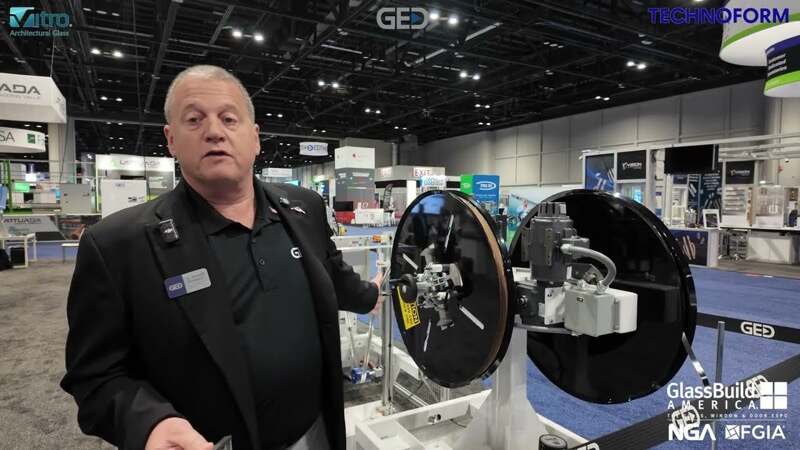
Behind the Build watched one run at GlassBuild 2025 in Orlando. It was GED’s Intercept spacer system, shown by Joe Shaheen of GED. A spacer is the strip around the edge of an insulating glass unit that holds the panes apart. “We start always with flat coil,” Shaheen says (4:52). The machine punches the steel, rolls it into a U-shaped channel, cuts each spacer to the size the office system sends, then applies sealant and a desiccant before the spacer is folded around the glass. Our lesson on what is inside an insulating glass unit explains the parts.
Here is what Shaheen said the full line asks for, at GlassBuild 2025:
- People. More than 2,500 insulating glass units in an eight-hour shift, but “you need seven operators to get that” (10:14). GED was working on running about 1,000 units with three or four operators.
- Months. “Lead times are going to be variable, right?” he says (12:03). During the pandemic they ran over a year. “We’re back to a more normal situation where you’re looking at 4 to 6 months lead time.” Setup takes two to three man-weeks. “But it’s going to be a process” (12:23).
- Floor space. The machine is about 65 feet long, with an assembly side of washer, oven and conveyors about as long again. “You really need about 30 ft in width and about 75 ft in length to really utilize the system correctly” (12:39).
Not every shop needs the top number. “Cuz some people don’t need 2,000, 3,000 units in a shift. They need 800, 900, 1,000,” Shaheen says (10:39). His pitch is fitting the machine to the plant: “It’s the combination of automation and operation, right? We want to understand what your operation is trying to accomplish and help you get there” (11:18).
Does every window maker want more automation?
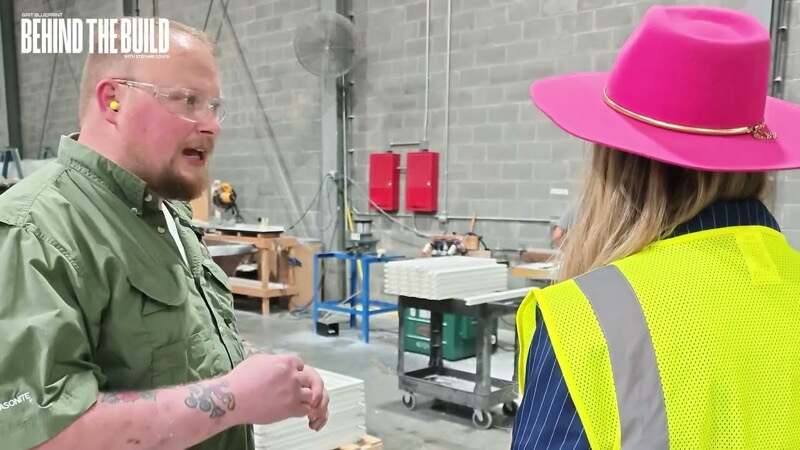
No. Nick Pesl started on the shop floor at Kolbe Windows & Doors in 2000 and is now a regional sales manager there. Kolbe has put automation into some of its products, he says. The plant is another matter.
From a manufacturing standpoint, we’re still very proud of the fact that very little in our manufacturing facility is automated.
 Nick PeslRegional sales manager, Kolbe Windows & DoorsFrom our interview, at 14:01
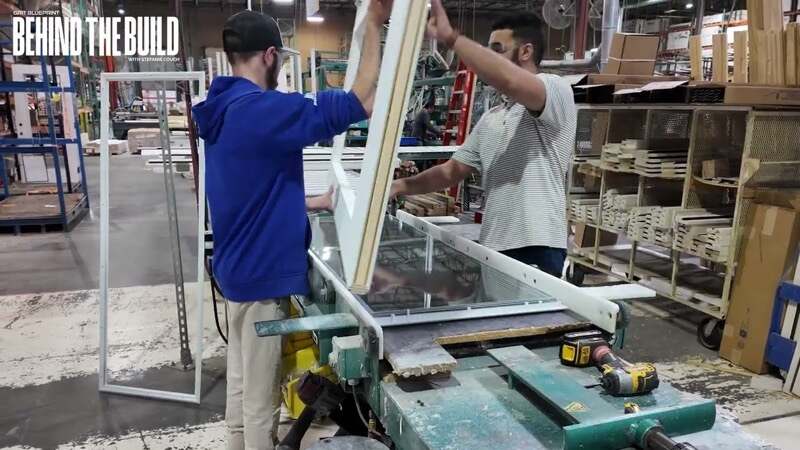
“We really view our team members as craftspeople, so that’s one thing we pride ourselves on as a company,” he adds (14:20). That is a choice about the product as much as the plant. When you sell windows, know which kind of plant your maker runs. It shapes what they can build and how fast. To see a custom line that mixes machines and hand work, follow one window order through Tucker Door & Trim’s plant.

Price the whole machine, people and all, before you buy
A machine looks like a labor answer. Price the whole thing before you decide. That means the machine and the people who still stand next to it. It means the floor space and the inventory you carry to keep it fed. It also means the volume you really run, not the volume on the brochure. Then compare it with buying the part from someone already set up to make it. Plenty of shops never sit down and run those numbers. Some keep making a part themselves out of independence, because they always have. Run the numbers anyway: in our experience, owning the machine pays only when the volume is really there.
Stefanie Couch saw this from the inside. As she told Devlin: “I worked in door manufacturing for a long time, so I’m very aware we would buy these huge machines that were very expensive, and you still had to have people around” (17:54). Name the problem the machine solves. Start with the one station where people are hardest to find. Learn from that before you buy the second.
What to do next
- Write down the one station in your shop where you lose the most hours to open jobs or injuries. That is your first candidate, if any.
- Price the full cost: machine, setup weeks, operators, floor space, carried inventory and your real units per shift.
- Ask any equipment supplier the three questions from the GlassBuild floor. They are lead time today, setup time, and how many operators for the volume you actually need.
- Ask your glass and window suppliers which of their stations are automated and which are hand work. Then you can explain lead times to customers.
- Look at handling equipment before production equipment. Devlin’s point is that lifters help keep the people you already have.
Questions people ask
What is an island of automation?
Katy Devlin of the National Glass Association uses it for a glass fabricator that has bought one automated machine and runs the rest of the shop the old way. She says it is the most common picture in the industry, because each machine is a big investment and takes time to fit in.
Why are glass fabricators automating?
Labor, in Devlin's view: the shortage will make automation a must-have for many companies. Safer handling equipment also lets more people do jobs that used to wear out a glazier's back and arms, and helps a company keep the workers it has.
How long does it take to get an automated spacer line running?
At GlassBuild 2025, Joe Shaheen of GED put lead time for the company's spacer system at 4 to 6 months, down from over a year during the pandemic, plus two to three man-weeks to set up a full system.
How many people does an automated spacer line need?
Shaheen said the full GED system needs seven operators to build more than 2,500 insulating glass units in an eight-hour shift, and that shops needing fewer units can run it with fewer people.
Do all window manufacturers want more automation?
No. Nick Pesl of Kolbe Windows & Doors says Kolbe is proud that very little in its plant is automated, because it sees its team members as craftspeople. Kolbe has put automation into some of its products instead.
Watch the full episodes
Katy Devlin of the National Glass Association (June 2024), GED Intercept Extreme at GlassBuild (January 2026) and Nick Pesl of Kolbe Windows & Doors (August 2025).
GED, Vitro, and Technoform show Intercept Extreme at GlassBuild 2025: how a window spacer goes from flat coil to finished part, what the new thermal break changes, and what it takes to put the system in a vinyl window shop.
A Grit Guide original. This piece is built from our own visit.
Episodes in this piece
Sources
- Leading In The Fenestration Industry: Katy Devlin, Content Director at National Glass Association (published June 25, 2024); quotes at 15:47, 16:22, 16:58, 17:54, 20:17 and 20:52 Grit Blueprint Podcast
- How High-Performance Window Spacers Are Made & Why They Matter: GED Intercept Extreme at GlassBuild (recorded at GlassBuild 2025, published January 15, 2026); quotes at 4:52, 10:14, 10:39, 11:18, 12:03, 12:23 and 12:39 Grit Guide, Behind the Build
- The Future of Building Products: AI, Innovation, and Market Evolution with Nick Pesl (published August 5, 2025); quotes at 14:01 and 14:20 Grit Blueprint Podcast