Click any timestamp to jump to that moment in the video.
Welcome to the Grit Blueprint Podcast at the National Hardware Show
Meet Adam Gunnett of Busy Beaver Building Centers
How to Tell Signal From Noise in Retail Technology
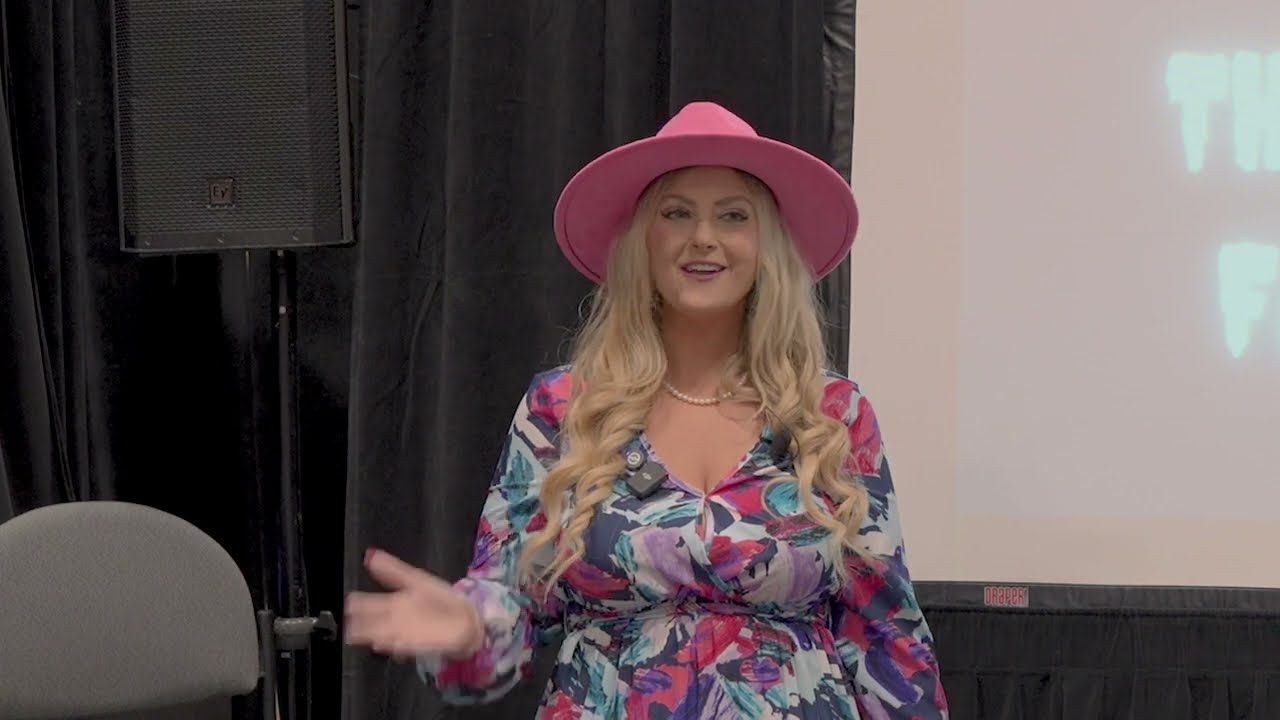
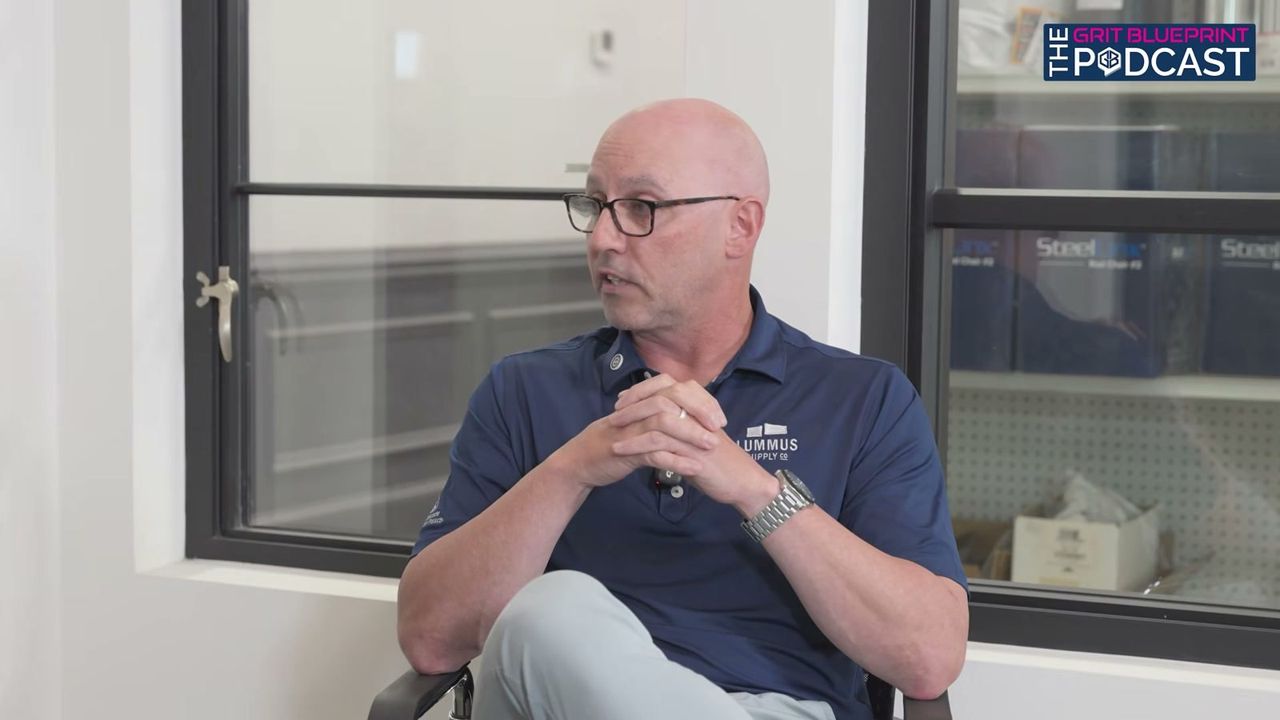
1:07 Stefanie Couch: Welcome to the Grit Blueprint Podcast. I'm your host, Stefanie Couch, and today I'm on the floor in Las Vegas at the National Hardware Show, Concept to Commerce. I'm here with my guest. Welcome to the show, Adam Gunnett.
1:20 Adam Gunnett: Thank you for having me.
1:21 Stefanie Couch: I want to read your intro, and I'm excited to finally sit down with you, because we have crossed paths a lot. I've seen you at a lot of shows. You are the VP of Business Intelligence and Strategy at Busy Beaver, a 19-store home improvement chain based in Pittsburgh. You've become one of the most talked-about people in our industry in the retail technology space. You've won awards, you've been on the cover of Hardware Retailing magazine, and you were nominated for CIO of the Year. You've turned a neighborhood hardware chain into what may be the most technologically advanced independent home improvement operation in the country. So welcome to the show. I'm glad to talk to you today.
1:59 Adam Gunnett: Thank you so much. We've been running past each other for the last few years. You stand out a little more than me, but I'm glad you noticed me. I forgot to wear pink today, but I have a little bit here. Let's see.
2:10 Stefanie Couch: You've got a little pink on the button there.
2:10 Stefanie Couch: Thanks for coming on the show. We've been crossing paths, but I want to talk about technology, because we are both very into AI and the tech that's out there. It's been a crazy few years on the AI side, but historically our industry has not loved being on the front edge of technology. How does it feel now when you walk around and every booth seems to have something with technology, all this AI software and marketing? How do you differentiate between what's signal and what's noise?
Why Over-Engineered Software Hurts Technology Adoption
2:49 Adam Gunnett: There's a lot of both out there, so getting the signal through the noise is the challenge. I typically like to ask, what is the problem you're solving for? A lot of times, especially with AI, the engineers find a cool product and try to reverse engineer it, and they're solving for a problem that doesn't really exist. So I ask, what's the problem you're solving for? Give me a real-world example of how this is going to help my end users and make them more efficient. And what does success look like? How do you measure that?
Using Change Management to Win Team Buy-In
3:29 Stefanie Couch: Absolutely. Even with something relatively simple, like a CRM, a lot of times they're so over-engineered. They think, hey, it has 500 features, but that's overwhelming to an end user who already has a lot to do day to day. I've seen that a lot. Implementation is harder, but adoption is almost impossible when it's super complicated. So how are you thinking about that when you bring tools into an already busy workforce and you're changing things?
Implementing a New Point of Sale System in Six Months
Why You Never Have the Luxury of Being Ready
3:59 Adam Gunnett: It really has to be a change management process. Like I said, you have to be solving a problem, doing something the team feels will make their lives easier. You have to develop the plan: if a process is in place, what needs to change? Then you have to get buy-in from the team. Once you get the buy-in, the momentum starts and adoption gets higher. So it's very important that you're solving the actual problem to get that adoption.
4:32 Stefanie Couch: Absolutely. Making someone's life easier is worth a little bit of the change for sure.
4:38 Stefanie Couch: I want to talk about your history. You came to Busy Beaver in 2015 as an entry-level IT tech with no hardware retail experience at all, and you had to implement an entirely new point of sale system within your first six months. So they threw you into the deep end pretty fast. What did that experience teach you, and how did you figure things out when you were maybe a little over your skis?
5:02 Adam Gunnett: Not to plagiarize, because I actually had some of these thoughts in my head, but you don't have the luxury of being ready. I had an interesting start to my career. My first day was at the company golf outing. Easy as pie, great.
5:19 Stefanie Couch: You're like, this is going to be awesome.
5:20 Adam Gunnett: This is going to be awesome. The second day, our email system crashed. The person I was working for didn't really have the knowledge of what was involved, so I had to realize that sometimes you just have to jump right in. That's not what I thought I'd be doing. When it came to that point of sale implementation and hitting the ground running, I had to roll with the punches. It was a listening exercise, too. I had to involve operations, merchandising, and finance to learn how they used the existing system and how they were going to use the upcoming one. So I very quickly had to learn the processes to get that system ready to go. One of the other things I found is that you can't train work ethic. I knew this was a pivotal, make-or-break project. There were no promises that if you do this, that will happen. But I believed in it, I wanted it to be successful, and I knew it wasn't going to be done in eight hours a day, five days a week, in a 90-day period. So I put in some long days and learned a lot about the business. It ended up working out well for the company and for me.
Why Work Ethic and Curiosity Cannot Be Trained
How to Spot a Curious Self-Starter in Interviews
6:49 Stefanie Couch: I like what you said about not being able to train work ethic. My husband Ben and I talk about that a lot with our team, and in teams I've worked on before. Work ethic and curiosity are the two most important things, because you'll figure it out and you won't stop until you do. How do you see that in people, and why has it been so important to you as you've progressed in your career?
7:11 Adam Gunnett: When it comes to curiosity, a lot of times in an interview I'll ask people about their hobbies and interests. One gentleman talked about how he liked working on his motorcycle, and I asked him how he learned about that. He said he was just curious; he went on YouTube and watched videos. That told me he was a curious mind and a self-starter. Then I asked, what if you can't find it on there? And he started naming outside resources, and it became apparent he was self-sufficient, a problem solver, and had the work ethic. Unusual questions like that, thinking outside the box, are how you determine whether someone could be a hard worker. Sometimes, unfortunately, you can't really tell until it's live in practice. Someone can be great in an interview and great on a resume, but seeing what they do hands-on is sometimes how you have to battle-test it.
How to Lead High-Stress Technology Projects
8:19 Stefanie Couch: Implementing software can be one of those stressful things, because you could lose a lot of revenue or data. The stakes are really high. How do you handle high-stress projects like that, and how do you help your team handle them?
How to Evaluate New Retail Technology Pitches
8:38 Adam Gunnett: You really just have to stay calm. Getting stressed and worked up doesn't help you or those around you. So staying consistent, staying confident, and reaching out when you need help. Being a self-taught person, I sometimes like to figure things out on my own, and that's something I continue to work on, but asking for help matters. When you're going through an implementation like that, hopefully the vendor you're working with is a partner and will help you. Depending on the industry, you can ask for help from others; there are third parties and communities out there. Asking for help and staying calm are the two keys.
Proof of Concept vs Proof of Technology Explained
9:34 Stefanie Couch: I love that. I want to transition and talk about technology and AI and how you're using it today. I'm sure you get pitched a lot. I get messages every day, and I don't even have a store, asking me to look at new software or technology. How do you figure out what's worth doing? You talked about problem solving, but how do you test things? What's the go-to-market strategy on new software that maybe isn't fully built out? How do you evaluate a new technology to figure out whether it really is what it says it is?
10:20 Adam Gunnett: A lot of times the terms you'll hear are proof of concept, trial period, or pilot. The term I like to use, which I stole from a colleague in another sector of retail, is proof of technology. Someone can show you a product, and the concept is pretty simple; you understand the concept, so you don't really have to prove it. They prove the concept in the sales pitch, but I need to prove that the technology is actually going to work, and work for me. In our space, point of sale can be very diverse and very specific to a company. So I want to do a proof of technology, and at minimum that needs to be 30 days. A lot of vendors, especially newer companies, are willing to do a 90-day proof of technology, and that really allows you to kick the tires and get the end users who use it day to day to see that it's actually living up to what you expect.
Learning From Retail Technology That Did Not Work
11:30 Stefanie Couch: Things can go really great sometimes, but sometimes they go really not so great. Was there a technology, even in your personal life, that looked good on paper and you thought would be great, but ended up not being so great?
11:45 Adam Gunnett: Unfortunately, there's been more than one, and I won't name any names. As you said in your previous session here at the show, failure can be our biggest teacher. One of the technologies was around supply chain and inventory, and we did not do a proof of concept or proof of technology. It worked great for other retailers, but it didn't work for us. Part of that was maybe we weren't ready for the change management involved, because it would have fundamentally changed our business to execute the way they wanted. There was also an e-commerce solution. It's not uncommon for people to switch e-commerce platforms, so I don't have to be ashamed of that, but I was really excited for this one platform and it didn't pan out. It was a learning lesson that I really want to evaluate these things, do proof of technologies, and have exit clauses.
Why There Is No Shame in Switching Software
The Best AI Tools for Independent Hardware Retailers
12:57 Stefanie Couch: Even in our small business, we've changed project management software a few times, and we've changed CRMs several times. As your business grows and innovates, and as the technology changes, sometimes you just have to pivot. There's no shame in that, but you do learn a lot about what you don't need, what's not important, and what is. I love that story because it resonates with me. I'm always telling my team, hey guys, we found this thing and we think we're going to change. I actually got feedback this week from one of my team members. We were trying to do something with two pieces of software, one for marketing and one for our sales CRM, and she brought it to me and said, I think we should cancel this and just go all in on the other. I said, awesome. I wanted you to bring it up, because you were used to using both, and I wanted you to be the one to say it makes sense. I like it when people bring me the idea, so it's not always me having to be the bad guy.
13:53 Stefanie Couch: I want to ask about some of the pivotal things retailers, hardware folks, and people in general should pay attention to. What are some of the tools that you love?
14:04 Adam Gunnett: Just the general AI tools, whether it's Gemini, ChatGPT, Perplexity, or Grok. From a personal perspective, if you're not using those just to throw ideas off of, you're missing out. You actually gave a presentation about bouncing marketing ideas off a tool like that, and that wasn't something I had thought of. I originally started using it to help with scripting and coding. There are a lot of great AI technologies out there. We're using one, and you just met the gentleman: FastQuery is a great technology specifically for independent hardware. We also have one called Zipline, which is more of a task management, communication, and learning platform. These tools empower our frontline employees. At the end of the day, if our frontline employees aren't helping customers, they're not making sales, and then we're not in business. So we're not necessarily looking for the cool tools for us at the headquarters or store support office. We want to empower frontline employees.
A Favorite AI Tool for Coding and Writing
How Technology Serves Associates Instead of Replacing Them
15:22 Stefanie Couch: That's awesome. Thanks for those tips. If you had to pick a favorite large language model, have you used Claude Code?
How Electronic Shelf Labels Improve Store Culture
15:32 Adam Gunnett: I have not. I have to check it out. I subscribed to it and have it set up, but I haven't started using it yet.
15:39 Stefanie Couch: The HTML writing and script writing with that are exponentially better than the other ones I've used. My team and I use it a lot, so you've got to check it out. Let me know what you think.
15:52 Adam Gunnett: I've made it a mission to get subscribed and set up on all the popular ones. I've just been so busy traveling that I haven't done it.
16:01 Stefanie Couch: It's hard to keep up. There's always a new one. But I think you'd like that one, since you do so much coding.
16:08 Stefanie Couch: I want to talk about your team. You've said your associates are your biggest competitive advantage over the big boxes. How does technology serve them rather than replace them? I hear a lot of people say AI is going to replace people, and a lot of independents are really scared of that. So how can technology serve your biggest competitive advantage in a way that people embrace instead of fear?
16:33 Adam Gunnett: When I hear about independents, I think about what we do. We position ourselves as the neighborhood home improvement store, and we talk about customer service. A lot of the people here today talk about offering legendary customer service. I think about the tasks my employees need to do that take away from helping customers, whether it's inventory or changing price labels. We have a few stores with electronic shelf labels. That technology takes a task away from our employees. We didn't have a dedicated person for price changes or cycle counts, and that's something our employees don't really enjoy doing. As a result of the technology, we've improved our culture, because they can help customers, which is what a lot of them want to do. We have some retirees who worked a full career and now work at our stores because they like talking to people and helping them solve problems. Those are the types of technologies we look for. Some of these AI technologies level up your employees. We have a gentleman named Bruce who can answer any question, whether it's paint, electrical, or plumbing. He knows every department in the store. We also have part-time high school students who know even less than me, which yes, is possible. You'd think being in this space I'd know more about hardware, but I still struggle. We have an app now that can essentially make that high school student a Bruce, and that's just using AI. It's a great tool.
Lightning Round: The One Technology Worth Keeping
The Biggest Tech Mistake Independent Retailers Make
What Grit Means and Retailers Should Do in the Next 90-Days With Technology
18:29 Stefanie Couch: That's great. Everybody needs a Bruce, and the only way I've found to get one is to do it with technology. As more people like Bruce retire, that knowledge doesn't just transfer. If we can figure out a way to get Bruce's brain into a tool and replicate it, that's where the magic happens. I want to ask you some lightning round questions.
18:50 Adam Gunnett: Okay.
18:51 Stefanie Couch: If there's one technology today that you could keep, the only one you could keep, what would you keep?
Closing Thoughts and Where to Connect
19:00 Adam Gunnett: FastQuery.
19:01 Stefanie Couch: Quite the testimonial there.
19:12 Stefanie Couch: What's the biggest tech mistake most independent retailers are making today?
19:12 Adam Gunnett: That technology is a silver bullet that solves all problems.
19:17 Stefanie Couch: I like to say no silver bullets, only golden BBs. Just one little tiny one at a time.
19:21 Adam Gunnett: Yes.
19:21 Stefanie Couch: Fill in the blank. The word grit means blank to me.
19:30 Adam Gunnett: Resilience.
19:32 Stefanie Couch: Last question, not a lightning round one: what is the one thing you wish every independent retailer in the industry would do in the next 90 days when it comes to technology? Just one thing.
19:49 Adam Gunnett: To realize that if they think they're behind, they're not, because everyone's behind with AI. It changes so quickly. They just need to start doing something today.
20:04 Stefanie Couch: I really appreciate you joining me today on the Grit Blueprint Podcast. I can't wait to keep up with you and see what you continue to do in our industry, and I'm sure I'll see you at a trade show nearby soon. Thank you for joining us on this episode, and we will see you on the next episode. gritblueprint.com