Click any timestamp to jump to that moment in the video.
Introducing Andrew Brown
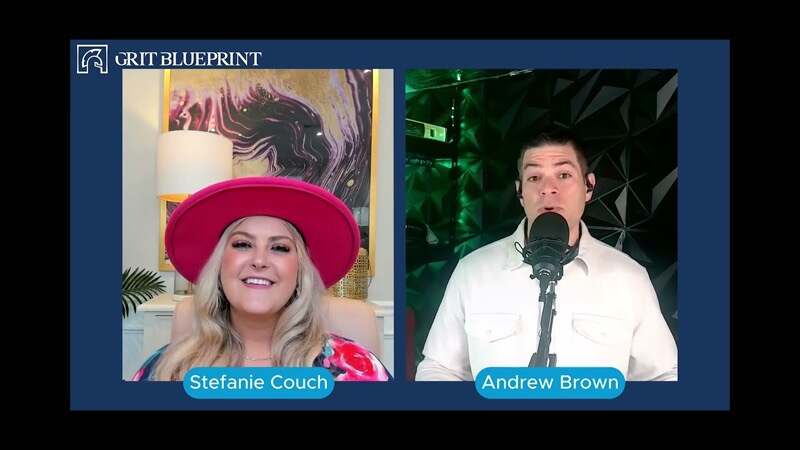
0:01 Stefanie Couch: Welcome to the Grip and Grip Podcast. Your host is definitely couch. This podcast is about branding, building, and business. It also highlights the grit that it takes to be successful in business and in life. Let's get started. Hello, and welcome to the Grit Blueprint Podcast. My name is Stefanie Couch, and I'm your host. I'm excited to have a guest here today. He is infamous on LinkedIn for amazing, funny videos. Andrew Brown, welcome to the podcast.
0:40 Andrew Brown: Infamous, Stefanie. It is great to be here. Thanks for having me.
0:45 Stefanie Couch: I'm glad to get to talk to you about this because you do something I haven't seen a lot of people do. We're going to get to that in a few minutes. But I want you to tell me a little bit about who is Andrew. You are in the skilled trades arena talking about things every single day. I see you out there. But what is your background? How did you get there? How'd you get into this world? And, you know, what's your life like? What what do you like to do?
September 11 and the Start of Toolfetch
1:09 Andrew Brown: So I always go back to the same date. It's September 11, 2001. I'm 23 years old, living in New York City at the time. And the planes had just hit the buildings. And like everyone else, we were shocked. And I had a friend in the building, and luckily he made it out. But I had this pit in my stomach. I had, I'm always a doer. I always want to do something. I want to be helpful. And I got this crazy idea that I want to go down there.
1:34 Andrew Brown: I want to help. And I called up a friend in Rhode Island at the time. And I said, dude, we got to go down there. We have to help. We have to do something. And he's like, we're not going anywhere near that. And I'm like, yeah, we are. So after some convincing back and forth, he shows up a couple days after, and he in front of my doorstep, he's got a big blue truck with an American flag on the back, and he's dressed up as a tradesperson.
1:57 Andrew Brown: He's got a hard hat on, he's got overalls on, and he's got a set of overalls and a hard hat for me. And I find myself now racing down the West Side Highway from checkpoint to checkpoint. And when we stop at the lights, there's people throwing in water, there's people throwing in toothbrushes, because they think we're tradespeople helping down at the Trade Center.
2:18 Stefanie Couch: Yeah.
2:18 Andrew Brown: And we made it through checkpoint to checkpoint. And I always feel it was divine intervention. Something was pulling us down there. And we made it down there. And now we're standing on the World Trade Center where it once stood. And the entire day I was helping first responders. I was helping EMS and firefighters and tradespeople find survivors. And you talk about life-changing events. I was a high-tech guy. I didn't know anything about tools and equipment. I wasn't around really the skilled trades at that point. But I had a life-changing event where I was watching the tradespeople on site and they were going into unstable structures.
2:56 Andrew Brown: And then some of them didn't have the right protection on. And I just got this, oh my God, look what they're doing. And they're just putting themselves in a situation that they just want to find survivors. It was so impactful for me that after that I quit my job in IT. And I had a good job in New York City at the time, and I put my two weeks notice in. And for months and months, I literally had sleepless nights. How do I get back to the skilled trades?
3:27 Andrew Brown: What I saw on 9-11. And that's where I co-founded the first online tool and equipment businesses with my brother named Toolfetch. And we've been doing that
3:37 Andrew Brown: about
3:38 Andrew Brown: 20, 22, 23 years right now. We're still going strong. We still love the business, where we provide tools, equipment, safety products, and safety training to the skilled trades. So your plumbers, your welders, your carpenters, and other blue-collar skill trades, which I believe really are the men and women who are building and repairing our infrastructure, bridges and tunnels and roads. And we reach them by offering one of the largest online equipment catalogs with 2 million products
4:05 Stefanie Couch: from
4:05 Andrew Brown: 650 different vendors. So products like lifts, cement mixers, drain cleaners, products, products like that. That is my way to get back to the skilled trades. And I've been, Stefanie, I've been doing this for 22, 23 years, talking to electricians, talking to welders, talking to plumbers, and listening to wages issue and not enough people in the trades and not getting recognition that I was like, you know what? One day I'm just, I want to turn on the camera. And I did, and I started talking about the skilled trades.
4:35 Andrew Brown: And five videos in, I said, welding is a dying career, and we don't have enough welders coming in. We need 370,000 welders. And that video went viral, and I just haven't stopped since. And I've just been supporting and showing up every day advocating for the trades.
4:51 Stefanie Couch: You have such a powerful story. Uh, that September 11th story, I want to go back to that for just a second. Number one, the fact that you're an action taker and you could have just watched it on TV or or whatever, which a lot of people did, and that's, you know, we didn't need a lot of people going down there that couldn't actually help because that would have been more of a hindrance. But you actually did something. And there were a lot of people after September 11th, I think, that had that kind of life change.
5:17 Stefanie Couch: A lot of people joined the military. Um, but you went in and you quit this, you know, kind of fancy tech job that I'm sure was in a nice building and you were always, you know, wearing nice clothes and doing all these things, and you went and did something that's totally different. And then 20 years ago to have an online business, still pretty cutting edge, pretty innovative at the time. I'm guessing, you know, you were, like you said, one of the first ones doing this uh online business selling tools and equipment with Toolfetch.
5:42 Stefanie Couch: So you're really a pretty cutting edge, innovative person. It doesn't surprise me now that you're doing something with the videos and talking about things that other people a lot of times are thinking and they're talking about on job sites and at the water cooler, but they're not doing something in in person or either out loud like you're doing online to really change that. So I admire that quality in you that you're not only an action taker, but you're a bold innovator. And I like that because I consider myself hopefully to be that same type of person.
6:11 Stefanie Couch: And so I see you in that and I love that. So congratulations on being that person and helping so many others do that. Tell me a little bit about with Toolfetch, what does that look like? I mean, I know you're selling to these people online and you're servicing them. What about the safety and that education portion of the business? What are you doing there? I'm curious about that part.
Safety Training and Robots on Job Sites
6:30 Andrew Brown: So we started uh Toolfetch Safety Group. This allows us to teach OSHA 10, OSHA 30, fall protection, and other safety requirements because that's that's the number one piece when it comes to skill trades. You want to make sure that they go home to their families, that they have 10 fingers and 10 toes. That's the most important piece. Everything else, obviously,
6:53 Andrew Brown: uh
6:53 Andrew Brown: is not as important. If you don't have a good safety program in place, then you're you're you're putting your workers at risk. So we built a toolfetch safety group that will go out and teach how to fall protection, how to OSHA 10, OSHA 30 to make sure that companies are up and up on the latest safety requirements from OSHA. And that's an initiative. I mean, I've uh for me, safety has uh this harkens back to to 9-11, what I saw on 9-11 with the PPE. And you you know years later that a lot of people who are working on that site had issues, health-related issues.
7:34 Andrew Brown: So it really impacts me deeply. So having the the safety group and having boots on the ground at different sites around the country and teaching people or teaching companies and and individuals being safe on the job site is is most important.
7:48 Stefanie Couch: Yeah, there's still so many construction-related industries uh that have high, high risk and high injuries. And I think that can be mitigated a lot by safety gear that fits, safety gear that's worn the right way, safety gear that's always worn, or you know, certain situations you don't put yourself in. And it makes me think about something I heard uh the other day on a job site was um talking about robotics and in different types of ways that they can do, especially in these big high rises, like in New York, where you're at, uh, using technology to actually mitigate some of those risks too, so that we don't have to put the people in that place.
8:26 Stefanie Couch: They they can allow a robot to maybe turn that screw or whatever it is that they're doing. So it's really cool how that's evolving. And I think our industry is only going to keep evolving, hopefully, with tech so that we can embrace that. And it's not gonna eliminate jobs because, like we've talked about, there's not enough people to even take the jobs that are even close to out there in the trades. But maybe if we can make it a little easier to recruit people based on the fact that we have some technology that can help and fill those gaps, it would be good.
8:55 Andrew Brown: Yeah, you said you said it about uh AI and and technology. It's it's not gonna overtake the skill trades anytime soon. It's you know, you can't outsource the skilled trades. Technology is not gonna take it over. Chat chat GGP is not gonna build a home. I mean, it's just not gonna happen. You need hands-on work by the people that's
9:13 Stefanie Couch: right
9:13 Andrew Brown: that are actually doing the uh the hard uh hard work.
9:17 Stefanie Couch: One of the things that I did see that I thought was interesting though was like a it was a robot, and it um actually this is at a conference I spoke at, and this guy was talking about it. It it did stuff on the ledges of buildings where someone would have to be out there in like a really bad position to do this work. And so you put this rail system in with a robot and it can go and do these holes or drill or you know, turn something or something small like that, where it's not really about it's not quicker because obviously it's still time consuming to set up, but it's just safer.
9:45 Stefanie Couch: So I think that's important. And I've heard of some really cautionary tales, and I've seen lots of people I grew up in the sticks. I did not grow up where OSHA reigned and uh and had a lot of say, and still now sometimes I see things on job sites and it horrifies me because I'm like that guy could just fall off that house at any second and just it's just over. But I do think as things get more regulated and they should be, it's a lot safer place for people to work in the industry if you're doing the right things.
10:14 Andrew Brown: And you you you talked about the technology when I was out the uh World of Concrete show, they were showing they people have to tie rebar. It used to be it used to be a manual process, and then they had rebar tires, which we sell. But there was a robot actually going and tying the rebar because it's very you're you're you have to bend over, it's hard on your back, and it's very tedious and monotonous. Those type of tasks that construction workers do, those are the things the monotonous tasks, the repeat tasks where robotics can take over to do that type of work,
10:50 Stefanie Couch: yeah,
10:51 Andrew Brown: is definitely helpful. But overall, you still need the power on hands-on work of the of the skill trades.
10:56 Stefanie Couch: Sure, absolutely. Well, we met through LinkedIn. We both are LinkedIn uh, you know, proprietary, like put out our information or whatever in different formats. I do a lot of copywriting and a lot of photos, which you have honed in on video. And video is something I don't see very many people doing, even on LinkedIn in general, but especially not in the construction space. So again, on that cutting edge of innovation, but I know you said you turn on the camera, five five videos, and you went viral.
11:26 Stefanie Couch: Was that on LinkedIn where you went viral or another platform?
Going Viral on LinkedIn, Then Not
11:30 Andrew Brown: That was LinkedIn.
11:31 Stefanie Couch: Okay.
11:32 Andrew Brown: That was LinkedIn. It was one of those kind of posts where you just,
11:35 Andrew Brown: you know,
11:35 Andrew Brown: you look at the vanity max, you're like, wow. And then you get over the vanity maxes, and then you try to repeat it. And you're like, wait, wait a second. Why don't this why is the next one not hit? And then you just,
11:44 Stefanie Couch: you know,
11:44 Andrew Brown: you get into the groove and put out content every day. Some hit, some don't. But as long as you're making an impact, that's the most important.
11:51 Stefanie Couch: It's important to note that I think for people listening to this that maybe say, like, hey, I I've been posting, I haven't gotten any traction. Hey, I've posted 10 times and I haven't gotten many likes or whatever it is. Those vanity metrics are hard because it, I mean, it's dope with me. Like, everybody likes that, right? To be told things that you're doing are good or people enjoy it and it's making an impact. But I actually listened to a podcast the other day with Dave Ramsey, and he was talking about this, and it really hit home for me that when he got on Oprah, he thought it was gonna be like some big giant change life thing.
12:23 Stefanie Couch: He was already pretty famous, you know, and he's like, we sold a lot of books for about a week, and then it was like it never happened again. It just restarts. And I think that really talks about the consistency you have to have, especially in the social media world, is even if you have a viral post, most likely the next week you're gonna have to just keep posting over and over again and just like every day. And that's the power of that long-term playing that game instead of trying to go viral, just post things that are valuable, that give knowledge, that show your personality or your expertise.
12:54 Stefanie Couch: And you do that really well. You also kind of position yourself. Sometimes it's funny, uh, like kind of jokey, and then also you're saying things that are very big statistics, like welding is a dying industry. And I think people, it gets people's attention. So focus more on that, like your message and not the vanity metrics. It's easy to say that. I mean, I I still look at them, but it is really easy to get caught up in that and quit because of it if you're not seeing that traction.
13:03 Stefanie Couch: So I'm I just want people to know consistency really is the thing, and it shouldn't be about the metrics as much as the fact that you know you're gonna have an impact if you keep doing it.
Batch Recording and Getting a Month Ahead
13:29 Andrew Brown: I want to go back a few years ago because this is really relevant to anybody who's listening who is just like burnt out and just can't get anywhere with social media. I used to do YouTube videos and I used to put them out mostly for my own business, and some of them were infomercial, funny videos. So I kind of got comfortable slightly on video, even though that I always say this, I'm an introvert, and you know, I sort of had a speech impediment when I was younger.
13:56 Andrew Brown: I was just I was always worried that was always in the back of my mind. So I guess that kind of pushed me to really try to get better in front of the camera. But I remembered I used to do YouTube videos and I had a studio down in my in my home, and it was like a Wednesday. I'm like, oh no, I gotta do a go do a video. Let me go shoot the video, let me go edit it. I was editing it, I was doing the thumbnail, I was doing uh the title description, and then I put it up and bum.
14:25 Andrew Brown: I'm like, what am I wasting my time here?
14:27 Stefanie Couch: I have
14:28 Andrew Brown: a business to run. And this was this is what happens to many people out there that they don't find a content strategy of being ahead. And this is this is really important. If you plan ahead, batch record, and have dedicated days to do content, that allows you to get ahead. I fell into the trap before I I was just I felt like I was always doing content
14:51 Stefanie Couch: and
14:52 Andrew Brown: I never had a plan. I never knew what topic I was gonna write. I just was never a month ahead like I am now. And that content strategy that I put in place today, I only really spent about an hour, maybe a week. Maybe I'm I'm on some podcasts and I pull clips or I just do batch recording, or I I was speaking in Las Vegas a couple weeks ago, so I got four or five clips out of that. But as long as you know what you need to do and you put a content strategy in place, I mean there's more to it, but otherwise you're just gonna feel burnt out.
15:29 Andrew Brown: I was there, so I know the pain and I know looking at other people and saying, how do they show up every day? I don't know, I don't understand. Well, now I kind of figured it out with testing and trying,
15:38 Andrew Brown: and
15:38 Andrew Brown: it seems to work uh at least for me, but it could work for others.
15:42 Stefanie Couch: For sure. That's a ticket. And I tell people that like if you're not batching, you're just torturing yourself pretty much.
15:48 Andrew Brown: And
15:48 Stefanie Couch: also I feel like your content, when you're under that kind of gun or that deadline, you know, it's not as good because you're just like, I gotta get something out there. And it kind of just whatever throws out there that day. It's not thought out like you said, with a strategy, but it just seems rushed, and then you're stressed and nothing good happens when you're rushed and stressed, and you just throw something out for the fact of having a post. And I mean, you never know what's gonna happen.
16:10 Stefanie Couch: I have a friend at work that used to say, be scared of tomorrow, talking about like production on on doors. Um, you know, you don't know what's gonna happen in the morning, what phone call you're gonna get or distraction. But if you're a month out, then it doesn't really matter because you have a post already scheduled and you're ready to go, and then you just have to do some engagement. So great tip. And I think most of the people who, like you said, have been doing it a long time and are doing well, they are doing that.
16:35 Stefanie Couch: Um, whether it's copywriting, videos, whatever they're using as their medium, even the pictures, they're bulking, like going and taking four or five shirts you know at a time, going and taking some pictures, then keeping them in the file. They're not trying to take a picture every day for LinkedIn, they're doing it in bulk, and that's the secret to success. So it's really about systems, which I think is probably the the whole base of every good business is systems. And I think content really is a business.
Getting Comfortable on Camera
17:01 Andrew Brown: I want to just touch upon the video side because you made a some people do most people do text posts, and not that many people do video posts. And it's I believe it's only one or two percent that really do content on LinkedIn. So there's almost about a billion users, right, on LinkedIn. So only one, two percent are doing content. And what's what's the video? One percent, less than one percent.
17:24 Stefanie Couch: Yeah,
17:24 Andrew Brown: I really enjoy the video aspect. I just like being on camera. I the the hardest part for most people is just actually starting. And I think people tend to be over-critical, how they look, how they sound. I get it. I've been there, and what what what are my friends gonna say, what are my colleagues gonna say? You have to kind of get over that. And what I did was in in the beginning stages, I would actually show uh people, my friends, my close friends, my family, and I I got I don't want to say criticized, it was constructive criticism, but they would give me feedback.
18:02 Andrew Brown: And
18:02 Stefanie Couch: yeah,
18:02 Andrew Brown: if I can get full feedback from family and friends and be okay with that, then I could put it out there and let other people sort of emphasize with me. And and I I just I just be I'm authentic.
18:16 Andrew Brown: I'm
18:16 Andrew Brown: just who I am on camera.
18:18 Stefanie Couch: And
18:18 Andrew Brown: I actually enjoy being on camera, and there's I'm not doing anything, I'm not thinking about it. It's just if my my voice goes high, my voice goes low, it's just I'm reacting to what I want to say. But it I think people just need to first start and try to get comfortable with your voice and seeing yourself on video because a lot of people overcriticize themselves.
18:39 Stefanie Couch: Yeah, I totally agree with that. And it's good to think about the fact that you are judging yourself so harshly where someone else is probably gonna be looking at it, number one, like, wow, this person has the guts to do this video, or they're probably someone that you don't care about their opinion anyway. And I I do think that's one thing you have to get over and and probably should just get over in life in general, but especially if you're gonna put yourself out to the world, build a brand, whether however what medium you choose to do that, is there are going to be people that just have nothing better to do in life than to send you a message or comment that your post is terrible or you look horrible or your whatever, your voice is weird.
19:18 Stefanie Couch: Um, Leila Hermozzi talks a lot about that, about her voice, and she really had a like an issue with that. Like she was really getting hung up on the fact that people were leaving comments, like you sound like a man, or you sound like whatever, you're on steroids. And she talks about that. Like Alex finally was said to her, Well, is your voice weird? And she's like, Well, kind of. And he's like, Well, is it weird that they said that? She's like, I guess not. And then she just got over it.
19:41 Stefanie Couch: So
19:42 Andrew Brown: it takes.
19:42 Stefanie Couch: It's like, well, I mean, is is this like, am I southern? Do I sound like really southern? Yeah, I probably do. Do some people love that? Yes. Do some people probably think she's a hick? Yes. Do I care? No. You know, I mean, it just is what it is, right? And so once you get past that part of like, I don't care about that. It's not what I'm trying to do here is have the best voice or have the prettiest face or be the skinniest or whatever your qualm is.
20:05 Stefanie Couch: Everybody has something about themselves they don't like. Then you can get past that to the why of why am I doing this? So I want to talk a little bit about your why. And you obviously gave that story about September 11th, which is so powerful, and that's a huge why. But now you've moved past just a business and you know, which is already making a big big impact, and doing something, you know, online, safety training, and you are doing something else with a council that you have are a part of.
20:32 Stefanie Couch: Tell me a little bit about that.
The Skilled Trades Advisory Council
20:36 Andrew Brown: So we started uh Stack, it's a skilled trades advisory council, and it's made up of eight other members, seven of them are women, uh, myself, another gentleman by the name of Rob Alman. And we're in retail, construction, HVAC, trades, and facilities management. So we're all sort of in the construction world in different aspects, and a lot of us were just scattered throughout the country. But our mission as Stack is really to combat the skilled trades labor crisis in the US and Canada. And we're really shedding the light on the essential trade jobs.
21:12 Andrew Brown: You know, plumbers and electricians, you can do well as an electrician, you can climb the ladder of success in the trades, you can make six figures, you can make something of yourself that we are pushing against sort of the old adage that it's dirty, it's dusty, it's it's for the bad kids. You know,
21:30 Andrew Brown: if
21:31 Andrew Brown: you get bad grades, you can always be in the trades. You know, that's a bunch of BS. And that's what we're trying to fight against. Uh we are uniting in industry, and it's all about working with other organizations, nonprofits, uh, causes, individuals, and sort of raising the bar across across the way. Uh we are a 501c3 nonprofit pending. When we when we are approved, we'll start on the fundraising side, we'll start to do scholarships and then give to organizations. other organizations. So we're really making an impact in a very short period of time.
22:06 Andrew Brown: My counterpart, uh Rob Alman, is actually interviewing Mike Rowe. I don't know if no Mike Rowe of Dirty Jobs in front of thousands of people. And I'll be in Nashville uh in a couple weeks to uh to see that stack will be uh in front and center with Mike Rowe on stage so it's really exciting for us. It'll be a national push. So there's a lot of good things coming down the pipeline with Stack. So we're really excited about it.
22:33 Stefanie Couch: What event is that going to be happening at just in case someone happens to be there?
22:38 Andrew Brown: It's the uh Connex show. It's the facilities management show in Nashville. Super excited about that.
22:44 Stefanie Couch: That's really cool. I mean I I actually saw he was at uh I think he was at IBS but I saw a few things like a few different people he's still one of people's favorite shows is Dirty Jobs. I mean everyone loved that show. I remember watching it and I was just like wow this is so cool what these people are doing. But I do want to mention something I think is an interesting thought shift that I see happening is when I was a little girl, you know, my my granddad was a painter.
23:10 Stefanie Couch: My dad worked at a lumberyard his dad had a lumberyard and then we ended up you know I grew up there and I was around a lot of tradespeople like contractors, plumbers, electricians, like they would all come in the lumber yard. And I never had that kind of stigma. I mean I guess I realized that it was like a dirty job like they would come in physically sometimes dirty but a lot of times they weren't you know um because they'd been working all day I was like three o'clock they needed this last plumbing elbow to get the job done or whatever.
23:37 Stefanie Couch: And I remember thinking like wow how cool it is to be able to build something. I've always felt that way like to be a part of making something making a home making a community and also fixing people's problems especially like with a plumber AC person uh your AC goes out in Georgia in July like there's no person you love more than that HCAP person that comes on your on
23:57 Andrew Brown: your speed dial.
23:58 Stefanie Couch: Yeah like you make sure they pick up anything I don't care what it costs here's the card just be here and fix this. And so I think that that is starting to shift as a general population because when you look at some of these entrepreneurial um or you know you see these videos on Instagram I've seen a few lately where they're interviewing people like on the street right in New York or wherever they are and they're saying like hey Andrew you know tell me about you what do you do how much do you make an hour and you're like $75 $55 what do you do and it's like I'm a plumber.
24:30 Stefanie Couch: I'm a you know a third year apprentice I'm this I'm every time they ask someone and it even could be like a tattoo artist or some of these other people that are more unpopular non-college route jobs right they're all making more than the people who went to these crazy four-year degree programs that have $150,000 in debt and are making 40 grand a year or $15, $20, $30 an hour. And it's starting to be a mind shift of people hey this is an option. And I think what you guys are doing and what many others are trying to do including myself is number one educate people on the front end which I want to talk a little bit about early grades like school you know especially in young women like I never even had an opportunity felt like I had an opportunity to take a shop class because it was so like this is what the bad kids do when they can't take another class.
25:21 Stefanie Couch: That's what it was at my school I would have loved to have done that. What kind of skills could I have gotten early you know hey I can fix this I can do this I can buy a house and fix it up and that would have been huge. So talk to me a little bit about that. How do you get people to change their mindset about changing mindset really about what the trades are the type of job they are and then going down to the school level elementary middle high school to get kids to see this as a viable amazing career option early so then they go straight to trade school or start straight into an apprenticeship program.
Parents, Teachers, Counselors and Shop Class
25:58 Andrew Brown: Yeah there's four things parents teachers guidance counselors and you hit it on on shop class. So what's being spoken about in the household kids don't like to believe this but their parents really have such an influence especially when you're when you're growing up and in my kids they're they're young and they listen to myself and my my wife and if if parents are saying to their kids go to college well what else are you going to think about? There's no other option out there. I'm I'm not even thinking about a trades option.
26:30 Andrew Brown: So it really depends what the parents are saying I was told to go to college. Now I had a a four-year degree from the University of Rhode Island management and information systems and business and I minored in finance and I don't use any of it. That didn't help me from my own business or being an entrepreneur and I came out more confused out of school than when I was in school and I changed majors like five different times.
26:52 Stefanie Couch: Yeah
26:52 Andrew Brown: so even though I I am uh I have an advocate for the for the college for the right person but it's not built for everybody I don't want my doctor not going to college and learning on YouTube. So
27:05 Stefanie Couch: you can only Google so much.
27:07 Andrew Brown: Exactly exactly and going down back to to school it's it's the teachers and guidance counselors. Personally I've never met a guidance counselor that really kind of sat down and said you're really good with your hands. Have you considered being a plumber? Is that conversation really happening? Not so often I always say that I feel like in some respects teachers and guidance counselors are the best marketers for college because they're giving free referrals you go go go into the system. But they're not all built for the system.
27:38 Stefanie Couch: Yeah.
27:38 Andrew Brown: And this is this is what's been happening over the last handful of years. You could date it back to the 70s and 80s and 90s and they took out shop class where you just said you were exposed to working with your hands. You've got to work with tools and machinery, home across it's it's like this lost art. You know kids are coming out of school they don't know how to use tape measure or swing or hammer I mean it's just it's just mind-boggling to me but we put so much emphasis on going to a four-year college degree where you're saying and it's true they're coming out with massive amounts of debt and when you get out of school there's no opportunity available and everybody thinks well I'm gonna be a social media star and influencer and I'm gonna go on YouTube and I'm gonna make money and everybody wants instant gratification but it doesn't work like that.
28:26 Andrew Brown: So the system I don't want to say it's broken but it's definitely the it needs to be sort of revamped and we're not setting up kids it's interesting what you said about younger kids how do you get them in the thing is even when somebody's interested in the trades a younger a younger kid there's nothing in school to show them not every school has a path where you can go into this program or you can be an apprentice or you can do a a trade school unless you know somebody who's in the trades.
29:00 Andrew Brown: Maybe you have a family member who's a plumber or an extended family member who is in electrical and then you can get some feedback but there's no there's no guidance to get them through and show them a path in the trade. So it's it's kind of left where they're on their own and some of them are just like you know what I'm just gonna go to college. And again it's just might not be right for them. So it's just getting the right information to teachers, parents, guidance counselors.
29:28 Andrew Brown: I'm a big advocate for putting back shop class or some form of a shop class to some degree it should be mandatory where you take a shop class because even if you don't go in the trades you have lifelong skills. You can fix things around the house so when something goes down you're like oh my God what am I going to do and I have to bring in some from the trades and what's going to happen and I had this conversation recently with Roger Wakefield who's a very well known plumber and I was on his podcast in October we're like it's going to one to two hundred dollars an hour.
29:59 Andrew Brown: It's I mean this is where it's going where you call a plumber up and you're gonna wait four weeks and you're gonna play one to two hundred dollars an hour and it's good for the trades but bad for the homeowner. And we're we're we're we're on that path and I we're trying to pull it back.
30:13 Stefanie Couch: And how many professional jobs can you think of that are going to pay $100 an hour non-trade jobs like I I mean I can think of a few obviously once you get up to like an executive level or something but we're talking about plumbers that are like out of school and can fix something. They don't have to be 75 years of experience to get $100 an hour. That's the crazy part is this is not outlandish. This is not a 1% of plumbers make this this is people make good money doing this and uh two things I want to go back to first question I want to ask you I saw actually one of the first things I saw of yours was a tape measure video on LinkedIn and caught my eye because I think it's funny that the average human doesn't understand or know how to use or read a tape measure.
30:56 Stefanie Couch: And then you're like hey I have these old YouTube videos so I went back and watched one of them which was awesome. How many percentage of the world in US people do you think actually understand how to read a tape measure? Like 5% maybe
31:09 Andrew Brown: I don't know what the percentage is. I'm sure we can Google it but I'm sure it's not we're gonna be shocked about that number but it's not a requirement but
31:16 Stefanie Couch: no
31:17 Andrew Brown: you use tape measures to you got to measure a ton of things and if you don't know how to do fra like you don't know what you're looking at. And when it's funny when I did that video which is funny you brought that up years ago there's so many things that a tape measure has that most people don't even know it exists which was really funny. So people reach out to me like wow I will
31:36 Stefanie Couch: give you credit I learned some stuff from that there were a few things I was like I didn't realize you know like this black dot equals this I didn't realize that and I think there should be more of that so um I may do a a tape measure video uh say inspired by Andrew Brown uh in in my future somewhere because I do think especially not to go always back to the women point because I think there's a lot of men that don't understand but I don't think a lot of women are going to be brave enough to say well what does that mean or I don't understand this or where's this um one thing I will laugh about about myself is I remember in high school when I was in math class was like I am never gonna freaking use these fractions.
32:12 Stefanie Couch: Like I don't I don't need to know that seven eighths equals 0.875. I don't need to know this stuff, you know? And then enter Stefanie Couch selling doors every day where 16th of an inch matters and you have to know that you know an eighth of an inch equals 0.125. And I use that every single stinking day and every time I would look at that fractions chart I would kind of laugh at myself like that stupid math teacher she was right but it's you never know what you're gonna need in life.
32:42 Stefanie Couch: And so if you have these little sprinklings of shop class or reading a tape measure things like that, what if that turns out to be one of your most valuable skills later and you just never know what if you love it and that's your zone of genius. So I would ask that anyone that's listening to this podcast that has young kids, teenagers, at least have a conversation, at least open up the door and if you're already in the construction world, that might be something that's easier for you to do.
33:07 Stefanie Couch: But if someone's listening to this that doesn't think of themselves as in the trades in the construction space, the building materials industry, why not explore that with your children, your nephew, your niece, your you know whoever you're talking to at schools because it is such a big valuable thing that number one, AI is probably not going to replace number two, there's already a giant labor gap we need to fill. And number three, there's a huge pool of retiring people that are in the trades or in the building materials industry that are going to be retiring in the next three to four years.
33:39 Stefanie Couch: I've heard one in four in a latest study I heard in the next five years. So that is huge like giant gaps that means you can always find a job. So it's something to consider um big big numbers there.
AI, White Collar Jobs and Editing Tools
33:52 Andrew Brown: You know they said for years that robots will take over the skilled trades but fast forward today AI is coming for you white collar job.
34:01 Stefanie Couch: Yeah
34:01 Andrew Brown: and it's it's it's true.
34:03 Stefanie Couch: Yeah
34:03 Andrew Brown: it's reverse
34:04 Stefanie Couch: yeah when you start to think about uh I'm I'm pretty versed on AI I use it a lot and I don't I don't rent my copy on LinkedIn with AI. Everybody always asks me that I do that myself but I use it in a lot of other things and when I think about the version that's here it's you know chat GPT four
34:23 Andrew Brown: they're
34:23 Stefanie Couch: coming out with five which I've heard is supposed to be coming out this summer they just released that and they say it's like leap years ahead of chat GPT four this is two years in so in five years ten years where is it going to be it is going to come for your white collar jobs like you just said it's only going to continue. So you better pony up and get some skills that an a robot can't replace
34:45 Andrew Brown: I had this same conversation uh a couple of nights ago with my son and we were talking he was asking about AI do you use AI I'm like yeah I do use AI I use it in co-pilot with MS365 I use ChatGGP and all other I use for video clips and things like that. I'm like you you know just wait four or five years where it's going we were talking about it was just really just crazy where it's gonna go but I I do feel that some of these skills that you had you and I had to learn in school are almost it's like you don't have to you don't have to know it like you once did because all the technology is there.
35:22 Andrew Brown: That's why I always say things are a it's a lost art.
35:25 Stefanie Couch: Yeah it's kind of like cursive right I mean how much do you use cursive in your real life but yeah I spent a lot of time writing on those little dotted line letters in fourth grade or whenever we had to learn it. But it's I mean I don't think they do that in school and AI is going to take over everything and uh as far as that goes with research and I mean you know and they're actually one thing that AI does that I hate is it makes stuff up right it's the phantom facts or whatever they call it.
35:48 Stefanie Couch: And I actually read that in that chat GPT 5 that that problem they think is going to be a lot lessened and that they do believe that's solvable. So they'll basically have it like fact check itself and it won't give you stuff for those of you listening that use chat GPT that do not realize that if you put something into chat GPT like tell me what happened on September the second 1985 in New York if it doesn't know anything it will, you know, it will make something up.
36:16 Stefanie Couch: It's going to find a solution it will find an answer. If you give it a math problem it's not really sure it'll find a solution. So always say you know don't make this up cite the sources until they figure out that bug but if you're if you're not 100% sure uh if you're using it for a resource that's got to be verified please make sure you get a site and check the site that do your
36:35 Andrew Brown: due diligence.
36:36 Stefanie Couch: Yeah
36:37 Andrew Brown: because
36:37 Stefanie Couch: I see some stuff it comes back and I'm like that is completely untrue. I mean you know like especially in the industry knowledge where I'm like hey tell me about this door or give me some information about this and it'll say something that just makes no sense and you're like that is not even true. But if you didn't know and you just copy and paste it into that page or wherever the blog you're toast so chat check your facts especially with chat GPT4 um any AI is still not perfect.
37:03 Stefanie Couch: It's still a still a learning machine it's learning. So it's a good a good conversation I think because a lot of people are very curious about it. I am since we're on the topic of AI I am curious what tools you would say that you love the most maybe one or two tools that you find are really great if you'd like to share that I think the audience would find that valuable
37:23 Andrew Brown: well chat GDP is one and and like you said I I don't write posts with it. It's more of an idea creation. So it can only get you so far and then obviously you take it your yourself and and your skill set to to do it. There are tools like I believe perplexity if I'm saying that right in AI there's there's opus dotai that cuts up
37:45 Stefanie Couch: so if
37:45 Andrew Brown: you do a podcast like this and you feed it into Opus it will take the best clips where it used to take editors hours to do that. It takes literally just minutes for it to pull and doesn't always pull the best clips but
37:58 Stefanie Couch: that's what I was going to say do you ever I mean find like when you go back and look at for real what clips you would have pulled if you were the editor that it's the same ones or it's close. I mean what because I've used those tools and I I sometimes have mixed emotions about that.
38:12 Andrew Brown: Yeah it's getting better but it's it tries to pull that that hook
38:16 Stefanie Couch: but
38:17 Andrew Brown: it sometimes it doesn't pull the whole thing and then you have to obviously add stuff but
38:21 Stefanie Couch: yeah
38:21 Andrew Brown: it to go back and look at an hour's worth of a podcast or if you did some sort of onstage keynote it it's a lot of work for somebody to pull out all the uh unique points in in the conversation that has the biggest impact where AI does an okay job but it's gonna get better.
38:41 Stefanie Couch: Yeah.
38:42 Andrew Brown: And especially editing sign like all the edit vividity editing out there where you had to hire an expensive editor of course look it's not gonna there's there's levels of editing but a lot of this stuff has been taken over by by AI or D script and and other programs out there.
38:58 Stefanie Couch: Yeah and one thing that I like to talk about when I say conversations that sort of get scary like hey AI is going to take over the world and all those things is that it gets you like 70% of the way there and then you use your creative brain and your smarts and your your zone of genius to nuance that 30% or the rest of the 20%. So I don't I mean maybe eventually it does a lot more than that but I feel like to if you want something to feel like you and we talk a lot about brand I talk a lot about the importance of it on LinkedIn and just in general in life having a brand that stands out that feels like you that people know your reputation for AI is never going to do that for you.
39:38 Stefanie Couch: Now you can program your brand voice you can do all of those things but it's still never going to be the same as you and if you program that and then maybe you start talking about something a little different maybe you change your mind about something like holy moly that's what humans do right you have a different opinion than you did a year ago you say that the AI is not going to know that. So use the tools you know plug into where you can but don't allow it to take your voice away and I read a lot of content I read a lot of comments that are written with AI that just summarize what I just posted and I'm like what is the point of this um I mean you know it's just like literally the exact thing that I posted they put in copy paste reply to this it's like this is I just said the exact same thing you did blah blah blah okay well thanks for that praying hands that's what I do but it's don't do that like be a little bit smarter than that get something out of it if you're gonna do and take the time to make videos if you're gonna take the time to make content or whatever you're doing to build your brand like at least read it and check over add a little bit of your personality back to it.
40:44 Stefanie Couch: Don't let AI do it 100%.
40:46 Andrew Brown: Yeah it's not gonna give you your flair and your authenticity you can feed in as much as you want into AI of course it's garbage in garbage out depending what what prompts you give in and what it's gonna uh come back out but it's it it's like you said it's not gonna replace your own creativity and you need that and that's what people see and they could kind of see right through that especially on video it's a little bit different with text posts but video which I don't know Alex uh Sheridan did a did a video uh people don't know he's uh a LinkedIn creator and he does uh really good videos
41:21 Stefanie Couch: yeah
41:21 Andrew Brown: and he did a fake video it was AI and it was like creepy
41:25 Stefanie Couch: yeah
41:25 Andrew Brown: if where it is now but where it's going to be in like five years from that part
41:29 Stefanie Couch: scares me I don't want
41:30 Andrew Brown: to replace myself by AI that
41:31 Stefanie Couch: part does scare me a little bit that um because that is like holy cow they can make you do or say anything in video and it you can't it's very hard to fact check that I mean even with photos I see some AI generated photos that are maybe doctored a little bit Photoshop and you it's very hard to tell it's not human. Usually with the eyes on that AI headshots and stuff you can tell they're not real because they look soulless because they are um but other than that like it's pretty crazy what she can create on AI images already and it's again it's two years in very early um yeah Alex is another great creator on LinkedIn if you guys don't know him he does a lot of video too Alex Sheridan and he is amazing.
42:07 Stefanie Couch: I've talked to him he's a super nice guy and um has made a whole business out of making videos on LinkedIn kind of making fun of LinkedIn and other platforms and like making videos and he does a lot of parody stuff which I love I'm always there for those videos. So
42:22 Andrew Brown: yeah creative.
42:23 Stefanie Couch: Well I want to go a little bit back to the trades and ask you one last question about that. So if you were a young person and I'm not asking you to pick favorites but you know if you're in in high school and you're you're listening your parents have listened to this podcast and are like hey you got to go listen to this Andrew what kind of thoughts would you have like a few trades that really people need they they're you know everywhere in all parts of the US and you could get into what are like the top two or three that you would say go just go explore this ask about an apprenticeship or how would they get into that and what would your advice be for them to kind of look just just peek under the hood of these different things.
Where a Young Person Should Start
42:59 Andrew Brown: I just want to share some statistics so just people know there's 37000 welders we need to by 2027. We need 55000 plumbers by 2000 I think it's 2027. We need 80,000 electricians every year up until 2030 to replace the electricians that are coming out and you just compound that by every other trade the opportunities are there. So you need to figure out exactly what you want. Now I could say that go and be an electrician or go be a plumber and and in a case in point
43:34 Andrew Brown: I
43:34 Andrew Brown: have an extended family member who was a corporate corporate and he worked for a large supermarket chain for 15 years and now he's in his mid 30s and he wants to be an electrician. And you know what? He quit his job in corporate
43:47 Andrew Brown: he
43:47 Andrew Brown: has a family and he started all over and now he wants to be an electrician. So it's never too late to want to go into the trades because in the next five or 10 years 40% are retiring so So the the window of opportunity is there. You need to figure out what you want. So what I typically tell younger kids, or if it's parents, I had somebody reach out to me just recently, and they were asking about their eighth grader, and they were saying he's really good with his hands, but as a father, I don't I don't know what to do.
44:20 Andrew Brown: And this is this goes on a lot. I've I heard these stories, these these stories, people reach out to me. And I I said, look, you need to obviously figure out exactly what he wants to do. So there is uh a website called Skill Point. Uh skill, I don't know if you're familiar with that, but Skill Point, yeah. You can go on their website and you can take it's a quiz, and it's like they asked you like 40 or 50 questions, and it comes back with, well, all you know, whether you want to work outside, whether you like working with people, management, that type of stuff.
44:53 Stefanie Couch: And
44:53 Andrew Brown: it will come back with a list of, well, you're more suited for welding, or you're most suited for construction management. And that's where you start to go down and say, oh, okay, maybe I do want to be a welder. Now what's the next step? Well, where do I get training? Where do I need to go? Is there anything local that I can a class that I could take, a local, local community college, or can I go to uh look for a local welding shop and start to shadow other people?
45:23 Andrew Brown: Or maybe you know somebody
45:24 Andrew Brown: who is
45:25 Andrew Brown: a welder and then you can reach out to them. So then you could start to go down sort of the path of how much do I make as a welder? And how long does it take to make uh X amount of dollars as a welder? And what part of welding do I want to be an underwater welder? I mean, it's
45:41 Andrew Brown: there's
45:41 Andrew Brown: a number of things that you can do, but you need to figure out exactly what you want.
45:44 Andrew Brown: But
45:45 Andrew Brown: a skill point would be the first uh probably be the first step to figure out exactly what you want, and then you could start going down the path of well, okay, is it a trade school or maybe I go right into an apprenticeship? So there's things that you need to work out first, but that would be my suggestion.
46:05 Stefanie Couch: That's awesome. Thank you for that website. I think that's really cool. I'd actually like to go take that and see what it says I should go into.
46:11 Andrew Brown: Yeah,
Retiring Owners With No One to Take Over
46:12 Stefanie Couch: one thing I was gonna mention that I think is also a point we need to be looking out for is a lot of people, like you said, just like your friend or or whatever your family member that's going and doing something they don't like every day, they maybe want to change careers, want a total reversal of from corporate, like from you, doing IT to now selling tools and having this amazing online business. If you are someone who wants to do something different and you also have dreams of entrepreneurship, there are a lot, and Cody Sanchez, another creator online, talks a ton about this of what we call boring businesses, like these plumbing businesses that maybe aren't illustrious and in a big tower somewhere in downtown where you're working in a suit every day.
46:55 Stefanie Couch: These businesses are highly profitable, they've been around for a long time, and they have aging owners who want to retire and sell the business. And there are not enough people to buy these businesses that these businesses will close. They will not have an owner, they will not go on. You can do creative financing with a lot of these, and I'm not gonna get into like all that stuff. She talks about it a ton, but there are so many opportunities that if you are someone that's a millennial or Gen X or whoever you are that wants an opportunity to change your life from a job you don't like, maybe you're really want ownership over something, you need to think about this as an option because a business like this has already gone through the hardships, hopefully, of the startup costs.
47:40 Stefanie Couch: They probably already have crews, they have all these things. You don't even have to be the licensed plumber or electrician to buy this business as long as you have there's a lot of regulations around what you need to do, but you don't have to go to plumbing school to be a plumbing business owner. So think about these options because you're not stuck, you're not without options, and there are a lot of people that would love to kind of teach you the ropes and then sell you their business, and they go off with their legacy being taken care of by someone like you that really wants to continue this journey for them and then you reap all the benefits afterwards.
48:12 Stefanie Couch: So think about that. I mean, that's something I see a lot, and I'm like, this is so sad. This person's 65, 75 years old, they don't want to do this anymore. And there's no one in their family maybe that wants to buy it, or maybe they don't have someone that would, you know, in the family to do that. And it just closes, they're just gone and they're not there anymore. And customers are sad and the market's sad and they're sad because their legacy just closed. So it's just a good option, I think, to bring up.
48:38 Andrew Brown: Case in point, I have somebody who fixes appliances, fixes a dishwasher, it fixes a dryer, and our our dryer went out. And he's the guy who comes over and he can just listen and be like, I know what it is, that type of person. And we got to talking. He said to me, He's like, Andrew, I don't understand. I don't have any debt, I make good money, I don't work long hours, but no one wants to take my job. I'm 65 years old. And I said, Yeah, you're right.
49:04 Andrew Brown: And he didn't really understand why the younger generation doesn't want to take it over. But this is what's happening, like you said. Compound that by other business owners that are getting to that retirement age. It's a lost start. What happens? Who's gonna fix all the appliances? Who takes it over?
49:21 Stefanie Couch: They're just gonna go to the dunk junkyard and it's gonna be a $15 part with a $100 service fee that becomes a new $12,000, I mean $1,200 dishwasher. That's what it's gonna be in the world. This is
49:32 Andrew Brown: why I advocate, this is why I bang jum every single day and show up for the trades.
49:37 Stefanie Couch: There's not enough people talking about it, and I think what you're doing is so important. I want to close with one last question. I ask everyone this. This podcast is called the grip blueprint, and the word grip means a lot to me personally, and I think it's something that's meant a lot to me in kind of my whole career. What does that word mean to you? What does grit mean and how have you used it to be successful in your life?
What Grit Means to Andrew Brown
49:57 Andrew Brown: I commit, I show up, and then I work my ass off. That's what grit means to me.
50:05 Stefanie Couch: That's
50:05 Andrew Brown: being a doer and just keep doing it for the long term. I don't look at it as instant gratification. I'm not gonna build muscles in a couple months. It's gonna take me years, just like your career, it's gonna take time. You've got to put your head down and put the work in. And I always recommend to get a coach or a mentor because that helps as well.
50:27 Stefanie Couch: Yeah, that's so good. Commitment is you can do something really well for a short amount of time and it not amount to much. But if you commit and you do even a pretty good job for a long time, it's gonna amount to something. And I think that is truly a great definition of it. So thank you for sharing that with me. Well, I'm so excited that you came on the podcast. I really enjoyed this conversation. Um, we have a lot in common, obviously, and have a lot of passions that we both really assimilate with.
50:51 Stefanie Couch: And I just appreciate all the work that you're doing. So if you are not connected to Andrew Brown on LinkedIn, he posts all the time. He's out there doing amazing things. If you don't know about the skilled trades advisory council and you'd like to be involved with that, check them out. And I really appreciate your conversation. Thank you so much for being on the grit blueprint.
51:10 Andrew Brown: Thank you, Stefanie.