How to Bring Young People Into the Trades
Young people hear about careers at home, from teachers and counselors, and in shop class. Andrew Brown of Toolfetch explains how to reach each one. Steve Tourek shows what Marvin does to bring people into its plants.

To get young people into the trades, reach the four places where they hear about careers. Those are home, teachers, guidance counselors and shop class. That is the list from Andrew Brown. He is co-founder of Toolfetch, an online tool and equipment supplier for the skilled trades.
A manufacturer or dealer can add what it controls. Steve Tourek of Marvin, the window and door manufacturer, describes high school tours and a robotics team. He also describes a community college program, and housing and child care in a small town.
Skilled trades are jobs like plumber, electrician, welder and carpenter. They take hands-on training, usually through a trade school or an apprenticeship. An apprenticeship is paid training on the job under an experienced worker.
Why did a tech worker start speaking up for the trades?
Because of what he saw on September 11, 2001. Brown was 23 and working in IT in New York City. He and a friend got to the World Trade Center site. There he spent the day helping first responders and tradespeople search for survivors. He watched tradespeople go into unstable structures, some without the right protection.
He quit his job, and with his brother he co-founded Toolfetch. The company also teaches safety courses such as OSHA 10, OSHA 30 and fall protection. OSHA is the federal workplace safety agency. Years later he started posting videos about the trades on LinkedIn. He also helped start a skilled trades advisory council to push back on the old idea that the trades are for kids with bad grades. “That’s a bunch of BS,” he says (21:48).
Who steers young people toward or away from the trades?
Parents first. Kids listen to what is said at home, Brown says. If parents only ever say go to college, he says, the child sees no other option. Brown himself was told to go to college. He earned a business degree and says he does not use any of it.
Then teachers and guidance counselors. “Personally I’ve never met a guidance counselor that really kind of sat down and said you’re really good with your hands. Have you considered being a plumber?” he says (27:25). In his view, teachers and counselors are “the best marketers for college because they’re giving free referrals.”
Then shop class, the hands-on class many schools cut. “I’m a big advocate for putting back shop class,” Brown says (29:46). His reason: “even if you don’t go in the trades you have lifelong skills.”
The last gap is a path. Many schools have no program that leads into an apprenticeship or a trade school, he says. So an interested student is on their own “unless you know somebody who’s in the trades” (28:44).
What should a parent do when a kid is good with their hands?
Find out which trade fits, then put them in front of people who do it. A father once reached out to Brown about his eighth grader. The boy was good with his hands, and the father did not know what to do next.
Brown pointed him to a career quiz from SkillPointe. The quiz matches a student’s interests to skilled trade careers. After that, look for a local class, a community college program or a shop where the student can shadow someone. If you know a welder or an electrician, ask them.
It is not only for teenagers. A member of Brown’s extended family spent 15 years in a corporate job with a supermarket chain. Then he quit in his mid-30s to become an electrician. “It’s never too late to want to go into the trades,” Brown says (44:05).
The other side of the problem is the work nobody is taking over. Brown’s appliance repairman, who is 65, told him: “I don’t have any debt, I make good money, I don’t work long hours, but no one wants to take my job” (48:55).
I don’t have a magic bullet. I think it’s going to require multiple things.
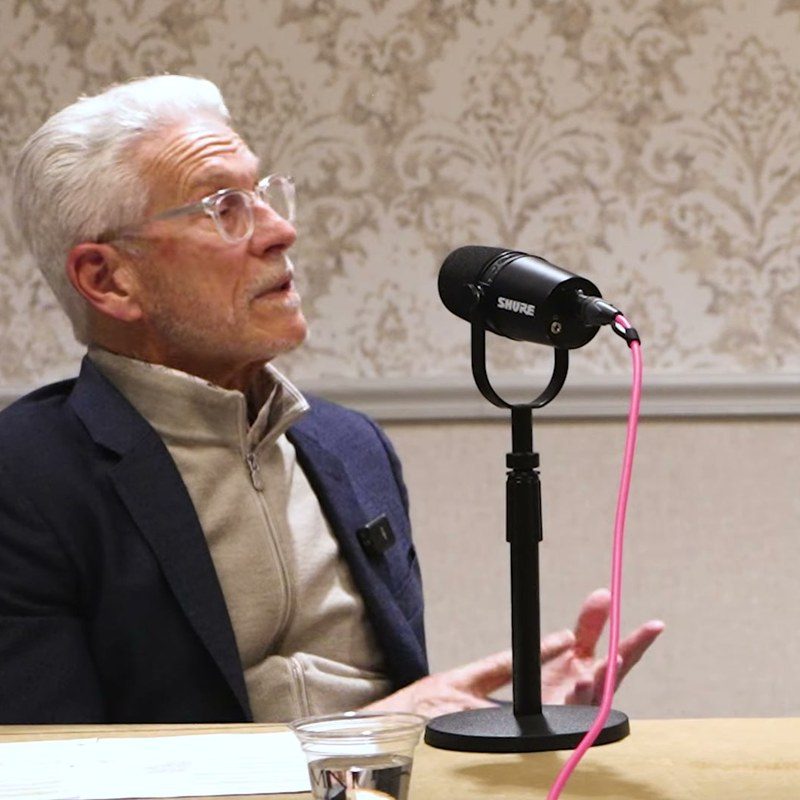 Steve TourekSenior vice president and general counsel, Marvin (56:07)
What can a manufacturer or dealer do to get young people into the trades?
Open the doors and build the path. Here is what Tourek says Marvin does:
- Tours and the robotics team. Marvin partners with the local high school, gives factory tours and supports its robotics team. People often have the wrong idea, he says, about how technical and skilled you have to be to run and service the equipment.
- A college program. Marvin worked with Northland Community College, part of the Minnesota State system. Marvin donated the property and the equipment for a course in mechatronics. Tourek describes mechatronics as a mix of mechanics, pneumatics and electrical programming. Students can take the skills anywhere, and ideally they come to work at Marvin.
- Housing and child care. Marvin employs more than 2,000 people in Warroad, Minnesota, a town of about 1,700, Tourek says. So it builds housing to get people to move there and provides child care for working families.
- Plants where the people are. When Marvin chose a site for its new Kansas City plant, an accessible workforce was one of the main questions. “You have to build the plant where the people are,” he says (59:09).
A lumberyard can run the small version of each: a yard tour for a shop class, an old forklift or saw donated to a school program, a summer job for the kid who keeps asking questions at the counter.

Talk to the kids in your life about the trades
Stefanie Couch grew up around contractors at her family’s lumberyard and never felt shop class was open to her. Later she found that the fractions she swore she would never use were what she used every day selling doors. In that work, a sixteenth of an inch matters. Her ask to anyone with kids or teenagers in their life: “at least have a conversation, at least open up the door” (33:00). People already in the building world are the ones who can do it most easily.
When a young person walks in, show them the real job: how to read a tape measure, how to write up an order, and why each step is done that way.
What to do next
- Invite a shop class, a robotics team or a scout troop to tour your yard, shop or plant. Show them the equipment that takes skill to run.
- Call your nearest community college or trade school. Ask what program you could support with space, old equipment or a guest instructor.
- Offer to speak at a career day, and talk to the parents and counselors as much as the students.
- When a parent asks you for advice, send them to a career quiz like SkillPointe’s, then offer a shadow day.
- New to the industry yourself? Start with How the Building Industry Works and Your First 30 Days at a Building Materials Dealer.
Questions people ask
How do you get young people interested in the trades?
Andrew Brown of Toolfetch says to reach the four places young people hear about careers: parents, teachers, guidance counselors and shop class. Show them what the work is and how to get started.
What can a lumberyard or manufacturer do to recruit young workers?
Marvin gives high school tours, supports a robotics team, helped set up a mechatronics course at a community college and provides housing and child care in its rural hometown. A dealer can start with yard tours and shadow days.
Is it too late to start a trade in your 30s?
Brown says it is never too late. A member of his extended family left a 15-year corporate career in his mid-30s to become an electrician.
What is mechatronics?
Steve Tourek of Marvin describes it as a mix of mechanics, pneumatics and electrical programming, the skills used to run and service modern factory equipment. Marvin supports a mechatronics course at Northland Community College in Minnesota.
Watch the full interviews
Andrew Brown of Toolfetch and Steve Tourek of Marvin. We cover Marvin’s story of loyalty in Loyalty Goes Both Ways.
Andrew Brown, CEO and co-founder of Toolfetch, explains what he saw tradespeople do after September 11, how he stays a month ahead on LinkedIn video, and where a kid who is good with their hands should start.
A Grit Guide original. This piece is built from our own interview.