Click any timestamp to jump to that moment in the video.
Sales vs Operations in the Door and Millwork Business
0:01 Stefanie Couch: So what happens when a really cool project gets sold by a salesperson and then operations has to figure out how to make it work? Because, you guys,
0:06 Lee Allen: We asked a lot of questions. Say, hey, what hands, jambs, width, sills, everything. The more complex it is, the more details that we have to do.
0:16 Ron Herrin: We are very good at complexity. We can add speed to complexity. So we get asked to do some really, really strange stuff. Our sales force doesn't know how to say no. They're not very good at it.
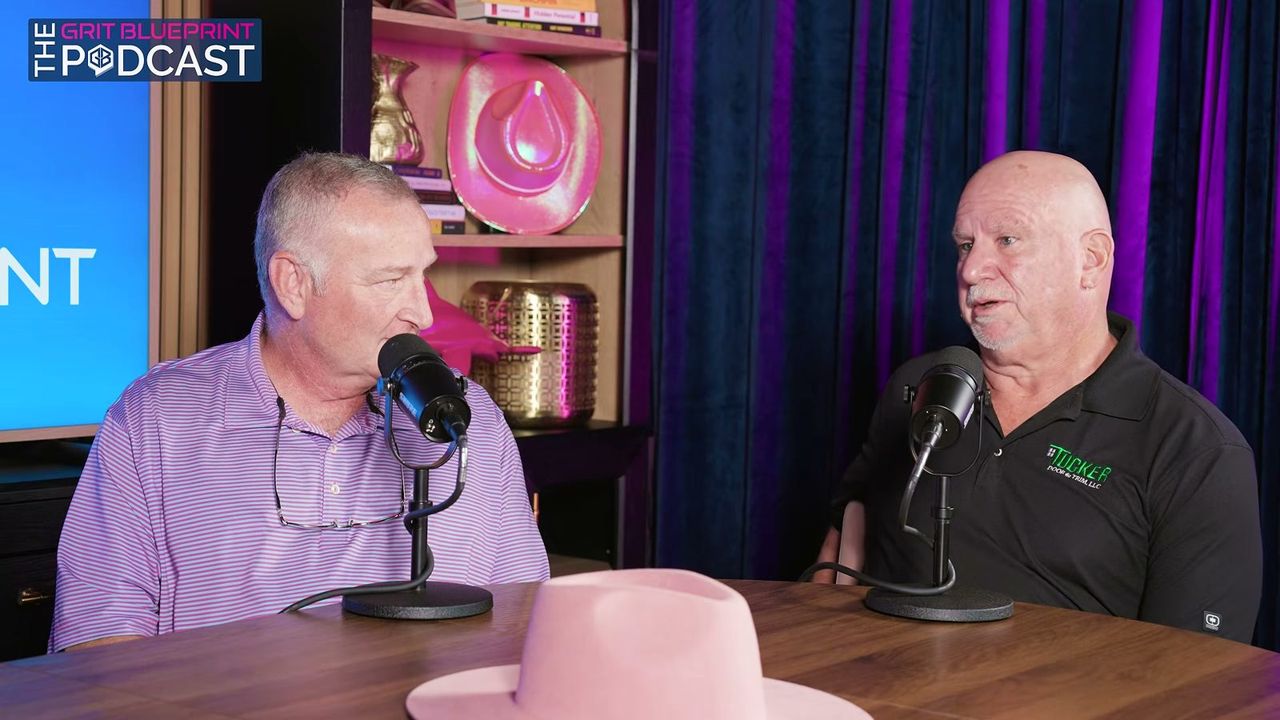
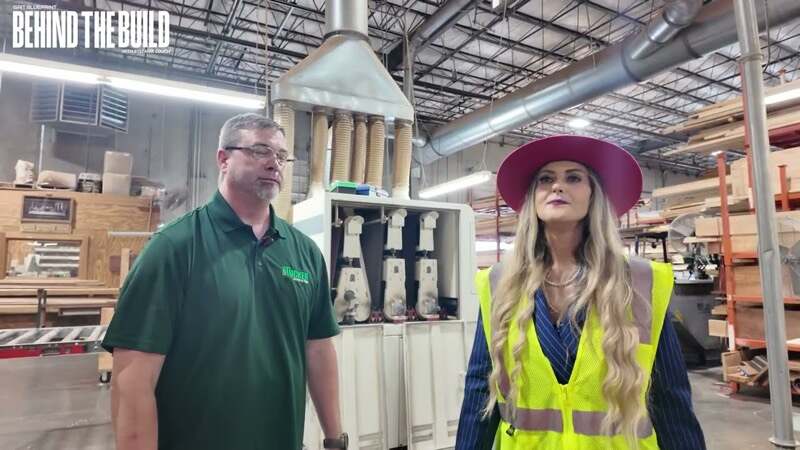
0:30 Stefanie Couch: Welcome to the Grit Blueprint Podcast. I'm your host, Stef. Stefanie Couch. And today we are doing a millwork roundtable. My two guests are both from Tucker Door & Trim. Welcome to the show, Ron Herrin and Lee Allen. Thanks for joining me.
0:42 Ron Herrin: Absolutely.
0:43 Stefanie Couch: And we are here in Clayton, Georgia. We have fought the rainstorm and we're finally able to record. So thanks for being patient with me. You guys are both very experienced in our industry, so I want you to just tell me a little bit. How long have you been in the industry and what was your first job in the industry, Ron?
1:01 Ron Herrin: So 1985. I started in January 1985 after coming out of the University of Florida. And I was a sales management trainee for a company called MacMillan Bloedel, who eventually got purchased by Weyerhaeuser in 1999.
1:19 Stefanie Couch: So what was the sales management training program like in 1985?
1:22 Ron Herrin: You worked in the yard and learned how to stack lumber is pretty much what the training program was.
1:28 Stefanie Couch: It's like, here's some gloves. Good luck. I love that.
1:31 Ron Herrin: If you did a good job, you got to come inside.
1:33 Stefanie Couch: Yeah, that's what I was going to say. I mean, it's actually not a bad way to start because you learned the business from the ground up. Right. What's your favorite job you've had in this industry?
1:40 Ron Herrin: Outside sales.
1:41 Stefanie Couch: Okay, love that. And you're definitely now in the sales world. So you're the VP of Sales at Tucker Door & Trim, and then on the other side of the fence is Lee Allen, and you are the VP of Manufacturing and Procurement. So. So there's always been a fun little battle, I know, in my career with sales versus operations, and you guys have a fun candor together. So I'm excited to talk about that. But tell me a little bit about how long you've been in the business and what your first job was.
2:07 Lee Allen: So I started off in 1983 with Thomas R. Hobson, and I went into the production area. I was over their maintenance and over some part of their production. Kind of worked my way all the way up till running their facility up in Acworth. And then obviously everybody knows they got bought out by Stock and kind of went from there.
Questions to Ask Before Taking a Custom Door Order
2:29 Stefanie Couch: So they were kind of a millwork powerhouse in the Southeast, though, for a long time, for those who maybe don't know. But a lot of things have changed in our business in the years that have come since that. You know, it used to be basically like a Colonist six-panel door. And you had a few options on exteriors, and now there's like every option under the sun. And you got to carry 20 million SKUs. I've been in your facility. You guys have a lot of inventory. But I want to ask a few questions today. So the topic of this is really going to be kind of that sales and operations, how they work together and how things in our business are changing and some of the innovation and stuff that you guys are seeing. So first thing I want to ask is for both of y'all, what are the things that when a customer comes in, they ask you for something that, you know, makes a salesperson say yes. And maybe sometimes the operations department says, hey, can we ask some more questions? Or we should hold on and maybe ask a few more clarifying questions. What are some of those things that come up in the business?
3:24 Ron Herrin: Everything. Bizarre. You can think of this. You know, we are very good at complexity. We can add speed to complexity. So we get asked to do some really, really strange stuff. So I don't know that I can narrow it down to one thing, but our sales force doesn't know how to say no. They're not very good at it. So.
3:42 Stefanie Couch: Well, and you probably don't want them to say no very often because you're known for doing very custom stuff. We actually just went up the road to a really beautiful church project, which is in Rabun Gap, that we're going to hopefully highlight in a few weeks. And had some interior doors from you guys, wood interiors with TDL privacy glass. Really cool projects like that that you guys get to see every day. So what happens when a really cool project gets sold by a salesperson and then operations has to figure out how to make it work? Because you guys...
4:11 Lee Allen: A lot of questions.
4:12 Stefanie Couch: So what kind of questions do you find that maybe people don't ask that you wish they would ask when they take an order?
4:17 Lee Allen: You know, the part of the business of where they have to say, hey, what hands? What are these jambs, width, sills, everything. And a lot of that does not get asked. So we have to do it, especially the more complex it is, the more details that we have to do.
How to Train the Next Generation in Millwork Sales
4:32 Stefanie Couch: Yeah. And we talked a little bit earlier about training and the need for training. You mentioned your management training program. You worked your way from the yard. I'm sure you had a very starter-friendly job where you were learning things by hand, learning by doing. I grew up in my dad's lumberyard ringing people up and doing some stuff from. And I remember my first day at two-step distribution selling doors. I had sold doors a lot, but I had called someone like Tucker and said, this is what I need and this is kind of where it's going. And they figured out the rest behind the scenes and made it happen. And I remember my first day when I was that person and I was like, I don't know anything. I had to learn a lot of lingo and a lot of, like, I remember transoms, the sash size versus frame size and then rough opening dimensions, drag set, all that, all that math. I remember thinking in high school and college, I will never use fractions. Like, my teacher needs to just forget it because I'm never going to use them. And then when I got that job, every single day I had my little fraction chart. I was like, 3/8, you know, equals this. And using all those things, it is a technical business. And I think that that training is important. How do you think that we can teach the next generation of people coming in those little nuances?
5:50 Ron Herrin: You just have to put them into the plant, and they've got to spend time in the plant understanding the why of, you know, how that is so important. But that's what we try to do. When we do a new hire, we're generally looking for somebody that's already got a lot of product knowledge and a lot of experience. But when you think about our industry too, there's like a bunch of us out there, right? A bunch of old people. So we've got to get some youth into the business, and how we do that, we haven't figured that, you know, equation out yet. But you would want to start them out there in the plant a good bit.
6:24 Stefanie Couch: It's a tough problem to solve. What about you? I know you've done a lot of training in your career. We were talking a little bit about some of the training. What have you seen be really beneficial for you?
6:33 Lee Allen: I mean, obviously the more math skills they have, because like you said, it's definitely the measurements and knowing that. But you know, Ron's right. I mean, coming up, the better employees that go and succeed in this usually come up through the ranks for sure. And then the more knowledge that you pick up. And like I said, I was telling you earlier, we call it Lumber U. It's just like going to college. You have to learn, you know, over the years, trial and error, but it's going to take you two to four years, depending on how much you put into this.
7:04 Stefanie Couch: Yeah. There's so many scenarios, little weird, odd things that don't happen until they happen. And you wouldn't even remember to train someone on that because it's so weird. And then somebody comes to your desk and says, here's this thing.
7:19 Lee Allen: Right. And it's hard to have every scenario laid out for them because you can't think of them all. And that's what it is. You have to be around long enough to be able to see each one of them and be, you know, okay, be there to learn it.
7:33 Stefanie Couch: Yeah. And just about the time we all think we have it down, then they come out with a new product line. Like, for instance, with doors especially, they're getting bigger and bigger, bifolding and all these crazy 20-foot openings and things that are going back into the wall and these tracks that are crazy. I mean, it just makes it so much more...
7:53 Lee Allen: It's got very complicated. I mean, when we started out, I mean, you only had what, two skins for hollow core doors, you know, a six panel. And then it's just, you know. Yeah, everything else is gone.
8:04 Stefanie Couch: I know.
8:04 Lee Allen: And now, you know, from flat jambs to split jambs.
8:08 Stefanie Couch: So yeah, I was doing a millwork training a few months ago and I was thinking about this, kind of laughing. You know, I worked in Atlanta my whole career until I didn't, and I moved to Texas and we were planning this door shop and I said, well, how many containers of split jambs are we going to order, guys? And they were like, what? And I said, well, we got to order split jambs. And they're like, we don't do that here. And I was like, what do you mean you don't do that here? I mean, that's 98% of what we sold in Atlanta in interior hollow core. They don't sell one split jamb in Texas. It's all flat jambs. So good thing I asked the question before placing that PO. I would have been gainfully unemployed pretty quickly. But that's really the thing. It's different no matter where you are. You got to know your local market. That's one of the things I think people like you... you guys have three facilities. So let's talk a little bit about Tucker Door & Trim. Tell me a little bit about who you guys are. How did it start, and what is Tucker Door & Trim today? Because three facilities, y'all have some giant warehouses doing a lot of stuff. So tell me that.
The History of Tucker Door & Trim
9:07 Ron Herrin: So I guess it started, what, 1968 is when... We're owned by a, it's called WAI. It's a privately held company. It's the Watkins family out of Lakeland, Florida. And in '68 they were the largest privately held commercial carrier east of the Mississippi. And they sold that to FedEx. And instead of going and putting the money into a portfolio, they decided they wanted to buy up some operating companies that give them a better return. So one of those was Tucker Door. That's kind of where we started. Where we are today is we're a three-location company: Richmond, Albany, and Monroe. That basically does the complexity of, you know, when you talk about the different products and the product knowledge, I mean, it's also just the different builds that we do. Everything is custom now. It's all special order for the most part. Nobody stocks doors anymore. You may have a few of the more rural locations or customers that do it. But everything we do is special order, and you got to get it right each time.
10:14 Stefanie Couch: And even with windows, I mean, there's maybe a few small things they stock on a 350 vinyl or something. But you've got a lot of customization with grids and colors, and windows used to be wood windows and you painted them whatever color. And now you've got interior one color and exterior another and cap stock and laminate and all these options. And it's crazy. I think a lot about that. You know, if I was 25-year-old Stefanie coming into this business, how overwhelming it would be to try to learn all of that. And then I start to think about it backwards, like, well, how do I eat that elephant? One bite at a time. You know, what is the most important thing? I think it starts with understanding the channel. So maybe for those that don't understand the channel, you guys are a two-step distributor, which means that you're distributing in the market, but you also are manufacturing. So you're sort of a mix of those things. You manufacture your own window line in house. You're doing wood windows, vinyl windows, single hung and double hung, composite windows. And then you're pre-hanging interior and exterior doors.
11:17 Lee Allen: Correct.
11:18 Stefanie Couch: And then lots of millwork stuff, transoms. You can even do custom millwork. So that's what you guys are selling and offering, and you're selling those to dealers out into the market who are then selling to the end user, contractors or homeowners, right?
Wood vs Fiberglass Doors and Other Costly Order Mistakes
11:30 Ron Herrin: Yes.
11:31 Stefanie Couch: Okay, gotcha. For those who maybe weren't sure, that's who they are. I want to go back to... in sales and in operations, sometimes we all have moments where maybe the promise doesn't match up to what we say, and it's never on purpose. But how do you fix that? Because I believe problems are kind of an opportunity to build trust with customers. How you handle it. How do you handle those things? When things go wrong, when things hit the fan, proverbially or in real life, what do you do about that? How do you keep that?
12:01 Ron Herrin: We try to be as quick and expeditious as we can. We want to tackle it, rather run to the fire rather than away from the fire. And most of the issues we have generally is we didn't ask, you know, where's this door, this window going? We don't have a clue what they're doing with it. So generally a lot of our problems or claims are where, you know, somebody puts themselves in harm's way with the wrong application.
12:28 Lee Allen: So, you know, wood doors go in certain applications, for, like, a fiberglass door.
12:32 Stefanie Couch: Yeah.
12:33 Lee Allen: And you know, a lot of our customers don't know where to use when.
12:37 Stefanie Couch: Let's talk about that a little bit because I think that's great information for people. We have a lot of people that listen to this that I think maybe don't have those 30, 40 years of experience. So tell me about a wood door. Beautiful. Aesthetically, they have a great, you know, look. But if you don't have an overhang...
12:54 Lee Allen: Correct.
12:55 Stefanie Couch: It's pretty much a no go. Now, there might be some weird thing that has a longer warranty or something, but that's pretty much what you tell people. So if somebody calls in, they want to order that, what do you guys say? Is it 24-inch overhang, that minimum?
13:08 Lee Allen: That is, you're supposed to be, you know, at least the width, length of the door.
13:12 Stefanie Couch: Okay, so like 48 inches. It's probably about normal, maybe more than that. And then with fiberglass, a lot of times, you know, you guys have people painting those black and doing all these crazy things. You guys actually offer a line that I love, the Onyx line through Plastpro, that kind of helps with that. So those are some of the problems. I guess if people tell you where it's going, you can help them solve. Correct?
13:34 Lee Allen: Yeah. I mean, the questions, like he said, have to be asked. And if we don't ask those questions or they don't give us those, we do not know and be able to do it. But we always give that information if we know. But a lot of our customers are experienced, obviously, and they know where to do it. It's just those one-offs that we run into that we didn't ask or they didn't let us know that we run into those problems.
13:59 Stefanie Couch: Yeah.
14:00 Ron Herrin: So another example of where we see a lot of mistakes is in our wood door lines for interior, where they're basically taking raw wood and then they're putting a water-based primer on that, and then they want to, you know, call it defective product. The finish.
14:16 Lee Allen: The finishing is very important. You know, acrylic versus oil based and all that.
14:20 Stefanie Couch: Yeah. And you guys have finishing instructions on your website, in your literature. But unfortunately, the painter or the person finishing that most likely is not the same person that installed and ordered the door. So they just come out and just do whatever they want on it, and it doesn't end up getting finished right. How do you think we solve that problem?
14:40 Ron Herrin: So what we're doing today is if you use our design portal, that customer, or we're doing the quote for that customer, we now have the ability to embed that finishing instruction and that warranty into the quote. So that's one of the things we're doing. And then just, you know, communicate. Communicate. Communicate.
14:58 Stefanie Couch: Yeah. It's hard when these people in the finishing... well, really just in the trades in general, they want to get to the next job and they're just trying to get paid, and I understand that as well. But it's hard to make sure they're doing it to spec, and then the problem doesn't happen until a year or two later, where they call you and they're like, man, we painted this exactly right. And you're like, no, you...
15:16 Ron Herrin: What's interesting about it is there's an MDF door that they could use as an alternative that would, you know, solve the problem. But for whatever reason, people still like raw wood.
15:27 Stefanie Couch: Yeah. It's really interesting. How do you think you get people to change? That's one of the things that I think is one of the coolest things and the scariest things about this business. People have brand loyalty, which is great when they're loyal to your brand. But how do you get them to change to something? Like, if you've been using wood doors for 20 years, but there is a better alternative, how do you get them to swap?
15:50 Ron Herrin: Usually when you have that claim, that's usually when the light bulb goes on. Right. And that's how that kind of progresses. But you know, people, as a general rule, me included, can be stubborn at times.
16:03 Lee Allen: Yeah, well, you just got to overcome those stubborn parts. But you have to give them all the benefits and all that. What we always used to do, and sometimes we still do, is say, hey, this is a problem you have. Well, these are the answers. So why don't you, you know, go from that wood door to a fiberglass door? Especially if you're sitting up on a mountaintop or something, you're getting a lot more exposure, beachside or anything like that.
16:28 Stefanie Couch: Yeah.
16:28 Lee Allen: Those guys will listen to you once they start seeing that problem, right?
16:32 Stefanie Couch: Absolutely.
16:33 Lee Allen: Yeah.
16:33 Stefanie Couch: It only takes one time of you getting burned how hot that stove was, for sure. I remember my first big screw-up and I'll never forget it, and I'll hopefully never do it again. So they definitely stick in your craw when you mess it up. We're talking a little bit about the next generation. So there's a lot of really amazing operators in this business. I saw a lot of them in your shop. And you actually have a sales team member that was my outside salesman at my dad's lumberyard here. And he's still with you guys. And I dearly love him. He's an amazing resource. How do you capture that knowledge from those people and help the next generation kind of soak that in?
17:08 Ron Herrin: I think it's just a natural progression. I mean, people like Brett that you're speaking about, you know, people want him as a resource. And, you know, when they have that product knowledge, you know, that's a value proposition to that dealer. So they kind of gravitate to where the people, first, are kind of servant leaders, and second, that have the knowledge base.
17:30 Stefanie Couch: Yeah. So he's so great because he's so infectious about his love of the business. And I think that's the thing, is when people are passionate about what they're doing and they want to help other people, you can definitely see that. And I always felt that from him, even when I was younger.
17:41 Lee Allen: He'll definitely go out and try to find the answers for his customer base. He's always asking, looking for it. You know, he calls me a lot and we'll, you know, try to figure out something for him, but he's good at that part. And then everybody else, even the younger generations, they gotta have that passion to be able to go get that answer for that customer.
18:00 Stefanie Couch: Yeah. We talked a little bit earlier about three words that you said are something you should be able to say in sales or operations, no matter what. Tell me what they are.
18:09 Lee Allen: The most important words is, I don't know, but I will get you the answer. And, you know, that instead of trying to, you know, not lie about it, but just try to say, hey, I do know, and give them the wrong answer. So. But that's very important. But you have to get back to them in a timely manner.
18:26 Stefanie Couch: Yeah, we were talking about... I think the biggest problem in our business right now, well, really in the world, is communication. Lack of communication, or just not enough communication. Really having that moment of, even just, you got an order or you got a quote or whatever it is, and you know it's going to take you some time to process, just saying, I got this. Like, I got you. Like, just acknowledging that it's in the world and you see it. I think there's something really powerful to be said for that, and we need to work on that as an industry.
18:55 Lee Allen: I think communication is very important.
Inside the 3300 Vinyl Double Hung Window Line
18:57 Stefanie Couch: Yeah, absolutely. Well, you guys are really problem solving for people most of the time. In your day to day, you're problem solving for builders that call into the dealer and need, you know, a weird thing that you guys can build. But you actually created a whole window line. And I know, Lee, you were very instrumental in doing that. You and another person in your shop, Barry, y'all worked on this product line. So tell me a little bit about the 3300. Why did you do this? What is it? All those answers.
19:24 Lee Allen: I'd have to go a little bit farther back. Obviously, you know, Barry and I came from Stock Building Supply, and they used to do the Portrait window, which was a wood double hung, boot glaze, six quarter sash. So Barry, he put out a lot of those windows all over the Southeast. Well, one of the things that we got challenged with from Stock Building Supply in northern North Carolina, they wanted to go more into the vinyl area. So we started making a vinyl sash and progressed that. Barry and I worked on that, came across part. Well, one of the things that we've always wanted to do is stay in the double hung window, keep it architecturally correct. But we made three different sashes, a wood sash, a PVC sash, and a vinyl sash, that all went into the same classic double hung frame. Well, the only last piece that was missing was the vinyl frame to go along with the vinyl sash. But the goal was to keep it looking just like the wood traditional window, architecturally correct, and keep that depth so when you're standing at the street or the curb, you won't be able to tell the difference. And that was the goal. And, you know, Barry and I basically, you know, worked hard with our vendors on that and came up with it. And he's doing a real good product. You got to remember, too, vinyl is the biggest segment of the business in the window world.
20:49 Stefanie Couch: Yeah.
20:50 Lee Allen: You know, it's over $4 billion, you know, and it's continued growing. The only thing that's, you know, growing as fast as vinyl now is fiberglass, and that's another segment of it. And that's kind of why we got into it. Just trying to, you know, complete our full line of window packages and then grow it, just having like sashes with like frames.
How a Two-Step Distributor Decides What Products to Carry
21:11 Stefanie Couch: Yeah. And you guys even offer that in black as well. So that black window is a huge part of the market right now. I don't know how long that'll last, but the last five to 10 years, it has been a strong player in every subdivision you ride in, it seems like. So offering that in that. What about your other product lines? When you talk about, you guys are offering, you know, door lines and different things that you're doing, how do you decide what to bring in? I know you're in charge of procurement. You're in sales. What goes into that? I mean, you only have so much space. You're always out of space. I've always thought in the business, you'd never have a moment where you're not out of space. What goes into what to bring in, what's special, all those things?
21:52 Ron Herrin: That's a great question, because I don't know that we... From a sales perspective, you know, we need to bring everything in. Yeah, that's what any of the salespeople would say. We don't have enough of anything. Realistically, the market's changing so fast now with, you know, everybody's launching a new style, you know, molded door or new fiberglass door. What we try to do, and like you said, we're very limited on space. Space is at a premium in our facility today, which is why we're adding the square footage on. Hopefully we'll be moving into it next year. But it's really... The consumer is driving it, so there's not a lot of...
22:32 Lee Allen: Well, I mean, it's really a team effort between sales and the rest of the teams, for sure. I mean, they had to spark, you know, the interest from the customer base, say, hey, we see this product out there, this is the interest. We, you know, and then bring it to us. We'll start investigating and going from there to see if it's the right fit. One of the areas, and we cover the Southeast, that's one of the biggest challenges. It might be a spark down in, you know, South Georgia, but it might not be up in North Carolina. So we just have to weigh all those options out. With three facilities, we sometimes will put one in one area or not. But, you know, it's not a fast process either. And that's where sales kind of gets upset, you know, frustrated with...
23:14 Stefanie Couch: Which you mean sales is impatient?
23:16 Ron Herrin: Yeah.
23:17 Stefanie Couch: You know, this is the first time I've heard that. Let's dig deeper into that thread.
23:21 Ron Herrin: So one thing we did, we have the advantage that we do a lot of modifications on stile and rails.
23:27 Lee Allen: Correct.
23:28 Ron Herrin: You can do more with what you have. So every week, the newest, latest magazine will have a different, you know, stile and rail pattern that they want.
23:38 Stefanie Couch: So tell me a little more about what you mean by that. For somebody who isn't in the door manufacturing business, what you mean by that is that you have maybe a single door with a flat panel and you can put boards on it to make it into a three panel or eight.
23:51 Lee Allen: So it all started off when we started bringing in our MDF program. Okay. And you would have obviously a one panel, two panel, you know, three panel equal, three panel Craftsman. Well, what it started going is, all right, we're going to bring us, you know, five panel in and this one, then the next, they wanted a six panel. Yeah, it's just made it. So what we would do is take the one panels, bring them in, and then until we got enough traction with it. And then we decided to say, okay, we're going to bring this in and stock it. And it's just every time we turn around, somebody wanted a different pattern, and it was hard to keep up with. And that's what he's talking about.
24:30 Stefanie Couch: Yeah, you can just make what you need. And same thing with exterior doors, probably with SDL, right? It's kind of open, opens you up to have so many more options without having 10 SKUs. You can have one SKU with an SDL bar that can be applied. I see so much of that in your shop when I go through there.
24:44 Lee Allen: You know, we do a fair amount of SDL. I mean, mainly it's on fiberglass and wood doors. And we pretty much do almost any lite pattern that you want. Yeah, and that's to a fault. That's probably one of our problems. So. But you know, because we do a cut notch, we didn't cope. And that makes it more of a challenge going forward or whatever. But.
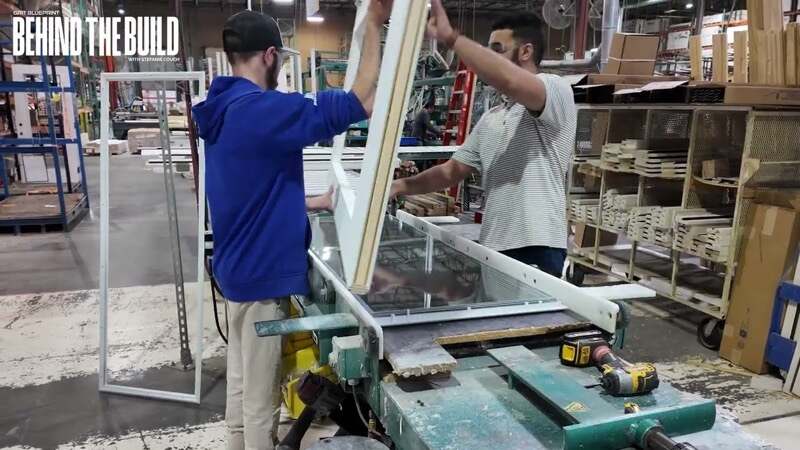
25:08 Stefanie Couch: And what that means for people, and we have some video we can show of it in your shop, but it's actually laying over on each other. So it's not just butting up together. It's actually made like a puzzle piece that fits on top of another. And it really does look so much better. Once you see it one way versus the other next to each other, it's hard to unsee it.
25:26 Lee Allen: So the goal was to try to make it look as close to TDL as possible. And that's what we're doing.
Why Tucker Door & Trim Expanded Into Richmond, Virginia
25:31 Stefanie Couch: Yeah, it looks really good. Well, let's talk a little bit about your territory. So you guys are servicing... You mentioned the Southeast. Do we call Virginia the Southeast?
25:40 Ron Herrin: Mid-Atlantic.
25:41 Stefanie Couch: Mid-Atlantic. Okay. So you guys have recently, in the last few years, expanded into that Richmond, Virginia area. What went into that decision? Why Richmond?
25:50 Ron Herrin: So in the COVID pandemic and then into the supply chain issues that we were staring down in '22 and '23, we were at capacity. I mean, we absolutely couldn't go out and sell any more business. So 40% of our runs today are a two-day run. We run a little bit different equipment than most of our competitors. But when you look at that Raleigh market, I mean, there was so much potential, but you could only service two trucks, you know, a week into that market. So since we're at capacity, we had to free up capacity to be able to grow. So we started looking at the dynamics, and that's when we said, you know what, we might want to move into that Mid-Atlantic area. And that's how we ended up in Richmond.
26:32 Stefanie Couch: And what areas are you servicing from that branch?
26:35 Ron Herrin: So we're going as far north into the D.C., Baltimore, Delaware market, and then it goes all the way over into the Roanoke, Blacksburg market, and then south through just outskirts of Raleigh, down into the coast, just north of Wilmington.
26:52 Stefanie Couch: Okay, love that. That's a great area too, because a lot of growth in North Carolina. North Carolina, South Carolina, what I call the Charlotte corridor. It's a hot area when you look at housing starts. So y'all are definitely in a good spot for sure. One of the things I want to talk a little bit about is what it takes to be a really great two-step distributor that maybe most people don't see, like, behind the scenes a little bit. Sometimes I've heard people say, I don't know, do we even need two-step distribution? If they saw how much inventory you had in your warehouse and thought about having that in their warehouse, they would know the answer to that is yes, we probably do. But what is the two-step model bringing that maybe people don't always know?
27:33 Lee Allen: I came from the one-step side, obviously, and you know, we ran production there. But the two-step is the breadth of inventory that you'll be able to pull that a lot of our customer base cannot. They don't have the room to be able to do it. A lot of times some of them call themselves a full-line service dealer, but some of them are not. But you know, being able to give them a brand name that we stand behind and everything else, to be able to give it to the dealers, and they have something to go to. Obviously, sometimes they run small shops, some of them have bigger shops. But even on that, they don't always have the talent base to be able to go to each one of the steps that we can go into, because we try to cover, you know, the majority of that. And that's some of the things that we do better, especially on the exterior envelopes. But even on the interior, we do a lot of different things that a lot of our customer base don't want to challenge themselves or do, you know, have the time, while they can do other things.
28:36 Stefanie Couch: Yeah, I mean, some of those things I can think of that come to mind is like a double door where you got sidelights on the side of a double with a spread mull or something crazy like that. We're trying to hit an opening size, or, you know, a quad with a transom. Like, quads are hard. I mean, you can't just walk out there and build a quad.
28:52 Lee Allen: You start doing, you know, 12080, and you're going from there, and it's a challenge.
28:58 Stefanie Couch: Yeah.
28:59 Lee Allen: And we do a lot of different things like spread mulls, pocket mulls, all that. So, and being able to have that in one place to go to, you know, it helps out that dealer for sure.
How the Tucker Design Portal Lets Dealers Quote 24/7
29:11 Stefanie Couch: One of the ways I was thinking of is actually your technology, that you have the quoting capability. So, Ron, can you talk a little bit about your portal? Why did you have that portal made? What does it do for clients? What do they use it for?
29:22 Ron Herrin: Tucker purchased the current design portal that we have today in 2015 and basically put it on the shelf, and we didn't pull it back off the shelf until 2020. But we originally thought, you know, this would be a good tool for the customer to quote into our system. In 2020, when we started developing the software, we realized that we were missing the mark entirely, because our customer wanted to be able to quote out of that to their customer, not just enter, you know, a quote. So we started rolling out in 2021. First year we did, I want to say, $3.9 million worth of revenue the customer placed into our system directly. What differentiates us from a lot of others is our system is in our live system. So our customer has the ability to see what we're working on for them, or we can see what they're working on. And so it's just a phone call away if they want us to modify something or they have a question. But today about 30% of our business rolls through that design portal. It's north of $30 million of revenue. And the number one reason people like it is, you know, they don't have to wait for us to walk in and unlock the door and turn the lights on. They can have access to get their customer a quote 24/7.
30:42 Stefanie Couch: I think it's really important in this business to let people do business the way they want to. And if someone wants to quote their own orders and then be able to sell at the table with someone, or at the counter at 6 p.m., and you go home at 5, let them do it. And it helps with the errors and all those things. But you guys still have a full team. If someone wants to call and talk to you guys, you have a team there, right? So letting them do business... I think that's something that, as the generational changes start happening, more people are going to want to do their own stuff most of the time, because they can see the picture, they can see all the measurements on there. But I really do love that your live inventory is in that thing, so you can go see what's there. And also you're tracking once the order is placed. Right? So you can see when it's going to be delivering and stuff like that.
31:31 Ron Herrin: Oh yeah. What the algorithm reads is what is the current production time for the worst item in that quote, and then it looks at what's the next available truck to that customer. So it gives them a live ETA once they're entering the quote. And like you said, inventory is a key piece. We don't allow a customer to enter an order for something we don't have. We tell them, hey, inventory is a little low on this, call the office for assistance. Yeah, but they like having that live information, knowing that the inventory is there and knowing what date we're shooting for.
AI, Consolidation, and the Future of the Building Industry
32:07 Stefanie Couch: When you think about the next, you know, five to 10 years of our industry, what excites you guys the most about it?
32:15 Lee Allen: I mean, if you want to talk about technology coming in through... and he's talking about the configurator, and we were talking earlier about the younger generations coming through. One of the things that I see with the configurator is they're able to pick and choose and look at, you know, online, what they're doing. And it helps educate them, cut down mistakes, which, you know, down the pipeline, helps out tremendously. Now, over the years, you know, the technology has changed. When I started out, I mean, you had air logic. Now you go into, you know, CNC routers and all that. And it's just progressively... We just got back from IWF. You see all the different types of equipment going wild, right? So that is helping, you know, on the production side, the quality side, all that, and being able to do things a little bit different. Obviously, the doors, you're going to have swing doors, you're going to have bifold doors, you know, interior, exteriors, all that. It really is not going to change the style. How many more styles can you have? I don't know.
33:21 Stefanie Couch: They're going to keep coming out with them.
33:22 Lee Allen: Yeah. I mean, but, you know, the big thing is that part of the business. Obviously AI is getting involved in it. You know, a lot about that. I think that's going to continue, you know, progressing us even farther going forward, helping us out all different ways. We probably don't even have the idea how it's going to really help us.
33:41 Stefanie Couch: Yeah, AI is changing so quickly. I would say in the last six months, some of the things that we've been hoping for, like, I've been laying in bed at night being like, dear Lord, please let Claude be able to do this. It can do it now, and it's kind of scary, but it's also super exciting. We're a small company and we don't have hundreds of millions of dollars to pay to do stuff, but I can go do a lot of it in Claude that I could have only dreamt of the situation and the solution for. So it's really about figuring out how do you do that. And then the other thing is the consolidation that's happening in our industry. You know, there's a lot of people that are getting bought, and the landscape of what this looks like is really rapidly changing. So I'm very curious. I mean, how is it even going to look with that angle in five years? You know, I wonder if we'll have sort of a reverse consolidation at that time. Like, maybe this happens for a few more years and then goes back, and independents start to open up again. I don't know.
34:37 Lee Allen: I think it's definitely going to be a cycle there for sure. I mean, you know, you're like, oh, everybody's buying up, getting bigger, but there's also a price to pay for that too. And they lose touch with their customers, lose their talent base when they get big corporate. So I've seen it. You've seen it.
34:56 Stefanie Couch: Yeah, we've lived that. We've all worked in small and large businesses, family owned and corporately run, publicly traded businesses. I think there's benefits. I learned a lot from working in a big business. I learned a lot from working in my daddy's small one-location lumberyard too. And I try really hard to take the best and the worst of both worlds. One of the things that I think small businesses don't do well is marketing and talking about their own business. And that's one of the things we try to do at Grit Blueprint, is, like, how do you help these smaller businesses? I mean, smaller is not always small. Sometimes it's a $100 million business. But how do you help them talk about it and be more visible? And that's one of the things that I'm really passionate about solving, because we are doing so much cool stuff in this industry, and a lot of times no one ever sees the end product except whoever's living in the home, or, you know, like that beautiful church. People need to see that, like the craftsmanship that happens in y'all's shop and on all of these job sites. It's really cool. And I think AI is going to bring that back as a cool thing that people want to do, because jobs are going to go away, and those jobs in the trades are going to be a lot more advantageous and a lot more rewarding, I think, for people than they have been. Maybe jobs at Tucker Door & Trim building amazing doors in your shop. It's going to be... I mean, it already is a great place to work. We talked to your team a few weeks ago, did a bunch of testimonial videos, got to meet some cool people, got a custom-made walnut logo, which I'm still riding a high on. It's over there right down in the office. But how do you think that's going to affect your talent?
36:30 Ron Herrin: I think it has the potential to be huge. You know, it's just getting our people to talk about where they started and where they're at today and how much growth they had, and the opportunities that, you know, they were there if they wanted to take them. So I think they were all consistent about, you know, how they've really appreciated the fact that they came in, started with this job, and now this is where they're at.
36:53 Stefanie Couch: Yeah. And a lot of them have been working there a long time and have a lot more even to go in their career, that they probably will move up and continue to take more leadership roles in the company, which is really cool.
37:04 Lee Allen: Yeah, our team is probably our greatest asset, by the way. The, you know, the talent base that we have. So. And they got a lot of opportunities, and as this company grows and as the market grows, the industry grows, you know, there's a lot more opportunities for everybody out there.
Why Atlanta Uses 10-Inch Sidelights
37:21 Stefanie Couch: I have two more questions. First question is, there is a thing that's weird in the South that I've been trying to figure out for a long time, and it's why in the hell do we use 10-inch sidelights? And when I first met, when I first met Lee Allen, I found out that he has an explanation for that story.
37:39 Lee Allen: I don't have an explanation, but I got a view of what I saw, why it happened.
37:44 Stefanie Couch: So for those who are like, what is she talking about? In my career, when I started in two-step distribution, there was this weird thing in Atlanta that really only in Atlanta they sell 10-inch sidelights on door units. So a 103010 is what we call it. It's a 59 and 21/32 or 59 and 5/8 inch opening. And what actually ended up happening is people would pick out stuff in the catalog. And this is why I started hating this whole thing so much, is everybody would go in and find this beautiful thing they wanted to buy and they would say, I want to price this door. And I'd say, awesome, let's do it. And then I would figure out that they didn't make it in a 10-inch sidelight. So they have started to make way more options now, since, now that I'm an old timer, they have all these cool new toys and 10-inch sidelights. But I always wondered, why did Atlanta, Georgia decide that it was a good idea to change the whole door market and offer something that no one else offers? So tell me kind of what your thought is on why that...
38:41 Lee Allen: Obviously before me, I don't know if they had the 10-inch sidelights and exactly where it started. But from when I was at Hobson, you had the big national guys like Therma-Tru or whatever that were out, and they wanted you to do their systems. So Hobson's management, Mr. Hobson and all that, basically, from what we saw, was, hey, well, let's do our own proprietary system, being able to offer. And that's when the Hedrick sills came out, being able to do it. But I think the builders, the Rylands, all those big builders, or whatever the national builders were, were saying, hey, I want to, you know, downsize this, cut cost out of it. And they were wanting to be able to give a value door, I guess it would be called, and away from that, to save them some money. And it took off from there, is the way I saw it.
39:37 Stefanie Couch: Yeah. And it's really interesting, because that seemed like a small thing. I mean, maybe they saved, like, what, $5 a door or something to do that, to go to a 10-inch. They were wood sidelights is what you guys were selling.
39:47 Lee Allen: Right.
39:47 Stefanie Couch: And now the whole remodel market has literally been changed forever because of that little one degree. You know how you take off in a plane and you move it one degree, it ends up in a different city? Well, you guys, somebody in your location changed the whole door market. But I think that's really interesting. And it's one thing about our business that I think is funny, because we all problem solve for our customers. You and that team, whoever was there on the ground, were problem solving for a customer. And it ended up creating something later that became a whole nother market. I know Therma-Tru and those people are not happy, because now they have to cut fiberglass dies for 10-inch sidelights. But it's kind of funny at the same time, you know, that one shop could change the course of a whole industry in a market. It's pretty cool. Yeah, you're a game changer, Lee.
40:34 Lee Allen: I don't know exactly what we would call that, but you know, the Atlanta market, there were other places that were doing it too. But you know, that's kind of the way I saw it and how it happened. It's just, hey, we were handcuffed by the big guys, and they wanted to be able to, you know, break the handcuffs and offer more. And I think that a lot of that had to come from the national builders saying, hey, we got to save some money.
40:57 Stefanie Couch: Yeah, we need that money back. I always love an independent spirit that says, hey, maybe we won't follow those rules. But maybe that's just me. That may be a toxic trait. I don't know.
Career Advice for the Next Generation
41:06 Ron Herrin: Yeah.
41:07 Stefanie Couch: All right, well, last question for both of you. Ron, as the industry changes, and all of the things that we've talked about today, what's one thing that you might go back and tell 25-year-old Ron? If you had to go back and give yourself a piece of advice, or something to make sure to do the same or do different, what's one thing?
41:24 Ron Herrin: I'd go back and just, you know, you worry so much when you're in this industry, when you go through the ups and the downs, corporate layoffs and everything else. I would just go back and tell myself, enjoy the ride.
41:36 Stefanie Couch: Yeah, you've made a great career out of this too. And I think that's exciting for the next generation to see. Like, hey, this can be a really great place to work, this industry.
41:44 Ron Herrin: Yes, I love that.
41:45 Stefanie Couch: What about you?
41:46 Lee Allen: I would tell them that you have to learn as much as possible, set yourself up for the opportunities, because you never know when that door is going to open, and if you're not prepared for it, you will not be able to get that opportunity. So learn as much as possible, be able to go forward with it, and if you want the opportunity, great. But you know, if you're not prepared for it, then they won't come for you.
42:11 Stefanie Couch: I love that. Well, thank you guys so much for joining me on the Grit Blueprint Podcast, and I'm excited to keep working together and sell a lot of millwork and doors together.
42:18 Ron Herrin: We appreciate the invite.
42:20 Lee Allen: Yeah. Thank you. I enjoyed it.
42:21 Stefanie Couch: All right, we'll see you on our next episode. Thank you for listening to the Grit Blueprint Podcast. If this episode helped you think a little differently about how to show up, share it with someone in your building world who needs it. If you're ready to turn visibility into growth, then head to gritblueprint.com to learn more and book a call to talk to us about your growth strategy. Until next time, stay unmistakable.