How a Prehung Door Is Built, and What It Means for Your Order
The shop buys the slab. Everything that makes it a door unit happens on the line, from the order.


In this lesson9 sections
- What does the door shop buy, and what does it build?
- How does a door move through the shop?
- What does each step mean for the order you write?
- How many doors can a shop build in a day?
- What can a door shop not change on a rated door?
- Watch a unit get built before you sell one
- What to ask your own door shop
- What stays product-specific
- What to do next
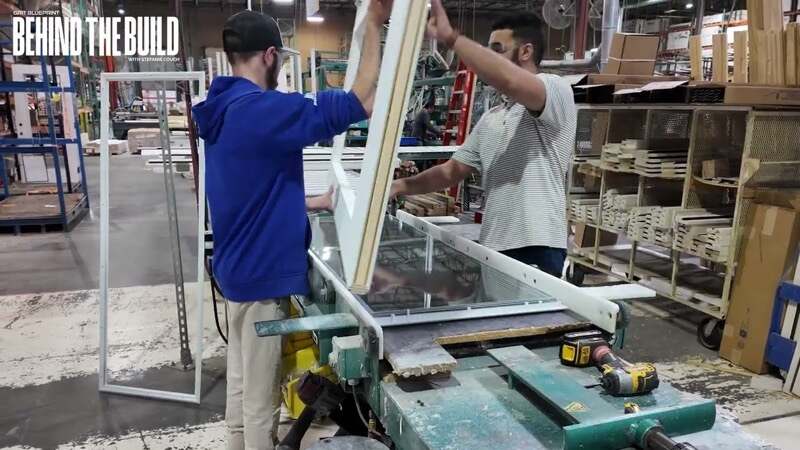
From the episodeHow Doors Are Made On The Kval Door Machine: Behind the Build at Magbee Contractors Supply Part 2
The shop buys the slab. Everything that makes it a door unit happens on the line, from the order.
A prehung door is built in a door shop from parts the shop buys. The slab arrives plain. The shop cuts and joins the jambs, routes and sets the hinges, hangs the slab in the frame, bores it for the lock and puts the casing on. An exterior unit also gets a sill, weatherstripping and often glass. Many dealer and distributor door shops assemble units around slabs they buy. They do not make the slab.
Jason Gert has been with Tucker Door & Trim in Monroe, Georgia, for 28 years. He described his interior department in one breath.
What we do is we bring in unprepped slabs, and we put them in frames. We apply trim, apply hinges
Doors 101 explains slab, prehung and the parts of a unit. This lesson follows a unit down the line. It stops at each step to show what it means for the order you write. It uses what we filmed at two Georgia shops: Tucker, and Magbee Contractors Supply in Winder. Want the shop visits told as a story, with the people who run the lines? Read Inside Two Georgia Door Shops.
What does the door shop buy, and what does it build?
It buys slabs, jamb stock, casing, hinges, screws, sills, weatherstripping and glass inserts. It builds the unit. A shop that assembles an entry door is not necessarily the maker of every part in it, so the name on the slab and the company that hung the door can be different.
That difference is why Bob Magbee, owner of Magbee Contractors Supply, likes doing the work in house.
If something's wrong, you're not going, well, we bought it from Fred. If there's an issue, we can solve it, because we're putting them together.
How does a door move through the shop?
Shops differ in machines and order, but the work follows the same path. This is the line at Magbee, filmed for Behind The Build.
- The order becomes paperwork on the line. Each unit travels with its sheet. At the glass station in the video, the crew read the paperwork for exactly what glass, what seal and what jambs and casing went on that door.
- Casing becomes hoops. A saw set by computer cuts each piece to length. The two top corners are mitered and joined on a V-nailer, a machine that nails the two mitered pieces together. A head piece and two legs make one casing hoop for one side of the door.
- The frame goes together around the slab. On the main line, the hinge jamb goes on first. The machine routes the hinge pockets and sets the hinges and screws, fed from a hopper. Then the head jamb and the strike jamb go on, and an automatic nailer fastens the casing and the head jamb.
- The lock is prepared. The slab is bored for the lockset. Exterior doors in the video arrived with a double bore, one hole for a deadbolt and one for the lockset.
- Exterior units get their weather parts. The exterior jamb in the video is one piece and arrives with weatherstripping already pressed into a kerf, a narrow groove cut along the jamb. A threshold, or sill, goes across the bottom and the joints are caulked.
- Glass goes in, if the door has it. A door cut out for a full-view insert gets the glass and a two-piece lip-lite frame. The frame clamps the glass from both faces.
- Trim, protection and staging. Brickmould, the exterior casing, goes on. At Magbee a cover goes over the sill so crews walking over it during construction do not damage it. The unit is checked against its order, labeled and staged for delivery.
Watch the line yourself: How Doors Are Made On The Kval Door Machine. The casing station has its own short clip: How a V-Nail Machine Is Used to Build Door Casing.
| Step | Interior unit | Exterior unit |
|---|---|---|
| Jamb | Flat or split, by market and door weight | One piece, with a kerf for weatherstripping |
| Hinges | Routed and set on the line | Routed and set on the line |
| Bore | Lockset, or none with a ball catch | Often a double bore for lockset and deadbolt |
| Bottom of the opening | No sill | Sill or threshold, caulked, often with a protective cover |
| Seals | None | Weatherstripping in the kerf, door bottom |
| Trim | Casing hoops, applied or loose | Brickmould, often applied |
| Glass | Sometimes | Often, as an insert with a lip-lite frame |
From the Magbee and Tucker shop videos. Other shops may do some steps by hand or skip them.
What does each step mean for the order you write?
- The casing is cut before the unit is built. Change the profile after the order goes in and the hoops may already be made.
- The hinges are set by machine to the handing on the order. A handing change after the order is a new unit, not a quick fix.
- The glass station reads the order. If the glass, the seal or the casing is not on the paperwork, the shop has to stop and ask.
- The screws for glass inserts go on the inside. At Magbee, the lip-lite frame is fastened from the interior face so nobody can unscrew the glass from outside. The plugs that cover the screws go in after the door is installed and painted.
Grit Guide’s rule for every shop order: if something changes after the order is released, stop the affected unit, change the order itself and get the change approved. A note that never reaches the next station is how the wrong door gets built.
How many doors can a shop build in a day?
It depends on the line and the mix. Jason Gert gave Tucker’s numbers for an eight-hour day on interior doors.
One line should be able to run about 250 slabs through it.
Tucker’s high-capacity line can get upwards of 800 slabs a day when the doors are alike, and drops to about 500 when casing and hinge changes slow it down. The difference is one machine: it sets four hinges at once where the others set one at a time. Twin doors and units with sidelites take the most skill. At Tucker, new people start in the interior department and work their way into exterior.
Timing on a house follows the build. Gert said builders typically want the exterior doors first, so they can dry in the house and run siding, then the interior doors and the windows.
What can a door shop not change on a rated door?
A fire-rated door is one part of a fire door assembly. Intertek, a testing lab that labels fire doors, quotes NFPA 80’s definition: “any combination of a fire door, a frame, hardware, and other accessories.” On any door with a fire label, follow the maker’s instructions, or ask your dealer or local building department.
Watch a unit get built before you sell one
A door order is a set of instructions to people and machines you may never meet. The fastest way to write better ones is to stand next to the line and watch a unit get built: see where the hinges go on, how the casing hoop is made and where the glass station reads the paperwork. Stefanie Couch said it on the Magbee shop floor after watching the screws go into a glass insert.
These are the little things that I wish I knew before I started selling doors, like how this works, you know? Until you see it, you don't really know.
 Stefanie CouchHost, Behind The Build (7:08)
Tucker’s Ron Herrin trains new hires the same way. New hires go into the plant to learn why the details matter.
What to ask your own door shop
“What do we make in house, and what do we buy already assembled? Which jamb types and widths do we stock? Which steps happen by machine, and which by hand? Where does the order sheet go, and who reads which line? What is the cutoff for a change before the unit is built? Which doors can we not modify, and who decides on a rated door?”
Checklist: before an order goes to the shop
Go down this list before an order goes to the shop. Any box you can’t tick is the step to go back to.
0 of 9 ticked
What stays product-specific
Which steps are done by machine, which parts are stocked, how far a slab can be trimmed and how a glass insert is fastened all differ by shop and by manufacturer. The machines named in our videos are one shop’s choices, not a standard. Production numbers are Tucker’s, from one interview. What may be done to a labeled door comes from its listing and its manufacturer.
What to do next
Ask your manager for an hour on the shop floor. Follow one interior unit and one exterior unit from the order sheet to the staging area. Write down every place someone reads the paperwork.
Then watch the Tucker tour: Inside a 290,000 Square Foot Custom Door Shop. The order lines the shop reads are in A Door Style Is Chosen. Is the Interior Door Order Complete? Next on this path: MDF, Finger-Jointed, Solid Wood or PVC Trim. Exterior frames and sills are covered in Interior vs. Exterior Doors.
Disclosure: Tucker Door & Trim and Magbee Contractors Supply are clients of Grit Blueprint, which publishes Grit Guide. The shop visits on this page come from Behind the Build episodes filmed with them.
Questions people ask
Does a door shop make the door?
Often not the slab. Many dealer and distributor shops buy slabs and build the unit around them: they cut and assemble the jambs, set the hinges, hang the slab, bore it and add trim, and on exterior units the sill and weatherstripping. Some shops also build custom wood doors from raw lumber, so ask what yours makes in house.
What is a casing hoop?
The casing for one side of a door, cut to length and joined at the two top corners before it goes on the unit: a head piece and two legs. Bob Magbee, owner of Magbee Contractors Supply, says building the hoops first makes putting the trim on the door unit quicker.
How many doors can a door shop build in a day?
It depends on the line and the mix. At Tucker Door & Trim in Monroe, Georgia, one interior line runs about 250 slabs a day, and a high-capacity line can approach 800 when the doors are all alike, dropping toward 500 with casing and hinge changes. Your own shop will have its own numbers.
Can a door shop cut or drill a fire-rated door?
Ask first. A labeled fire door is one part of a fire door assembly with its frame and hardware. Follow the maker’s instructions, or ask your dealer or local building department.
Episodes in this piece
- Sales Makes the Promise. Operations Keeps It. | Ron Herrin & Lee Allen, Tucker Door and Trim
With Ron Herrin and Lee Allen
- Inside a 290,000 Square Foot Custom Door Shop | Behind The Build with Tucker Door & Trim
With Albert Davis, Bryan Broadnax, Jason Gert and Tommy Ball
- How A V-Nail Machine Is Used To Build Door Casing Faster And Cleaner Than On The Jobsite
With Bob Magbee
- How Doors Are Made On The Kval Door Machine: Behind the Build at Magbee Contractors Supply Part 2
With Bob Magbee
Sources
- How Doors Are Made On The Kval Door Machine: Behind the Build at Magbee Contractors Supply Part 2 Grit Guide
- Inside a 290,000 Square Foot Custom Door Shop (Behind The Build, with Jason Gert) Grit Guide
- Sales Makes the Promise. Operations Keeps It. (with Ron Herrin and Lee Allen) Grit Guide
- UL Fire Door Inspection and Field Evaluation Programs: What Are the Differences? UL Solutions
- Fire Door Field Labeling (FAQ: NFPA 80 definition of a fire door assembly) Intertek