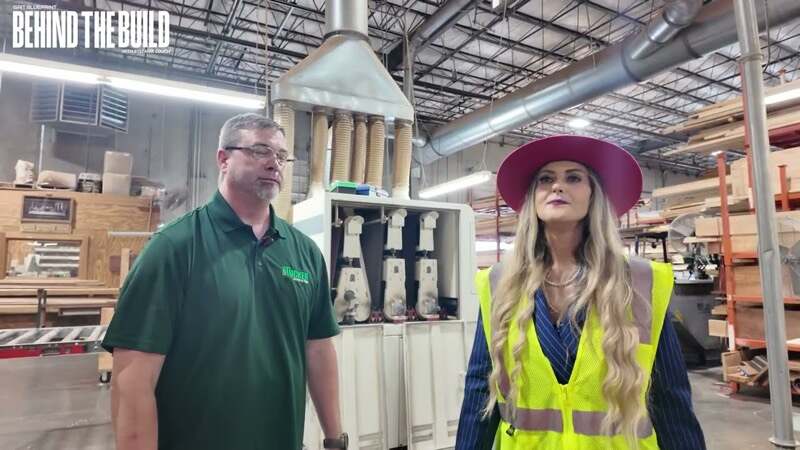
At Tucker Door, Most Claims Start With an Unasked Question
A custom door or window order has questions that have to be asked before it goes in. Ron Herrin and Lee Allen of Tucker Door & Trim list them. Jonathan Harvey of HarLand Windows & Doors adds what happens when nobody asks.
Client: Tucker Door & Trim and HarLand Windows & Doors are Grit Blueprint clients.
Most door and window claims at Tucker Door & Trim start with a question nobody asked when the order was taken: where is this unit going? Ron Herrin, VP of Sales, and Lee Allen, VP of Manufacturing and Procurement, say every custom door order needs five answers before it goes to the shop: the handing, the jambs, the widths, the sill and the opening it will live in. Miss one and a good door ends up in the wrong place.
Herrin is frank about what that means for Allen. “We are very good at complexity,” he says. His sales force, he adds, doesn’t know how to say no (3:23).
Tucker is a two-step distributor. It sells to lumber dealers, and the dealers sell to contractors and homeowners. It also builds: across three locations in Richmond, Albany and Monroe, it makes its own vinyl windows and builds custom door units, meaning doors already hung in their frames. Very little of that is stock product now. “Everything we do is special order, and you got to get it right each time,” Herrin says (9:06).
What does a custom door order need every time?
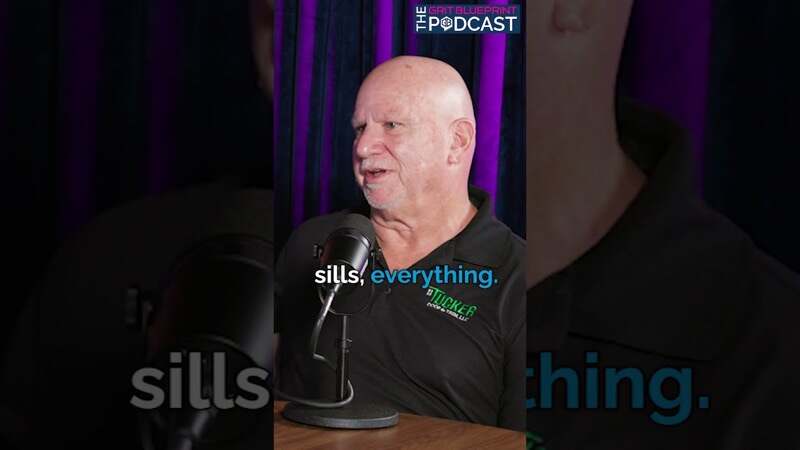
It needs the hand, the jambs, the widths and the sill, written down before sales says yes. Allen gets the order after that yes. His list is short: “What hands? What are these jambs, width, sills, everything. And a lot of that does not get asked” (4:16).
For anyone new to doors:
- Hand, or handing: which side the door hinges on and which way it swings.
- Jamb: the frame parts at the sides and top of the door. The jamb has to suit the thickness of the wall it goes into.
- Width: of the door and of every piece of the unit.
- Sill: the bottom of an exterior door frame, the part you step over.
“The more complex it is, the more details that we have to do,” Allen says (4:16). How to Read a Window and Door Order, Line by Line shows where each of these sits on the paperwork.
Why do most door claims start at the counter?
Because nobody asked where the door or window was going. A claim is a request to have a product repaired or replaced under its warranty. Herrin says most of Tucker’s issues come from that one gap. “We don’t have a clue what they’re doing with it,” he says (12:00). Herrin and Allen give two examples.
- A wood door with no cover. An overhang is the roof or porch above a door that keeps weather off it. Allen says wood doors go in certain applications. When the host asked about a wood door with no overhang, he agreed it is a no-go, and said the overhang should reach out at least the width of the door (13:07). A house on a mountaintop or at the beach gets more exposure, and that is where he points a customer to fiberglass.
- Raw wood and the wrong primer. Herrin sees raw wood interior doors coated with a water-based primer and then called defective. “The finishing is very important,” Allen says (14:15).
The second one is hard to catch, because the person who paints the door is rarely the person who ordered it. Tucker’s answer is to make the instructions travel with the order. When a quote is built in its design portal, Herrin says, “we now have the ability to embed that finishing instruction and that warranty into the quote” (14:39). His other fix is three words long: “Communicate. Communicate. Communicate.”
Ask what the customer’s words mean
Jonathan Harvey is a co-owner of HarLand Windows & Doors. Years ago he was two months into an inside sales job, taking orders at a distributor. A good customer asked for shutters for Heritage Green and gave him the sizes. He ordered them. A few weeks later she came to pick them up and walked out to the warehouse. She came back to ask why her shutters were green. Heritage Green was the name of the subdivision.
“Had I been aware of everything that they had going on and what projects they had going on, I probably would have recognized the name,” Harvey says (10:48).
His other story cost more. On a $2 million custom home, his crew came in to install windows the builder had bought. Somewhere along the way, he says, “plans got changed, nobody communicated, windows got ordered” (6:01). Fifty-some windows were on site and none fit the openings. Framing crews had to come back, change every opening and tape them all again.
Harvey’s standard for talking to a contractor is “telling them the good, the bad, and the ugly, no matter what.” They have jobs to schedule and customers of their own to prepare (5:01).
What should you do when an order goes wrong anyway?
Go toward it, and say when you will have an answer. Herrin’s rule is to “run to the fire rather than away from the fire” (12:00). Allen’s is one sentence: “The most important words are, I don’t know, but I will get you the answer.” The second half counts as much as the first. “You have to get back to them in a timely manner,” he says (18:08).
Harvey has watched a supplier run to the fire. A customer of his was installing doors on a multifamily project in Panama City. The slabs, meaning the door panels alone with no frames, were half-view units. Those have glass in the top half. The customer unboxed them on a Friday afternoon with labor due the next morning. Not one had its glass insert.
Harvey called his rep at the distributor. The rep’s answer, as Harvey tells it, was “that’s completely on us” (22:50). About two hours later the rep called back to say he was loading a trailer. He drove the inserts down, stayed the night and helped install them the next morning.
“That’s what we want as a company. We want those types of stories,” Harvey says (23:19). A customer who has watched a supplier fix its own mistake that fast has a good reason to send the next order to the same place.

Follow the claim back to the order
A claim is the last stop of a handoff that broke earlier. The customer experiences the whole company. That means what sales said, what the order showed, what arrived and what happened when it was wrong. Each department sees its own piece. The customer lives in the gaps between them.
So when the same claim keeps coming back, stop repairing it one door at a time. Follow the work from the counter to the jobsite. Talk to the people who touch it. Ask where information gets lost and what depends on one person remembering. Ask what could be caught earlier. Almost everything on Allen’s list exists at the counter and gets lost before the shop.
The cheapest fix is often to close the loop out loud. Stefanie Couch is the host of the Grit Blueprint Podcast. On the episode, she put it this way. The minute an order or quote comes in, tell the customer, “I got this. Like, I got you” (18:25). And a dealer that reliably catches missing order details before they become jobsite problems has something better to say about itself than “great service.”
What to do next
- Put five lines on every door and window order: handing, jambs, widths, sill, and where the unit is going, including how exposed the opening is.
- Write the job name and address on the order. Read the whole order back to the customer before you place it.
- Check the order against the current plans. Ask whether anything has changed since they were drawn.
- Send the finishing instructions and the warranty with the quote, so they reach whoever hires the painter.
- Decide how fast “I will get you the answer” is at your company. Tell the customer that time when you say it.
For a list you can work from at the counter, see Window and Door Order Checklist. If the complaint has already come in, start with How to Check a Door Complaint Before Anyone Blames the Door. To see what happens to an order once it reaches the plant, read What Happens to a Custom Window Order on the Shop Floor.
Questions people ask
What details should sales confirm before a custom door order goes to operations?
Confirm the handing, the jamb details, the widths and the sill, and ask where the door is going and how exposed the opening is. Lee Allen of Tucker Door & Trim says the more complex the order, the more of these details operations needs. A broad product description is not enough to build from.
Why do so many door and window claims come back to the order?
Because the product often went into a place it was not chosen for. Ron Herrin of Tucker Door & Trim says most of the company’s issues trace back to nobody asking where the door or window was going, such as a wood door on an opening with no overhang or raw wood finished with the wrong primer.
What should a salesperson say when they do not know the answer?
Say you do not know, commit to finding out, and get back in a timely manner. Giving a wrong answer to sound sure creates the next problem. Tell the customer when they will hear back, and keep that promise.
How do finishing instructions reach the painter?
Send them with the quote and the warranty, not only on a website or in a brochure. The person finishing a door is rarely the person who ordered or installed it. Tucker Door & Trim embeds finishing instructions and the warranty in quotes built in its design portal.
Watch the full interviews
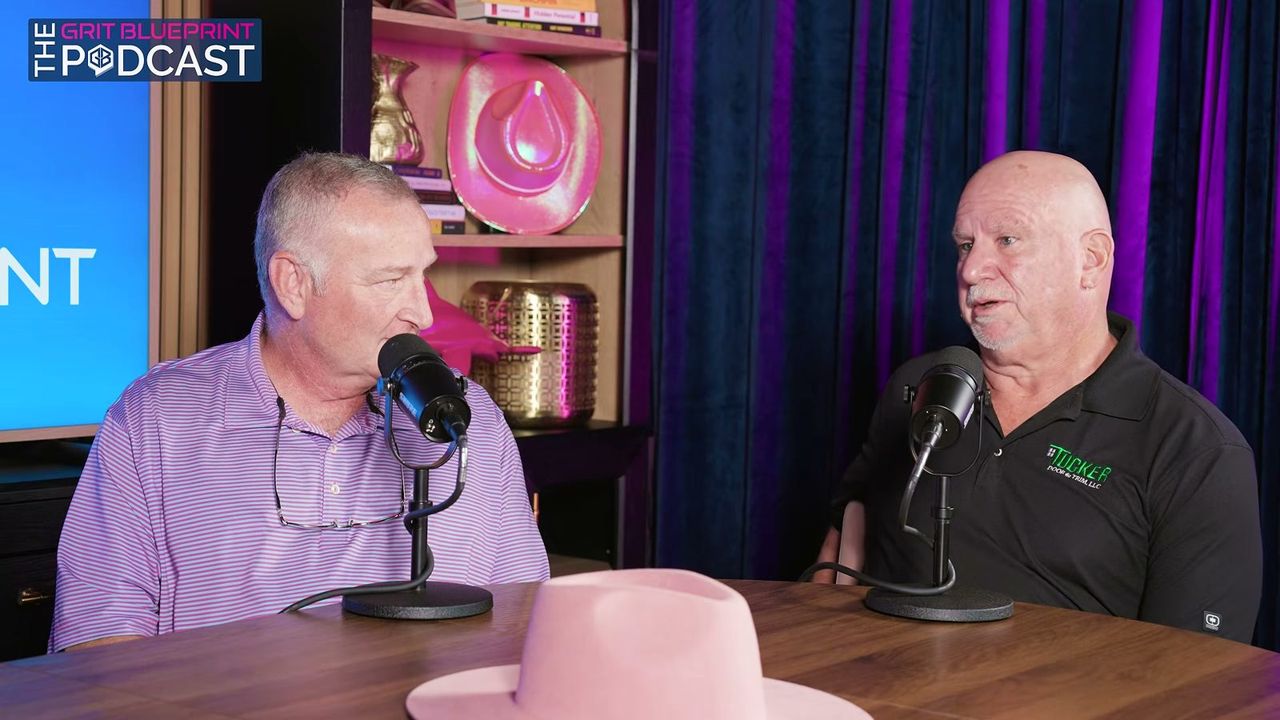
Sales Makes the Promise. Operations Keeps It. with Ron Herrin and Lee Allen, and How Great Companies Turn Mistakes Into Customer Loyalty with Jonathan Harvey. Time stamps are from the podcast audio.
Ron Herrin and Lee Allen of Tucker Door & Trim explain what sales has to ask before a custom door order goes in, how to handle a claim, and what a two-step distributor does that most dealers cannot.
A Grit Guide original. This piece is built from our own interview.