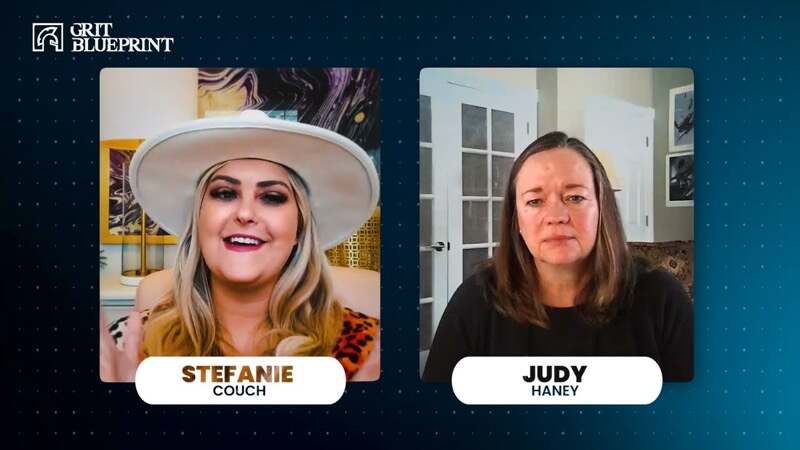
Click any timestamp to jump to that moment in the video.
Opening Clips and Introduction
0:01 Hacia Atherton: You talked about positive psychology. For people who maybe don't know what this is, tell me more about what that is. Clinical psychology is like your doctor. And then positive psychology is like your personal trainer and your dude. So if you go to your arm, you go to the doctor. If you want to get strong biceps, you go to the door.
0:19 Speaker 1: Asia Atherton is a visionary leader who has dedicated her career to fostering diversity and inclusion in the skilled trades industry. Inspired by a life-threatening accident that introduced her to the transformative power of positive psychology. Her commitment to placing people before profit and her passion for creating supportive environments for women in traditionally male-dominated fields have been instrumental in grit success.
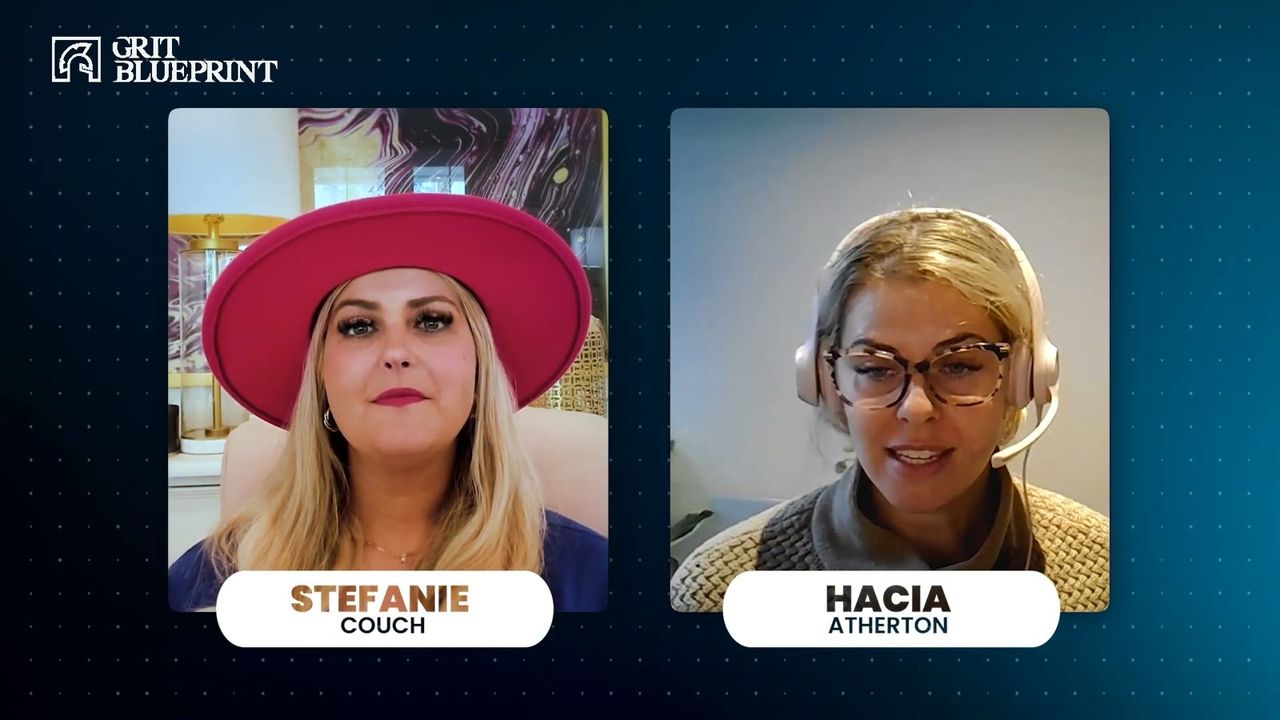
0:47 Hacia Atherton: This is not feeling this is excitement. This is excitement for the learning I'm about to add. This is excitement for the failing I'm about to do because that is going to allow me to get closer and closer to success. Welcome to the Grit Blueprint Podcast. I'm your host, Stefanie Couch. This podcast is about branding, building, and business. It also highlights the grit that it takes to be successful in business and in life. Let's get started. Hello and welcome to the Grip Blueprint Podcast with Stefanie Couch.
1:22 Stefanie Couch: I am so excited today to have a friend from all the way across the continent here. I am excited to welcome you. Heceia, thank you so much for joining me.
1:33 Hacia Atherton: Thank you for having me on.
1:35 Stefanie Couch: And we actually met through a mutual friend recently and found out that we both have similar love for people in the trades and in construction. And you have an amazing organization helping women and also working with corporations on some positive psychology efforts. And I'm really excited to talk to you today. Obviously, there's a lot of women that are working towards this goal, but there need to be so many more of us. So I'm excited that you're doing work and I want you to tell me a little bit about you.
From a Plumbing Family to the Factory Floor
2:05 Hacia Atherton: So I actually come from a fifth-generation plumbing family, but despite having all of that rich connection to the trades, I was always encouraged by both myself, my family, and my school to go down the academic pathway. So I graduated from school. I actually got into law, and it's ironic what I'm doing right now because I left the law industry because it was so male-dominated, and little 18, 19-year-old me was like, wow, this is too much to deal with. So I left and went and did fashion design.
2:40 Hacia Atherton: And then from there I went into financial planning. Again, that industry didn't really align with like my values. So I kind of got a bit lost. And I went back to university, did my commerce degree, majoring in accounting, and became an accountant. But once I came back to the family company, which now manufactures medical infection control equipment, my dad said, off you go, go spend time on the factory floor. Now that you've kind of learned all of this business acumen. And I was an international dresser driver at the time, training to go towards the world equestrian games.
3:18 Hacia Atherton: So for me, I was like, oh, how nice I can just work on the factory floor, ride my horses, what a beautiful balance. But I went through a really interesting journey on the factory floor. So once I put my steel cap boots on and I walked into the factory floor, all of that confidence from being an international dressage rider, a very confident woman started to actually peel away. And I was questioning myself when I was struggling to world or struggling to use the CNC machines. And I was blaming my gender.
3:49 Hacia Atherton: I'm like, I see, I'm a girl, I can't do this. And I was fortunate enough to be surrounded by amazing tradesmen that said, your gender has nothing to do with it. The world doesn't know if you're a girl or a guy. The CNC machine doesn't know if you're a girl or a guy. Like, this is all in your head. Um, and then I thought that's really interesting. But when I went outside of my family company, I really started to experience like society and other tradesmen from other industries or other companies commenting on why are you in high vies?
The Riding Accident and Six Months in Hospital
4:22 Hacia Atherton: It's not Halloween. So why are you dressed up as a tradie or look at that high viz candy, yum yum? And I started to experience all of this kind of microaggressions and anti-feminine behaviour towards me. And then I had my horse riding accident. So my horse reared up, I fell off, she weighed 600 kilos and decided to do some role reversal and have a go at sitting on top of me, which didn't go too well for myself. So I was airlifted to Alfred Hospital here in Melbourne, Australia.
4:58 Hacia Atherton: I got told that there was only millimetres between life and death from the accident, and I had to go into a nine-hour surgery where they tried to piece together my shattered pelvis, my broken hips, um, damage to my spine, nerve damage to my right leg. And I came out of that um surgery being told that I will most likely will never walk again in any meaningful way, that I needed to spend three months non-weight bearing in a hospital bed. And after we've gone through those three months, we will have a go at standing and see how it is.
5:34 Hacia Atherton: And so I spent six months in hospital after that accident and learning how to stand again, learning how to walk again. I've successfully run a half marathon since. So definitely proved the doctors wrong, which was amazing. And that was really connected to the positive psychology work. As I say, the clinical psychology in hospital helped me stay alive because I was extremely depressed, very, very deep, dark depression. So the clinical psychology kept me alive, but the positive psychology allowed me to thrive. And what I did in hospital was really start to dig down into the experience I was having when I was in my steel cap boots and high feeds and reach out to other women in the industry, really get their lived experiences, their journey, how they got into the industry, why they're staying in the industry, or the women that had left the industry, why that all happened.
6:30 Hacia Atherton: And so that was an amazing experience to spend that six months kind of really deeply researching the issues that are happening within the construction industry and manufacturing industry in Australia around attracting and retaining women, despite our country having some of the worst skill shortages we've ever seen in our history.
6:53 Stefanie Couch: Yeah, your story is so cool because you've done a lot of things in your life and you have had a lot of experience in different industries, and then you kind of came back to this family business, which I'm from a family business. I understand the kind of pull of that. It's interesting, though, that your experience and my experience and several other women that are out there, it there's a common vein there uh that you have some men who are wildly supportive that do amazing things to help you, which I've definitely had in my life.
7:23 Stefanie Couch: And then there's some that they don't get it and they're actually adversarial with you. And then I've also had women that are the same way. Some are very supportive and some are adversarial. So it goes way past the gender, but you talked a little bit about this about the confidence. You said, you know, you had this confidence of being an amazing world-class athlete, and then you walk into an environment that's not something you knew and felt this instant, like, oh no, sinking into yourself. And women seem to have that happen a lot more than we would like to admit inside of us.
7:56 Stefanie Couch: Sometimes we don't even recognize that that's happening when we go into a new challenge. We might say, Oh, I don't want to do that, or I'm not interested in that. And really, it's just that you're scared. And this happens to men and women. I mean, fear is such a real thing in our lives. What would happen if this doesn't work out? What if I fail? I'm gonna look stupid, I'm gonna be judged. And I've just found so much that if we can just let go of that, even just a little bit to have the courage to go through that first minute or two of the hard thing, usually we're better than we think we're gonna be on the other side of it.
8:30 Stefanie Couch: And I love that you went through so much. I mean, you pretty much were given like a life in bed sentence, and then here you are, and obviously you've done a ton, run a half marathon, which I've never even done, and I didn't have an accident. So kudos. Not gonna act like I'm probably ever gonna do that. Not, I just don't like running. But you are doing a lot to change the world that you're in, and so I love that you're having such an impact. When you had the accident, that was in 2017, right?
9:01 Hacia Atherton: Yes.
9:01 Stefanie Couch: So you've been down this road now for around seven years, and I know you still have some things that you're working through with injuries and stuff like that doesn't just go away. You talked about positive psychology. So, for people who maybe don't know what this is, have never heard of this, tell me more about what that is and how it has impacted you in your last seven years since this accident.
Clinical Psychology and Positive Psychology
9:24 Hacia Atherton: So, the difference between positive psychology and clinical psychology, I like to say there's a baseline, a zero baseline that we get to with our psychological well-being and health. When we go below that baseline is when we start to see clinical conditions of anxiety or depression. And that's where clinical psychology is very important to get us back up to that kind of baseline. And you get to this, I feel okay, and then you no longer see your psychologist or your counselor or um your other clinical people that work in this space because you're back to the baseline of zero.
10:00 Hacia Atherton: But the problem with staying at that baseline, as soon as life knocks you off your feet, which that's the only thing I can guarantee in life, is life is going to knock you off your feet.
10:09 Stefanie Couch: Yeah,
10:09 Hacia Atherton: you can go back into that clinical state. So positive psychology really starts to build a strong buffer from that zero line to really making sure you've got the psychological well-being and strength to be able to go through life's emps and flows. So it's all about really putting a lot of resilience into yourself, a lot of resilience into your mindset, understanding how we really feed our psychological well-being and create a lot of strength in our psychological well-being. So for me, I guess the best way to put it is clinical psychology is like your doctor, and then positive psychology is like your personal trainer and your gym.
10:50 Hacia Atherton: So if you've broken your arm, you go to the doctor. If you want to get strong biceps, you go to the gym. And so positive psychology is really the gym for our psychological well-being.
11:01 Stefanie Couch: That's a great way to example those. I like that a lot. So, how would you tell someone who doesn't know anything about positive psychology that wants to learn more about this? Like, what would be the first steps to getting into that mindset?
The PERMA Well-Being Framework
11:13 Hacia Atherton: For me, the foundation that I used all through my um accident and recovery, and I've had 30 surgeries since, with more to go. As you mentioned, I've got to get my neck fused, I've got to get my other hip replaced, and my pubic bone fused. So that's three more extremely major surgeries that are coming down the pipeline for me. But I use this well-being framework called PERMA. So it looks at the five different pillars that we really need for a strong psychological well-being. And the first one is positive emotion.
11:46 Hacia Atherton: So that's looking at how do we build up our positive emotion? How do we get out of that cycle of those negative emotions? Like when I went into the factory for the first time, the self-doubt, the negative self-talk, I can't do this because I'm a girl, I can't do this because I'm an academic. That's that negative cycle. So the positive emotion is how do we build up positive emotions? And even in my darkest time in hospital, when I am literally lying in a hospital bed to have people move me, it was a whole medical team that had to shift me to a different style of bed to push me around to take me to showers.
12:22 Hacia Atherton: I use gratitude in that moment to build my positive emotions. And even just being so grateful, I'm grateful that there is a medical team that can move me and I can have a shower. And even though I was in the hospital clinical environment being hosed down like a racehorse in my shower because I couldn't do it myself. I sat there so grateful that I was getting my hair washed. I was having my hygiene looked after. So I could have choose to have the negative emotions, but I focused on the positive emotions and the gratitude for what was good in that moment.
12:55 Hacia Atherton: And it's so great to have your hair washed. So it's like you can find gratitude even in your darkest times and build up those positive emotions. Then you're looking at the E, which is engagement. So finding those things in your life where you lose track of time. You're like, it's lunchtime, or watching your kids play sport and realizing that the game has finished, but you've been so engaged in watching your child play sport or different things like that. We need to find stuff in our lives where we get so engaged we lose that sense of time.
13:26 Hacia Atherton: Relationships, which are so incredibly important, and building those high-quality relationships. And as you said, when we have fear and we have self-doubt, leaning into that support network that is like, you've got this, even if you don't believe in yourself in this moment, I believe in you. And that is so important for our psychological well-being because we all doubt ourselves, every human being doubts. Um, and then you have meaning, which is connecting to something that's greater than us, and this conversation is a perfect example of that.
13:59 Hacia Atherton: What we're talking about and what both of us are wanting to do in the construction industry is way greater than you and I. It is not just for us to get a payday, it's to create a change, a legacy, and a history in the construction industry. So that's what meaning comes from in both of our lives. And then the other one is achievement. And this is where, especially in Australia, we've got something called tall poppy syndrome. So as soon as anyone does anything good, we're like, slave you, don't.
14:30 Hacia Atherton: So, you know, even very successful people, they're like, Yeah, I do all right. Like, we're not very good in Australia at celebrating our achievements, which is what I love about America, because
14:41 Stefanie Couch: yeah,
14:42 Hacia Atherton: you guys are so good at A, like you're so good at celebrating yourselves and celebrating achievements and celebrating wins, which is amazing. So, even in America, people focus probably more on the other pillars because your your culture is very A-driven. In Australia, our culture is not A-driven to the point when I do some keynotes about my horse riding accident, Australians will come up to me and they're like, Yeah, but you're alive. It's not like you've died. And it's like, mate, I got crushed by a 600 kilo horse, and you're still like, yeah, but like, really?
15:17 Stefanie Couch: Like, would you be happier about telling you the story as it ghosts from the grave? Like, would that validate this story a little more for you? People are crazy.
15:25 Hacia Atherton: Yeah, so for our culture, we've really got to focus on building that A up from psychological well-being because we're not good at it.
Claiming Achievements and the Skills Shortage
15:32 Stefanie Couch: It's funny that you say that culturally is such a big deal for you, but also I actually am doing a program. There's a book called How Women Rise, and it talks about 12 habits women have that actually hurt them professionally for becoming as successful as they can be. And the number one thing is not claiming your achievements.
15:51 Hacia Atherton: Yes. And
15:51 Stefanie Couch: women really struggle with that because even in America, even the bold, amazing braggarts that we are, um, we sometimes have a hard time talking about what we do, and we often undermined those things and say, well, it's not a big deal, or it was a team effort when you know the man would be like, Yeah, I did this, and and they don't give all the credit to someone else. Or if they do say it's a team effort, they still take their amount of credit. So women really, really struggle with that.
16:20 Stefanie Couch: And I think that's a part of the with the trades. It's already a male-dominated environment, three to four percent women here in the US. I don't know what the standards are there as far as you probably see.
16:33 Hacia Atherton: With a lot of trades, particularly metal trades, not even a full percentage. Yeah.
16:37 Stefanie Couch: It's it's so crazy the numbers. And I heard something yesterday. Um, this is a US statistic, but 550,000 plumbers will be needed in the next five years. Uh, 400,000 electricians, uh, welders, like, I don't know, it was like 300,000 in the next three years, and there's only 34% women, and around 50% of the people in the industries will be retiring in the next 10 years. So it's a lot of people we need already, and then you just deduct the people that are coming towards their retirement cycle, you have to get other people that aren't considering the trades to consider that.
17:17 Stefanie Couch: So if it's women, if it's diverse people, we have to fill those gaps somewhere. And that becomes this giant problem because these people are actually building the places we live, and there's already a huge housing shortage in the US. Sure, there probably is in Australia too. How do we imagine a world and make that happen where women actually want to go work at these places because they're really great paying jobs? It's not a pay problem. That's definitely not the issue. It's a lot of different things that go into it.
17:47 Stefanie Couch: So it's really a to me, it's like a branding issue on the front end to make them feel like, hey, this is something we want to go look at. But then once they get in it, you have to have some sort of ability to make it an environment they can thrive in. And some of that's on the woman and with the confidence and all those things. And some of it is on the environment and the culture of the place they're working in. You can't have this place that's abusive and expect someone to want to stay and thrive.
18:13 Stefanie Couch: So tell me more about empowered women in the trades. What is your mission? How are you doing these amazing things to get more women in the trades in Australia? And just tell me how it started.
How Empowered Women in Trades Started
18:27 Hacia Atherton: So it really started connecting with understanding my lived experience in when I was in the factory and then the research I was doing in hospital. And then I realized we had such a massive problem with one, the awareness. So I started to reach out just to women, I'll speak to the nurses in my hospital bed. So many women weren't aware of the different career pathways into trades. They didn't understand how you actually became an electrician, what an apprenticeship was. And outside of like plumbing, carping, carpentry, and electrical, they didn't really understand like fitter and turner or welder.
19:02 Hacia Atherton: Um, even the plumbing industry, they didn't understand HVAC or being a roofing plumber or gas fitter or all of these different things. They just thought dirty toilets. And so I realized again there was a branding issue and a lack of awareness as well for women to understand how to even come into the industry. So they weren't even asking the questions. So we've designed programs that we run in schools and outside of schools to really immerse women in a safe space where they can be very vulnerable, ask the silly questions that if they asked in an environment where there potentially is men, they would be like, How do you not know that?
19:39 Hacia Atherton: Or why didn't your dad teach you that? Or different things like that. So we create a really psychologically safe space for women to be very vulnerable, very curious, immerse themselves in the a range of different trades. We get them out to construction sites, out to manufacturing sites, again in a cohort of women. So when they're walking around a big construction site with a thousand people and maybe like four women on the site, they don't feel so overwhelmed. If anything, the guys on the site are like, wow, we have never seen this many women on the site.
20:09 Hacia Atherton: We don't know quite what to do. Like, or sit on the lunch room and you see all the guys like, what is going on? Um, which is great because it gives the women that confidence because they're in their group, they're in their community, they're like, Yeah, have a look at us. Yeah, we're here, like, yeah, we're making our mark. So that's really to support the awareness. And then we do marketing campaigns and all the different stuff and interview amazing tradeswomen and just get the information out there so that women can start to understand one, the questions to ask how do I get an apprenticeship?
The Alliance for Employers
20:42 Hacia Atherton: Um, or you know, what does that look like? What are other roles into the industry that aren't necessarily the apprenticeship model and understanding those different things? So that's working on kind of the awareness and then transitioning into the attraction side to the industry. We've just launched our corporate um membership program called the Alliance. And we did that because women in Australia, and I'm sure this is um similar in America, I've started to talk to women over in America and starting to get the same feedback of really struggling to find employers that will take the chance and give them an apprenticeship and give them an option.
21:19 Hacia Atherton: And Australia women will submit, you know, over 40 resumes, call over 40 employers, all advertising for apprentices, all refusing to take them on. So our corporate platform is to be able to really bring together that community of organizations that are not only willing to employ women but proud of it. They want to put the badge of honor that they're an EWIT Alliance member so they can really show that they are a safe harbor for women to come into the industry. Yes, they might not have it all right, but they're willing to work on their culture, they're willing to work on their policies and procedures, and they're really willing to work with their female democratic.
22:00 Hacia Atherton: To co-design what great looks like as a gender diverse organization. And that flows into the other work that we do, and I particularly specialize in is how do we create those real fantastic cultures where everyone feels that they belong, everyone feels that they're included, everyone feels that they're respected and they've got access to the resources and the support that they need to be able to thrive. Now, some even men in the industry need mentorship to be able to become inclusive supported leaders. So I work with organizations to provide that support.
22:37 Hacia Atherton: Some women, again, need some coaching to be able to have that confidence to really find their voice in a male-dominated industry. Some people have got it. So it's not a one size fits all uh approach. And that's where I think in our industries we have to work on both the attraction but also the retention. What is needing to change to make sure we we create cultures in our trade-based industries where there is a deep sense of respect, belonging, and inclusivity for all.
23:08 Stefanie Couch: Absolutely. And I think for sure the corporations, I'm seeing there they have this great desire to have women in the industry. I'm more from the building material side of the industry than the trades, but obviously that all trickles down because you're selling to the trades. So, you know, very closely wrapped together. And I think people would most of the time love to have a lot, a lot of women in the organization. It's just figuring out, like you said, it is different for every person. It's also different for every trade, every region.
23:41 Stefanie Couch: Um, there's a lot of things that go into that. And you've got to figure out what works for your business and also works for the people you're trying to attract. And so you both are happy. It's got to be a symbiotically good relationship for the people that come in and the business because at the end of the day, you're running a business. So that's a really strong thing to have to balance. I find that that's challenging, even for me as a small business owner. You know, I have certain things that are demanded in a certain role, and you want to give them that time to train and get to where you want to go, but you also need someone to perform in a role.
24:15 Stefanie Couch: So it's a balance of that training. And I found that that's probably one of the biggest lacking areas I see is if someone is going to come in and they're really hungry, and then you wait 90 to 100 days and there's no training program, there's no regimen of how to get them to where they need to go, they're probably gonna leave. And it will probably be said that they didn't do a good job when they do leave because they didn't, because they weren't set up for winning up front.
24:41 Stefanie Couch: So we're working on a lot of training programs too, even on the soft skills and things like that, but even more technical in the building materials space, same type of initiative is that we have to fix this problem because there's such a giant gap already that's only going to continue to widen. I call it the Red Sea parting. And it is basically gonna be a huge issue in five years. We have to fix this now, at least start fixing it. So I'm excited for what you're doing.
25:08 Stefanie Couch: And I mean, everything you're doing is sounds amazing and going into the schools and all of those things, so impactful. So you're kind of hitting it from all sides, which is awesome. And you talked a lot about resilience, and I think we have to have resilience. This is called the grit blueprint. That's the name of the podcast. Tell me what the word grit means to you.
What Grit Means to Hacia
25:29 Hacia Atherton: So for me, grit is really about actually leaning in and really embracing that fear, that self-doubt, really looking in the mirror of those very overwhelming emotions and learning how to actually embrace them and take a step forward with your fear, with your self-doubt, not going, oh, once I have, or once this happens, or once this thing happens, not sitting there and waiting. And really, that's the courage to look at those gremlins that sit on your shoulder and give you the self-doubt, tell you that it's not gonna work, tell you you're not good enough, tell you that this is a waste of time, and really pick yourself up with that deep sense of I can do this.
26:15 Hacia Atherton: I don't know how, I don't know what the next step is, but I'm gonna take a step and then I'm gonna take a step and have that real faith that the path will unfold in front of you. And going back to making sure you are in a community of people that are pay potentially a few steps in front of you, and really embrace that vulnerability to say, I don't know how to take the next two steps. You're five steps in front of me, guide me on the next two steps, support me on the next two steps, and really being honest with ourselves and that community of those relationships that we've built around us when we're not okay, when we need someone to hold our hand, when we need that support, and stop trying to do it ourselves.
26:58 Hacia Atherton: I think sometimes when people look at grit, they think it's like this stoic toughness, and you have to be able to get into the ring and like punch on and know everything. I actually see grit as really embracing your vulnerability to be able to admit when you're inadequate, admit when you don't know, and be able to have that deep fire to go, I can't do this on my own. I need a coach, I need a mentor, I need someone to help me through this. And that's how we become strong and resilient and really have that grit to keep going when we have the vulnerability to admit that we're not enough.
27:35 Hacia Atherton: And we admit that these voices are in our head, but we have the courage to keep going despite those really overwhelming feelings.
27:44 Stefanie Couch: Yeah, I love that perspective and reframe of it's not just toughness, it's being able to embrace the failures and keep going. And I think that's one thing that I would say for everyone that is struggling, you're going to struggle. It's not a part of life that you can get around. I mean, if you're doing anything at all in life, you're gonna eventually, like you said, you're gonna get kicked, you're gonna get trampled, you're going to go through these things. It looks different for each person and it may happen at a different time.
28:12 Stefanie Couch: But failure and just absolute disappointment is a part of life. So don't feel like, why is it so hard for me? Because it's hard for everyone. It may just be not that exact season of life. You know, maybe they had hard when they were growing up, and now things seem a little easier, but you know, they're struggling through things just like everyone else. So don't think that you're weird because you have it hard. You're just human. And unfortunately, life is just tough, you know? And I think that's important.
Reframing Fear as Excitement
28:40 Hacia Atherton: And it comes back to again what I was saying about positive psychology. Like if we stay in our comfort zone, yes, everything's amazing because we're not growing, but as soon as we're not growing, we're dying. So it's about really having that excitement around your discomfort. Like as soon as you're uncomfortable, it means you're growing. So have gratitude for the discomfort, have gratitude for the fear because that's a sign that you're actually growing and you're stretching yourself and you've stepped outside of your comfort zone. Yes, have the support networks to keep going through that fear zone to your mastery zone.
29:14 Hacia Atherton: But as soon as you master whatever you're feeling uncomfortable with and whatever you're struggling with, that will become your comfort zone. And then you re-go through that cycle. So I really get excited when I feel all of those, oh, I can't do these uncomfortable things. Because I'm like, I am about to level up and this is exciting. I need my strategies to help me level up. But as soon as I start to get that feeling inside myself, I've reframed that as excitement. I'm like, this is not fear, this is excitement.
29:43 Hacia Atherton: This is excitement for the learning I'm about to have. This is excitement for the failing I'm about to do because that is going to allow me to get closer and closer to success. No successful person has gone from zero to a hundred without failing a hundred times.
29:58 Stefanie Couch: Yeah. That's just a vision from the outside looking in that you think they're an overnight success that you didn't see the 5,000 times that they got kicked in the face every day. Oh, which is especially true with entrepreneurship. You know, I think that's one of my biggest lessons is like these people that try to act like they got it all together, that even no matter where you are, how much money you're worth, no matter how successful your business is, even like Amazon and Jeff Bezos, like he has issues.
30:23 Stefanie Couch: He has things that he's working on. Um, you know, Apple has problems. All these companies, no matter where you get to, they just have a little more resources to deal with the problems when they happen. It just doesn't mean they don't have them. So speaking of leveling up and what's coming in the future for you, you have a new book that is about to be coming out later this year in the end of 2024. So tell me a little bit about what that's about. And um I want to hear any other exciting things you have coming.
Her Book on Men and Workplace Culture
30:47 Hacia Atherton: So the book's called The Billion Dollar Workplace Issue that no one's talking about. And it's really diving into the research that I'm doing with all of my psychology studies and that I did in my master's of applied positive psychology, which is understanding the masculine journey through diversity and inclusion. So, what we've done and what the patriarchal society has actually done to men and young boys is stolen their tears. We've told young boys that they need to become men by disconnecting from their human condition, disconnecting from their emotions, disconnecting from their ability to be vulnerable, which we just spoke about was so important to be able to be vulnerable and to be able to admit when you're inadequate.
31:30 Hacia Atherton: But as a society, we have told men that no, no, no, you either have to be happy or the only other emotion you can show is violence and aggression. And we endorse that through sports, through movies, through so many different things. So my book is really around how do we create that psychologically safe space for men in particular to step back and learn how to reconnect to their human condition so they can start to learn, to lead through a sense of vulnerability, to lead through a sense of how do I create inclusive belonging environments?
32:06 Hacia Atherton: Because poor workplace culture is costing the US between $450 and $550 billion a year, because poor workplace culture leads to productivity issues, turnover issues, a range of different absentees because of illness days. Uh, in Australia, we've got a smaller economy, but it's still about $55 billion a year that it costs us. And we've been working on this for a while. And I was like, what is going wrong? Why aren't we making real change here? Why is it getting worse? So that's where my research really started to go into what does the patriarchy and traditional masculine expectations do to men?
32:49 Hacia Atherton: And how does it really uh make men not be able to step up and be the allies for the change that we need? As we've seen with the skill shortages, we need a very diverse workforce. We can't achieve supporting the economies that we're growing by just having men in the man roles and women out there doing the caring and all of those kind of things. We need that co-gendered yin and yang, not only to be able to do the labor that's needed to keep growing our economies, but to create the innovation, to create that space where we're designing things that work for both genders and cogenders and all those different things.
33:35 Hacia Atherton: So if we keep men in this cage of silence where they're not allowed to speak up about their concerns, their fears, their inadequacies, like I've interviewed a lot of men both in Australia and the US for this book. And one man was saying, Yes, I've got a couple females on my team, but I'm so concerned whether when I have a meeting with them and one-on-one, do I need someone in there to witness the meeting? Do I close the door? Do I not close the door? So I am having less one-on-ones with her than my males because I don't know what the right thing to do is.
34:08 Hacia Atherton: I'm so concerned about doing the wrong thing. So therefore, I have backed off and I probably am excluding her, my female team members, a little bit because of my own fear. And so that and that's what the whole book is about. How do we create as human beings a real deep level of respect equality? So we all start to respect each other as the creatures of humans, and then through our heart of appreciation and gratitude for the difference, we actually co-design a sense of belonging and inclusivity within our organization.
34:43 Hacia Atherton: And we empower particularly men to feel safe, to ask the question, would you like the door opened or closed? Would you like to have someone else um take notes in this meeting or would you like a private meeting without them feeling we're going to come at them and victimize them and and tear them down for not necessarily knowing what the right thing is to empower, right thing is to do to empower the women in their teens.
Closing Thoughts
35:07 Stefanie Couch: Yeah, I get asked that a lot actually. Um, how do we fix this? How do we do better? What do you need? What do you want to be supported? And I don't think most women even know the answer to a lot of those questions themselves. So for us to anticipate and expect that men are just gonna carte blonde, all have it figured out when half of us don't even have it figured out, it's kind of a ridiculous expectation, truly. Um, and so that's the thing is I think working together and having grace with each other is very important.
35:34 Stefanie Couch: There's no like one size fits all, there's no right answer because it's different for every person. And that makes it even more complicated because there's no rule book. It's not like, hey, if this happens, do this. If this happens, do that. Well, nope, there's caveats and everything. So I think that it's important to have these conversations because we won't solve this issue with all the amazing labor that could come from having more women in the workplace without also having the men be a part of that solution and like you said, feel comfortable doing that.
36:03 Stefanie Couch: So I love the book idea. I think it's gonna be amazing. And if you obviously have a little time before it comes out, but if you will have it on your website, I'm sure it'll be on Amazon everywhere else. So check that out later this fall. And I'm just really excited to keep getting to know you and hopefully supporting each other. I know you're gonna be coming back to the U.S. You do keynote speaking, you're on podcasts everywhere. I see you a lot on social media.
36:26 Stefanie Couch: So check out, we will put all of your information in the links in the podcasts. And I'm just so grateful for you for coming on today. Thank you so much for a wonderful conversation and for everything you're doing to change the world.
36:37 Hacia Atherton: And thank you for the incredible work that you're doing and creating space for these really important conversations to be had. Because if we don't create space for the conversations, we don't create space for the change.
36:48 Stefanie Couch: True. Absolutely. Thank you so much, and we will talk to you on the next episode of the Grit Blueprint. Thanks for joining us on the Grit Blueprint. If you're a woman who's ready to build your brand, lead with impact, and make your mark on the world, visit buildwomen.com to learn more about how we can help you build your personal brand. See you next time on the Grit Blueprint.