What a Co-op Does for an Independent Dealer
A co-op lets a one-yard dealer buy like a much bigger company. Three people who run one explain what members own, what they get and where the savings hide.
Client: Do it Best is a Grit Blueprint client.

A hardware and lumber co-op lets independent stores buy together, share services and own the company that supplies them. For a one-yard dealer, that means buying like a much bigger company, help with shelves and promotions, some protection when lumber prices move, and sales data from thousands of stores. Three people at Do it Best, a member-owned co-op, explain how it works and where the savings hide.
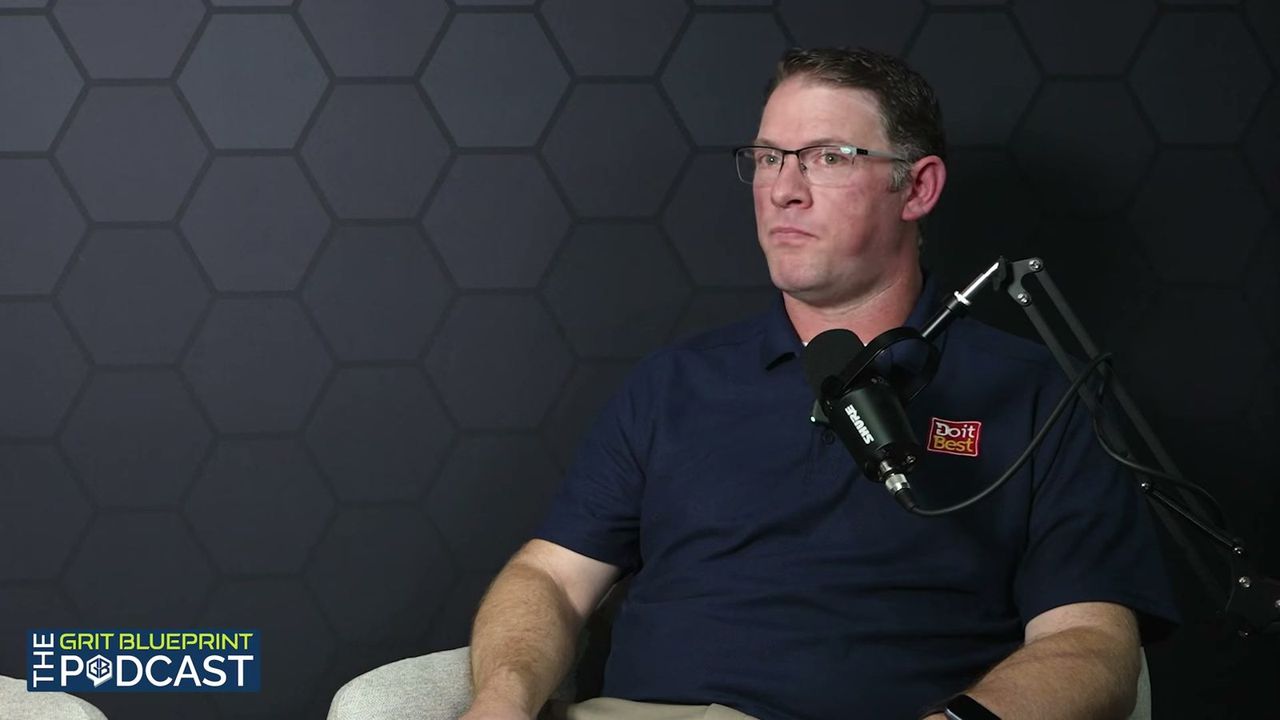
Gabe Arnold keeps running into the same buying pattern. Arnold is a regional sales manager for lumber and building materials in the Northeast at Do it Best. A small dealer needs some dimensional lumber, which is framing lumber cut to standard sizes, plus some plywood and a little drywall. So the dealer orders a mixed truck from a nearby distributor: part of a load of each. In an interview published in December 2025, he said some dealers do that “two, three, four times a month.”
Those dealers worry that buying through the co-op might cost “a percent or two more.” Arnold’s answer is to look at the whole month. Bought as full trucks, or through one of the co-op’s reload centers, the same material could “save well more than that one or two percent,” he told the Grit Blueprint Podcast.
The price of one load and the cost of a month are different numbers. That difference is a good way to understand what a co-op is for.
What is a hardware and lumber co-op?
Word to know
The whole glossary- Co-op
- An organization that independent stores join so they can buy together and share services. A cooperative, or co-op, is owned by its members. Not every buying group is a co-op.
Joining one does not change who owns the store. The owner still runs an independent business. How the Building Industry Works shows where co-ops sit among the other company types.
Jason Stofleth is vice president of merchandising at Do it Best. He puts the job this way: “We help members do things that they otherwise can’t do themselves. Buying products is just a piece of what it is to be a retailer.” He spoke in an interview published in September 2025. In that interview the group was described as about 9,000 retailers, after Do it Best bought True Value.
Who owns a co-op?
Its members do. Dan Starr is president and CEO of Do it Best Group. For him, the line between a co-op and an ordinary supplier is ownership. Members hold shares in the company that supplies them.
They’re not just a customer, they’re our owner, and they also have a board of directors that’s entirely comprised of member owners themselves.
 Dan StarrPresident and CEO, Do it Best Group
Starr said this in an interview published in April 2025. The benefit of buying together, he added, is driven back to that same group of people.
How does a co-op save a dealer money?
Mostly by buying for many stores as one. That scale is the first benefit. Starr calls it the “nerdy behind the scenes” part. A co-op takes product into warehouses and runs trucks to stores. That costs a great deal of money. The more volume it moves, the more efficient the whole system gets.
For lumber and building materials, Starr described two ways members buy. Some buy direct from the mill by the carload. Others use reload centers, where a member can get less than a full truckload and a range of products. That is the door Arnold was pointing to.
Many dealers also buy from a two-step distributor, a wholesaler that buys from manufacturers and resells to dealers. Arnold said the Northeast has distributors “everywhere.” A co-op is another route to the same goods, and a member has to compare the two with real orders.
Scale also changes who wants to sell to you. Stofleth said suppliers want their brands on member shelves because of the number of stores. His team looks for product lines that leave the retailer more margin, which is the share of the selling price a store keeps after paying for the product.
Less risk in lumber
Lumber prices move fast, and a dealer can lose money on a full yard when prices fall. Starr said the co-op hedges and offers members lumber futures. Both are ways to protect a price ahead of time. He was careful about the goal: “We’re not trying to encourage people to be roulette players.” The aim, he said, is to take risk out and lower the overall cost of goods.
Warehouse stock helps as well. A dealer can order what the next few weeks need and avoid holding months of inventory.
Help on the sales floor
A co-op also works on how the store sells. Stofleth’s team builds planograms, along with signs and promotions. Planograms are plans for where each product sits on the shelf. “How the product is presented on the shelf is so critical,” he said.
Twice a year the co-op holds a market, a trade show for its members. “Fall Market is all about setting up for the spring season,” Stofleth said. Members see new products and programs there and buy for the months ahead.
Data one store cannot see
Starr expects data to become the benefit that matters most. One store knows what it sold. It cannot easily see what it failed to stock. “The harder thing to find is where are the gaps,” Starr said. “How do you know what you should have when you don’t have it?”
With sales data from many stores, he said, a co-op can check whether a department is complete, what is missing and what is not moving. Members “cannot do that on their own.”
What it does not do
A co-op does not run the store. It also does not pay off for a member who never calls. Arnold said the savings appear when the dealer and the co-op “get more interactive” and go looking for them.
One more caution. All three people quoted here work for the same co-op. There are others, such as LMC, and not every buying group is owned by its members. Ask each one the same questions.

A co-op only pays if you use it
The owner of one yard cannot work hard enough to match a chain’s buying power. Stefanie Couch’s checklist for independents, BLEND, has a letter for this: L is leverage, which she describes as partnering with someone bigger, such as a co-op or a distributor, so a small dealer can buy like a big one without becoming one. As she said in an earlier Grit Blueprint Podcast episode with Tri County Lumber: “I know from experience how hard it is to be one store competing against giants” (17:44).
A partnership only pays when you use it. It works when both sides want to work with each other, which is Arnold’s point about getting interactive. So judge a co-op, or any buying group, by a real month. Price last month’s orders both ways. List the services you would actually use. Find out who will pick up the phone when you call.
What to do next
- Pull last month’s purchases. Mark every partial load and who it came from.
- Ask for the month to be priced another way. Have your co-op, or one you are considering, price those same orders as full trucks or reload orders. Compare the month, not one load.
- Ask who owns the group. Find out who sits on its board and how members share in the results.
- List the services you pay for and do not use. Planograms, promotions, data reports and lumber price tools are common ones.
- Go to the next market with a plan. Know which season you are buying for before you walk in.
Questions people ask
What is the difference between a co-op and a buying group?
A cooperative is owned by its members; a buying group may not be. At Do it Best, members hold shares and the board is made up of member owners. Ask any group you are considering who owns it, who sits on its board and how members share in the results.
Does buying through a co-op cost more than buying from a distributor?
It depends on how you buy. Gabe Arnold says some dealers worry a co-op load costs a percent or two more, but the same material bought as full trucks or through a reload center can save more than that over a month. Compare a whole month of real orders, not one load.
What is a reload center?
A warehouse where a co-op member can buy less than a full truckload and still get a range of building materials. Dan Starr describes it as one of two ways Do it Best members buy lumber; the other is buying direct from the mill by the carload.
Does joining a co-op change who owns my store?
No. The owner still runs an independent business. Joining makes the store a member and part owner of the co-op that supplies it.
What does a co-op do besides buying?
At Do it Best, the people interviewed describe shelf plans called planograms, signs and promotions, two markets a year, tools to protect lumber prices, and sales data from many stores that shows a member what it is missing.
Watch the full interviews
Co-op Scaling Power with Jason Stofleth (September 2025), How Independent Dealers Can Compete (and Win) Against Big Box Giants with Dan Starr (April 2025) and How Independent Dealers Win With Partnerships And Visibility with Gabe Arnold (December 2025).
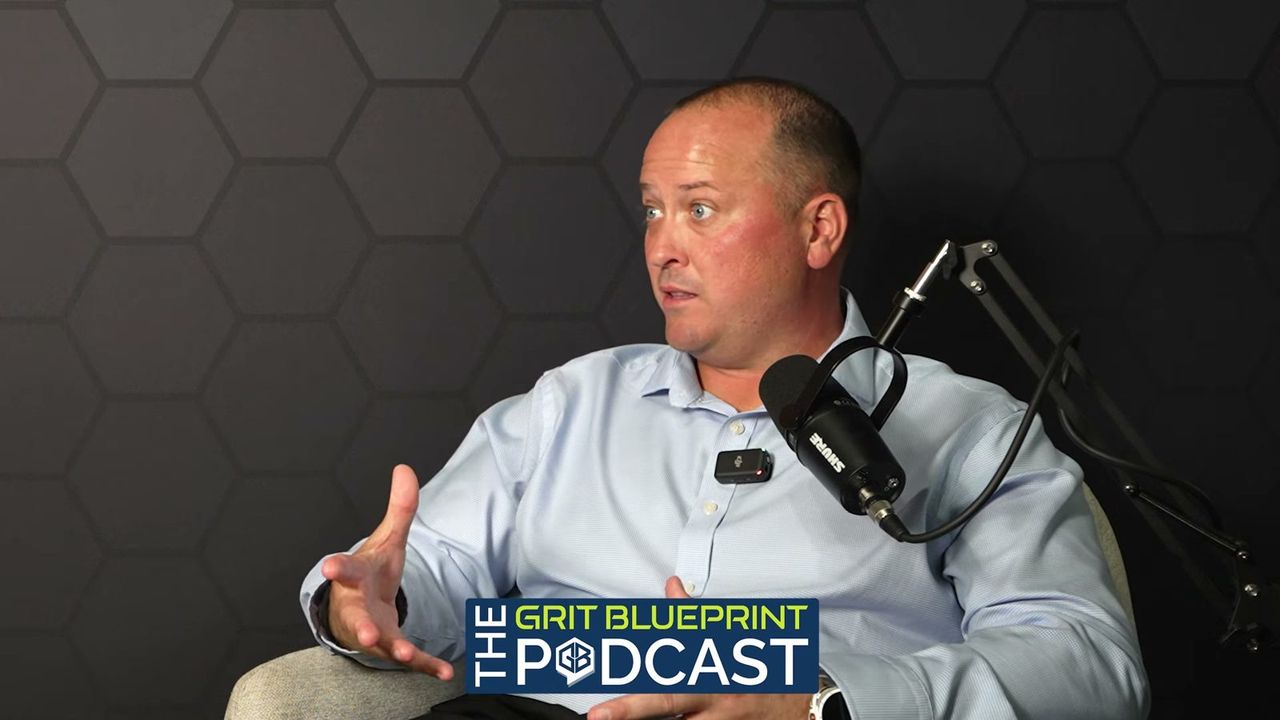
Jason Stofleth, VP of Merchandising at Do it Best, explains what a co-op does for 9,000 independent retailers. He also covers how new vendor partners get picked and why Fall Market is about getting stores ready for spring.
A Grit Guide original. This piece is built from our own interview.
Episodes in this piece
- How Independent Dealers Win With Partnerships And Visibility: Gabe Arnold, Do it Best
With Gabe Arnold
- Building Materials Clash of The Titans | Todd Tomalak on Paradigm Industry Insiders
With Todd Tomalak
- Competing as an Independent: Tri County Lumber Company | Sponsored by Do it Best Group
With Dave Ables and Stefanie Couch
- How Independent Dealers Can Compete (and Win) Against Big Box Giants | Dan Starr, Do it Best CEO
With Dan Starr
Sources
- How Independent Dealers Win With Partnerships And Visibility: Gabe Arnold, Do it Best (interview published December 30, 2025) Grit Blueprint Podcast on Grit Guide. Quoted at 5:31, 5:59, 6:32.
- Co-op Scaling Power: The Secret Weapon of 9,000 Independent Retailers | Sponsored by Do it Best (interview published September 5, 2025) Grit Blueprint Podcast on Grit Guide. Quoted at 3:20, 5:41, 9:44, 11:22, 13:14.
- How Independent Dealers Can Compete (and Win) Against Big Box Giants | Dan Starr, Do it Best CEO (interview published April 22, 2025) Grit Blueprint Podcast on Grit Guide. Quoted at 5:27, 7:46, 11:25, 14:19, 15:27, 18:39, 19:06.
- Competing as an Independent: Tri County Lumber Company (Grit Blueprint Podcast, published 2025-08-26; Stefanie Couch quoted at 17:44) Grit Guide, Grit Blueprint Podcast
- Building Materials Clash of The Titans | Todd Tomalak on Paradigm Industry Insiders (Grit Blueprint Podcast, published 2025-10-15; BLEND and “L is leverage” at 14:14 to 14:42, paraphrased) Grit Guide, Grit Blueprint Podcast
Sponsorship The interviews with Jason Stofleth and Gabe Arnold were recorded for episodes sponsored by Do it Best Group.