Click any timestamp to jump to that moment in the video.
Inside Magbee Contractors Supply Custom Millwork Shop
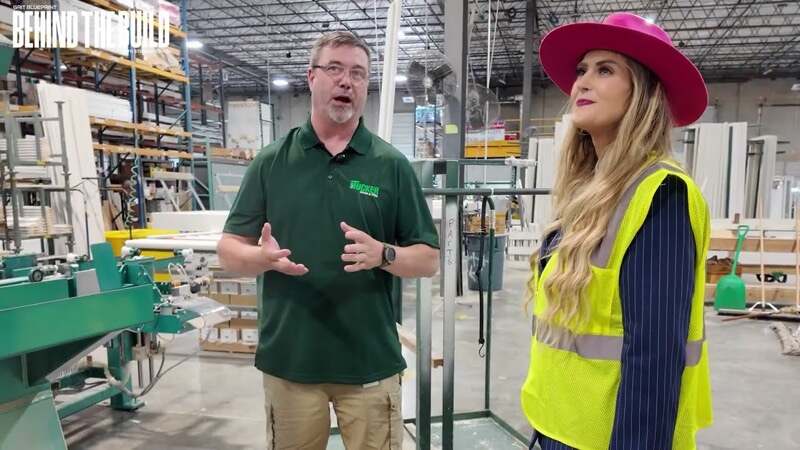
0:01 Stefanie Couch: Welcome to Behind the Build with Stefanie Couch. Today I'm here in Winder, Georgia with Bob Magbee at Magbee Contractors Supply. We're about to take you behind the scenes to see all the things that happen here at Magbee. You ready?
0:13 Bob Magbee: I'm ready.
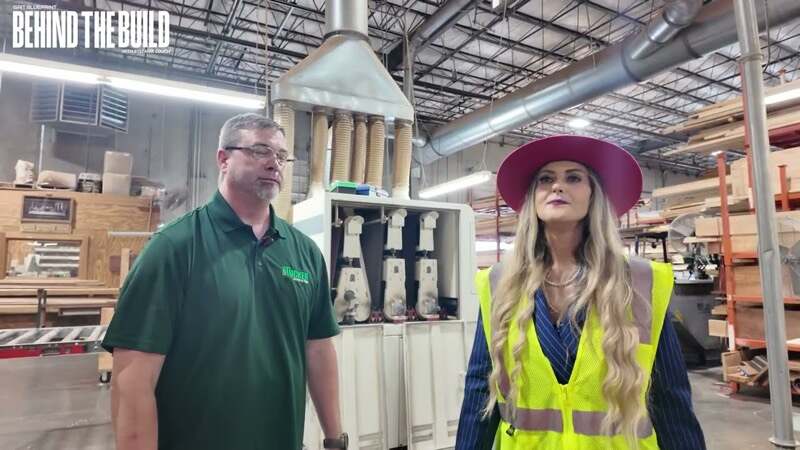
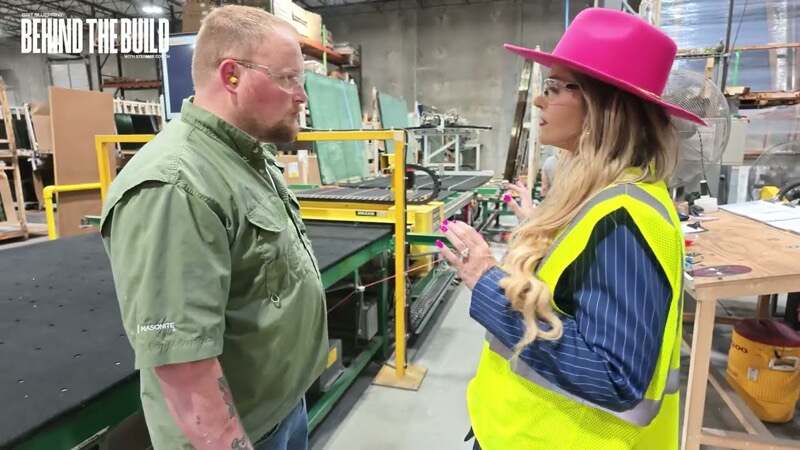
0:13 Stefanie Couch: Let's go. We have found my favorite place in every operation. We're in the custom mill area, so lots of machinery, lots of raw wood over here. I see some cool stuff.
0:23 Bob Magbee: This is the custom side, where most of it is on products that we manufacture. We can actually manufacture a finished product, like a crown mold that somebody wants or a casing that they want. And we can even actually make a knife, which we do for some architects. They want to do something custom, we can make the knife and run them whatever they want.
How Custom Wood Doors and Knives Are Made
0:44 Stefanie Couch: Yeah, that's my favorite thing. You can actually draw on a cocktail napkin or in a CAD drawing. So you guys are doing a custom collection with somebody like Lew Oliver, which you're currently doing. They actually can draw that, you'll make the knife, and then they will run something that's never been made before.
1:00 Bob Magbee: Correct. You know, think about it. Look how many different kind of cars there are out there. Not everybody wants the same car. And if they want something upgraded, they can do it. Now in housing, more so than ever, and guys like Lew Oliver and others can help them figure out what they really want.
Why Historical Moldings Are Coming Back in High-End Homes
1:16 Stefanie Couch: And I think there's a resurgence, especially in the higher end homes, of people wanting something that just is different, but feels more historically accurate as well.
1:24 Bob Magbee: Yeah, that's true.
1:25 Stefanie Couch: A little homey. I've seen so much more wood molding in houses that are coming out now. That minimalistic white box look is out, and old school historical molding is back in.
Custom Wood Doors in White Oak, Poplar, and Maple
1:32 Stefanie Couch: You have a custom wood door manufacturing facility right here on site?
1:41 Bob Magbee: Yes.
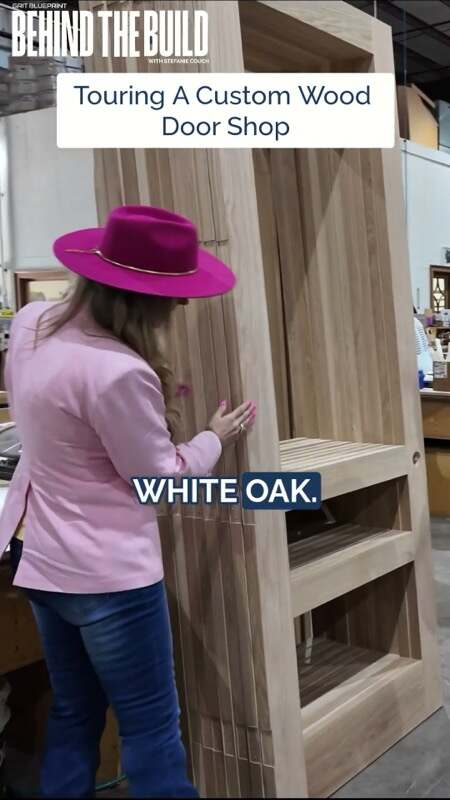
1:42 Stefanie Couch: And you can do anything pretty much that people want in a wood door. We're looking at these slabs right here. So this is white oak. This is what we call a raised panel molding. This one is really pretty. And then he's gonna put these panels in all the way up, and then these will be panels as well. This is gonna be beautiful when it gets finished. You've got specialty craftsmen, and this is one thing in our industry that I worry about. You've got people like your team out here, been doing this a long time. They know a lot of stuff, and there's not a lot of people coming up that are learning that.
2:13 Bob Magbee: No, you're right. That's one of the things we're always trying to tell people: don't retire anytime soon, because they're hard to replace. They really are.
True Divided Lite Vs Simulated Divided Lite Explained
2:19 Stefanie Couch: That's right. Every time I come in here, there's something I've never seen before.
2:24 Bob Magbee: Glass in here.
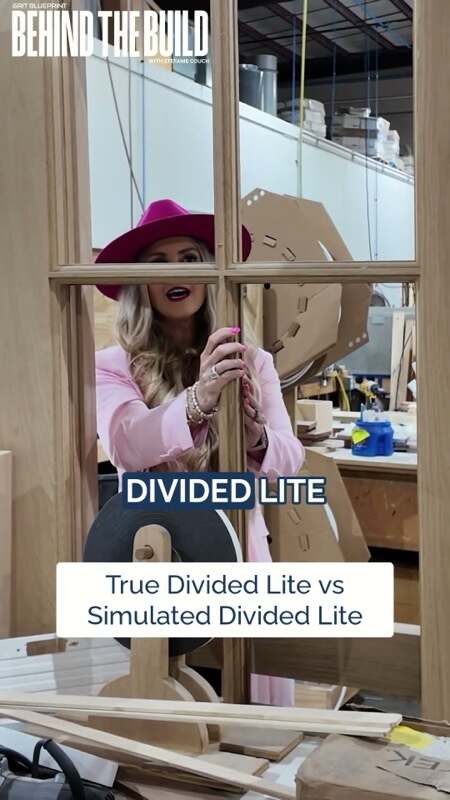
2:25 Stefanie Couch: Yeah, glass on this. This is the exterior on the back. And as you can see, this is a grid, so they're gonna put glass in this. This is true divided lite, which means they're actually divided in small panels of glass, where a lot of stuff you see now is simulated. It's not really truly divided.
2:41 Bob Magbee: Yeah, those are insulated. They'll be insulated glass, so you'll have the energy efficiency even though it's a custom product.
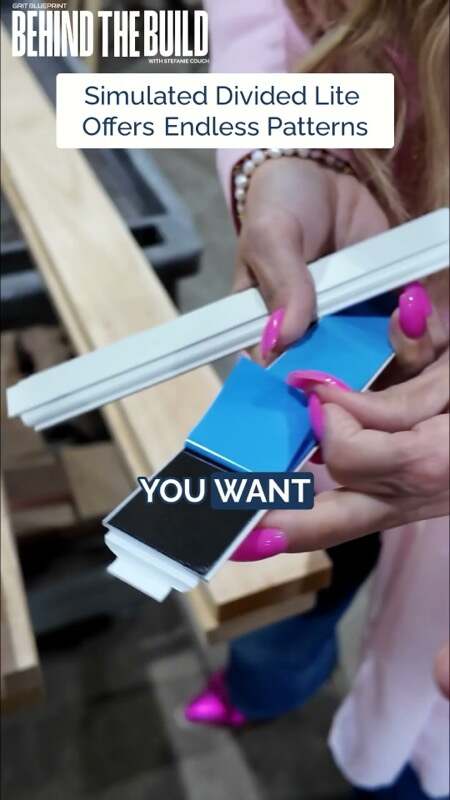
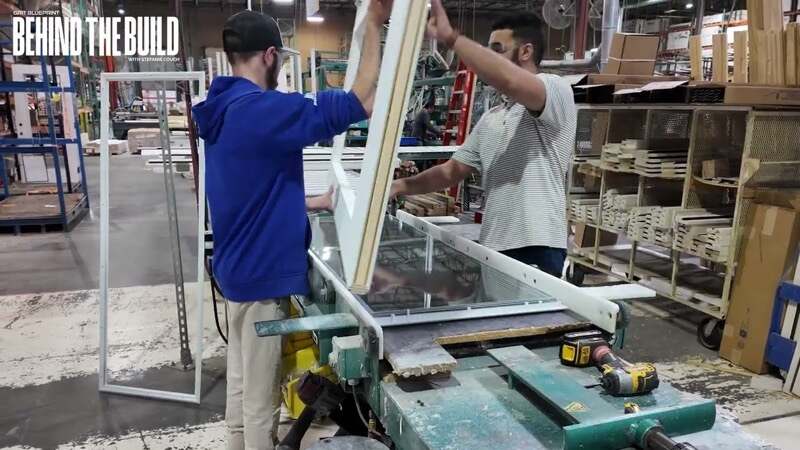
2:48 Stefanie Couch: Your team here is actually installing a simulated divided lite here, which is a sticky back on the grid. So this is simulated divided lite, SDL for short. You can see it. This is just a grid that has a sticky back on the back, like a 3M piece. That's what these grids are that he's installing on these doors.
3:01 Stefanie Couch: And the best part about this is that you can actually make any pattern that you want. Here's the sticky. And because it has a black backing, it has less of a shadow when you put it on there, so you can make these work any way you want into any pattern. This allows you all to have a million different options without having to source it differently. You guys are doing a lot of high-end window jobs, and again, this is that simulated divided lite window, which the market has to be 80, 90% that now on grids.
Why Simulated Divided Lite Gives You Endless Design Options
3:43 Stefanie Couch: So this is interior poplar. I think this is a Lew Oliver door. This door is actually gonna be painted. I've seen people stain poplar, but it's not nearly as common. But this will be painted. It's a pretty affordable way to do a custom door. This is a 48-inch wide door, white oak, with this cool lattice. You all made this grid in-house. This is my favorite thing about coming here. Every time I come here, I see a door I've never seen, and I've seen a lot of doors, and I still get as excited as the first day I came in here. Just so cool. And you can choose your panel design to lay on this. You've got a raised panel, but you've got kind of a molding here. You can do different things. You can do shaker, and your customer is actually stuck in that.
Multi-Point Hardware on Custom Wood Doors
4:23 Bob Magbee: Can also say they're doing some custom hardware.
4:25 Stefanie Couch: Yeah, multi-point. This is multi-point hardware. It's actually gonna be touching and closing in multiple points locking, and it's made into the slab. This actually is a good moment to explain something.
Direct Set Vs Sash Set Transoms in Custom Homes
4:41 Stefanie Couch: This is a direct set transom, so in the South we do a lot of transoms here. Other places they don't. When I moved to Texas, they don't really do transoms very much. But this is actually the glass is made into this frame, and it does not have a sash. This is a sash set transom. This one is a huge sash set transom. You can see they've made a wood sash that looks like a window here, and stopped it into this frame. On the other side, there's a stop. So this is the opposite of what we just saw with the direct set transom, but they're both options. They're used a lot here in Georgia.
5:16 Stefanie Couch: They have a ton of volume here, so they've got doors that are staged on pallets and racks that are ready to go out everywhere.
Flush Glaze Exterior Doors and Lincoln Window and Door
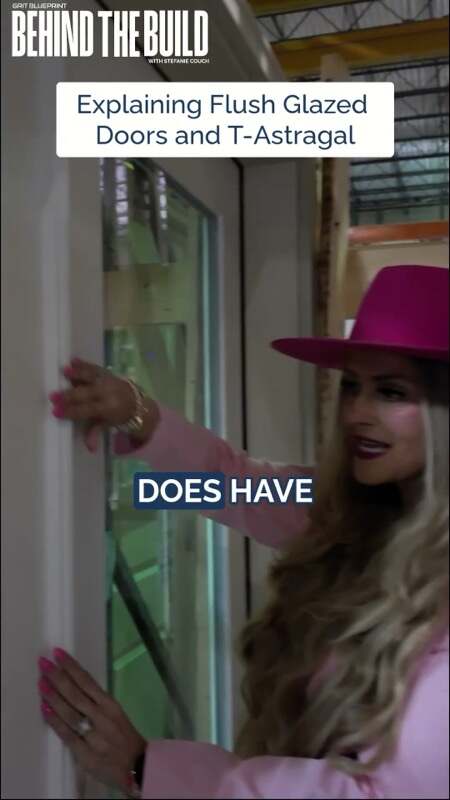
5:28 Stefanie Couch: So here Abraham's gonna show us an exterior double that they've built. This is actually a flush glaze exterior door. So what that means is this is actually made into the slab with the glass coming from the manufacturer with the glass in. This is actually a really contemporary, sleek look, and these are a really popular option. This is kind of an upgrade. So this is a 6080, and this is a double. This door does have, what should we call a TIA here, this is how the door is closed and sealed. This has weather stripping right here on this side. This is the active door. This door is gonna be an inactive door, and this door will have a head bolt and a foot bolt that will open. So this is a common double. You'd see this as a back door a lot of times going out to a patio or a deck, and they will both actually open.
6:16 Stefanie Couch: So this is a nice order. Looks like aluminum clad with wood on the interior. These are Lincoln Window and Door?
6:22 Bob Magbee: Yes.
6:22 Stefanie Couch: Okay. This is actually a slider. So they've got the panels for the slider here, and then it looks like one or two of the panels are out and one is installed because it's gonna be so heavy to move this thing.
6:35 Bob Magbee: It is, yeah.
6:36 Stefanie Couch: So it's a 10-foot by 6080 bi-folding, bi-parting slider is what this is.
6:42 Bob Magbee: Yep.
6:42 Stefanie Couch: So you've got a trim order here that's bundled up and ready to go.
6:47 Bob Magbee: Yeah.
6:47 Stefanie Couch: And this looks like maybe base cap here.
6:51 Bob Magbee: Well, you can see there's pretty good size crown mold underneath there. And one buys probably for some of the casing, I suspect.
6:58 Stefanie Couch: Yep.
6:59 Bob Magbee: We've got some in here that we package up and then slide them in. We load a lot of them. Depending on how big an order, we may take shovel trucks. But those are doors to be loaded out there on the dock, and then we'll push this in and leave enough room for this to get in.
Inside the Trim Pack and Custom Molding Pull System
7:12 Stefanie Couch: You got an attic stair on the top here, so that's for the garage or somewhere in the house. They got an attic stair. You've got your bundle of shims right here for installing the exterior doors. You've got a handrail or some kind of rail that they're using. You've got all different molding. So this is an entire house pack of trim.
7:30 Bob Magbee: We like them on these pallets too. We slide the order right in on the truck. Less handling.
7:35 Stefanie Couch: Yeah, absolutely. You've got pick and pull over here on molding. They're pulling packages, orders. He's got all this stuff like we just saw, but he's actively pulling this house trim pack. You got your crown molding here, he's got two different sizes of crown, different base sizes here. Some chair rail it looks like maybe. I like that you all stand up your molding. So much more organized.
7:56 Bob Magbee: Yeah. Use that air space.
Touring the 20-Acre Rail-Served Lumber Yard
7:58 Stefanie Couch: All right, we've made our way to the yard. This thing is massive. There's lumber and building materials everywhere, trucks everywhere. What am I looking at here? We're in Winder, Georgia.
8:07 Bob Magbee: This is the main hub for the company, been here the longest. It's 20 acres here and a rail-serviced in the back. And what you're seeing right now behind us is the engineered wood floor system. One of the things that we do is we design the floor systems and we actually cut the holes out for the heat and air systems that go through those I-joists.
8:29 Stefanie Couch: And that's something that a lot of people don't have on site at their lumber yard. That's pretty unique to have a saw and be able to do that.
8:34 Bob Magbee: Yeah. I think you'll find one of the things we've done over the years is try to do more of that ourselves. We're able to respond quicker. We're able to get control of that part of it, and therefore perform better for our customers if we can do it ourselves.
Engineered Wood Floor Systems and Weyerhaeuser TJI Joists
8:49 Stefanie Couch: I'm looking at, so you guys are partnering up with Weyerhaeuser here with TJI joists? And with engineered wood, which has been really something, in the last 20 years, has developed into a real common thing in our industry.
9:01 Bob Magbee: Yes, yes.
9:01 Stefanie Couch: You can just span so much longer. But the I-joists are so long. What are these, 48 feet maybe?
9:07 Bob Magbee: Yes. They started out at these long lengths, but then we cut them to length, so you're basically trimming those down for the most part. And there's different grades of all this stuff. So you might have a wide flange, as well as this flange. And of course, how deep it is has a lot to do with how far you're spanning.
9:26 Stefanie Couch: All of this has been engineered for that individual plan, and you all are doing this in partnership with your vendors to engineer that.
9:32 Bob Magbee: We use their software technology where they basically build in all the different spans that these products will do. And depending on the need on that job site, we've matched up with the right product that'll span correctly that piece of the house, the floor systems. That's really what all this is.
How the Magbee Family Business Started in 1954
9:50 Stefanie Couch: Tell me a little bit about how your family got started in this, because I know both of our families started in Atlanta a long time ago.
9:55 Bob Magbee: One of the uncles, the oldest of the four boys, and my dad teamed up. They started down in the Decatur area in '54. After about six years, they moved from their initial facility in downtown Decatur out to the suburbs of Decatur at the time, and built a facility there that had rail access and all that.
Why Rail Access Still Matters for a Modern Lumber Yard
10:16 Stefanie Couch: Why is rail access so important for somebody maybe that doesn't know? Because it is 2026. You would think, well, railroads don't really matter, but they do for the lumber business.
10:25 Bob Magbee: If you look at all the stuff we're looking at right now, one of the things that people don't really understand: all this is yellow pine fiber, which is from the Southeast. You really start in Texas and you go all the way over even to the Carolinas. So this wood fiber, a lot of this stuff is manufactured here in the South. Whereas your structural two by sixes, two by fours, and other products that are made to frame up houses, a lot of that historically in my lifetime has come out of Canada. And so if you're coming from Canada, rail is a lot more economical than trucking.
10:57 Stefanie Couch: Well, this is where the rail cars actually are brought in.
How Custom Wood Doors Changed in the Last 20 Years
11:00 Bob Magbee: Mm-hmm.
11:00 Stefanie Couch: And then you guys are unloading from here.
11:02 Bob Magbee: Yes.
11:03 Stefanie Couch: And then once you unload, obviously you have a ton of lumber everywhere. I don't see very many lumber yards with this much lumber. Back when I was selling doors, my dad had a lumber yard, and I've worked there until 2012. There was a few interior door style options, there were some upgrade options. Exterior doors, you might get a quad, maybe. You didn't even see very many of those. Now it's like a 29-foot door is possible.
11:27 Bob Magbee: Well, yeah. My dad and uncle would be mesmerized at some of the stuff that we do today. Very different market today than it was 50 years ago.
11:39 Stefanie Couch: But it definitely allows people to customize more, and if you can dream it, you can just about do it if you have the time and the money.
11:46 Bob Magbee: Yeah. People have realized they can get a lot more options than they expected they could 20, 30 years ago. There's just a lot more out there.
Why Millwork Is the Most Visible Part of a Home
11:57 Stefanie Couch: What's the most exciting thing about this industry to you right now? What's happening in your business or in the industry that's exciting to you?
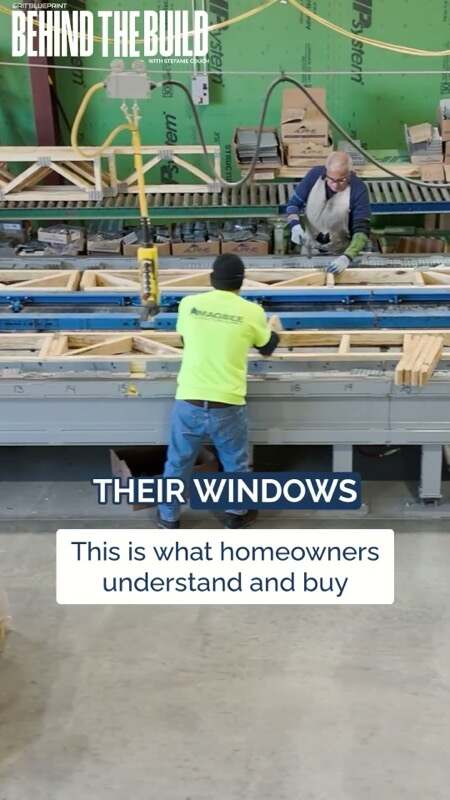
12:03 Bob Magbee: Well, I think we've always been focused on, and I have to give my dad and uncle credit, they were always leaned into the millwork side of the business, which is the most visible part of the business. The part that you actually see on a house. All this is covered up in a floor system, or behind the siding on a wall, or behind the roof. All of this structural stuff doesn't get a lot of focus from a homeowner because they know it works, but they're not sure what's up there and how it works. They understand their windows and their doors and their siding. All the stuff that really is the face of the house, how it looks compared to all the others, and how it radiates from what attracted them to like that house over that house, which is all the outside type stuff.
12:47 Stefanie Couch: Yeah, and you guys do some beautiful stuff with millwork. I've been on a lot of your job sites doing video and media, and it's just absolutely stunning. You have a door shop, we're gonna go walk through a custom millwork shop. So I'm glad that excites you because that's my favorite part of the business too.
How Inside Sales Runs the Custom Order Process
13:02 Bob Magbee: Well, it's the artistic side. And I have to give them credit, they were focused on that. They were pretty astute for their time.
13:02 Bob Magbee: This is the inside sales area, where the actual orders come in a couple ways: from our sales guys, as well as customers calling in here direct.
13:19 Stefanie Couch: Companies in this industry are still very relationship driven. So you've got people in here that have long-standing relationships. You also have outside salespeople who have relationships as well.
13:29 Bob Magbee: Customers can call and find out about status of an order, or add to an order, or whatever it is that they need to be addressed on their job site. That kind of is the nerve center of what goes on here. Actually, the outside guys calling in here too, send them, they send them electronic correspondence as well as verbal. So that's the nerve center of how information comes out of the field into our system.
Thermally Modified Wood for High-End Home Building Materials
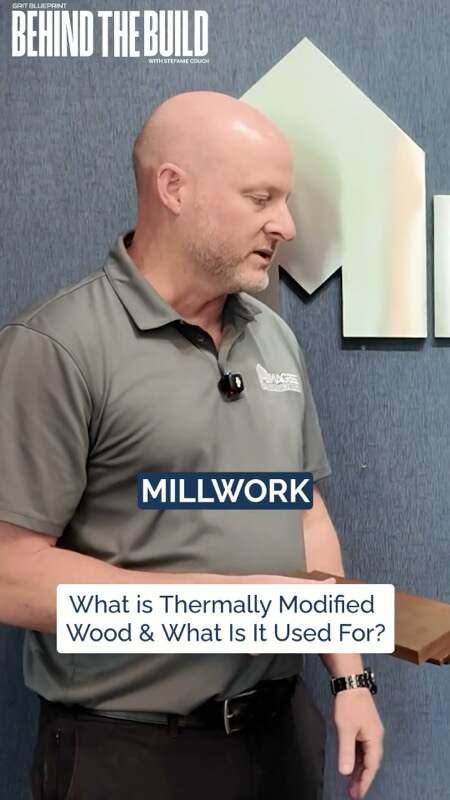
13:51 Stefanie Couch: I'm here with Stewart Brandon, who is the VP of sales here at Magbee, and I want to talk about a new product line that's hit the market really in the last year or two. I've been seeing it everywhere. Thermally modified wood. So you guys are actually selling a lot of this, not just panels to go on walls or exterior siding, but you're making custom moldings with this and custom doors. Tell me a little bit about that.
14:12 Stewart Brandon: Well, I think some of this has come about by the trend going away from paint grade and back to stain grade. There's a lot of folks wanting accent walls, or even entire exteriors and interior walls and entire houses, with the stain grade look. And what they love about this is, one, it's no chemicals. It's basically a heat treatment.
14:31 Bob Magbee: Mm-hmm.
14:32 Stewart Brandon: It kills all the sugars and all the stuff that termites want. So it's durable. It's gonna last forever. We can get a longer warranty on the doors and the millwork when it's made out of it. And it just holds straighter and truer for a longer period of time. Not a lot of maintenance. You do have to seal it, but like once every five years.
14:47 Stefanie Couch: But this is not stained. This is actually just sealed. So this color is coming from the process of them actually treating it.
14:53 Stewart Brandon: That's correct.
14:53 Stefanie Couch: And then once they do all of that with a thermally modified process, then that is what comes out like this. And then you just put a top coat on it.
15:01 Stewart Brandon: That's right.
15:01 Stefanie Couch: So I'm holding a maple door sample here. And then you've actually got poplar. This is gonna be a pretty affordable option on the poplar. Maple's a little more. And then you can do, what are some of the other things?
15:12 Stewart Brandon: I'm doing a lot of yellow pine, actually mostly grown in the Southeast. We're doing a lot of shiplap, a lot of custom moldings for interior and exterior, and then we've got some backboards that people are doing too. And it's cool to the touch. So even on a dock or an outdoor space you can walk on at barefoot.
The Lew Oliver Molding Collection First Look
15:29 Stefanie Couch: Okay. And then some of the other things that you guys are doing. I want to talk a little bit about the custom molding collection. You actually have partnered with Lew Oliver, who's a renowned designer in the Southeast. He's done Trilith, Avalon, lots of projects. And he actually came up with some amazing moldings and door collection. So let's talk a little bit about that and how you're offering that to the market.
15:49 Stewart Brandon: Lew, to me, is an artist that has an ability to see things in his mind that most people can't. And for someone that is building a home that wants something unique, that's not completely custom to them, we're coming up with some collections of doors and moldings that go together. To where you don't have to be an interior designer to figure out what works together. This collection will give different historical significance all the way to more modern profiles, and there'll be doors, crown, plinth blocks, casings, the whole bit. That kind of comes together in a collection that you can do stain grade, paint grade, whatever you want.
16:28 Stefanie Couch: And you guys are actually gonna have a new showroom that's gonna show some of this coming. That's right in summer/fall of 2026, gonna be in Ball Ground at your location there. So if somebody wants to learn more about this, they can check it out on your website or call Magbee, and then go see it in the showroom.
Prestige Steel Custom Wood Doors and Iron Inlay
16:41 Stewart Brandon: That's right.
16:42 Stefanie Couch: Well, thank you, Stewart.
16:43 Stewart Brandon: You're welcome.
16:44 Stefanie Couch: I am here with inside sales manager Melissa. I'm looking at some pretty doors here, and you specialize in those. What am I looking at?
16:53 Melissa McDougald: Yes. This is a Prestige Steel double door. It's a 10-foot tall, four-foot wide, with the steel inlay and the glass. And the jambs that's actually holding these up, we made in our shop. They're made out of the thermally modified.
17:09 Stefanie Couch: And it's pine. These are really cool.
17:11 Melissa McDougald: Yep. It's pine.
17:12 Stefanie Couch: And I'm guessing you can probably get this in different glass patterns and stuff.
17:16 Melissa McDougald: Yes, there is pretty much nothing that Prestige Steel can't design in the house. Usually you just send us what you're looking for and we get with them, and we have them create that into a CAD and send it back to you.
Lincoln Window and Door Bronze Exterior Walkthrough
17:32 Stefanie Couch: Well, Magbee really specializes in high-end molding and millwork. And this is one of the lines you saw a lot of. So this is Lincoln Window and Door.
17:38 Melissa McDougald: Yes.
17:39 Stefanie Couch: This is the bronze color. Let's talk about this a little bit. What am I looking at?
17:42 Melissa McDougald: Yeah, so this is, like you said, it's a Lincoln exterior door. Both slabs do open. The three-point lock.
17:50 Stefanie Couch: So multi-point is a feature that we love on millwork, especially high-end doors, really with the 80. It's highly recommended because it really helps. But on the corner of the door slab here, you can see that they've put the hardware into this. So this is wood on the interior and aluminum clad on the exterior.
18:09 Melissa McDougald: Yep.
18:10 Stefanie Couch: Yeah, this is a great line. You guys sold a ton of this stuff. And again, color options.
18:15 Melissa McDougald: Lincoln Windows actually has 23 different color options. Five of those are their standard. The rest are custom colors, but they can do a lot of different varieties.
How to Work With Magbee Contractors Supply on a Custom Project
18:25 Stefanie Couch: So tell me a little bit, if someone's interested in working with Magbee, how do you work with people? You help contractors all over the state of Georgia, so talk a little bit about that.
18:33 Melissa McDougald: Most of the time, it really does start with a phone call, or, you know, friend of a friend knows somebody, and they just send in what their vision is. And we sit down with designers and some of our different vendors and make that happen for them.
18:48 Stefanie Couch: I love it. Well, if you're interested in a door or a window, call Melissa, she can help you out. Well, thank you for showing me Magbee Contractors Supply, and thank you for joining us on this episode of Behind the Build. We'll see you next time. gritblueprint.com