Inside Two Georgia Door Shops: A Prehung Door, Station by Station
Tucker Door & Trim and Magbee Contractors Supply show what happens to a door between the order and the truck, and who does the work.
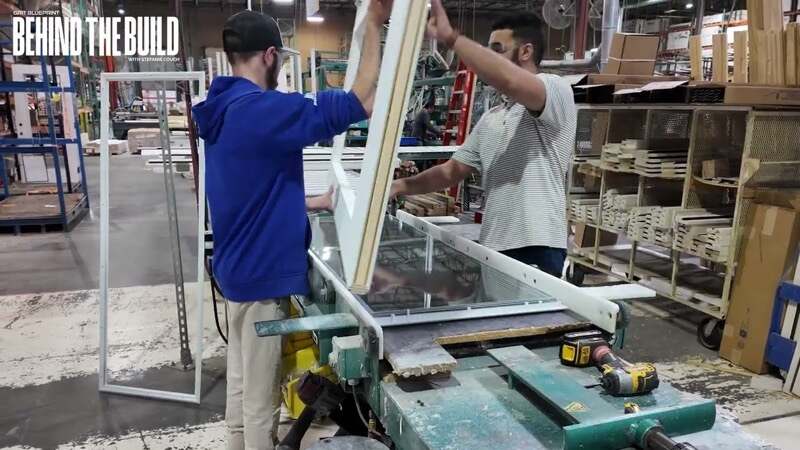
A prehung door is built in a door shop at five stations: a bare slab comes in, the trim is built ahead, a door machine hangs the slab on its hinges in a frame, the frame is finished as an interior or exterior unit, and doors with glass get their insert from the order paperwork. Two Georgia door shops show every station: Tucker Door & Trim in Monroe and Magbee Contractors Supply in Winder.
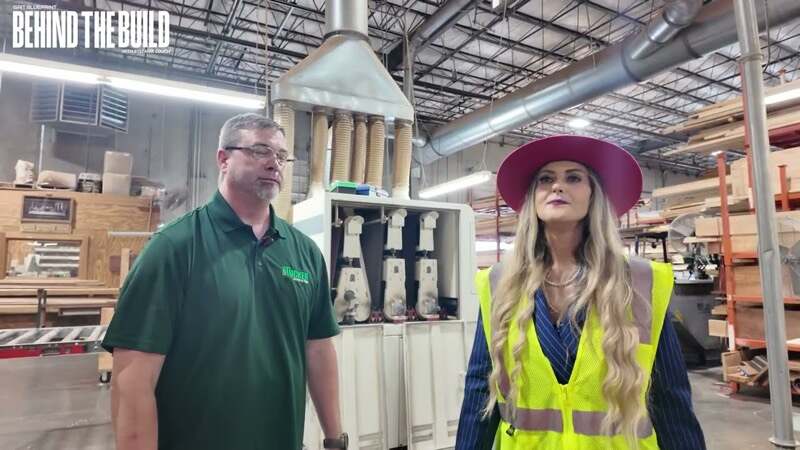
Jason Gert has been with Tucker Door & Trim for 28 years. Bob Magbee is owner and CEO of Magbee Contractors Supply. Each walked Behind the Build through his shop.
A prehung door is a door already hung on its hinges in a frame and shipped as one unit (Doors 101 covers slabs, frames and the parts). The hanging is done in a door shop like Tucker or Magbee. This is the shop visit, station by station. For what each step means for the order you write, read the lesson How a Prehung Door Is Built, and What It Means for Your Order.
Station 1: A bare slab comes in
A slab is the door by itself, with no frame. Tucker runs interior and exterior doors in separate departments. Gert describes the interior department this way: “we bring in unprepped slabs, and we put them in frames. We apply trim, apply hinges” (7:38). Unprepped means the slab has not been cut for hinges or a lock yet.
Station 2: The trim is built ahead
At Magbee, casing (the trim around a door) is mitered and joined into a three-sided “hoop,” a head piece and two legs, before the door gets to it. Brickmould, the exterior trim, is made into hoops the same way. Bob Magbee says a hoop built ahead goes on the unit quicker and more accurately.
Station 3: The machine hangs the door
Magbee’s line is built on Kval door machines. On an interior door, the operator sets one leg of the frame against the slab. That leg is called a jamb. The machine applies the hinges and drives screws that feed from a hopper above. The second jamb and the head jamb (the top of the frame) go on, and automatic nailers fasten the head jamb and the casing.
Tucker’s high-volume interior line sets more than one hinge at once. “This machine will put four hinges on at one time,” Gert says (8:27). On his other two machines, the hinges go on one at a time.
Machines like these are a long wait. “It takes a year to get one of those machines,” Magbee says (0:29).
Station 4: Interior and exterior frames part ways
The frame is where an interior unit and an exterior unit stop looking alike. The Magbee tour points out four differences.
- Split jamb (interior): a jamb made in two pieces that come apart on the job, so the unit can ship with casing already on both sides. The tour shows them on a light hollow-core door.
- Exterior jamb: one piece, with the weatherstripping already in it. The weatherstripping sits in a small groove called a kerf.
- Double bore: the exterior doors on the line already have two holes bored, one for a deadbolt and one for a lock.
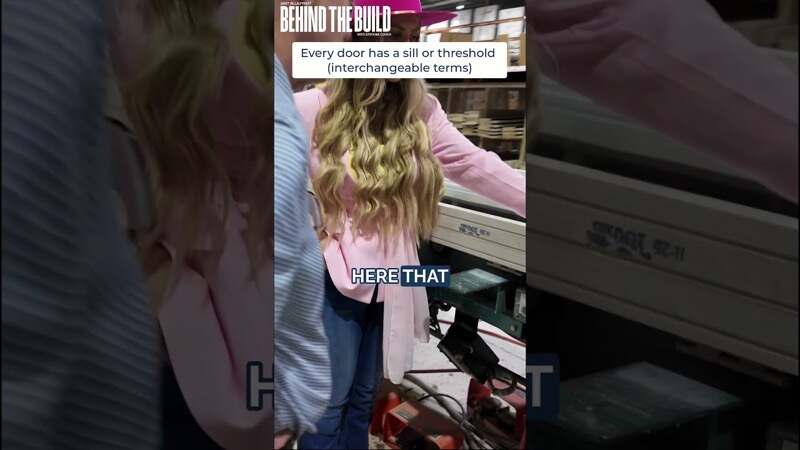
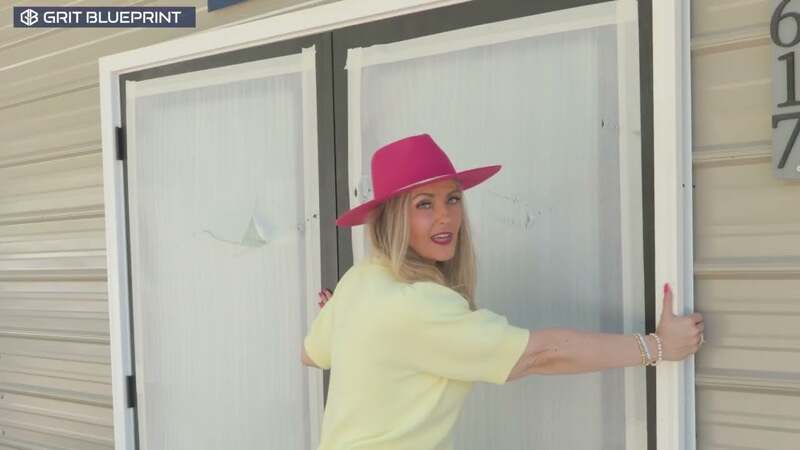
- Sill: every exterior unit gets a sill, also called a threshold, across the bottom, and the crew caulks it. Magbee adds a cover over the sill so it survives being walked on during construction.
Station 5: Glass goes in from the paperwork
Doors that get glass reach the glass station with the opening already cut out. The crew reads the order paperwork. It tells them which glass goes in the door, which sill it gets and which jambs and casing go on it.
The glass comes in a two-piece frame that closes on the door like a sandwich. The screws always go on the interior side, so nobody can unscrew the glass from outside. Small plugs that cover the screw holes ship taped to the glass. They go in after the door is installed and painted.
What it means for you: that paperwork is your order. What you wrote, and what you left blank, is what the crew builds from.
What slows a door line down?
Changes do. Gert gives numbers for his own shop. One interior line should run about 250 slabs a day. The high-capacity line can reach “upwards of 800 slabs a day, depending on changes.” The changes are the catch.
If it’s a lot of the same thing, repetitive, pretty easy to go about 800. If you’re adding casing to doors or doing a lot of hinge changes and stuff, then you’ll drop down to about that 500 range, in an eight-hour day.
Why do custom and double doors take longer?
Because they stop in another department first or need the shop’s most experienced builders. Some orders stop in another department before they reach a line. At Tucker, one department applies simulated divided lites (SDL). Those are bars applied to the glass in a door. Gert says: “Once they’re done with it, tickets are turned into production. It’ll go through production just like normal” (4:20).
Albert Davis applies SDL bars at Tucker. “It’s not a rush thing you do,” he says (4:43). “It’s not a race or nothing like that. You have to take your time, be patient with it, because you want to send out a good product.”
The shop calls double doors twins. Twins go to Tucker’s most experienced builders. So do units with sidelites (glass panels beside the door) or a transom (glass above it). Gert says most of those builders have 10 to 20 years or more. “These units take a lot more making sure your tolerances are correct, so it takes an increased skill set,” he says (7:02).
The last station is the jobsite
The shop adds parts that are only there for the trip. On Building Grit, Michael Tull of Tull Sales installed an outswing double door, one that opens to the outside.
Three kinds of shipping hardware came off first: a plate screwed to the bottom so the unit can slide in the truck, four screws through the head jamb that hold an outswing unit closed, and a carrying handle the door shop had added. (The door in that video was provided by Plastpro in partnership with Harris Door & Millwork.)
Exterior doors usually leave the shop first. Gert says builders want them early “so they can dry in the house,” which means closing it up against the weather (9:44).
What should you ask your door shop about a prehung door?
Four questions from the two tours:
- Which options on this order mean a change on your line, or a stop in another department first?
- Is this interior unit on a split jamb or a one-piece jamb, and is that right for the weight of the door?
- For a door with glass, what does your paperwork need from me?
- What shipping hardware will be on the unit, and who takes it off?

Build a few doors in the shop, then call the customer once
Most people who sell doors learn the catalog first and the shop later. From a lumberyard counter, you can call the door shop with the size of the opening. The shop does the rest.
Stand on a line like Tucker’s or Magbee’s and you find out how much you did not know. You learn which insert fits which door and which choices change the build. The quickest way to learn is to build a few units with the crew and handle every part yourself.
On the next special order, call the door shop or supplier first. Ask what they will need from you. Then you can call the customer one time and get every answer with the options in front of them. As Stefanie Couch said on the Magbee tour: “So one thing about a door shop is there’s like a million components, and you have to have a lot of different things to make one door unit, and a lot of people or machines have to touch it” (1:25).
What to do next
- Read your next door order for changes. Each hinge change and each casing is a change on somebody’s line. Ask the shop which ones affect the ship date.
- When you sell a door with a glass insert, tell the customer the screw hole plugs are taped to the glass and go in after paint.
- Ask the builder for the dry-in date and place the exterior door order first.
Disclosure: Tucker Door & Trim and Magbee Contractors Supply are clients of Grit Blueprint, which publishes Grit Guide. The shop visits on this page come from Behind the Build episodes filmed with them.
Questions people ask
What is a prehung door?
A door already hung on its hinges in a frame and shipped as one unit. A door shop starts with the slab, which is the door by itself, then adds the frame, the hinges and often the trim.
What is the difference between a split jamb and a one-piece jamb?
In the Magbee tour, a split jamb is an interior jamb made in two pieces that come apart on the job, so the unit can ship with casing already on both sides. The exterior jamb is one piece with the weatherstripping already in a small groove called a kerf. Ask your door shop which one suits the door you are ordering.
How many doors can a door shop build in a day?
It depends on the changes. Jason Gert says one of Tucker’s interior lines should run about 250 slabs a day, and its high-capacity line can reach about 800 on repetitive work. Added casing and hinge changes bring that line down to about 500 in an eight-hour day.
Why do exterior doors usually ship first?
Builders want them early so they can dry in the house, which means closing it up against the weather. Gert says that is why exterior doors usually leave Tucker’s shop first.
What shipping hardware comes on a prehung exterior door?
In the install video, three things came off first: a plate on the bottom so the unit can slide in the truck, four screws through the head jamb that hold an outswing unit closed, and a carrying handle.
Watch the full episodes
Inside a 290,000 Square Foot Custom Door Shop, How Doors Are Made On The Kval Door Machine and How to Install an Exterior Double Door.
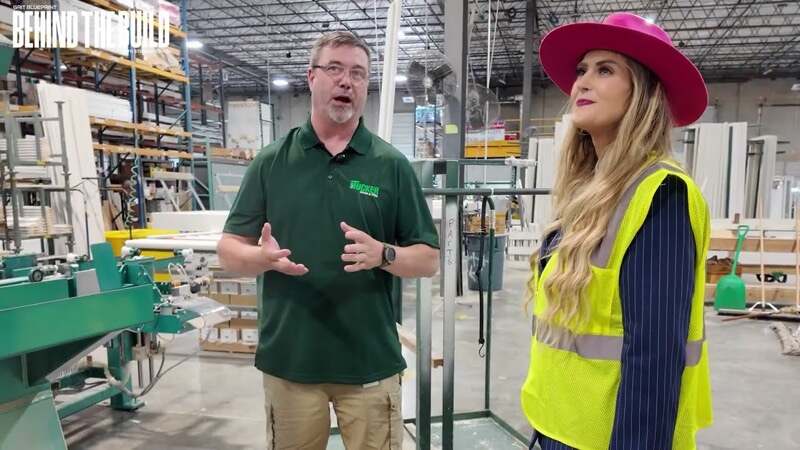
A walk through Tucker Door & Trim's door shop in Monroe, Georgia with Jason Gert: custom millwork, CNC work from AutoCAD drawings, simulated divided lite, and how the exterior and interior door lines run.
A Grit Guide original. This piece is built from our own visit.
Episodes in this piece
Sources
- Inside a 290,000 Square Foot Custom Door Shop (Behind The Build with Tucker Door & Trim). Jason Gert and Albert Davis; quotes at 4:20, 4:43, 7:02, 7:38, 8:04, 8:27 and 9:44 Grit Guide, Behind the Build
- How Doors Are Made On The Kval Door Machine: Behind the Build at Magbee Contractors Supply Part 2. Bob Magbee; quote at 0:29 Grit Guide, Behind the Build
- How to Install an Exterior Double Door (Full Outswing Door Installation Start to Finish). Michael Tull, Tull Sales Grit Guide, Building Grit