
WatchBehind the Build

How Doors Are Made On The Kval Door Machine: Behind the Build at Magbee Contractors Supply Part 2

Client: Magbee Contractors Supply is a Grit Blueprint client.

Inside the door shop at Magbee Contractors Supply with Bob Magbee, every part of a door unit is named as it gets built: casing hoops, split jambs, kerfs, glass inserts, thresholds, and brick mold.

With Bob Magbee, Magbee Contractors Supply

11 min

ListenApple PodcastsAudio file

What you’ll Learn

  1. One door unit takes a lot of components and a lot of people or machines touching it. Stefanie calls it labor-intensive work, even with the best machinery in the shop.

  2. A split jamb is a jamb in two pieces that comes apart on the job so the door can be installed with casing already on both sides. Stefanie says it suits a hollow core door and is never a good idea for a heavy one.

  3. An exterior door uses a one-piece jamb with weatherstripping already applied. The weatherstripping sits in a little groove called a kerf and fits like a puzzle piece.

  4. On a glass insert, the screws always go to the interior. Otherwise somebody could unscrew the glass and walk right in the house.

  5. A shop that assembles its own doors can fix its own doors. Bob Magbee says that when there is an issue, Magbee can solve it because Magbee is putting the units together.

Chapters

  1. 0:00Welcome To Magbee Contractors Supply Custom Door Shop TourStefanie opens at Magbee Contractors Supply in Winder, Georgia with Bob Magbee.
  2. 0:12Magbee Contractors Supply Makes Most Doors In HouseTrim is mitered, then a V-nailer joins the pieces into casing hoops.
  3. 0:22Why The Kval Door Machine Is The Best EquipmentThe green Kval machines on the shop floor, and Bob on the year it takes to get one.
  4. 0:45How A V-Nailer Works To Build Casing For Brickmold Hoops
  5. 1:25Why A Door Shop Has So Many Components And Moving Parts
  6. 2:03What Split Jamb Installation Is And Why Georgia Uses ItA split jamb comes apart in the field so the unit installs with casing on both sides.
  7. 3:07Running The Kval Door Machine: The Lamborghini Of Door MachinesThe Kval machine applies hinges and screws and nails jambs on interior and exterior doors.
  8. 3:30How Hinges And Screws Get Applied On An Interior Door
  9. 4:13When Split Jambs Work And When They Do NotSplit jambs work well on a hollow core commodity door and are never a good idea on a heavy one.
  10. 4:29Exterior Door Manufacturing: Weather Stripping And Kerf JambsExterior doors get a one-piece jamb with weatherstripping set into a groove called a kerf.
  11. 5:30How A Full Lite Glass Insert Gets Built Into A DoorA two-piece frame holds the glass like a sandwich, with the screws on the interior side.
  12. 7:22Why Vertically Integrated Door Shops Solve Warranty ProblemsBob explains that building units in-house lets Magbee solve problems itself.
  13. 7:54How Head Jambs And Strike Jambs Get Assembled On Exterior Door UnitsEvery exterior unit gets a threshold, and a cover protects it during construction and transport.
  14. 8:33How A Threshold Seal Protector Saves Door Sills On The Jobsite
  15. 9:14Why Brickmold Trim Is The Most Common Exterior CasingBrick mold, the most common exterior trim, is measured, cut and applied.
  16. 10:02Closing The Magbee Contractors Supply Door Shop Tour

About This Episode

The door shop at Magbee Contractors Supply in Winder, Georgia is the classroom here. Stefanie Couch walks it with Bob Magbee and names every part as it goes by. It starts at the trim saws, where one by four is mitered and a V-nailer joins the pieces into casing hoops. A hoop is built ahead of time so it goes on the door unit faster and more accurately.

Then comes the Kval machine, which Bob says is a big investment and takes a year to get. It applies hinges, feeds screws from a hopper and nails the casing and head jamb automatically. Stefanie explains split jambs, a two-piece jamb that comes apart in the field so a door can be installed with casing already on both sides. She says they work well on a hollow core commodity door and are never a good idea on a heavy door. Exterior doors get a one-piece jamb with weatherstripping that fits into a groove called a kerf.

On the exterior line, a full lite glass insert goes in like a sandwich, with the screws always on the interior side. Each unit has a hinge jamb, a strike jamb, and a head jamb, then a threshold and brick mold. Bob adds that because Magbee puts the units together, it can solve an issue itself.

Trim saws and casing hoops

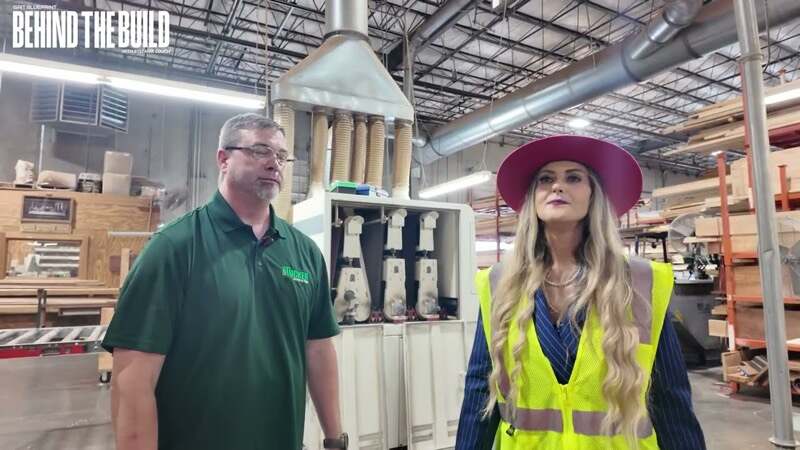
This part of the Magbee Contractors Supply tour stays inside the door shop in Winder, Georgia. Bob Magbee says this is where most of the company’s interior and exterior doors are made. Many of them leave prehung. That means the door is already hung in its frame on hinges, ready to set in the wall.

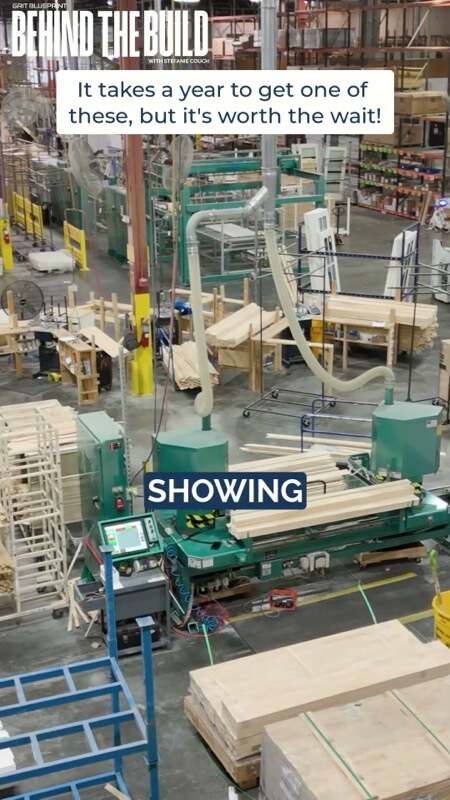
The green machines on the floor are made by Kval. Stefanie Couch calls it the best machinery there is. Bob adds how hard they are to get.

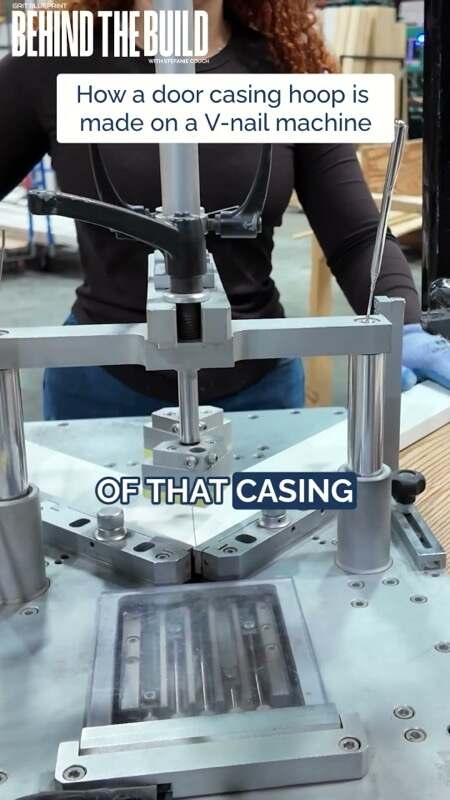
The first stop is the trim saw. A worker enters the length, and the saw sets itself for the cut. He is mitering one by four, which means cutting the ends at an angle so two pieces meet at a clean corner. Next to him, a worker uses a V-nailer to join two mitered pieces with staples. That makes one corner of a casing hoop. Casing is the trim around a door. A hoop is the top piece and both side legs, put together before they ever touch a door.

The split jamb habit in Georgia

A jamb is the frame a door hangs in. Many Georgia dealers use split jambs, which most other places do not. A split jamb comes in two halves. The shop puts casing on both sides of the unit. The installer pulls the halves apart on the job to set it in the wall. The units waiting behind Stefanie already have trim on both sides for this reason.

A split jamb suits a light hollow core door, the kind of plain interior door that sells in volume. The interior door on the machine during the video is that kind.

On the Kval line

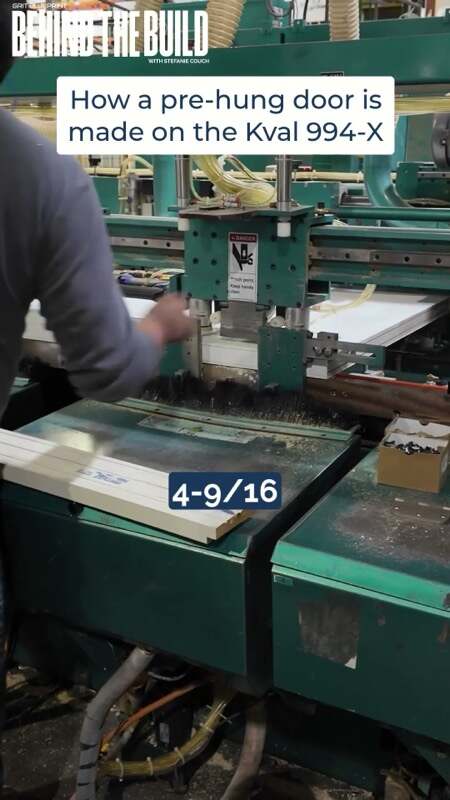
The big Kval machine runs interior singles and doubles on one side and exterior singles on the other. It handles doors 6 foot 8 and 8 foot tall. A worker sets a side jamb in place. The machine applies the hinges and drives screws fed from a hopper on top. Automatic nailers then fix the casing and the head jamb, the piece across the top.

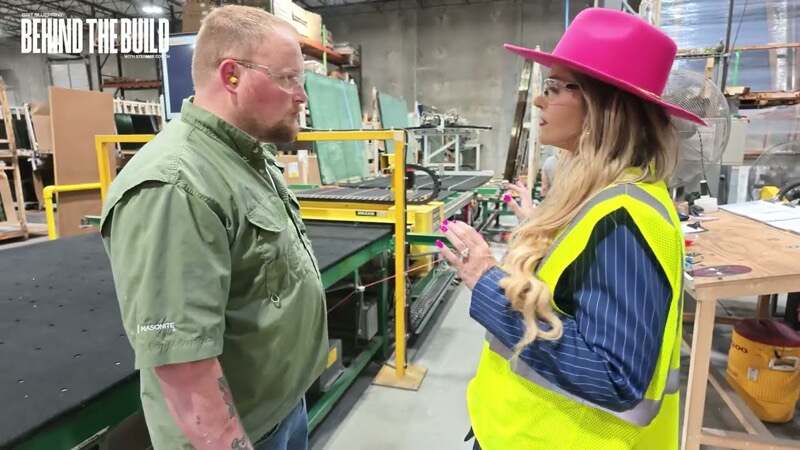
The exterior door that follows is a two-panel door with a one-piece jamb. Its weatherstripping, the soft seal that keeps out air and water, is already in place. The machine routes for the hinges, which means it cuts shallow pockets so each hinge sits flush with the wood. On this door the worker drives the hinge screws himself. Then the line turns the unit toward the exterior side of the shop.

Glass, thresholds, and brick mold

On the exterior line, doors wait with openings already cut for full lite glass. Full lite means glass that fills most of the door. They also have a double bore: two holes, one for a deadbolt and one for a lock. Workers read paperwork from the shop office that names the glass, the seal, the jambs, and the casing for each door.

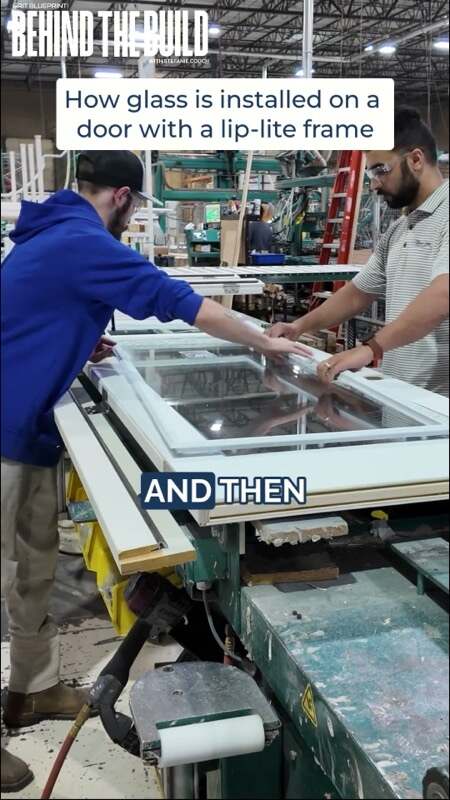
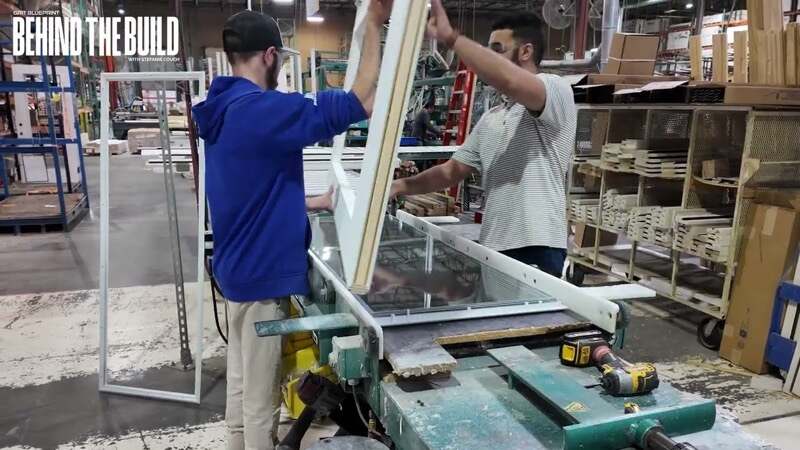
Door sizes in the shop are said in feet and inches. A 2.8 door is 2 feet 8 inches wide, and a 3.0 door is 3 feet wide. The glass here is a common 22 by 64 insert for either one. A machine lifts the door so nobody has to do it by hand. The insert frame comes apart like a sandwich, the glass goes in, and the screws go on the inside of the house.

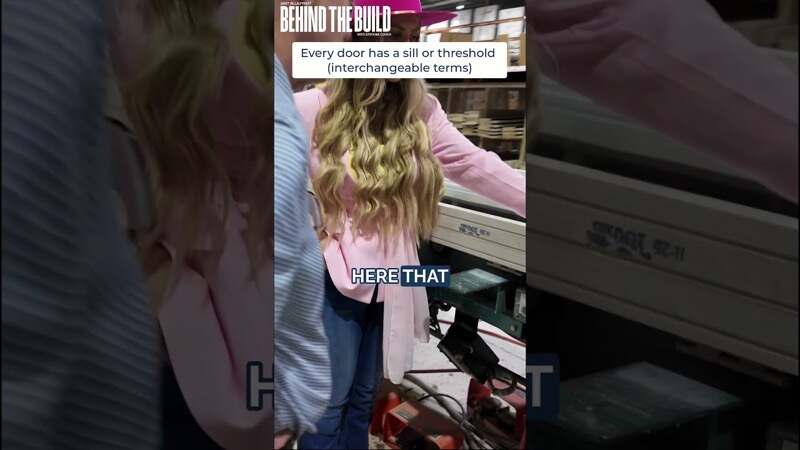
At the bottom of every exterior unit sits a threshold. Some are wood, some are composite, and the caps adjust. The crew caulks it so it seals. Then they add a cover over the seal. That cover protects it from workers walking over it during construction and from scrapes when the unit slides across a pallet. A lift table raises each unit when the worker presses a foot pedal.

Last comes brick mold, the most common outside trim. The shop uses a 180 profile. The worker measures pieces made for a 3.0 door and cuts them down for a 2.8.

Why a dealer builds its own doors

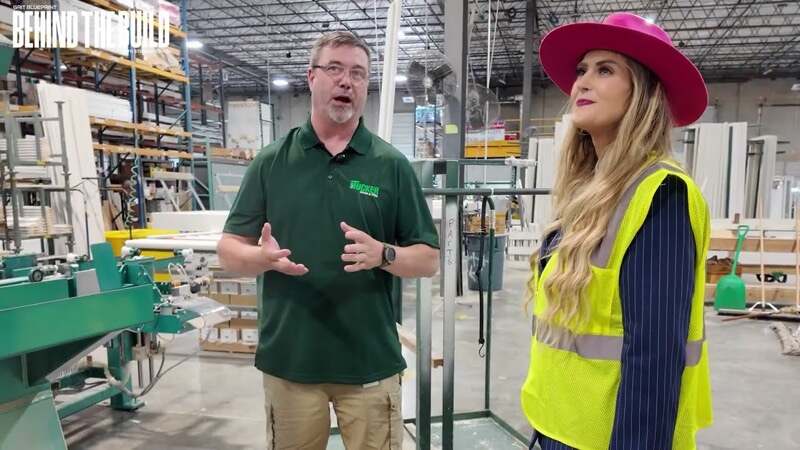
Bob says Magbee is about as vertically integrated as anyone in the industry. Vertically integrated means the company does more steps itself instead of buying them from others. Stefanie points out that a shop like this only makes sense with volume. The machines and the people cost a lot to start. The upside for builders is one stop for custom work. When a unit has a problem, Magbee does not have to blame the place it bought from. It built the unit, so it can fix it.

What To Do With This

  1. Learn the three jambs

    Stand at a door unit and point out the hinge jamb, the strike jamb, and the head jamb. Stefanie says every door unit has them, even doubles.

  2. Ask how heavy the door is

    Before a split jamb goes on an order, find out what kind of door it is. Stefanie says split jambs work really well on a hollow core commodity door and are never a good idea on a heavy door.

  3. Explain the screw hole plugs

    On a door with a glass insert, the little plugs that cover the screw holes come taped to the glass. Tell the customer they go in after the door is installed and painted.

  4. Watch a door unit get built

    Stefanie says these are the little things she wishes she knew before she started selling doors, and that until you see it, you don't really know. Ask to stand in a door shop and follow one unit through.

Plain English

V-nailer
A machine, named for its shape, that nails two mitered pieces of casing together.
hoop
A head piece and two legs of casing or brick mold put together ahead of time so it goes on the door unit quicker and more accurately.
split jamb
A jamb made of two pieces that come apart in the field so the door can be installed with casing already applied on both sides.
kerf
A little groove in the exterior jamb that the weatherstripping fits into like a puzzle piece.
double bore
Two holes in an exterior door, made for a deadbolt and a lock.
hinge jamb, strike jamb, head jamb
The three pieces of a door frame: the side with the hinges, the opposite side, and the piece across the top.
brick mold
The most common exterior trim, or casing, applied around an exterior door unit.

Questions this video answers

What is a seal protector on an exterior door threshold?

It is a cover the shop puts over the threshold seal before the door ships. During construction people walk over the threshold, and the seal can get messed up. Magbee adds the cover so the seal also survives being slid across a pallet.

What do door sizes like 2.8 and 3.0 mean?

They are widths in feet and inches. A 2.8 door is 2 feet 8 inches wide, and a 3.0 door is 3 feet wide. In the video, a common 22 by 64 glass insert is shown for either size.

How long does it take to get a Kval door machine?

Bob Magbee says it takes a year to get one of those machines. Stefanie Couch calls the Kval the best you can buy for running prehung doors.

Why would a lumber dealer build its own door units?

Bob Magbee says that when there is an issue with a door, Magbee can solve it because it puts the units together. Builders also get custom doors in one stop. Stefanie notes it takes real volume to pay for the machinery and the people.

In their own words

“It takes a year to get one of those machines.”

Bob MagbeeHear this at 0:29

“It's a very labor-intensive thing, even with technologies.”

Stefanie CouchHear this at 1:25

“That is keeping them from having all these injuries that can happen by doing the same thing a million times a year.”

Stefanie CouchHear this at 8:24

“We're very vertically integrated as much as anybody in the industry, really.”

Bob MagbeeHear this at 7:22

Clips from this episode

Full transcript

2 speakers · 10:41 · 16 chapters

Click any timestamp to jump to that moment in the video.

Welcome To Magbee Contractors Supply Custom Door Shop Tour

0:00 Stefanie Couch: Welcome to Behind the Build with Stephanie Cows. Today I'm here in Winder, Georgia with Bob Magbee at MAGB Contractor Supply. We're about to take you behind the scenes to see all of the things that happen here at MAGB.

Magbee Contractors Supply Makes Most Doors In House

0:12 Bob Magbee: This is where the vast majority of our doors are made on these little all your interiors and exteriors, and we actually pre-hang on a ton of them.

Why The Kval Door Machine Is The Best Equipment

0:22 Stefanie Couch: All this machinery that's green is Pavol, which is I think the best school machinery there is.

0:29 Bob Magbee: It takes a year to get one of those machines.

0:31 Stefanie Couch: Yeah, and they're very expensive. They're very expensive. But they have a lot of technology. So you're actually showing here what length of the cut and the trim, and then you're saying what it sets it for you. And then it's running it based off of that. He's mitering one by four right here, and he's doing it for each side. So he's got one hand on the other, and one hand on this side. So this is a V-nailer. She's actually gonna put this casing together to nail it.

How A V-Nailer Works To Build Casing For Brickmold Hoops

1:00 Stefanie Couch: This is called a V nailer because of the shape here. Taking two pieces, this machine is gonna V-nail it together, and then this is gonna be one side of that casing hoop. And then she's gonna take the other leg, which they've cut on their machines straight to sides and by hand, and then they are going to V nail this out of staples.

Why A Door Shop Has So Many Components And Moving Parts

1:25 Stefanie Couch: So one thing about a door shop is there's like a million components, and you have to have a lot of different things to make one door unit, and a lot of people or machines have to touch it. It's a very labor-intensive thing, even with technologies. So, like you've got they call these brick mold hoops, right? Right. So you've got trim here, this is interior set up for a unit to put on here already. So this saves a little bit when you actually make the unit.

1:54 Bob Magbee: These are all cry to link off a computer, and we just assemble them together, and then it also makes the application on the door unit quicker.

What Split Jamb Installation Is And Why Georgia Uses It

2:03 Stefanie Couch: Well, in Georgia, we do something that a lot of places don't do, so we use something called split jams. Alright, so this is a split jam, this is a head jam. This is gonna come apart like this, and then in the field, you can take this apart so you can actually install this with casing on it, and then they're gonna nail this in. So this is already installed on these units you're seeing behind me, but this is how it works. These are not common in all areas.

2:28 Stefanie Couch: So we'll look on this right here, and this has actually got trim applied on both sides already because of the split dam. So you take it apart in the field and install it. Don't see this very often in other places. This is the hoop of the trim, and they're gonna put it on one side and then flip it and do it on the other.

2:49 Stefanie Couch: You can make it a hoop already, but still very manual.

2:52 Bob Magbee: Yeah, it is, and it's but it's a lot more accurate because they put the hoop down and they're not having to, you know, it's the length, the header's the length, absolutely, and the uh legs are the length, so it's just much quicker for them to put it on. Yeah. And and more accurate.

Running The Kval Door Machine: The Lamborghini Of Door Machines

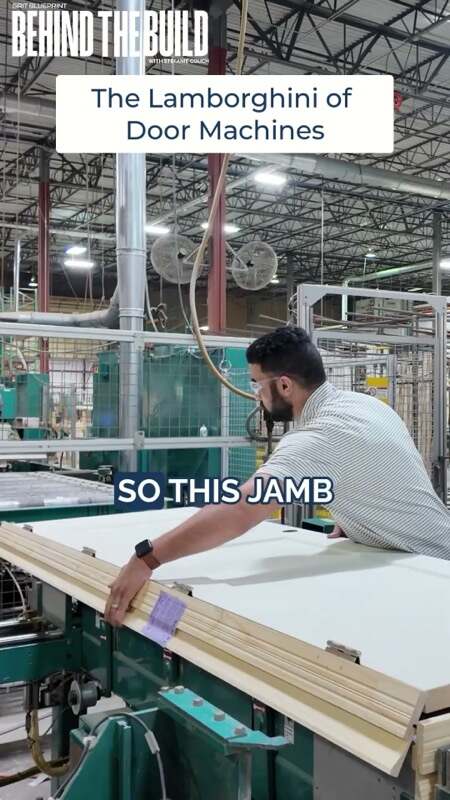
3:08 Stefanie Couch: Alright, so this is the cabal machine. You're running singles and interior doubles on this, and then exterior singles on this. This machine will run uh 6'8 and 8.0 at the 994X. This is basically like a Lamborghini of door machines, like the best thing you can buy.

3:26 Bob Magbee: This costs more than a million dollar ounce.

3:29 Stefanie Couch: Yeah. A lot of dorms gotta go through this to paint for this bad boy. So he's putting the leg jam on one side of this interior, and this machine will do interiors and exterior. Now applying the hinges and the screws. So the screws are coming from the hopper in the top. Now this door unit is going to have another jam applied and a head jam. This is an automatic nailer right here. These are gonna automatically nail the casing and the head jam. Alright, so now we're putting the head jam in.

How Hinges And Screws Get Applied On An Interior Door

4:04 Stefanie Couch: This is a split jam. So this jam actually has two pieces that go together, and in the field they're gonna take those two pieces apart to make it be able to be applied and installed with the casing. If you have a heavy door, split jams are never a good idea. If you have something like a holocore commodity door, which is what we're looking at right now, these work really well. Alright, so we're gonna run an exterior door. This is an exterior two-panel door. The jam's on an exterior difference, so you can see as you're looking at this that it actually has weather stripping in it, and it is a one-piece jam.

When Split Jambs Work And When They Do Not

Exterior Door Manufacturing: Weather Stripping And Kerf Jambs

4:42 Stefanie Couch: So this is a 4916 exterior jam he's putting into there. The weather strip is already applied. Goes into a little groove called a kerf, and the weather stripping has a kerf on it, so it fits in there like a puzzle piece. Now it's routing for the exterior hinges, and it's applying the hinges.

5:04 Stefanie Couch: Now he's manually having to put in the screws with the machine and the hinges he's putting on there. This is going to roll down, and we're gonna put the other jam on the other side. This is gonna actually turn this for us. So this is diverting this to the exterior line, which you can see here has got a bunch of stuff already made. These doors are actually cut out, so they are cut out for inserts where you're gonna put a full view glass in this. And as you can see, these doors already have a double bore here, which is made for a deadbolt and a single lock.

How A Full Lite Glass Insert Gets Built Into A Door

5:41 Stefanie Couch: You're only really gonna see that on the exterior. These are gonna actually go into those doors over there that we just saw that were cut out for a full light. On a door insert, you actually have two pieces that go together, but they actually come apart when they're installed, and then the glass is inside. So this is a pretty common commodity full light glass, 22 by 64 for a 3.0 or a 2.8 door. So they're actually looking at the paperwork from the interior of the shop, telling them exactly what glass needs to go into this door, what type of seal, and what kind of jams and casing are gonna go on it.

6:17 Stefanie Couch: So he's gonna take this apart like a sandwich. That's called the lip-like frame. Those are plastic and they are bolded in the factory, and then the glass is put in there. This part of the machine, if you did not have glass, it would just keep rolling past it.

6:35 Stefanie Couch: So he's lifting this up with a machine so he doesn't have to do that manually. And then they're gonna fit this glass insert right in that hole, and then they're gonna put the lip-like frame on the side, and this is the interior of the glass. They're putting the screws in. The screws always go to the interior, otherwise, somebody could just unscrew the glass and walk right in the house. Once these are installed and painted in the home, they're gonna actually put some little plugs in there that will cover those screw holes.

7:08 Stefanie Couch: But they don't do that in the factory, they those are taped on the glass, and you do that after you install the door and paint it. These are the little things that I wish I knew before I started selling doors, like how this works, you know? Until you see it, you don't really know.

Why Vertically Integrated Door Shops Solve Warranty Problems

7:22 Bob Magbee: We're very vertically integrated as much as anybody in the industry, really. Yeah, you can't go any further uh than this.

7:28 Stefanie Couch: But you do have to have volume. I mean, it doesn't make sense to put a book on this piece up. Yeah, it's too expensive to start it and machinery and the people, but you guys are doing a ton of all this.

7:37 Bob Magbee: Yeah.

7:38 Stefanie Couch: The good part about it is that, like you said, you can do everything so people can one-stop shop. They don't have to go different places to get custom.

7:45 Bob Magbee: Well, and if something's wrong, you're not going, well, we bought it from Fred, and you know, like we just go. If there's an issue, we we can solve it though, because we're putting them together.

How Head Jambs And Strike Jambs Get Assembled On Exterior Door Units

7:55 Stefanie Couch: Yeah, absolutely. So they're nailing in the head jam here to the frame on the leg jam on a hit on a hinge jam. So you're looking here, these are handed, uh, just for somebody that may not know. This left side is a hinge jam, and the right side is the strike jam, and then you have a head jam. Every door unit has that, even doubles. Um, and then they're gonna put a threshold or a seal on the bottom here. They're doing a little caulking here. Make sure it's all sealed up like it should be.

8:24 Stefanie Couch: So, something that they do here that some people may or may not do is they're actually have a seal cover or seal protector on this seal. So during construction, people are walking over this, this thing will get really stuffed up. That's just a little extra safety point there. Then they're putting that on there to be able to transport and slide that across the pallet without the bottom getting messed up. Alright, so this table, he's gonna press a button with his foot, it's gonna lift up. That is keeping them from having all these injuries that can happen by doing the same thing a million times a year.

How A Threshold Seal Protector Saves Door Sills On The Jobsite

8:55 Stefanie Couch: That thing is done. Now he's gonna put casing on it. So this is actually what the threshold or the seal looks like without that still cover on it. This one has a wood piece here, some of them are composite here. This is a cap, it's what we call this, and they're adjustable. This one is mill. This is like more of a commodity seal that's really inexpensive. On every single exterior door unit, there's some type of threshold. Alright, so now they're gonna put exterior brick mold on this.

Why Brickmold Trim Is The Most Common Exterior Casing

9:23 Stefanie Couch: 180 brick mold is the most common exterior trim that there is or casing, and they are applying that here. They've got a head jam and two legs. As you can see, he's having to measure this. So those are made for 3.0 doors, and he's cutting it for a 28.

Closing The Magbee Contractors Supply Door Shop Tour

10:08 Stefanie Couch: We'll see you next time.

Next episode

More from Behind the Build

All episodes