
About This Episode
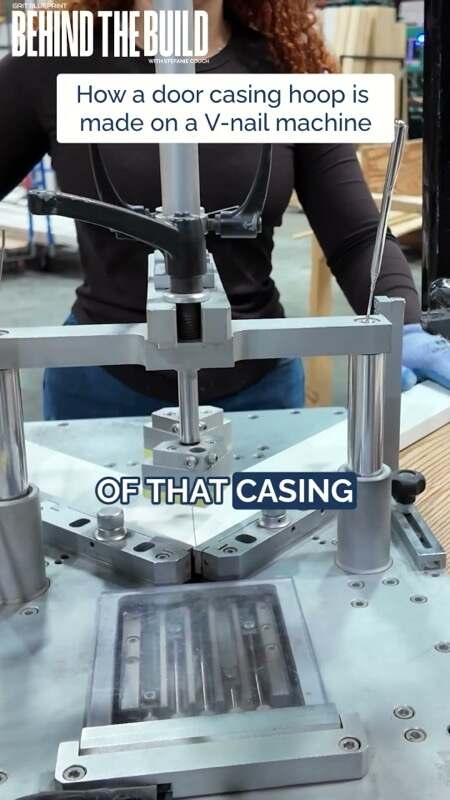
The door shop at Magbee Contractors Supply in Winder, Georgia is the classroom here. Stefanie Couch walks it with Bob Magbee and names every part as it goes by. It starts at the trim saws, where one by four is mitered and a V-nailer joins the pieces into casing hoops. A hoop is built ahead of time so it goes on the door unit faster and more accurately.
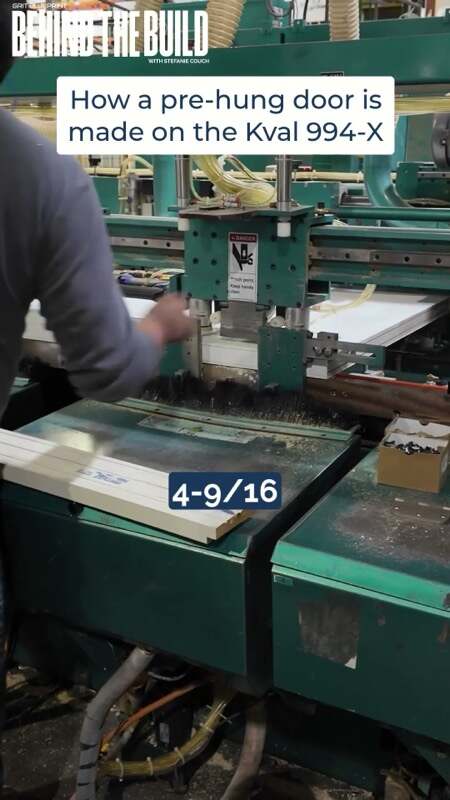
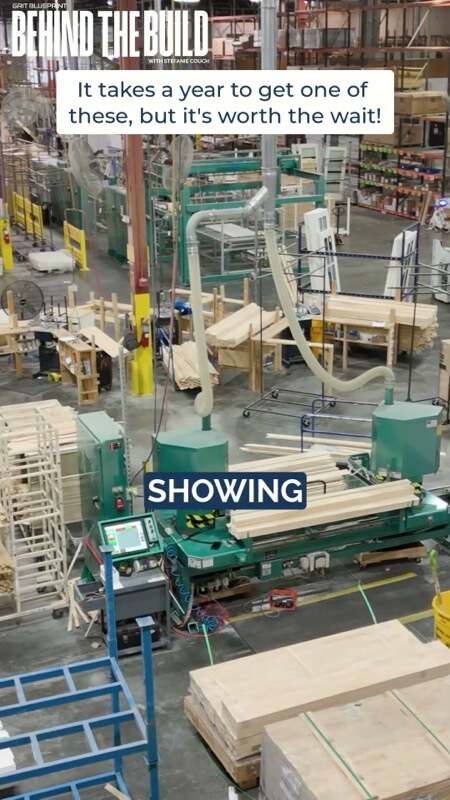
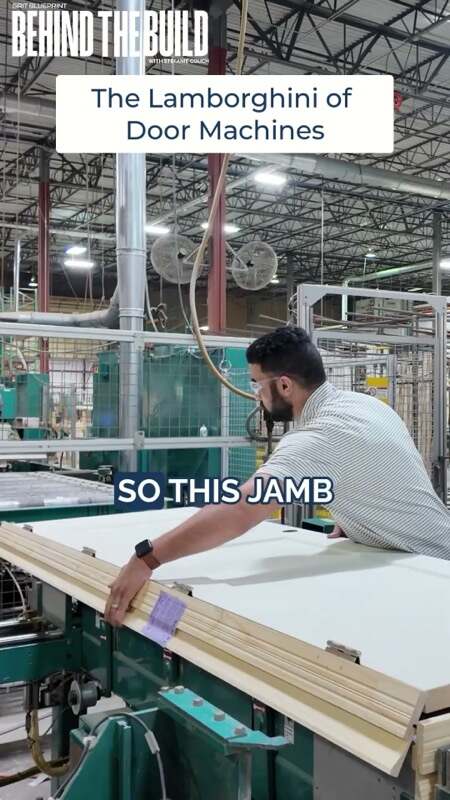
Then comes the Kval machine, which Bob says is a big investment and takes a year to get. It applies hinges, feeds screws from a hopper and nails the casing and head jamb automatically. Stefanie explains split jambs, a two-piece jamb that comes apart in the field so a door can be installed with casing already on both sides. She says they work well on a hollow core commodity door and are never a good idea on a heavy door. Exterior doors get a one-piece jamb with weatherstripping that fits into a groove called a kerf.
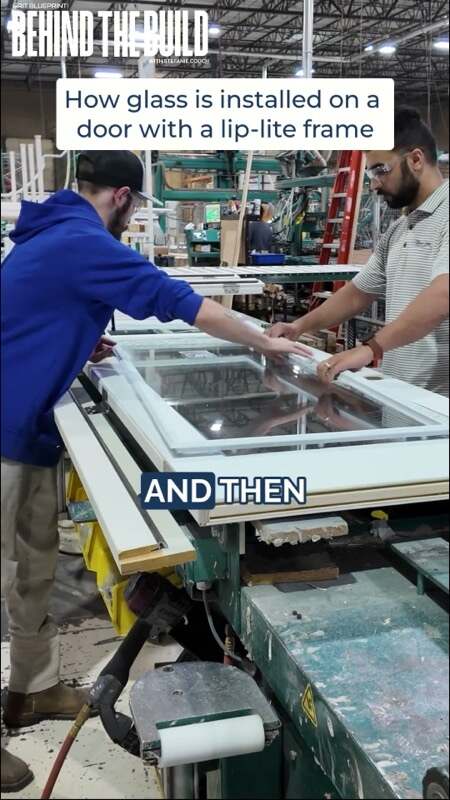
On the exterior line, a full lite glass insert goes in like a sandwich, with the screws always on the interior side. Each unit has a hinge jamb, a strike jamb, and a head jamb, then a threshold and brick mold. Bob adds that because Magbee puts the units together, it can solve an issue itself.
Trim saws and casing hoops
This part of the Magbee Contractors Supply tour stays inside the door shop in Winder, Georgia. Bob Magbee says this is where most of the company’s interior and exterior doors are made. Many of them leave prehung. That means the door is already hung in its frame on hinges, ready to set in the wall.
The green machines on the floor are made by Kval. Stefanie Couch calls it the best machinery there is. Bob adds how hard they are to get.
The first stop is the trim saw. A worker enters the length, and the saw sets itself for the cut. He is mitering one by four, which means cutting the ends at an angle so two pieces meet at a clean corner. Next to him, a worker uses a V-nailer to join two mitered pieces with staples. That makes one corner of a casing hoop. Casing is the trim around a door. A hoop is the top piece and both side legs, put together before they ever touch a door.
The split jamb habit in Georgia
A jamb is the frame a door hangs in. Many Georgia dealers use split jambs, which most other places do not. A split jamb comes in two halves. The shop puts casing on both sides of the unit. The installer pulls the halves apart on the job to set it in the wall. The units waiting behind Stefanie already have trim on both sides for this reason.
A split jamb suits a light hollow core door, the kind of plain interior door that sells in volume. The interior door on the machine during the video is that kind.
On the Kval line
The big Kval machine runs interior singles and doubles on one side and exterior singles on the other. It handles doors 6 foot 8 and 8 foot tall. A worker sets a side jamb in place. The machine applies the hinges and drives screws fed from a hopper on top. Automatic nailers then fix the casing and the head jamb, the piece across the top.
The exterior door that follows is a two-panel door with a one-piece jamb. Its weatherstripping, the soft seal that keeps out air and water, is already in place. The machine routes for the hinges, which means it cuts shallow pockets so each hinge sits flush with the wood. On this door the worker drives the hinge screws himself. Then the line turns the unit toward the exterior side of the shop.
Glass, thresholds, and brick mold
On the exterior line, doors wait with openings already cut for full lite glass. Full lite means glass that fills most of the door. They also have a double bore: two holes, one for a deadbolt and one for a lock. Workers read paperwork from the shop office that names the glass, the seal, the jambs, and the casing for each door.
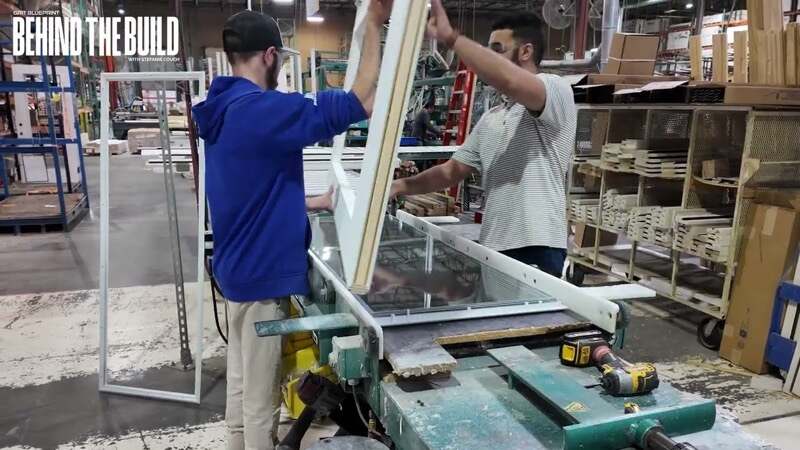
Door sizes in the shop are said in feet and inches. A 2.8 door is 2 feet 8 inches wide, and a 3.0 door is 3 feet wide. The glass here is a common 22 by 64 insert for either one. A machine lifts the door so nobody has to do it by hand. The insert frame comes apart like a sandwich, the glass goes in, and the screws go on the inside of the house.
At the bottom of every exterior unit sits a threshold. Some are wood, some are composite, and the caps adjust. The crew caulks it so it seals. Then they add a cover over the seal. That cover protects it from workers walking over it during construction and from scrapes when the unit slides across a pallet. A lift table raises each unit when the worker presses a foot pedal.
Last comes brick mold, the most common outside trim. The shop uses a 180 profile. The worker measures pieces made for a 3.0 door and cuts them down for a 2.8.
Why a dealer builds its own doors
Bob says Magbee is about as vertically integrated as anyone in the industry. Vertically integrated means the company does more steps itself instead of buying them from others. Stefanie points out that a shop like this only makes sense with volume. The machines and the people cost a lot to start. The upside for builders is one stop for custom work. When a unit has a problem, Magbee does not have to blame the place it bought from. It built the unit, so it can fix it.
What To Do With This
Learn the three jambs
Stand at a door unit and point out the hinge jamb, the strike jamb, and the head jamb. Stefanie says every door unit has them, even doubles.
Ask how heavy the door is
Before a split jamb goes on an order, find out what kind of door it is. Stefanie says split jambs work really well on a hollow core commodity door and are never a good idea on a heavy door.
Explain the screw hole plugs
On a door with a glass insert, the little plugs that cover the screw holes come taped to the glass. Tell the customer they go in after the door is installed and painted.
Watch a door unit get built
Stefanie says these are the little things she wishes she knew before she started selling doors, and that until you see it, you don't really know. Ask to stand in a door shop and follow one unit through.
Plain English
- V-nailer
- A machine, named for its shape, that nails two mitered pieces of casing together.
- hoop
- A head piece and two legs of casing or brick mold put together ahead of time so it goes on the door unit quicker and more accurately.
- split jamb
- A jamb made of two pieces that come apart in the field so the door can be installed with casing already applied on both sides.
- kerf
- A little groove in the exterior jamb that the weatherstripping fits into like a puzzle piece.
- double bore
- Two holes in an exterior door, made for a deadbolt and a lock.
- hinge jamb, strike jamb, head jamb
- The three pieces of a door frame: the side with the hinges, the opposite side, and the piece across the top.
- brick mold
- The most common exterior trim, or casing, applied around an exterior door unit.
Questions this video answers
What is a seal protector on an exterior door threshold?
It is a cover the shop puts over the threshold seal before the door ships. During construction people walk over the threshold, and the seal can get messed up. Magbee adds the cover so the seal also survives being slid across a pallet.
What do door sizes like 2.8 and 3.0 mean?
They are widths in feet and inches. A 2.8 door is 2 feet 8 inches wide, and a 3.0 door is 3 feet wide. In the video, a common 22 by 64 glass insert is shown for either size.
How long does it take to get a Kval door machine?
Bob Magbee says it takes a year to get one of those machines. Stefanie Couch calls the Kval the best you can buy for running prehung doors.
Why would a lumber dealer build its own door units?
Bob Magbee says that when there is an issue with a door, Magbee can solve it because it puts the units together. Builders also get custom doors in one stop. Stefanie notes it takes real volume to pay for the machinery and the people.