
Low-E Glass and Argon Gas: What Your Windows Actually Do with Barry Williams of Tucker Door & Trim
Client: Tucker Door & Trim is a Grit Blueprint client.
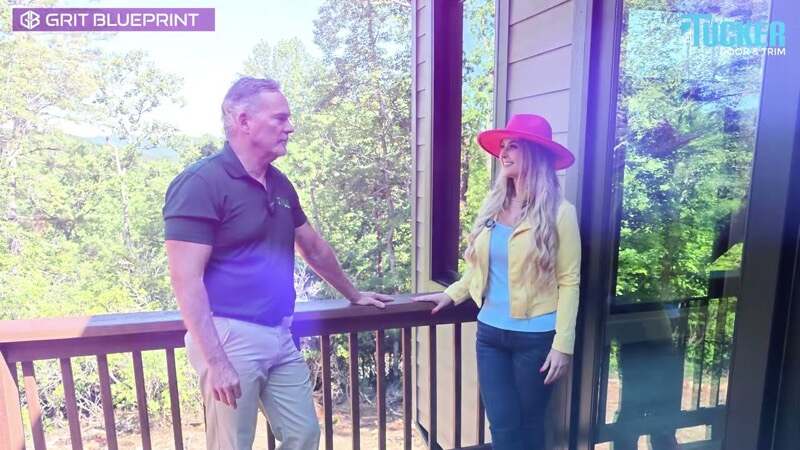
Barry Williams of Tucker Door & Trim explains low-E glass: a sputtered silver coating turns the outer pane into a mirror that keeps the sun's heat out.


Chapters
Full transcript
Click any timestamp to jump to that moment in the video.
What Is Low-E Glass and Why Does It Matter?
0:00 Transcript: All right, Barry. Low-E is something that a lot of people maybe have heard of, but I want to know, what is low-E glass and why does it matter?
0:08 Transcript: With regular glass, the sun's energy will go right through. The heat will go right through the glass,
0:15 Transcript: go into the house, and heat the room up. So you may be running an air conditioner,
0:19 Transcript: but it has to run even harder because it's trying to keep that heat from the sun out.
0:25 Transcript: Well, what low-E is, is it's essentially a mirror. You're turning that exterior piece
0:30 Transcript: of glass into a mirror. And what they do with our glass supplier is they put silver
0:36 Transcript: on the glass. They use silver bars, actual silver bars, and they cause the silver to separate in what they call sputter coat the glass.
0:44 Transcript: So what it is, is it's a mirror, and then they put another material on it and then put another coat.
0:51 Transcript: Our standard is called LoĒ²-270. The two is because it's got two coats of low-E on it,
0:58 Transcript: and the 70 is the emissivity of what percentage of the sun that it lets in and out. And you can
1:05 Transcript: take a low-E window and stick it in front of your face in the sun, and it feels almost
1:10 Transcript: like you put plywood in between you and the sun. The heat doesn't get through. Now, we have two types of low-E. There's 270, which meets code, and it's two coats of low-E.
270 vs 366 Low-E Glass: Which One Do You Need?
1:21 Transcript: We also have 366. So to get even the higher performance number and more, you put three
1:28 Transcript: coats of low-E. The only negative is at night when you turn the lights on in the room. With a 366,
1:37 Transcript: it reflects where you won't see out the window as well. A little bit of an upgrade. So, you know, that is something that you would need to ask your person you're purchasing your windows from. Hey, do you want that? Do you see people that mix and match? So they might have 366 on one side of the house where they're getting a ton of sun, like you mentioned, and then the other stuff,
1:55 Transcript: or maybe they have a beautiful mountain view that they might want to see the stars at night
1:59 Transcript: through those windows. They want to see that outside at night. They would do 270.
2:05 Transcript: Yes. Okay. So if you are looking for windows and you're not sure what low-E that is offered on
2:10 Transcript: something that you're purchasing, you can ask your window rep about that, and they should be able to
2:15 Transcript: explain. And then, like you said, you can mix. We can mix and match a little bit, get what you need best for your home and the sun that is coming in. Overall, though, I think low-E is an absolute
2:23 Transcript: must-have. I would never purchase something that doesn't have low-E on it today. It's just, especially in Georgia, it's July right now, it's hot, and I wanted to feel good and cold inside.
What Does Argon Gas Do in a Window?
2:33 Transcript: All right, let's talk a little bit about argon. It is a gas. A lot of people learned about it in seventh grade science class. But how does it apply to windows,
2:41 Transcript: and what does it actually do to a window if you order something with argon gas?
2:46 Transcript: There's two panes of glass, and between that pane of glass there's usually,
2:51 Transcript: generally air. Argon is more for the winter. It's more for the cold. When it's 20 degrees outside,
2:57 Transcript: that outer piece of glass is going to be 20 degrees because it is outside.
3:03 Transcript: Before there was insulated glass, the problem was that 20 degree piece of
3:08 Transcript: glass was also inside your house. So it was radiating that cold into your house.
3:13 Transcript: So we come up with two pieces of glass, which was the technology at the time. So now there's
3:18 Transcript: an airspace. So it has to get from that piece of glass to this piece and cool off that airspace.
3:23 Transcript: Argon is thicker than air. The molecules are more dense. So what happens is the air is moving fast.
3:32 Transcript: If you could see it, it's convecting inside there and trying to get the cold back to that.
3:38 Transcript: Well, you put argon in there, which is thicker than air, it slows that down. So the cold has a
3:44 Transcript: harder time getting from this piece of glass to this piece of glass. So it helps your U-factor.
3:50 Transcript: Yeah. So Georgia, maybe you would want it, but somewhere like Minnesota or Canada,
3:54 Transcript: where it's really, really cold, you definitely are going to want to look into argon. And there may be some other options as well that are coming out. Vacuum glass is something you hear
4:02 Transcript: about sometimes. And all of that is really to make sure that what's happening outside,
4:06 Transcript: whether it's hot or cold, doesn't get inside.
GritConnected
The people, companies and topics linked to this page, and where to go next.
People
-
 Expert card Tap to open
Barry Williams Window Division Manager, Tucker Door and Trim Grit Guide Expert Watch their episode with Barry Williams

Companies

Next episode
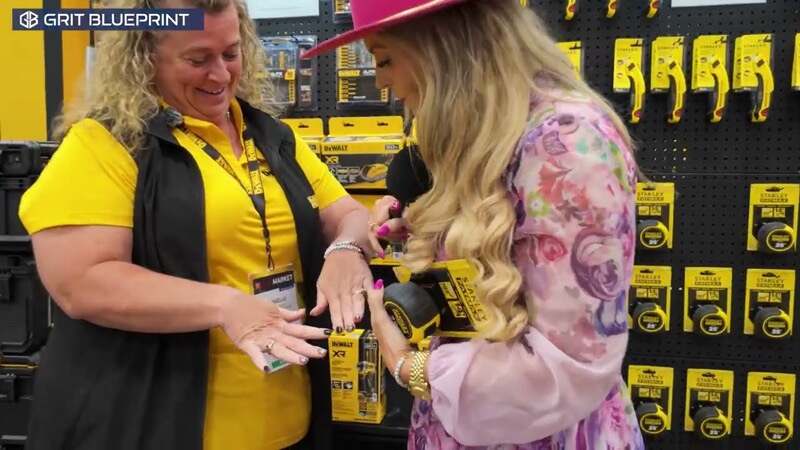
How DEWALT End Cap Subscriptions Work for Do it Best Stores
DEWALT's end cap subscription sends Do it Best and True Value stores a new end cap every quarter, with 35 percent off for signing up for the full year.


