How Windows Are Made: A Custom Order on the Shop Floor
Follow one window through Tucker Door & Trim’s plant and you will see why the order has to be right before it leaves your desk.
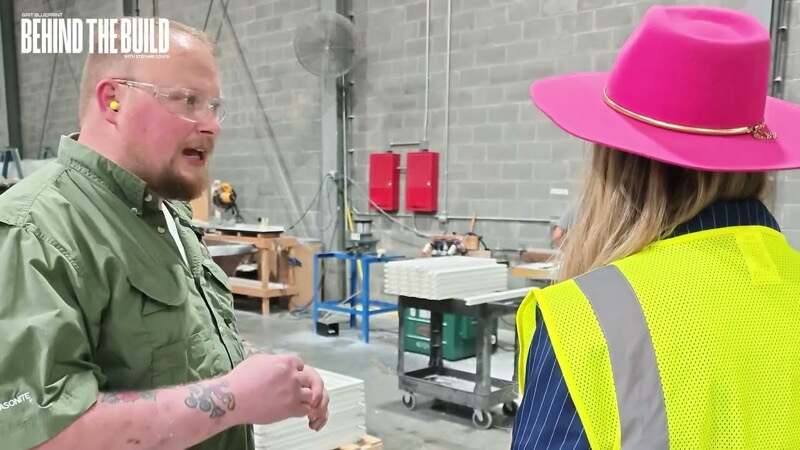
Here is how windows are made to order at Tucker Door & Trim’s plant in Monroe, Georgia: the glass is cut, washed and sealed into one unit in a climate-controlled room, pressed and filled with air or argon, built into a wood, PVC or vinyl sash, then labeled, braced and sent to the dock. Every window there is made to order, so a mistake on your custom window order means a remake, and the tour says a remake can take weeks.
Chris Kotlowski runs production for the window department at Tucker Door & Trim in Monroe, Georgia. Wood, PVC and vinyl windows all move through his lines, “going from beginning to end,” as he puts it. Behind the Build walked those lines with him.
Tucker is a two-step distributor, a company that sells to dealers and lumberyards, and it also builds windows and doors in its 290,000 square foot facility. The episode opens with a custom trapezoid window. Tucker built it and delivered it to Reeves Building Supply, a dealer in Clayton. Reeves delivered it to a jobsite in Cleveland, Georgia, where the builder, Wilkinson Construction Management, installed it.
There is no standard size to pull off a shelf for a window like that. Here is the order of the line and what each stop means for the person who wrote the order.
Stop 1: The glass gets cut
Kotlowski’s walk starts at the glass cutter, because the glass comes first.
You have to start from the beginning. The main thing with the windows, you have to get the glass.
 Chris KotlowskiRuns window production, Tucker Door & TrimFrom our plant visit, at 2:20
Common glass sizes arrive at Tucker already cut by the glass manufacturer. The plant’s own cutter handles odd sizes and special glass. An operator enters the size. The machine pulls a sheet down onto the table. A part of the machine called the optimizer lays out the cuts. “It yields it all out,” Kotlowski says (3:45). “Get the most pieces out of it.”
Some shapes are beyond the machine. Kotlowski points to a curved piece and says the cutter does not have the CAD file, the computer drawing it works from, for that shape. “We’ll cut the sheet of glass to that, then we’ll freehand it,” he says (4:27). “We have to cut it by hand.”
What it means for you: a special shape can mean hand work at the very first stop. Ask early whether the shape you are ordering is cut by machine or by hand.
Stop 2: The washer and the green room
Cut glass goes through a washer with three tanks: hot water, a rinse and a final rinse. An air knife then blows the water off. From there the glass enters what Tucker calls the green room, where two panes become one sealed unit. The trade name for that unit is an insulating glass unit, or IGU (Windows 101 covers the glass terms). Workers put a material called Duraseal on the glass, then “cap it off,” in Kotlowski’s words, and send it down the line.
In here it has to be climate controlled because of the Duraseal. It has to be 73 degrees in here all year round.
Chris KotlowskiRuns window production, Tucker Door & TrimFrom our plant visit, at 5:09Stop 3: The press, then air or argon
Next the unit goes through a press that brings it to its overall thickness. Kotlowski says it is 120 degrees as the unit comes through, which heats the glass and the Duraseal “so everything will have a good bond to it.” Then the space between the panes is filled. “He’ll grab the glass and put air in it, or argon, depending on what the customer wants,” Kotlowski says (5:45).
Argon is a gas. Kotlowski calls it a heavier gas, so whatever hits the outside pane takes longer to get through to the next pane. That is as far as he goes, and it is as far as you should go at the counter without the manufacturer’s numbers in front of you. Barry Williams, who manages Tucker’s window shop, covers both topics in Low-E Glass and Argon Gas: What Your Windows Actually Do.
What it means for you: air or argon is a choice somebody makes. Make it on purpose and write it on the order.
Stop 4: What is a sash, and how is each kind built?
The sash is the framework that holds the glass. Tucker builds sashes from wood, PVC and vinyl, and each line works differently.
- Wood: a worker fits a rubber boot around the glass. Kotlowski says the boot is the seal on a wood sash. The wood parts go on around it, a machine clamps the sash, pre-drills it and drives the screws, and weatherstripping goes on last. “Everything fits like a puzzle,” he says (6:50). “It’s a lot of hands-on.”
- PVC: parts arrive in long lengths and are cut to size. The ends are milled on shapers and the sash is put together with no glass in it. An automatic glazer then runs silicone into the sash. “It puts the exact amount, not too much, not too little,” Kotlowski says (9:04). The glass is dropped in after that.
- Vinyl: a welder heats the corners of the sash and joins them. A second machine cleans the leftover weld off each corner so it sits flush.
LeeAnn Gilbert is team lead on one of the vinyl lines and shows the before and after of that corner cleaning. “I like working here because I can see the product from start to finish, and actually get it out the door, and I take pride in my work,” she says (11:24).
What it means for you: wood, PVC and vinyl are three lines with three sets of steps. The material on your order decides which line builds it.
Stop 5: Labels, braces and the dock
At the end of the line the sashes go into their frames. Stickers and logos go on and the window is strapped. Braces go on the bottom so the product does not break when it is dragged. Then it goes straight to the dock.
We completely make every window out there. Not just the 3300, but every window we make, I was in on the designing of it. So it’s kinda like my kids out there.
 Barry WilliamsManager of the window shop, Tucker Door & TrimFrom our plant visit, at 7:38
What should you ask a supplier about how windows are made?
Five questions from the tour:
- Which sizes and glass types come to you already cut, and which do you cut to order?
- Is this unit filled with air or argon, and where does that show on my order?
- Can this shape be cut on your machine, or is it cut by hand?
- What is the largest window you build in this line?
- If something is wrong, how long does a remake take?

On odd shapes, stop and call before you order
The trapezoid that opens this tour is the kind of window where counter people get burned most. It is not a stock unit. A shape name said out loud can mean a different window than the one in the wall. And at Tucker, a shape the cutter has no drawing for is cut by hand at the very first stop. Our rule for anything unusual: stop, get a trace or a template of the opening, and call the person who will order or build the custom unit before anything is ordered.
Knowing how a window moves through the plant is what lets you tell a customer why a remake takes weeks. As Stefanie Couch said on the tour: “A lot of people think that windows and doors just show up and they’re there, but there’s a lot of process that goes into this” (2:09). The same is true of doors: see how a prehung door gets built, station by station.
What to do next
- Write down the order of the line as Kotlowski gives it: glass cut, glass insulated, sash built, stickers on, out to the truck. Use it the next time a customer asks what goes into a custom window.
- On your next window order, decide air or argon on purpose and put it in writing.
- Check the measurements every time a custom order changes hands. This one went from the plant to the dealer to the builder. The Window and Door Order Checklist gives you the list.
- Tell the customer in plain words that a custom window is made to order and that a remake can take weeks.
- Ask your supplier if you can walk the plant.
Questions people ask
Why does a wrong custom window take so long to fix?
At Tucker every window is made to order, so there is no stock unit to swap in. A mistake means the window is built again from the first stop, and the episode says a remake can take weeks.
What is an insulating glass unit?
Two panes of glass sealed together as one unit, also called an IGU. At Tucker it is made in a climate-controlled room the plant calls the green room, then pressed, and the space between the panes is filled with air or argon.
Who decides whether a window gets air or argon?
The order does. Chris Kotlowski says the line fills each unit with air or argon depending on what the customer wants, so make the choice on purpose and write it on the order. For what each one does, use the manufacturer’s numbers.
Are odd-shaped windows cut by machine?
Not always. At Tucker, common glass sizes arrive already cut, the plant’s cutter handles odd sizes and special glass, and a shape the cutter has no drawing for is cut by hand. Ask early which one applies to the shape you are ordering.
How are wood, PVC and vinyl window sashes built differently?
At Tucker each material has its own line. A wood sash is fitted around the glass and screwed together, a PVC sash is cut, milled and glazed with silicone before the glass goes in, and a vinyl sash has its corners welded and then cleaned flush.
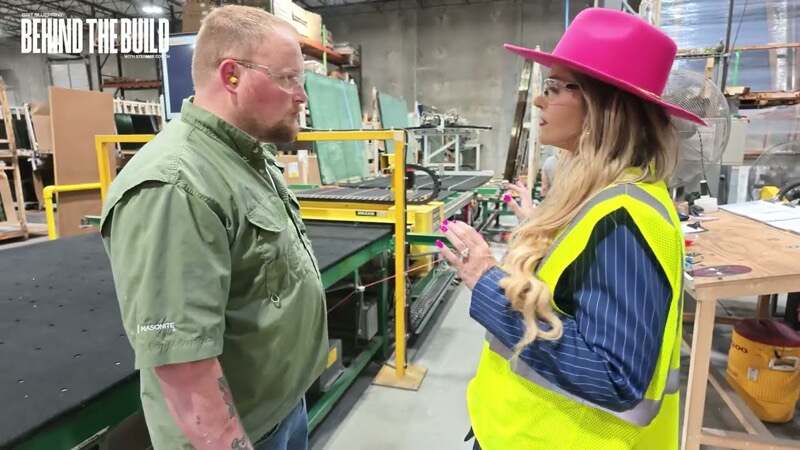
Watch the full episode
How Windows Are Made: Glass, Vinyl, PVC, and Wood.
How custom wood, PVC, and vinyl windows get made at Tucker Door & Trim in Monroe, Georgia, from cutting and insulating the glass to loading the dock. Chris Kotlowski, who runs window production, walks the line step by step.
A Grit Guide original. This piece is built from our own visit.
Episodes in this piece
Sources
- How Windows Are Made: Glass, Vinyl, PVC, and Wood (Behind The Build at Tucker Door & Trim, Part 2). Chris Kotlowski, Barry Williams and LeeAnn Gilbert; quotes at 2:20, 3:45, 4:27, 5:09, 5:45, 6:50, 7:38, 9:04 and 11:24 Grit Guide, Behind the Build
- Low-E Glass and Argon Gas: What Your Windows Actually Do (with Barry Williams of Tucker Door & Trim) Grit Guide