Click any timestamp to jump to that moment in the video.
Can You Grow Your Career Without Leaving Your Company?
0:00 Stefanie Couch: You are living proof that in business, you actually don't have to leave a company to grow in that company. You joined Blish-Mize in 2001 as the receptionist.
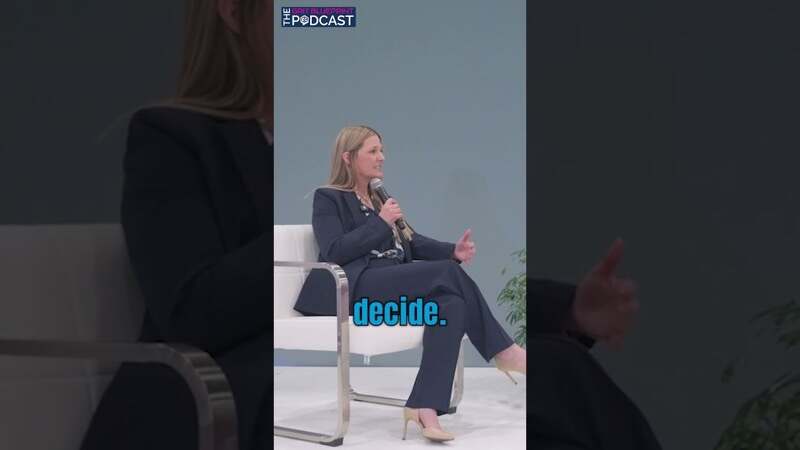
0:10 Sarah Lee: I became our first female merchandise manager, and that's a fact I'm incredibly proud of. In 25 years, I've become the vice president of purchasing. They were willing to invest in me, in time and in growth opportunity, and we share core values of what a family business is. The messy middle, in large part, is three-quarters of my career. I would say, decide. I've had opportunities to either leave or stay. Just being willing and open, I committed to myself at some point in my company to continue saying yes.
Welcome to the Grit Blueprint Podcast
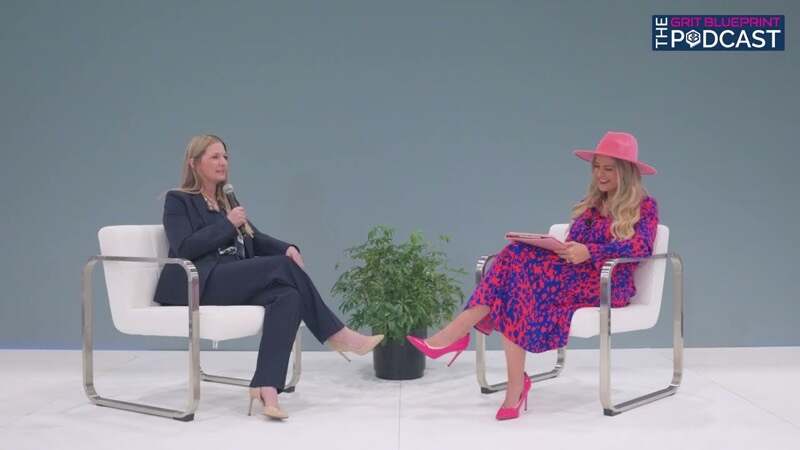
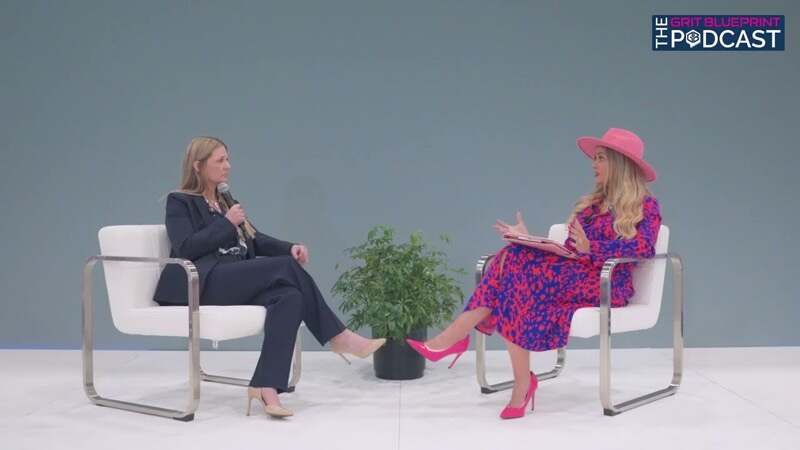
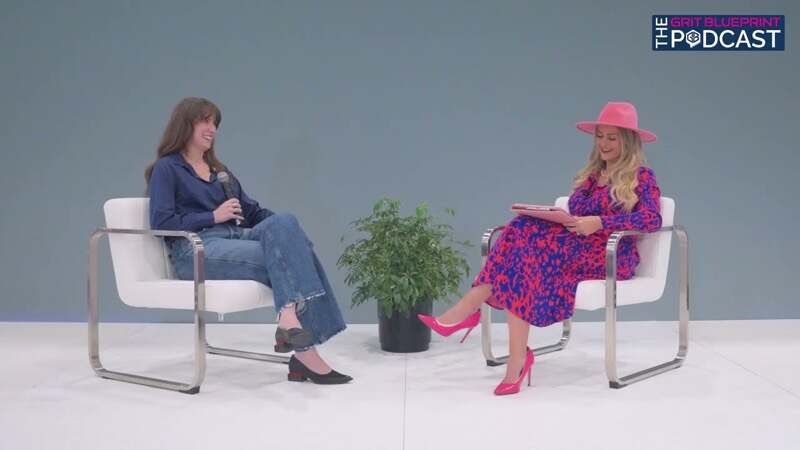
0:49 Stefanie Couch: Welcome to the Grit Blueprint Podcast. I'm your host, Stefanie Couch. This is a spot where leaders talk about the stories, strategies, and systems that win in the building industry. We unpack how leaders and brands build their reputations and become unmistakable. Thank you for joining me, Sarah Lee. I'm going to do your intro. We actually spoke on the phone, and I'm so excited to talk about this, because Sarah has a very interesting background. She's been in the business and done a lot of things, so I can't wait to dig in. You are living proof that in business, you actually don't have to leave a company to grow within that company. You joined Blish-Mize in Kansas in 2001 as the receptionist, and in 25 years you've become the vice president of purchasing at one of the oldest and most respected wholesale distribution companies in the country. This company has been family owned since 1871, which is incredible, and you're still going strong in the fifth generation. Most businesses, only one percent, get to the fourth generation. Very few get to the fifth, so that's a really incredible feat. You didn't just climb the ladder by leaving and going somewhere else. You did it in-house, and I really love your story. You've learned from every department and promotion you've had, and now you're deciding what over 1,500 independent retailers across 13 states have on their shelves. So welcome, Sarah Lee. Please give her a round of applause.
From Receptionist to Vice President of Purchasing in a Family Business
2:24 Stefanie Couch: All right. Tell me about this receptionist-to-VP story, because most people do feel like they have to leave, especially in a company that's maybe in a smaller town or area, in order to grow. What made you stay? And what did you know about this company that made you decide, okay, I'm going to tough it out and go through 25 years of all these different roles here at Blish-Mize?
2:47 Sarah Lee: Thank you. First, I'll clarify: with a name like Sarah Lee, it's probably the number one question I get. I'm not the brand. So I found a company in which to start my career, and that happened to be as a receptionist back in 2001. Why I stayed: bear with me, I'll take you on a ride, because I did a lot of roles in this company. Receptionist was my first exposure to our vendor reps and our vendor community, and to what our industry is about. From there, I joined our catalog department, which was exposure to the 50,000 products that Blish-Mize stocks in our distribution center. That was a promotion opportunity I was offered. Shortly after, I was offered a promotion in our advertising department, where my role was to help our independent retailers grow and promote their stores. That opened up my knowledge of the brands we stock and do business with. In 2012, there was an opportunity in our purchasing department, and I put in for the promotion. I wanted this job. It was an assistant buyer. I got the job, and that's where my passion for purchasing grew, knowing what it would take to be where I'm at today. I became our first female merchandise manager, and that's a fact I'm incredibly proud of. That was a catalyst to advancement. My predecessor announced his retirement, and I threw my hat in the ring. There were a lot of reasons I might not want to do that. You weigh every decision and what you want for your own career. Hindsight being what it is, I wouldn't look back, and I'd do it all over again. So we developed a purchasing director position, and I got to learn and grow under my predecessor for a two-year period. At his final retirement, I took over in 2020, during COVID. I like to consider that trial by fire, and here we are today. So basically, I stayed because they were willing to invest in me, in time and growth opportunity, and we share core values of what a family business is. I really take to that, and to our goal to serve the customers. Full circle, our values align.
Why There Is No Such Thing as Just the Receptionist
5:25 Stefanie Couch: When you took that first step from receptionist, first of all I'll just say, those jobs you think maybe aren't going to be a good learning experience, where you're like, oh, I'm just the receptionist. You're not just the receptionist. Like you said, you're talking to everyone who walks in or calls. You're building relationships, you're helping people, you're kind of the gatekeeper. Did you realize at that moment how big of a deal that background was going to be, that it was a ladder for you, that you'd really be able to use that skill foundationally?
5:58 Sarah Lee: Not at the time, because admittedly it did feel a little just receptionist. I knew I wasn't going to stay there; that wasn't the end of it for me. But in hindsight, that's exactly what it was. It was a way to show my company I can communicate, I can engage, and I can learn in basically every step. So I know it now; I didn't know it at the time.
How Jobs You Don't Love Build You Into A Better Leader
6:21 Stefanie Couch: Throughout my life, a lot of the things I got thrown into, or felt like I had to do because no one else would, are now the things I'm like, wow, I'm really glad I did that project, because it built on the next thing. Can you tell me about some of your examples? Some jobs you didn't love but that taught you something, and some you did love that taught you what you wanted to do more of.
6:48 Sarah Lee: Certainly, and I think we'd all agree we all have those. One in particular comes to mind, but it's a learning experience in how to become a leader. Every part of my career has shaped the leader I am today. I drew from those maybe less desirable jobs. The departments under my umbrella today, I'm able to make changes within them. If something was a grievance, or made me pull my hair out every Monday, guess what? I now have the ability to make those changes, to work with my IT department and make it easier for the person in that role today. That ability is part of where my value comes in, knowing the organizational mentality of my own company.
Getting a Legacy Businesses Team to Embrace Change
7:46 Stefanie Couch: I love that. We were talking earlier, and you said something I thought was really interesting, about how sometimes you're in a situation you don't love and you see what's wrong that you can fix, using that first-principles thinking of, what if we did this a different way? Our industry historically is not known for loving change, whether it's technology or just people change. How do you get around that, especially with your team, when it's, hey, we're going to change the way we've always done it, because there could be a better way? What's your approach?
8:17 Sarah Lee: When you've been doing it as long as my company has, 155 years, there's a lot of this is the way we've always done it. That happens because people are resistant to change. However, with the things we learn, whether the catalyst is something like COVID, let's test the theory: is this still the best way to do it? If it's not, let's talk about it. Let's get feedback from the ones actually doing it and make the appropriate changes. It's not easy for people to change, but I'm a passionate person, and my own work history tells you I'm open to change. I can be met with a challenge, but it's important to adapt and keep finding ways to grow something. Just because we did it that way 50 years ago and it worked then, let's make sure it still works today.
How Two-Step Distribution Works in Hardware
9:09 Stefanie Couch: I love that checkpoint. I want to talk a little about your place in the supply chain, because Blish-Mize is in the two-step world, in between the end user and the manufacturer, which is an interesting place to be. You're talking to a lot of people, vendors and customers. You're a real connector. What does that mean for your day-to-day as a purchasing VP, having to go through so many different people and build so many different relationships, and your team is doing the same thing? Tell me how important that is in your role.
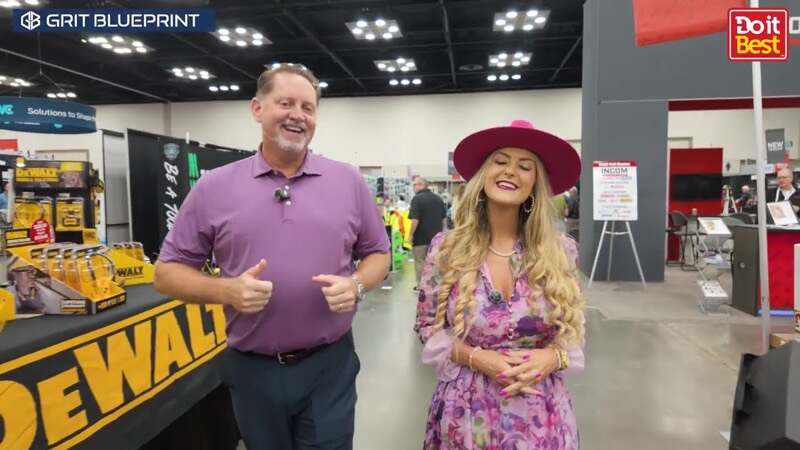
9:43 Sarah Lee: Certainly. With a family-owned and operated business like ours, relationships are our biggest asset in a lot of ways. Our role is finding what our customer base needs and how we provide it. We really provide a one-stop shop, a solution-based source for independent, typically mom-and-pop, rural hardware stores. That's where we're better suited to work with these manufacturers, using our own buying power and our technology to better facilitate individual independent stores. And that's where shows like this come into play, making sure we're still finding those avenues to be the best asset to our brick-and-mortar stores that we can be.
How Buyers Decide Which Products Make the Shelf
10:30 Stefanie Couch: Absolutely. When you're walking a show like this, or buying something for the warehouse, you have 1,500 independent retailers in 13 states you're thinking about. What questions are you asking about products? What's your filter? How are you deciding yes versus no for a product or a line?
10:49 Sarah Lee: Certainly. The key factor in walking a show like this is booth presence and retail packaging. If it can stop me, and I've seen countless amounts of product at retail, that's the first filter: does it get my attention? Second: can my stores be successful with this product? That would open the door to it being worthy of being stocked in our distribution center. Then we get into the nuts and bolts: is there room for two-step distribution? Can we be profitable along with our dealer base? And is it a good fit for the clientele we currently serve? If it's a yes, it's an easy yes for me, because it's not about what I want or what my buyers decide we want. It's what our stores are telling us they need.
What Makes a Product Stop a Buyer at a Trade Show
11:37 Stefanie Couch: What are some of the things that do stop you as you walk by? I'm just curious. For me it's usually pink, surprise, shocker. What are some of the things you know make you stop and look? There are a lot of people here with products trying to stand out, so what does that take from somebody like you who's a decision maker?
12:00 Sarah Lee: Certainly. Number one would be, have I not seen something like that before? Something completely unique, where I go, that's different enough to catch my attention. Or an improvement on an existing category. In a lot of cases, a particular tool or item has been the same for the last 25 years. So if there's innovation in an existing product or category, I take note of that, because it generates interest in a category that may have been underserved.
Where Independent Hardware Retail Is Heading
12:34 Stefanie Couch: You've talked a little about where independent hardware retail is going and the shift happening in the market. Tell me what's going on there. What are you seeing, from a perspective a lot of people never get to see, about where independent retail is going with national brands and private brands? What are your thoughts?
12:53 Sarah Lee: Brand shift happens naturally over time, and we have to keep up with that. Personnel at my company will say we're ready when our customers are. We have to be ahead of those switches; we can't be retroactive. With brand preference changing over time, it's rare that we'd have a single-source supplier within a category, meaning we cover enough territory and geography that we have to have SKU duplication among brands. We may have six different power tool accessory suppliers, and that's okay, because that's the service we offer. So it's about who the up-and-coming vendors in a category are, and whether we can make a partnership and a go-forward relationship with those suppliers.
Why Trade Shows Are Critical for Selling Your Product to Distributors
13:44 Stefanie Couch: I love that. Trade shows, we're at one today. I go to a lot of these, and I'm sure you do. From a seat as a buyer, what's the debate around them? How important are trade shows like this, and what are you thinking about when you come to these, for someone who's displaying, in terms of where you're spending your time, whether they get into the catalog or the warehouse?
14:08 Sarah Lee: To me, these events are industry critical. I have an example from this show. I'm walking by a booth, and a vendor pulls me out of the aisle. Great, good job, first-rate salesman, pull me out of the aisle and sell me on your product. He recognized my name and my company and said, I've been trying to get a hold of you. Here's the difference from a cold-call email among the many I'm inundated with: had he and I not been face to face, and I hadn't seen his product, that opportunity might not exist. The reality is there will be potential for him in our space, simply because I wasn't leaving his cold call filtered in an email. That face-to-face wouldn't have happened otherwise. There have been other instances over the years where deals have been closed right here on a show floor, which again is critical. I'll continue to support events like this in our industry.
How to Research Buyers Before a Trade Show
15:05 Stefanie Couch: That's great, and a great story for all of you who may have a product. See that, like, hey, it's worth your time, but you've also got to do some fishing. You've got to grab people and say, hey, come look at my stuff and talk to me about my thing. I also like to research people before trade shows. So if there's someone like you who's going to be here, and you know it, let's figure out who's going to be there so we can find that person and make that connection. That's a powerful tool to use up front so you don't waste your time. You talked about change, and also about a 155-year-old company, which are two things that maybe don't seem like they go together. What's the best thing about having a company with that much stability, and then the hardest thing about getting them to change? I'm just curious about some of your experiences.
Stability and Technology in a 155-Year-Old Business
15:52 Sarah Lee: The stability is evident, and it's such a rarity. I'll add that we started out supplying wagon trains going out west, in 1871. So think about that today. Even if change may be resisted by one's natural nature, the reality is we have changed over time. Our biggest benefit is technology. My company's presidents and CEOs have always been advocates for technology, and that's instrumental in how we change. It's not always easy; there has to be a force behind it, a reason. Change for the sake of change is not beneficial, but when it's necessary and there's a reason, they're willing to do it. That's how we get here today, 155 years later.
The Leadership Shift From Top Performer to Team Leader
16:46 Stefanie Couch: That's great. I can't wait to see what you do in the next 155 years. I want to talk about leadership a little. I find that often the skills that make us exceptional individual contributors can sometimes hold us back, or have to shift totally, when we become leaders. Going from a great individual performer, even at a director level, to now having a big team, what has that leadership journey been like for you, from receptionist to running a giant team and being responsible for a lot of products and people in the warehouse? Tell me about that, and how you're handling it, the great things and the challenges.
Leading Through COVID as a New VP of Purchasing
17:25 Sarah Lee: Certainly. Initially, a promotion from a peer, my buying staff for example, to being their leader is not always the easiest transition. My team are the ones actively doing the work day to day; the leader is meant to lead. COVID, again, a change at the helm to vice president of purchasing during a time when the world was upside down, especially in product procurement and inventory, was a catalyst to step up, show I could do it, and find the ways to get us through. There's nothing we can't handle together going forward, because we've already done this. We proved success in that. That was an unforeseen advantage on my part, because the timing worked out so well in a leadership role. Beyond that, I've taken every opportunity to go to leadership trainings and seminars, ever learning how to be the best leader. As for the challenges, I draw from a background of working under maybe not the best leaders. That's a learning experience too. Show me the ways of successful leaders so I can draw from that, and show me the unsuccessful ones, because I learn from that as well. All in all, every step of the way has helped shape my leadership.
How to Find Mentors and Grow as a Leader
18:58 Stefanie Couch: You touched on it: training and seeking out knowledge, maybe internally in your teams or your company. What advice would you give to someone who wants to be a better leader, who maybe wants to go do some training? How can they get started? What's some advice?
19:17 Sarah Lee: Certainly. I'd say look around this industry. At one point in my career I had a mentor. She was instrumental in my confidence and my growth. I thank her periodically, and leading up to this she's been on my mind a lot. At the time, she and I didn't know she was mentoring me. I had a networking opportunity with her, and I'd reach out and she'd answer my questions. At certain events we'd get together, and that was so beneficial to my growth, personally and professionally. I'd say use our networking. Ask all the questions. Don't be afraid of no. We're going to have failures; it's just part of life. It's how you handle them and take them forward. Use every means at your disposal. There are strong women and strong people in this industry. Find those women who have done it and ask the questions, even in small ways: help me. I assure you, they will be willing to help guide.
20:22 Stefanie Couch: What was your mentor's name?
20:22 Sarah Lee: Jody Maud.
20:24 Stefanie Couch: Jody Maud. Well, thank you, Jody, for being a great mentor to Sarah, so she can do the same.
Advice for Women in the Messy Middle of Their Career
20:29 Stefanie Couch: I want to close with this question. You've spent 25 years building expertise in this one amazing company, and you've now risen to VP of Purchasing, doing great things. What would you say to the women in the room, and even the men in the room, who are in the messy middle of the climb? A lot of times we talk about the beginnings and the mountaintops, but we don't speak about the messy middle. What would you say to those people?
20:56 Sarah Lee: Certainly. The messy middle, in large part, is three-quarters of my career, and it really is. I would say, decide. I've had opportunities to either leave or stay. Weigh those options and decide for you. The messy middle can be a stepping stone to the future, or if you decide that's where you want to stay, it's up to you. I looked at every opportunity as, this is where I'm at for now, and I kept doing that. Just be willing and open. I committed to myself at some point in my company to continue saying yes. I started out being approached for a promotion. Yes. Why would I decline that? If it takes me somewhere in the future, great. If it doesn't, I'm better off than the last step.
21:43 Stefanie Couch: Absolutely. And don't be scared to fail some when you start to roll, because you're not going to know how to do everything. Remember when you first rode a bike? You probably fell down a few times, and it's going to be the same. Hopefully you have the support of people, like you said, around you. So thank you so much for sharing that. Y'all give Sarah a round of applause. Thank you for sharing. And I'd love for you to connect with these ladies after; we're going to have time for questions. So be thinking about how that resonates with you, and some of the things you might want to ask. Thank you so much.
Final Encouragement & Where to Connect
22:13 Stefanie Couch: Thank you for listening to the Grit Blueprint Podcast. If this episode helped you think a little differently about how to show up, share it with someone in your building world who needs it. If you're ready to turn visibility into growth, then head to gritblueprint.com to learn more and book a call to talk to us about your growth strategy. Until next time, stay unmistakable. gritblueprint.com