Lumber Sizes, Grades and Stamps: How to Read a Board
A 2x4 is a size label. The stamp on the board tells you the rest: who graded it, what grade, which species and how dry.

In this lesson7 sections
- What does a 2x4 actually measure?
- What does a lumber grade stamp tell you?
- Grades are names inside a set of rules
- Same size, same grade, different species
- Customers come to a yard for the person who can read the stamp
- What to ask before you quote lumber
- What to do next
From the episodeGeorgia Builders Are Powered By This Fourth Generation Lumberyard | Behind the Build: Harbin Lumber
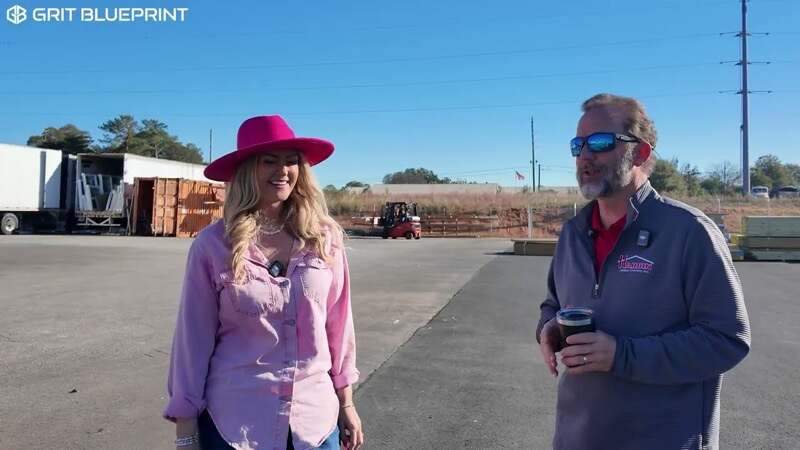
A 2x4 is a size label. The stamp on the board tells you the rest: who graded it, what grade, which species and how dry.
A 2x4 is a size label, and the board under that label is 1 1/2 by 3 1/2 inches when it is dry and dressed. That is the first thing to learn about lumber. The second is that size is only one line of the order. A complete line also says the species, the grade, how dry the wood was when it was surfaced and, if it is treated, what it was treated for.
Most of those answers are printed on the board. This lesson shows you how to read a lumber grade stamp. It also covers what the size and grade words mean and what to ask before you quote. For the short definitions, keep the Building Industry Glossary open in another tab.
What does a 2x4 actually measure?
A dry 2x4 measures 1 1/2 by 3 1/2 inches. The U.S. standard for softwood lumber, PS 20-25, calls “2x4” the nominal size: “The label designation for lumber size categories that does not reflect the dressed size.” Dressed means surfaced, run through a planer so it is smooth and even. PS 20-25 Table 3 sets the minimum dressed sizes.
| You will hear | Thickness, dry | Width, dry |
|---|---|---|
| 1x4, 1x6 (boards) | 3/4 inch | 3 1/2, 5 1/2 inches |
| 2x4 | 1 1/2 inches | 3 1/2 inches |
| 2x6 | 1 1/2 inches | 5 1/2 inches |
| 2x8 | 1 1/2 inches | 7 1/4 inches |
| 2x10 | 1 1/2 inches | 9 1/4 inches |
| 2x12 | 1 1/2 inches | 11 1/4 inches |
Minimum dressed sizes for dry lumber. Green (unseasoned) lumber is cut slightly larger in the same table, for example 1 9/16 inches thick for a nominal 2. Length is ordered as length: the table does not take anything off it.
Look at the 2x8. Up to 2x6 the width is a half inch under the label. From 2x8 up it is three quarters of an inch under. That is why the rule “take off a half inch” gets people in trouble. Use the table.
PS 20-25 also sorts lumber into three size classes. Boards are under 2 inches nominal thickness. Dimension runs from 2 inches up to, but not including, 5 inches thick, and the standard says it is “also designated as framing, joists, planks, rafters, or studs.” Timbers are 5 inches and up in their smallest dimension.
Word to know
The whole glossary- Board foot
- A unit of lumber volume. PS 20-25 section 2.2 works it out as nominal thickness in inches times nominal width in feet times length in feet. A 2x12 that is 1 foot long is 2 board feet.
What does a lumber grade stamp tell you?
A lumber grade stamp tells you who graded the piece, where it was made, the grade, the species and how dry it was when it was surfaced. PS 20-25 section 2.8 says a grade mark “is owned by the grading agency” and must show five things. The Western Wood Products Association (WWPA) and the Pacific Lumber Inspection Bureau (PLIB) list the same five on their stamp guides.
- Agency mark: the grading agency whose inspectors supervise that mill. The Southern Forest Products Association says each piece should be marked by an agency accredited by the American Lumber Standard Committee (ALSC).
- Mill number: the mill, by an assigned number or its name. It tells you who made it, not how strong it is.
- Grade: a name, number or abbreviation, such as No. 2 or STUD.
- Species: one species or a species combination, such as Hem-Fir.
- Seasoning: how dry the piece was when it was surfaced, such as S-DRY or KD.
S-DRY, KD, MC-15, S-GRN and HT
| Mark | What it means |
|---|---|
| S-DRY or KD | Surfaced at 19% maximum moisture content. KD means kiln dried |
| MC-15 or KD-15 | Surfaced at 15% maximum moisture content |
| S-GRN | Surfaced green: over 19% moisture content, unseasoned |
| HT | Heat treated. It can appear beside a seasoning mark or alone |
PLIB notes that MC-15 and S-DRY lumber may be air dried or kiln dried. These marks describe the piece at the mill. Wood keeps gaining and losing moisture after delivery.
HT gets mixed up with pressure treating. PS 20-25 defines heat treated as heated in a chamber “until it achieves a minimum core temperature of 56 °C for a minimum of 30 minutes.” Nothing in that definition is a preservative. Treated lumber has its own tag, covered in Treated Lumber and the Fasteners That Go With It.
Grades are names inside a set of rules
A grade only means something inside its own grading rules, species and product class. WWPA lists the dimension lumber classes this way:
- Structural Light Framing (2x2 through 4x4), for high strength in small sizes “such as in engineered wood trusses”: Select Structural, No. 1 and Better (Douglas Fir, Douglas Fir-Larch and Hem-Fir only), No. 1, No. 2, No. 3.
- Light Framing (2x2 through 4x4): Construction, Standard, Utility.
- Stud (2x2 through 4x18): “an optional grade intended for vertical use, as in load bearing walls.”
- Structural Joists and Planks (2x5 through 4x18), for joists, rafters, headers, small beams and trusses: the same grades as Structural Light Framing.
So “stud” can mean two things. It is a job in the wall, and it is a grade name. Ask which one the customer means.
Southern Pine has its own grade list from the Southern Pine Inspection Bureau rules. One you will see on a premium rack is No. 2 Prime. The Southern Forest Products Association describes it as “based on No.2 Dimension Lumber except wane and other characteristics that affect appearance are limited.” Wane is bark or missing wood along an edge. Prime is about looks on top of the No. 2 grade.
What it sounds like in a truss plant
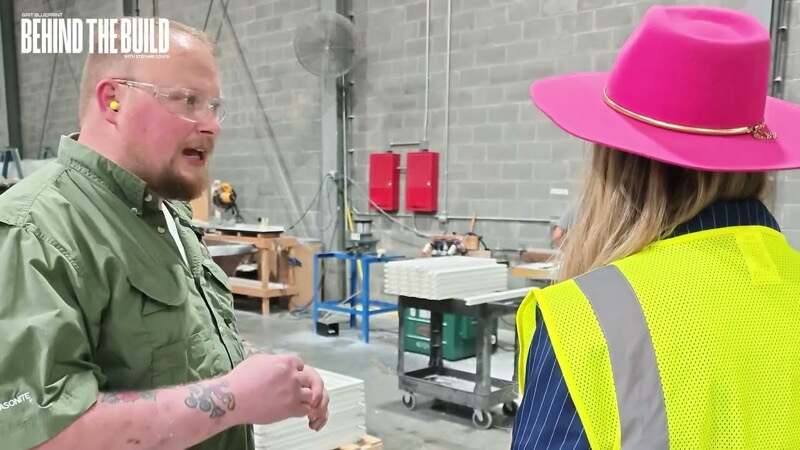
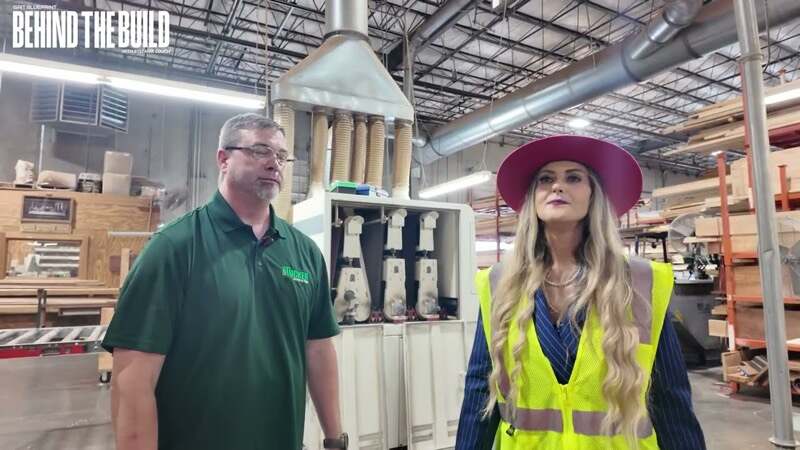
At Harbin Lumber in Lavonia, Georgia, the truss plant runs on one species group. In our Behind the Build visit, Westley Harbin, fourth generation at the company, said the plant uses Southern yellow pine and named its grades: No. 3, No. 2, No. 1 and two grades of MSR (machine stress rated lumber, tested by machine as well as graded by eye). Then he explained why many builders still prefer spruce for wall framing.
Yellow pine is a stronger, denser, harder material. Unfortunately, it's also a little less stable.
 Westley HarbinFourth generation, Harbin LumberFrom our Behind the Build visit, at 24:22
Strong and stable are two different things a builder may want. Different species sit in different places on each. That choice belongs in the order, and you cannot see it from the size label.
Same size, same grade, different species
A higher grade or a familiar species does not approve a swap on a structural job. That call belongs to whoever designed it. Your job is to notice the difference, write it down and ask.
Customers come to a yard for the person who can read the stamp
Product knowledge is the independent yard’s edge, and it starts with reading what is printed on the board. Stefanie Couch has said it on the record about independent dealers: “a lot of these people that work in these local stores, the independents, they’ve built the decks, they’ve built the fences, they’ve done it themselves” (8:43). Customers come to a yard to find that person.
Jim Powell of Culpeper Wood made the same point from the supplier side in his episode: “the independent dealer can pick whatever they want based on their customers’ needs” (7:54). A yard can only choose its grades on purpose if the people at the counter can read them. The habit to build: ask the better question, find what is behind the request, and catch the missing detail before it turns into a problem on the jobsite.
What to ask before you quote lumber
“What is it for: wall, floor, roof, deck, trim? Do you have plans or a material list? Which species and grade does it call for? What lengths, and how many of each? Treated or untreated? Does it need to be dry, or is green fine for this job? Is anything here a substitute for what the plans say?”
Checklist: A lumber line is complete when it has
Tick each one off. It is not ready until every box is ticked.
0 of 6 ticked
What to do next
Pull one piece each of 2x4, 2x8 and 2x12 from your yard and measure them. Find the stamp on each and write down the five parts. Then find a stud-grade piece and a No. 2 piece in the same size and look at the difference.
Next on the structure path: Treated Lumber and the Fasteners That Go With It, then Engineered Wood: LVL, LSL, I-Joists and Glulam. The deck side of lumber is in Decking 101.
Questions people ask
Why is a 2x4 not 2 inches by 4 inches?
Because “2x4” is a nominal size, a label for a size category. The American Softwood Lumber Standard, PS 20-25, says the nominal size does not reflect the dressed size and gives a dry 2 by 4 as 1 1/2 by 3 1/2 inches. The minimum sizes for every common width are in its Table 3.
Is No. 1 lumber always better than No. 2?
A grade name only means something inside its own grading rules, species and product class. A substitution of grade or species on a structural job goes to the person who designed it. The stamp tells you what you have; the plans tell you what is required.
Does KD mean the wood will not shrink?
No. KD means kiln dried to a set moisture content when the piece was surfaced at the mill. WWPA and PLIB both list KD and S-DRY at 19% maximum moisture content. Wood keeps taking on and giving off moisture after it leaves the mill.
Is HT the same as pressure treated?
No. HT means heat treated: PS 20-25 defines it as heated in a chamber to a core temperature of at least 56 °C for at least 30 minutes. Preservative treatment is a separate process with its own end tag. See Treated Lumber and the Fasteners That Go With It.
Episodes in this piece
Sources
- Voluntary Product Standard PS 20-25, American Softwood Lumber Standard (January 2025): sections 2.7 and 2.8 (p. 10), 2.12 to 2.16 (p. 11), 3.4 (p. 12), Table 3 (p. 15) NIST, U.S. Department of Commerce
- Interpreting Grade Stamps: Overview Western Wood Products Association
- Dimensional Lumber (product classes and grades) Western Wood Products Association
- Lumber Inspection & Grade Stamping: Parts of the PLIB Grade Stamp Pacific Lumber Inspection Bureau
- Grade Descriptions (No.2 Prime) and Specification Guidelines Southern Forest Products Association
- Georgia Builders Are Powered By This Fourth Generation Lumberyard | Behind the Build: Harbin Lumber Grit Guide
- Why Choosing NOT To Sell To Big Box Can GROW Your Business: Jim Powell, Culpeper Wood Grit Guide