Click any timestamp to jump to that moment in the video.
Tour of the lumber yard
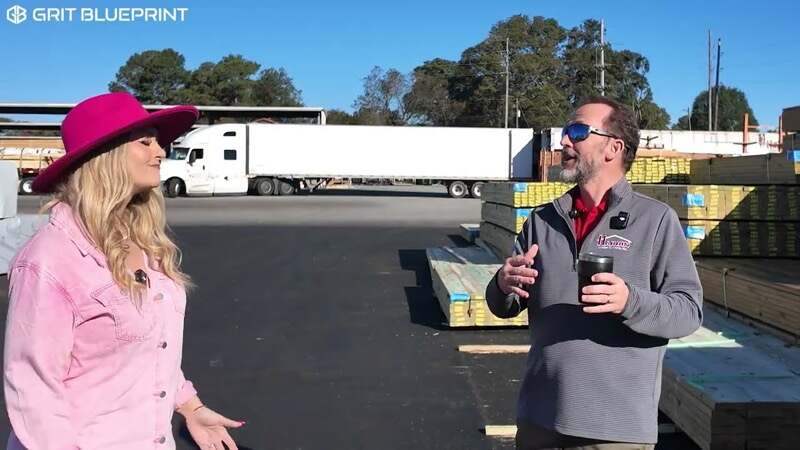
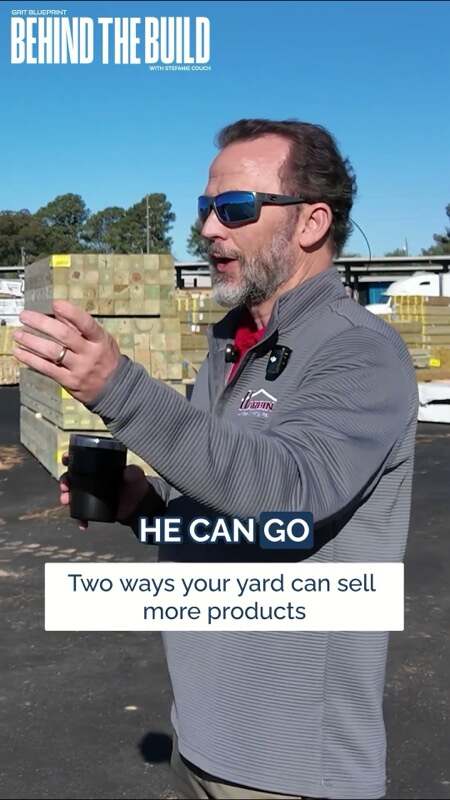
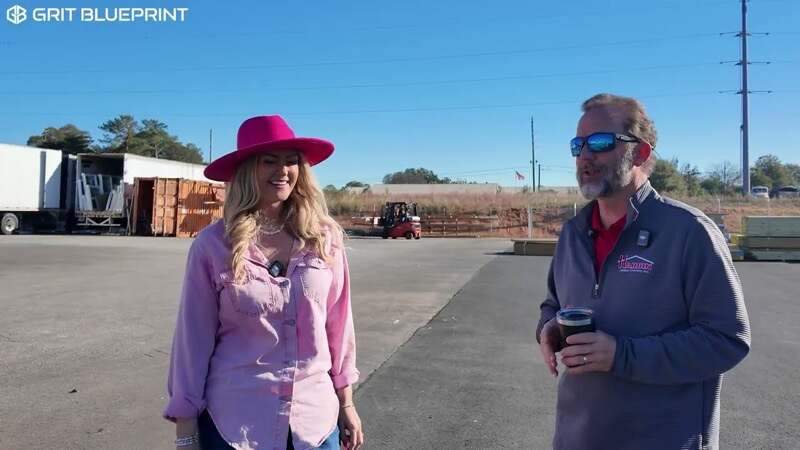
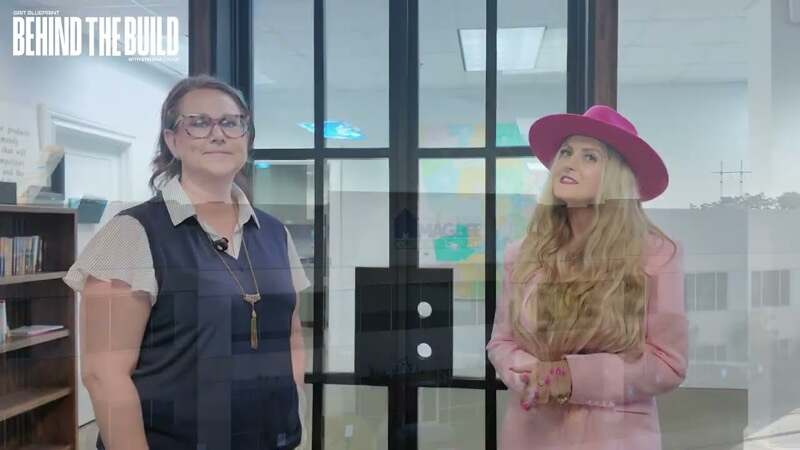
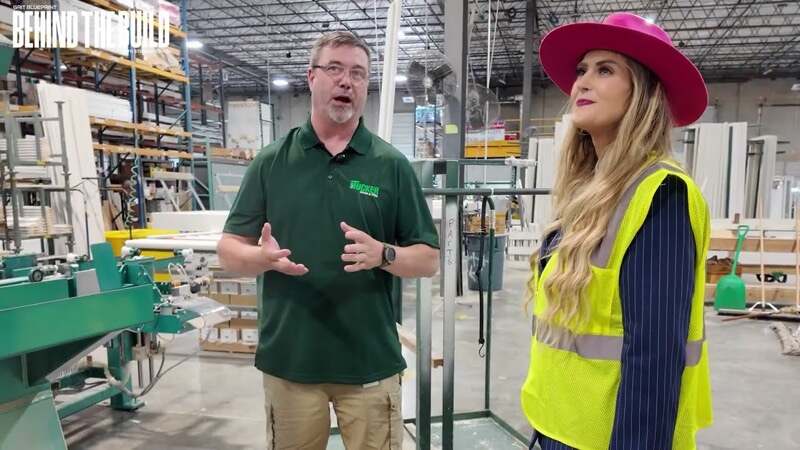
0:02 Transcript: I'm Stephanie Couch and I'm here today on site at Harbin Lumber in Leavonia, Georgia. I'm here with Westley Harbin, fourth generation of lumber yards, door shops, trust plants, opened in 1917, and we are about to take you behind the build here at their lumber yard. So, let's go do it.
0:21 Transcript: Let's go. The original building was built in 72 obviously and we've grown tremendously since uh since that time 53 years ago.
0:39 Transcript: You can actually see the pictures up on the screen.
0:46 Transcript: So it kind of goes raw saw assembly and then it makes a U back around to all of the finished material.
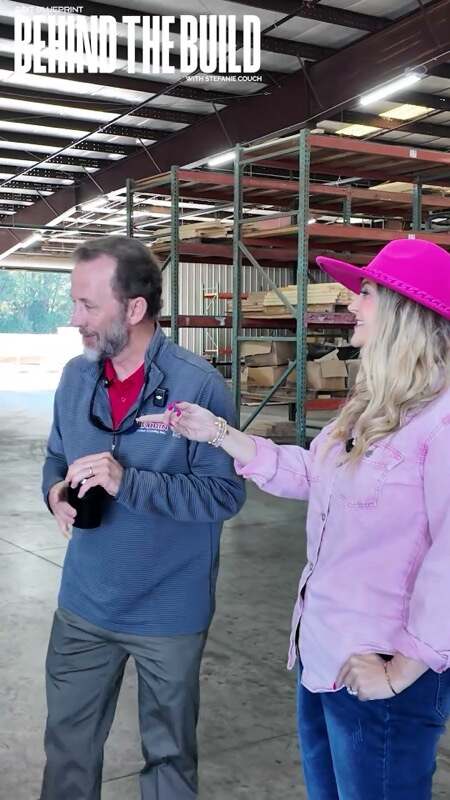
1:07 Transcript: So our uh our milwork warehouse trim uh interior exterior doors, windows uh we use racking systems. Yep. Uh which are becoming more and more popular. We don't do uh we do do some box bands, that sort of stuff, but the we try to handle it as little as possible. And so if at the door shop, you'll see when it comes off to the production line, literally it is loaded onto these racks and then everything is forked, you know, use fort list from there on.
1:33 Transcript: So literally stored here in the racks. Ideally, we don't take them out of the racks. Literally, those racks will go on the truck
1:39 Transcript: and then the, you know, the pig or the muffin on site will literally take it to the front door. So everything's really coming through here from the shop before it goes to the contractor.
1:47 Transcript: That is correct. Everything at the lumber yard comes through here.
1:50 Transcript: So
1:50 Transcript: man, you got a fortune in racks in a door shop, don't you?
1:52 Transcript: Oh, no kidding. Across the whole country
1:54 Transcript: and you never have enough.
1:57 Transcript: Uh traditional traditional lumber yard,
1:59 Transcript: couple plywood sheds and a couple lumber sheds.
2:02 Transcript: So you guys fourth generation?
Family legacy and values
2:05 Transcript: Yes.
2:05 Transcript: Your dad was Baron.
2:07 Transcript: My dad's Baron. That's correct.
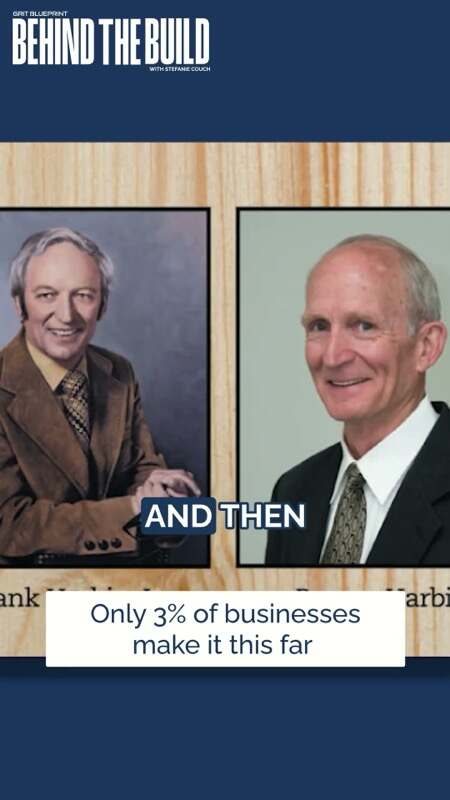
2:08 Transcript: His dad was Frank and Frank. Frank Junior. Frank Sior.
2:11 Transcript: And then Frank Senior. That's correct. Only 3% of businesses, not just lumber business, but in general, get to the fourth generation.
2:18 Transcript: Yeah. 3% get to the fourth generation. Less than uh less than 1% make it to the make it to the fifth generation. So, you are going to do it. We're going to do it. Yes, we're going to do it. You are. So, who's going to be the fifth generation, you know, yet?
2:29 Transcript: So, good. So, I have three kids. One of which is recently graduated from a grad school at University of Georgia.
2:34 Transcript: Okay. Go.
2:35 Transcript: So, she's Yeah, absolutely. So, she's working in the nonprofit world there in Athens. Okay. But uh she is working for us part-time obviously tied into that. So she does a little bit of community relations work for us. So
2:45 Transcript: we have a foundation that uh yeah I talked a little bit about this morning. So where we give a percentage of our profits every year to the foundation and that foundation does the bulk of our charitable giving that we do like I said in in the communities.
2:56 Transcript: What are some of the projects that y'all have done?
2:58 Transcript: So Habitat for Humanity is obviously the single largest one we do. Uh so um we actually have nine different Habitat for Humanities that we that we work with and so that's scattered across all the markets we're in and uh so Habitat for Humanity and then a an employee scholarship program or kids of employee scholarship program are the two biggest things that we do. So every year we give away well like I said to all that apply but it's usually about 20 scholarships a year that we give away every year to kids of employees.
3:25 Transcript: So cost of education these days keeps going up. So
3:28 Transcript: it is expanding every year. As I said, the plywood sheds u as part of this addition, we are uh adding like none of these have lights in them. Yeah. So, as part of this, we're actually getting lights in them now, which will um
Customer mix and operations
3:41 Transcript: y'all work one shift right now.
3:42 Transcript: We work one shift, uh here, but obviously that one shift extends from about first guys are coming in about 5 in the morning. So,
3:50 Transcript: that'd be nice to have those lights at 5:00 a.m. For sure. Especially in the winter cuz
3:54 Transcript: Oh, yeah.
3:54 Transcript: gets dark early, too.
3:55 Transcript: Yeah. Daylight savings comes.
3:57 Transcript: Yep.
3:57 Transcript: Yep. So, when you think about I mean y'all's business is very contractor driven like you said,
4:02 Transcript: correct?
4:04 Transcript: I'm always curious, you know, what is the mix? I I come from this area, this market. Usually, it's more custom contractors or regional builders, but what what is y'all's mix like? What's it look like dayto-day? Who's coming in here? Who's who's
4:16 Transcript: So, our actual customer mix that's coming in here is very limited. Yeah.
4:22 Transcript: Uh we don't discourage customers from coming in, but the the bulk of our customers
4:26 Transcript: couldn't even find us.
4:28 Transcript: Uh because again, you know, we're doing all the deliveries deliveries to them. But uh yeah, so we're we're about 80%, you know, residential, but inside of that 80% residential. Um
4:40 Transcript: 70% of that is is custom. Uh so there is about 10% of that that is production or track work. And and we do a lot of regional builders. that is a growing part of our business. But I am a believer that I want to keep it diversified to agree as much as possible. I don't want all my eggs in in in any one basket.
4:57 Transcript: Well, if if what 2008 told us anything
4:59 Transcript: Yes. So about 80% on the uh residential side and then it's about 10% commercial and multif family and then about 10% uh on the a side. So we especially over to Trust Plant. Georgia is the chicken house or the poultry capital of of the world. Arkansas tries to claim that, but they're but they're wrong. Uh, so Arkansas actually produces more eggs. Uh, Georgia produces more chicken. Okay. Uh, so
5:23 Transcript: I guess depends upon which way you want to look at it. So, um,
5:26 Transcript: and so you're building helping people build chicken houses with these trusses.
5:29 Transcript: That is correct. Yep. That is correct. So, um,
5:32 Transcript: and when you think about the custom homes, you guys got Lake Hartwell, we got Lake Burton, Lake Raven. There's several way down through Lake. Yeah. Lake Okoney. Very high-end custom. And those are beautiful custom 10,000 foot houses sometimes. Yes. Tear downs from some old lake cabin to some beautiful thing.
5:50 Transcript: That's what you're seeing on Lake Verton now. There's no lot, no good lots left. And so they're they're tearing down the cabins and building these multi-million dollar mansions.
5:57 Transcript: And you pay a million dollars for the land and the tear down to get to that new house being built. It is pretty crazy. And those are 99ear lease lots, which to me is just you don't even own it full time. So we we've got trucks loaded down here.
6:13 Transcript: Yes.
6:13 Transcript: Um tell me a little bit about I mean I see in Hardy is Hardy one of y'all's big product lines.
6:18 Transcript: Cement siding is still a big line. So uh depending upon the market uh so we do both Hardy and Allure. Okay. Uh obviously in the in in this part this area of Georgia and western or upstate South Carolina. Uh we'll do more Allura than we will do Hardy. But now you go to Lake Okoney and it is almost all Hardy. And uh so a lot of that depends upon you know Hardy's done a good job coming into some markets and like I said Lake Okcon being one of them and really doing a lot of advertising and uh good so name recognition.
6:49 Transcript: So people are you know they demand one or the other. So
6:52 Transcript: we were talking a little bit earlier about this is sort of the the new section that they're finally when I was here last week this was a disaster and so they've done much done a much better job of getting this relayaid back out and cleaned back up.
7:04 Transcript: So this is kind of your truck staging area treated. You've got it all kind of divided out here.
7:09 Transcript: That is correct. So, that's the biggest thing that this extra acre is doing for us right now is actually giving us a truckloading area because uh prior to this, basically, we had one area and it was for loading and unloading all at the same time. So, if you had two or three inbound trucks, you basically had no room to do any outbound stuff. So, uh, I've always thought that loading a truck, like we're watching him do this here, it's kind of like a little game of Tetris, and it really does take some skill to figure out how to get this on here where I'm I'm thinking this is multiple loads, right?
Logistics and fleet management
7:40 Transcript: This is probably going maybe to two different job sites. I don't know.
7:44 Transcript: No, the same load.
7:46 Transcript: Well, to be honest with you, I don't know the answer to that, but I this very well it could be two two loads. It could be one single load. Actually, by seeing the numbers, so you see 1670. So those are ticket numbers and 4436.
7:58 Transcript: Yeah. So this is a deck package probably. That's a framing package.
8:01 Transcript: Yep. You're probably right.
8:02 Transcript: Okay. So
8:03 Transcript: So, so it's a little bit like you said, it's a Tetris for your dispatcher to figure out putting those two loads together cuz they're close and then the guys on the yard or girls on the yard got to figure out how the heck to load that to get it off the right way.
8:14 Transcript: Absolutely. So
8:15 Transcript: yeah,
8:15 Transcript: cuz you got to be able to get it back off in the order that you can get it on. So
8:18 Transcript: yeah, and certain stuff it's got to ride down the road, you know.
8:21 Transcript: That is that is correct. So you've got guys on the yard. So, uh, we actually had the guys on the yard load all the trucks, but then you've got the, you know, the drivers out here who are saying say, "Hey, move this over. I want this here." You know, who are giving a lot of, uh, instructions.
8:34 Transcript: Okay. So, what we're looking at here,
8:37 Transcript: there's a mopet lift that's going or some kind of lift that's going to go on the back of this. That's correct. And for somebody that may not be super lumber yard, they're going to pop that lift off just like on this truck and get on the job and and be able to put that where they want it.
8:49 Transcript: That is correct. So, if you went back 30 years ago, everything was uh was dumped. Yep.
8:54 Transcript: You know, and if you go back prior to that, everything was hand unloaded.
8:57 Transcript: Do you even have dump trucks here anymore?
8:59 Transcript: We do have dump trucks. So, but they're all small. Uh, so they're for what we call hot shot loads or fill in 550 or something like that.
9:05 Transcript: Yeah. So, we use a lot of little little Isuzu and little Isuzu. And that's for Hey, I need 50 boards here. Uh, it's not for framing PS,
9:14 Transcript: man. My dad, he uh he talks about
9:18 Transcript: when you dump a load on a hill or somewhere, you just never know what's going to happen. Bands break, thing, bad things happen. And so Moffets are like the best thing that's ever happened to a lumber yard.
9:26 Transcript: So we use uh we use Navigators which is just another brand and uh part of the reason for that is uh they're manufactured in Mississippi. We like them but it's actually a centermounted. So whereas a mafet is on the left side
9:39 Transcript: and we're a u a navigator center mounted.
9:42 Transcript: Okay, that's cool.
9:43 Transcript: Some of the technology I don't know if you know much about them now but and you know a lot of the brands have it but they actually have reaches on them now. So it used to be in the day you would unload one side of the truck and then have to turn your truck around so you can unload the other side.
9:54 Transcript: You may not be able to even do that where you're at.
9:56 Transcript: Now what they have reaches so they can reach both sides of the truck. I did not know that.
10:01 Transcript: And then uh four-way capability. So a lot of them have the capability to drive sideways.
10:05 Transcript: That's really cool.
10:06 Transcript: And uh so you think about lake lots or long length lumber or or like eyejist LVL's trying to get those down in between trees or down a driveway. You turn sideways, drive sideways.
10:16 Transcript: Yeah. Some of those LVL packages are like 40 ft long. I don't even know how you even do that in some of these little pigtail driveways that you get, especially like Lake Burton and those areas. The driveways are barely car friendly. Yes,
10:27 Transcript: it's crazy.
10:28 Transcript: That's correct. So,
10:29 Transcript: well, you we I want to talk a little bit about your childhood. So, you grew up in the door shop sweeping floor. Started when you were about nine.
Growing up in the business
10:36 Transcript: Started when I was nine. Worked. Uh, so my dad came home. Uh, I guess school was letting out that year. My dad came home and said, "All right, it's time to go to work." And uh so yeah, started working at the door shop that summer.
10:47 Transcript: Did you get paid?
10:48 Transcript: I did. I got paid. So uh it was actually funny. So we actually we had worked a little bit uh I say we we' worked a little bit at the corporate office. So uh before that back in the day when um they would have uh statements would go out at the end of every month.
11:04 Transcript: Yep. I remember those days.
11:05 Transcript: So statements were done in triplicate back then.
11:07 Transcript: That was my first job. You literally had to pull these things apart and then fold them all up, stuff envelopes,
11:13 Transcript: sort them in ABC order.
11:14 Transcript: That's right. So, uh, we So, on Saturday, they would do they would do statements on Saturday. I'd have to go in and help lick envelopes, stuff,
11:22 Transcript: lick envelopes, stuff envelopes,
11:24 Transcript: PTSD on that nasty taste.
11:27 Transcript: So, literally that and I can remember that I got paid a dollar an hour and uh, back then. So, you know, for obviously for a kid that I thought that was pretty good. Yeah,
11:35 Transcript: I thought that was good money. When I went over to the door shop, started sweeping, uh, I kind of I thought I was going to stand up for myself and so I demanded minimum wage.
11:44 Transcript: What was that at the time?
11:44 Transcript: At time was $3.35 an hour.
11:47 Transcript: That's a big race.
11:48 Transcript: It was. It was. So, uh, started working at the door shop. Um, did that for two summers. Uh, then I came over to the lumber yard. Obviously, it was our old lumber yard downtown. Uh, I did that for two summers and that's where I started learning how to drive a forklift. Uh, like literally unloading and unloading trucks. I always like to tell the story that so Davis Brothers was a a lumberer over here in South Carolina that uh they no longer exist, but that's who we bought all our treated lumber from.
12:15 Transcript: Okay.
12:15 Transcript: Um they truck driver comes in from Davis Brothers. He's got a load of treated.
12:20 Transcript: I come up ask him for his paperwork and I drive up on Sport Lift. He's like, "What are you doing?" I said, "I'm fixing to unload you." He said, "You ain't unloading my truck."
12:27 Transcript: Basically, you're not.
12:28 Transcript: And I can understand. He's like, "You know, this this 12-year-old is going to tear my stuff up." So, uh, did that for a couple summers and then I moved over to the trust plant and, uh, so when I was 13, I moved over to Trust Plant and, uh, I spent actually four years over here or four summers over to Trust Plant and, uh, spent two summers outside, uh, working on the tables, in the yard, and then I actually moved into the office and spent two summers there learning how to design trusses.
12:55 Transcript: Okay.
12:55 Transcript: Uh, so you've done it all.
12:57 Transcript: Yeah. which is great with with what you're doing now because I mean you understand everything in the business. You've done everything. I think that's being entrepreneurs. It's hard to explain how to how to do something if you never done it. It's some things you you don't know how to do. But, you know, it's it's I like to know what I'm hopefully telling people directionally at least.
13:18 Transcript: Summer I graduated high school. I uh um been at like I said I've been at the door or excuse me been at the trust plant for four summers and actually once I got 16 I started working there after school as well but uh had been there four years and uh that last summer I decided I wanted to do something different and uh so I actually went to work for one of our customers.
13:38 Transcript: Okay.
13:38 Transcript: And uh so I spent that last summer before I went to college u learning how to build houses.
13:43 Transcript: I bet that was super valuable.
13:44 Transcript: It was a it was a very valuable great experience. residential just
13:47 Transcript: residential custom builder that was that was here local uh so like I said Hart County, Franklin County and uh you've sold all this material.
13:55 Transcript: Yeah.
13:56 Transcript: But now you actually get to see it put together.
13:57 Transcript: That's right. It's a big different learning curve cuz saying what something is and then putting in a header or knowing what a jack stud is or something until you see it, you don't know.
14:06 Transcript: Absolutely.
14:06 Transcript: Yeah. We built our first house when right when Ben and I got married, we were building a house and I learned a lot. It was uh dealing with that. It's It's a lot to juggle.
14:17 Transcript: It was a small house, too. I can't imagine these giant monsters that take three years to build,
14:22 Transcript: but sure sure do like to sell the material on them.
14:26 Transcript: So, this is all expansion. We just we're standing on this new pavement.
14:30 Transcript: New pavement. Uh only a couple weeks old. Uh you had to let it sit for a week or two to harden up, but uh yeah, only been here a couple weeks.
14:38 Transcript: Over here, we got expansion potential, but
14:41 Transcript: expansion potential.
14:42 Transcript: You guys have bought acre. How was it? 55 acres.
14:44 Transcript: Well, that's on the other side of town. We got 50 acres on the other end of town for future expansion. Yep.
Expansion and market strategy
14:49 Transcript: Because doors and windows take up so much space, too.
14:51 Transcript: Yeah.
14:52 Transcript: Back in the day, there was only one set, you know, one style of doors, one casing.
14:55 Transcript: Calling us calling us door six colonist 356 casing. That was it. Uh there's so many styles and options today that just take so much more space. Uh so, I mean, we could legitimately here we need 100,000 ft of warehouse space and we've got 20. So,
15:10 Transcript: that's why we're going to do that on the other end of town. Not to mention the fact, but just as Leavonia continues to grow, 90% of our deliveries come out of here, turn right.
15:18 Transcript: Yep.
15:19 Transcript: Okay. So, they turn right, they go through Leavonia, and then they're either getting on 85 to go to South Carolina, they're going up to the mountains, they're going to Commerce because we don't go left that much just because of there's not a lot of development that way. Not only that, but
15:33 Transcript: uh Athens store is only covers that Athens store is 40 miles that way. So basically if you assume half and half I can go 20 mi this way or I can go 100 miles you know just
15:43 Transcript: so we go
15:45 Transcript: this will basically cut 10 minutes off every delivery be on the other side of town.
15:48 Transcript: That's a big deal.
15:49 Transcript: So okay let's talk territory. We're both from Georgia.
15:53 Transcript: Are you a Georgia bulldog?
15:54 Transcript: Absolutely.
15:55 Transcript: Go dogs.
15:56 Transcript: Go dogs.
15:56 Transcript: And Clemson is close. So that's a big area like we talked about Heartwell but you guys have Tell me how many stores, how many employees? What's your footprint look like today? because you're servicing a big area.
16:07 Transcript: That's correct. So, we uh like I said have four lumber yards. Um in a perfect world, they'd be kind of in a 100 mile radius. It doesn't quite work out that way, but uh
16:17 Transcript: we like to go a 100 miles pretty much in each in each direction. Okay. This store goes the furthest. Uh so, I mean, this store, we're in North Georgia, but we routinely go to Asheville. Uh go to Chattanooga. Wow.
16:29 Transcript: Uh go to like a Greenville, Spartanberg. Uh so um a lot of lot of north and east out of here. Um like I said the four stores uh four lumber yards plus the trust plant a door shop uh plus an installed sales center. Installed sales is cabinets uh closet systems, shower doors, uh afterpaint stuff. Uh and then we have a turnkey division or turnkey office which we do uh multif family and commercial uh turnkey framing and siding.
17:00 Transcript: With the market like it is today, people are well something that keeps me up at but not a lot. I'm probably keeps you up too is where do these people come from in the future? You know that the contractors are older. They're 50 60 70. A lot of you know lumberyard teams are older the salespeople. But that turnkey seems to be a secret that I think a lot of really great lumber yards like you have figured out because nobody wants to search for that labor, especially on the hard stuff.
17:28 Transcript: Absolutely. Uh the uh labor is becoming a bigger and bigger issue for all of us. So if you can provide labor, it's much easier to sell your product. Uh not only that, but one of the things we talk a lot about is the stickiness factor. And so, hey, um it's very easy for a builder to he can go down the road and get another lumber yard tomorrow. Mhm.
17:47 Transcript: He doesn't. So, he can swap lumber yards easy. It's much harder to swap framers. Okay. If he's got a framer he likes, he doesn't generally want to leave that guy. So, uh again, the more products you can get in with them, hey, I'm their trust guy. I'm their cabinet guy. I'm the this it increases that stickiness factor. It makes it harder for them to leave you.
Speed, quotes, and technology
18:05 Transcript: Customer experience and like contractors wanting to do business with you is how you've built this business, I'm certain. What matters to them and like what are you guys working on to continue to get better every day? Sure. Uh well, one of our initiatives right now is speed. Uh and you know, what does speed mean? You know, you kind of break this down into two sides of things. And so there is the the the quote side of thing and then the order side of things.
18:28 Transcript: So, hey, how fast can you turn my quote around? So, that's the that you're taking that from the time that they send you that plan to the time you can get them that quote back. Uh you know, there's been plenty of studies out there that obviously the faster you get that thing back, the higher your percentage is of actually getting that quote. Uh there's so many. Of course, we all know that contractors are not the greatest planners in the world.
18:48 Transcript: Uh they
18:50 Transcript: surely not.
18:50 Transcript: I know that that uh shocking news, but they're not the greatest planners in the world. I I find it I'm shock amazed all the time when they did not realize they were fixing to build this house and all of a sudden it's like, "Hey, I need this on Monday."
19:01 Transcript: Hey, the concrete's already porch.
19:03 Transcript: I know. So anyway, it's just it's the world we live in. Uh we have to deal with. But yes, how fast can you turn around that quote? Again, going back to sort of a change in what happens today. Used to be a a quote was here's the material list I need. Now it's here's the plans. You figure the material list I need.
19:19 Transcript: The less they have to touch it the more you can keep the business.
19:22 Transcript: That is correct. So obviously you're uh we have estimators who are takeoff specialists who are doing the material takeoffs. So one you got to get the material takeoff done. One obviously you got to do it quickly. You got to do it accurately. Then you actually got to produce the quote. Uh so that's one side of it. How fast can you turn that quote around? Well then once it becomes an order it's how fast can you get it to me?
19:41 Transcript: Yeah. And so there's two sides of that. You know, obviously at a lumber yard, if we're dealing with sticks and, you know, the the stock items, that's easy. It's the special order stuff, whether that be mill work, windows, floor systems, roof systems, how fast can you turn that around? So, uh I was at a uh lumber yard last week and customer would ask them say, "When can I get it?" And they their question back was always, "Well, when do you need it?"
20:05 Transcript: Sure.
20:05 Transcript: And that's really where we're trying to get to. the faster we can produce the quote and the faster we can get the product to them makes it easier for the customer uh makes it a better overall experience. Is there any kind of technology that y'all are using or thinking about using or I mean AI is coming so quickly. You know what? There's just so many options.
20:23 Transcript: AI is rapidly coming. Obviously on the estimating side it's it's just a matter of time. There are a number of companies out there that are uh already working on this and literally it is scan a set of plans 10 minutes later it's giving you the material takeoff.
20:37 Transcript: It's pretty incredible.
20:37 Transcript: It's it's incredible what's coming out there these days. And so the side of that though is that is great for producing a rough material list. Okay. Uh unfortunately uh if you're doing components or that sort of stuff, it's still not to that point.
20:51 Transcript: Yeah,
20:52 Transcript: it will get there at some point. Uh but we're a little ways off from that. But yeah, AI is going to be a big part of the
20:57 Transcript: It is. And you know, we talk about that a lot with my company. It's like there's so many things out there. People ask a lot, well, what do you think is going to affect first, the takeoffs? Because that's the thing people hate the most. Yes. like that's the hardest thing. And then also just communication in general. How do we reduce friction so contractors don't they can get a text or they can get a reminder?
21:18 Transcript: Like you said, they're not exactly the best planners, but if you remind them on stuff, it's easier, but your people have to be able to do it. AI can do it for them. So, it's little stuff like that. I think it's not like some big huge thing all the time besides the takeoffs, but just the little communication things I see being such a big option. All right. So, we're in the truss plant.
Truss plant and materials
21:37 Transcript: For those who maybe aren't in a market where trusses are a big deal, talk to me about Georgia. I know stick frame roofs are still a thing here, but you obviously have a lot of trusses out here. So, what's the split you think? Just
21:49 Transcript: ballpark.
21:50 Transcript: So, in the custom world, I'm going to say it's probably 7525 uh 75 stick 25 uh truss. Yeah. Now, in the production world, it's almost all truss. in the commercial multif family world it's almost all truss now so going back to the custom side even though I said it was 7525 we're not here we not only do trusses but we also do eyeist and so what you're seeing is a lot of stick roofs over a open web floor or over an eyejist floor and so uh like the Athens market I mean that's almost all stick roofs over eye floors
22:26 Transcript: yep
22:27 Transcript: obviously we do both here and so we'll see some of that as we kind of as we walk
22:30 Transcript: so tell us for maybe non-experts What are we looking at right here? Tell me what this is and what is the use case on this.
22:38 Transcript: These are floor trusses or what referred to as open web floor trusses. These are 24 in deep. Uh very likely this is for a commercial project being so deep. When you're talking about the depth that pretty much all relates to a span scenario. Uh so most residential is going to be, you know, 14 16 in deep. you get into a lot of commercial stuff that is uh could be uh 20 22 24 in deep.
23:04 Transcript: You just have a lot more weight that they're carrying. So that's why it's like that
23:07 Transcript: bigger spans more weight. That is correct.
23:10 Transcript: In the truss industry uh at least in the south, everything is southern yellow pine. Um so we don't do any spruce, any fur, any of those stuff. Um we have everything from number three, number two, number one, uh two different grades of uh of MSR. Um, a lot of a lot of
23:28 Transcript: It's a good thing right now with everything going on with tariffs that y'all getting this from from Southern Gil Pod.
23:33 Transcript: That is correct. So almost all of our wood literally will come from within a 300 mile radius. And the bulk of it is actually coming from about a 100 mile radius of here. So Inter West Frasier uh Georgia Pacific all big southern yellow pine producers uh that we're actively buy. I mean you can look see Georgia Pacific material right there. There's some interform material right there. So,
23:56 Transcript: and
23:56 Transcript: they're all key partners.
23:57 Transcript: So, when I moved to Texas and I worked a little bit out west, I didn't even know that fur and all this other stuff was even a thing. Hemlock, all that. I I was like, what is that? You know, I'm from the south. We just use spruce and yellow pine. What is the capacity? It's a stronger wood with yellow pine. Why are you using that here? Yes, yellow pine dominates the truss industry in the south and even uh in parts of the other country.
24:22 Transcript: Northern parts that are closer to the spruce market, they're still using some yellow pine for certain applications, whether it be girders, attics, that sort of stuff. So, yes, yellow pine is a stronger, denser, harder material. Unfortunately, it's also a little less stable. And so, that's why a uh a lot of builders still prefer spruce for, you know, their wall framing, that type of wall framing, roof framing. But for actual trusses, pine is the pine is the way to go.
24:48 Transcript: Usually what I saw was once you get to a 2 by 10 or 2 by 12, it switches over to yellow pine.
24:53 Transcript: Correct. Is
24:53 Transcript: that That's still true. That is correct.
24:55 Transcript: So 2x4s, 2x6, 28 spruce in this market. And then you get up. Yeah. Y'all got a lot of sticks out here, Westley. Yes.
25:02 Transcript: I It's like a a maze of just lumber everywhere. I love it.
25:06 Transcript: Yes.
25:06 Transcript: Well, we're walking over towards the engineered wood. And there was some back there on the other yard as well.
25:12 Transcript: Yes.
25:12 Transcript: Engineered wood. I don't know what 20 years ago it became like a really big thing. I don't know maybe 25 years.
25:18 Transcript: Yeah. So Wirehouser uh if you remember obviously Wirehouser or even going back pre-wirehouser uh to uh uh McMill and Blowdale uh was one of the you know original uh as far as in the in the US and so they had a meal over in Calbert which is Madison. So about 20 mi from here where they produce PSL or Paralams and uh paralams aren't a big deal anymore. Most of the uh beams today have moved to the LVL.
25:42 Transcript: Uh you're starting to see a lot of LSL as well, but a lot of stuff has moved to the LVL world. But uh anyway, so I can our design manager here at the trust plant, he's been here about 31 or 32 years. Uh when he was hired, he was the first we brought him in to be our eyeist designer. We said, "Hey, we got to get into this eye business." So for us, like I said, that was about 31 32 years ago.
26:04 Transcript: Um, but it really about 15 years ago it really became big uh for us. We used to do it at all the lumber yards uh and we kind of dabbled in it at four different places. We said, "Hey, we're going to bring all this in, consolidate it all into one." And because our trust designers are doing all the design on this as well, it just made more sense. You can see that's our little cut shed right there.
Manufacturing assembly lines
26:27 Transcript: Okay.
26:28 Transcript: It's uh
26:29 Transcript: boy, that song's going to be like Christmas morning for them.
26:31 Transcript: Well, I know. So that's actually what this lean to was built for it. Right now we're storing material in it, but that's where the salt it'll be in feed and in the out feed. So that's going to be great. That's what this was built for.
26:40 Transcript: All right. So we're about to walk in the truss facility where you're manufacturing trusses.
26:44 Transcript: Okay.
26:45 Transcript: And you got machinery happening. You got people in here doing stuff. So which where are we going first?
26:51 Transcript: All right. So we just actually we were just walking through the sheds. So for uh the simple uh the simple version is you know we try to make it as linear as possible. Unfortunately this original building not what you see right here but the original building was built in 72. Obviously we've grown tremendously since uh since that time 53 years ago. Um and so when we originally built this was a all of our finished material was over there.
27:17 Transcript: We long time ago ran out of space to keep all of our finished material. And so we're now more in the shape of a U. Yeah.
27:25 Transcript: And so when I say a U, we were walking through the sheds. So that's all the raw material. What you're seeing here is our sawing operation. So it kind of goes raw saw assembly and then it makes a U back around to all of the finished material.
27:40 Transcript: So
27:40 Transcript: okay,
27:42 Transcript: component saws, if you're in the uh trust world today, everything is pretty linear saws. Most everything is moving to linear saws. Uh we still use both. Uh we don't believe that there's a single answer for both. Uh so we have a component saw, we've got a web saw, which is a floor web saw, and then we've got a Mitech blade linear saw in here.
28:06 Transcript: Tell me what what we're seeing. We've come from raw yellow pine.
28:09 Transcript: Raw yellow pine.
28:10 Transcript: We're cutting it to length here.
28:11 Transcript: Cutting into lengths. So uh we cut everything that is longer than 5 ft over there on the component saw. Everything smaller than 5T gets cut here on this linear saw.
28:22 Transcript: Okay.
28:23 Transcript: The material is in stage. So obviously all the smaller stuff you can see is staged here in the racks. All the bigger stuff is outside on racks. Then it is all maneuvering around with forklifts. Um lifts will actually bring it to the tables or the assembly stations.
28:48 Transcript: So just if the difference in component saws and linear saws, component saws cut one piece out of every board. That's how they're designed. So hey, if it's a 12T 9 in board, you got to put a 14 footer up there.
29:00 Transcript: Linear saws cut multiple pieces out of every board. So they actually have what they call board stretchers on them. So you can get 22 ft of cuts out of a 20ft item cuz they're taking those pieces, nesting them together. And
29:14 Transcript: so there really is something such thing as a board stretcher. That is correct. Because I spent a lot of time when I was little hunting that thinking I was going to find it in my lumber yard and I never did.
29:23 Transcript: So when I started at the door shop, uh yeah, I spent most of one afternoon hunting a glass stretcher and uh I never did find it.
29:30 Transcript: WELL, THERE IS A BOARD STRETCHER.
29:32 Transcript: But there are board stretchers today.
29:33 Transcript: It took me a long time, but we found one. Yes.
29:36 Transcript: I love that.
29:38 Transcript: All the stories of the lumber yard kid trying to get pranked by the old men in the shop, right?
29:43 Transcript: Yes.
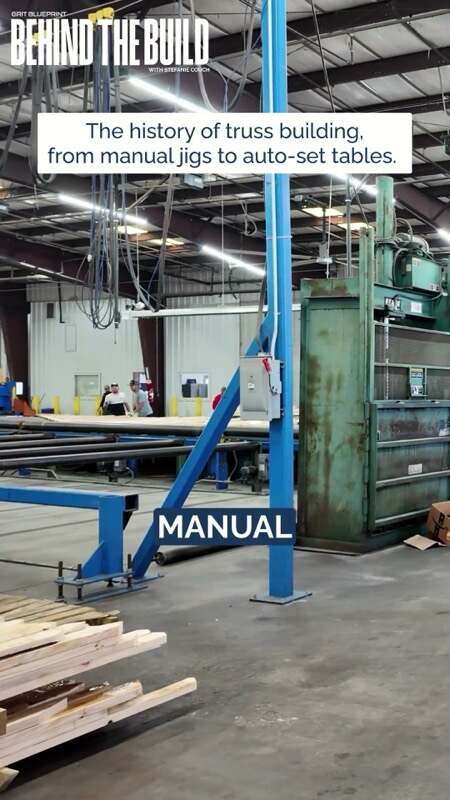
29:44 Transcript: One thing that's changed a lot with trust facilities is that it's way it's still manual, but it's way less manual than it was.
29:52 Transcript: When trust first started, they were all wood top tables and it was literally a just a plywood jig that they would build their stuff in. Then it slowly converted over to metal top tables or steel top tables, but it had manual pots that you move to set the set the jigs. Today's world has gone to what they call auto set tables and so that wizard or planks tables focus. We are primarily mych equipment in here.
30:17 Transcript: Um all of these are autoset tables. So the guy actually riding the press, he's got that computer right there. He controls that. You can actually see the pictures up on the screen. So
30:27 Transcript: then let's go show the picture on the screen. That's cool.
30:30 Transcript: When they finish that truss or when they finish that setup, literally he just presses go on there. All the pucks run in and out to set up the profile of the next truss.
30:40 Transcript: Yeah.
30:43 Transcript: So many less errors.
30:45 Transcript: I mean, that's a fairly normal truss. It's And I say fairly normal. Uh I'm assuming this is on a house and it's just a what? The old the living room, date room. They're just a big vault.
30:55 Transcript: Yeah. I just wonder though like how I mean craftsmanship obviously has changed over the years but how many times did that go to the job and it wasn't exactly right when before we had this technology you know something got moved a little bit too far or whatever you know
Quality control and innovation
31:13 Transcript: yeah so we have uh six stations uh for roof trusses uh and then we have two stations or two tables where we build floor trusses
31:24 Transcript: and that's because like you said the the roof is just more common on those track builders and stuff.
31:28 Transcript: That is correct. That is correct. So, and plus there's still a lot of singles on their house being built. So,
31:34 Transcript: yeah, they don't need
31:35 Transcript: That's great. A lot of the uh a lot of that production work is also on slabs.
31:40 Transcript: Yeah. In Georgia, we have basements, but a lot of these people don't want to
31:44 Transcript: don't want basement. So, see, a lot of the custom work is either on basement or on crawl space. Most of the production work is on slabs.
31:50 Transcript: Yep. So, we talked earlier a little bit. You said you got around 350 people total,
31:58 Transcript: correct?
31:59 Transcript: You actually have a lot of women working here.
32:01 Transcript: We do. So, uh you know, we never never discouraged women. You just we just didn't have any. We We didn't discourage it, but I don't know that we encouraged it either. And so we've always had women in the office, but about 5 years ago, we were at a trust plant up in Nashville or outside of Nashville. And I walked in there and they were just women everywhere in this plant. And I said, "Well, if they can do it, we can do it, too."
32:28 Transcript: You know, we've been complaining about having finding enough people. Well, let's double our labor pool by by by going to women. And so, uh, we've got about 10 women in the trust plant now. So, for portlift operators to you got a uh builder down here on the uh on one of the floor tables uh for lift drivers, saw operators. Uh one of our supervisors was a builder out here on one of the roof tables.
32:53 Transcript: She got promoted to uh inside the office and is a production supervisor now. So,
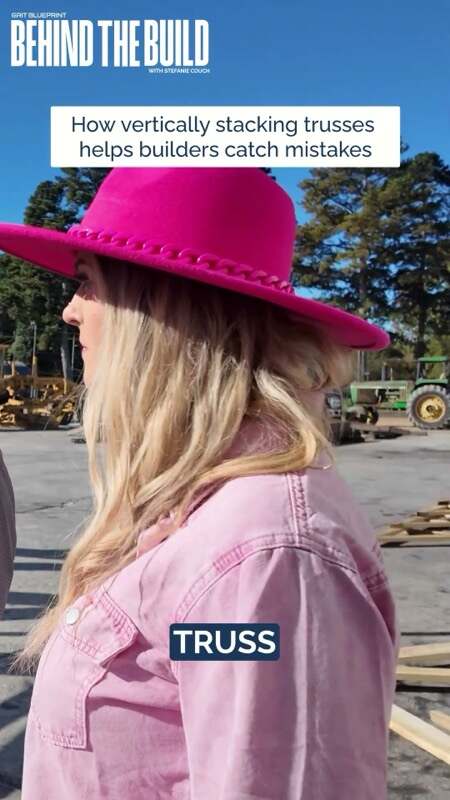
32:57 Transcript: that's awesome. So this is the stacking area. Um we are uh a little different. Uh the bulk of the truss planks we go to, you will see they flat stack. So literally they come out on these rollers and they pull them off onto the ground. I've never seen this before. The flat stack it. We vertical stack. Uh we like that for multiple reasons. It's a better quality check because if you notice uh when they're building on the roof table, obviously they're putting the plate on the top and they slide one under the bottom.
33:38 Transcript: Well, that one on the bottom is very easy to to miss, to get turned, to not get proper tooth coverage. And so by here, we're pressing them, they come out, and then the truss is stood up. They're now looking at the underside or the back side of the truss. So, it's just a third party quality or it's a quality check for them to go through and look, hey, are all the plates in the right orientation.
33:59 Transcript: Are they the right size? Or sometimes they fall off? You know, they forgot to put one. That's our quality check.
34:05 Transcript: Yep. And there's this truss that we saw that was for the vaulted ceiling that was on the screen, finished, ready to go.
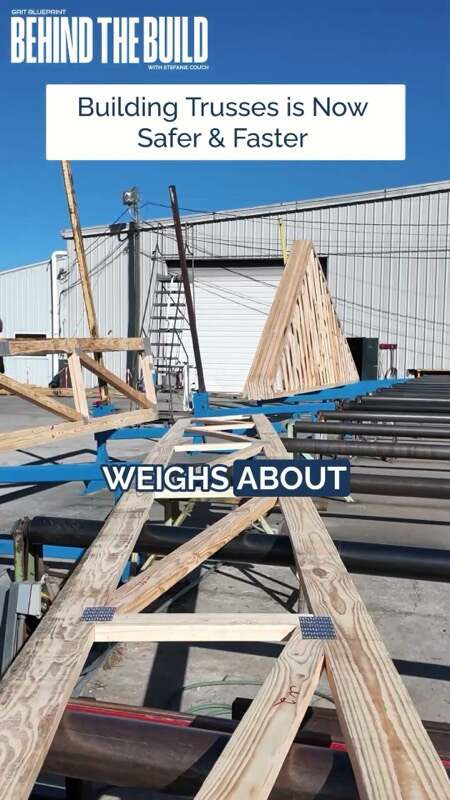
34:12 Transcript: This used to be one of the hardest jobs in the plant. Uh because one, you're outdoors, so
34:18 Transcript: hot, sun, cold, rain, all that other sort of stuff. But it was also a very manual, strenuous job. You know, that truss probably weighs about 250 or 300 lbs. Yep.
34:28 Transcript: And to stand that up was a difficult process.
34:30 Transcript: Now,
34:32 Transcript: yeah,
34:32 Transcript: the stacker
34:34 Transcript: that's huge.
34:36 Transcript: You think about trying to stand that up by yourself. Uh that's rough on your back.
34:40 Transcript: Yeah. Well, and it's the trash just moves so much.
34:44 Transcript: Oh, yes. Yes.
34:45 Transcript: Safety hazard. Yeah. That's awesome.
34:47 Transcript: Yes. Much safer process. It's much quicker process and makes these these guys jobs so much easier. So this is actually
34:55 Transcript: what is this for? This little
34:57 Transcript: So that's a that's a parapit wall. So this is on a commercial building. Okay. And so this is likely
35:03 Transcript: um
35:04 Transcript: I mean everything from a office building to a uh hotel. They all have flat roofs today, but then they'll have that big parapit wall that's built up in front that Yeah. like the sign will be on. So
35:15 Transcript: I've never seen that before, but it makes sense. Well, they used to literally they used to build all those parapit walls on site.
35:21 Transcript: Okay.
35:21 Transcript: And but you think about it, when they built it on site, it's much stronger to build it inside of the truss.
35:26 Transcript: Yeah.
35:27 Transcript: That's awesome.
35:27 Transcript: Yeah.
35:28 Transcript: You guys obviously family family lumber yard fourth generation.
Legacy, culture, and pride
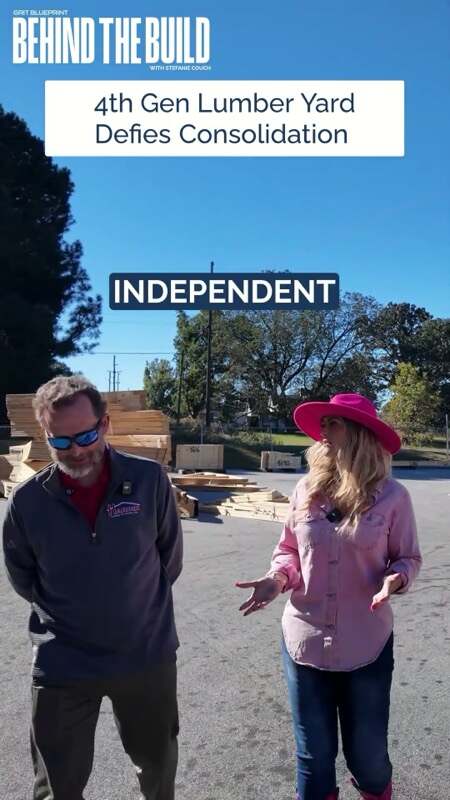
35:33 Transcript: There's so much happening in the macro of the lumber industry right now with consolidations. What inspires you to keep going as a family independent lumber yard? And what excites you the most about the what y'all are doing now and in the next few years?
35:47 Transcript: I was at a a trust plant last week and I might have I told a little bit of the story earlier, but I was at a trust plant last week up in uh up in Maryland that one thing that impressed me about is they weren't scared to be different. Okay, they were they were a family-owned independent trust plant and they weren't scared to be different. You know, where does innovation come from?
36:05 Transcript: It comes from all of us who are trying to be better than each other, trying to do something different. If we all work for the same company, uh, where does innovation come from?
36:16 Transcript: I agree.
36:16 Transcript: Um,
36:17 Transcript: what do you think? Because different sometimes, well, first of all, I think different's hard, you know, cuz you get judged sometimes, you it fails sometimes. It's not proven.
36:27 Transcript: But what what do you think different is in this industry right now? I mean, in being independent in a big lumber yard is different by itself. So, you know, we talked a little bit about speed earlier, and I think that's important to a lot of customers today that how fast can you make a decision? And, you know, if you're with a some national uh lumber dealer and hey, can we do this?
36:51 Transcript: Can we do that? Well, it's got to go up through four chains of command before it gets to somebody. Hey, can we do this or not?
36:57 Transcript: It just it it's bureaucratic process. Here, it's very easy. They got one call. They can get to me. I'm the owner. I can make the decision and it's just so much faster of a process.
37:07 Transcript: And I'm sure even in your micro markets like you know in Athens or in Eaton or in Leavonia, you're making decisions, your leadership teams making decisions on the ground even with their customers. They don't even have to call you half the time, I'm sure.
37:19 Transcript: Oh, absolutely. Uh each one of our stores are are a separate profit center. And so they have a lot of ability and uh decision-m authority because again, who knows their customer better than them? Who knows their market better than them? Totally. Yeah. I I I think there's a lot of things happening that make me believe that people like you guys are only going to become more valuable to the procontractor because they don't want to mess around with that corporate wool.
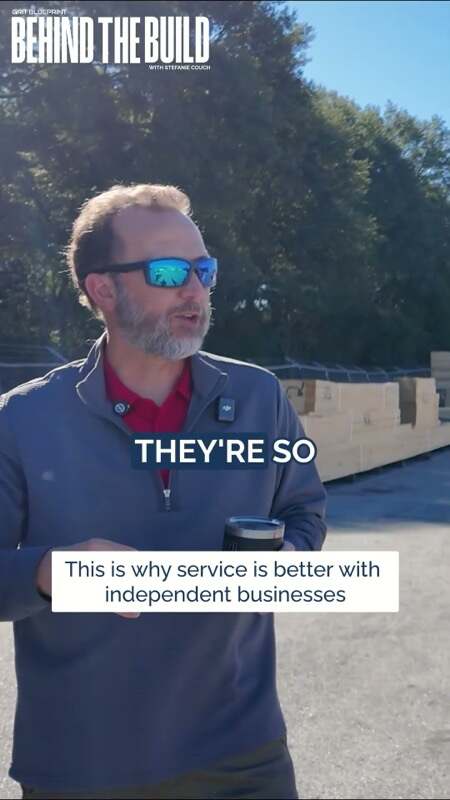
37:48 Transcript: And I mean there is I mean it's just so many weave webs to go through sometimes. But I think the service proposition is what I still see that it's hard for them to touch. service is absolutely and you know and we uh I'm a believer in local you know buy local stay local kind of a deal u so a lot of our customers are local independent businesses and they want to do business with other local independent businesses they don't want their money going to California or Texas or going into the you know a private equity fund somewhere
38:19 Transcript: your your kids are going to school with their kids uh I was thinking about this last week cuz I was driving through kind of my hometown town and I was thinking about all the kids that I grew up with that used to come in my lumber yard when I was working there with my dad and now they're running their dad's construction company uh whatever doing building concrete work. How cool is that?
38:42 Transcript: Like legendary legacies that these people are building and I that's one of my favorite things about what I get to do is tell these stories of people like you and your family that are building this legacy and continuing it.
38:54 Transcript: So and I agree with that. We've got one We got one local builder here that it's it's kind of a cool story. So, they're on their third generation. We're on our fourth, but my grandfather sold his grandfather, my dad sold his dad. I'm selling him today.
39:08 Transcript: We we want to keep that going.
39:09 Transcript: That's really awesome.
39:10 Transcript: Yeah.
39:11 Transcript: Yeah. And and it's uh it's always fun cuz I mean, you get in trouble in the lumber yard when you're little for doing dumb stuff together and then you're having to get on to your kids later, I'm guessing. Yes. Um, do you ever get in trouble for running across stacks of lumber that were abandoned?
39:25 Transcript: Oh, absolutely. Uh, disappearing up into the racks. That's a good place to hide.
39:30 Transcript: I used to steal the fort lift a lot. Did you do that?
39:33 Transcript: I would, uh, like you said, use the fortlift and you could always tell when you had been up in the top of the racks because you'd come down and you'd be dirty. You'd have dust. You'd have all over you.
39:40 Transcript: They're like, "What are you doing?" Oh, nothing. Not Not doing anything. Being so well behaved.
39:45 Transcript: Yeah. Yeah, I got in a lot of trouble, but most of it my dad never knew cuz he was too busy doing the actual work while I was out messing around. Thank goodness uh OSHA wasn't a big deal back then in those days.
39:55 Transcript: Yes. I don't know that they would have took Kylie to a uh a seveny old, excuse me, a 9-year-old running around the door plant or a 12-year-old driving a fortlift. A little bit different today.
40:04 Transcript: I know. But it's still a great place for kids to work.
40:06 Transcript: Yes, absolutely.
40:07 Transcript: So, for people who are thinking about getting into this industry like 20-year-old you,
40:12 Transcript: Yeah.
40:13 Transcript: what would you tell them? It is very much a relationship business. Okay. If you like knowing your customers, working with people, building those relationships, not with your customers, your vendors, your employees, it's a great place. The other thing I really like is taking pride in seeing that building and saying, "Hey, we provided the material for that building."
40:33 Transcript: You know, so and so's house. They're so proud. Oh, we just built our new dream house. We were had a hand in that. We had a part in that. Um, my kids, they they almost get tired of hearing me say this sometimes, but literally we'll be driving down the interstate and we'll go past some building like, "Oh, yeah, we did that." "Oh, yeah, we did that." I take a lot of pride in that.
40:50 Transcript: Well, and your home, I mean, commercial buildings are awesome, too, but your home is the American dream. To me, that is the thing that still, even in 2025, it's the thing you hang your hat on, proverbally or real realistically. And you're, like you said, a big part of that community of doing that. And then you're helping other people build their businesses with it. You're just touching so many things in the community.
41:12 Transcript: So, I love that. Congratulations on four generations.
41:15 Transcript: Thank you.
41:16 Transcript: I can't wait to meet the fifth generation. Maybe in a year or two I'll come back and be able to do this with them.
41:21 Transcript: And what you built here is really incredible. So, I love it. And congratulations. Thank you for giving me a tour.
41:26 Transcript: No, thank you for coming.
41:27 Transcript: And thank you for taking me behind the build.
41:29 Transcript: Absolutely.
41:30 Transcript: All right. We'll see you on the next episode. Heat. Heat.