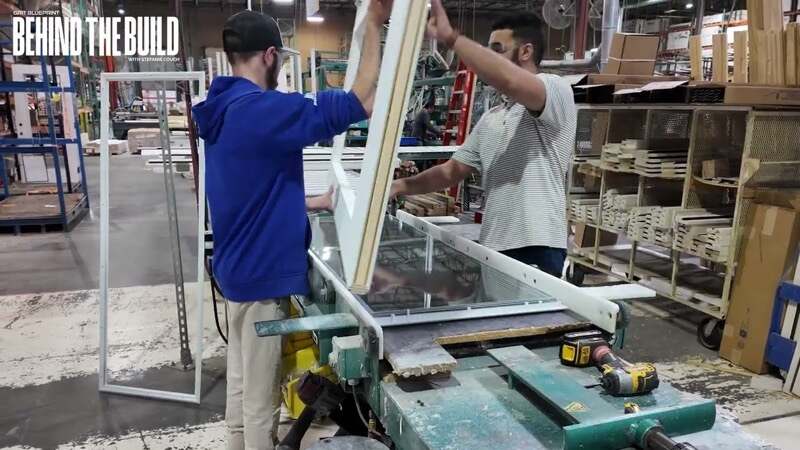
What Is TFL? How Thermally Fused Laminate Is Made and Sold
A decorative paper, a resin, heat and a board. Here is how the people who make and distribute TFL explain it.
What is TFL? TFL, short for thermally fused laminate, is a decorative paper soaked in melamine resin and fused with heat to a board, usually particleboard or MDF. The paper carries the color or woodgrain you see, and the board underneath is the body of the panel. Cabinet shops, closet companies, store fixture makers and furniture makers are among the buyers.
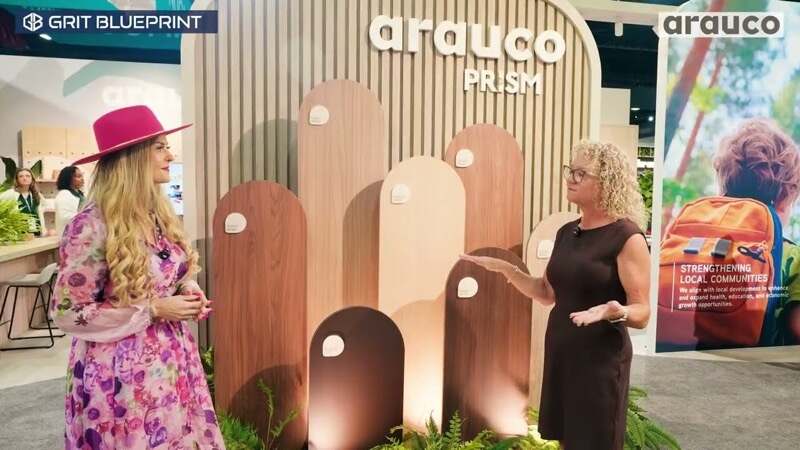
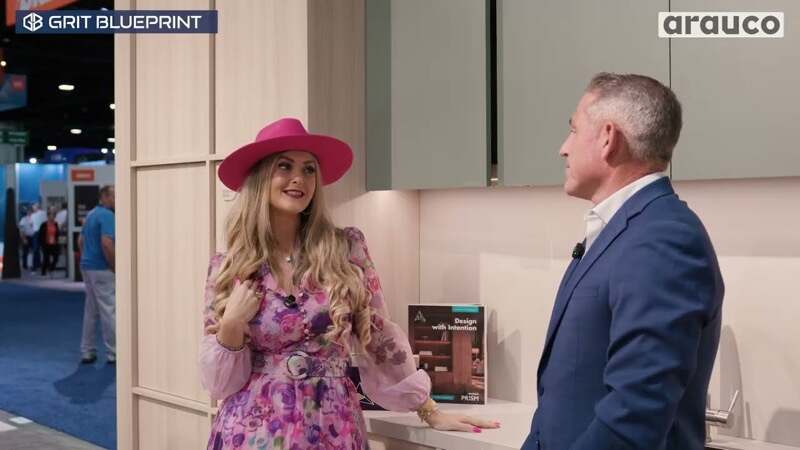
Cathy Hummer is senior manager of TFL development and design at Arauco. She was standing in front of seven new designs. They were at the company’s booth at the International Woodworking Fair (IWF) in Atlanta. Arauco makes wood panels: plywood, MDF, particleboard and TFL. She was asked to explain TFL for someone who does not know what the letters stand for. Her answer:
TFL is an acronym that stands for thermally fused laminate. It is a product that is made by saturating a decorative paper with a melamine resin, and that melamine-treated paper is then thermally fused to our particle board or MDF substrates.
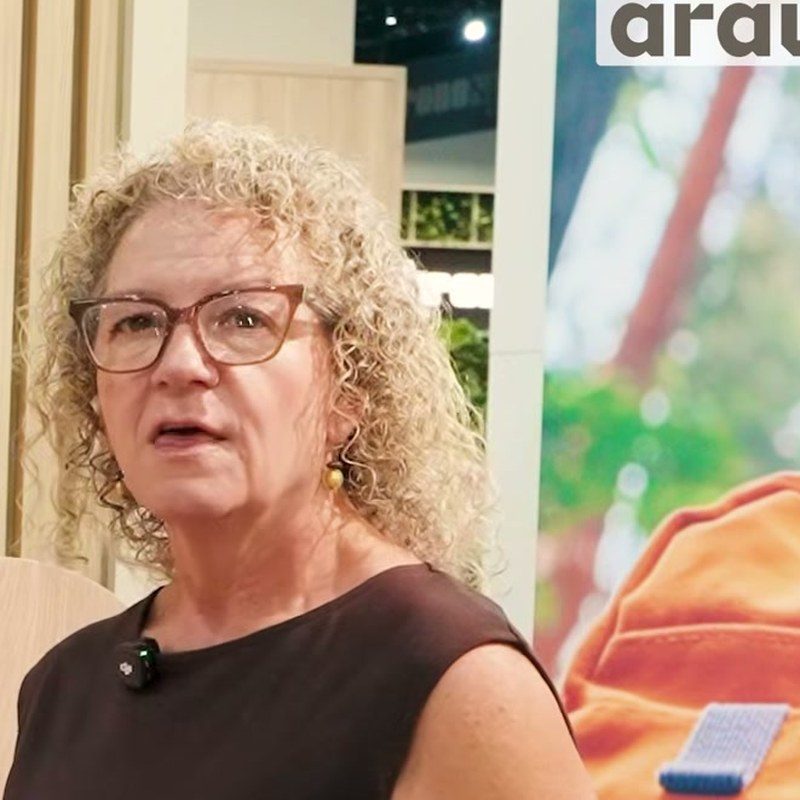 Cathy HummerSenior Manager, TFL Development & Design, Arauco North AmericaFrom our interview at IWF 2026, at 1:55
What is TFL made of?
Three parts, in plain words:
- Decorative paper: the layer that carries the color or the woodgrain design you see.
- Melamine resin: the resin the paper is soaked in before it is pressed.
- Substrate: the board underneath. Hummer names two, particleboard and MDF (medium-density fiberboard; Millwork 101 covers the basics). Both are panels made from wood.
Heat fuses the treated paper to the board. That is the “thermally fused” in the name. The result, in Hummer’s words, is “a beautiful, flat, decorative surface.” So when a cabinet shop calls a panel TFL, the design you see is the fused surface, and the body of the panel is the board under it.
The texture is pressed in
The surface does not have to be smooth. The booth tour shows panels with texture pressed into them. So a woodgrain design can feel like grain under your hand.
Hummer says the texture is matched to the design. Softer woodgrains get a smoother, velvet-like finish. A stronger, heavier grain gets a different one. Of one design, a rift cut white oak, she says “we used our Boreal finish on that to really accent the design” (2:57).
What it means for you: a sample carries two names, the design and the finish. Write down both when a customer picks one.
Where new designs come from
The seven designs are a collection Arauco calls Quietude, in its Prism TFL line. Hummer says they came out of a two-year line review, “where we work with our customers and really pay attention to what they’re looking for” (1:30). One finding: “the trends in TFL are moving toward a warmer palette” (1:45).
Asked why designers pick the product, Hummer says of Arauco’s own line: “It’s durable. It’s repeatable. It’s consistent. It’s available across the country” (3:06).
Who buys TFL?
Shops that build cabinets, closets, store fixtures, countertops and furniture, often through a distributor. Jon Minnaert is president of Aetna Building Solutions, a wholesale distributor (how distributors fit in: one-step vs two-step distribution) with locations in the Twin Cities, Rockford, Chicago, Indianapolis and Lexington, Kentucky. Aetna carries Arauco panels. Minnaert has been in the industry more than 40 years and started in outside sales.
He lists the primary segments Aetna sells to: “cabinet manufacturing, any sort of case good, store fixtures, closet producers, countertop manufacturers, office furniture” (10:07). A case good is furniture built as a box, such as a cabinet or a dresser. If you sell to any of those shops, expect TFL to come up.
What does a distributor look for in a panel supplier?
Three things, in Jon Minnaert’s order: how well the supplier makes it, whether it can still ship on a bad day, and range. Minnaert was asked what makes a great partner. His first answer is “their manufacturing capabilities, I’m going to say, is number one, and the quality of the product that they produce” (9:11). His second is about what happens on a bad day.
They don’t just have one plant. If something were to happen, they can shift production, they can shift business over to serve, so our supply won’t be in jeopardy.
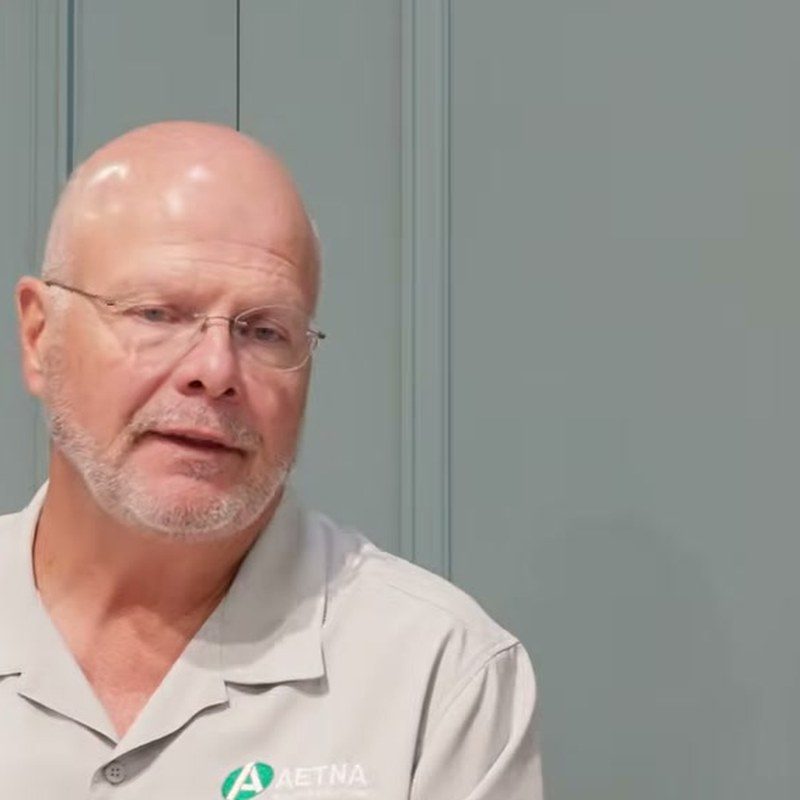 Jon MinnaertPresident, Aetna Building SolutionsFrom our interview at IWF 2026, at 9:23
His third is range. Arauco makes MDF, plywood, particleboard and TFL, and Minnaert says that “diversifies well.”
Those three tests work for any buyer. How well does the supplier make it? Can it still ship if a plant goes down? What else does it make?
Russ Jordan, president of Arauco North America, is in his 22nd year with the company and started there as a sales manager. He describes the aim from the manufacturer’s side: “One of our cores is to add value to the product. We believe that makes us more valuable to our customers” (5:44). He points to new embossed and deep textures. He also points to light manufacturing that can take cost out of a customer’s supply chain.
What to ask your panel supplier
- What is the substrate under this TFL: particleboard or MDF?
- Which finish comes on this design? Can I get a sample with that texture on it?
- Is this design stocked at the location that serves me?
- How many plants make it?
- What else do you make that I already buy from someone else?

Explain TFL with a sample in their hand
Hummer’s definition works because it starts with something a person can see and touch. Do the same at the counter. Start with what the customer already knows and put a sample in their hand. Explain it in familiar words. Then ask a question to check that it landed. Stefanie Couch opened her own post about these panels with the line to borrow: “Most people run a hand across these wood grains and don’t think twice. But it isn’t wood. It’s paper.” (LinkedIn, September 30, 2026). After that, the three parts make sense: the paper, the resin, the board.
Then write down what they picked, the design name and the finish name. That way the next person who touches the order knows exactly what the customer chose.
What to do next
- Learn the definition well enough to say it at the counter: a decorative paper saturated with melamine resin and fused with heat to particleboard or MDF.
- Get a sample in your hand. Run a finger across it. Read the label for the design name and the finish name.
- Ask your distributor which shops in your market buy TFL. Start with cabinet shops, closet companies and store fixture makers.
- Run Minnaert’s three tests on the panel supplier you use now.
Questions people ask
What does TFL stand for?
Thermally fused laminate. Cathy Hummer of Arauco describes it as a decorative paper saturated with melamine resin and fused with heat to particleboard or MDF.
Is TFL real wood?
The woodgrain you see is a decorative paper, fused to a board that is usually particleboard or MDF. Texture can be pressed into the surface, so a woodgrain design can feel like grain under your hand.
Who uses TFL panels?
Jon Minnaert of Aetna Building Solutions lists cabinet manufacturers, case good makers, store fixture makers, closet producers, countertop manufacturers and office furniture makers as the main buyers his company sells to.
What is the difference between a TFL design and its finish?
The design is the color or woodgrain printed on the paper. The finish is the texture pressed into the surface, and Hummer says Arauco matches the finish to the design. A sample carries both names, so write down both when a customer picks one.

Watch the full interviews
Thermally Fused Laminate Explained: What’s New at IWF 2026. For the two-minute version, watch What Is TFL? Arauco’s Designer Explains Thermally Fused Laminate.
Cathy Hummer of Arauco explains what thermally fused laminate is and how it is made, Russ Jordan describes how the company adds value beyond commodity panels, and distributor Jon Minnaert says what makes a supplier worth keeping.
A Grit Guide original. This piece is built from our own interview.