Click any timestamp to jump to that moment in the video.
From Car Auctions to Building Materials
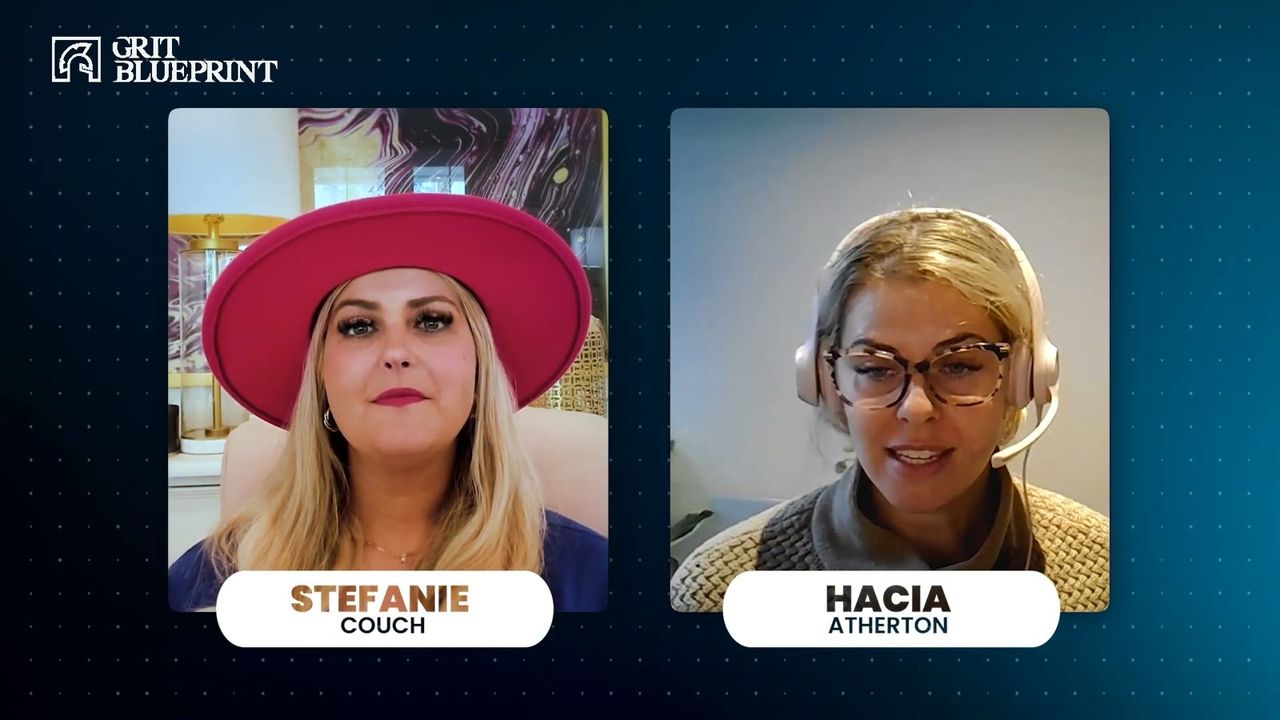
0:00 Stefanie Couch: Welcome to the Grip and Grip Podcast. I'm your host, Stefanie Chow. This podcast is about branding,
0:14 Stefanie Couch: building, and business. It We also highlighted the British next to be successful and last. Let's get started. I am so excited today to have my friend Tina here. Welcome to the podcast. Thank you for having me. She is also an amazing leader in the building industry. And we met at a conference we both spoke at in 2022. And uh we had an Uber ride together to the airport and just hit it off. And I've been thinking about working with you on something since then. So I'm really excited to get to show some of my audience your amazing skills and talents and let them get to know you a little bit.
0:54 Stefanie Couch: So let's get started. Okay. Sounds great. I'm ready. All right. The first question I have for you: you are in a building materials distribution role, much like what I grew up in. Cut my teeth and dealer and distribution. So I love that business. But for those people that maybe don't know, tell us a little bit about who you are, what you're doing today, and then your backstory of how you got to where you are. Okay. So I am the vice
1:21 Tina Breen: president of sales and marketing for a company called Manufacturers Reserve Supply. We are a two-step distributor out of New Jersey. We specialize in outdoor building materials, and I have been with the company for 16 years.
1:38 Stefanie Couch: That's awesome.
1:39 Tina Breen: This is kind of my second life in my career, I would say. Before this, I was in the wholesale auto industry. So I worked for car auctions.
1:49 Stefanie Couch: Okay.
1:49 Tina Breen: And I loved that too. I found myself coming to the building materials industry not by choice. I would say kind of by chance. I was ready for a career change. I was looking for something different. And I put my resume on monster.com. And that's when Monster was the place to go.
2:15 Stefanie Couch: Yeah.
2:16 Tina Breen: When online recruiting really had kind of just started to blossom. And I got a phone call from Steve Boyd, who at the time was the owner of Manufacturers Reserve Supply. And when I started talking to him, honestly, I did not think that this was gonna work out. Uh the industry didn't appeal to me. I mean, I was a girl and it was lumber. I didn't even know what decking was. I never even put a second thought into stepping up stairs onto a platform. I didn't even realize that was a deck.
2:51 Stefanie Couch: Yeah.
2:52 Tina Breen: Um, but you know, I hadn't interviewed in like 15 years. So I said, I'm gonna go because I'm gonna brush up on my interview skills. Look, and then when I went there and I met the team of people, and especially Steve, and I started to understand his vision and what he was tasking me with, it didn't matter what he was selling. I wanted to work for him,
3:19 Stefanie Couch: yeah, and
3:20 Tina Breen: I wanted to be a part of that team. So I would say, and I've said it a hundred times, it wasn't the industry that I came into, it was this company that I came into and this team of people. It was almost a byproduct that I fell in love with the industry in the process.
3:38 Stefanie Couch: I love that story and really thinking about the fact that a lot of people, especially women that might look at our industry, it's not beauty, it's not tech, it's not glamorous all the time. It's getting a little better. I mean, there's some pretty beautiful products out there now, but it's not that traditional graduate from college and go work at the sexy, sleaky new New York dog as a fashion designer type thing.
4:02 Tina Breen: Yep. Yep.
4:03 Stefanie Couch: But for the people who don't see it that way, if you can just give it a chance, the people are so amazing in this industry. I mean, salts of the earth, like take care of you type, good relationship builders. And then it is a really big land of opportunity. You're not going to be competing with 50 other people right out of college for this job necessarily like you are somewhere else. So you're a big fish in a small pond, which is pretty cool thing, especially when you're young with no experience.
4:32 Stefanie Couch: So I love that. And obviously, you've been there 16 years, so you made a really good choice to go in that interview. Um, I think it's also a thing to say in your life when you're not sure. My dad always used to tell me this it never hurts to listen.
4:45 Tina Breen: Yeah, you
4:45 Stefanie Couch: could say no, but what if you want to say yes? And if you don't want to do the interview, you don't know. So
4:50 Tina Breen: yeah, you should never pass up an opportunity
4:53 Stefanie Couch: to
4:54 Tina Breen: listen and talk because you don't know where that could lead.
4:57 Stefanie Couch: Absolutely.
4:59 Tina Breen: That's that's networking at its best.
5:00 Stefanie Couch: Yeah, for sure. 100%. And you are now in a VP of sales role, right? Sales and marketing, I think. Tell me a little bit about that and what what does your day-to-day look like? And what are you getting to do with these amazing teams that you're working with? And also, I know incredible customers.
A Day as VP of Sales and Marketing
5:17 Tina Breen: My day-to-day is not typical, and it's not structured and it's not the same every day. And that's one of the things I love about my job. And I do love my job, and I still love my job after all of these years. I could be in my home office, so at our corporate office in Irvington, New Jersey. I could be in my home office where I am today, or I could be on the road traveling to meet customers. I could be on the road traveling to meet potential suppliers.
5:53 Tina Breen: I could be working on strategic initiatives for the company or trying to help our outside sales team land a deal or even just one order.
6:05 Stefanie Couch: Yeah.
6:05 Tina Breen: I get to I and I also manage our marketing department. So I could be helping to pick out sweatshirts or planning training events, like we have one this week, which is going to be huge. So I get to have my fingers in a lot of different areas, which keeps me challenged and never bored and always on the run and in a million different directions. And that's what feeds my soul.
6:32 Stefanie Couch: Yeah. I love that uh getting to move around because you you can't get bored. People like us, like if you gave me a task to do for 15 years and never changed it, I would be out after like six months because I just can't I can't stay. Some people love that they thrive on that habit and that discipline of having the same consistency. I I like to be able to be a boomerang. So I I love that you're doing that and also helping a lot of different people grow and thrive in their own positions in that leadership role, helping people build their businesses as customers and even vendors' partnerships.
7:05 Stefanie Couch: That was always a really fun part of distribution for me was that you got to work up and down the channel a lot. And even with the end user of a homeowner, even though they're not your customer, you're still kind of touching that part of the channel, especially with marketing. I think that's one thing people miss in this business with marketing, is they think, well, I'm selling to dealers or I'm selling to distributors. So I don't really care if the homeowner likes it. Well, when a homeowner looks at your website because the builder sent them to the dealer to your website, it better be pretty cool or they're gonna just click right off and go somewhere else.
7:39 Stefanie Couch: So it matters, you know. And I think with millennials and Gen Z being more Google searchers on
7:44 Tina Breen: everything,
7:45 Stefanie Couch: I look up everything. It doesn't matter if it's the laundromat or the restaurant or the hotel or the vendor that I'm buying something from, I'm Googling it. So, you know, for B2B and B2C dealers and distributors in this market, I would say like, get ready to change your perception on marketing being uh like nice to have, and it's a must-have now.
8:07 Tina Breen: Yes, it sure is. I would agree.
8:09 Stefanie Couch: How are you guys addressing that in your business? With I know you're doing a lot of training and all these things. Like, what do you feel like is really moving the needle for you guys with your marketing that maybe that's something that's innovative or changing or that you find really works?
How a Distributor Markets Regionally
8:24 Tina Breen: Our marketing initiatives help to enhance what the manufacturer is doing on a national level.
8:32 Stefanie Couch: Yes,
8:33 Tina Breen: at a regional level.
8:34 Stefanie Couch: Gotcha.
8:35 Tina Breen: The manufacturer does really great marketing nationally, and they're looking to drive their brands home with um the end user, um, the contractors and the homeowners. So that their excuse me, so that their brand is being requested by name.
8:54 Stefanie Couch: Yeah.
8:55 Tina Breen: But they don't know the small and individual nuances of the local markets that we do.
9:03 Stefanie Couch: Yeah.
9:04 Tina Breen: So we take their national marketing and we pull it into our regional areas um and into our retailers to help them elevate their marketing. So we might do things like run ads um for the manufacturer, helping with brand awareness in print or in radio or in digital.
9:32 Stefanie Couch: Yeah.
9:33 Tina Breen: Or we may help our retailers, so the lumberyards and the one-steppers and the roofing and siding houses, to create advertising initiatives for their businesses, whether that's billboards or print or um a lot of digital now. So a lot of the advertising is digital.
9:54 Stefanie Couch: Yeah, it sounds like you guys are really a bridge, which is I think great distributors are partnership-wise, and you're you're spanning between two different things. Sounds really
10:03 Tina Breen: an email, man.
10:04 Stefanie Couch: Yeah, you're doing a great job with it though. So I I see your stuff on LinkedIn and social, and I always note that you know you guys are doing a lot more than a lot of other people I see. So kudos on that for me. The distributor marketing girl at heart. Um I love what y'all are doing. So
10:19 Tina Breen: Rick Ryan,
10:20 Stefanie Couch: yes, absolutely. Well, let's go a little deeper into who you are. And I want to hear a little bit about this exciting thing that you've been working on. I remember when we first met, you told me about this, and I thought, how interesting. I don't know if I've ever met anyone in this industry who has been pursuing a master's in organizational psychology. Um, I love that. I read a lot of books about it, actually, majoring in psychology in college too. And it's just, it was so intriguing to me to hear you say that.
10:47 Stefanie Couch: So, talk to me a little bit about that and how you think now that background is helping you influence in your day-to-day. And then what have you grown with your team because of that education that you're getting?
What Industrial and Organizational Psychology Is
11:00 Tina Breen: So when I tell people that my education and my degrees are in industrial and organizational psychology, nobody knows what that is. It's it's fairly new, maybe in the past 10 years. And I didn't know what it was either until my college advisor said to me, Um, you know, what do you want to major in? And I said, Gee, gee, I really don't know, to be honest with you. Help me figure out what my next next steps are. And I told him a bit about what I do, and he said, Uh, you're you're I of psych, which is the buzzword, right?
11:34 Tina Breen: I of psych. And I said, Oh, am I? Tell me what that is. So it's it's it's a psychology major and it's using the the principles of psychology in the workplace.
11:47 Stefanie Couch: Yeah.
11:48 Tina Breen: So psychology is the study of why people do what they do. So take that into the workplace to help build a better organization and get better engagement out of your employees from a psychology perspective.
12:11 Stefanie Couch: Really culture building and helping people understand themselves and others. And yeah, I love it. My one of my favorite authors is Dr. Benjamin Hardy, and he is has a doctorate in organizational psychology. I've read a lot of his stuff. If you don't know him, you should know him. He's awesome. But he talks a lot about this, how he goes into organizations and they're like, we don't know what that means, but you know, we know you have a DR for your name. So we're gonna test you.
12:36 Stefanie Couch: He really works on that with how do you push yourself to be better? And then how do you push those around you from a leadership standpoint or managing up, you know, as an individual contributor to push yourself and those around you. I think it's so important. And I believe training and lack of that type of thought in our industry specifically has been one of the things that's held us back from gaining top-tier talent that is a new person out of college because they want development paths.
13:03 Stefanie Couch: They want to see that culture that's going to be helping them grow and thrive throughout the years. So I think if we can trickle in a lot more of that into the old school lumber business mentality, we will see more young, amazing talent come in and stay because they love that and prioritize that a lot of times more than their salary or anything else when they're young, because they think if I can grow the skills now, I can make the money later with those skills. Skills are more important now than money is.
13:33 Stefanie Couch: So um
Recruiting and Onboarding Top Talent
13:35 Tina Breen: and and like you said, to to be able to recruit that top-tier talent, you need to incorporate those conversations into your recruiting initiatives.
13:47 Stefanie Couch: Yes.
13:48 Tina Breen: It's not like it was 20 years ago where you would post a job and the attitude was the candidate is lucky to come and work for you.
13:59 Stefanie Couch: Right.
13:59 Tina Breen: It's more of you're really trying to recruit these people and pull them into your business and you need to show them why.
14:08 Stefanie Couch: And
14:08 Tina Breen: and that that is part of the psychology of IOSYC is putting together packages that appeal to very specific candidates. And it's everything from writing the job description with particular keywords and power words that are going to attract the right applicants to apply for the jobs. Then when they apply for the jobs, are you giving them the right escalation paths? Are you showing them the opportunity for upward mobility? Are you what kind of perks are you putting in front of them? I mean, even little things like we have a gym at MRS.
14:50 Stefanie Couch: So
14:51 Tina Breen: we're
14:51 Stefanie Couch: making
14:51 Tina Breen: sure people know that. We have, you know, a barista bar. I think we call it like the MRS Cafe or something, and we flavored coffees and I don't know, sprinkles, whatever.
15:02 Stefanie Couch: You know, you allow dogs in the office, I'm applying.
15:05 Tina Breen: Uh, I wish we would allow dogs in the office, but not quite yet. Um, you know, but even um, what is it, work from home opportunities everybody wants now. So you've got to make sure you're selling the, and and that's part of the culture of your company too. So you've got to sell your culture to get the that top-tier talent. And that's a very intentional initiative from your HR department or even from the top down. Somebody at your company has to own that initiative. And that's kind of where IO Psych comes in because you're you're appealing to people's psyches and what motivates them.
15:47 Tina Breen: So it's also understanding what motivates people to bring them into your company. Yeah. And it's one of the many components of industrial organizational psychology.
15:57 Stefanie Couch: It literally is the competitive edge for people. Like if people can figure that out and get top talent to come in versus not, it can be technology and people to me is the competitive advantage, especially in a business like distribution where most people have CapEx, they're they're dealing with a product line that's similar. You know, there are some competitive advantages in me. I think some products are better than others. But the real thing you could say, what makes you stand out is your people and your technology.
16:22 Stefanie Couch: And that's it. And the rest is just all the other things that go into it and a lot of hard work. But what you're doing is is huge and being intentional in that, knowing that if you're necessarily writing for someone that has 30 years experience, that's gonna be a very different job description and package that they want than someone that's 25 that's coming up in the ranks and wants to get to a certain level in five years or 10 years. Um, very good.
16:47 Tina Breen: Even just the word job description. Yeah, I mean, that's important. Does your company have correct and updated and current job descriptions?
16:56 Stefanie Couch: Yeah,
16:56 Tina Breen: because your candidates want to read that.
16:58 Stefanie Couch: Yeah,
16:59 Tina Breen: they want to see what their day-to-day is going to look like, and then they want to see once I get on board, how are you gonna train me?
17:06 Stefanie Couch: What
17:06 Tina Breen: does that training program look like? Because on the job training and training under fire, that doesn't cut it anymore.
17:13 Stefanie Couch: No,
17:14 Tina Breen: people want a process, they want to know that they're going to be trained well.
17:21 Stefanie Couch: And
17:21 Tina Breen: the onboarding process is intentional, and that also um, you know, studies have shown that the onboarding process, if it's done correctly, is directly correlated to retention.
17:37 Stefanie Couch: Yeah, that first 90 days matters a lot.
17:40 Tina Breen: It does.
17:40 Stefanie Couch: Yeah, I think training is the biggest problem in the building industry today that we're gonna, because there's all these retirements coming. And I know we both probably had a maybe a similar experience. I won't speak for you. I mean, I grew up in a laundry art, so I kind of like watched a lot. So I had a leg up on any other person that could have come into a distribution location selling something. But most of the people I've seen training, and this is not a knock on any one company, this is every place I've ever seen training, customers, vendors, my companies, everybody.
18:09 Stefanie Couch: It's like, hey, sit beside this person at their desk and watch them work for a few days, and then here's some POs. Good luck. Hope you figured it out. Hope you figured out what the difference between this door and this door is because good luck. And you know, that's the training program. And so we as a company, and when I left and started my own business, my big mission was two things. I wanted to change the training and the culture building part of the industry, and I wanted to redesign the blueprint for women at construction.
18:39 Stefanie Couch: That was the two things that I wanted to do. And so we're building out a training platform where we can have people learn soft skills, we can have them learn these types of things and also learn the technical skills. How do I know that, you know, this door should be sold in this place? What's the difference between an interior door and an exterior door? Or, you know, what is the difference between composite decking and this other product that's wood or whatever it is? And those little nuances that we just know because we've been in it so long, could take five or six years for a new 20-year-old person out of college to come in and learn that stuff.
19:15 Stefanie Couch: They don't have you don't have five to six years to get them there. So
19:18 Tina Breen: not anymore.
19:19 Stefanie Couch: We're trying to solve it. And then obviously the women uh thing is is a big deal to me, and I know it is to you too. My goal for Build Women is to have amazing leaders like you pushing and all pushing in the same you know direction, pulling the rope. And 2030, I would love to see 30% women in this industry, which today it's 14%, so it's over double in six years. But I think it can be done with a very concentrated intentional effort, and also with all those people that are going to be retiring.
19:50 Stefanie Couch: We're gonna have to fill those gaps somewhere, and it won't be all men because there are not enough men to fill it.
Why Diversity Has to Be Intentional
19:54 Tina Breen: Well, you know, we need women supporting women, but we also need men supporting women.
20:00 Stefanie Couch: Absolutely.
20:00 Tina Breen: I mean, we we need um we need everyone to understand the benefits of diversity, equity, and inclusion, and how a diverse organization operates better because different perspectives from different people from different walks of life and different cultures. When you bring all of that experience into one organization, it leads to better decisions, better outcomes, better profits, uh, a better, a well run, a better organization that's well run.
20:43 Stefanie Couch: Yeah.
20:44 Tina Breen: And to do that, you've got to have people, both men and women, actively recruiting diversity.
20:51 Stefanie Couch: Yes.
20:52 Tina Breen: Whether that diversity is the divert the gender diversity or any any type of diversity, um, it needs to be intentional.
21:02 Stefanie Couch: Absolutely.
21:03 Tina Breen: And then that whatever that diversity is, um, it needs to be supported. So, you know, I have a passion for supporting women, you know, because that is what I identify with. But no matter what the diversity is, there should always be some support system in the the the company for that.
21:27 Stefanie Couch: Yeah. And like you said, it cannot be said enough that we have to have male allies and supporters. It can't if women could have solved it, we would have already solved it. I mean, you know, like if we could have fixed it by ourselves, we can't. We don't want to. I have some men in my life that have supported me to the amount that I sometimes wonder why on earth are they doing this for me? They have no reason to put my name in the hat for that.
21:54 Stefanie Couch: They have no reason to say you should hire Stefanie, you should do this. Um they have. Have just done it because for whatever reason they decided to support and be an ally and and really a sponsor for me. And women have done that too, but by and large, men have done it a lot more because they're in those positions that they can do that in this industry.
22:15 Tina Breen: Um,
22:16 Stefanie Couch: and so really that can't be understated. And again, they're not every man will not do that, and every woman will not do that.
22:24 Tina Breen: So
22:24 Stefanie Couch: you've got to find the people in your life. I call it my board of directors, you know, four or five people that you know that will give you the truth,
22:34 Tina Breen: good,
22:34 Stefanie Couch: bad, or indifferent. They will support you, and they will also make sure that you're really in the right mindset to go after things like why are you asking for this title or why are you doing this, or what do you is this really what you want to do? I found in my career, I was chasing something for a long time to achieve it. Like I was trying to climb this ladder that I actually got a little ways up and realized, like, I don't want to be here.
23:02 Stefanie Couch: I'm literally doing this to win at this point, which is I'm very competitive and I love to achieve things. So it tracks, but I got to a point where I was like, holy cow, I'm on the wrong mountain climbing, you know. And so to have that person in your life, those people in your life that kind of show you that, it's very helpful.
23:21 Tina Breen: Sure. Yeah, you need to have um a tribe, you know. You you know, you call it your board of directors, but you definitely need people around you that were gonna help keep you in check.
23:32 Stefanie Couch: Yeah,
23:33 Tina Breen: and and help you figure things out.
23:35 Stefanie Couch: Yeah. And sometimes you can't see the force for the trees. My husband is definitely that one of those people for me because we're business partners now, and he has very opposite strengths of me. So my strengths are one thing, and his are literally the exact opposite. So when I'm going too hard on something, I'll ask him. And sometimes he says something, I'm like, oh my God, such a blind spot. I did not even see that. And it's very helpful. So, same thing with teams, you know, that's what diversity does.
24:00 Stefanie Couch: It's like that person that's different, thinking different, acting different, they see things you don't see. And it's really great to have a room full of people like that.
A Leader Who Brought Her to the Table
24:10 Tina Breen: And when you work at a company where you have that support system, I feel like the rest of the people at that company learn by example.
24:25 Stefanie Couch: Yeah.
24:25 Tina Breen: So at MRS, when I first started working there, Steve Boyd brought me in. He's now the chairman, and his son Brian is now the president. So now I work for Brian. Um, but when I worked for Steve, and Brian is very much the same, of course, um, because he he learned under Steve like I did. Steve lifted me up. He Steve brought me to the table.
24:52 Stefanie Couch: Yeah.
24:53 Tina Breen: Now I uh deserved to be there, but he brought me to the table and he validated the things that I said.
25:04 Stefanie Couch: Yeah.
25:04 Tina Breen: And he amplified my voice. And he gave credibility to me with the people that were in the room. He would give me credit for projects that I did.
25:20 Stefanie Couch: That's all thing.
25:21 Tina Breen: And you don't find that kind of leadership,
25:24 Stefanie Couch: though in men or women. It that's not a gender thing, that's an altruist go-giver thing. Um to be able to put someone else on a place that they they deserve to be, they're working hard for, but you don't have to do that. Like to go out of your way to show others like what you're doing is that's huge.
25:46 Tina Breen: And that is what has kept me
25:49 Stefanie Couch: at
25:49 Tina Breen: this company because Brian is very similar to being in that kind of environment where you're recognized for your contributions,
26:00 Stefanie Couch: yeah,
26:01 Tina Breen: um, is huge.
26:03 Stefanie Couch: It is.
26:04 Tina Breen: And I think if I were to give advice, which I think is one of your questions later, I'll skip ahead. Um, but you've got to find an organization where you're valued.
26:14 Stefanie Couch: Yeah.
26:15 Tina Breen: You really do.
26:16 Stefanie Couch: And if you know you don't have that, get out. Like, don't stay because of the upside that maybe could be if those people leave and then all these million things fall into place. Like, if you know it's probably not gonna happen, learn what you can and go somewhere else and do the next step.
26:37 Tina Breen: Yeah, you're not trapped, you know, you're not stuck in a job. It's not that it's going to be easy to find another job.
26:45 Stefanie Couch: Sure.
26:46 Tina Breen: But don't ever feel stuck in a job that you're not happy, that you're not valued, that you're not lifted, that your goals, your career goals or your personal goals are not being met.
27:04 Stefanie Couch: Yeah.
27:05 Tina Breen: It's time to start networking. It's time to start talking to your board of directors or talk to your tribe and get yourself in check and say, how can I do this? I was just talking to a girlfriend the night before. As a matter of fact, she's coming over tonight, and I'm gonna help her with her resume.
27:21 Stefanie Couch: I'm
27:22 Tina Breen: gonna help her get her socials up to speed because she's not happy where she's at.
27:26 Stefanie Couch: Yeah, and most people do feel stuck. I mean, that's I think that's why I talk about personal branding so much. Because number one, I think people in this industry are like, what are you talking about? Like, I don't want to be an influencer, I don't want to have five million followers on Twitter or Instagram or whatever. It's not about that. It's about people knowing who you are without a logo attached to that. Even if it's your company, it's still, what if in five years you want to do something different?
27:55 Stefanie Couch: What if in five years you sell the company? What if you're working for somewhere that, you know, you decide to go somewhere else, and everything you've ever posted or talked about is literally your company logo. I spent a lot of time doing that. I wasted years that I could have been doing both. You can still talk about your job. You don't, a personal brand does not have to be black and white like that. But you want to share what are your skills, your strengths, the things that only you can offer the world.
28:22 Stefanie Couch: And then once you start doing that, people are gonna see, hopefully at your company, more of that and outside in the other parts of the world, customers will see it, vendors will see it. All these different people see who you are and what you can have to offer. And that makes your brand and the company's brand so much more valuable. It's not just about finding another job, it's about people inside where you are right now seeing your value.
28:47 Tina Breen: Well, I went through a creating your personal brand exercise once, and the first thing that they had us do was write a list of things that you would want other people to say about you or remember about you or think about you if they were asked.
29:13 Stefanie Couch: Yeah.
29:13 Tina Breen: What how do you want people to perceive you? How do you want them to think about you? What are the qualities that you want to stand out?
29:21 Stefanie Couch: Because if doing it, whether you are intentionally building your brand or you're just leaving it to chance, they're thinking those things. They're known, you're known for something. No matter how where you are in the chain, no more where you are the channel, whatever, man, woman, all of it, you have a brand. And like Jeff Bezos from Amazon says, it's what people are saying about you when you're not in the room.
29:43 Tina Breen: Oh, yeah. You
29:44 Stefanie Couch: can choose to curate that and have I want to show more of these things that maybe they wouldn't see otherwise, or you can choose to leave it to chance. And I don't particularly understand why anyone would not do at least some of that because it's pretty easy nowadays. You don't have to post on social media every single day. You can do just a little bit of stuff to really get your name out there and showcase who you are, and it makes a huge difference.
30:09 Tina Breen: Yeah, you need to incorporate it into your everyday. You need to live it a little bit. But even if it's just conscious in the back of your head, even if it's just kind of there, then you'll you'll start putting it forward in your everyday and in your conversations.
30:22 Stefanie Couch: In every meeting, everything. Yeah, absolutely. Well, one discussion that I want to really unpack with you, I'm really excited to talk about this with you, is specifically women, but also I think people of color and other diverse groups have issues with knowing what to ask for at the table when they're trying to get a salary for the first time or getting a raise. Really, it's that transparency and salary discussions. And to go back to like historical how it's always been, a lot of people have been very secretive.
30:55 Stefanie Couch: Like, you know, back in 80, 90, there was no glass door, none of these things, even to go try to find out what people made. But even now, those numbers, I mean, you know, you'll go Google something, and there will be like a $300,000 range between $50,000 and like $400,000. And you're like, uh, so what do I ask for? You know, there's no real metric that makes sense in a lot of these glass door and things like that.
31:19 Tina Breen: Yeah.
31:19 Stefanie Couch: What what challenges have you seen? And I'll I'll narrow it down just specifically to women because I think we both can identify that. Um, what have you seen in the salary discussions where women are not asking each other, not talking to each other about what they're making? And then unfortunately, men maybe aren't sharing that. And you see a woman that's making let's just say $20,000, $30,000 less than the other person that's doing the exact same job. What how do you see that happening? And what would you say the best advice for a woman that's in that situation should take to not have that problem?
Talking About Salary
31:57 Tina Breen: The whole conversation about salary is interesting. Um and there is a lot to unpack there.
32:04 Stefanie Couch: Yeah.
32:06 Tina Breen: So I'll start with one of my favorite video clips. Um, I recommend everyone go check it out. It's you could Google it up. It's Barbara Corcoran from Shark Tank, and she's got a little TikTok that talks about women and asking for a raise.
32:30 Tina Breen: And women don't historically they don't ask. So that's the first problem.
32:36 Stefanie Couch: Yep.
32:37 Tina Breen: Men have no problem asking.
32:39 Stefanie Couch: Yeah,
32:39 Tina Breen: they have no problem asking for a raise. Women, for whatever reason, don't ask for the race.
32:46 Stefanie Couch: They think someone's just gonna magically come sprinkle it on them like this. Is one of the how women rise habits that women struggle with. It's not leveraging your work, not speaking your work, just thinking that people are gonna see it and reward you for it.
33:02 Tina Breen: Yes. And that's not that's not how it happens.
33:06 Stefanie Couch: No,
33:06 Tina Breen: you need to ask for what you want,
33:08 Stefanie Couch: absolutely.
33:09 Tina Breen: It's not gonna just get handed to you.
33:11 Stefanie Couch: Yeah,
33:12 Tina Breen: when I I don't I want to say grew up in my career, but early in my career, I was literally told, do not discuss your salary.
33:22 Stefanie Couch: Yeah, I've had people say it's actually like illegal against company policy, which I think it's actually illegal the opposite way now. But I've had people tell me, like, you can't talk about that. Uh, you cannot tell someone what what you make. It's not that's not true. For anyone on this podcast listening that thinks that is a real thing, um, is out there as a rumor mill for sure. It is not real. You can tell other people whatever you want about your salary unless you have some sort of weird, crazy NBA that I don't know about, which I still think is illegal.
33:52 Tina Breen: Yeah. I I will tell you that the um National Labor Relations Act protects employees' rights to have these conversations. Yes. And that is a federal act. So um, and companies cannot retaliate if they find out that you've had um salary or any kind of comp discussions within your
34:15 Stefanie Couch: but really the legal part is one part of it. It's more of a cultural thing of you know, we are as women, we're kind of told to be quiet and like don't ask questions and don't question things. And then I think sometimes other people think, well, if I tell her what I'm making, then my boss is gonna get mad because he finds out when she goes into his office and says, Well, you know, Tina's making $120,000 and I'm making, you know, $80,000 for the exact same job.
34:46 Stefanie Couch: Like, what the hell? And then they're gonna say, How did you find out that information? And so that's the kind of cycle that you get into your mind. Like, is this worth the problem that I'm about to stir up to go and even have these conversations for someone to tell you that information is a risk kind of on their part too?
35:04 Tina Breen: Yeah, I don't know at this point that I would advocate for having that conversation internally with your direct peers.
35:19 Stefanie Couch: Yeah.
35:21 Tina Breen: At this point,
35:22 Stefanie Couch: I still
35:24 Tina Breen: I still believe that within any company the right thing to do is to have correct however you want to do it, pay bans, and that people are paid correctly for their experience. You know, there's a strategy behind compensation that no one is um unfairly paid because of um gender, race, creed, um, you know, that there is a strategy for why people are paid what they're paid.
35:56 Tina Breen: But I would more so advocate that conversation be within your like or transferable skill sets with people outside of your company.
36:13 Stefanie Couch: Yeah. Because then there's no there's really no retaliation risk.
36:17 Tina Breen: Then there's no, you know, it's just not it doesn't make for an uncomfortable situation in your workplace.
36:24 Stefanie Couch: Yeah, absolutely. No, I totally agree. I
36:26 Tina Breen: really want to have an uncomfortable, but I would want to talk to my peers in the industry and say, you know, figure out what they're making, but you need to you need to start the conversation.
36:41 Stefanie Couch: Yeah.
36:41 Tina Breen: Oh, you, you know, you need to and and I've done that a little bit. I would like to do it more, and I do plan on doing it more.
36:50 Stefanie Couch: Yeah.
36:52 Tina Breen: I have found that I've shared more than I've received.
36:57 Stefanie Couch: Yeah.
36:58 Tina Breen: So that's been interesting. But I would, I think that the more we talk about it, people will become more comfortable talking about it.
37:08 Stefanie Couch: I've seen that in in the entrepreneurial space too. You know, I think now you're starting to see more people on social media talking about how they did things. Um, like one of one of the people that I follow is Cody Sanchez. She's a woman who buys boring businesses, is what she says. You know, plumbing businesses, laundry bats, all these things. She acquires them from people that are retiring. They own her finance. There's like a whole strategy. And she highlights how people are doing this because until you see actual human beings doing this, normal human beings that don't have millions of dollars in the bank already to fund this deal, it's very hard to understand that you could get that, do that, all those things.
37:47 Stefanie Couch: So entrepreneurial spaces are starting to really do that. And I think that the corporate world is right behind it.
37:54 Tina Breen: But
37:54 Stefanie Couch: that's one reason why, like the Build Women Network, that's why I started that group, is because I never wanted another women, woman in the industry to feel the way I felt the last few years and my role where I was like, am I asking for too much? Am I doing enough to get to this? All those questions that you, you know, we then get that thought in our head of like, is am I right or are they right or somewhere in the middle? And so that group, Build Women Network, is really to have these hard conversations to also develop women to be able to have the skills to negotiate more pay and ask for what they want.
38:30 Stefanie Couch: We're doing a webinar this week on asking for what you want, you know, um, because they're so wildly uncomfortable. What if that manager was waiting for you to walk in his or her office and say, Yes, absolutely, you deserve this? They just haven't thought of it or haven't had time. And everyone else around you has already been in the office asking for that thing, and you just didn't walk in.
How to Ask for a Raise
38:52 Tina Breen: Well, payroll is the single most um the biggest chunk of money that goes out for any company. It's the biggest expense.
39:01 Stefanie Couch: Yeah.
39:02 Tina Breen: So most companies, whether it's you know a big company or an independent company, they're not just going to dish out money. Here you go. Here's you know, a $10,000 bump. You have to ask for it. And then when you watch that Barbara Corcoran video, she also tells you when you ask for it, you need to be prepared to tell them why you deserve it. You can't just go in there and say, I want to make more money. Can I have a whatever amount bump? You have to show them the research that you've done of competitive salaries,
39:37 Stefanie Couch: and
39:38 Tina Breen: those online calculators don't cut it anymore. They're really not. We need to have these conversations so you can say, I spoke to 10 of my peers in the industry that do exactly what I do, and they're all making XYZ more than me.
39:53 Stefanie Couch: Yeah.
39:53 Tina Breen: Or they're getting their cars paid for, or they're getting stock options, or they're, you know, whatever it, you know, whatever the perks are that they're getting. Um, and then you need to show what you brought to the table.
40:06 Stefanie Couch: Yeah.
40:06 Tina Breen: This is what
40:07 Stefanie Couch: they value.
40:08 Tina Breen: This is what I've done in the past three years, and then you have to turn it into an ROI for the company.
40:13 Stefanie Couch: Yeah.
40:14 Tina Breen: So, you know, just because you came up with new training initiatives or you brought in new business here or there, was it profitable business? Um, how did the training initiatives turn into profits for the company? So you need to turn whatever it is that you did into profit for the company.
40:39 Stefanie Couch: Yeah and
40:39 Tina Breen: then show them your value. And this is why I deserve to be paid um what I'm asking for.
40:48 Stefanie Couch: Yeah, that's a brilliant point. And I think one that sometimes is easily missed because we get on the side of like, I want, I need, I deserve. And you, it's sort of like court, right? You have to have a burden of proof there that you're saying, here's why. Because no person, including me as an entrepreneur who has employees, is gonna say, well, because you walked in and you asked so nicely, I'm just gonna give you all this money. No one's gonna do that. And I'm a woman and I wouldn't do it for a woman if you walked in tomorrow and asked me that, unless, like you just said, you have the value.
41:21 Stefanie Couch: And I think in any business venture, whether this is a personal thing, you're you're doing something yourself, you're working for a company, you run the company, whatever it is, you have to always be proving value to your customers, to your vendors, to your employer, all of those things, you have to be saying, here is what you are getting. And in my opinion, it always needs to be more than what you're asking for in return.
41:48 Tina Breen: There
41:49 Stefanie Couch: should be no doubt. There should be no question of like, well, they said it was X. Is it really? They should be like, hell yeah, you're getting this race. Because now that you show me all this stuff, I mean, like, I'm glad you only asked for this amount because really it should be more. So that's how you should present this. And if you don't know how to do that, then find someone, probably in sales, that can help you figure out how to do that because they know how to negotiate, they know how to communicate if they're good at what they do.
42:18 Tina Breen: Yeah, and this is exactly sales that and this is called selling up the chain.
42:23 Stefanie Couch: Yes.
42:23 Tina Breen: You're selling to your bosses, and in sales, you need to make it easy for your customer, which in this case is your boss,
42:30 Stefanie Couch: yeah,
42:31 Tina Breen: to say yes.
42:31 Stefanie Couch: Yeah,
42:32 Tina Breen: so you need to do the legwork for your boss in showing them your value and the ROI and turn that into profit for the company so that they can easily say yes. Don't make them go back to their office and try to figure out, oh, what's her value? Is she worth it? Don't make them go back and do the
42:50 Stefanie Couch: chance.
42:51 Tina Breen: You've got to make it easy for them and you've got to spell it out.
42:53 Stefanie Couch: That's that's great. I mean, I don't I don't know what else anyone else could say that would be more important than that point. It's like it is on you. No one is coming to save you. Like, as a woman, as a man, it doesn't matter. No one is gonna advocate for you ever like you're gonna advocate for yourself.
43:12 Stefanie Couch: And Prince Charming is not coming to Claude Travera in the title.
43:15 Tina Breen: That's
43:15 Stefanie Couch: and if anybody's seen the Disney movie, it didn't exactly work out like that anyway. That's the thing, is like you are your own person that's gonna advocate. So don't forget that and never let it slide long enough just because it's hard. It will be hard to walk in there and have that conversation. Harder for some people than for others, but it will not be easy and nothing worth doing in life ever is easy. So take the hard choice, make the decision to do the research, like you said, and be documenting as you go.
43:44 Stefanie Couch: Don't wait until the day you decide you have to have a raise to go in and say, well, now I've got to think about the last five years. Keep notes, monthly, quarterly notes of like, here's the big things that I've had wins on. Here's the specifics on that. Because if you go in with a bunch of packages. Of information, say here's the data, it is very hard to argue with.
Log Your Wins on Your Calendar
44:06 Tina Breen: I'm gonna tell you a little tip of what I do. And if my boss is watching this, this is for you, Brian. Um, on my calendar, I have my work anniversary, and it's um, you know, repeated every year, June 19th.
44:22 Stefanie Couch: Okay.
44:23 Tina Breen: And when I do something during the course of the year that's really valuable, and I'm like, oh, I killed this. This is so great for the company. I go into that event on my calendar on June 19th for you know of the year of
44:39 Stefanie Couch: coming
44:40 Tina Breen: up. Thank you. And I put it in there.
44:43 Stefanie Couch: That's brilliant. So
44:45 Tina Breen: I don't yeah, because when I go into my review with Brian, we talk about my accomplishments for the year, and he'll say to me, you know, are there any that I miss, Tina? Is there anything that I didn't, you know, catch or recognize you for or whatever? And he's great, so a lot of times he's got them all. Um, and now he really will because he'll go check my calendar. But um, you know, but I don't hesitate to advocate for myself. And I say, well, you know, here's these other three things that I and he's like, oh, that's right.
45:13 Tina Breen: You really did kill it with those things. So, like you, because you'll forget.
45:16 Stefanie Couch: Yeah, even if you forget your boss is telling you one too.
45:20 Tina Breen: Okay, yeah, they can't remember every little thing that every single person does all year long. So you have to advocate for yourself, and you can't leave it till last minute, and you forget everything that you do all year.
45:32 Stefanie Couch: Yeah,
45:32 Tina Breen: so you gotta write it down and just stick it in your calendar.
45:35 Stefanie Couch: Absolutely. And then also, I think the same thing with your goals of like, what are you actually driving towards? And this is something that I think is not just about pay, but it's about like development and all of these other things that are also important in that is if you want to be sent to a training or you want to go to a conference or you want to do these things, have that same research mindset of like, here's the ROI that I'm gonna get, and the company's gonna get if you pay this money.
46:00 Stefanie Couch: Because
46:00 Tina Breen: you
46:00 Stefanie Couch: know, sending someone across the country to a conference for three days, they're missing work, they're paying for the travel, there's a lot of things that go into that. It's not just like, well, pay a thousand dollars and and you know, I can go to this conference. But if you can walk in and say, here's the things that I'm gonna get from this, and then the company is also gonna get all these benefits, it's pretty likely that they'll at least consider it. They may not be able to say yes now, but if you keep going back and say, well, here's something else.
46:26 Stefanie Couch: You know, when I started in marketing, I had been a salesperson my entire you know career at this company I was at. I asked them to send me to Kellogg, Northwestern, for an online mastering marketing class. It was like advanced marketing techniques, and I had all the information, what it was, what I got from it. Of course, Kellogg has like amazing marketing about their marketing course. It's really easy to sell someone. But they literally said, yes, I will send you. There was no question, it wasn't like a $50,000 course or anything, but it was still an investment for the company.
46:58 Stefanie Couch: They sent me, I learned a lot, I grew grew from it, and the ROI was obviously exponentially better than what they paid for it. You've got to have that up front. So don't just think about salary, think about other benefits and development that you want and be advocating for yourself on that too. I think it's just something we often forget. And then we look around and we're like, wow, we haven't done anything to grow in the last two years. And I haven't read a book and I haven't done any of these things.
47:22 Stefanie Couch: You know, you've got to be thinking about those things for yourself.
47:25 Tina Breen: Yeah, that that's all that, you know, read a book that brings up you need to be doing things personally for your professional development.
47:33 Stefanie Couch: Yeah, absolutely. You don't like again, don't be a Rapunzel. Don't wait for your company to come to your desk and say, hey, we're sending you to do this. You know, um, I read a staggering statistic this week about people reading books. I think it was like 20% of people haven't read uh 80% of people have not read a book since high school.
47:55 Tina Breen: Oh, yikes.
47:57 Stefanie Couch: I was like, oh wow. But if you think about it, most people are very busy, they're not thinking about it that way. And so even if you read one book a year, you're doing better than the majority of people. If you read one book a quarter, um, you know, it doesn't have to all be personal development books, but I definitely feel like that's the best thing for your book. So just be thinking of that. And I'm gonna obviously on the Build Women Network be sharing a lot of books that have really changed my life.
48:22 Stefanie Couch: How women rise is one of them. So I think this is a good segue to kind of go into that. We're doing a course on how women rise, which is a book that highlights 12 habits that women have that hold us back. It's not our boss that does it, it's not society, it's literally our problem. And we are doing this ourselves.
48:40 Tina Breen: So I
48:40 Stefanie Couch: want to ask you about one habit. And I think you and I have talked a lot about networking. We both really love networking. And this is one thing I see women really struggle with is building relationships. They are ex women are historically really great relationship builders. They have friends, they have deep relationships a lot of times. But when it comes to leveraging those relationships, asking for something from them, they are really bad at it. They do not do it. It feels like pulling teeth to get them to do that.
49:10 Stefanie Couch: So tell me a little bit about is it hard or has it been hard for you, or have you seen others struggle with balancing that building relationships versus leveraging those relationships? And what advice would you have for a woman that is struggling with that?
49:27 Tina Breen: So I'm not sure that I understand the difference.
49:33 Stefanie Couch: Yeah.
49:34 Tina Breen: Um, and maybe that's be maybe that's because I'm not, maybe I'm not leveraging relationships. Um, or maybe I'm doing it so naturally. So to I would like to hear a little
49:52 Stefanie Couch: example, yeah.
49:54 Tina Breen: So
49:54 Stefanie Couch: um you're at a at an event, a conference, and you meet someone like we met, and I have a business now, and I could call you and say, Tina, I am doing X, Y, and Z. And I would really love to ask you to possibly, you know, talk about that, whether it's an event I speak out or it's a training, or maybe it's something I'm doing for marketing for your business. It just depends on what you're trying to sell. Most women would be terrified if we, especially if we were friends, if we were like really close friends, to say, hey, I do this thing that you need help with.
50:32 Stefanie Couch: Would you be open to just exploring that with me as your person you're doing that with?
50:37 Tina Breen: Whether
50:37 Stefanie Couch: it's coaching you, you know, your marketing team, maybe it's your vendor. Most women will not do that because they don't want to risk messing up the friendship or the relationship that they've built and they've spent so much time building that relationship, that then when it comes time to make the ask, they do not make the ask, very rarely. And so maybe because you're in a sales-driven role, you're used to making the ask. But I find that especially women who lead with the strength of relationship building and they don't have influencing, which is what I lead with.
51:11 Stefanie Couch: I have influencing and executing.
51:13 Tina Breen: My
51:13 Stefanie Couch: sister leads with relationship building. And she is an epic, hallmark, amazing relationship builder. But when it comes time to ask for something, she sometimes does not want to do that because if they say no, it can hurt the relationship. They may feel like they're being used because, like, oh, you're only my friend because you wanted to ask to sell me this thing. So that's really where I see it being a problem is when there is some sort of ask that could be there that they don't do because of that.
51:39 Tina Breen: Okay. So I think I do that naturally, which is why
51:45 Stefanie Couch: I agree.
51:46 Tina Breen: Which is why I didn't make a distinction. It wasn't even a thing to me.
51:50 Stefanie Couch: Yeah.
51:50 Tina Breen: And it's definitely because of my because I excel in sales.
51:54 Stefanie Couch: Okay.
Ego Drive and Ego Strength in Sales
51:55 Tina Breen: In sales, you have to ask for the order.
51:58 Stefanie Couch: Yeah.
51:58 Tina Breen: You have to you have to be comfortable asking for the order. Um, if you're not comfortable with the ask, then you probably will be struggling in sales.
52:13 Stefanie Couch: I think a lot of salespeople actually do struggle with that though. There's no call to action. It's like we have a great lunch, we go do this thing, we talk about whatever, and there's never a conversation that says, like, can I have the P.O. Like just give me the PO number. It's a few digits. There's very few times that I see, especially young people, they they sometimes forget that part, which is they're like assuming that if the person wanted to give them the PO, they would.
52:37 Stefanie Couch: But sometimes that person's assuming that if you wanted the PO, you would ask for it.
52:42 Tina Breen: So to me, those are different skill sets in salespeople. Those are not hunters.
52:48 Stefanie Couch: Yeah.
52:49 Tina Breen: Those are not people that are smelling blood in the water.
52:52 Stefanie Couch: Yeah.
52:53 Tina Breen: Those are more account management um type of personalities.
52:57 Stefanie Couch: Yeah.
52:58 Tina Breen: And that leads me to um something I learned in school in IO Psych is personality traits. I am a huge proponent of understanding personality traits because not everyone is the same.
53:16 Stefanie Couch: Absolutely.
53:17 Tina Breen: People have different personality traits at different levels and have different motivators.
53:23 Stefanie Couch: Yeah.
53:24 Tina Breen: So one of the personality traits that makes you or that helps you to be comfortable with being uncomfortable and asking for the sale or asking and leveraging a relationship is called ego drive. And it's not your big ego, but ego drive is the deg uh the degree of satisfaction in which you gain from winning a negotiation.
53:54 Stefanie Couch: Yeah.
53:55 Tina Breen: And the second one that pairs with that is ego strength. Maybe even more important for this conversation. Ego strength is when you get knocked down. Can you pick yourself back up? Can you go knock on the next door?
54:11 Stefanie Couch: Yeah.
54:11 Tina Breen: Well, what we were just talking about in if you ask to leverage your relationship with another person, they say no. Maybe that's why people aren't asking or not leveraging relationships. You know, they might take it personally or they might get knocked down.
54:27 Stefanie Couch: Yeah.
54:27 Tina Breen: So if you understand your own personality traits, um, or you understand the personality traits of others, you can see why maybe they're uncomfortable with leveraging relationships. And then because you know why they're uncomfortable, you can help to teach skill sets to compensate for that.
54:49 Stefanie Couch: Yeah, absolutely. I think the personality stuff is invaluable. I mean, I I obviously like the Clifton Strengths. That's what I coach. And then I think maybe you were just referencing some of the stuff that's all caliper, which I also like. Um, there's Hogan, there's all these discs, there's a million Enneagram, all this stuff.
55:07 Tina Breen: But
55:07 Stefanie Couch: at the end of the day, it's really about self-awareness and also about, like you said, EQ of other people in the room. Um, you know, if you're driven by data, but the person you're trying to sell doesn't care at all about data, doing a 15-minute presentation with a bunch of numbers, they're gonna shut down and be like, I don't, I want you out of my office. But if it's vice versa and you give them some data, then maybe they love that. So knowing how to ask for things is a huge deal.
55:33 Stefanie Couch: But I think women in the book How Women Rise, Sally talks a lot about this and has some really cool examples. Um, but my favorite one, and I'll just I'll leave with this um kind of leveraging that is asking for what you want. A woman who was a partner in the running, basically, she had all the things at a long term that might make someone become partner. She gets passed up once, she gets passed up twice. And the third time she actually quits and she finds another job, and they ask her, like, why, you know, why are you quitting?
56:03 Stefanie Couch: Like, we, you know, we love you. You're amazing. You're the best performer we have. And she said, Well, you passed me up for partner three times. Like, I, you know, I feel completely slighted. You know, you you don't care about me. Obviously, you don't see my value. And they said, Well, guess what? Those guys that were partner, that got partner, every one of them literally was knocking on my door every single day saying, Hey, can I have partner? Hey, can I be partner? What can I do to be partner?
56:27 Stefanie Couch: And you never once uttered the words, I want to be partner. So we just assumed that you didn't want to be partner while she's over here assuming that they knew she wanted to be partner and would definitely give her what she wanted. So it's a real communication gap sometimes of not speaking that work combined with not being bold enough to go and ask for what you want. So I think if I could summarize this whole conversation, it is advocate for yourself, ask for what you want,
56:55 Tina Breen: yeah,
56:55 Stefanie Couch: and try to find out as much background on what you're trying to get as possible. So you go in with leverage, because leverage is a very powerful thing, possibly the most powerful thing in business, influence and leverage. And you've got to use those two together. So I will ask you one last question. I ask everyone that comes on. This podcast is called the grit we print. I love the word grit, it's one of my favorite words, and that's why I named that um this podcast because it takes a lot of grit to really thrive, especially as a woman in this industry.
57:26 Stefanie Couch: What does the word grit mean to you and how have you used it to be successful in your career?
Grit and Advice for a 25-Year-Old
57:34 Tina Breen: I associate the word grit with scrappy and blood, sweat, and tears,
57:44 Stefanie Couch: yeah,
57:45 Tina Breen: and never giving up. And literally I feel sand in my mouth and just biting your teeth and literally gritting to get through tough times because a person's character is made when times are tough, not when times are good.
58:11 Stefanie Couch: Exactly.
58:12 Tina Breen: So you can shine through grit during those tough times. Um, that's a testament to who you are.
58:24 Stefanie Couch: Yeah.
58:25 Tina Breen: So when I think of grit, I think of getting through the tough times.
58:28 Stefanie Couch: Make sure it's resilience and resolve in the hardships. And life is not easy. I mean, we said this earlier, it's not sunshine and rainbows all the time. And if you're going for something really big in life, it's especially going to be hard. You know, like I my husband and I have decided, we heard this from one of our people we really love and and follow. Is he said every day that you wake up and you feel like, holy crap, this other thing just happened. Like, this is so hard.
58:57 Stefanie Couch: Ask yourself, did you think this was going to be easy? And the answer for me is always no. I didn't think entrepreneurship was going to be easier. I didn't think, you know, whatever it was was going to be easy. And then you say, Well, you know what? This is what heart feels like. Buckle up buttercup. This is
59:12 Tina Breen: hard.
59:13 Stefanie Couch: And then just keep going one more day. You do one more rep, one more time, you you go one more day. And eventually you get to where heart is not hard anymore in that exact thing. Then there's just another heart if you keep challenging yourself. But knowing that it's not going to be easy and then expecting that actually helps because you know what monster you're going to face. It's going to be a monster. You just don't know if he's red or he's green or he's blue or whatever.
59:37 Stefanie Couch: But you know there will be something you have to fight. So, my advice to young women, and I want to get your final like what if you're a 25-year-old woman in this industry is give it a chance, advocate for yourself, and know that it's not going to be easy because nothing's easy. And that's okay. Hopefully, it will be a little bit easier to develop and thrive in this industry in a few years as a woman, but it will be worth it if you can sustain the hard times.
1:00:03 Stefanie Couch: So that's my advice for 25-year-old Stefanie. Um, and also, maybe, like you said before, don't stay in a place too long that you know you shouldn't want to
1:00:11 Tina Breen: be.
1:00:11 Stefanie Couch: That's another little side note. But what is your final 25-year-old Tina in this type of industry? What's your your advice for her?
1:00:21 Tina Breen: So I would say build your village. You need to build um people around you that you can talk to honestly that are gonna help you through your journey.
1:00:33 Stefanie Couch: Yeah,
1:00:34 Tina Breen: I would say um find a place to work who supports you, both your personal goals and your career goals. I would say write down your goals.
1:00:49 Stefanie Couch: Yeah.
1:00:49 Tina Breen: You've got to put them in writing, or they don't, if you don't put them in writing, they're just a dream. They're not a goal. Every year in January, I literally write down my personal goals. I actually write down my personal goals, my financial goals, and my career goals.
1:01:08 Stefanie Couch: Yeah.
1:01:09 Tina Breen: Um, and I put them up on a bulletin board that's just right over there in my home office. But you've got to write them down. So I would say, write down your goals. I would say take your vacation time.
1:01:22 Stefanie Couch: Yeah.
1:01:23 Tina Breen: It's the whole self-care conversation, but uh women need different coaching advice than um men. And I think that's why we have these women groups. Men have no problem taking their vacation time. I'm taking two weeks off.
1:01:40 Stefanie Couch: Yeah.
1:01:40 Tina Breen: See you later.
1:01:41 Stefanie Couch: They don't feel guilty or or have to worry about checking their phone or every five minutes.
1:01:46 Tina Breen: Women don't. You know, we're we save our vacation days um when the kids, you know, get sick.
1:01:52 Stefanie Couch: Yeah.
1:01:53 Tina Breen: So we're not taking two weeks off for vacation. So take your vacation time. And the last piece of advice is figure out what you're good at. Because not everyone is good at everything. Don't try to be an operations person and a salesperson and a finance person and an age rep person. Figure out what you're good at and stay there and be really, really good at that. Be a rock star at that and constantly get better and better at that. That's how you're gonna um six uh succeed and excel.
1:02:23 Tina Breen: But you don't figure out what that thing is, but figure out what you're good at. Yeah, I love that. That's an amazing way to end this podcast. Um, ladies and gents that are listening.
1:02:33 Stefanie Couch: If you want to connect with Tina, she is on LinkedIn and obviously she is up in New Jersey. So if you're in that area, check her out at MRS. Great company and an amazing woman. Thank you so much for this time today. I love this. We I think we could have talked another hour or two, but we will do another episode, I promise. So thank you so much, and join us for the next episode of the Grip Blueprint with Stefanie Couch.