The Job Move That Looks Like a Step Back Can Move You Forward
A home building leader left a 13-year career for a builder that did everything differently. A distribution VP came from car auctions. They share when to make the move and how long to give it.

Should I change jobs? Yes, when your current one has stopped teaching you, even if the next move looks like a step back on paper.
A company that works differently will show you what you know and what you do not. It will do that faster than another five years where you are. Abby Cornelius learned that after 13 years at one national home builder. Tina Breen learned it when she left the wholesale car auction business for a building materials distributor. At the time, she did not know what decking was.
Both of them give the same warning with it. The first months will be uncomfortable, and that is not a sign you chose wrong.
Should I change jobs if I feel safe where I am?
Cornelius started in 2005 with a sales internship at Ryan Homes, a national builder. She picked it over a finance internship at a bank in Charlotte. Her cousin sold houses at Ryan Homes and talked her into it. She stayed through college and worked full time for her last year and a half of school.
She went on to sell houses in model homes for years. Then she became a regional sales trainer for new hires, then a sales leader, then general manager of land acquisition. The general manager of land acquisition is the person who finds and buys the land a builder will build on. She was on a path to division president.
Looking back, she says the comfort held her in place. “I stayed for so long because I wasn’t sure what I was capable of,” she says (12:02). The company had known her as a college student. She felt safe there, and she says safe meant she was not growing.
She also saw a business reason to move. She knew her company did things differently from most builders. She also knew that knowing only one way limited both her career and what she could bring to an employer.
Why pick a company that works the opposite way?
Because the differences are what teach you. Cornelius moved to Taylor Morrison, another national builder, and says she could not have picked a more opposite company. In her interview, the area president told her he was concerned about how different the two companies were. Her answer: “that’s the appeal for me. Like, I want to see something different” (13:15).
One example she gives: Taylor Morrison built inventory homes, houses started before a buyer signs. Her old company built only to order, after a buyer chose a lot and a plan. She came in during an acquisition and threw herself into the uncomfortable parts. She calls the next two years two of the biggest years of growth of her career.
The move also told her something about herself. At the old company, praise felt like it came from family. “I almost needed that validation from outsiders to understand the value that I actually was bringing to my organization,” she says (14:05).
How long should you give a new job before you decide?
Six months, in two parts. Cornelius’s rule is to “give it three months to figure out what you know and don’t know. And then you got to give it another three to determine if you even like it” (15:43). Her reason: the first three months are chaos, and nobody judges a job fairly in the middle of that.
Is a step down ever a good career move?
Sometimes, and it is rarely as final as it feels. Cornelius moved seats about every two years even inside her first company. She stepped off the path to division president to start a coaching business for women in home building, the Building Women Society. She says she has taken a lower role by choice and left a corporate job on the edge of a big promotion.
“I have committed career suicide so many times, and I came back from it,” she says (17:39). Every one of those moves, by her account, turned out fine.
Choose the people, then learn the product
Breen came into building materials from the wholesale auto business, where she had worked for car auctions. She wanted a change and posted her resume on Monster.com. Steve Boyd called her. He was then the owner of Manufacturers Reserve Supply, a two-step distributor of outdoor building materials in New Jersey.
She did not expect it to work. “I didn’t even know what decking was,” she says (2:16). She had not interviewed in about 15 years, so she went to practice. Then she met the team. “It didn’t matter what he was selling. I wanted to work for him,” she says (2:52).
She was still there 16 years later, as vice president of sales and marketing. “It wasn’t the industry that I came into, it was this company that I came into and this team of people,” she says (3:19). The industry came after.
Her advice to anyone weighing a move is about the people too. “You’ve got to find an organization where you’re valued,” she says (26:22). And if you are not: “don’t ever feel stuck in a job that you’re not happy, that you’re not valued” (27:04). Start talking to your network before you need it.
What the new job will expect from you
Cornelius says she hears one line over and over: “men get promoted based on potential, women get promoted based on achievement” (50:48). Whoever you are, her point is that the next level wants business thinking on top of a strong record in your current seat.
So when you move, ask to see the numbers. When she took over her sales team’s marketing budget, a quick review turned up work nobody needed anymore. By her estimate it saved about $50,000. That is the kind of result a new employer remembers.

Staying put is a risk too
The comfortable job feels safe because you know it. You will not feel ready to leave it, and you do not have to. Stefanie Couch said it to Cornelius on the show: “staying in the same job and staying where you are complacent and not doing anything to change, that’s also a risk” (18:08).
Before you move, do the work to find out where you are strong. A job that fits your strengths will still be hard, but it will be your kind of hard. A job that does not fit will feel like failing every day even when you are doing it well. Use that to choose the next seat, then give it the six months Cornelius recommends before you judge it.
What to do next
- Write down the last thing your current job taught you. If you cannot name one from this year, start looking.
- List two companies in your part of the industry that do things the opposite way from yours. Find one person at each and ask how they work.
- When you interview, ask about the people you would report to and how they give credit. Breen chose a boss before she chose an industry.
- If you take the new job, put two dates on your calendar. At three months, ask: what do I know and not know? At six months, ask: do I like it?
- In the new seat, ask to see a budget or a profit report you have never seen. Find one thing in it you can improve.
Not ready to leave? Read how Sarah Lee grew from receptionist to VP without changing employers. Coming in from another industry? Start with how the building industry works.
Questions people ask
Is it bad to change jobs often in the building industry?
Not if each move teaches you something. Abby Cornelius changed seats about every two years inside her first builder, then moved to a builder that worked differently and calls it two of the biggest years of growth in her career.
How long should I stay at a new job before deciding it is wrong?
Cornelius gives it six months: three to learn what you know and do not know, three more to decide whether you like it. The first three months are too chaotic to judge.
Can I move into building materials from another industry?
Tina Breen did, from wholesale car auctions, without knowing what decking was. She says she chose the company and the people first and fell in love with the industry after.
Is taking a lower title ever worth it?
Sometimes. Cornelius says she has taken a lower role by choice and walked away from a near promotion, and none of those moves ended her career.
Watch the full interviews
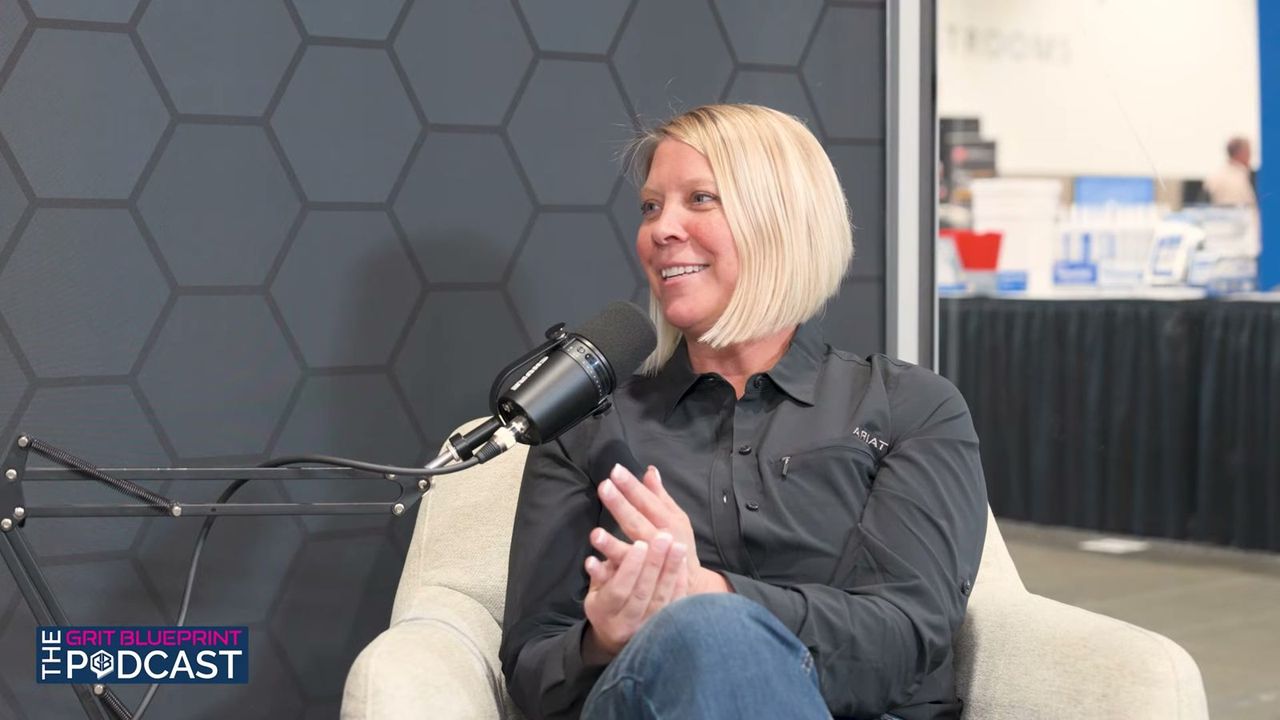
Abby Cornelius on leadership coaching for women and Tina Breen of Manufacturers Reserve Supply.
Abby Cornelius went from sales intern to general manager of land acquisition at national home builders. Then she started coaching women in the industry. She explains what gets people promoted, how to lead across generations, and what male allies can do.
A Grit Guide original. This piece is built from our own interview.
Episodes in this piece
Sources
- Rise And Lead Boldly: Abby Cornelius, Leadership Coaching for Women (Grit Blueprint Podcast interview with Abby Cornelius, founder, Building Women Society; quotes at 12:02, 13:15, 14:05, 15:43, 17:39 and 50:48 on the transcript clock) (April 2024) Grit Guide
- Crafting High-Performing Sales Teams: Tina Breen, Manufacturers Reserve Supply (Grit Blueprint Podcast interview with Tina Breen, vice president of sales and marketing, Manufacturers Reserve Supply; quotes at 2:16, 2:52, 3:19, 26:22 and 27:04 on the transcript clock) (May 2024) Grit Guide