Click any timestamp to jump to that moment in the video.
Sales is About Value, Not Price
0:01 Jim Wilcox: Here's where salespeople get it wrong. They think they bring the value. As a sales professional, I don't bring the value. You own the value. If I can align my product or my service to that, the sale will happen. If I don't do that, then I get reduced down to the lowest common denominator, which is always price.
0:18 Stefanie Couch: So many businesses they'll sell to anyone that kind of walks in the door. And if you did have the data of saying, hey, 80% of the time when we go with this type of customer we don't get paid, we get burned, well, maybe we should go with this 20% that actually could fill the whole business and go after them. If you don't know the numbers, you have no clue on that.
0:36 Jim Wilcox: Professional sort amateur sell. So when that builder is in front of me, I have to really understand what it is that they're trying to do. Is he trying to crank out as many homes as he can and he's looking for the best way to maximize his margins? Let me figure out how I can help him solve for that.
0:55 Stefanie Couch: Welcome to the Grit Blueprint Podcast, the show for bold builders, brand leaders and legacy makers in the construction and building industry. I'm your host, Stefanie Couch, and I've been in this industry my entire life. Whether we're breaking down what's working in sales and marketing, new advances in AI and automation, or interviewing top industry leaders, you're going to get real-world strategies to grow your business, build your brand and lead your team. Let's get to work.
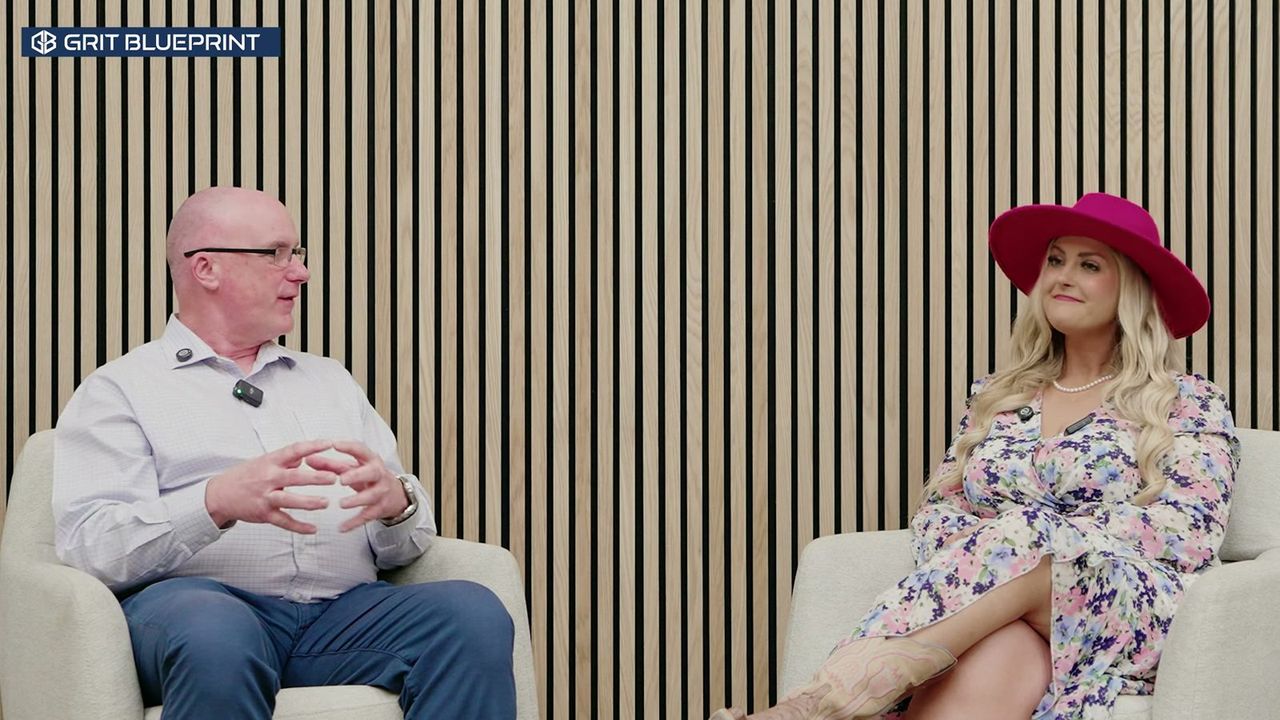
1:31 Stefanie Couch: Welcome to the Great Blueprint Podcast. I'm your host, Stefanie Couch, and I am here today live in Orlando, florida, at the Do it Best Spring Market with my friend, Jim Wilcox. Welcome to the show, Jim.
1:42 Jim Wilcox: Good to see you, thank you.
1:44 Stefanie Couch: Yes, and you are actually here with Do it Best, Just like me as a consultant. We both work with them. It's been a really cool partnership to be able to see you at markets. You have Wilcox & Associates. Tell me a little bit about what you do and who you are.
1:57 Jim Wilcox: Yeah, thank you. So Wilcox & Associates is my company, we are a Sandler training organization, so we exist to help companies scale and we do that three ways. We do that through management, leadership, development, we do that through sales process and methodology, and then this wouldn't apply to do it best necessarily directly, but we've got a program that helps small and medium-sized companies scale. Where that helps you at best is with a lot of the tools that we've brought to them and they're using in different ways.
2:30 Jim Wilcox: So those are the three things, that three lanes that we swim in, if you will.
2:35 Stefanie Couch: Absolutely. I love sales. I've been doing sales a long time, but a lot of people are terrified of sales. What would you say to people who say I can't sell, I would never want to sell anything, because I think everything in life is sales. You know, every action that you take, you're selling something to someone, either an idea or a principle, or a product. What would you say to people that are scared of sales?
2:58 Jim Wilcox: It's a great question. Somewhere along the line, sales truly became a four-letter word and a lot of people are terrified of it truly became a four-letter word and a lot of people are terrified of it to the degree that you know people want to put business development manager, you know, on their card or some other cute term that doesn't say sales. And I think something you said, Stefanie, is very important. Almost every single role in the organization truly is selling, yeah, internally or externally. I think when you look at roles that are not directly selling, I would ask some questions around.
Breaking Down Sales as a Four-Letter Word
3:30 Jim Wilcox: So what ideas are you sharing? Where do you negotiate? Where do you have to be convincing? Internally or externally? Because, like you said, even internally I'm trying to sell an idea, that's sales, right, if I'm trying to get time with somebody across the organization, you think about the larger organizations that we work with. If I need somebody to help me out across the organization, sometimes I've got to negotiate or sell my time. So putting away this idea that sales is somehow a four-letter word and it's bad, yeah, getting over that head trash first, I think, is the first step in addressing that.
4:12 Stefanie Couch: Yeah, what are some of the principles? Because I know Sandler is known as the best sales coaching in the world and you are obviously associated with them. What are some of the principles that you teach at Sandler in sales?
4:31 Jim Wilcox: Thank you. From a Sandler perspective, we believe that there's a handful of steps in identifying an opportunity, taking it all the way through close. So the first thing is building bonding and rapport. So how am I engaging that prospect or that client on a personal level? Sales gets a bad rap because I show up and I try to be all things to Stefanie, for example, or I try to be somebody I'm not, but how do I truly match and mirror and what are the tools in doing that?
4:59 Jim Wilcox: So that's the first step. I'm not going to be friends with everybody that I sell to, yeah Right, and I don't have to be friends that to everybody that I sell to. You don't even have to like me necessarily to buy from me, which are weird concepts, but if I can figure out how to create some likeness with you, then we can create some bonding and rapport from there. If we can create some equal business stature right, then we can get the ball moving on selling From there.
5:27 Jim Wilcox: It's how do we properly qualify? What's interesting is, when I talk to sales reps about how do you know when you have a qualified opportunity, most of them will say I had a conversation with Stefanie Couch and it was a great conversation and that's how they feel like it's qualified.
5:44 Stefanie Couch: So it all goes back to, honestly, whether they like you or not, or whether you like them or they felt like there was a warm and fuzzy. I feel like that's what most people qualify on is like is it warm and fuzzy? Did I feel good about that? It's not. Is this solution a good fit? Do they have the you know, sometimes the money or the qualifications to do the thing that I want them to do, or do they even need my solution? I think is a big question that people forget to ask.
6:10 Stefanie Couch: I've always thought that you know you can sell something to someone and they can say yes and the check can clear, or the credit card can go into your account, but if in a few weeks they don't feel like what you brought them gave them great value, they're never going to buy from you again. And also they're probably going to have some resentment there, cause I know I feel that way about certain products that I probably shouldn't have bought and they didn't give me that. How can people as a salesperson make sure that that is a good fit?
Sandler Training Principles
6:39 Stefanie Couch: So you're talking about qualifying. Go a little deeper into that it's. But let's let's take a do-invest member, for example, someone selling lumber or someone selling a hardware product. Let's take lumber products. That's more of a fit for a longer-term job. A lot of times Maybe a builder comes in. How do you know that that builder is a good qualified customer for you as a lumber dealer?
7:05 Jim Wilcox: One of the things that I talk about a lot when you're selling is and I use this phrase all the time that professional sort amateur sell. Professional sort amateur sell. And so, as a professional, I'm trying to sort through. In the moment I have to know the game I'm playing at a couple of different levels. So when that builder is in front of me, if I've never done business with them or it's been a long time since I've done business with them, I have to really understand what it is that they're trying to do.
7:30 Jim Wilcox: Now that sale might be transactional right, you supply lumber, I need lumber right, let's make things happen. But if I want that builder to come back time and time again, I probably need to have an understanding of what is he trying to do. Is he trying to crank out as many homes as he can and he's looking for the best way to maximize his margins? Let me figure out how I can help him solve for that. If he is trying to grow a scalable business, something bigger than who he is as one individual, and I can help solve for that, then we have a much different relationship.
8:04 Jim Wilcox: So I have to sort through what's the game I'm playing here in the way that I sell and in the way that I'm selling to the customer at the end of the day, I think one of the things we're seeing in our business, because we help people build systems and also do some things with marketing and branding and that AI we're doing a lot.
8:27 Stefanie Couch: Loyalty programs are something that I'm seeing a ton come out into the market. So I work with a lot of manufacturers as well as dealers and distributors in the building materials space specifically, and a lot of big companies in the last three months have come out with loyalty programs, and I think it's because no one wants to be competing on just price. We need to figure out how do we as a company help the customers that are coming to us build their businesses, which is intrinsically what you're doing for people is helping them scale.
8:59 Stefanie Couch: I've always found that if we can solve a problem for someone, if we can figure out how to make their life easier, reduce friction, all those things and I think we're starting to see that you know for four or five years previous to right now well, especially 2020, 2021, crazy, crazy, crazy things. You know you just sold it. If you had it, it was going to sell in the building materials business. We are not in that market right now and some people are very worried about how do I stay on top.
9:28 Stefanie Couch: How do I dominate my market when I'm competing on price again? What would you say to a person in the dealer market that wants to say they have more than just a price. They aren't just a price? What are the things that you would say that you see people winning in this market with?
9:45 Jim Wilcox: So we talked about, started to talk about qualifying a moment ago, and there's a. I always say when I'm training people that if I were to have a tattoo, it would be right here and it would say that, all things being equal, price only matters in the absence of value.
10:06 Jim Wilcox: So I would, I would print that right there. I do believe that. I believe you know we're in Orlando. There's a Ferrari pop-up store in the Vineland Mall right now and I looked at a jacket that was $850 just for a puffer jacket, right. I could buy the same Patagonia jacket for probably $200.
10:28 Jim Wilcox: Those jackets are flying out of that store because people value whatever it is the brand, the quality, the perceived quality, right. And so we train a lot not to sell on price, right. But here's where salespeople get it wrong. They think they bring the value.
10:47 Jim Wilcox: As a sales professional, I don't bring the value, you own the value, right. So if I can unlock what Stefanie values and if I can align my product or my service to that, we have a pretty darn good chance of that buyer-seller relationship. The sale will happen. If I don't do that, then I get reduced down to the lowest common denominator, which is always price.
11:11 Stefanie Couch: Absolutely. And in a product-based market like what we're in here selling hardware, selling lumber, selling doors, windows it is very easy and I see a lot of especially inexperienced salespeople that they do. Unfortunately, they live that nightmare of it's just hey, this person was $2 cheaper than you, and sometimes on big jobs I mean it's. I know someone that lost a siding job for 50 cents, you know, and it's really hard for to get people out of that mentality. But also, if that customer is that way, like truly, that really is all they care, they value, then maybe it isn't the right qualified customer for you If that's not how your business is set up.
Managing Sales Teams Effectively
11:51 Jim Wilcox: Correct, yeah, correct. I think that you know there. There's a time and a place to make adjustments to the price. Now, if I follow good negotiation process, I'm only going to do that if I'm getting something of equal or greater value in return. Right, that should be my mindset around that. I'm not just going to say, oh, they're $2 lower or 50 cents lower, let me match that. I'm going to fight for. Well, what if we were able to meet in the middle? You concede, I concede I'm going to fight for.
12:20 Jim Wilcox: Well, what if we were able to meet in the middle? You concede, I concede, I get something of equal, greater value. I still hit my margins and we're okay with it. Right, that's a win. But for me to just give up 50 cents or two bucks to match somebody else's price, I may be cutting my own throat just to get the sale. And when I'm out talking to owners of businesses in all industries, when they have sellers that are discounting to win business, that's a huge problem.
12:48 Jim Wilcox: In fact, we'll often say that that's the tax the owner pays for having salespeople that don't think beyond selling on price.
12:58 Stefanie Couch: Yeah, it's dangerous for the whole business, for sure, and it does feel like, especially when things get tough, that that's what people go back to if they don't have the training. So, other than the qualification process, what's a few other things that you focus on? And, sandler, with your sales principles, because I really believe a lot of people struggle so much with this. They don't know what to do.
13:20 Jim Wilcox: Correct. Yeah, they're not following a process. So qualification is more than you know. Did we have a good conversation? It's what are the problems, issues or challenges you're trying to solve Right, when are you at today versus where do you want to be tomorrow? We call that pain. You know what. Are you willing and able to make the investment in my product or service? And then how are you going to make the decision? There's a couple other steps beyond that. So on the sales side, we're training to a process and then the methodology, which is the tips, tools and best practices.
13:54 Jim Wilcox: Beyond that, we're training managers on how to lead and develop talent in their organizations and how to coach and train to a process. I'll use my own story. You know, in my past sales career I was always, you know, top sales guy and one day somebody tapped me on the shoulder and said Jim, you're pretty good at sales, we're going to promote you to manager, go out and lead the team. But I never got trained. They just assumed, because I was a good sales guy, that I'd be a good manager.
14:25 Jim Wilcox: And that does not translate, Didn't translate in my case and it doesn't translate Hardly ever Right and the skills are so different.
14:33 Stefanie Couch: especially a lot of salespeople that are really great are actually lone wolves. I mean, they're out there eating what they kill and they're going for the gusto every day and they're not thinking a lot about team and building, you know, an organization. So I find that sometimes they're the worst managers. Are those people? Because they're so, you know, just naturally they need that training.
14:54 Jim Wilcox: Well, and here's a fallacy with your A players. The common mistake with managers is they tend to spend their time with C players. I've got to fix some, yeah Right, and they ignore their A players because they can be on autopilot and we get that backwards, right. So we talk a lot about not only where do you spend your time, but how. If you take an A, b and a C player on a team, they should get a different type of interaction. A players don't need their time managed, right, you know they typically have got that down.
15:27 Jim Wilcox: They need coaching. C players need their time managed. They need to be able to do the fundamentals and if they can't, you've got decisions to make.
15:36 Stefanie Couch: Yeah, that's a great conversation. I want to dig into that just a little bit. So I have a pretty firm belief, and you could disagree with this, but I think you can tell usually pretty soon after you hire someone within a few months at least, but usually pretty immediately whether someone is kind of an A player. I mean, I've never seen anyone turn into a superstar that wasn't already one. That's a true A player, like a unicorn. But B player, C player is a little harder to pick out and sometimes they can mirror as an A player for a few minutes during an interview.
16:10 Stefanie Couch: Right, it's kind of easy to look that way. And sometimes people come in with great pedigrees. You see a resume and you're like, wow, this person, he or she has worked everywhere, They've done everything, and they don't get to the finish line like you think they're going to. How do you sort through that as a leader? How do you know when someone really is a good fit for a role? Because I think that's something a lot of people struggle with, and sometimes you're having a really short interview process.
16:36 Stefanie Couch: It's you need someone right now. How do you micromanage that or manipulate that to work for you?
16:42 Jim Wilcox: There's several steps. So in our leadership program, one of the tools that we use is it actually comes out of our organizational excellence program but we train owners and managers on how to create what we call a search model for the position, not the person right. So if Stefanie is a top performer, for example, and she leaves, we're not necessarily trying to replace Stefanie. What we want to look at is what are the skills, experiences, attitudes, results, cognitive background and habits of the position that are required, and then let's match the candidate to that.
17:19 Jim Wilcox: Let's do that through, you know, creating a strong job profile, for example. And then we're big believers in bringing along third party objective assessments that help us vet out is this candidate right? Because, like you alluded to, I mean the average sales person, can you know BS their way through an interview? And then you're stuck with the result, Unfortunately, three months later saying hey, I thought Jim could produce and he doesn't seem to want to leave his house. Now you've got a problem. So we start with that search model.
Using Data to Target Ideal Clients
17:55 Jim Wilcox: We encourage third party assessments.
17:58 Stefanie Couch: Are there some that you love more than others?
18:01 Jim Wilcox: third-party assessments. Are there some that you love more than others? There's a few that we like. Okay, you know, on the communication side we use DISC quite a bit. On the behavioral side, we use assessments like Talogy and Harvard and Octus. Okay, there's a ton of them out there. The key is, you know, having ones with the right job models and having ones that are validated is having ones with the right job models and having ones that are validated. You've got to have a validated assessment to have the confidence of what you're working with.
18:29 Jim Wilcox: When you're working with a large organization, you got to check all the HR and SHRM boxes there, but there's a few that we like. And then training managers on how to interview. Most managers interview, you know, likely qualify. Oh, you know she's got this background or went to that school or knows this person. That's not good enough when it comes to you know your next talent anywhere in the organization.
18:55 Stefanie Couch: Yeah, I think one thing that is kind of a thread through this whole conversation that's interesting to me is our human nature is to like people that are like us, yes, and also people that like us. So if someone else, if I like you, jim, and I think well, jim and I are kind of similar and we like each other, then it's way easier for me to hire you or for me to want to buy from you. And some of that is just human nature, nature.
19:20 Stefanie Couch: But I think as leaders, it is very interesting to see how that actually can be negative in an organization, because you copy and paste yourself, unfortunately, and your problems become the whole organization's problem, instead of having that diversity of hey, this person's really good at this thing that I'm terrible at. It almost never seems like that's naturally how it works, maybe after you've been burned enough times and you know you need that complementary skill. There's built-in bias, that's right exactly, and so I think some of these tools that set up, like you said, it's not about the person as much as it's about the role and what does the role really need, and then truly getting down to figure out what is that even actually outlined as?
20:00 Stefanie Couch: Because sometimes what you think a role needs, you get into the day to day and it's a very small part of what they actually are going to be doing. Like, for instance, salespeople need to be able to do some of the technical operations in, like CRMs and tracking and metrics and things like that, and I've met a lot of salespeople that would rather just drive off a cliff than log into their CRM. So how do you mitigate that when someone has some of the raw skills, like, for instance, the sales ability, but they don't want to do some of the other more technical parts of the job?
20:31 Jim Wilcox: Boy, that's potentially Pandora's box, because I used to be that guy. I used to be that guy where you know I was always typing in my notes late, right, getting it, getting them last minute. But you know, as an owner now, I completely understand the need to be able to have data in there, cause if if we're working together, you're on my team and you win the lottery and decide you're not coming in tomorrow, I've got to be able to pick it up and if I don't have good data in there, I can't pick it up.
21:06 Jim Wilcox: Or worse, you leave, I don't have data and now you're taking all your clients with you. I'm super at risk. The other piece of that is, as a small business owner, I've got to be able to plan, so your projections need to be very, very tight and we've got to have you know. In our CRMs we look at the stages of our pipeline. I've got to have good entry and exit criteria so that I have confidence that what you're out there producing is good from my perspective, to be able to plan and make decisions.
21:38 Jim Wilcox: And so you know, I don't know that a lot of salespeople have that perspective. They look at it as oh, my CRM is my babysitter or it's another task I have to do, but there's a lot of importance in collecting that data.
21:54 Stefanie Couch: Absolutely. I think data is the biggest building industry miss that I've seen is I mean this ranges from like companies that are startups that have $100,000 a year in sales to billion dollar companies.
22:07 Jim Wilcox: It's every business.
22:08 Stefanie Couch: They have the data. A lot of times they do actually have some data, but they don't know what to do with it. Or, in a smaller business, they don't. They just don't even have any. They don't know what any of their numbers are. And when you start to think about making these giant decisions that we make in our businesses every day by gut feeling, only without any numbers, it's really scary. And you can you could literally crush the business because of something like that. So I think the more we can educate salespeople and really anyone on the fact that this is not a babysitter the word babysitters I've always heard from my sales teams.
22:47 Stefanie Couch: You know, guys, I've got to get out of this customer's yard and sit in my car for 15 minutes and write notes in the CRM, and you know it's just a pain for them. But if you start to think of it as an actual kind of a tale of, hey, here's what actually we could do if you did this, in a way we could use this data. One thing that I see as a real opportunity for our industry is figuring out what customers we actually should be focusing on, because I feel, like so many businesses, they will.
23:11 Stefanie Couch: They'll sell to anyone that kind of walks in the door or calls, and if you did have the data of saying, hey, 80% of the time when we go with this A type of customer, we don't get paid, we get burned, we get you know, well, maybe we should go with this 20% that actually could fill the whole business and go after them. If you don't know the numbers, you just you have no clue on that stuff.
23:33 Jim Wilcox: Yeah, one of the things we work with in fact, it's one of the sessions I've done this week being here is around client segmentation. Done this week being here is around client segmentation, and so we train every single client on a client segmentation strategy called CARE, which stands for clients that I want to keep, attain, recapture and expand. There's three steps that we take with CARE. The first one is how do we identify them? What do they look like? Now, what's interesting is when you really get granular on the clients you want to keep and the clients you want to attain, the unintended or intended outcome of that is I can develop an ideal client profile, and that speaks to the 20% that you were talking about.
24:16 Jim Wilcox: If I know that now, I can begin to be more targeted in the areas that I'm going after on the attain side. What's interesting on the keep side is there are a lot of clients that I have that maybe they're not the ideal client, right, so now it gives me the opportunity to relook at that. And then there are clients I want to recapture and expand. So how do we identify them? Second step is what do we do with them when we, now that we've got them in our sites.
24:45 Jim Wilcox: Those clients get treated slightly differently. Right, I'm going to treat my keep client a little bit differently than my, expand my recapture a little bit different than my attain. The last step, then, is what's my 90 day over 90 day plan? So now I have a strategy to go out and be very targeted and balanced in my approach as I'm going out and navigating my territory as somebody who has to develop business as part of my role with focus on hey, how much time do I spend on totally new business, like never seen this person before?
25:22 Stefanie Couch: And then sometimes the nurturing and the upkeep on current customers gets put to the wayside. And then you have some people that are more nurturers and they're out just nurturing all the time and don't ever get new business. I feel like usually people are better at one or the other and they feel so comfortable in that that they get locked in. So it's great to have a process that you're actually thinking about that upfront.
The CARE Client Segmentation Strategy
25:42 Jim Wilcox: Well, not only that, but you alluded to us being predictable. We're very predictable as human beings and as a salesperson myself. The easiest place for me to go is to play clients that already like me, or if I know that I've got a relationship and somebody will welcome me in. That's easy, but that's not always or necessarily what sales is about. I've got to go out and disrupt relationships. I've got to go out and walk onto that lumberyard where nobody knows me, or it's been a hot minute since I've talked to anybody there and be bold enough to get into a conversation.
26:21 Jim Wilcox: That's not comfortable always.
26:22 Stefanie Couch: Yeah, I think that exact moment that you just described is why 99% of people in the world say they hate sales. It's because they don't want to do that uncomfortable thing. Humans usually don't, I mean, most of us don't like to do the hard things. It feels icky and we don't want to go there. But true salespeople love that adventure and think it's fun. But maybe we're just the crazy ones, I don't know.
26:46 Jim Wilcox: Maybe. Yeah, we don't have a problem being told no right.
26:49 Stefanie Couch: It just means not yet to us for sure. Well, this has been such a great conversation.
26:54 Jim Wilcox: I do want to end with one last question for you, If you were 20-year-old, jim, and you could give yourself one piece of advice, what would it be?
27:06 Stefanie Couch: Oh my gosh, it can be around sales, since we've been talking about sales the whole time.
27:08 Jim Wilcox: What would?
27:09 Stefanie Couch: it be.
27:10 Jim Wilcox: You know, a lot of our clients will say this and I said it. And actually, if I back up, there are two things. So I spent five years as a client of Sandler and when our owners came to me and said, hey, we're going to do training, I thought, great, we hired some schmuck who can't sell, so now he's training right. You know the old adage those that can't do teach. I quickly learned that was not the case, very blessed to have an amazing trainer. The other thing that I hear from clients is where was this?
27:42 Jim Wilcox: 20 years ago? I had had 15 years or so of sales experience coming into Sandler and that was one of the very first things I said was where was this 15 years ago? And this will sound weird, but I think if you have any solid process that you could, you could lean into and own. Now I'm biased, right, because I'm a Sandler trainer. I do think Sandler is the best. We are the 800 pound gorilla in the room. But you know you have a choice to make.
28:12 Jim Wilcox: I think Nick Saban is credited with saying look, you got five choices. You can be bad, you can be average, you can be good, you can be exceptional or you can be elite, right. So having a process to fall back on, because most of us learn sales by figuring it out right? So if I have a process and I'm making a decision on what I want to be, then I can go all in to the degree that I want to be elite, right. So I'm going to go all in.
28:41 Jim Wilcox: And again, that has me going where was this 20 years ago? Or 15 years ago?
28:45 Stefanie Couch: Absolutely. I think it's so important to spend the time and develop your skills, and sales is a skill, for sure, and it does get, I guess, labeled as a gut instinct or like you either have it or you don't. But I don't really believe almost anything in life is that way. I think that maybe some people are more naturally inclined or talented, based on personality or risk ability and taking things that are hard and loving it, yeah.
29:11 Stefanie Couch: But even people that are born that way, with those processes and that kind of framework, can just hockey stick, and that's always a good thing when you're making commissions or when you're selling. So if someone is listening and wants to connect with you and is interested in learning more about what you do, how can they find you?
29:28 Jim Wilcox: My email is jimwillcox at Sandler S-A-N-D-L-E-R. com. I'm on LinkedIn, jim Wilcox, sandler, indiana, north Carolina. Those are my two. I've got offices in both states. Okay, you can find me on LinkedIn very active on LinkedIn, so it shouldn't be too hard to find me.
29:45 Stefanie Couch: Very good. Well, I'm excited for a great market. I am too, and thank you for spending a little time with me.
29:50 Jim Wilcox: Thanks for having me.
29:51 Stefanie Couch: That's it for this episode of the Grit Blueprint Podcast. For more tools, training and industry content, make sure to subscribe here and follow me on LinkedIn and other social media platforms. To find out more about how Grit Blueprint can help you grow your business. Check us out at our website, gritblueprintcom.