What to Measure on a Sales Team Besides Total Sales
Total sales is the number everyone watches and the hardest one to act on, so Eric Knox of Do it Best tracks the activity underneath it.
Client: Do it Best is a Grit Blueprint client.

Besides total sales, measure the work that produces it. That means visits, call activity, prospecting calls, active leads and results on short promotional pushes. Those are the sales team metrics Eric Knox, director of LBM sales at Do it Best, watches. He keeps total sales on the board but says it is hard to act on. His reason: a salesperson with a big book of business posts big numbers whether they chase new work or not.
Knox moved from the hardware side of Do it Best to lead its LBM sales team. When he did, the team already had sales numbers. He says “we had sales numbers and all that, but it was not the main focus” (2025 interview, 5:54). LBM is short for lumber and building materials.
Do it Best is a co-op, a wholesaler owned by the independent hardware stores and lumberyards that buy through it. He started out lugging bag goods outside a hardware store as a summer job. By his early twenties he was running stores. He describes himself as “very metric driven, data-oriented.”
He has sat for two Grit Blueprint Podcast interviews. One was on the floor of a Do it Best market in 2025. The other was in a studio in early 2026. In both he comes back to the same point. Most sales teams watch one number, and that number cannot run the team alone.
Why is total sales hard to act on?
Top line sales is total sales before any costs come out. Knox does not wave it away. He calls it the most important metric. Then he names the catch: “it’s really hard to take action on that top line sales number” (2026 interview, 6:37).
The number also flatters the wrong people. A big book of business means the accounts a salesperson already has. A salesperson with a big one will post big sales either way. In Knox’s words (7:11): “if I’ve got a huge book of business, I’m gonna continue to get that business whether I chase it or not.”
He wants to find the salespeople who are “hungry, trying to grow their business through new business or new categories,” and to measure those things “as opposed to who’s been around the longest and has the most customers.”
Which sales team metrics can you act on?
The ones that count the work a salesperson does this week. So Knox drills down to activity. These are the questions he asks about his own team (6:37):
- Are we making visits?
- What does our call activity look like?
- How are we performing on short-term promotional sprints? A sprint is a short push on one promotion.
New business gets its own measure. Knox says “the fastest way to grow is new business” (16:24), and it shows up in dollars late. The sales cycle is the time from a first conversation to a first order. It is long in this industry. Say he announced a new-business push today and ranked people by new dollars tomorrow. The ranking would tell him little (18:16).
So he counts the early steps first: “number of prospecting calls, number of active leads.” Signed accounts come after that, and invoices after that.
He is just as clear about the other side. A team that only prospects and lets its existing customers drift has gained nothing.
What two questions should you ask of every sales report?
A dealer’s system can produce more data than anyone can read. Knox warns that you can drill all the way down to a single item “and you can get lost” (7:59). When he runs a report he looks for two things:
- What is down the most in dollars? He looks by category and by vendor, the supplier of a product line. That is business he is losing and can try to win back.
- Where is the team winning? He asks “where are we crushing it?” and then “if I’m crushing it with a handful of customers, how do I find more customers to go crush it with?”
The second answer shows what the business is good at. Knox says to lead with that.
Publish the score, and explain it first
That’s one of the biggest things you can do as a sales leader is basically tell a team this is how we’re keeping score.
 Eric KnoxDirector of LBM Sales, Do it BestFrom our 2025 interview, 0:00
The order he followed matters. His team built a plan, “got that in front of the team, explained why it was important, and then we published those metrics” (2025 interview, 5:54).
He handles goals the same way. Sit down with the group and talk through the goals for the year. Then “write those goals down, better yet, post them, even better, sit and update everybody on them on a frequent basis” (2026 interview, 14:10). His team reviews its numbers every week.
When he started posting leaderboards, the newest people on the team took to it at once. He says “those guys were all over it” (2025 interview, 19:08).
A scoreboard does not motivate everyone
Knox is competitive and says so. He also took a leadership course that reminded him his team is not built like him. “That’s not what motivates everybody” (2026 interview, 3:14). His conclusion is that a leader has to “communicate to people in different ways.”
Jim Wilcox adds a warning about where a manager’s hours go. Wilcox is CEO of Wilcox & Associates, a Sandler sales training organization. He says managers tend to spend their time on their weakest people, the C players, and leave their best people, the A players, alone. He thinks that is backwards. “A players don’t need their time managed,” he says (15:12). “They need coaching. C players need their time managed.”
The notes are part of the score
Activity numbers depend on salespeople writing things down, usually in a CRM. That stands for customer relationship management software, where reps log accounts, calls and visits. Wilcox admits he used to be the rep who typed his notes in late. He says a lot of salespeople look at it as “my CRM is my babysitter” (21:56).
As an owner he sees it differently. If a rep is out, or leaves, somebody has to carry those accounts. He says that “if I don’t have good data in there, I can’t pick it up” (20:49).
Tell the team that reason. It is easier to log a visit when you know what the note is for.

Put one to three numbers on the board
Keep the scoreboard to one to three numbers. A board with twelve numbers tells a rep that everything matters, so nothing does. Pick the one or two activity numbers that move the result you want this quarter. Keep total sales beside them, and leave the rest in the report.
When a number lags, find out why before you push. A missed target can come from an unclear expectation, a missing skill, a broken process or a failure to follow through. Each needs a different fix. Only the last one is about effort.
And take Knox’s point about motivation seriously. The rep who lights up for a leaderboard can be one of your best people. So can the steady account keeper who ignores it. Build the scorecard around the work, then ask each person what winning looks like to them.
What to do next
- Keep total sales on the board. Next to it, add two activity numbers your team can change this week, such as visits made and prospecting calls.
- For new business, track calls and active leads first. Add dollars once those accounts start ordering.
- Run one sales report and ask Knox’s two questions: what is down the most in dollars, and where are we winning?
- Write the goals down, explain why each one matters, post them and go over them every week.
- Ask each person on the team what they want out of the job. Give your best people coaching time, not only the ones who are struggling.
To turn the goals into something everyone can repeat, read How to Make Sure Every Employee Knows the Goal. For a prospecting list your activity numbers can run on, see How to Use Building Permits to Find Builders You Don’t Sell To, and for the existing book, How to Keep an Account Sold After the Order.
The 2025 Eric Knox interview was recorded for an episode sponsored by Do it Best Group.
Questions people ask
What should a sales manager measure besides total sales?
Measure the activity behind the sales: visits, call activity, prospecting calls, active leads and results on short promotional pushes. Eric Knox of Do it Best says total sales matters most in the end but is hard to act on, because established accounts keep ordering either way.
How do you measure new business when the sales cycle is long?
Count the early steps first, such as prospecting calls and active leads, then signed accounts, then invoices. Knox says ranking people on new dollars the day after a new-business push tells you little, because first orders come months later.
What should you look for in a sales report?
Knox asks two things: what is down the most in dollars, by category and by vendor, and where the team is winning. The first is business to win back. The second shows what the business is good at and where to find more customers like the ones you already win with.
Should a sales team post a leaderboard?
It can help when the team knows why the numbers matter. Knox built the plan, explained it, then published the metrics, and his newest people took to the leaderboard at once. He also says a scoreboard does not motivate everyone, so talk to people in different ways.
Why do CRM notes matter to a sales manager?
A CRM, or customer relationship management software, is where reps log accounts, calls and visits. Jim Wilcox of Wilcox & Associates says that if a rep is out or leaves, someone has to pick up those accounts, and they can only do it with good notes.
Watch the full interviews
How To Win in 2026: Sales Data, AI, And LinkedIn and The Power of Metrics, Drive & Team Culture in LBM Sales with Eric Knox, and Mastering Sales Beyond Price with Jim Wilcox. Times in parentheses mark where each quote sits in the audio episode. Knox’s are from the 2026 interview unless marked 2025.
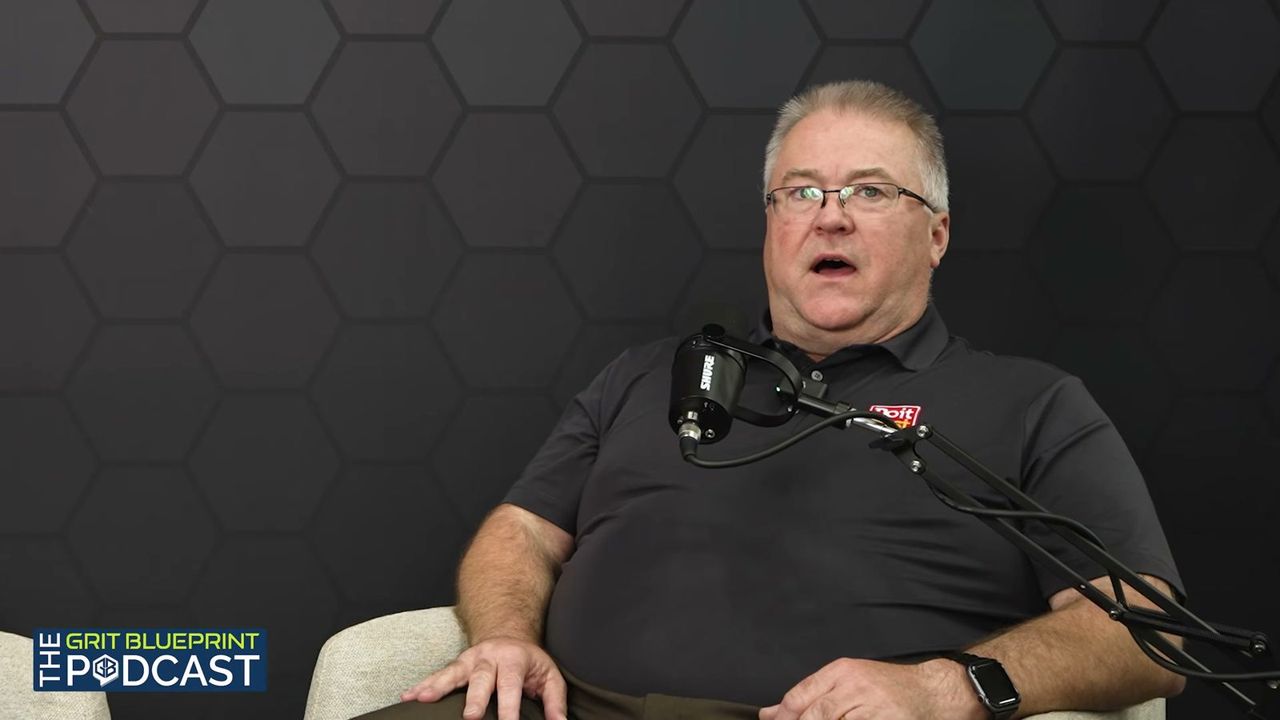
Eric Knox of Do it Best explains why top line sales alone can't tell a sales team what to do next, and what he measures instead: visits, calls and active leads. He also shows how he uses LinkedIn and AI before a sales call.
A Grit Guide original. This piece is built from our own interview.
Episodes in this piece
Sources
- How To Win in 2026: Sales Data, AI, And LinkedIn (interview with Eric Knox, Director of LBM Sales, Do it Best; quotes at 3:14, 6:37, 7:11, 7:59, 14:10, 16:24 and 18:16) Grit Guide, Grit Blueprint Podcast
- The Power of Metrics, Drive & Team Culture in LBM Sales (interview with Eric Knox, Director of LBM Sales, Do it Best; quotes at 0:00, 5:54 and 19:08) Grit Guide, Grit Blueprint Podcast
- Mastering Sales Beyond Price (interview with Jim Wilcox, CEO, Wilcox & Associates; quotes at 15:12, 15:44, 20:49 and 21:56) (July 2025) Grit Guide, Grit Blueprint Podcast